
Reviewed · FOOD & DRINK
【For adult】Traditional Mochi Pounding Experience with Tasting
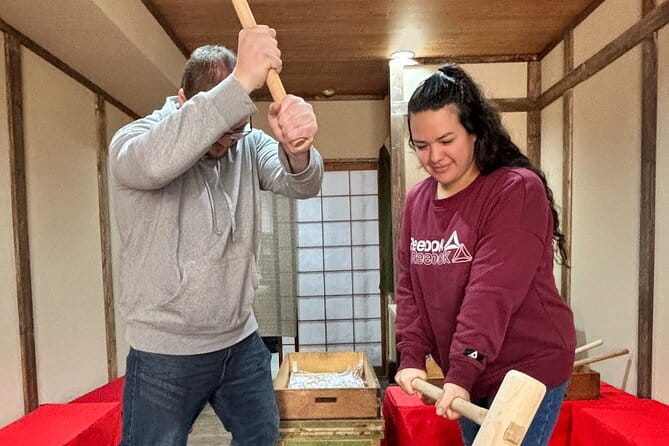
Fresh mochi starts with a wooden mallet. This one-hour Osaka activity turns a familiar sweet into a hands-on lesson, with steaming rice, traditional pounding, shaping, and tasting all packed into a small-group session. I like the freshly made mochi and the chance to learn the custom behind it. I also like that children can take part with a smaller mallet. The main consideration is that the room may feel warm during hot weather, and mochi should be eaten in small portions by older adults because it can be difficult to swallow.
The setting near Dotonbori makes this easy to fit into a busy Osaka day. Morning and afternoon sessions give you useful flexibility, while the maximum group size of 10 keeps the activity personal. English support is available, and Chinese assistance comes through slides or interpretation.
The staff get especially high marks for their friendly approach. Aiko, Grace, Seina, Runa, Mao, and Riki are among the instructors praised for keeping the pace lively and making sure everyone gets a turn. At $32.37 per person, I see this as a fair price for a short cultural activity that includes instruction, participation, tea, and a generous tasting.
In This Review
- Key points at a glance
- Why mochi pounding is worth your Osaka hour
- From steamed rice to a soft, stretchy dough
- The tasting is the best reward
- A small group makes the activity work
- Fitting the session into a Dotonbori day
- What to wear and what to expect physically
- Is $32.37 a fair price?
- Who will enjoy this most?
- Practical booking advice
- Should you book this mochi experience?
- FAQ
- Where does the mochi pounding experience take place?
- How long does the experience last?
- What happens during the session?
- Is the activity suitable for children?
- Is the experience available in English?
- Can vegetarians and vegans participate?
- How far in advance can I cancel for a full refund?
Key points at a glance
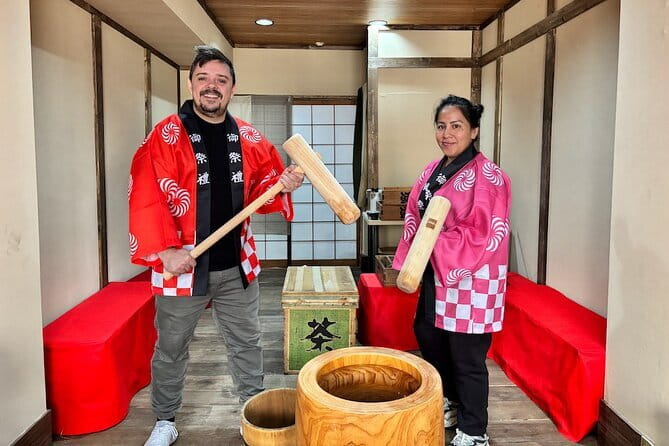
- You pound steamed glutinous rice yourself: This is not a demonstration-only class. You handle the traditional mortar and pestle, with staff guiding the process.
- The session begins with a 10-minute cultural talk: You learn why mochi pounding matters before picking up the mallet.
- Fresh mochi comes with five seasonings and ingredients: Kinako and sweet red bean paste are included, along with other Japanese flavors.
- The group is capped at 10 people: That gives you a better chance to participate and ask questions.
- Children are welcome: A smaller mallet lets younger participants join the pounding.
- It lasts about one hour near Dotonbori: You can add it to a morning or afternoon in central Osaka without giving up half your day.
Why mochi pounding is worth your Osaka hour
Mochi is easy to recognize in Japan, but its traditional preparation is much more physical than the soft sweets sold in shops. Steamed glutinous rice is placed in a heavy mortar, then pounded until the grains become one smooth, stretchy mass. One person pounds while another turns and moistens the rice at the right moment.
That teamwork is the heart of the activity. You are not simply watching a performer make a snack. You see how separate grains change texture, then take part in the work that creates the finished mochi.
The opening talk lasts about 10 minutes and covers the history and cultural importance of mochi pounding. This short introduction gives the activity some meaning. You understand why the process is treated as a tradition, rather than just a noisy way to prepare dessert.
I particularly like the balance here. The cultural explanation is long enough to give you context, but not so long that children or hands-on learners lose interest. Soon enough, you are ready to use the tools.
More Craft Workshops in Osaka
- Osaka: Traditional Mochi Pounding Experience with Tasting
★ 4.9 · 306 reviews - Kamigata Ukiyoe Museum:Ukiyo-e Woodblock Printing Experience
★ 4.9 · 79 reviews - 1.5〜2 Hours Traditional Kintsugi Work Shop in Namba Osaka
★ 5.0 · 75 reviews
From steamed rice to a soft, stretchy dough
The process begins with steaming glutinous rice. You join this part of the demonstration and learn how the cooked rice becomes the base for mochi. The important change happens after steaming, when the rice is pounded into a sticky, unified dough.
You will use traditional tools, including a mortar and pestle. The mallet work is fun, but it also requires attention. Staff guide you through the technique and help keep the process moving safely. The activity is designed so everyone can take a turn instead of leaving the work to one person.
The staff make a point of including children. A smaller mallet is available, which means younger participants are not pushed to the side while adults do all the work. For families, this is a useful detail. Children can see the transformation, feel involved, and take part in the final tasting.
Do not expect a full cooking course with recipes to take home. This is a compact cultural activity focused on the traditional method and the pleasure of eating the result right away. You get a clear look at the process without needing special cooking skills.
The tasting is the best reward
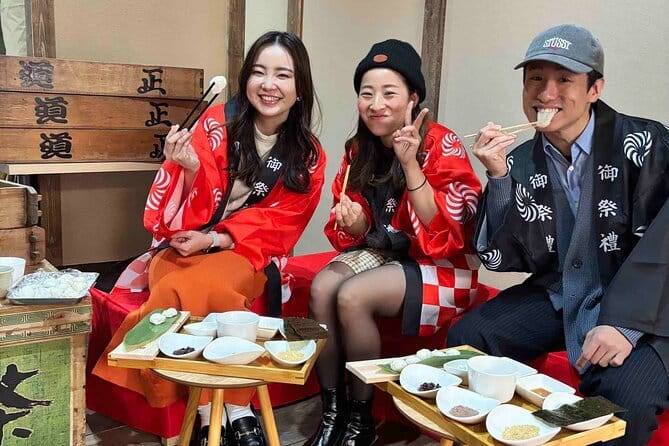
After the pounding, the mochi is portioned and shaped. You get to handle it in your palms, then taste it with five Japanese seasonings and ingredients. Kinako, a roasted soybean powder, and sweet red bean paste are specifically included. Other flavors are also served, giving you several ways to compare the same fresh mochi.
This tasting is more filling than the short duration may suggest. The mochi is dense and satisfying, so I would avoid scheduling it immediately before a large meal. You may want to leave room in your day for the food rather than treating it as a tiny sample.
The fresh texture is the point. Store-bought mochi can be pleasant, but freshly pounded mochi has a softer, more elastic quality. The experience lets you taste the result while the preparation is still fresh in your mind.
Not every flavor may suit you. Some seasonings are less sweet and more traditional than the dessert-style mochi many visitors already know. That variety is useful, though. It shows you that mochi is not limited to one sweet filling or one familiar flavor.
Tea is served alongside the tasting. It helps balance the sticky rice and gives the final part of the session a calm finish after the energetic pounding.
A small group makes the activity work
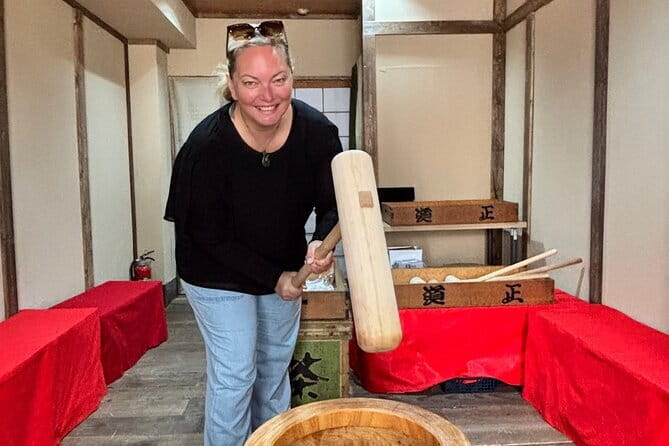
The group limit is 10 people. That matters because the experience depends on participation. In a very large class, you might get one quick turn and spend the rest of the hour watching. Here, the smaller size should give you a better chance to use the mallet, shape mochi, and take photos.
The staff are also active throughout the session. Aiko, Grace, Seina, Runa, Mao, and Riki are praised for being welcoming, energetic, and clear in their explanations. Their role is not just to explain the steps. They help people join in, keep the mood light, and make sure the activity does not become awkward for first-time participants.
Photography is encouraged. Staff can help take photos and videos, which is handy when your whole group wants to appear in the picture. The activity also provides a simple visual story: rice before pounding, the transformation in the mortar, and the finished mochi on the tasting table.
The language setup is practical. English instruction is available. Chinese support is provided through slides or interpretation with ChatGPT, so Chinese-speaking participants have additional help, though the format is not described as a fully Chinese-language session.
More Food Tours in Osaka
- Osaka: Shinsekai Food Tour with 13-15 Dishes at 5 Eateries
★ 4.8 · 2,204 reviews - Osaka Food Tour: 13 Dishes at 5 Local Eateries
★ 5.0 · 2,149 reviews - Hungry Osaka Street Food Tour:15 Tastings & 3 Drinks with a Local
★ 5.0 · 1,727 reviews - Hungry Osaka Street Food Tour: 15 Dishes & 3 Drinks
★ 4.9 · 694 reviews
Fitting the session into a Dotonbori day
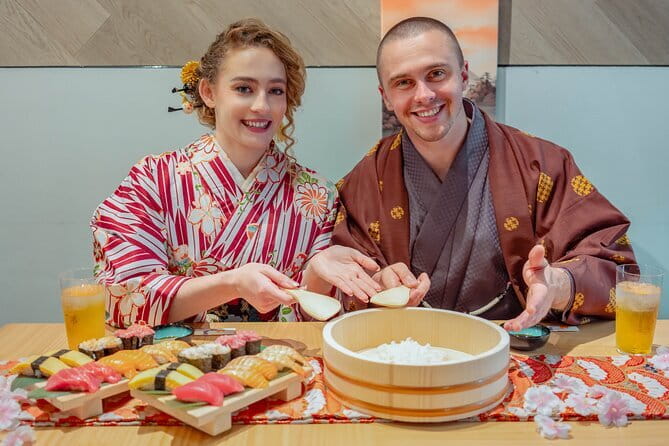
The meeting point is Mochi Pounding Experience Osaka, known as Oh Mochi, at 2-chōme-4-11 Dotonbori, Chuo Ward, Osaka. The activity begins and ends at the same location, and it is near public transportation.
That central location is a real advantage. Dotonbori is already one of Osaka’s main areas for food, shopping, and evening lights, so you can place this experience between other plans. A morning session can start a day of exploring. An afternoon session can break up sightseeing before dinner.
The one-hour length is another strength. You do not need to sacrifice a major attraction or spend a full day indoors. The schedule gives you a taste of a traditional activity while leaving time for Osaka Castle, the markets, shopping streets, or an evening meal.
Arrive on time. One participant who arrived a few minutes late was still welcomed and fitted with a mochi-making costume, but late arrival can still shorten your own session or interrupt the group. The available information does not specify how long late entry will be accepted, so arriving before the start is the safer plan.
What to wear and what to expect physically
Mochi pounding is active. You will swing a mallet, stand or move around during the process, and handle sticky rice while shaping it. It is not an intense workout, but it is more physical than a tea tasting.
Wear light clothing if Osaka is hot. One useful tip from the experience is that the room can become warm in hot weather. Comfortable clothes also make it easier to move your arms and take part without worrying about formal attire.
A mochi-making costume may be provided as part of the activity. This adds to the sense that you are taking part in a real workshop rather than simply attending a food sample.
Safety deserves attention during the tasting. Mochi is sticky and can be hard to swallow, so older adults should eat small portions. Take your time, chew carefully, and do not treat the tasting as a race. The same sensible approach is useful for young children.
The activity welcomes families, vegetarians, and vegans. Dietary preferences can be accommodated, which makes this a good choice for groups with different eating needs. You should still communicate your requirements when booking or before the session begins.
Is $32.37 a fair price?
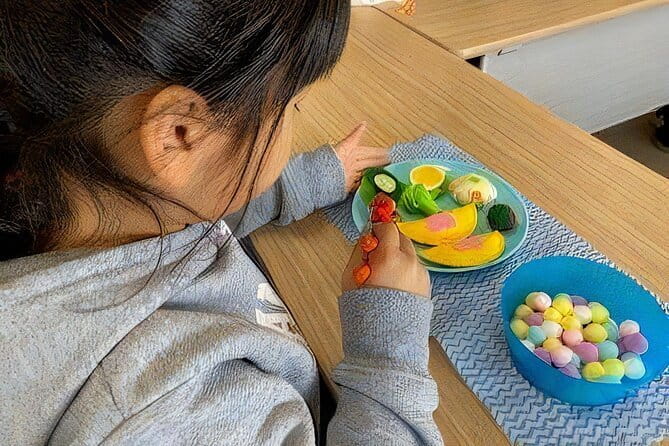
At $32.37 per person, this is not the cheapest snack in Dotonbori. You are paying for more than the food, though. The price covers a cultural explanation, the use of traditional equipment, staff instruction, hands-on participation, fresh mochi, several toppings, and tea.
The value is strongest if you want an activity rather than another restaurant stop. You learn how mochi is made, take part in the work, and eat the result. The small group and staff involvement also make the price easier to justify.
The value is weaker if you only want to taste mochi. Osaka has plenty of places to buy Japanese sweets for less money. You should book this for the process, the social fun, and the chance to make the food yourself.
The short duration helps. A longer cooking class might offer more dishes, but it would also take a larger piece of your itinerary. This session gives you a focused cultural experience for roughly an hour, with morning and afternoon choices.
The very high recommendation rate and 5.0 rating from 68 reviews point to consistent satisfaction, especially with the staff, the hands-on format, and the food. Those strengths are clear in the experience itself, but keep your expectations realistic: this is a lively introduction, not an advanced culinary lesson.
Who will enjoy this most?
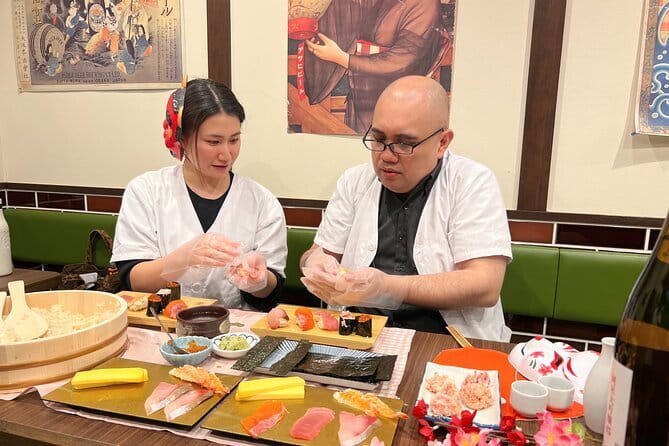
I would recommend this for first-time visitors who want a traditional Japanese activity without a formal, quiet setting. It offers more action than a tea ceremony and a different kind of food lesson than a sake tasting.
Families are a strong match. Children can use the smaller mallet, help shape the mochi, and enjoy the toppings. The activity has a clear beginning, middle, and end, which helps younger participants follow along.
Mochi lovers will get the most obvious reward. You can compare freshly made mochi with different seasonings and learn how texture changes before and after pounding.
It also works well for couples, friends, and solo visitors who enjoy meeting people in a small group. The staff make sure people participate, so you are unlikely to spend the whole session standing at the edge.
You may want to skip it if you dislike sticky foods, cannot eat rice-based sweets, or prefer a quiet museum-style activity. The pounding is part of the fun, and the tasting is generous enough to feel like a real snack.
Practical booking advice
The experience offers free cancellation if you cancel at least 24 hours before the local start time. Changes or cancellations made less than 24 hours before the start are not accepted for a refund.
The activity requires good weather. If poor weather causes cancellation, you will be offered a different date or a full refund. The available information does not explain why weather affects the session, so check your plans and keep some flexibility.
Your mobile ticket makes entry convenient. Confirmation is received at booking, and the meeting point is near public transportation. Since the activity ends where it starts, you do not need to arrange a separate return transfer.
Choose the session that best matches your food plans. Because the tasting can be filling, an afternoon booking may work well before a lighter dinner, while a morning booking can give you an enjoyable start to the day.
Should you book this mochi experience?
Book it if you want a short, friendly, hands-on look at Japanese food culture. The strongest reasons are the chance to pound the rice yourself, the fresh mochi tasting, the small group, and staff who make the activity easy for beginners and children.
I would especially choose it for a first Osaka visit, a family itinerary, or a day when you want something more memorable than another quick meal. At $32.37, the activity earns its price through participation and instruction, not simply through the amount of food.
Skip it if your only goal is inexpensive dessert, or if sticky foods are not appealing. For everyone else, this is a cheerful one-hour break in central Osaka, with enough culture to give the snack meaning and enough action to keep the hour moving.
FAQ
Where does the mochi pounding experience take place?
It takes place at Mochi Pounding Experience Osaka, known as Oh Mochi, at 2-chōme-4-11 Dotonbori, Chuo Ward, Osaka, 542-0071, Japan.
How long does the experience last?
The activity lasts approximately one hour.
What happens during the session?
You receive a 10-minute talk about the history and cultural significance of mochi pounding. You then join the steaming and pounding process, use traditional tools, shape the mochi, and taste it with five Japanese seasonings and ingredients alongside tea.
Is the activity suitable for children?
Yes. Children are welcome, and a smaller mallet is available so younger participants can take part in the pounding.
Is the experience available in English?
Yes. English is supported. Chinese assistance is provided through slides or interpretation with ChatGPT.
Can vegetarians and vegans participate?
Yes. The activity accommodates vegetarian and vegan dietary preferences.
How far in advance can I cancel for a full refund?
You can cancel at least 24 hours before the experience start time for a full refund. Cancellations or changes made less than 24 hours before the start are not accepted for a refund.
Just added around Osaka
- Osaka Food Tour with 10 Classic Japanese Tastings & Drinks★ 5.0 · 38 reviews
- Osaka: Highlights & Hidden Gems Private Walking Tour★ 4.7 · 38 reviews
- Kyoto private tour (Shore excursion available from Osaka or Kobe port)★ 5.0 · 39 reviews
- Osaka Private Day Trip – Enjoy Your First-Time Visit to Osaka!★ 5.0 · 39 reviews
- Kyoto & Nara & Uji: Full Day Sightseeing Tour from Osaka or Kyoto★ 4.5 · 39 reviews
- Authentic SUSHI Course Cooking Class★ 5.0 · 39 reviews
- Osaka: Mind & Spirit Balance Temple Reiki Healing★ 5.0 · 41 reviews
- Osaka Afternoon Walking Tour with Osaka River Cruise★ 3.5 · 42 reviews
Food & Drink, compared.
Shinjuku Food Tour (13 Dishes at 4 Local Eateries)
Read our review →
Tokyo Tsukiji Fish Market Food and Culture Walking Tour
Read our review →
Shinsekai Food Tour with 13-15 Dishes at 5 Eateries
Read our review →
Osaka Food Tour: 13 Dishes at 5 Local Eateries
Read our review →
Shinjuku Food Tour (15 Dishes and 4 Eateries)
Read our review →
Best of Shinjuku: Izakaya Food Tour (4 Stops, 14+ Tastings)
Read our review →
Kyoto Night Foodie Tour in Gion (9+ dishes + 6 Sake tastings)
Read our review →
Hungry Osaka Street Food Tour:15 Tastings & 3 Drinks with a Local
Read our review →Browse the lists this tour appears in