
Reviewed · SUMO EXPERIENCES
【SUMO FESTIVAL】Tokyo Ginza: Sumo Show & Photo Experience
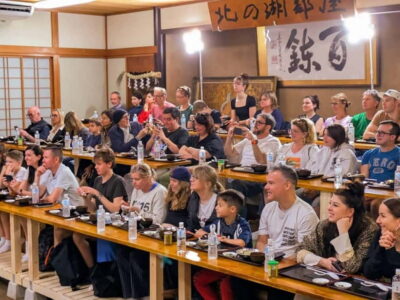
Sumo gets personal here. This two-hour Ginza experience combines clear English commentary with demonstrations, crowd activities, and a chance to enter the ring against a retired wrestler. I like the easy-to-follow format and the close seating, since every seat faces the sumo ring. The main caution is that this is a staged cultural show, not a full professional tournament, and some of the host’s explanations may feel long.
You’ll see sumo techniques, try shiko stomping, throw salt, practice a body collision, and possibly challenge a retired wrestler by lottery. I also like the mikoshi ritual at the end, which adds a second piece of Japanese festival culture. Food is available for an extra charge, but the quality and value may depend on what you order.
In This Review
- Key points before you book
- What this Ginza sumo show really is
- Entering the Ginza venue
- Watching the demonstrations up close
- Learning shiko, salt throwing, and body collision
- The retired wrestler challenge and the lottery
- The mikoshi finale adds a second Japanese tradition
- Food, drinks, and the extra cost
- How the hosting affects the experience
- Who will enjoy this most
- Practical tips for a smoother visit
- Should you book the Tokyo Ginza sumo experience?
- FAQ
- How long does the Tokyo Ginza sumo experience last?
- Where is the sumo show held?
- How can I find the venue on Google Maps?
- Is the sumo show in English?
- Can I wrestle with a sumo wrestler?
- What activities are included?
- Is food included in the ticket?
- Are all seats close to the ring?
- Can I cancel for a full refund?
Key points before you book
- Two hours of hands-on sumo: Watch demonstrations, learn basic techniques, and take part in several simple activities.
- The ring is the star: Seating keeps you close to the action, with a front-row upgrade available.
- English commentary is a strength: The MC explains the moves and rules in a way that is easy for first-time viewers to follow.
- The wrestler challenge is not guaranteed: Audience participation is limited and may be decided by lottery when demand is high.
- Food costs extra: Some meals and snacks are praised, while other dishes receive less enthusiastic feedback.
- Finding the venue takes care: Search for TokyoSumoFestival on Google Maps rather than relying only on the street address.
What this Ginza sumo show really is
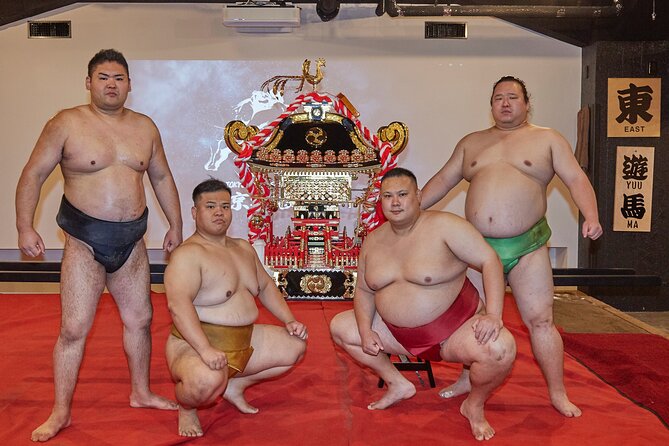
You should think of this as an interactive sumo theater experience, not a morning at a professional tournament. The program presents sumo in short, understandable sections, with wrestlers demonstrating techniques and the MC explaining what is happening.
That distinction matters. If your dream is to watch long bouts between ranked wrestlers, this is not a substitute for a tournament at Ryogoku Kokugikan. If you want to understand the basics, see sumo at close range, and take part yourself, the format makes much more sense.
The show is designed for people who may know little about sumo. The commentary is given in English and Japanese, and the explanations cover winning techniques, basic principles, and selected elements of sumo culture. The tone is light and entertaining rather than academic.
The strongest part is the access. You are not watching tiny figures from a distant upper tier. All seats face the ring, and the front-row option brings you even closer. The wrestlers interact with the audience, which turns the event from a simple demonstration into something you can remember and talk about afterward.
More Sumo Experiences in Tokyo
- Tokyo: Sumo Show Experience with Chicken Hot Pot and a Photo
★ 4.8 · 6,678 reviews - Tokyo: Sumo Show and Dining Experience
★ 4.8 · 2,742 reviews - the SUMO show
★ 5.0 · 1,960 reviews
Entering the Ginza venue
The official address is 1-3-1 Ginza, Chuo City, Tokyo, at Ginza INZ 1 B1, postal code 104-0061. The practical problem is that this location can be hard to find, especially if you arrive with only the address shown on your ticket.
Search Google Maps for TokyoSumoFestival. That exact search is more useful than entering the full street address, which has reportedly pointed to the wrong place. The venue is near public transportation, but allow extra time to get your bearings in the Ginza area.
This is one of those Tokyo arrival problems that can sour an otherwise good outing. You may need to ask for help, and the venue name may not be familiar to nearby people. A working data connection is useful, since one person had trouble calling for help without mobile data.
The experience lasts about two hours. Since the program includes several demonstrations and participation sections, it is long enough to feel like a proper outing without taking over your whole day in Tokyo. The central Ginza location also makes it easy to pair with shopping, department stores, or another nearby activity.
Watching the demonstrations up close
The program begins with demonstrations described as morning sumo training, followed by explanations of techniques used to win. Expect an introduction to the physical language of sumo rather than a full training session at a stable.
The wrestlers show how movement, balance, timing, and force work together. You learn why a bout can be decided quickly and why a wrestler does not simply rely on size. For someone new to the sport, this is useful context before the live action begins.
The wrestlers then perform live sumo scenes. The action is presented for entertainment, so there is humor and audience interaction alongside the athletic display. That mixture works well for families and groups who want an upbeat cultural activity.
Still, the amount of actual wrestling is limited. The program may feature only two wrestlers and a small number of rounds. If you expect bout after bout, you may find the host’s explanations and transitions take too much time.
I would approach this part with the right expectations: you are seeing a demonstration with educational commentary. The wrestlers are the reason to book, but the show depends heavily on the MC to connect each section.
Learning shiko, salt throwing, and body collision
The audience activities are what separate this from a standard stage show. You can try the sumo stomping exercise known as shiko, practice throwing salt, and learn the basic idea behind a sumo body collision.
Shiko is more than a dramatic foot stomp. It is one of the sport’s recognizable movements, and trying it gives you a small sense of the control and strength required. Do not expect to perform it like a professional wrestler. The point is to participate and understand the movement.
Salt throwing adds visual fun. In sumo, salt is connected with purification before a bout, and the action is instantly recognizable even if you have never watched a match. Here, it becomes an easy activity for the whole audience.
The body-collision practice is likely to be the most memorable for people selected to take part. You get a physical taste of how a wrestler uses stance and momentum. It is presented as a controlled activity, but the size and strength difference can still make the moment feel dramatic.
These sections work especially well with children and mixed-age groups. Even if you do not get into the ring, you can still watch other participants and learn the point of each exercise.
A completely different kind of day out in Tokyo:
- Mt Fuji and Hakone 1-Day Bus Tour Return by Bullet Train
★ 5.0 · 26,383 reviews - 1-Day Tokyo Bus Tour
★ 5.0 · 14,250 reviews - Tokyo: TOKYO SKYTREE® Admission ticket
★ 4.5 · 11,192 reviews - Tokyo: teamLab Planets TOKYO Digital Art Museum Entry Ticket
★ 4.6 · 9,779 reviews
The retired wrestler challenge and the lottery
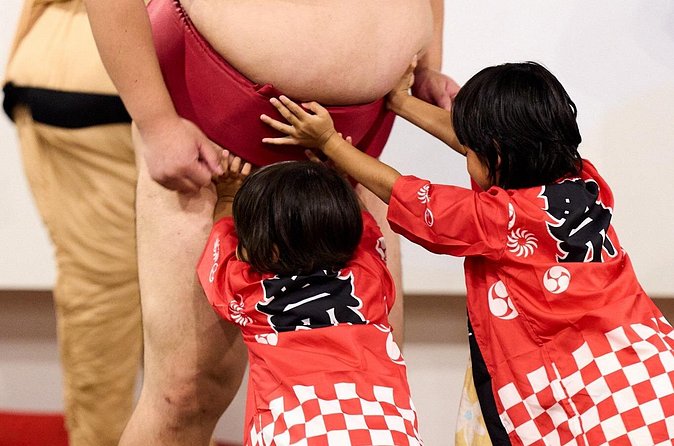
The headline activity is the chance to challenge a retired sumo wrestler. This is the part many people will picture when they consider booking, but participation is limited.
If the number of applicants is high, selection may be handled by lottery. That means you should not buy a ticket assuming you will wrestle. You are paying for the complete show, with the challenge as a possible extra.
The lottery system is fairer than choosing only the most eager or athletic person, but it also creates uncertainty. If you are traveling with children who are desperate to participate, explain beforehand that watching may be the outcome.
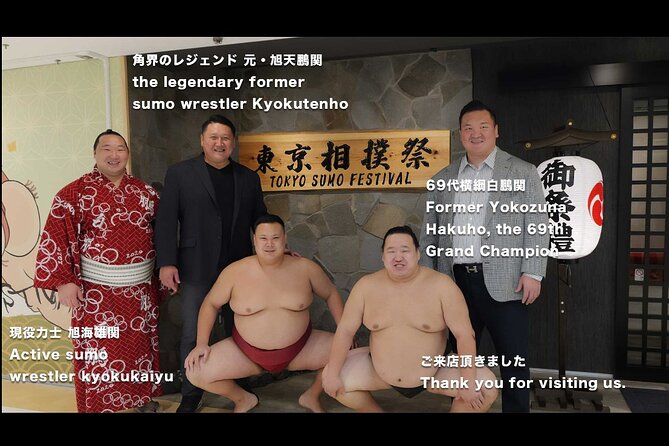
Even without entering the ring, the interaction remains a major strength. The wrestlers engage with the audience, and the atmosphere is friendly rather than intimidating. Some people have particularly praised wrestlers named Yuma and Kaito for their humor and energy.
The challenge is also a good reminder that sumo is not just about winning a match. The show gives you a chance to see the physical size, ritual, and personality of the wrestlers at close range.
The mikoshi finale adds a second Japanese tradition
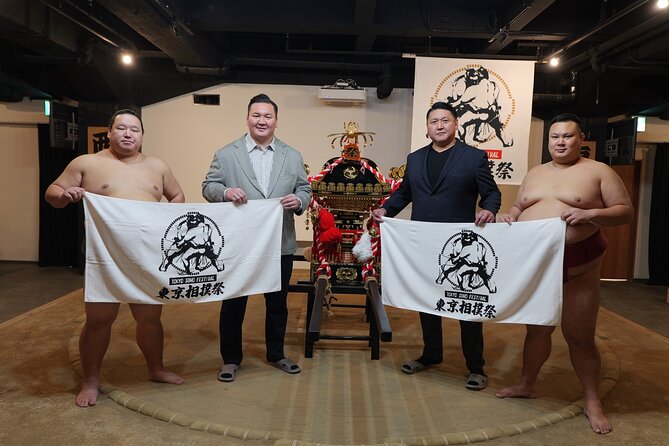
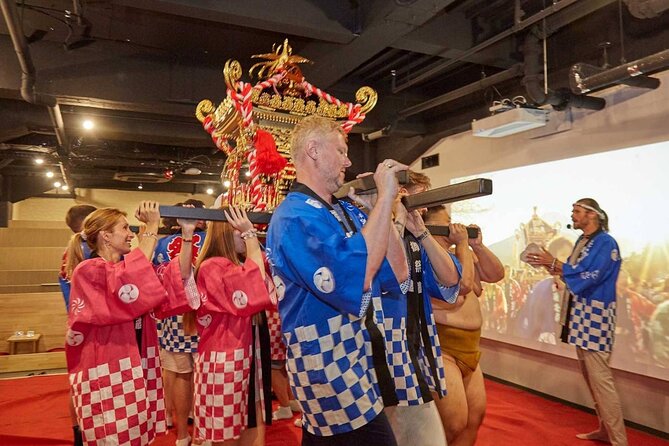
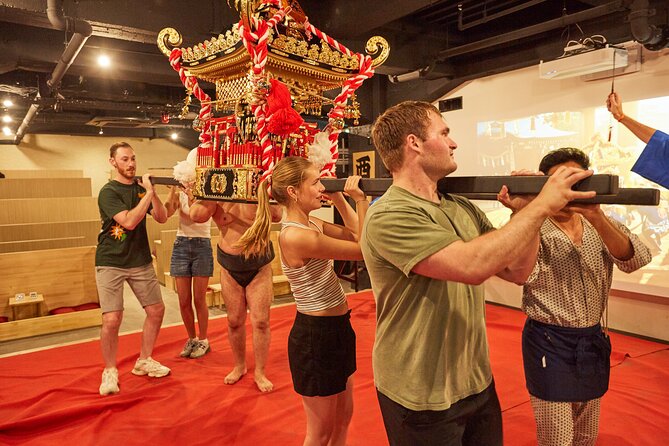
After the sumo portion, you get to experience a mikoshi, the portable shrine carried during Japanese festivals. This is a sharp change of pace from the ring, but it gives the program another traditional element.
You may find this especially interesting if you want more than a sports presentation. Carrying or handling a mikoshi is a group activity linked with festival energy and cooperation. It is not the same as attending a neighborhood festival, but it introduces a custom you might otherwise miss during a short Tokyo stay.
This section will not appeal equally to everyone. If you came mainly for wrestling, the shrine activity may feel like an unnecessary extension. The best way to see it is as part of the show’s larger aim: giving you a compact introduction to several Japanese traditions in one location.
Food, drinks, and the extra cost
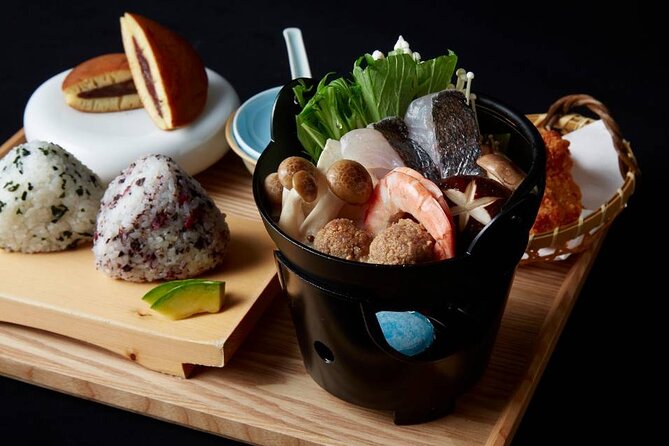
A welcome drink is included. Meals are not, although food and additional dishes are available for purchase at the venue.
Food feedback is mixed. Some diners find the portions filling and the dishes delicious, while others consider the food ordinary or mediocre. A few people have found the appetizers tasty and reasonably priced, and one account describes the meal as a strong part of the experience.
I would treat food as a convenience rather than the main reason to book. You can order something if you want to make the event a complete meal, but do not assume the ticket price includes lunch or dinner. Check the current food options and prices when you arrive.
At $63.41 per person, the ticket is not a bargain cultural performance, but it is also not an outrageous price for a two-hour, English-friendly activity in central Tokyo. The value depends on how much you enjoy participation.
If you only want to watch wrestling, the limited number of bouts may make the price feel high. If you appreciate the demonstrations, ring activities, commentary, close seating, and mikoshi experience, the package becomes easier to justify.
For a family, the shared entertainment can work well because children and adults can participate at different levels. For a solo visitor, the lottery and audience activities may feel less predictable, but the clear explanations make it easy to follow.
How the hosting affects the experience
The MC is central to the program. The English is widely praised for being clear, and the explanations help people who have never seen sumo understand what the wrestlers are doing.
A strong host can make a cultural show approachable. The MC explains techniques, keeps the audience involved, and provides the links between demonstrations. This is a real advantage for international visitors who do not speak Japanese.
The same feature can also become the show’s weakest point. Some people find the host talks too much or explains the sport in an overly simple, tourist-focused way. If you prefer action with little narration, the pacing may test your patience.
I would describe the tone as friendly, informative, and sometimes silly. That suits families and first-time sumo fans better than serious sports followers. The show is trying to make the sport accessible, not recreate the quiet intensity of a professional match.
Who will enjoy this most
I would recommend the experience to:
- Families looking for an activity that keeps children involved
- First-time visitors curious about sumo but unable to attend a tournament
- Adults who prefer cultural activities with participation
- Groups of friends who enjoy light entertainment and photo opportunities
- People visiting Tokyo outside the main sumo competition schedule
You may want to skip it if you already know sumo well and mainly want high-level competition. You may also be disappointed if a long, formal explanation or a small number of wrestling rounds sounds frustrating.
The show works best when you arrive ready to laugh, learn a few movements, and possibly volunteer. It is less successful if you treat it as a substitute for a full tournament.
Practical tips for a smoother visit
Use the exact Google Maps search TokyoSumoFestival before leaving your hotel. The address may not lead you directly to the entrance, and the basement location at Ginza INZ 1 can take extra effort to identify.
Keep your mobile ticket available. Confirmation is sent within 48 hours of booking, subject to availability, so check your booking details before setting out.
Arrive with realistic expectations about participation. You can try shiko, salt throwing, and body-collision practice, but the retired wrestler challenge may be decided by lottery.
If you want to sit as close as possible, consider the front-row upgrade. Standard seating still offers a close view, so the upgrade is a choice for extra intensity rather than a requirement.
Plan for food as an add-on. You receive a welcome drink, but meals cost extra. If you are particular about lunch or dinner, eat beforehand or view the venue food as optional.
The experience is near public transportation, and most people can participate. The supplied information does not list a detailed accessibility plan, so contact the provider if you have a specific mobility or participation concern.
Free cancellation is available up to 24 hours before the start time. Changes or cancellations inside that window are not accepted for a refund, and the cut-off follows Tokyo local time.
Should you book the Tokyo Ginza sumo experience?
Book it if you want close-up sumo, friendly English commentary, and real audience participation in a compact two-hour program. The wrestlers, ring activities, and mikoshi segment give you more to do than a simple stage performance.
I would not book it expecting a professional tournament or many full bouts. The host does a lot of talking, the action can be limited, and the wrestler challenge is not guaranteed. Food is another variable, since it costs extra and the quality may not match everyone’s expectations.
For most first-time visitors, especially families, this is a fun way to meet sumo outside tournament season. Search carefully for the venue, allow time to find the basement entrance, and judge the $63.41 price as payment for an interactive cultural show, not just a wrestling match.
FAQ
How long does the Tokyo Ginza sumo experience last?
The experience lasts approximately two hours.
Where is the sumo show held?
It is held at Tokyo Sumo Festival, at Ginza INZ 1 B1, 1-3-1 Ginza, Chuo City, Tokyo, Japan, postal code 104-0061.
How can I find the venue on Google Maps?
Search for TokyoSumoFestival on Google Maps. The street address provided for the venue may not point to the correct location.
Is the sumo show in English?
The MC provides commentary in English and Japanese. The English explanations are intended to help first-time viewers follow the demonstrations and activities.
Can I wrestle with a sumo wrestler?
You may have the chance to challenge a retired sumo wrestler. Participation is limited, and a lottery may be used if many people apply.
What activities are included?
The ticket includes the entertainment sumo show, commentary, shiko sumo stomping, salt throwing, sumo body-collision practice, and the chance to enter the wrestler challenge lottery. A mikoshi experience is also part of the program.
Is food included in the ticket?
Meals are not included. Food is available for an additional charge, and a welcome drink is included.
Are all seats close to the ring?
All seats provide a close-up view of the sumo ring. A front-row upgrade is available for an even closer experience.
Can I cancel for a full refund?
You can cancel for a full refund up to 24 hours before the experience start time. Cancellations or changes made less than 24 hours before the start time are not accepted for a refund.
Just added around Tokyo
- Tokyo 6hr Instagram Highlights Private Tour with Licensed Guide★ 5.0 · 38 reviews
- Tokyo Small Group Tour with Guide★ 4.5 · 38 reviews
- Tokyo Sumo Experience with Live Show & Audience Challenge★ 5.0 · 38 reviews
- Very popular in Harajuku♡Animal petting zoo★ 4.6 · 39 reviews
- Japanese Food Cooking Class in Asakusa, Tokyo★ 5.0 · 39 reviews
- Ramen Making from Scratch with Tokyo Mom(Vegan Option Available)★ 5.0 · 39 reviews
- Tokyo: Kimono Rental inside Shinjuku Gyoen National Garden★ 4.9 · 39 reviews
- Tokyo JDM Night: 600hp C63s AMG Edition 1 (Private)★ 4.9 · 39 reviews
Sumo Experiences, compared.
Tokyo Shinjuku Sumo Show & Experience with Photo
Read our review →
Sumo Show & Experience w/ Optional Kimono & Hot Pot
Read our review →
Authentic Sumo Experience in Tokyo: Enter the Sanctuary
Read our review →
Luxury Sumo Show Experience & Japanese cuisine & Drink
Read our review →Browse the lists this tour appears in