
Reviewed · HISTORICAL TOURS
Asakusa: A Big-picture History Walk to Know Japan
History gets easier beside the Sumida. This two-hour Asakusa walk turns temples, gates, and a shopping street into a clear story about Japan’s past. I like the way it connects the Edo shogunate’s isolation with the arrival of Admiral Perry, and I like the simple explanations of Buddhism and Shinto. The main caution is that the tour covers a lot of ideas in a short time.
I also like the human touch supplied by guides such as Choco, Sachi, Amy, and Kay, who have been praised for keeping children and adults involved. The price is fair for a certified English-speaking guide and snack tastings, though the subject matter suits curious adults more than anyone seeking a relaxed stroll with little commentary.
In This Review
- Key points to know before you book
- Why this Asakusa walk is different from ordinary sightseeing
- Starting beside the Sumida River at Asakusa Pier
- Getting the religious basics at the Culture Tourist Information Center
- Reading the dragons at Kaminarimon
- Walking Nakamise with art, symbols, and a snack
- Hōzōmon and the surprising medieval comparison
- Sensō-ji, where history and worship meet
- Asakusa Shrine and a thousand years of shared worship
- The guides make the difference
- Is $58 a fair price for two hours?
- Practical advice for a smoother walk
- Who should book this Asakusa history walk?
- Should you book it?
- FAQ
- How long does the Asakusa history walk last?
- What language is the tour conducted in?
- Where does the tour meet?
- Which places are included on the walk?
- Are snacks included?
- Are hotel transfers included?
- Can children join the tour?
- What happens if the tour is cancelled because of low participation?
Key points to know before you book
- A two-hour history lesson with real places attached: You learn about Japan’s isolation, religious life, art, and opening to the world while standing at the places that shaped Asakusa.
- The Sumida River sets the big picture: The opening stop explains Japan’s restricted foreign trade, Dutch connections, Perry’s arrival, and the old gun batteries near present-day Odaiba.
- Buddhism and Shinto become easier to understand: The tour explains how prayer, symbols, shrines, and temples differ, then shows how the two traditions shared space for centuries.
- Ukiyo-e connects Asakusa to European art: At Nakamise Shopping Street, you learn how Japanese woodblock prints reached Europe and influenced Impressionist painters.
- Guides use visual aids and practical examples: Amy brought printed images to make complex points easier to follow, while Sachi and Choco were praised for keeping younger participants engaged.
- Expect moderate walking and a steady flow of information: Comfortable shoes, water, and weather-ready clothing will make the experience much more enjoyable.
Why this Asakusa walk is different from ordinary sightseeing
Asakusa is easy to visit on your own. You can walk through Kaminarimon, browse Nakamise, take photographs of Sensō-ji, and make a quick visit to Asakusa Shrine. The trouble is that the sights can become a string of attractive objects with no clear connection.
This tour gives those places a framework. The guide uses each stop to explain a larger question: How did Japan move from a tightly controlled feudal society to a modern international nation? How did Buddhism and Shinto share influence? Why did Japanese art affect painters in Europe?
That approach is the tour’s main strength. You are not simply told that Sensō-ji is old. You are shown how it fits into Japan’s religious story. You do not only hear that Nakamise is historic. You learn how its Buddhist symbols and woodblock-print culture connect Japan to the wider world.
The walk covers a small part of Asakusa, which is useful if you have limited time. It also means the guide can keep returning to the central story rather than sending you across a large area. The tradeoff is pace. You will hear a great deal in 120 minutes, so this is best for someone who enjoys asking questions and making connections.
More History Tours in Tokyo
- Tokyo: Imperial Palace and Shogun Historical Walking Tour
★ 5.0 · 2,251 reviews - Tokyo: Imperial Palace Japanese History Walking Tour
★ 4.9 · 987 reviews - Yanaka Walking Tour: Historic and Traditional District of Tokyo
★ 5.0 · 530 reviews
Starting beside the Sumida River at Asakusa Pier
The first major stop is Tokyo Cruise Asakusa Pier, where the guide uses the Sumida River to explain Japan’s period of restricted contact with foreign countries. This is a smart opening because the river gives you a physical setting for a subject that can otherwise feel abstract.
You learn why the Edo shogunate limited foreign trade for more than 200 years, and why the Netherlands was allowed to maintain commercial links when other European powers were shut out. The explanation then moves to Admiral Perry and the pressure that forced Japan to reopen.
The guide also connects this earlier period with modern Tokyo. You hear about the former gun batteries near Odaiba and the Statue of Liberty replica facing the Pacific. These details help you see that Japan’s relationship with the outside world was not a simple switch from closed to open. It involved defense, commerce, foreign pressure, and selective contact.
I would pay close attention here, because this first explanation gives you the historical map for the rest of the walk. The river stop lasts about 15 minutes, so do not expect a full lecture on the Edo period. Instead, you get the essential outline before moving into Asakusa’s religious and artistic center.
Getting the religious basics at the Culture Tourist Information Center
The next 15-minute stop is the Asakusa Culture Tourist Information Center. Here, the guide introduces Buddhism and Shinto before you enter the temple and shrine area.
This is one of the most useful parts of the experience for first-time visitors to Japan. Religious sites can be confusing when you do not know what separates a Buddhist temple from a Shinto shrine. The guide explains the difference in plain language and gives you a foundation for understanding the rituals and buildings ahead.
The value is practical as well as historical. Once you know what kind of place you are entering, the customs at the gates and worship areas make more sense. You can also better understand why one religious tradition does not simply replace the other.
This introduction is short, so it will not answer every question about Japanese religion. It does, however, prepare you to look at Asakusa with more care instead of treating every red gate, statue, and offering box as part of one general tradition.
Reading the dragons at Kaminarimon
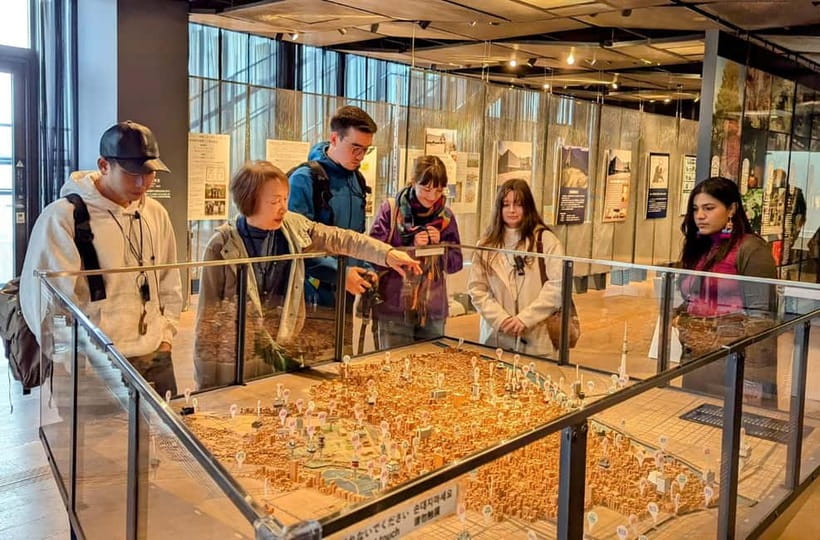
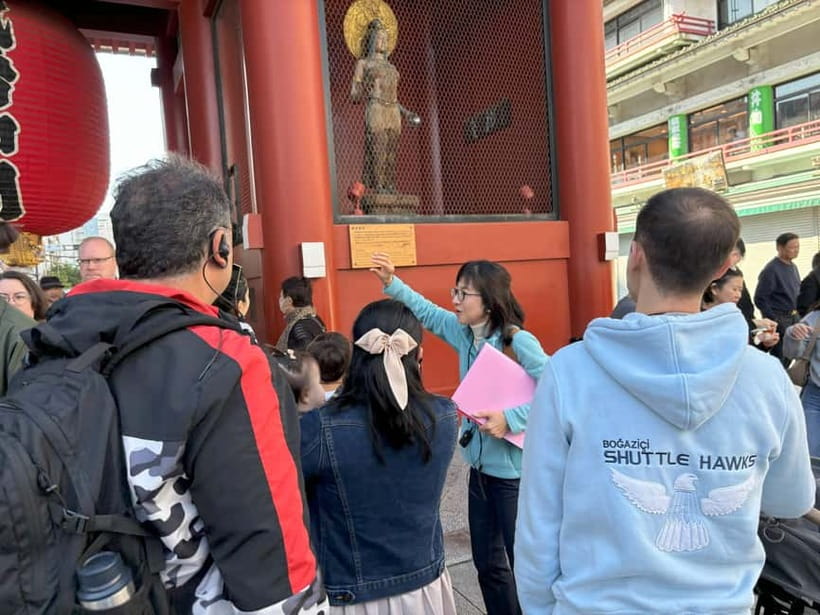
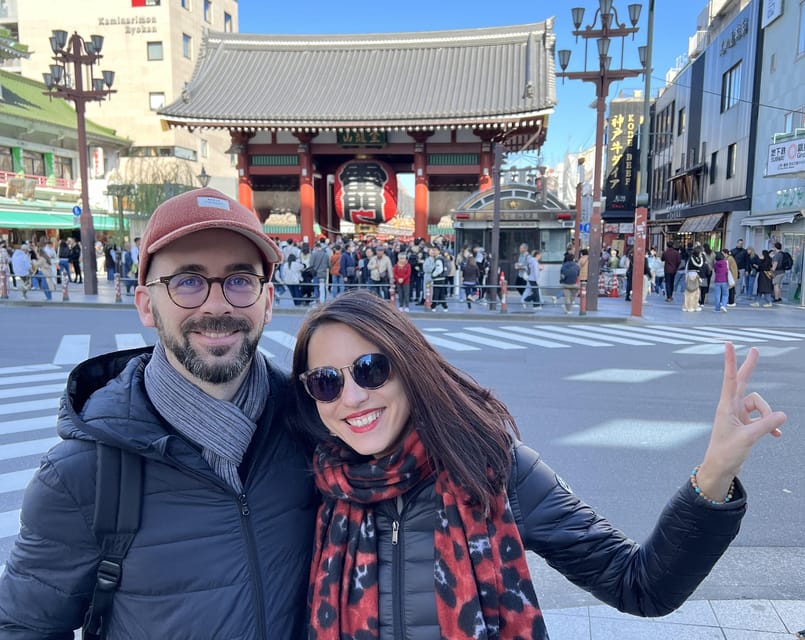
Kaminarimon, or Thunder Gate, is one of Tokyo’s most recognizable entrances. Its enormous red lantern makes it a natural photo stop, but the tour asks you to look beyond the famous image.
The guide explains the difference between Japanese and Western dragons. In many European stories, the dragon is a dangerous enemy to defeat. The Japanese dragon has a different role and symbolism, which gives you a useful example of how similar-looking figures can carry opposite meanings across cultures.
This kind of comparison is a good fit for the whole tour. Instead of presenting Japanese customs as mysterious or exotic, the guide places them beside ideas you may already recognize. That makes the material easier to remember.
Kaminarimon receives about 15 minutes. Crowds and photographs may compete for your attention, especially around this famous entrance, so a headset can help. Headsets are provided for groups of three or more. One person did find that the earpiece created some echo at times, so sound quality may vary, but the equipment is intended to let you hear the guide clearly in a busy setting.
More Walking Tours in Tokyo
- Tokyo Tsukiji Fish Market Food and Culture Walking Tour
★ 5.0 · 3,184 reviews - Tokyo: Shinjuku Local Bar and Izakaya Guided Walking Tour
★ 4.9 · 1,794 reviews - Tokyo: Tsukiji Fish Market Food and Walking tour
★ 5.0 · 1,724 reviews - Tokyo: Asakusa Walking Tour with Sensoji Temple Visit
★ 4.8 · 1,583 reviews
Walking Nakamise with art, symbols, and a snack
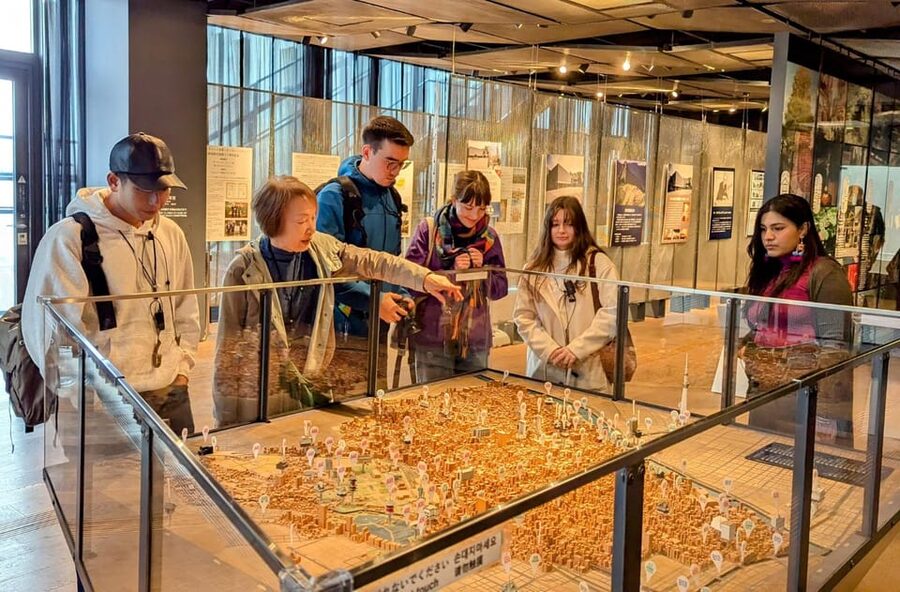
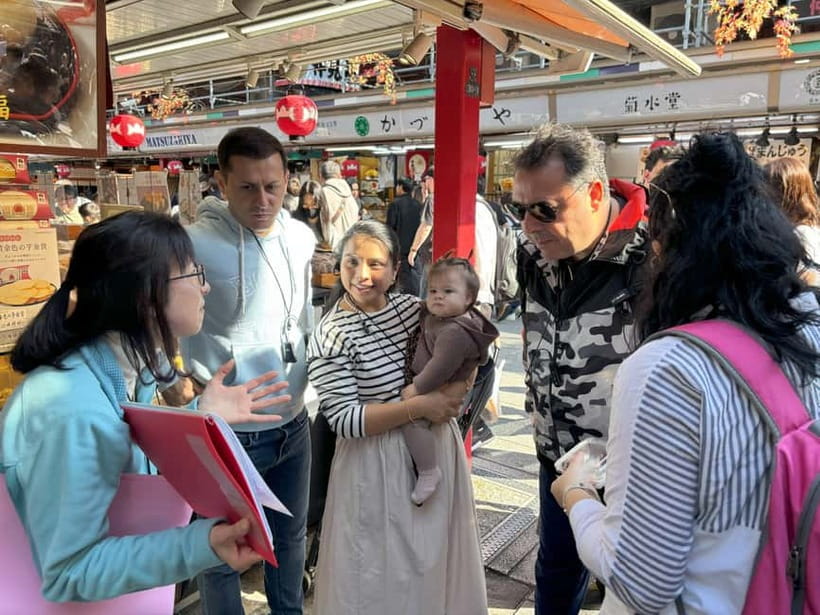
Nakamise Shopping Street receives the longest section of the walk, about 30 minutes. This is the tour’s busiest and most varied stop, with shops leading toward Sensō-ji and a steady stream of people moving in both directions.
The guide discusses Buddhist symbols such as the vajra, also called tokko, and explains how these objects and images carry meaning. You also learn about ukiyo-e woodblock prints, one of the most important links between Japanese culture and European art.
The story of ukiyo-e is especially worthwhile. Japanese woodblock prints unexpectedly reached Europe and influenced Impressionist painters. That connection gives you a new way to look at the shop displays and historic streets around Asakusa. The art is not presented as something isolated inside Japan. It becomes part of a larger exchange of ideas.
Traditional snack tastings are included, adding a small food element to the historical walk. The information provided does not specify the snack or number of tastings, so you should treat this as a modest extra rather than a meal.
Nakamise is also where you may feel the limits of a guided group. You will have time to see the shops, but this is not a dedicated shopping excursion. If you want souvenirs, note what catches your eye and return later. The guide’s job here is to explain the street’s religious and artistic setting, not to give you a long browsing break.
Hōzōmon and the surprising medieval comparison
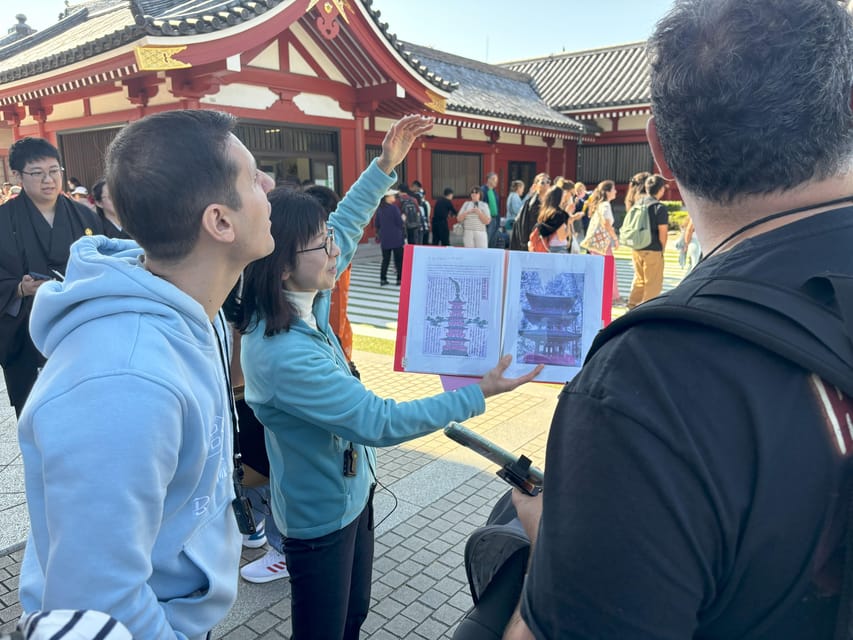
At Hōzōmon Gate, the guide makes one of the tour’s more unexpected comparisons: people in Japan and Europe shared surprisingly similar ways of thinking 1,000 years ago.
This is a useful correction to the idea that Japan and Europe developed in completely separate mental worlds. The comparison helps you notice common human concerns in medieval societies, even when customs, religions, and political systems differed.
The stop lasts about 15 minutes. It is not likely to provide every detail behind the comparison, but it gives you a fresh question to carry into Sensō-ji: how much of the medieval world was truly different, and how much was shaped by similar needs and beliefs?
That kind of question is what makes this tour more than a list of dates. The guide repeatedly uses Asakusa’s structures to help you compare cultures rather than placing Japan in a category of its own.
Sensō-ji, where history and worship meet
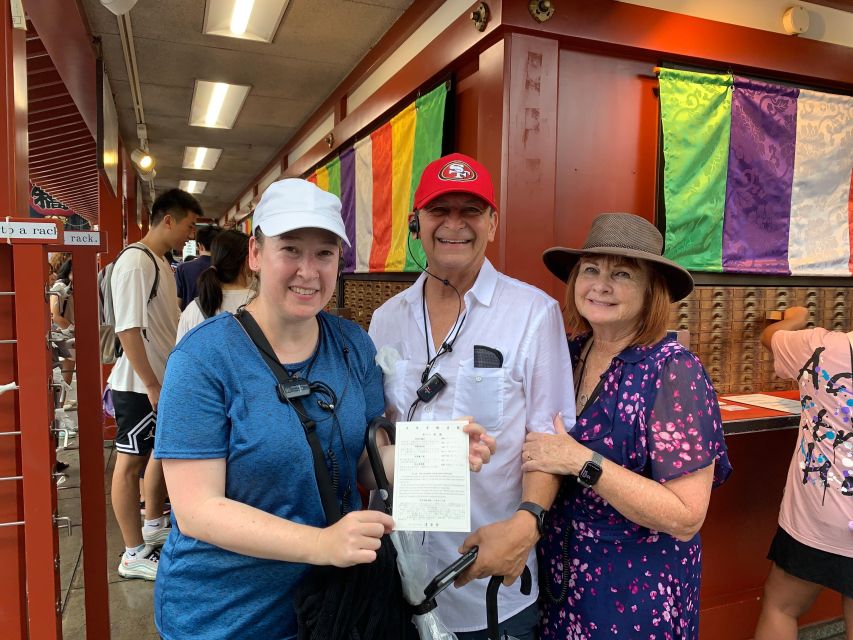
Sensō-ji is Japan’s oldest Buddhist temple and the central religious sight on this walk. You receive about 15 minutes of explanation here, including another comparison between medieval Japan and Europe.
The guide also explains how prayer differs in Buddhism and Shinto. This matters because many first-time visitors see people bowing, clapping, offering coins, or lighting incense and are unsure what each action means. A clear explanation lets you watch respectfully and understand the setting.
Sensō-ji can be crowded, so the guide’s commentary is important. You may not have a quiet atmosphere for reflection, but you will have a chance to understand what you are seeing. The temple is not treated simply as a beautiful backdrop. It becomes a place where religious practice, local tradition, and long historical change come together.
Families can manage this portion well if children are interested in stories and visual details. An eight-year-old was especially engaged by the fortune-telling activity near the temple entrance, and Choco was praised for keeping both adults and children involved. Children under six may join without charge, though the tour’s historical focus is aimed more at adults.
Asakusa Shrine and a thousand years of shared worship
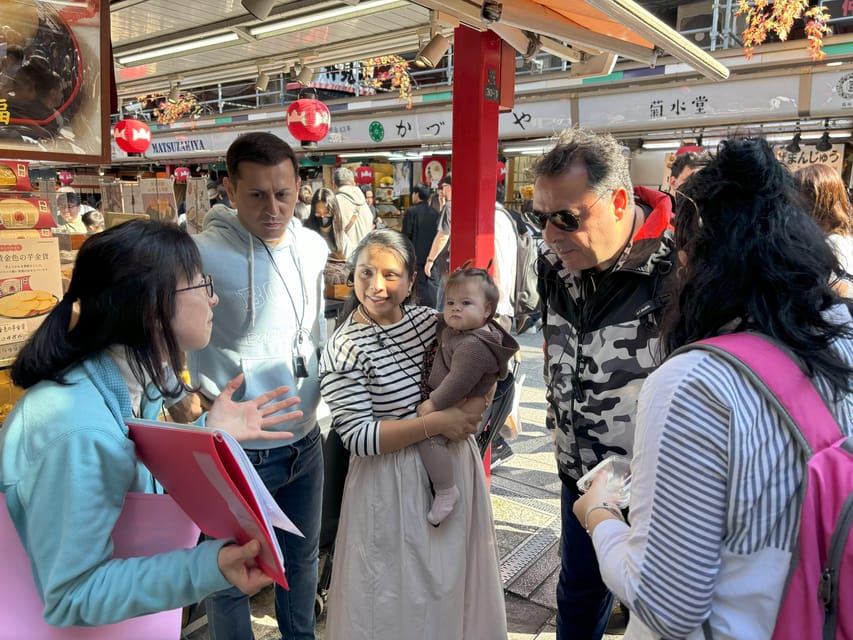
The final stop is Asakusa Shrine, another 15-minute explanation that gives the tour its strongest ending. The shrine and Sensō-ji Buddhist temple share the same grounds and a long history of coexistence.
For many people, this is the moment when the earlier explanations click. Buddhism and Shinto are not presented as two sealed boxes with no contact. In Asakusa, they have shared place, practice, and local history for more than 1,000 years.
The guide explains why this arrangement developed and how worshippers can move through a space containing both traditions. That is a valuable lesson for anyone planning to visit other Japanese temples and shrines. You leave with a better sense of why religious boundaries in Japan can be more layered than a simple either-or choice.
Ending here also keeps the tour focused. Rather than finishing with another shopping stop, the walk closes on the question that has run through the entire experience: how have different traditions lived beside one another over time?
The guides make the difference
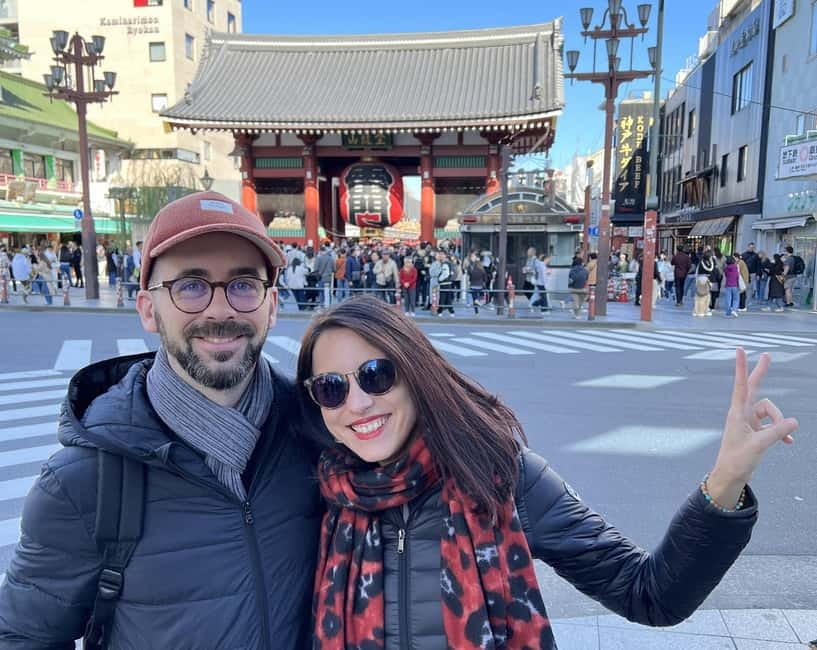
The tour is offered in English with a live guide and English audio support. The most praised part of the experience is the guiding itself, especially the friendly, clear style of people such as Choco, Sachi, Amy, Yasu, Yoko, and Kay.
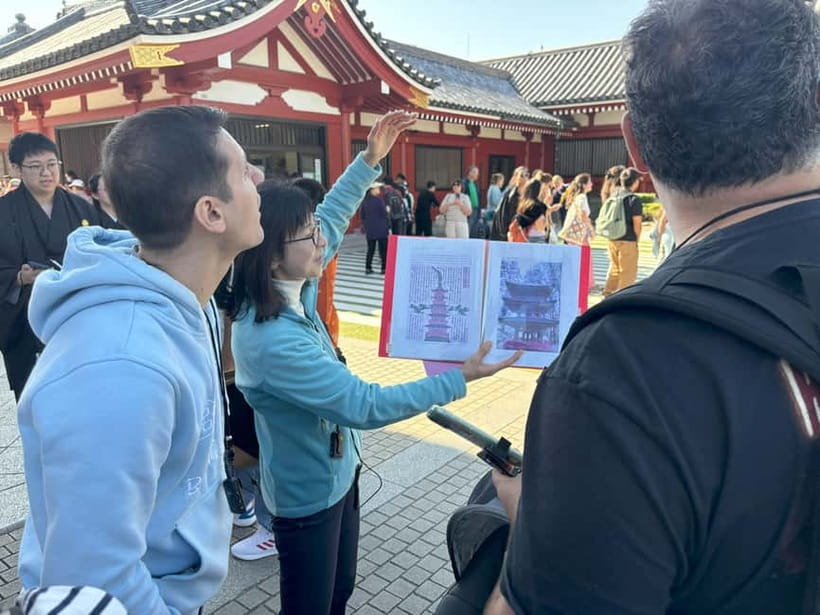
Sachi was praised for explaining Asakusa’s spiritual history while keeping a 13-year-old interested. Choco received similar praise for engaging adults and children, with the fortune-telling activity adding a memorable moment for a younger participant. Amy used printed images to make her explanations easier to grasp, which is particularly useful when discussing art, symbols, or historical buildings.
Kay, a Tokyo local, was also appreciated for explaining how to approach shrines respectfully. That practical advice can be as useful as the formal history, since small points of behavior are easy to miss when you explore alone.
The guide you receive will depend on the date, so you cannot count on a particular person. Still, the repeated praise for warm delivery, clear explanations, and good responses to questions is a positive sign. One criticism concerned echo from the headsets. If you have trouble hearing, tell the guide promptly rather than waiting until the tour is over.
Is $58 a fair price for two hours?
At $58 per person, this is not the cheapest way to see Asakusa. You can walk through the same district without paying for a guide. The value comes from the interpretation: the river becomes part of the story of Japan’s opening, the dragons become a lesson in cultural difference, and Nakamise becomes a link between Buddhist imagery and European painting.
The included traditional snack tastings and headsets add modest value. The main purchase is the guide’s time and structure. If you already know Japanese history and religious customs, you may find the tour too introductory. If you are visiting Japan for the first time, the explanations can save you from seeing famous sights without understanding them.
The two-hour length is also a strength. You get a focused introduction without giving up an entire morning or afternoon. One four-star assessment considered the tour a fair general overview for the price, which is a sensible way to view it. This is not an advanced university seminar. It is a well-organized orientation to Asakusa and several major themes in Japanese history.
Practical advice for a smoother walk
Meet in front of the Burger King beside Exit 4 of Asakusa subway station on the Ginza Line, station G19. Step outside Exit 4 rather than waiting inside the station, and allow enough time to find the street-level meeting point.
Wear comfortable shoes. The walk involves a moderate amount of walking, and the route includes several outdoor stops. Bring water and dress for the weather because the tour runs in rain or shine.
The walk is in English. It does not include hotel pickup or drop-off, so you handle your own transport to and from Asakusa. If you have mobility concerns, contact the supplier before booking. The activity is listed as unsuitable for people with mobility impairments, though the operator will try to accommodate individual needs when contacted in advance.
The tour may be cancelled if the minimum number of participants is not reached. You should receive notice at least 24 hours before departure and a full refund in that situation. You can also cancel up to 24 hours in advance for a full refund, and the reserve-now, pay-later option keeps your plans flexible.
Who should book this Asakusa history walk?
I would recommend it to first-time visitors who want a clear introduction to Japan rather than a simple photo walk. It is also a good choice if you are interested in religion, world art, or the way Japan moved from restricted foreign contact into global trade.
Families can enjoy it when children are old enough to follow a historical story. The positive experiences with eight- and 13-year-olds suggest that a lively guide can hold younger attention, but the tour is still built around explanation rather than games.
I would skip it if you want a slow, quiet visit to Sensō-ji, a long shopping break, or a specialist lecture on one narrow period. The route is compact, the pace is steady, and the guide has many subjects to cover.
Should you book it?
Book this tour if you want Asakusa to make sense. For $58, you receive two hours of guided walking, historical context, religious explanations, English audio support, and traditional snack tastings. The strongest reason to go is the way the stops connect: river trade, foreign pressure, temples, shrines, symbols, and art all become parts of one story.
Skip it only if you are already comfortable explaining Buddhism, Shinto, the Edo period, and ukiyo-e to yourself. For most first-time visitors, this is a practical and engaging way to get the big picture before exploring Asakusa on your own.
FAQ
How long does the Asakusa history walk last?
The tour lasts two hours.
What language is the tour conducted in?
The live tour guide and audio guide are in English.
Where does the tour meet?
The meeting point is in front of the Burger King restaurant next to Exit 4 of Asakusa subway station, G19, on the Ginza Line.
Which places are included on the walk?
The route includes Tokyo Cruise Asakusa Pier, Asakusa Culture Tourist Information Center, Kaminarimon, Nakamise Shopping Street, Hōzōmon Gate, Sensō-ji Temple, and Asakusa Shrine.
Are snacks included?
Yes. Traditional snack tastings are included.
Are hotel transfers included?
No. Hotel pickup and drop-off are not included.
Can children join the tour?
Yes. Children under six may join without charge. The tour is recommended more for adults because of its historical focus, but families are welcome.
What happens if the tour is cancelled because of low participation?
The tour will not operate unless the minimum number of participants is reached. The operator will notify you at least 24 hours before cancellation, and participants will receive a full refund.
Just added around Tokyo
- Tokyo 6hr Instagram Highlights Private Tour with Licensed Guide★ 5.0 · 38 reviews
- Tokyo Small Group Tour with Guide★ 4.5 · 38 reviews
- Tokyo Sumo Experience with Live Show & Audience Challenge★ 5.0 · 38 reviews
- Japanese Food Cooking Class in Asakusa, Tokyo★ 5.0 · 39 reviews
- Very popular in Harajuku♡Animal petting zoo★ 4.6 · 39 reviews
- Ramen Making from Scratch with Tokyo Mom(Vegan Option Available)★ 5.0 · 39 reviews
- Tokyo JDM Night: 600hp C63s AMG Edition 1 (Private)★ 4.9 · 39 reviews
- Tokyo: Kimono Rental inside Shinjuku Gyoen National Garden★ 4.9 · 39 reviews
Historical Tours, compared.
World Heritage Shirakawa-go and Experience Tours from Kanazawa
Read our review →
Imperial Palace and Shogun Historical Walking Tour
Read our review →
World Heritage Kyoto & Nara Uji Authentic Matcha Experience
Read our review →
Kyoto Gion: 2-Hour Geisha Culture & History Walking Tour
Read our review →
World Heritage Shirakawa-go Morning Guided Tour
Read our review →
Hiroshima Historical Walking Tour – Why A-Bomb was Dropped
Read our review →
Hiroshima Peace (Heiwa) Walking Tour at World Heritage Sites
Read our review →Browse the lists this tour appears in