
Reviewed · RAMEN & NOODLE TOURS
Asakusa Classic Ramen & Crispy Gyoza Cooking Class
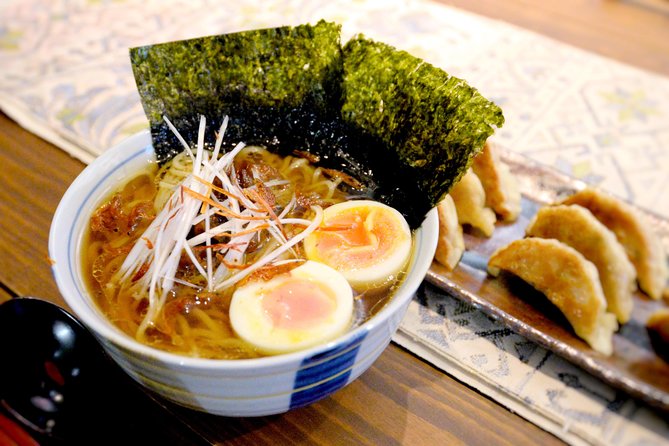
Good ramen begins long before the first slurp. In Tokyo’s Asakusa area, this three-hour cooking class gives you a practical look at how ramen broth, toppings, and gyoza come together, with plenty of time to cook and eat your work. I especially like the small maximum group of eight, which keeps the class personal, and the fact that you learn two Japanese staples in one sitting instead of spending half a day on only one dish.
Masa leads the cooking, while Junko helps with the class and takes photos along the way. Their clear English, humor, and patient instruction are repeatedly praised, making this a good fit for complete beginners as well as keen home cooks. You also leave with recipes, aprons and utensils are provided, and all ingredients are natural, with no MSG or artificial additives.
The main consideration is the ramen itself. You learn the broth and base, but the long cooking process means Masa handles much of the stock preparation while you assemble the finished bowl. Gyoza offers more hands-on work from start to finish, so people seeking a fully scratch-cooked ramen broth may find the class more instructional than fully participatory.
In This Review
- Key points to know before booking
- Finding the class in Asakusa’s kitchen district
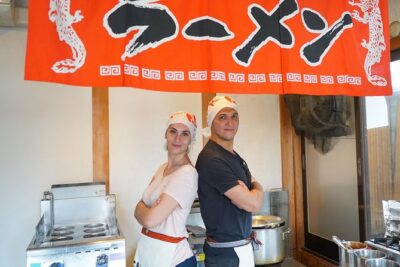
- Masa and Junko set the tone
- Building the ramen from base to bowl
- Folding gyoza and getting the bottoms crisp
- A full meal at the end
- What you really learn, and what you do not
- Is $167.81 a fair price?
- Who should book this cooking class?
- Should you book the Asakusa ramen class?
- FAQ
- How long does the cooking class last?
- Where does the class start?
- What dishes do you make?
- Is the class suitable for vegetarians or vegans?
- Are cooking equipment and aprons provided?
- How many people can join the class?
- Do you receive the recipes afterward?
- Is the booking refundable?
Key points to know before booking
- Two Japanese favorites in three hours: Prepare shoyu-style chicken ramen and crispy gyoza in the same class.
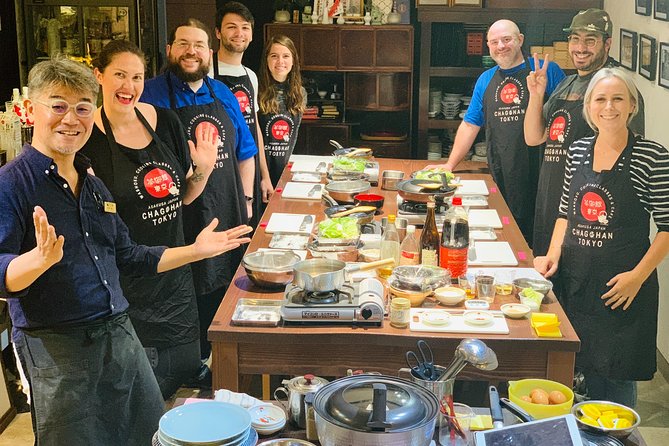
- A genuinely small class: The maximum group size is eight, with morning and afternoon sessions available.
- Masa and Junko teach together: Expect clear demonstrations, cultural context, friendly humor, and help at every stage.
- Gyoza is the most hands-on part: You cut vegetables, mix the filling, fold dumplings, and learn how to crisp them properly.
- You eat a full meal: The finished serving includes roughly eight gyoza and a full bowl of ramen.
- Recipes come home with you: The digital instructions make it possible to try the dishes again in your own kitchen.
Finding the class in Asakusa’s kitchen district
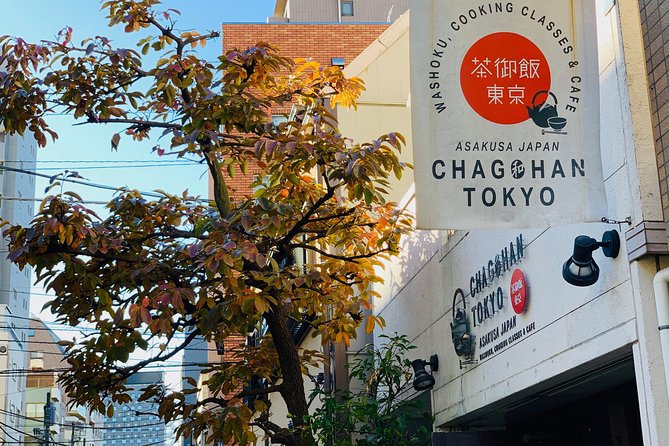
The class begins at 茶御飯東京 Chagohan Tokyo, at 2-chome 17-13 Nishiasakusa, Taito City, Tokyo 111-0035. It sits near public transportation and in the Kappabashi area, Tokyo’s famous district for kitchenware and cooking supplies.
That setting adds something useful. You are not simply attending a demonstration in an anonymous meeting room. You are cooking in a proper, organized kitchen in an area closely tied to food and restaurant culture. If you have time before or after the class, Kappabashi is a natural place to browse Japanese knives, bowls, chopsticks, cooking tools, and restaurant equipment.
The address is worth checking carefully before setting out. The activity starts and ends at the same place, so you do not need to arrange transport between separate parts of the experience. The morning class runs from 10 a.m. to 1 p.m., and the afternoon session runs from 3 p.m. to 6 p.m. The stated duration is approximate, so leave a little flexibility around the end.
More Cooking Classes in Tokyo
- Ramen & Gyoza Cooking Class in Tokyo with Local Supermarket Visit
★ 5.0 · 823 reviews - Tokyo: Easy Ramen Cooking Experience in Kabukicho, Shinjuku
★ 4.6 · 321 reviews - Ramen and Sushi Cooking Class with Sake Pairing Set in Tokyo
★ 5.0 · 291 reviews
Masa and Junko set the tone
The hosts are a large part of the appeal. Masa teaches the cooking and introduces the food, while Junko assists and records photos and videos during the session. That combination lets you focus on chopping, folding, and listening instead of trying to document every step yourself.
Masa’s English is described as excellent, and his instructions are clear enough for people who do not cook much at home. He also brings in the background of ramen and Japanese cuisine, so the class is not just a sequence of kitchen commands. You learn why the ingredients matter and how the dishes fit into Japanese food culture.
The tone seems friendly rather than formal. Masa and Junko are often described as funny, warm, and relaxed, but the kitchen itself is clean and well organized. That balance matters. You get the comfort of a couple-run class without feeling that the process is improvised.
The small group size helps here. With no more than eight people, you should have room to ask questions and receive direct help. This is also why the class suits couples, families with older children, friends, and small company groups better than large organized tours.
Building the ramen from base to bowl
The ramen portion begins with an explanation of the base and broth. You learn about the components that create a flavorful shoyu ramen, along with the toppings and other pieces needed for the final bowl.
There are many steps in a proper stock, and the three-hour format cannot give every participant full control over each one. Masa carries out much of the longer broth work while explaining what he is doing. You then take part in the preparation and assemble your own bowl at the end.
That is an important distinction. You are not simply watching a chef cook and then receiving a bowl. You learn the method, handle parts of the preparation, and finish the dish yourself. But if your goal is to stand over a pot and make a complete stock entirely from scratch, you should set expectations accordingly.
The reward comes at assembly. You arrange the noodles, broth, and toppings into a bowl that looks as good as it tastes. Several people find the final ramen surprisingly impressive, especially because they began with basic instruction rather than advanced cooking skills.
The recipe helps extend the value of this section. Ramen is not a quick weeknight dish in the same way as folding dumplings, but the detailed instructions give you a road map. You may need patience and access to the right ingredients at home, yet you leave understanding far more than simply which bowl of ramen to order in Tokyo.
Folding gyoza and getting the bottoms crisp
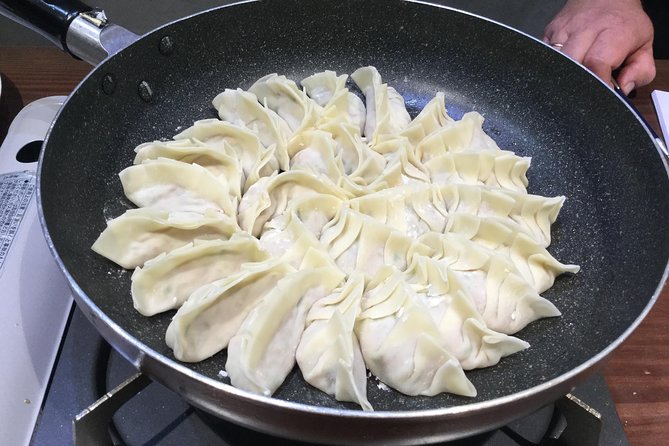
Gyoza is where the class becomes especially tactile. You cut the vegetables using Japanese kitchen techniques, prepare the filling, place it into wrappers, and fold the dumplings by hand.
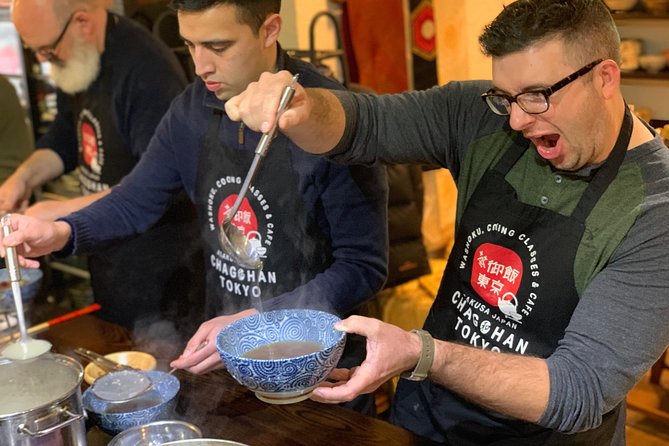
This part works well for beginners because the task is broken into small stages. Masa demonstrates the technique, then guides you through it. If your first dumpling looks a little lopsided, that is part of the fun. The goal is not a cooking-school audition. It is learning a repeatable method that you can use again.
The class also explains how to get the outside crisp while keeping the inside juicy. That contrast is the heart of good gyoza, and it gives the lesson a clear practical payoff. You are not just making dumplings that taste fine. You are learning the pan-cooking step that creates the crunchy base.
Each participant receives around eight gyoza, along with a full bowl of chicken ramen. That is a substantial meal, not a token tasting. Plan your appetite accordingly, particularly if you book the morning class and have a major lunch reservation later.
For home cooks, gyoza may be the most useful takeaway. The folding technique is approachable, and the recipes are designed to be repeated. One person who felt less certain about making ramen still felt confident about preparing gyoza independently. That is a fair assessment of the class: dumplings are the skill you can likely put to work first.
More Ramen Tours in Tokyo
- Eat and Drink Like a Local: Tokyo Ueno Food Tour-Taverns&Ramen
★ 5.0 · 957 reviews - Tokyo: Ramen Tasting Tour with 6 Mini Bowls of Ramen
★ 4.9 · 432 reviews - Professional Ramen & Gyoza with Ramen Chef in a restaurant!
★ 5.0 · 223 reviews - Shibuya: Ramen Dojo Tokyo | Make All 3 (Tonkotsu/Shoyu/Miso)
★ 5.0 · 214 reviews
A full meal at the end
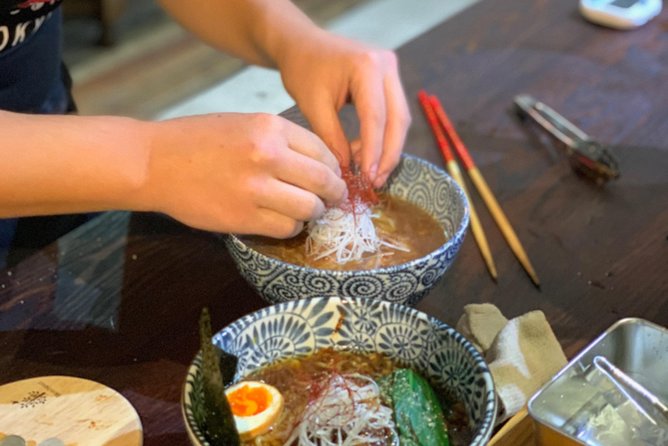
The final meal is the payoff for the work. You sit down with your own ramen and gyoza, rather than watching someone else enjoy the finished dishes.
That ending gives the class a satisfying rhythm. You hear the background, prepare the ingredients, cook with guidance, assemble the ramen, and then taste the result while the process is still fresh in your mind. You can immediately see which steps created the texture and flavor on your plate.
The food is also practical rather than overly decorative. The ramen is intended to be a proper bowl, and the gyoza portion is generous enough to make the meal feel complete. You are likely to leave full, so avoid treating this as a short snack stop between sightseeing appointments.
The dishes are made with natural ingredients and no MSG or artificial additives. That may matter to you, but it does not mean the food is bland. The class focuses on building flavor through the broth, base, filling, and cooking technique.
Vegetarian and vegan options are available with advance notice. You should mention your needs before booking or as soon as possible, rather than assuming the standard ingredients can be changed at the last moment.
What you really learn, and what you do not
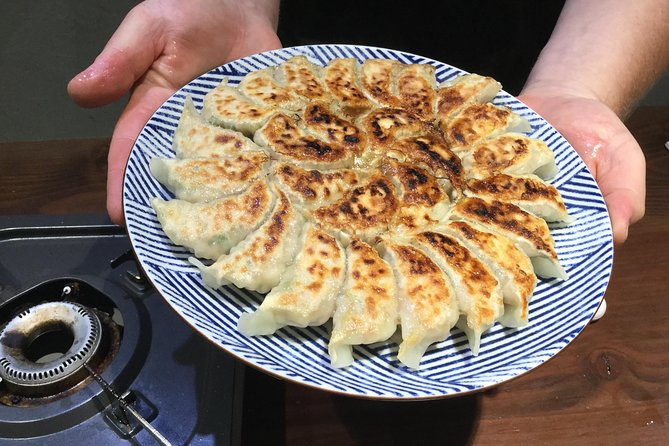
The best part of this class is its mix of explanation and action. You learn about ramen’s ingredients and background, practice cutting vegetables, form gyoza, and finish a ramen bowl. That is much more useful than a purely theatrical cooking show.
You also receive recipes after the class. This is valuable because ramen has enough stages that you may not remember everything from a single demonstration. The written instructions give you a chance to recreate the dishes gradually at home.
Still, the class is not a professional ramen apprenticeship. The stock takes time, and some of that work is demonstrated rather than completed by every participant. The experience gives you a strong foundation and a clearer understanding of the process, but you may need practice before your home ramen matches the class version.
Knife work is part of the preparation. Families with older children can enjoy the class, but younger children may not be suited to a session that includes vegetable cutting. The available information does not specify a minimum age, so ask the provider if you are booking for young children.
Is $167.81 a fair price?
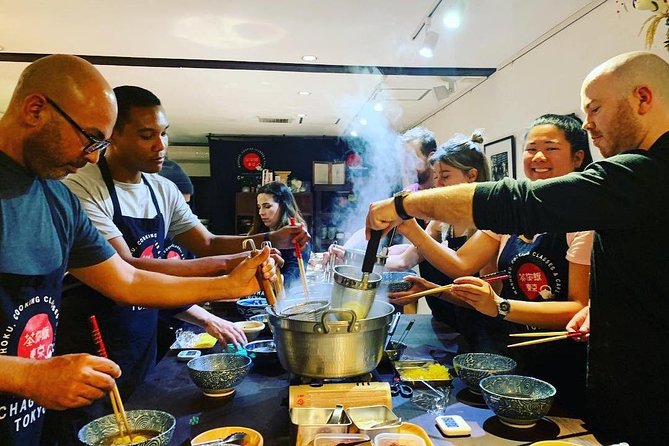
At $167.81 per person, this is not a cheap meal. You can eat ramen and gyoza in Tokyo for far less, and if you only want lunch, a restaurant is the obvious bargain.
The value comes from the instruction and the format. In about three hours, you receive a small-group lesson, an apron and utensils, ingredients, a full meal, cultural background, help from two hosts, and recipes to take home. You also avoid paying separately for two food experiences.
I think the price makes more sense for someone who treats cooking as part of the trip, not just as a way to fill up. The recipes and gyoza technique add value after you leave Tokyo. The photos and videos Junko takes are another pleasant extra, especially for families or couples who want a record of the activity without constantly reaching for a phone.
The class is also a good use of time if you already plan to visit Asakusa and Kappabashi. You can combine the cooking session with nearby sightseeing and shopping rather than crossing the city for a single meal.
Who should book this cooking class?
I would recommend it most strongly to:
- Ramen and gyoza fans who want to understand the food, not only eat it.
- First-time cooks who prefer calm, step-by-step instruction.
- Couples and friends looking for a shared activity in Tokyo.
- Families with older children who can manage supervised knife work.
- Home cooks who want a gyoza recipe they can realistically repeat.
- Small groups seeking a relaxed team activity.
It is less suitable if you want a completely hands-off food tour, a quick tasting, or a professional-level ramen workshop. It may also disappoint you if you expect to make every part of the broth personally from the first ingredient to the final simmer.
The timing deserves a little thought. The morning class leaves your afternoon open for Asakusa, Ueno, or other Tokyo plans. The afternoon class can follow morning sightseeing, but you will finish at 6 p.m. The class has a maximum of eight people, and it is commonly reserved several weeks ahead, with an average booking lead time of 27 days. If your dates are fixed, arrange it early.
The booking terms are strict: the experience is non-refundable and cannot be changed after booking. If the provider cancels because of poor weather or because the minimum number of participants is not reached, you are offered another date or experience, or a full refund. Confirmation is sent within 48 hours, subject to availability.
Should you book the Asakusa ramen class?
Yes, if you want a hands-on food lesson with a real meal at the end. Masa and Junko provide the warmth, structure, and clear help that make the class work for beginners. The combination of crispy gyoza and shoyu ramen gives you two useful Japanese dishes in one session, and the recipes keep the experience going after your Tokyo trip.
Go in knowing that gyoza is the most fully hands-on dish, while the longer ramen broth process is partly demonstrated and explained. If that tradeoff suits you, the class offers a memorable and practical afternoon or morning in Asakusa, with good food, personal instruction, and skills you can try again at home.
FAQ
How long does the cooking class last?
The class lasts approximately three hours. The morning session runs from 10 a.m. to 1 p.m., and the afternoon session runs from 3 p.m. to 6 p.m.
Where does the class start?
The class starts at 茶御飯東京 Chagohan Tokyo, located at 2-chome 17-13 Nishiasakusa, Taito City, Tokyo 111-0035. It ends back at the same meeting point.
What dishes do you make?
You make shoyu ramen, including the ramen base, broth elements, toppings, and final bowl assembly. You also prepare gyoza filling, fold the dumplings, and cook them until crisp outside.
Is the class suitable for vegetarians or vegans?
Vegetarian and vegan options are available with advance notice. Tell the provider about your dietary needs ahead of time.
Are cooking equipment and aprons provided?
Yes. An apron and utensils are provided, so you do not need to bring your own cooking equipment.
How many people can join the class?
The maximum group size is eight people. Groups of eight or more should contact the provider directly.
Do you receive the recipes afterward?
Yes. You receive recipes with detailed instructions so you can try making the ramen and gyoza at home.
Is the booking refundable?
No. The experience is non-refundable and cannot be changed for any reason. If the class is canceled because of poor weather or because the minimum number of participants is not reached, you are offered a different date or experience, or a full refund.
Just added around Tokyo
- Tokyo 6hr Instagram Highlights Private Tour with Licensed Guide★ 5.0 · 38 reviews
- Tokyo Small Group Tour with Guide★ 4.5 · 38 reviews
- Tokyo Sumo Experience with Live Show & Audience Challenge★ 5.0 · 38 reviews
- Very popular in Harajuku♡Animal petting zoo★ 4.6 · 39 reviews
- Japanese Food Cooking Class in Asakusa, Tokyo★ 5.0 · 39 reviews
- Ramen Making from Scratch with Tokyo Mom(Vegan Option Available)★ 5.0 · 39 reviews
- Tokyo: Kimono Rental inside Shinjuku Gyoen National Garden★ 4.9 · 39 reviews
- Tokyo JDM Night: 600hp C63s AMG Edition 1 (Private)★ 4.9 · 39 reviews
Ramen & Noodle Tours, compared.
Ramen Cooking Class at Ramen Factory in Kyoto
Read our review →
Eat and Drink Like a Local: Tokyo Ueno Food Tour-Taverns&Ramen
Read our review →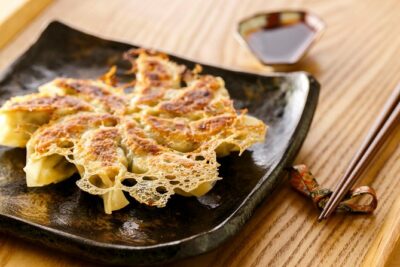
Ramen & Gyoza Cooking Class in Tokyo with Local Supermarket Visit
Read our review →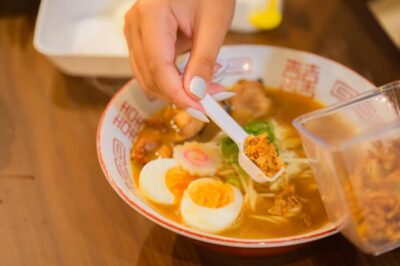
Ramen Cooking Class at a Ramen Factory with Souvenir
Read our review →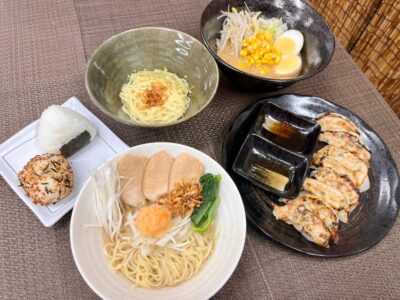
Five Must-See Highlights Walking Tour & Ramen Lunch
Read our review →
Browse the lists this tour appears in