
Reviewed · SUMO EXPERIENCES
Exclusive Sumo Morning Practice in Tokyo with Photo Opportunity
Sumo gets serious before breakfast. This two-hour visit near Tokyo Skytree gives you rare access to a working sumo stable, where you can watch wrestlers warm up, spar, and train at close range. I like the small group of no more than 10 people, and I like that the guide adds useful context instead of leaving you to guess what each ritual means. The photo opportunity with the wrestlers and stable leader is another strong point.
The main drawback is seating. Several tour companies may visit the stable, and places are assigned first come, first served. Arrive late and you may sit two or three rows back. Practice can also become repetitive after about an hour, so this suits you best if you want a focused look at sumo life rather than a full morning event.
In This Review
- Key points before you book
- Why a sumo practice is different from a tournament
- Meeting at Oshiage Station at 8:00 am
- Walking into the sumo stable
- What you will see during practice
- Photo time with the wrestlers
- How the small group affects the visit
- Is $99.10 a fair price?
- Practical advice for a comfortable visit
- Who will enjoy this most?
- Should you book this sumo morning practice?
- FAQ
- How long does the sumo practice experience last?
- Where does the tour begin?
- What time should I meet the guide?
- Where does the activity end?
- How many people can join the tour?
- Can I cancel for a full refund?
Key points before you book
- Morning access to a real sumo stable: Watch wrestlers train near Tokyo Skytree rather than seeing only a tournament bout.
- Small group format: The maximum group size is 10, which gives the guide room to explain what you are seeing.
- Photos are part of the experience: You may photograph the wrestlers and pose with them at the end.
- Meet at Oshiage Station at 8:00 am: The central meeting point is convenient, but the taxi stand location can take a moment to identify.
- Seating is first come, first served: The earlier you arrive, the better your chance of sitting near the front.
- Price and time: At $99.10 per person for about two hours, this is a specialty experience priced for access, not a long sightseeing tour.
Why a sumo practice is different from a tournament
A sumo tournament gives you polished ceremony, formal matches, a large crowd, and the thrill of competition. A morning practice shows you something less public: the daily work behind that spectacle.
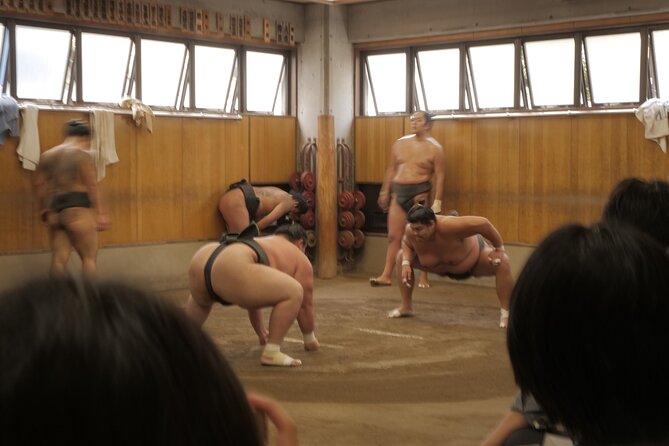
You watch wrestlers warm up and spar with one another while the stable follows its normal routine. The mood is serious. The practice is not arranged as a show for the group, and that matters. You are seeing concentration, repetition, physical effort, and strict attention to the activity itself.
The close distance helps. You can see how forceful the attacks are and how much control goes into each movement. One especially useful point from the experience is that many wrestlers are surprisingly young. Seeing them at close range makes the sport feel less like a distant cultural symbol and more like a demanding job carried out by young athletes.
The guide helps you read the scene. English-speaking guides such as Kentake, Yuki, and Hana have been praised for clear explanations, enthusiasm, and strong knowledge of sumo customs. Your guide may be someone else, but the intended format is the same: explain the background, point out what is happening, and help you understand the seriousness of the practice.
More Sumo Experiences in Tokyo
- Tokyo: Sumo Show Experience with Chicken Hot Pot and a Photo
★ 4.8 · 6,678 reviews - Tokyo: Sumo Show and Dining Experience
★ 4.8 · 2,742 reviews - the SUMO show
★ 5.0 · 1,960 reviews
Meeting at Oshiage Station at 8:00 am
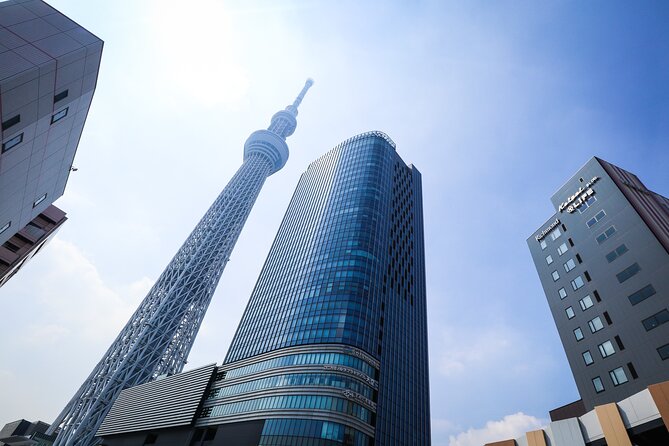
The tour begins at 8:00 am at the taxi stand in the station rotary at Oshiage Station, Tokyo 131-0045, Sumida City, Oshiage 1-chome 1. This is a practical starting point for a visit near Tokyo Skytree, and the activity ends back at the same meeting point.
Give yourself extra time to find the exact taxi stand. One person found the meeting place confusing at first, even though the location made sense once the group connected with the guide. That is a useful warning for a busy Tokyo morning. Check your mobile ticket before leaving and do not cut the timing close.
The early start is part of the appeal. You fit the visit into a sightseeing day without giving up a full afternoon. It also places you at the stable during morning practice, which is the reason to book this activity in the first place.
The tour is near public transportation, and most people can participate. The supplied details do not promise a private vehicle transfer, so plan to reach Oshiage Station on your own and meet the guide there.
Walking into the sumo stable
From Oshiage, the group visits one of the sumo stables around Tokyo Skytree. A stable is the place where wrestlers train and live within the sumo system. This is not a museum or a staged cultural demonstration. It is a working space with its own rules.
The atmosphere calls for quiet attention. You are there to watch, not wander around. All areas inside the stable are off-limits except the tatami, or straw flooring, areas designated for viewing. Respect that restriction. Do not step beyond the permitted space, reach into training areas, or assume that a good photo is worth moving closer.
That limit is not a flaw. It protects the practice and makes clear that you are entering someone else’s workplace. You get access, but not unlimited access. For many people, that boundary is part of what makes the visit feel genuine.
The guide’s role is particularly useful here. Without explanation, a practice session can look like a series of powerful collisions. With context, you can follow the warm-up, the bouts, the focus of the wrestlers, and the meaning behind the discipline. Yuki has been praised for explaining the background and philosophy carefully, while Kentake has been singled out for fluent English and detailed information about sumo history and the wrestlers.
What you will see during practice
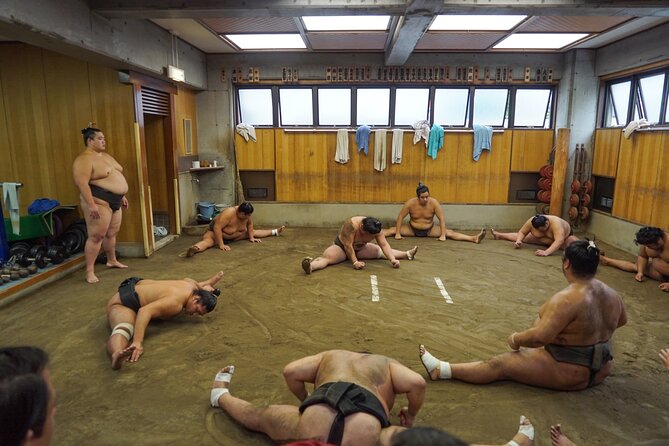
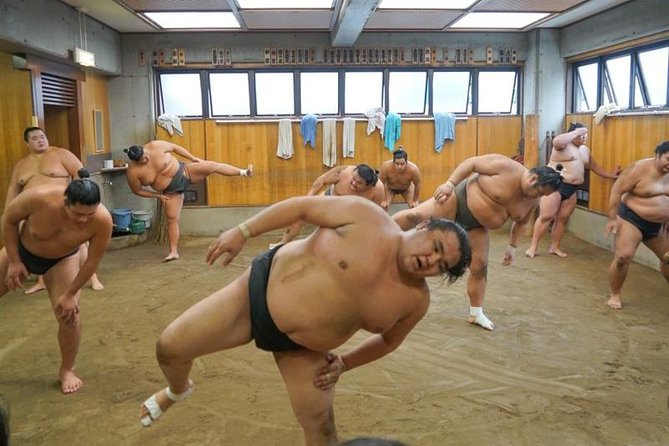
The exact practice sequence can vary, but the advertised experience includes warm-ups and sparring. You may see wrestlers work through repeated movements, prepare their bodies, and face one another in intense short bouts.
The attacks are a major part of the impact. You are close enough to appreciate the strength behind them, but the setting also shows restraint and control. The action may feel less theatrical than a tournament match, because the wrestlers are training for themselves and their stable rather than performing for a crowd.
This is a physical sport, and the practice can be intense. You may notice long stretches of repetition. One useful expectation is that about an hour can be enough for some people. The training may continue, but repeated bouts can begin to feel similar if you are hoping for constant variety.
I would not treat that as a reason to skip the tour. It is simply a question of what you value. If you want to study technique, watch the routine, and understand the work behind sumo, the repetition gives you a better sense of the discipline. If you need a fast-moving show, the pace may feel slow.
The most praised part of the experience is the chance to see the wrestlers up close while they are fully focused. Several people found the seriousness and engagement more impressive than expected. You are not just looking at large athletes in ceremonial clothing. You are seeing powerful competitors working hard, with no guarantee that every minute will produce a dramatic clash.
A completely different kind of day out in Tokyo:
- Mt Fuji and Hakone 1-Day Bus Tour Return by Bullet Train
★ 5.0 · 26,383 reviews - 1-Day Tokyo Bus Tour
★ 5.0 · 14,250 reviews - Tokyo: TOKYO SKYTREE® Admission ticket
★ 4.5 · 11,192 reviews - Tokyo: teamLab Planets TOKYO Digital Art Museum Entry Ticket
★ 4.6 · 9,779 reviews
Photo time with the wrestlers
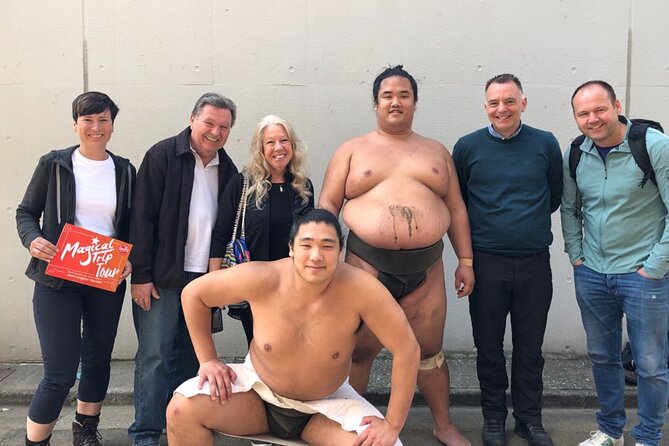
The experience includes the chance to photograph the wrestlers and pose for pictures with them. At the end, some groups have had the privilege of taking a photo with the whole stable and the stable leader, known as the sensei.
This is a valuable extra because sumo practice is difficult to photograph from outside. You get a record of the visit and a more personal connection after watching the formal training. Still, keep your expectations sensible. The photo opportunity does not mean unrestricted conversation or free movement around the stable. Follow the guide’s instructions and the stable’s rules.
Photography should never interrupt practice. Stay within the tatami viewing area, keep your movements controlled, and wait for the proper moment. A respectful photo is worth more than one taken by stepping somewhere forbidden.
The photos also help explain why this activity appeals to people who cannot attend a tournament. The tournament calendar does not always match your schedule, and tickets can be difficult to arrange. This morning visit gives you a close look at the sport even when no tournament is taking place.
How the small group affects the visit
The maximum group size is 10 people. That is small enough for the guide to speak directly to the group and answer questions without turning the visit into a lecture delivered to a crowd.
A small group also matters inside the stable. The viewing space is limited, and a large tour would feel intrusive. Ten people is still enough to affect seating, however, particularly when other tour companies are present. The first-come seating rule matters more than the advertised group size.
Arrive early and position yourself well when the group gathers. Late arrival may put you two or three rows from the front. You should still see the practice, but the close-range effect will be reduced, and photography may be harder.
This is one reason I would not schedule a rushed connection or a major morning appointment immediately afterward. The listed duration is about two hours, and the tour returns to the meeting point, but the pace of a live practice is not as predictable as a museum visit. Keep a little breathing room in your day.
Is $99.10 a fair price?
At $99.10 per person, this is not a bargain activity in the usual sightseeing sense. You are paying for access to a specialized setting, a guide, a small group, and a photo opportunity, all in about two hours.
The price makes more sense if sumo is high on your Tokyo list. A regular tournament gives you a bigger event, but tournament attendance involves its own schedule and ticket concerns. This visit works when you want a shorter, more direct introduction to the sport and its culture.
The value is also tied to the guide. A poorly explained practice could become a confusing hour of watching bodies collide. A strong guide gives you the framework to understand the customs, the wrestlers’ roles, and the seriousness of the training. The positive feedback about Hana, Kentake, and Yuki points to that interpretive side as a central part of the experience.
I would hesitate if you are only mildly curious about sumo or are comparing this with a full day of Tokyo sightseeing. Two hours is enough to make the visit manageable, but $99.10 is a lot for a short activity if the sport is not a priority.
Practical advice for a comfortable visit
Wear clothing that lets you sit comfortably on the tatami viewing area. The provided information does not specify a dress code, but you should treat the stable as a formal working place and dress neatly and respectfully.
Summer requires extra care. Tokyo can be very hot and humid, so bring water and wear a hat to reduce the risk of heat stroke while getting to and from the stable. The morning start helps, but it does not remove the heat.
Keep your mobile ticket ready and confirm the meeting point before setting out. The taxi stand is in the station rotary, and the exact location may not be obvious on a first visit. Since the tour ends back at the starting point, you can continue sightseeing around Oshiage afterward.
Remember the main conduct rule: only the tatami areas are open to the group. Do not enter other parts of the stable. You are receiving unusual access, and the best way to preserve that access is to follow the boundaries without argument.
Free cancellation is available if you cancel at least 24 hours before the 8:00 am start time. A cancellation made less than 24 hours before the start is not refunded, and late changes are not accepted. The cut-off uses Tokyo local time, so check the clock carefully if you are arranging plans from another time zone.
Who will enjoy this most?
I would recommend this to you if you have a real interest in Japanese sport, traditional culture, or the daily work behind a public spectacle. It also suits photographers who want a rare chance to see wrestlers at close range and take a group photo afterward.
It is a good fit for a short Tokyo itinerary. You meet early, spend about two hours at the stable, and return to Oshiage, leaving much of the day free. The location near Tokyo Skytree makes it easy to pair with sightseeing in the same part of the city, though the tour itself does not include a Skytree visit.
Families and mixed-interest groups may also find it useful, provided everyone can sit quietly and respect the stable’s rules. Most people can participate, according to the supplied details, but the experience requires attention and patience rather than constant movement.
I would think twice if you dislike sitting through repetition, need guaranteed front-row seating, or expect a tournament atmosphere. This is practice, not a match day. Its strength is access to the routine, not a packed arena or a long sequence of headline bouts.
Should you book this sumo morning practice?
Book it if you want a close, serious look at sumo and cannot fit a tournament into your Tokyo plans. The small group, strong guide explanations, intense practice, and photo opportunity give the visit real substance for a short morning activity.
Book early, arrive before 8:00 am, and accept that seating is not guaranteed near the front. If you understand that you are observing a working practice rather than attending a polished performance, the $99.10 price can be worthwhile.
Skip it if you want nonstop action or a cheaper cultural stop. Practice may become repetitive, and the stable’s rules limit where you can go. For the right audience, though, watching young wrestlers train at close range is far more memorable than a quick photo beside a sumo statue.
FAQ
How long does the sumo practice experience last?
The activity lasts approximately two hours.
Where does the tour begin?
The meeting point is the taxi stand in the station rotary at Oshiage Station in Sumida City, Tokyo.
What time should I meet the guide?
The stated start time is 8:00 am.
Where does the activity end?
The activity ends back at the Oshiage Station meeting point.
How many people can join the tour?
The group has a maximum of 10 travelers.
Can I cancel for a full refund?
Yes. You can cancel at least 24 hours before the experience start time for a full refund. Cancellations or changes made less than 24 hours before the start are not accepted or refunded.
Just added around Tokyo
- Tokyo 6hr Instagram Highlights Private Tour with Licensed Guide★ 5.0 · 38 reviews
- Tokyo Small Group Tour with Guide★ 4.5 · 38 reviews
- Tokyo Sumo Experience with Live Show & Audience Challenge★ 5.0 · 38 reviews
- Japanese Food Cooking Class in Asakusa, Tokyo★ 5.0 · 39 reviews
- Very popular in Harajuku♡Animal petting zoo★ 4.6 · 39 reviews
- Ramen Making from Scratch with Tokyo Mom(Vegan Option Available)★ 5.0 · 39 reviews
- Tokyo JDM Night: 600hp C63s AMG Edition 1 (Private)★ 4.9 · 39 reviews
- Tokyo: Kimono Rental inside Shinjuku Gyoen National Garden★ 4.9 · 39 reviews
Sumo Experiences, compared.
Tokyo Shinjuku Sumo Show & Experience with Photo
Read our review →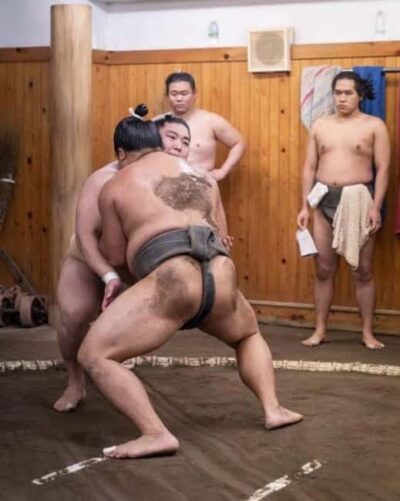
Sumo Show & Experience w/ Optional Kimono & Hot Pot
Read our review →
Authentic Sumo Experience in Tokyo: Enter the Sanctuary
Read our review →
Luxury Sumo Show Experience & Japanese cuisine & Drink
Read our review →Browse the lists this tour appears in