
Reviewed · SUMO EXPERIENCES
Experience the Sumo World in Tokyo
Sumo is best understood up close. This half-day outing takes you from Ueno Station to a working sumo stable, where you sit near the training area, watch the wrestlers practice, ask questions, and share a bowl of chanko nabe. I especially like the front-row view of serious morning training and the chance to try pushing a wrestler yourself. The main caution is the early meeting time and the need to follow the meeting instructions closely.
I also like that the experience explains the sport instead of treating it as a quick photo stop. Guides such as Ryoko, Haru, Tomer, Tammy, and Yassmine have been praised for explaining sumo rules, customs, history, and daily life in clear terms. The weak point is communication: one person missed most of the practice after not receiving the WhatsApp updates, so you should confirm the meeting details before bed.
In This Review
- Key Details Before You Book
- Why Morning Sumo Practice Is Worth Your Time
- From Ueno Station to Kunugiyama
- Inside the Asahiyama Stable
- The Push Test: Fun, But Not a Match
- Chanko Nabe, the Wrestlers’ Shared Meal
- Guides Make the Difference
- Price, Group Size, and Overall Value
- Communication and Arrival Tips
- Who Should Book This Experience?
- Should You Book the Sumo World Tour?
- FAQ
- Where does the sumo tour begin?
- How do you reach the sumo stable?
- Is the train fare included?
- Is lunch included?
- Can you take photographs?
- Can you try sumo wrestling?
- How long does the experience last?
Key Details Before You Book
- Sit close to an active morning practice: You watch rikishi train from chairs beside the practice area, rather than from distant arena seats.
- Try a real strength test: After practice, you may step forward and try to push one of the wrestlers. Your odds of moving him are, to put it mildly, limited.
- Eat chanko nabe at the stable: The meal is a traditional stew associated with the wrestlers’ diet, and vegetarian service is available if requested at least three days ahead.
- Ride two local trains with your guide: The route runs from Ueno to Matsudo, then onward to Kunugiyama, with round-trip rail costs of ¥1,060 not included.
- Expect a small-group cultural activity: The maximum group size is 26 people, though some departures may be smaller.
- Plan for an early start: You meet at the JR Information point in Ueno Station at 7:45 a.m., and the full outing lasts about four hours.
Why Morning Sumo Practice Is Worth Your Time
A tournament gives you spectacle. A stable visit gives you routine, discipline, and the physical work behind the spectacle.
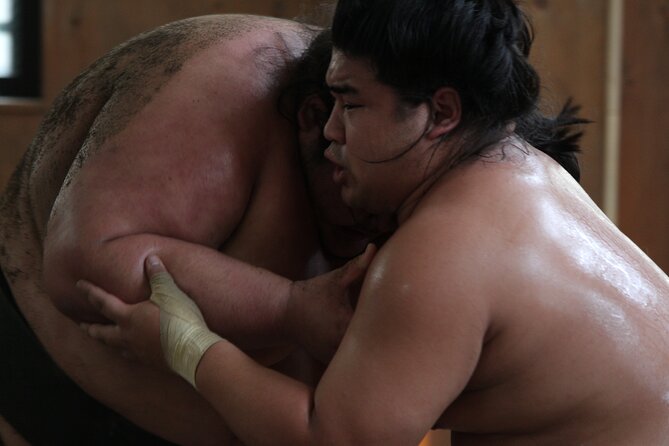
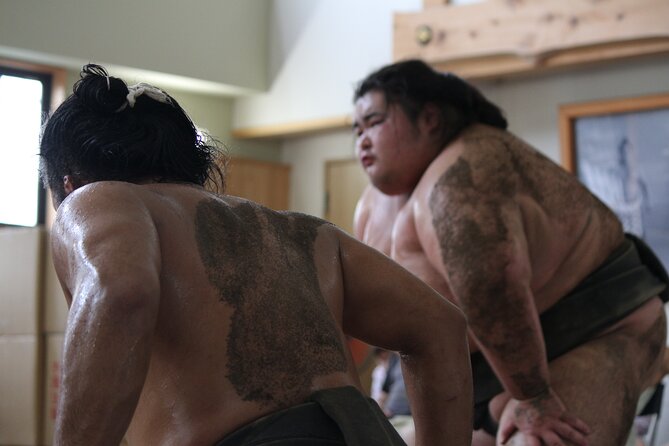
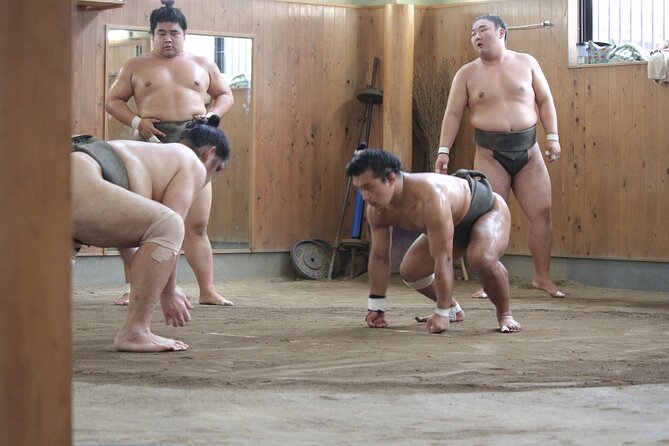
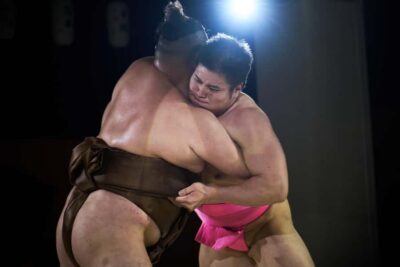
At the Asahiyama stable, you are there for practice rather than a staged performance. The wrestlers train in front of you, under the eye of the stablemaster, and you can see the exertion, balance, speed, and force that are easy to miss during a match in a large arena. The training can be intense and surprisingly technical. Size matters, but so do agility, timing, tactics, and footwork.
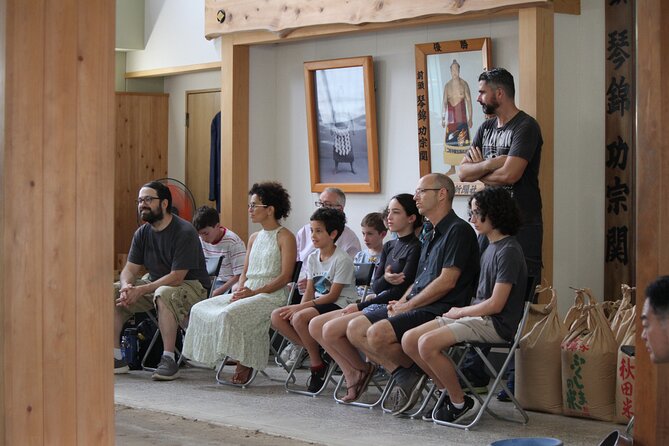
You sit on folding chairs beside the training space, which gives you a close view without requiring you to stand for the whole session. That is a practical advantage for families and anyone who prefers a settled viewing position. The experience is also suitable for children, with several accounts describing younger participants enjoying the push against a wrestler and the chance to ask questions afterward.
The length of the practice you see may vary. One family described watching about 45 minutes, while another group arrived late and saw only around 10 minutes of bouts followed by stretching. The stable’s schedule controls the morning, not the tour company, so arriving at the meeting point on time is essential.
More Sumo Experiences in Tokyo
- Tokyo: Sumo Show Experience with Chicken Hot Pot and a Photo
★ 4.8 · 6,678 reviews - Tokyo: Sumo Show and Dining Experience
★ 4.8 · 2,742 reviews - the SUMO show
★ 5.0 · 1,960 reviews
From Ueno Station to Kunugiyama
The meeting point is the JR Information area at Ueno Station, at 7:45 a.m. Ueno is a useful starting point because it has good public transport links, but large Japanese stations can still feel confusing when you are tired and moving early in the morning. Give yourself enough time to find the correct information point.
From Ueno, you ride about 19 minutes to Matsudo Station. The route then continues for roughly 15 minutes to Kunugiyama Station. The listed itinerary allows about five minutes at each station stop, so this is not a leisurely sightseeing ride with room for wandering off.
Your guide handles the route and can explain the sport during the train journey. Ryoko has been singled out for using the ride to explain sumo terms, rules, and customs, while Tomer has given a short history lesson on the way. That makes the transport time useful rather than dead time.
The round-trip train fare is separate from the tour price and totals ¥1,060, about $7. You should carry enough yen or be ready to pay the rail fare as directed by the guide. The tour ends back at the original Ueno meeting point, not at the stable.
Inside the Asahiyama Stable
The stable is the heart of the morning. This is a real training setting, not a museum display or a demonstration designed only for visitors.
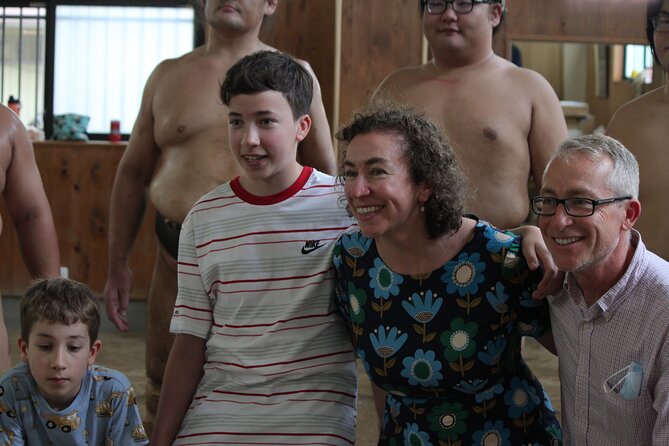
You watch the wrestlers work through practice at close range. The atmosphere is serious during the training, and basic respect matters. Keep your voice down, follow the guide’s instructions, and avoid assuming that you can interrupt the practice for a photograph. Photography is allowed at the end of the session, when the wrestlers come out for pictures and conversation.
That order is important. The best part of the visit is not simply seeing large athletes in traditional clothing. It is seeing the concentration and effort of the practice itself, then meeting the wrestlers once the formal training has finished.
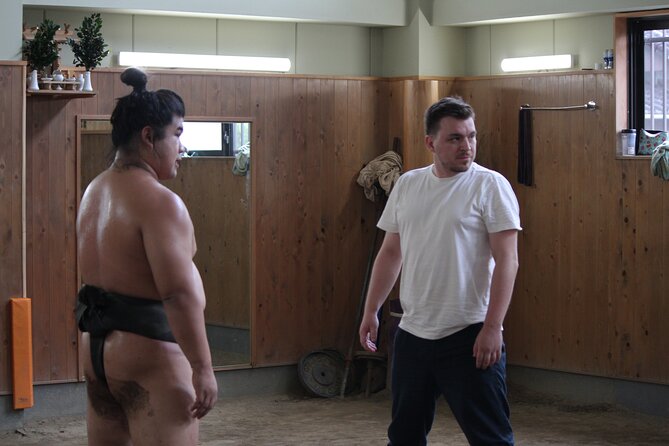
Several guides have helped translate questions and explain what the stablemaster is saying. After the practice, you may learn about individual wrestlers, their route into sumo, and aspects of their daily life. One particularly interesting detail from the accounts is the mention of the stable’s single foreign-born wrestler, a reminder that the sport has a strict and distinctive path into professional life.
The wrestlers are often described as friendly and gentle after training. That contrast is part of the charm. They can be powerful enough to feel immovable in the practice space, yet patient when children or adults attempt a friendly push.
The Push Test: Fun, But Not a Match
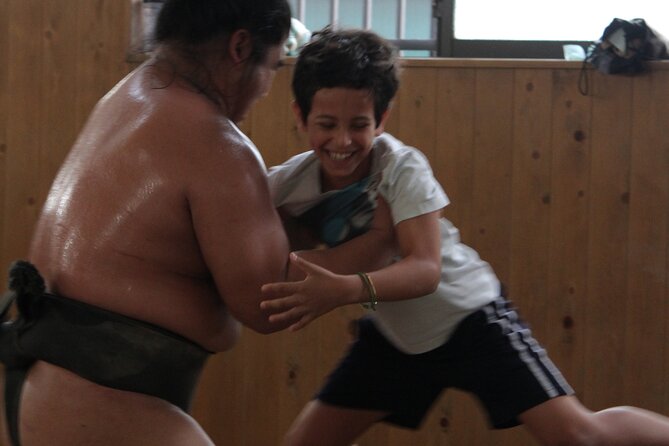
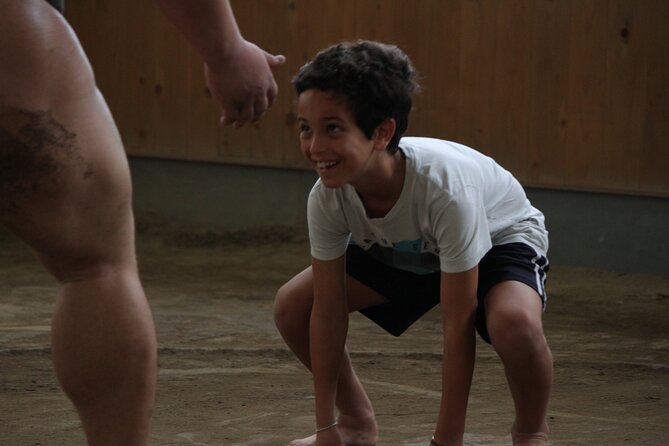
The hands-on portion is playful rather than competitive. You may step into the ring area and try to push one of the wrestlers. The point is not to defeat him, and you should expect the wrestler to control the exchange carefully.
For children, this can be the morning’s big moment. Adults may find it humbling in a funny way. One account joked about winning, followed by the more likely explanation that the wrestler simply allowed it. That is probably the correct mindset: enjoy the absurd difference in strength and take the photograph.
The activity also helps you understand sumo physically. Rules and rituals make more sense after you have felt how hard it is to shift a trained wrestler even a little. You are not just hearing about force, balance, and stance. You are getting a brief, safe sense of them.
Photography is included at the end, so you should have a chance to record the meeting. Still, this is a working stable, and the exact flow depends on the wrestlers’ schedule and the number of people in the group.
A completely different kind of day out in Tokyo:
- Mt Fuji and Hakone 1-Day Bus Tour Return by Bullet Train
★ 5.0 · 26,383 reviews - 1-Day Tokyo Bus Tour
★ 5.0 · 14,250 reviews - Tokyo: TOKYO SKYTREE® Admission ticket
★ 4.5 · 11,192 reviews - Tokyo: teamLab Planets TOKYO Digital Art Museum Entry Ticket
★ 4.6 · 9,779 reviews
Chanko Nabe, the Wrestlers’ Shared Meal
Lunch is included, with vegetarian service available if you notify the operator at least three days ahead. The meal centers on chanko nabe, a hearty stew linked with the sumo stable kitchen and designed to provide energy for athletes.
Descriptions of the meal include broth with vegetables and chicken. It has been praised as tasty, and one family called it a light broth and vegetable soup rather than a heavy feast. That is useful context: expect a traditional, nourishing meal, not a restaurant tasting menu.
Eating after the practice gives the morning a social finish. You have already watched the wrestlers work, tried the push, and taken photos. Sharing food helps connect the athletic side of sumo with the stable’s daily routine.
Vegetarians need to plan ahead. The option is available only with advance notice, specifically at least three days before the visit. If you have allergies or other dietary needs, the supplied information confirms only the vegetarian arrangement, so you should ask the operator directly before booking.
Guides Make the Difference
This experience depends heavily on the guide. The stable itself provides something rare, but a guide turns what you see into something you can understand.
Ryoko receives especially strong praise for her warmth, sumo explanations, and practical help beyond the scheduled activity. She has helped people with directions for the rest of their day in Tokyo. Haru has guided alongside Ryoko, and Tomer has been praised for translating stablemaster comments and answering questions during the journey.
Tammy and Yassmine have also led departures, with Yassmine noted for bringing personal stories and clear explanations to the customs and lifestyle of the rikishi. The repeated pattern is that guides are friendly, prepared, and willing to help with train navigation.
This matters because sumo has its own vocabulary and customs. Without explanation, you might see a series of powerful movements and miss the meaning behind them. With a guide, you can ask why the wrestlers perform a particular exercise, how a bout works, or what daily life at the stable involves.
The experience is in English based on the supplied descriptions and accounts, but the exact guide varies by departure. The quality of your morning may therefore depend on who is leading your group, though the available feedback is unusually consistent on this point.
Price, Group Size, and Overall Value
The listed price is $105.71 per person, plus about $7 for round-trip trains. That puts the practical total at roughly $113 per person before any other personal spending.
That is not a cheap morning, but the price includes access that is normally unavailable to the public, a guide, the training observation, the hands-on sumo activity, and lunch. You are paying for access to a working stable and for the interpretation that makes the visit meaningful. A standard tournament ticket can offer more bouts, but it does not give you this same look at training or the chance to meet wrestlers afterward.
The maximum group size is 26. That is large enough that the stable may feel busy during the photo and push portion, but the activity is not necessarily full. Some departures have had only a few participants. You should not book on the assumption that your departure will be private.
The four-hour schedule also makes this manageable. You can spend the rest of the day exploring Tokyo, though the early start means you should protect your sleep the night before. If you are choosing between this and a tournament, I would think of them as different experiences rather than direct substitutes.
Communication and Arrival Tips
The one serious warning concerns last-minute communication. The operator may use WhatsApp for updates, and one person who did not use WhatsApp struggled to find the stable after arriving late at Ueno. That person ultimately paid for a long taxi ride and missed most of the practice.
The operator’s response indicated that information had also been sent through the booking platform, but the situation still shows why you should take control of the details. Check your messages the day before, confirm the 7:45 a.m. meeting point, and make sure you know how the guide will contact you. If you do not use WhatsApp, tell the operator clearly and ask for all essential instructions through another channel.
Do not treat 7:45 as a loose suggestion. The group travels by train, and the stable is far enough from Ueno that catching up later can be difficult and expensive. If you miss the departure, the operator may be able to help, but you should not count on reaching the practice in time.
The itinerary can change slightly because of weather, transport, or scheduling. That is normal for an activity built around a working stable, but it is another reason to keep the rest of your day flexible.
Who Should Book This Experience?
I would recommend this to anyone curious about Japanese sport, ritual, and everyday discipline. You do not need to follow professional sumo to enjoy it. The guides explain enough for beginners, and the close view makes the sport easier to appreciate.
Families are a particularly good fit. Children can watch serious training, try the push, eat the stew, and ask questions. The activity also suits adults who want a cultural experience that feels less polished and more connected to real working life.
You may want to skip it if you dislike early mornings, small-group transport, or activities where the schedule can change. It is also not the right choice if you want a full day of sightseeing at a relaxed pace. The morning starts early and includes two train rides in each direction.
Free cancellation is available until 24 hours before the start time. Cancellations or changes inside that window are not refunded, and the experience requires a minimum number of participants. If the operator cancels for that reason, you are offered another date or experience, or a full refund.
Should You Book the Sumo World Tour?
I would book this if you want a close, human look at sumo rather than only a tournament seat. The strongest reasons are the front-row practice viewing, the chance to push a professional wrestler, the shared chanko nabe meal, and guides such as Ryoko and Tomer who make the customs easy to follow.
The value is good for a special morning, provided you accept the extra train fare and the early start. Just confirm the communication method, arrive at Ueno early, and request vegetarian food at least three days ahead if needed. If those details suit you, this is one of Tokyo’s more unusual cultural activities and a memorable way to see the work behind Japan’s national sport.
FAQ
Where does the sumo tour begin?
You meet at the JR Information point in Ueno Station, at 7 Chome-1 Ueno, Taito City, Tokyo. The meeting time is 7:45 a.m.
How do you reach the sumo stable?
The group travels by train from Ueno to Matsudo, a ride of about 19 minutes, then continues to Kunugiyama for about 15 minutes. The guide accompanies the group.
Is the train fare included?
No. Round-trip JR train costs are ¥1,060, or about $7 per person.
Is lunch included?
Yes. Lunch includes chanko nabe. A vegetarian option is available if you notify the operator at least three days in advance.
Can you take photographs?
Photography is allowed at the end of the training session. The visit includes opportunities to take photos with the wrestlers after practice.
Can you try sumo wrestling?
You can take part in a friendly push against one of the wrestlers after the training. It is an informal experience, not a professional bout.
How long does the experience last?
The full activity lasts about four hours and ends back at the original meeting point in Ueno. The stable visit itself is listed at about two hours.
Just added around Tokyo
- Tokyo 6hr Instagram Highlights Private Tour with Licensed Guide★ 5.0 · 38 reviews
- Tokyo Small Group Tour with Guide★ 4.5 · 38 reviews
- Tokyo Sumo Experience with Live Show & Audience Challenge★ 5.0 · 38 reviews
- Japanese Food Cooking Class in Asakusa, Tokyo★ 5.0 · 39 reviews
- Very popular in Harajuku♡Animal petting zoo★ 4.6 · 39 reviews
- Ramen Making from Scratch with Tokyo Mom(Vegan Option Available)★ 5.0 · 39 reviews
- Tokyo: Kimono Rental inside Shinjuku Gyoen National Garden★ 4.9 · 39 reviews
- Tokyo JDM Night: 600hp C63s AMG Edition 1 (Private)★ 4.9 · 39 reviews
Sumo Experiences, compared.
Tokyo Shinjuku Sumo Show & Experience with Photo
Read our review →
Sumo Show & Experience w/ Optional Kimono & Hot Pot
Read our review →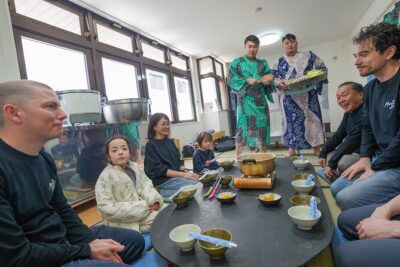
Authentic Sumo Experience in Tokyo: Enter the Sanctuary
Read our review →
Luxury Sumo Show Experience & Japanese cuisine & Drink
Read our review →Browse the lists this tour appears in