
Reviewed · WALKING TOURS
Half-Day Private Walking Tour in Kyoto
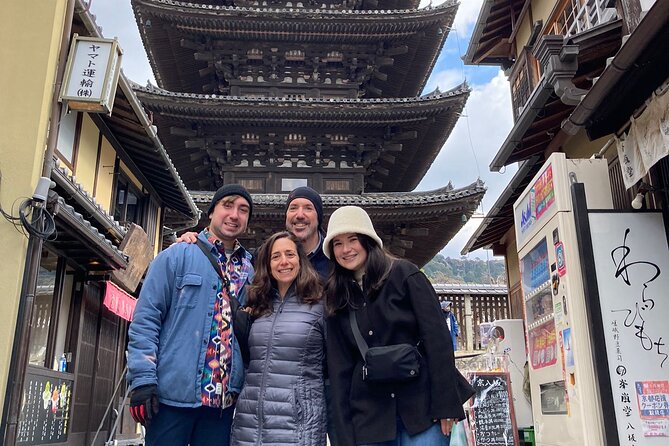
Kyoto rewards slow feet. This 3.5-hour private walk links Kiyomizu-dera, Gion, and Nishiki Market, giving you a clear path through some of the city’s most famous sights without reducing Kyoto to a string of photo stops. I especially like the mix of temples, old lanes, shrine customs, theater history, tea shops, and street food.
I also like the private format. Your guide can adjust the pace, answer your questions, allow time for photographs, and help with shopping or food choices. Guides such as Philip, Kaoru, Hiro, Rika, and Reiko have been praised for tailoring the route and offering useful advice after the tour. The main drawback is simple: transportation to Kiyomizu-dera and temple admission are not included, and this is a serious walking tour.
In This Review
- Key points to know before booking
- Why this Kyoto walking route works
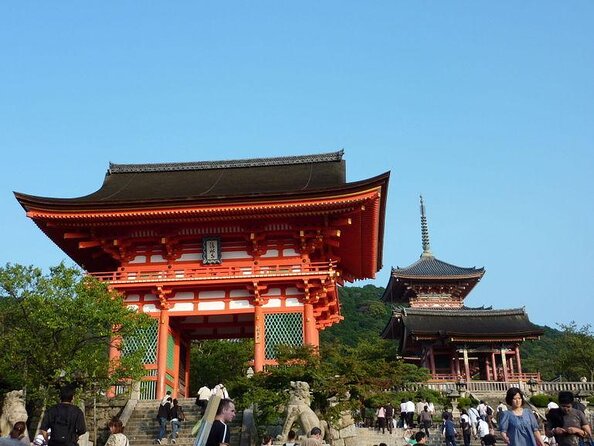
- Starting at Kiyomizu-dera and the famous wooden stage
- Sannenzaka and Ninenzaka, Kyoto’s old shopping lanes
- Yasaka Shrine and the basics of shrine etiquette
- Gion, matcha, kabuki, maiko, and geisha
- Pontocho, a useful evening tip
- Nishiki Market, the food-focused finale
- The private guide is the real value
- Timing, transport, and what to bring
- Who should book this Kyoto walking tour?
- Should you book it?
- FAQ
- How long does the walking tour last?
- Which places are included?
- Is Kiyomizu-dera admission included?
- Is transportation to Kiyomizu-dera included?
- Is this a private tour?
- How much walking is involved?
- What is the cancellation policy?
Key points to know before booking
- Five major Kyoto areas in one walk: Kiyomizu-dera, Sannenzaka and Ninenzaka, Yasaka Shrine, Gion, and Nishiki Market all fit into one organized route.
- A genuinely private experience: Only your group participates, so the guide can adjust stops, pace, shopping time, and explanations.
- Strong local guidance: Guides have helped with shrine customs, market purchases, restaurant ideas, matcha selection, and post-tour planning.
- Expect plenty of walking: Comfortable shoes are essential, with hills and crowded historic lanes around Kiyomizu-dera.
- Admission and transport cost extra: The guide fee is included, but you pay for Kiyomizu-dera entry and your own transportation to the starting point.
- Best for a first Kyoto visit: The route gives you a useful introduction to temples, food, traditional streets, and the Gion district in one morning or afternoon.
Why this Kyoto walking route works
Kyoto can feel scattered on a first visit. Temples sit beyond narrow lanes, shopping streets turn into shrine approaches, and the best food shops are easy to pass without knowing what to look for. This tour solves part of that problem by creating a sensible east-to-central Kyoto route.
You begin at Kiyomizu-dera, walk downhill through Sannenzaka and Ninenzaka, continue toward Yasaka Shrine and Gion, pass Pontocho, and finish at Nishiki Market. That progression matters. You start with major religious sights, move through older residential and shopping streets, then finish with food and downtown Kyoto.
I would not book this as a quiet temple meditation. The route covers popular places, and some lanes can be crowded. Instead, think of it as a first look at Kyoto’s essential character, with a local person helping you understand what you are seeing.
The price is $95.77 per person. That is not the cheapest way to walk around Kyoto, but the value improves if you are new to the city, visiting for only a day, or traveling with a family or mixed-age group. A private guide can save time and prevent the usual confusion over where to go next.
More Walking Tours in Kyoto
- Kyoto Geisha Walking Tour: Gion District & Hidden Gems
★ 4.7 · 3,273 reviews - Kyoto: Gion Magical Night Walking Tour with Geisha Trivia
★ 4.9 · 2,393 reviews - Kyoto: Gion Geisha District Walking Tour – Stories of Geisha
★ 4.7 · 2,187 reviews
Starting at Kiyomizu-dera and the famous wooden stage
Kiyomizu-dera receives about one hour, making it the longest temple stop on the route. Admission is not included, so set aside extra money for entry. Transportation from your hotel to Kiyomizu-dera is also your responsibility unless you arrange something separately.
The temple’s famous wooden stage gives the guide a natural opening for a question about the expression jumping off the Kiyomizu stage. That small detail adds cultural context to a place many people otherwise experience as simply a grand viewpoint.
You also choose one of the Otowa Falls streams to visit. The falls are tied to different wishes, and your guide explains how to approach the site. This is the kind of practical help that makes a difference at Japanese temples, where visitors may not know which actions are respectful or how the rituals work.
The setting is one of the strongest parts of the morning. You get temple architecture, hillside views, and a sense of how Kyoto’s religious sites connect with its streets below. The tradeoff is the terrain. Reaching and leaving Kiyomizu-dera involves walking uphill or downhill, and the route can be tiring if you are not used to spending several hours on foot.
A guide named Philip has been praised for allowing time for photographs and answering questions rather than rushing from one point to the next. That is exactly the right approach here. Kiyomizu-dera deserves more than a quick picture at the stage.
Sannenzaka and Ninenzaka, Kyoto’s old shopping lanes
After the temple, you spend about 50 minutes in Sannenzaka and Ninenzaka. These sloping lanes are lined with traditional-looking buildings, souvenir shops, cafes, sweets, tea, and small food counters.
This section is where a private guide can earn the fee. You might walk straight past a shop selling a useful souvenir or miss a small cafe hidden behind a busy storefront. Your guide can explain what is worth browsing and help you avoid buying something simply because it is displayed in the most crowded shop.
The area is also a good place for food tastings, though the exact purchases are not included. You pay directly for anything you eat or take home. I would keep a little space in your budget for matcha sweets, pickles, snacks, or other small items that catch your eye.
The lanes are photogenic, but they are not empty museum streets. They are active shopping roads with uneven surfaces, slopes, and crowds. Stay aware of other people, especially when stopping for pictures.
Several guides have adapted this part of the walk to personal interests. Chika helped one person find a particular shop, while Rika adjusted the route around a love of coffee and pointed out a special coffee stop. These examples show the value of telling your guide what you care about at the start.
Yasaka Shrine and the basics of shrine etiquette
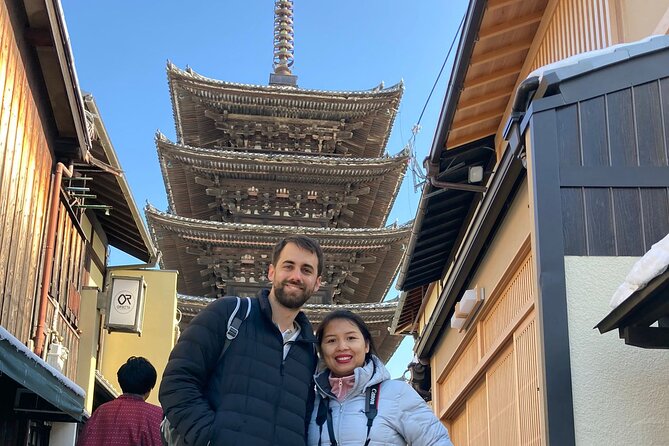
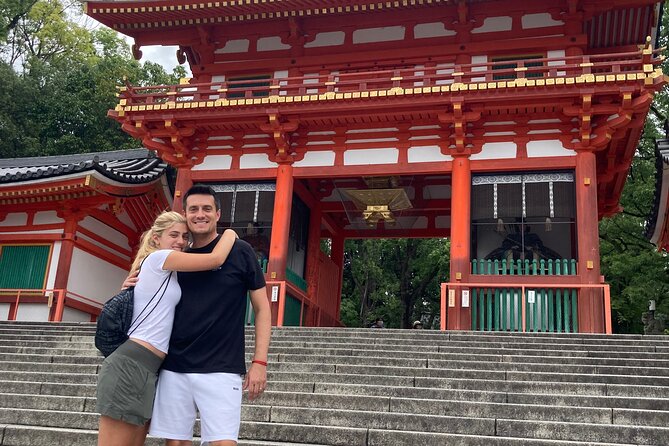
The Yasaka Shrine visit lasts about 10 minutes and marks the eastern edge of the Gion district. Admission is free. The stop is brief, but it adds an important contrast to Kiyomizu-dera because your guide shows you how to pray properly at a Shinto shrine.
For a first visit to Japan, these instructions are useful. You learn how to approach the worship area and take part without guessing. Ten minutes is enough for a clear introduction, though not enough for a long, unhurried exploration of the entire shrine complex.
The shrine also helps orient you geographically. From here, you are at the meeting point of temple streets, Gion, and central Kyoto. If you are already familiar with Japanese shrine customs, you may find this stop short. If you are new to Japan, it is a compact lesson in local manners.
A completely different kind of day out in Kyoto:
- PERFECT KYOTO 1-Day Bus Tour
★ 5.0 · 13,518 reviews - Kyoto: Fushimi Inari, Kinkakuji, Bamboo Grove 1 Day Bus Tour
★ 4.8 · 4,316 reviews - Kyoto: Tea Ceremony in a Traditional Tea House in Kiyomizu
★ 4.9 · 3,519 reviews - Kyoto: Tea Ceremony Ju-An at Jotokuji Temple
★ 4.9 · 3,207 reviews
Gion, matcha, kabuki, maiko, and geisha
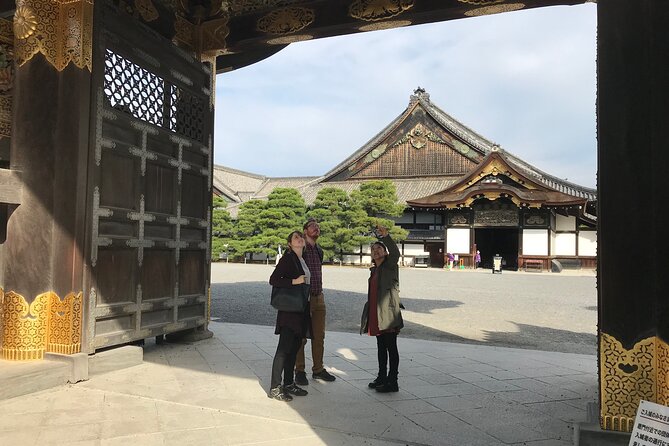
The tour spends roughly 30 minutes in Gion, Kyoto’s best-known traditional entertainment district. Your guide takes you past local tea shops, including places where you can look for matcha to bring home.
The shopping advice is practical. Matcha varies in flavor and quality, and a guide can help you understand the differences before you buy. You should expect to pay for your own souvenirs, but the guidance can keep the purchase from being a blind guess.
You also see the statue of Izumo no Okuni, who is associated with the beginnings of kabuki, and the Minamiza kabuki theater. These stops give Gion a wider story. It is not only a district of elegant streets and tea houses. It is also tied to performance, theater, and the working lives of maiko and geisha.
Your guide explains the difference between these roles and the customs surrounding the district. Keep your expectations realistic: this is a short walking introduction, not a private geisha performance or a theater visit. You see the streets and hear the background, but no performance is included.
Gion is also an area where respectful behavior matters. Follow your guide’s advice, avoid blocking narrow lanes, and do not treat people in traditional dress as photo props. A good guide helps you see the district without turning it into a stage set.
Pontocho, a useful evening tip
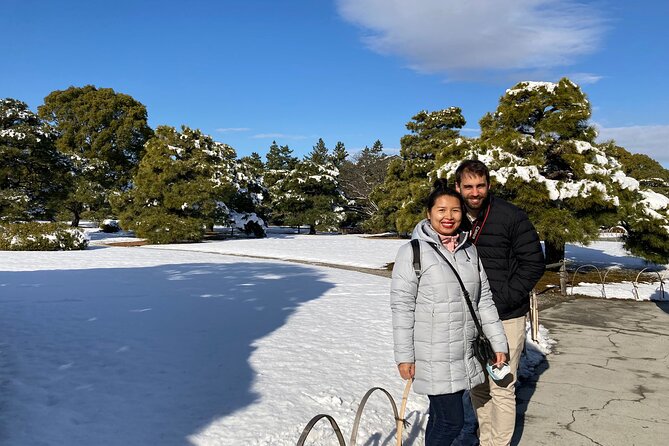
The route passes Pontocho, a narrow dining street known for restaurants and bars. It is not listed as a formal timed stop, but your guide points it out as a place you can return to later on your own.
That suggestion adds value because Pontocho has a different mood after dark. You can come back for dinner or drinks and get a better feel for Kyoto’s evening atmosphere. The tour does not include food, reservations, or a return visit, so treat this as local orientation rather than part of the paid schedule.
I like this kind of advice. A guide who tells you where to return after the tour is helping you use the rest of your time, not just completing a route.
Nishiki Market, the food-focused finale
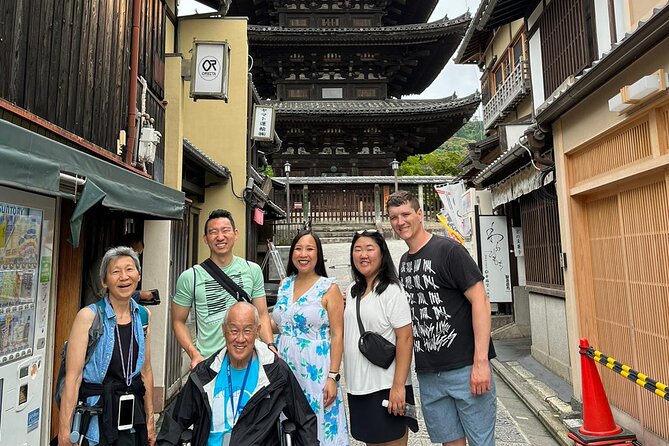
The final stop is Nishiki Market, where you spend about an hour. The market is in central Kyoto and offers a long display of Japanese foods, including seafood, fried foods, pickles, karaage, takoyaki, spices, ice cream, green tea, and egg dishes.
This is the most flexible part of the tour. You can ask questions, sample foods, shop for edible souvenirs, and watch how local ingredients are presented. Your guide can explain unfamiliar items and help you speak with vendors. Hiro, for example, has helped with market shopping and spoken to sellers on behalf of visitors.
Bring an appetite, but remember that food purchases are extra. The hour can pass quickly if you stop often. If you want a serious market lunch, tell your guide early so the pace can be adjusted.
Nishiki is also a busy commercial market, not a quiet local neighborhood. Some stalls are designed for quick sampling, and the central passage can feel crowded. Your guide helps you move through it with a purpose, but you should still keep your belongings secure and avoid blocking the walkway while eating.
Ending here is smart. You finish near central Kyoto with plenty of choices for lunch, shopping, or independent exploring. You also leave with a list of foods and places to try rather than having to make every decision from scratch.
The private guide is the real value
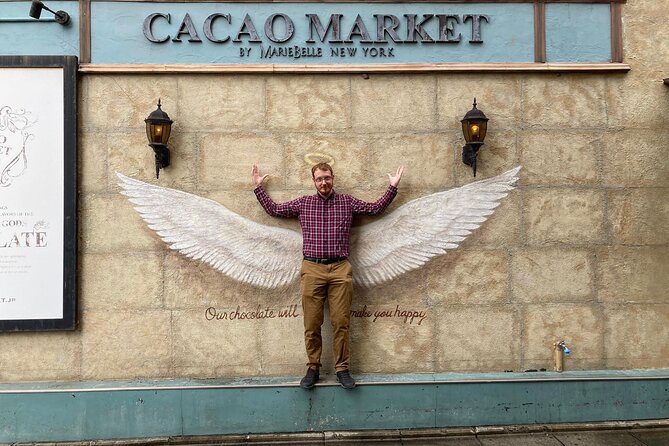
The sights are famous, but the guide determines how useful the tour feels. The strongest praise has gone to Philip, Kaoru, Hiro, Rika, Reiko, Akiko, Yuka, and Chika for their warmth, flexibility, cultural explanations, and help with practical details.
Kaoru has customized walks around existing interests and provided maps and Google map pins for later use. Hiro has brought small helpful items, including handmade city maps and a hand towel for drying hands after shrine water rituals. Rika has taken photographs during the walk and sent them to the group afterward.
These details matter because they turn a standard sightseeing route into personal assistance. If you want photos, food advice, shopping help, accessibility adjustments, or a focus on architecture, say so at the beginning. One guide adjusted the walk for accessibility needs, while others changed the emphasis for coffee, shopping, or previous Kyoto experience.
The private setup also works well for families. You can ask questions without worrying about holding up a large group, and the guide can change the pace for different ages. Still, private does not mean effortless. You are walking for several hours, and the route includes slopes and crowded streets.
Timing, transport, and what to bring
The experience lasts about 3 hours and 30 minutes. Pickup is offered, but transportation from your hotel to Kiyomizu-dera is not included in the guide fee. Confirm the meeting arrangement carefully before the day of the walk.
Because the tour is often booked around 65 days ahead, early planning makes sense if your Kyoto dates are fixed. The tour also offers mobile tickets and group discounts, though the exact discount depends on the booking.
Wear comfortable shoes with good support. You should also carry water, a small amount of spending money for food and souvenirs, and enough phone battery for maps and photographs. If you have mobility concerns, mention them when arranging the tour so the guide can discuss possible adjustments.
The tour requires moderate physical fitness and good weather. If poor weather cancels the experience, you can receive a different date or a full refund. A minimum number of participants is also required, and if that condition causes cancellation, you are offered another date, another experience, or a full refund.
Free cancellation is available up to 24 hours before the local start time. Changes or cancellations made inside that 24-hour window are not refunded.
Who should book this Kyoto walking tour?
I would choose this tour for a first visit, a short stay, or a day trip from Tokyo by bullet train. Several hours of organized walking can give you a useful Kyoto framework, and a guide can help you spend the rest of your day more wisely.
It is also a good fit for solo visitors who want conversation and local direction, couples who prefer a private pace, and families with different interests. Food lovers will appreciate Nishiki Market, while culture-focused visitors get temples, shrine etiquette, Gion, and kabuki connections in one route.
I would think twice if you want a slow, deeply focused visit to one temple. Kiyomizu-dera receives about an hour, and the later stops are short. I would also consider another plan if you dislike crowds, hills, or shopping streets.
Should you book it?
Book this half-day Kyoto walking tour if you want a well-organized first look at the city and value personal help more than a low-cost self-guided route. The strongest benefits are the private format, the range of sights, and the guides’ practical assistance with food, shopping, customs, photos, and follow-up ideas.
At $95.77 per person, you are paying for orientation and local insight, not transportation, admission, or meals. For a first-time visit, that can be a fair trade, especially if your time is limited.
Skip it if you already know Kyoto well or want to spend a full day at a single temple complex. For everyone else, bring good shoes, leave room for snacks, and tell your guide what you want from the walk. That is how you get the most from this route.
FAQ
How long does the walking tour last?
The tour lasts approximately 3 hours and 30 minutes.
Which places are included?
The route includes Kiyomizu-dera Temple, Sannenzaka and Ninenzaka, Yasaka Shrine, Gion, Pontocho Street, and Nishiki Market.
Is Kiyomizu-dera admission included?
No. The entrance fee for Kiyomizu-dera is not included.
Is transportation to Kiyomizu-dera included?
No. Transportation from your hotel to Kiyomizu-dera is not included in the tour price.
Is this a private tour?
Yes. Only your group participates in the private activity.
How much walking is involved?
The tour requires a moderate level of physical fitness and includes several hours of walking through temple areas, sloping historic lanes, shrine grounds, and market streets.
What is the cancellation policy?
You can cancel up to 24 hours before the experience start time for a full refund. Cancellations or changes made less than 24 hours before the start time are not refunded.
Just added around Kyoto
- Kyoto: Private Customizable Day Trip by Car★ 5.0 · 38 reviews
- Kyoto: Gion Night Walking Tour with Geisha Insight★ 5.0 · 39 reviews
- Kyoto: Full Day Bike Tour★ 4.9 · 39 reviews
- Private Japanese Calligraphy in Kyoto – Learn Shodō with a Master★ 5.0 · 39 reviews
- Kyoto: Gion Evening Walk with Hidden Gems, Geisha & Sake★ 5.0 · 41 reviews
- Experience a tea ceremony in an authentic tearoom, in Kyoto!★ 4.5 · 41 reviews
- Kyoto Private Photo Shoot & Tour by SnapKyoto★ 5.0 · 41 reviews
- The Way of Tea: Kyoto Crafts, Hidden Temples & Wabi-Sabi Walk★ 5.0 · 41 reviews
Walking Tours, compared.
Kyoto Geisha Walking Tour: Gion District & Hidden Gems
Read our review →
Tokyo Tsukiji Fish Market Food and Culture Walking Tour
Read our review →
Gion Magical Night Walking Tour with Geisha Trivia
Read our review →
Imperial Palace and Shogun Historical Walking Tour
Read our review →
Gion Geisha District Walking Tour – Stories of Geisha
Read our review →
Shinjuku Local Bar and Izakaya Guided Walking Tour
Read our review →
Browse the lists this tour appears in