
Reviewed · FISH MARKET TOURS
Inside Tokyo’s Kitchen: Tsukiji Market, Food & Culture Tour
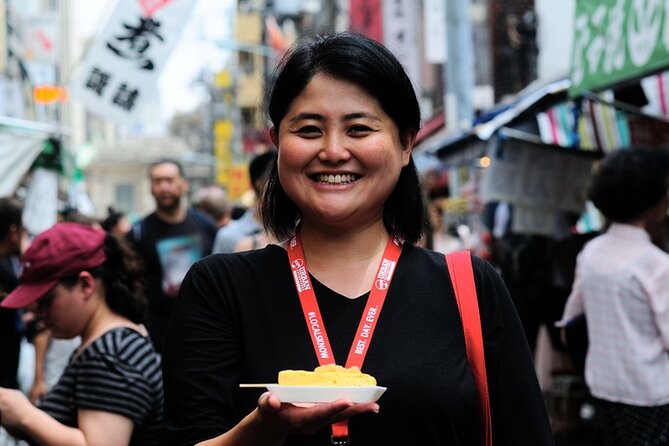
Come hungry, and bring good shoes. This three-hour Tokyo tour turns the maze of Tsukiji Outer Market into a guided tasting walk, with sushi, sashimi, tamagoyaki, fish cakes, sweets, and local snacks along the way. I like the six-person limit, which keeps the group small enough for questions and makes it easier to move through narrow market lanes. I also like the mix of food and culture, from Kabuki-za and its small shrine to Namiyoke Inari Shrine at the end.
The main thing to consider is that the food portion may feel uneven. Some outings include an impressive spread, such as several types of tuna, sushi, sea eel, wagashi, and sake. Other experiences have included packaged tuna sushi or fewer tastings than expected. At $83.35, this can be good value if your guide provides a generous selection, but you should not treat it as an all-you-can-eat meal.
In This Review
- Key points at a glance
- Why Tsukiji still works for a food tour
- Meeting at Kabuki-za and Kabuki Inari Shrine
- Two hours through Tsukiji Outer Market
- What you may taste along the way
- Namiyoke Inari Shrine and the quieter finish
- Is $83.35 a fair price?
- Who will enjoy this morning most?
- Practical ways to get more from the experience
- Should you book the Tsukiji food tour?
- FAQ
- How long does the Tsukiji Market food tour last?
- What time does the tour begin?
- Where does the tour meet?
- Where does the tour end?
- What food is included?
- Are drinks included?
- Can vegetarians and vegans join?
- Can children join the tour?
- How many people are in the group?
- What should I wear?
- Can I cancel for a full refund?
Key points at a glance
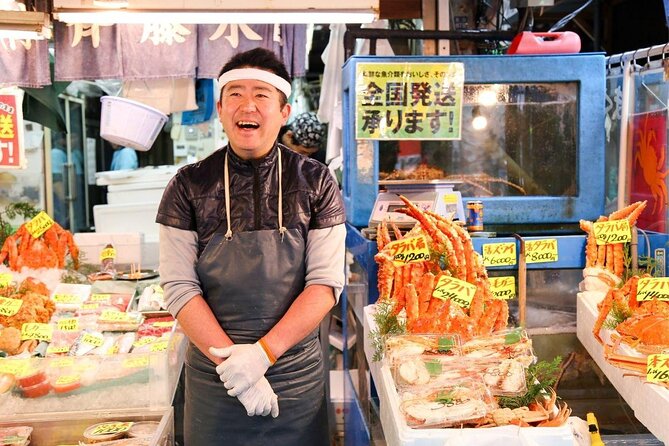
- A six-person group makes Tsukiji easier to handle: You get personal guidance in crowded lanes and more chances to ask questions.
- The tastings can be wonderfully varied: Past menus have included sushi, sashimi, fish cake, tamagoyaki, white strawberries, dried anchovies, wagashi, and real wasabi.
- The tour starts beside Kabuki-za: A short introduction to Kabuki and the theater’s striking design adds context before the food walk.
- A guide helps with language and market choices: You can learn what you are seeing instead of simply wandering past unfamiliar stalls.
- Food quantity is the main variable: Some groups leave full, while others receive only a modest set of samples.
- Wear sneakers or other closed-toe shoes: Market floors can be wet, and this is a walking tour through working food areas.
Why Tsukiji still works for a food tour
Tokyo’s famous wholesale fish market moved to Toyosu, but Tsukiji Outer Market remains a busy food district with seafood shops, produce sellers, prepared foods, kitchen goods, and small places to eat. This tour focuses on that outer market, not on a wholesale auction experience.
That distinction matters. If you are expecting the famous tuna auction, this is not the right tour. If you want to understand how Japanese ingredients appear in everyday food, Tsukiji offers a more approachable setting. You can look at fish, snacks, vegetables, sweets, and cooking items while your guide explains what they are and helps bridge language gaps.
I like the fact that you are not simply handed a map and sent into the alleys. Tsukiji can feel confusing at first, especially when several lanes appear to offer similar foods. A local guide helps you spend your limited morning time on the parts that fit the tour rather than wandering until the clock runs out.
The early start also makes sense. You meet at 8:00 a.m., when the market is active and the day’s food business is underway. The timing requires commitment, but it gives you a useful first activity in Tokyo. Afterward, you still have most of the day for Ginza, Asakusa, the Imperial Palace area, or another part of the city.
More Food Tours in Tokyo
- Tokyo: Shinjuku Food Tour (13 Dishes at 4 Local Eateries)
★ 5.0 · 6,603 reviews - Tokyo Tsukiji Fish Market Food and Culture Walking Tour
★ 5.0 · 3,184 reviews - Tokyo: Shinjuku Food Tour (15 Dishes and 4 Eateries)
★ 4.9 · 2,033 reviews
Meeting at Kabuki-za and Kabuki Inari Shrine
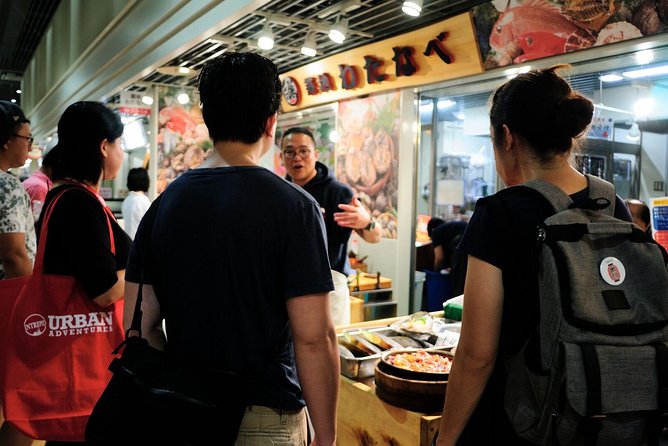
The tour begins at Kabuki Inari Shrine, in front of Kabuki-za at 4 Chome-12 Ginza. This is a practical meeting point near public transportation, but Tokyo’s streets can be confusing, so allow extra time. The shrine is associated with the Kabuki theater, and the guide gives a short introduction to Kabuki, Japan’s distinctive combination of drama and dance.
The stop lasts about 10 minutes. That is enough time to understand why the theater matters and admire the architecture, but not enough for a theater visit. You do not need to plan on entering Kabuki-za as part of this experience.
I appreciate this opening because it gives the market walk a little more meaning. You begin with one part of Japanese culture, then move toward the food traditions that shape daily life. It is brief, but it prevents the tour from feeling like a series of unrelated samples.
For the meeting, check the exact shrine location before leaving your hotel. One person missed the group after walking past the meeting point and arriving only a few minutes late. The supplied contact information did not solve the problem quickly enough, so this is not a good morning to rely on last-minute navigation.
Two hours through Tsukiji Outer Market
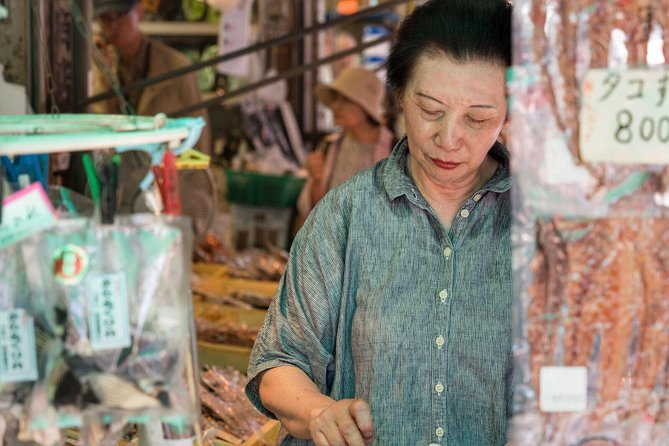
The market section takes about two hours, making it the real heart of the experience. You walk through narrow lanes lined with seafood, vegetables, prepared foods, sweets, and snacks. Your guide explains ingredients and local food customs, and can help translate when you need to ask about a product or understand what you are buying.
The six-person maximum is especially useful here. A large group would be harder to keep together, and you would have less room to stop at a stall. With a small group, you have a better chance to hear explanations and ask why a particular fish, cooking method, or sweet matters.
The market is not a polished food hall. It is a working food district, and that is part of its appeal. You may see ingredients before they become a finished dish. You may also encounter crowded passages, wet flooring, strong smells, and sellers focused on their work rather than on entertaining sightseers. Closed-toe shoes are required, and sneakers are the safest choice.
The guide’s role can make a big difference. Good guides such as Mihari, Yuri, Shino, Aya, and Koz have been praised for making the walk friendly, clear, and enjoyable. Yuri, for example, brought real wasabi and a tool for grating it, allowing the group to taste freshly grated wasabi with sushi. Shino helped a group understand the market while they watched a large tuna being prepared for sushi.
Those moments show the value of the tour. You are not only eating a familiar piece of sushi. You are learning how an ingredient differs, how it is prepared, and what makes it worth noticing.
What you may taste along the way
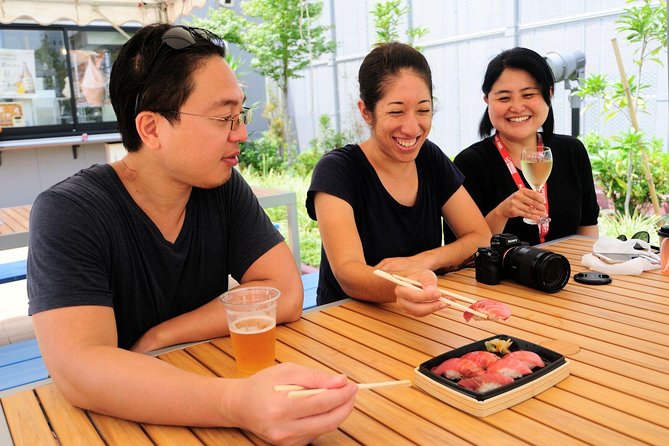
The exact food selection is not fixed, so you should think of the experience as a guided tasting rather than a guaranteed menu. The strongest food outings have included several forms of tuna, including lean, medium-fatty, and fatty cuts, assorted tuna nigiri, tuna sashimi, and a sea eel roll.
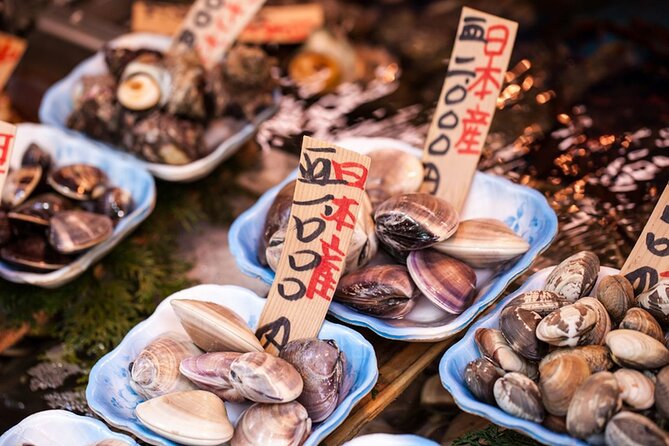
Other samples have included Satsumaage fish cake, tamagoyaki, fish-broth omelette served on a stick, dried anchovies, white strawberries, sweetened rice balls, and Kawaii Wagashi sweets. Some groups have also tasted sake. These examples give you a good idea of the range: seafood is central, but the tour is not limited to raw fish.
The sweets are important for balance. Wagashi, traditional Japanese confectionery, offers a different look at food culture through shape, color, texture, and seasonal presentation. You may also try snacks that you would not think to order on your own.
Still, manage your expectations. One outing included premade tuna sushi in a package and fried tuna from an indoor location. The guide later took the group to a barbecue place, but the food was not always eaten right where it was prepared. Another group felt there was not much food and that the timing of the samples was awkward.
That inconsistency is the clearest weakness. The description promises sushi, sweets, and snacks, but the number and style of tastings can change. If you want a full meal, plan to buy additional food or eat afterward. Drinks and extra food are not included in the price.
Vegetarian and vegan options are available, but the selection is limited. If you do not eat fish, you can still take part in the cultural walk and try suitable foods, but this experience is designed mainly around seafood.
More Market Tours in Tokyo
- Tokyo: Tsukiji Fish Market Food and Walking tour
★ 5.0 · 1,724 reviews - Tokyo: Tsukiji Fish Market Guided Walking Tour
★ 4.9 · 1,397 reviews - Tsukiji Fish Market Guided Tour and Sushi Making with Pro Chef
★ 5.0 · 775 reviews - Tokyo: Tsukiji Fish Market Food and Culture Walking Tour
★ 4.7 · 757 reviews
Namiyoke Inari Shrine and the quieter finish
After the market, the tour visits Namiyoke Inari Shrine. This smaller shrine provides a calmer change of pace after two hours in the market lanes. It is connected with Tsukiji and offers a chance to discuss local beliefs and traditions without the noise and movement of the food stalls.
The shrine visit takes about 10 minutes, followed by a walk of about 10 minutes to the nearest station. The tour ends at Tsukiji Fish Market, with Tsukiji Station on the Hibiya Tokyo Metro Line as the useful nearby connection.
I like ending here rather than finishing with one last food purchase. You get a moment to slow down and consider the relationship between the market, the neighborhood, and the traditions that support it. It also makes the tour easy to connect with the rest of your Tokyo day.
Do not expect a major sightseeing stop. This is a short cultural pause, not a long shrine tour. Its value comes from contrast: busy market lanes first, quiet shrine space afterward.
Is $83.35 a fair price?
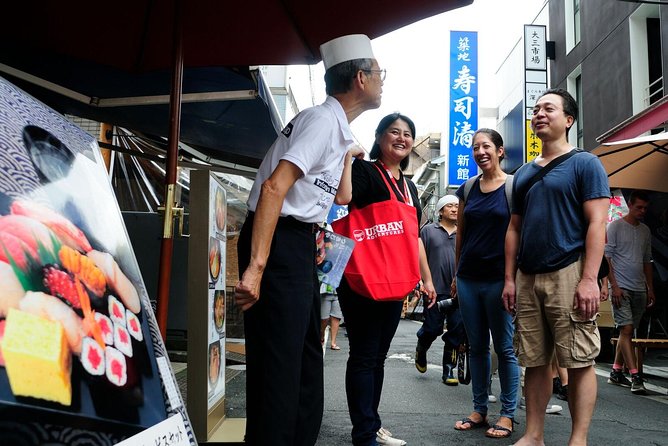
At $83.35 per person, the tour is not the cheapest way to eat around Tsukiji. You could buy individual snacks yourself for less. The price pays for more than food, though. It includes a local guide, translation help, route planning, cultural explanation, and access to a small group capped at six people.
That can be worthwhile on your first visit. Tsukiji is easy to browse but harder to understand. A guide can point out differences between fish cuts, explain unfamiliar foods, and help you avoid spending your morning on random purchases.
The value depends heavily on the food portion. If you receive sushi, sashimi, fish cake, tamagoyaki, sweets, and extra specialties such as real wasabi, the price feels more reasonable. If you receive only a few modest samples, you are paying mainly for the guided experience.
I would budget for an additional meal or drink. That way, you can enjoy the tasting without worrying about getting full. You can also ask your guide which extra foods are worth buying, though those purchases are your responsibility.
Who will enjoy this morning most?
This tour is a good match for a first-time visitor who wants an easy introduction to Tsukiji. You will get a useful orientation, several chances to taste local foods, and practical suggestions for other places to eat and visit in Tokyo.
It suits seafood fans particularly well. The possible tuna, sashimi, sushi, eel, and fish cake samples make fish the main attraction. Adventurous eaters will also enjoy the smaller discoveries, such as dried anchovies, unfamiliar sweets, and real grated wasabi.
Families can join, and children under six participate free. Keep in mind that the market is crowded and the walk lasts several hours, so young children need to stay close to the group. The small group size helps, but this is still a working market rather than a quiet museum.
Vegetarians and vegans can participate, but the limited food choices mean you should book for the market and cultural experience, not for a broad plant-based tasting. The same advice applies if you dislike fish or raw seafood.
The tour is less suitable if you want a formal sit-down meal, a fixed tasting menu, or a visit to the Toyosu wholesale market. It is also not ideal for a late riser, since the meeting time is 8:00 a.m.
Practical ways to get more from the experience
Wear closed-toe shoes with good grip. The floor can be wet, and sandals are a poor choice for a market walk.
Eat lightly before meeting the group. You want room for several samples, especially if your guide provides the fuller selection of sushi and snacks.
Keep your group small in the lanes. Do not stop in the middle of a passage for photographs, and follow your guide’s instructions around sellers and food displays.
Ask questions. The tour becomes much more valuable when you ask about ingredients, preparation, regional differences, and how to identify foods you may see again in Japan.
If you have allergies or strict dietary needs, explain them when booking and again at the start. Vegetarian and vegan choices exist, but the overall food selection is limited.
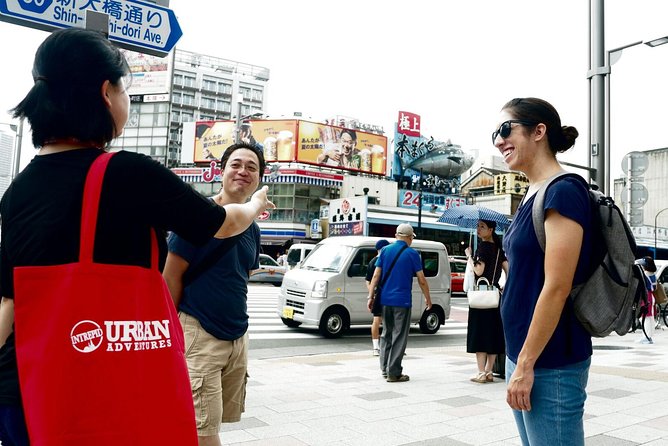
Give yourself extra time to find Kabuki Inari Shrine. The meeting point is close to public transportation, yet the first few minutes in Ginza can be disorienting. Being early is far better than trying to locate the shrine while the group is leaving.
Free cancellation is available up to 24 hours before the 8:00 a.m. start time. Changes or cancellations inside that window are not accepted for a refund.
Should you book the Tsukiji food tour?
I would book this tour if you want a small, guided introduction to Tsukiji and prefer understanding the food rather than simply buying whatever catches your eye. The best version gives you a broad tasting menu, a helpful guide, and small cultural details that are easy to miss alone.
I would skip it if your top priority is a large meal, a guaranteed restaurant setting, or a precise list of included dishes. The food quantity and presentation can vary, and extra food and drinks cost more.
For first-time Tokyo visitors, seafood lovers, and curious eaters, the combination of market access, translation help, sushi, sweets, and two shrines makes the $83.35 worthwhile. Just arrive early, wear sturdy shoes, and think of it as a guided food education with tastings, not a three-hour feast.
FAQ
How long does the Tsukiji Market food tour last?
The experience lasts approximately three hours. The market portion takes about two hours, with short visits to Kabuki Inari Shrine and Namiyoke Inari Shrine.
What time does the tour begin?
The tour starts at 8:00 a.m.
Where does the tour meet?
You meet at Kabuki Inari Shrine, in front of Kabuki-za, at 4 Chome-12 Ginza, Chuo City, Tokyo 104-0061.
Where does the tour end?
The tour ends at Tsukiji Outer Market near Tsukiji Fish Market. Tsukiji Station on the Hibiya Tokyo Metro Line is nearby, with about a 10-minute walk from the shrine area.
What food is included?
The tour includes freshly made sushi, local snacks, and wagashi sweets. Possible tastings have included sashimi, tuna nigiri, sea eel roll, fish cake, tamagoyaki, dried anchovies, white strawberries, and sweetened rice balls.
Are drinks included?
No. Drinks and additional food are not included.
Can vegetarians and vegans join?
Yes. Vegetarian and vegan options are available, but the food selection is limited.
Can children join the tour?
Yes. The tour is child-friendly, and children under six can join free of charge.
How many people are in the group?
The maximum group size is six people.
What should I wear?
Wear closed-toe shoes. Sneakers are recommended because market floors can be wet.
Can I cancel for a full refund?
Yes, if you cancel at least 24 hours before the experience start time. Cancellations or changes made less than 24 hours before the start are not accepted for a refund.
More Shopping Tours in Tokyo
- Tokyo Food Tour Taste Fresh Delights at Tsukiji Market
★ 5.0 · 429 reviews - Tokyo Tsukiji Fish Market Tour and Sushi Making Lesson
★ 5.0 · 390 reviews - Tsukiji Fish Market: Street Food & Culture Walking Tour
★ 4.8 · 259 reviews - Tokyo Washoku 4-hour Cooking Class: From Market to Table
★ 5.0 · 253 reviews
More Fish Market Tours in Tokyo
- Tokyo Sushi Making Class in Tsukiji with Professional Chef
★ 5.0 · 1,177 reviews - Tsukiji Fish Market: Street Food & Culture Walking Tour
★ 5.0 · 669 reviews - Tsukiji Fish Market Small-Group Food Walking Tour
★ 5.0 · 621 reviews - Tokyo: Tsukiji Fish Market Sushi Making Class with Pro Chef
★ 4.9 · 506 reviews
Just added around Tokyo
- Tokyo 6hr Instagram Highlights Private Tour with Licensed Guide★ 5.0 · 38 reviews
- Tokyo Small Group Tour with Guide★ 4.5 · 38 reviews
- Tokyo Sumo Experience with Live Show & Audience Challenge★ 5.0 · 38 reviews
- Japanese Food Cooking Class in Asakusa, Tokyo★ 5.0 · 39 reviews
- Very popular in Harajuku♡Animal petting zoo★ 4.6 · 39 reviews
- Ramen Making from Scratch with Tokyo Mom(Vegan Option Available)★ 5.0 · 39 reviews
- Tokyo JDM Night: 600hp C63s AMG Edition 1 (Private)★ 4.9 · 39 reviews
- Tokyo: Kimono Rental inside Shinjuku Gyoen National Garden★ 4.9 · 39 reviews
Fish Market Tours, compared.
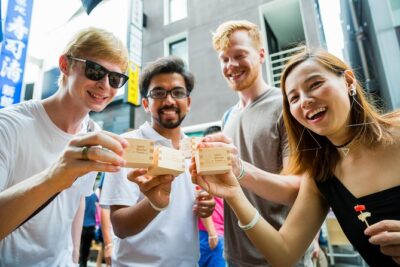
Tokyo Tsukiji Fish Market Food and Culture Walking Tour
Read our review →
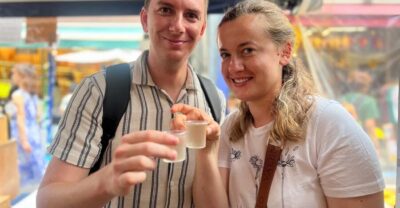

Tokyo Sushi Making Class in Tsukiji with Professional Chef
Read our review →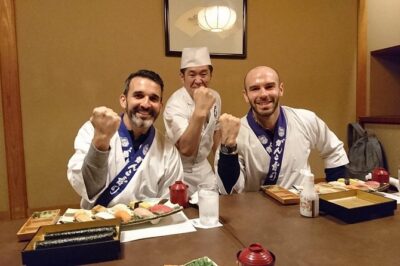
Tsukiji Fish Market Guided Tour and Sushi Making with Pro Chef
Read our review →Tsukiji Fish Market Food and Culture Walking Tour
Read our review →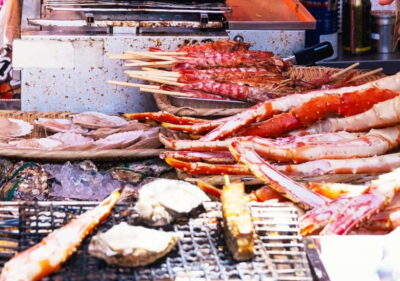
Tsukiji Fish Market: Street Food & Culture Walking Tour
Read our review →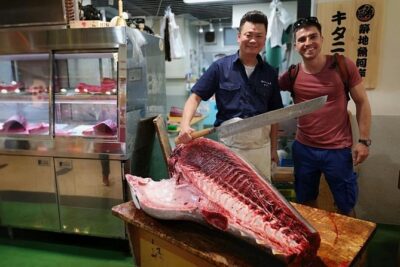
Tsukiji Fish Market Small-Group Food Walking Tour
Read our review →Browse the lists this tour appears in