
Reviewed · COOKING CLASSES
Tokyo Washoku 4-hour Cooking Class: From Market to Table
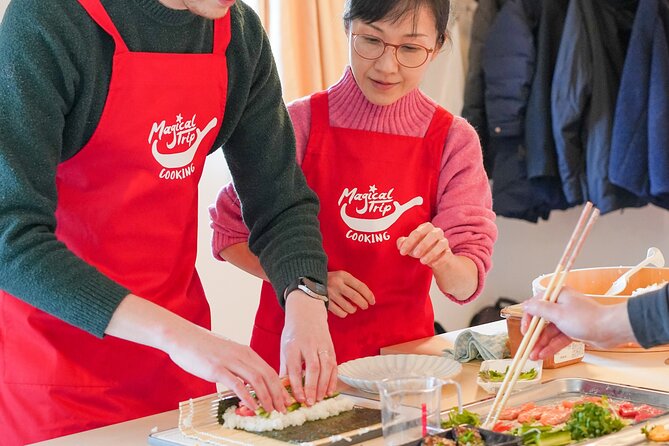
Shop first, cook second, eat best. This four-hour Tokyo experience takes you from a local supermarket near Iriya Station to a hands-on cooking studio, where you prepare makisushi, miso soup, rolled omelet, and grilled eggplant. I like the practical shopping lesson and the chance to ask a local cook questions as you work. The main drawback is the strict start time: arriving more than five minutes late can mean missing the class without a refund.
At $79.59 per person, the class offers more than a meal and a recipe card. You get market guidance, knife practice, cooking instruction, food, and drinks in a small group of no more than seven people. Dietary requests need to be arranged at least one day ahead, and the kitchen cannot guarantee an allergy-free meal.
In This Review
- Key points at a glance
- Why this Tokyo cooking class feels different
- Meeting your guide at Iriya
- Shopping like a local near Iriya Station
- Rolling sushi and building the menu
- What you actually learn at the counter
- Eating together with sake and other pairings
- Recipes you can use after Tokyo
- Price, group size, and overall value
- Who should book this experience
- Booking details worth getting right
- Should you book the Tokyo Washoku cooking class?
- FAQ
- Where does the Tokyo cooking class meet?
- What time does the class begin?
- How long does the experience last?
- Where does the activity end?
- What dishes are prepared?
- Are vegan and vegetarian options available?
- Can the class accommodate food allergies?
- How many people can join the class?
- Can I cancel for a refund?
Key points at a glance
- The supermarket visit comes first: Learn how to choose Japanese ingredients before you cook with them.
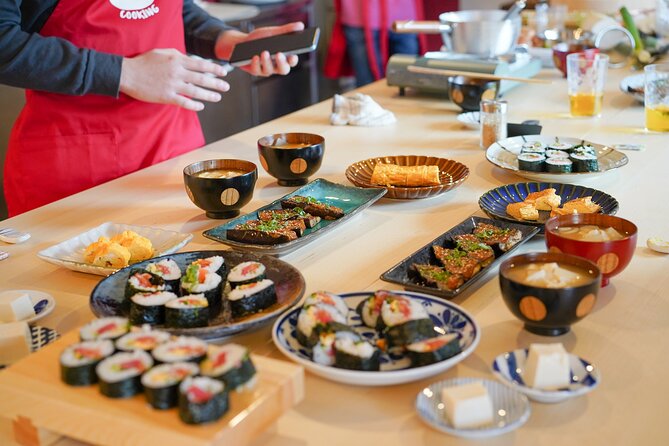
- Four traditional dishes are prepared from scratch: The usual menu includes makisushi, miso soup, dashimaki tamago, and nasu dengaku.
- The class is genuinely hands-on: You practice cutting, rolling, mixing, and cooking instead of only watching a demonstration.
- Local instructors shape the experience: April, Yuri, Masai, Alice, Minnie, Mihori, Taka, Suzy, and Nigiri have each been praised for patience, warmth, and clear instruction.
- You eat what you make: The cooking ends with a shared meal, plus the chance to try sake or another drink pairing.
- The group stays small: A maximum of seven people gives the teacher room to answer questions and guide each person.
Why this Tokyo cooking class feels different
Many cooking classes begin with ingredients already measured and waiting on the counter. This one starts at a FamilyMart at 2-chōme-1-10 Shitaya, in Taito City, near Iriya Station. That first stop changes the tone. You are not simply handed a recipe. You see how Japanese cooks shop.
Your guide points out ingredients and explains how to choose them. You can ask about Japanese vegetables, meat, seasonings, and other items that may look unfamiliar in a supermarket aisle. This is useful far beyond the four-hour class, especially if you plan to return to Japan or want to find Japanese ingredients at home.
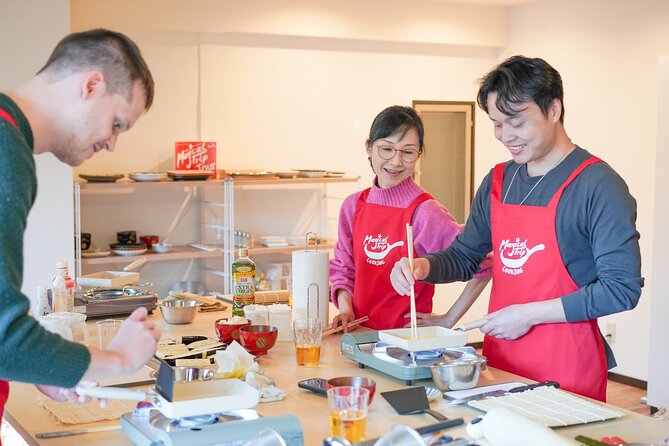
The cooking portion takes place at a dedicated studio. It is described as spacious and well arranged, which matters when several people are chopping, stirring, rolling, and moving around the same work area. The group size is capped at seven, so the class has a social feel without becoming a crowd.
I like the balance here. You spend time shopping, learning, cooking, eating, and talking. The class does not treat Japanese food as a museum display. You handle the ingredients yourself and learn techniques you can repeat.
More Cooking Classes in Tokyo
- Ramen & Gyoza Cooking Class in Tokyo with Local Supermarket Visit
★ 5.0 · 823 reviews - Tokyo: Easy Ramen Cooking Experience in Kabukicho, Shinjuku
★ 4.6 · 321 reviews - Ramen and Sushi Cooking Class with Sake Pairing Set in Tokyo
★ 5.0 · 291 reviews
Meeting your guide at Iriya
The start time is 10:00 a.m. at the FamilyMart on 2-chōme-1-10 Shitaya, Taito City, Tokyo 110-0004. The meeting point is near public transportation, but you should still allow extra time to find the exact store and arrive before the group gathers.
This is not a flexible drop-in activity. The company says the tour begins on time. If you are more than five minutes late without contacting the provider, the booking is treated as a cancellation. You cannot join later, move the booking, or receive a refund after missing the group.
That rule is firm, but understandable. The supermarket visit and cooking schedule depend on the whole group moving together. I would plan to arrive in the area early, especially if this is your first morning in Tokyo or you are still learning the local train system.
The tour ends back at the cooking studio, not at a major sightseeing site. You can visit Kappabashi Dougu Street afterward on your own. That is a useful pairing, since Kappabashi is known for kitchen goods and makes a natural next stop after spending the morning learning to cook.
Shopping like a local near Iriya Station
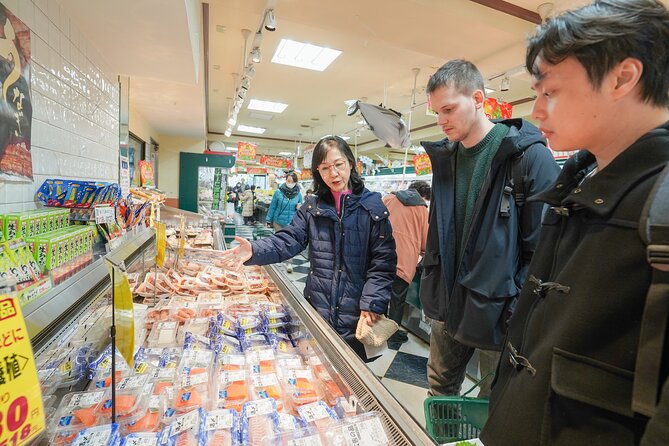
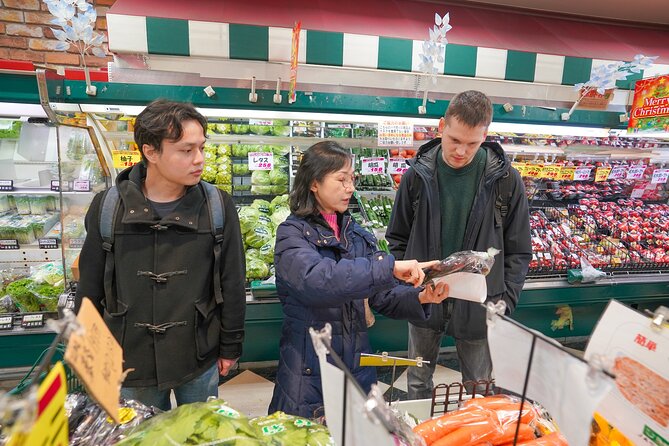
The supermarket visit is the most distinctive part of the class. Your guide helps you understand what to buy and how to select it. That may include advice about Japanese vegetables, meat, fish, seasonings, or prepared ingredients, depending on the day’s menu and the group’s needs.
You are likely to gain more from this than a simple list of ingredients. Japanese supermarkets can be confusing at first. Packaging may contain little English, produce can look unfamiliar, and products often come in forms that differ from what you find at home. A local guide gives you context while you are standing in front of the shelves.
This stop also lets you ask practical questions about everyday Japanese life. One well-organized session included time for questions about Tokyo life, not just cooking. That informal conversation is part of the appeal. You are learning food culture in a place where people actually shop for dinner.
The supermarket is also a good reason to book this class early in your trip. You will leave with a better sense of Japanese ingredients and may feel more confident exploring food halls, markets, convenience stores, and supermarkets later.
Rolling sushi and building the menu
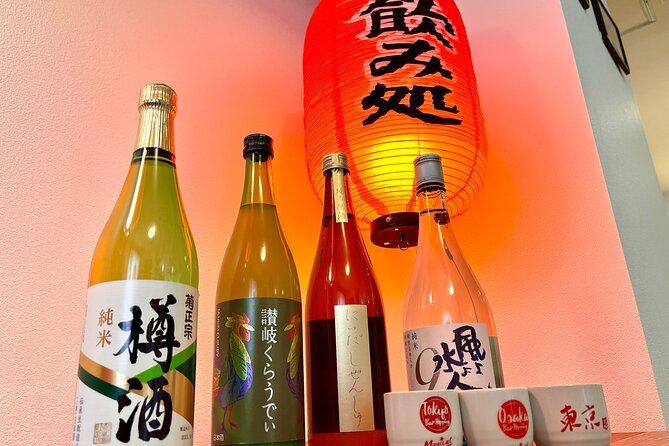
Back at the studio, you prepare a traditional Japanese meal from the ingredients selected during the shopping visit. The dishes listed for the class are makisushi, miso soup, dashimaki tamago, and nasu dengaku.
Makisushi, or rolled sushi, gives you a practical lesson in handling rice and arranging fillings. You learn how to build and roll the sushi rather than simply eating a finished piece. The finished roll may look simple, but getting the shape right takes some care. That makes it a satisfying dish to prepare as a group.
Miso soup provides a different kind of lesson. It introduces the balance between broth and miso, and it shows how a few familiar Japanese ingredients can create a complete, comforting dish. One participant called the soup the best they had ever tasted, which gives you a good reason to pay attention during this part of the class.
Dashimaki tamago is a rolled Japanese omelet. The technique is more precise than an ordinary scrambled egg. You work with layers, timing, and controlled movement. It is also one of the reasons the class may not suit someone who cannot eat eggs. If you avoid eggs, the selection is reduced from four dishes to three.
Nasu dengaku is grilled eggplant prepared with a sweet miso topping. It shows how Japanese cooking can turn a modest vegetable into a rich and savory side dish. The class teaches cutting and cooking methods as well as the flavor combinations that make the dish work.
The menu provides useful variety. You handle sushi rice, soup, eggs, and vegetables, so the class is not built around one repetitive task. You also get a look at several everyday Japanese cooking methods.
More Market Tours in Tokyo
- Tokyo Tsukiji Fish Market Food and Culture Walking Tour
★ 5.0 · 3,184 reviews - Tokyo: Tsukiji Fish Market Food and Walking tour
★ 5.0 · 1,724 reviews - Tokyo: Tsukiji Fish Market Guided Walking Tour
★ 4.9 · 1,397 reviews - Tsukiji Fish Market Guided Tour and Sushi Making with Pro Chef
★ 5.0 · 775 reviews
What you actually learn at the counter
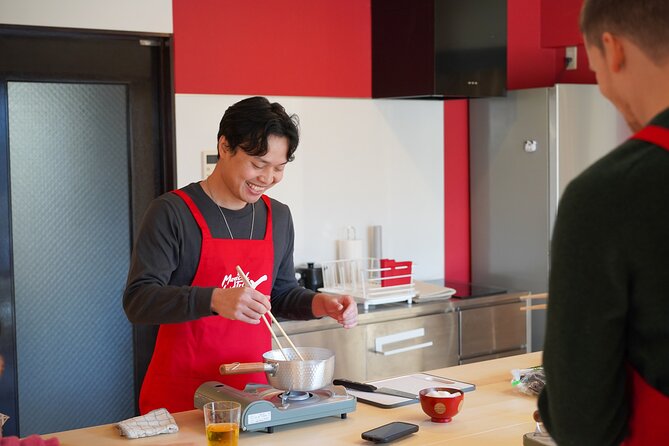
This is not only a cooking demonstration. You practice traditional knife and cooking techniques, with the instructor guiding you through each step. The exact amount of work you do can depend on the group, but the experience is designed around participation.
That matters if you want to recreate the food at home. A recipe is useful, but it does not show you how to cut an ingredient, hold a knife, roll an omelet, or judge when something is ready. The instructors focus on those small movements and let you ask questions as you go.
The teaching style has received particularly strong praise. April was described as encouraging at every stage. Yuri gave detailed instructions and sent participants home with recipes. Masai was patient and made helpful comparisons with cooking in the West. Suzy was praised for clear English, patience, and a personable manner.
Other instructors named in the feedback include Alice, Minnie, Mihori, Taka, and Nigiri. Their approaches differ, but the repeated strengths are clear: friendly conversation, careful explanations, and a willingness to share information about Japanese food.
You should not expect a formal culinary-school lesson. This is a friendly home-cooking experience, not professional chef training. That is part of its value. The goal is to help you understand and repeat traditional dishes, not to test you.
Eating together with sake and other pairings
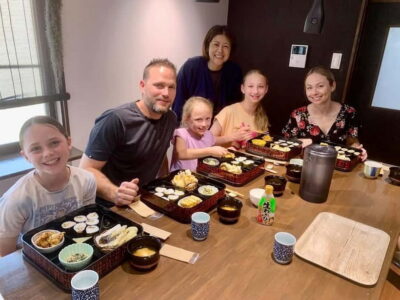
After the cooking, you sit down and eat the meal you prepared. The shared table gives the class a natural finish. You can compare results, ask final questions, and enjoy the food while it is fresh.
The experience also includes the chance to experiment with different sake or other drink pairings. Beer and sake tasting was a highlight for one participant, and another session included sake with a four-course meal. The exact drinks may vary, so I would treat the pairing as an added feature rather than a guaranteed tasting flight.
This part works well for couples, families, and solo visitors who want more conversation during a meal. The group may include people from several countries, which adds a social element without taking away from the Japanese focus.
The meal is also a practical test of the class. You are not merely told that the recipes are easy. You get to see how the dishes come together, taste the result, and take the instructions home.
Recipes you can use after Tokyo
The recipes are provided so you can make the dishes again. That is a small but important benefit. Many food tours end when the last bite is gone. Here, you leave with a way to repeat at least part of the experience in your own kitchen.
The dishes are described as tasty and not overly complicated. You may need to find Japanese ingredients at home, but the supermarket lesson helps you understand what those ingredients look like and how they are used.
I would take notes during the class if you have a particular question about substitutions or cooking times. The instructor can answer questions while the food is in front of you, which is more useful than trying to remember everything afterward.
The recipe handout also makes this a good choice for people who enjoy cooking with teenagers. Two teenagers particularly enjoyed the shopping, cooking, and meal. The hands-on format gives young cooks something active to do, while the food provides a clear reward at the end.
Price, group size, and overall value
At $79.59 per person, this is not the cheapest way to eat lunch in Tokyo. You can buy a good meal for much less. The value comes from the combination of activities: supermarket instruction, transport between the meeting point and studio, cooking guidance, ingredients, the meal, recipes, and conversation with a local instructor.
A four-hour food experience also fills a useful part of your day. Instead of spending four hours on a short demonstration or a meal that lasts less than an hour, you get time to learn and practice. The limit of seven people helps protect the quality of the instruction.
The price makes the most sense if you enjoy cooking or want a cultural activity that goes beyond sightseeing. It is less compelling if you want a quick food tasting or prefer to observe rather than work.
The class has received a five-star rating from 253 reviews, with 100 percent recommending it. That strong response fits the experience’s main strengths: friendly instructors, solid organization, a spacious studio, and plenty of direct participation.
Who should book this experience
I would recommend this class to first-time visitors who want an approachable introduction to Japanese food. The supermarket visit gives you useful context, while the cooking keeps the morning active and social.
It also suits families with older children and teenagers. The group can be international, the recipes are accessible, and everyone has a task. Couples and solo visitors can also benefit from the relaxed conversation at the cooking table.
This is a good pick for people who want practical skills. You learn how Japanese ingredients are selected and handled, then receive recipes to try later. If you are passionate about food but do not cook much, the class still offers plenty of guidance.
You should think carefully before booking if you have serious allergies. Dietary requests must be sent at least one day before the activity. Vegan and vegetarian arrangements are welcome, but the food is prepared in kitchens that do not belong to MagicalTrip, so an allergy-free meal cannot be guaranteed. Substitutions may not always be possible.
The weather policy is also worth noting. The experience requires good weather. If poor weather causes a cancellation, you will be offered another date or a full refund. Tokyo can be very hot in summer, with highs listed as high as 40°C, or cold in winter, with lows reaching -5°C, so dress for the season.
Booking details worth getting right
You receive confirmation when you book, and the activity uses a mobile ticket. Free cancellation is available up to 24 hours before the start time. Changes are also allowed up to 24 hours ahead, but late changes, no-shows, and cancellations after the start time are not eligible for a refund.
Send dietary information and allergy details at least a day in advance. Do not wait until you arrive at the supermarket. If you cannot eat eggs, tell the provider ahead of time so the three-dish option can be prepared.
Plan to arrive early at the FamilyMart meeting point. The no-late-entry rule is the biggest practical risk in an otherwise simple booking.
Should you book the Tokyo Washoku cooking class?
Book it if you want to understand Japanese food through shopping, preparation, and eating. The supermarket visit is the key feature, and the small group, patient instructors, recipes, and shared meal add real value to the $79.59 price.
Skip it if you only want a quick tasting, have severe allergies that require a guaranteed separate kitchen, or cannot commit to the 10:00 a.m. start. For everyone else, this is a useful and friendly morning that gives you something better than a souvenir: the ability to make part of Tokyo’s food culture at home.
FAQ
Where does the Tokyo cooking class meet?
The class starts at the FamilyMart at 2-chōme-1-10 Shitaya, Taito City, Tokyo 110-0004, Japan.
What time does the class begin?
The start time is 10:00 a.m.
How long does the experience last?
The cooking experience lasts approximately four hours.
Where does the activity end?
The activity ends back at the cooking studio, which is also the meeting point area for the experience.
What dishes are prepared?
The class includes makisushi, miso soup, dashimaki tamago, and nasu dengaku. The food selection is reduced from four dishes to three if you cannot eat eggs.
Are vegan and vegetarian options available?
Yes. Vegan and vegetarian participants are welcome, but you must provide dietary requests at least one day before the activity.
Can the class accommodate food allergies?
You must report allergies at least one day in advance. The provider cannot guarantee an allergy-free meal because the food is prepared in kitchens that do not belong to MagicalTrip, and substitutions may not always be possible.
How many people can join the class?
The activity has a maximum of seven travelers.
Can I cancel for a refund?
You can cancel for a full refund up to 24 hours before the experience start time. Cancellations made less than 24 hours before the start time, late arrivals, no-shows, and late changes are not eligible for a refund.
More Shopping Tours in Tokyo
- Tokyo: Tsukiji Fish Market Food and Culture Walking Tour
★ 4.7 · 757 reviews - Tsukiji Fish Market: Street Food & Culture Walking Tour
★ 5.0 · 669 reviews - Tsukiji Fish Market Small-Group Food Walking Tour
★ 5.0 · 621 reviews - Tokyo: Tsukiji Fish Market Sushi Making Class with Pro Chef
★ 4.9 · 506 reviews
Just added around Tokyo
- Tokyo 6hr Instagram Highlights Private Tour with Licensed Guide★ 5.0 · 38 reviews
- Tokyo Small Group Tour with Guide★ 4.5 · 38 reviews
- Tokyo Sumo Experience with Live Show & Audience Challenge★ 5.0 · 38 reviews
- Very popular in Harajuku♡Animal petting zoo★ 4.6 · 39 reviews
- Japanese Food Cooking Class in Asakusa, Tokyo★ 5.0 · 39 reviews
- Ramen Making from Scratch with Tokyo Mom(Vegan Option Available)★ 5.0 · 39 reviews
- Tokyo: Kimono Rental inside Shinjuku Gyoen National Garden★ 4.9 · 39 reviews
- Tokyo JDM Night: 600hp C63s AMG Edition 1 (Private)★ 4.9 · 39 reviews
Cooking Classes, compared.
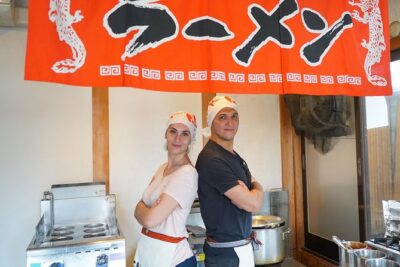
Ramen Cooking Class at Ramen Factory in Kyoto
Read our review →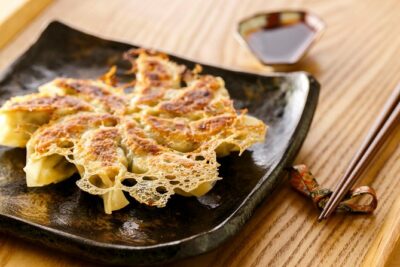
Ramen & Gyoza Cooking Class in Tokyo with Local Supermarket Visit
Read our review →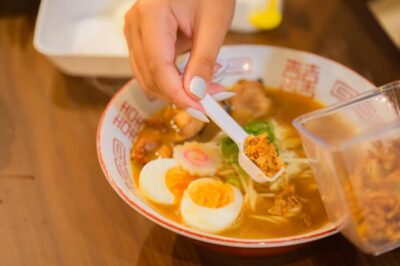
Ramen Cooking Class at a Ramen Factory with Souvenir
Read our review →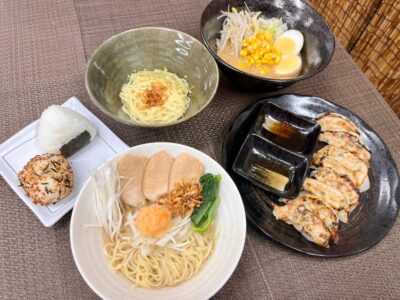
Japanese Washoku Bento Small Group Cooking Class
Read our review →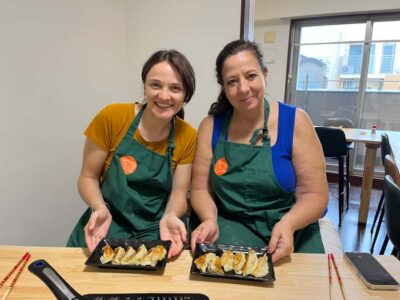
Easy Ramen Cooking Experience in Kabukicho, Shinjuku
Read our review →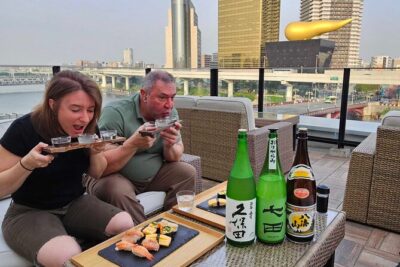
Ramen and Sushi Cooking Class with Sake Pairing Set in Tokyo
Read our review →Browse the lists this tour appears in