
Reviewed · WALKING TOURS
Kyoto Custom Private Walking Tour with A Guide (Private Tour)
Kyoto rewards a local guide. This private walking tour turns a large, sometimes confusing city into a day shaped around your interests. I like the one-group format and the chance to meet at your city accommodation, while the guide’s advance contact can help build a sensible plan instead of sending you through a random checklist.
I also like the flexibility. You can focus on temples, shrines, gardens, markets, historic neighborhoods, local food, or museums, with ticket-booking help available if needed. The main caution is guide quality: several guides, including Kokoro, Ian, Qianyu, Emma, and Andy, receive warm praise, but a few visitors found their guides late, poorly informed, difficult to understand, or too fast.
The price is listed at $53.15 per person, which can be good value for a private introduction to Kyoto, especially for a couple or family that wants personal attention. Just remember that attraction tickets, meals, drinks, tips, and public transportation cost extra.
In This Review
- Key points to know before booking
- Why a private walk can make Kyoto easier
- Your first contact with the guide
- What a two-hour Kyoto tour can cover
- How a six to eight-hour walk changes the experience
- Gion, Maruyama Park, and the old streets
- Museums and attraction tickets
- The value of $53.15 per person
- The guides who received the strongest praise
- Transport, walking pace, and practical limits
- Who should book this Kyoto walk
- Should you book this private Kyoto tour?
- FAQ
- How long does the private Kyoto walking tour last?
- Is this a private tour?
- Is pickup from my accommodation available?
- Are attraction tickets included?
- Can I visit a museum?
- Is food or drink included?
- Is public transportation included?
- Can most people participate?
- Can I cancel for a full refund?
- What happens if the weather is poor?
Key points to know before booking
- A private Kyoto walk: Only your group takes part, so you do not have to match another group’s pace or interests.
- A route built around you: Your guide contacts you before the tour to learn what you want to see and how you like to travel.
- Two to eight hours: The short option works as an orientation, while six to eight hours allows time for several neighborhoods and breaks.
- Exterior sightseeing by default: Monuments and museums can be viewed from outside unless you arrange visits and pay admission.
- Accommodation pickup in central Kyoto: Pickup is offered if your lodging is located in the city.
- Guide quality matters: Strong matches have included Kokoro, Ian, Qianyu, Emma, Andy, Keiko, Paul, and Bamah, but the assigned guide may differ.
Why a private walk can make Kyoto easier
Kyoto is not difficult because its sights are obscure. It is difficult because the city spreads across separate districts, and each district has its own rhythm, landmarks, and transport choices. A first visit can quickly become a day of checking maps, lining up ticket plans, and wondering which temple deserves your limited time.
This tour gives you a person to help sort out those choices. Before meeting, the guide contacts you to ask about your interests and tastes. That simple exchange is important. If you care about Buddhism, you can ask for temples and religious context. If you prefer gardens, old streets, markets, or everyday life, the route can lean in that direction.
I especially like this approach for a first afternoon in Kyoto. A good guide can help you get your bearings and suggest places for later independent visits. Emma, for example, helped one group plan the rest of its Kyoto stay, including vegetarian restaurants, shops, and bars.
You should not expect a fixed parade of famous sights. The experience is designed to change from one group to the next. That is its strength, but it also means you need to communicate clearly before the day begins.
More Walking Tours in Kyoto
- Kyoto Geisha Walking Tour: Gion District & Hidden Gems
★ 4.7 · 3,273 reviews - Kyoto: Gion Magical Night Walking Tour with Geisha Trivia
★ 4.9 · 2,393 reviews - Kyoto: Gion Geisha District Walking Tour – Stories of Geisha
★ 4.7 · 2,187 reviews
Your first contact with the guide
The guide is supposed to learn what you want before the walk starts. Use that opportunity well. Send a short list of priorities, explain how much walking your group handles comfortably, and mention children, mobility limits, food interests, or a desire to visit a museum.
This is not a tour where you simply show up and hope for the best route. The more specific you are, the more useful the time should be. Tell the guide if you want a gentle introduction to Kyoto or a packed six-hour day. Say if you prefer famous landmarks, quiet temple grounds, shopping streets, or local religious history.
Past experiences show why this matters. Ian planned a route around less touristy temples and shrines, while Paul was praised for knowing back routes away from large crowds. Kokoro was repeatedly singled out for his flexibility, warmth, and ability to explain Kyoto’s main sights while adding lesser-known stops.
Still, do not treat a guide name as a guarantee. Assignments can change, and the quality of the day depends heavily on the person sent to you. Confirm the meeting point and start time carefully. One poor experience involved confusion over a hotel pickup and Kyoto Station, followed by a delayed arrival.
What a two-hour Kyoto tour can cover
The shortest option lasts about two hours. Think of it as a useful orientation rather than a full survey of Kyoto.
In that time, you might focus on one compact area, such as Gion, Maruyama Park, nearby streets, a few temples and shrines, or Nishiki Market. A short walk can be enough to introduce local customs, explain the difference between Shinto shrines and Buddhist temples, and point out places to revisit later.
This format suits a solo visitor with limited time, a couple arriving between other plans, or anyone who wants help finding a good starting point. It also works well on the first day, when a local can explain how to move around and what deserves a longer visit.
The limitation is obvious: Kyoto is too spread out for a two-hour walk to cover many districts properly. If you want a museum, several religious sites, a market stop, and time for food, choose a longer duration.
How a six to eight-hour walk changes the experience
A six-hour tour gives the guide room to respond to your interests instead of rushing from one stop to the next. It can include several areas, a market, temples and shrines, local streets, and time for questions. One family praised Ian for adapting the plan to a member with limited mobility, while Bamah helped two families with six children balance sightseeing and group needs.
An eight-hour option offers the most room, but do not assume every minute will be spent walking or that food is included. This is still a walking tour, and meals and drinks are optional extras. Plan to discuss breaks before setting off.
A longer day also makes the guide’s pace more important. One visitor reported being left behind because the guide walked too quickly and did not want to stop for lunch during a six-hour booking. That is not a minor issue in Kyoto, where crowded paths and busy crossings can make a fast pace tiring.
I would tell your guide at the start that you want time to look, ask questions, and take photographs. A private tour should give you that freedom. If your group has children or limited mobility, make your preferred pace clear from the first message.
A completely different kind of day out in Kyoto:
- PERFECT KYOTO 1-Day Bus Tour
★ 5.0 · 13,518 reviews - Kyoto: Fushimi Inari, Kinkakuji, Bamboo Grove 1 Day Bus Tour
★ 4.8 · 4,316 reviews - Kyoto: Tea Ceremony in a Traditional Tea House in Kiyomizu
★ 4.9 · 3,519 reviews - Kyoto: Tea Ceremony Ju-An at Jotokuji Temple
★ 4.9 · 3,207 reviews
Gion, Maruyama Park, and the old streets
Several successful walks have included Gion, Maruyama Park, nearby lanes, and a finish at Nishiki Market. This is a sensible combination for a first look at Kyoto because it brings together traditional streets, religious buildings, open park space, shopping, and food.
In Gion, your guide can help explain the character of the historic district and point out details you might pass without noticing. The experience focuses on the exterior of monuments, so you should not assume entry to every temple, shrine, or museum.
Maruyama Park gives the walk a change of pace. From there, nearby temples and shrines can add cultural context without requiring a large transfer. A strong guide can explain how the sites differ and connect them to local customs.
Nishiki Market is a practical ending point. It gives you a chance to see food stalls and shopping in one concentrated area, and it can help you decide what to eat later. One guide also suggested restaurants and bars after the walk, which is useful if you are still learning your way around Kyoto.
The drawback is that these places can be busy. If your priority is quiet, ask for an early start or a route built around less crowded sites. Ian and Paul were both praised for finding calmer areas and back routes.
Museums and attraction tickets
Museums can be added if you tell the guide in advance. The company can help arrange tickets for desired visits, but admission itself is not included in the tour price.
That distinction matters. The base fee pays for the private walking service and customization. You should budget separately for any museum or monument admission, along with food, drinks, and local transportation.
Because the default experience centers on exterior visits, this tour is best for learning the setting and meaning of places rather than receiving a full guided museum tour. If a particular collection or interior matters to you, name it before the day begins and ask if it can fit the schedule.
The guide may be able to help with booking, but you should not assume every ticket can be obtained at short notice. Your advance planning is especially important during busy periods.
The value of $53.15 per person
At $53.15 per person, the tour is not the cheapest way to walk around Kyoto. You can explore many streets and public areas without paying a guide. The value comes from having a private person shape the day, answer questions, adjust the pace, and help with practical decisions.
For a couple, the price may be reasonable if you want a personal introduction and do not want to spend your first day sorting out routes. For a family, the value depends on the number of people and the guide’s ability to keep everyone involved. A private format can be especially useful when children, older relatives, or different interests are part of the group.
Group discounts are offered, though the exact saving is not provided. Ask about the final price for your party before booking. Since tickets and transportation are extra, compare the full cost with a public walking tour or a self-guided day.
The strongest value comes when you use the guide for local judgment, not just directions. Ask why a site matters, how a shrine differs from a temple, where to eat afterward, and which places are worth returning to alone. That turns a simple walk into a useful foundation for the rest of your stay.
The guides who received the strongest praise
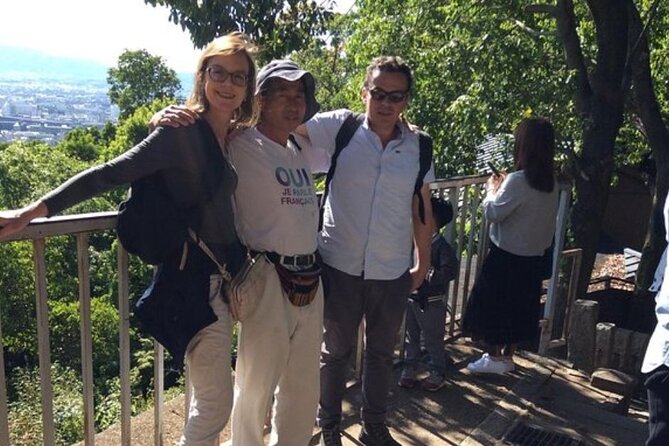
Guide assignment is the biggest variable here. Kokoro received repeated praise for his energy, kindness, flexibility, and understanding of Kyoto and Japan. He was also credited with surprising people with less obvious stops and explaining the city in an engaging way.
Ian was praised for careful planning, considerate pacing, and taking groups to quieter temples and shrines. Qianyu was described as flexible and good at shaping the tour around personal requirements. Andy was appreciated for patience, enthusiasm, and suggestions for cultural places outside the main route.
Emma helped one group understand Japanese culture, history, and language, then offered useful recommendations for the following days. Keiko received praise for communication and planning. Francisco brought a strong understanding of Buddhism to one particularly memorable experience, while Bamah handled the needs of two families with ten people and six children.
These examples show the kind of guide you should hope for: someone who listens, explains clearly, adjusts the route, and treats the walk as a shared day rather than a race between landmarks.
There were also serious weak spots. Some assigned guides were said to lack local or historical knowledge, give incorrect facts, use Google Maps to find sites, or offer little enthusiasm. One booking involved a guide who did not show up, with the company agreeing to a refund only after the missed appointment.
That range does not make the tour a bad choice, but it makes communication and confirmation important. If you have strong academic or religious interests, ask how your guide’s experience matches them.
Transport, walking pace, and practical limits
This is a walking tour. Car transportation is not included, and local or public transportation is also extra. You may still need buses or trains to reach another district, especially on a longer day, so discuss the route before committing to distant areas.
Pickup is available at your accommodation if it is in the city. The meeting point should be confirmed clearly, especially if your hotel is near a major station or has more than one entrance.
Most people can take part, and service animals are allowed. The available information does not promise a fully accessible route, so anyone with limited mobility should discuss slopes, stairs, walking distance, and rest stops before booking. The experience can be adapted, but adaptation depends on the route and guide.
Weather matters as well. The tour requires good weather. If poor weather causes cancellation, you are offered another date or a full refund.
Cancellation is free up to 24 hours before the local start time. Canceling or changing the booking within 24 hours normally brings no refund, so leave yourself enough notice if your plans are uncertain.
Who should book this Kyoto walk
I would recommend it most strongly to first-time visitors who want help getting oriented without joining a large group. It is also a good fit for couples, families, solo visitors, and groups with mixed interests.
Families can benefit from the private format because the guide can balance children, adults, sightseeing, and breaks. Solo visitors may value the company and practical help. Couples can shape a short walk around a neighborhood, market, or evening outing.
You should think twice if you want guaranteed specialist historical instruction, a fixed list of major attractions, or included entrance tickets. A self-guided day may be better if you are comfortable with maps and research. A public or government-run tour may suit you more if formal credentials and consistent subject knowledge matter most.
Should you book this private Kyoto tour?
Book it if you want a flexible first look at Kyoto and are willing to help shape the plan. The best experiences appear to come from guides who listen well, explain local culture clearly, and take you beyond the obvious route.
Before paying, send your interests, mobility needs, desired pace, and must-see places. Confirm the pickup location, duration, ticket costs, transportation needs, and whether a museum visit is realistic. If your ideal day depends on a specialist guide, ask about that match directly.
At $53.15 per person, it can be a fair buy for personal attention and local orientation. Just keep expectations realistic: the route is flexible, entry fees are extra, and the assigned guide can make or break the day.
FAQ
How long does the private Kyoto walking tour last?
The tour lasts approximately two to eight hours. You choose the duration when booking.
Is this a private tour?
Yes. Only your group participates, and the guide customizes the experience around your interests and personality.
Is pickup from my accommodation available?
Pickup is offered at your accommodation if it is located in Kyoto city.
Are attraction tickets included?
No. Tickets to attractions are not included. The team can help book tickets for desired visits if you arrange them in advance.
Can I visit a museum?
Yes, a museum visit may be added if you tell the guide ahead of time. Museum admission is optional and costs extra.
Is food or drink included?
No. Food and drinks are not included, though you may choose to stop for them during the experience.
Is public transportation included?
No. This is a walking tour, and local or public transportation is not included. Car transportation is not provided.
Can most people participate?
Yes. Most people can participate, and service animals are allowed. If someone in your group has limited mobility, discuss the route and pace with the guide beforehand.
Can I cancel for a full refund?
Yes, if you cancel at least 24 hours before the experience start time. Cancellations within 24 hours are not refunded.
What happens if the weather is poor?
The experience requires good weather. If it is canceled because of poor weather, you are offered a different date or a full refund.
Just added around Kyoto
- Kyoto: Gion Night Walking Tour with Geisha Insight★ 5.0 · 39 reviews
- Kyoto: Private Customizable Day Trip by Car★ 5.0 · 38 reviews
- Kyoto: Full Day Bike Tour★ 4.9 · 39 reviews
- Private Japanese Calligraphy in Kyoto – Learn Shodō with a Master★ 5.0 · 39 reviews
- Kyoto: Gion Evening Walk with Hidden Gems, Geisha & Sake★ 5.0 · 41 reviews
- Experience a tea ceremony in an authentic tearoom, in Kyoto!★ 4.5 · 41 reviews
- Kyoto Private Photo Shoot & Tour by SnapKyoto★ 5.0 · 41 reviews
- The Way of Tea: Kyoto Crafts, Hidden Temples & Wabi-Sabi Walk★ 5.0 · 41 reviews
Walking Tours, compared.
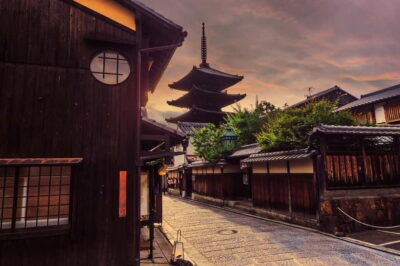
Kyoto Geisha Walking Tour: Gion District & Hidden Gems
Read our review →
Tokyo Tsukiji Fish Market Food and Culture Walking Tour
Read our review →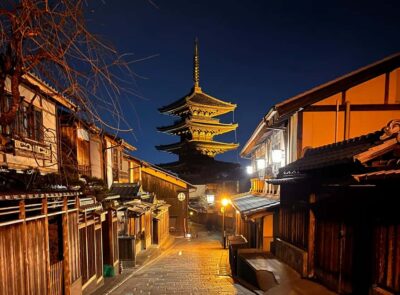
Gion Magical Night Walking Tour with Geisha Trivia
Read our review →
Imperial Palace and Shogun Historical Walking Tour
Read our review →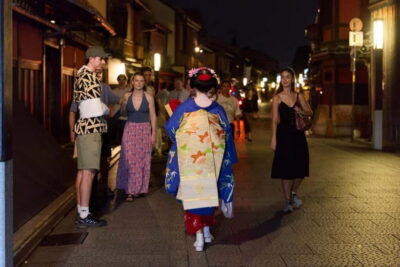
Gion Geisha District Walking Tour – Stories of Geisha
Read our review →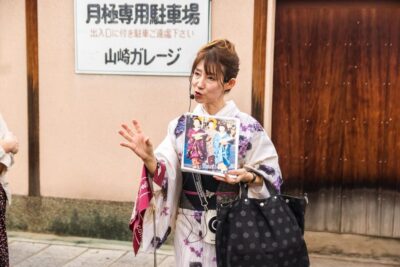

Shinjuku Local Bar and Izakaya Guided Walking Tour
Read our review →
Browse the lists this tour appears in