
Reviewed · WALKING TOURS
Kyoto Early Bird Walking Tour
Kyoto rewards early risers. This private morning walk links Fushimi Inari, Kinkaku-ji, and Arashiyama in about five hours, giving you a useful first look at three of the city’s most famous sights before the crowds build. I especially like the quiet start at Fushimi Inari and the way the tour finishes around noon, leaving your afternoon open.
I also like having a guide handle the trains and buses between sites spread across Kyoto. That convenience comes at a cost, though. At $105.45 per person, plus ¥1,220 for public transportation and ¥500 for Kinkaku-ji, this is not a budget outing. The pace is brisk, and you need comfortable shoes.
In This Review
- Kyoto highlights before the crowds arrive
- Why this early start matters in Kyoto
- Fushimi Inari: one hour beneath the vermilion torii
- Kinkaku-ji: the Golden Pavilion in morning light
- Arashiyama: bamboo before the midday rush
- Public transport is part of the experience
- What the private format really gives you
- Pace, comfort, and accessibility
- Is $105.45 per person good value?
- Who should book this Kyoto morning?
- Final call: a smart first half-day in Kyoto
- FAQ
- Where does the Kyoto Early Bird Walking Tour start?
- Where does the tour finish?
- How long does the tour last?
- Which attractions are included?
- Is Kinkaku-ji admission included?
- Is public transportation included?
- Is this a private tour?
- How much walking is required?
- Can I cancel for a full refund?
Kyoto highlights before the crowds arrive
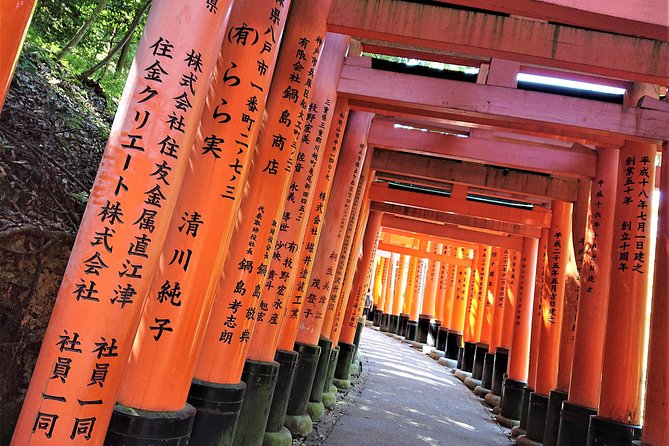
- Fushimi Inari before the tour groups: Walk beneath the famous vermilion torii gates while the shrine is still relatively calm.
- Kinkaku-ji at opening time: See the Golden Pavilion and its pond in the softer morning light. Admission costs ¥500 extra.
- Arashiyama’s bamboo forest in the cool morning air: Reach the grove before the midday rush and warmer temperatures.
- Private guiding for your group: Your party participates on its own, with the guide able to answer questions and adjust the flow when possible.
- Public transportation made easier: The guide leads you through the train, subway, and bus connections, with fares totaling ¥1,220 per person.
- A useful first half-day in Kyoto: The tour ends back at Kyoto Station around noon, giving you time for another neighborhood, a museum, or lunch.
Why this early start matters in Kyoto
Kyoto’s best-known places can become crowded quickly. Fushimi Inari, Kinkaku-ji, and Arashiyama are all major stops on first-time itineraries, so the timing is the main selling point here, not simply the number of attractions.
The tour begins in the early morning at Kyoto Station. That may feel painfully early after a long flight, but jet lag can work in your favor. One family found the start especially useful because they were naturally awake early, and the group managed to cover the sites at a good but fast pace.
The private format is another practical advantage. You are not waiting for a large group to gather at every corner, and your guide can check your pace, water needs, and interests. Guides such as Akiko, Sumiko, Kaz, Megumi, Tomoko, Miho, and Makoto-san have been praised for explaining Japanese history and culture clearly, taking photos, and helping with small needs along the way.
You should still think of this as an active half-day, not a relaxed stroll. The three locations sit in different parts of Kyoto, and the sightseeing includes a fair amount of walking plus public transport. The tour description calls for moderate physical fitness, and that is a fair warning.
More Walking Tours in Kyoto
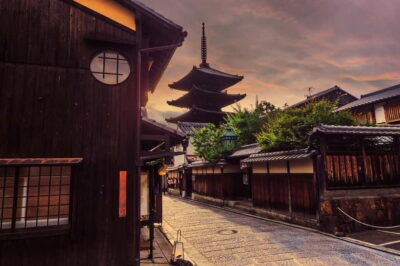
- Kyoto Geisha Walking Tour: Gion District & Hidden Gems
★ 4.7 · 3,273 reviews - Kyoto: Gion Magical Night Walking Tour with Geisha Trivia
★ 4.9 · 2,393 reviews - Kyoto: Gion Geisha District Walking Tour – Stories of Geisha
★ 4.7 · 2,187 reviews
Fushimi Inari: one hour beneath the vermilion torii
Your first stop is Fushimi Inari-taisha Shrine, reached from Kyoto Station. Its most famous feature is the long tunnel of orange-red torii gates, donated by worshippers in gratitude for good fortune connected with the deity enshrined here.
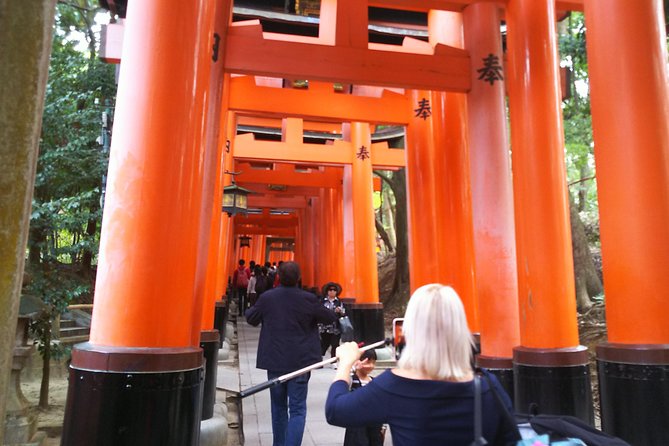
The early hour is especially valuable at Fushimi Inari. The shrine grounds are open, atmospheric, and photogenic before the main wave of organized groups arrives. You can walk through the gates with more breathing room, pause for photographs, and listen to your guide explain the meaning of the shrine and its offerings.
The one-hour stop gives you a taste of the complex rather than a full climb through every section. That is important to understand. Fushimi Inari extends well beyond the first striking rows of gates, so you are not likely to explore every path in an hour. Instead, the tour focuses on seeing the signature torii route and understanding why the shrine matters.
This is also one of the places where a guide adds real value. The gates can look like a beautiful corridor at first glance, but their purpose, religious setting, and connection to worshippers’ gratitude give the visit more depth. Guides have also been praised for finding good photo positions and helping families get pictures together.
You will walk on an uneven route and may encounter steps or inclines, so sturdy shoes are sensible. There is no admission charge for this stop.
Kinkaku-ji: the Golden Pavilion in morning light
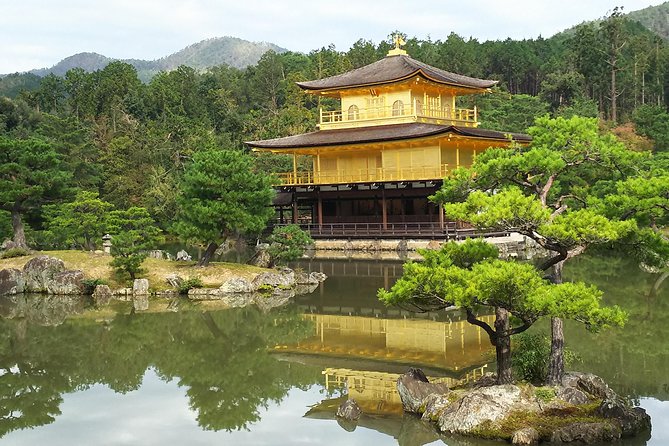
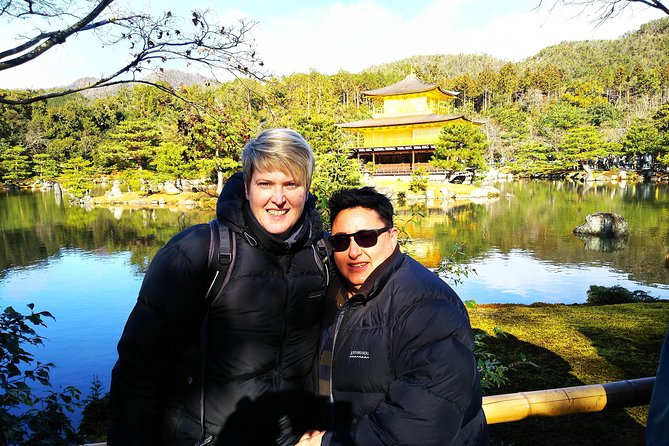
Next comes Kinkaku-ji, commonly called the Golden Pavilion. This Zen temple is one of Kyoto’s most recognizable sights, with its gilded exterior reflected in the pond beside it.
The timing is carefully chosen. The visit takes place just after the temple opens, when the grounds are quieter than they will be later in the day. Morning light can also make the pavilion especially striking, with the gold catching the sun above the water.
Your guide leads you around the temple grounds and explains its place in Kyoto’s Buddhist and samurai culture. Several guides have been praised for answering questions about Japanese ceremonies, religion, history, and customs instead of simply pointing out the famous building.
Kinkaku-ji is not a place where you wander freely through every interior room. The main pleasure is the view from the garden route, particularly the pavilion, pond, and surrounding setting. If you are expecting an extended temple meditation or a long indoor visit, adjust your expectations. This is a focused sightseeing stop.
Admission is not included. The stated fee is ¥500 per person, so add that to the tour cost. The extra fee is small, but it is worth carrying enough yen or being prepared to pay as directed by the guide.
The one-hour allocation works well for a first visit. You can see the main view, walk the grounds, ask questions, and take photographs without turning the stop into a rushed snapshot. The early timing also matters here because the viewing area can become much harder to enjoy as the day progresses.
Arashiyama: bamboo before the midday rush
The final major stop is Arashiyama, best known here for its bamboo forest. The grove is most appealing in the morning, when the air is cooler and the sunlight filters through the tall stalks.
The sound of the breeze moving through the bamboo is part of the experience. Your guide may invite you to pause and close your eyes for a moment, an easy way to notice the atmosphere rather than treating the grove as a quick photo backdrop.
The one-hour stop is enough for a walk through the renowned section, but it does not turn the tour into a full exploration of Arashiyama. The district has more to offer than bamboo, yet this outing is designed to give you the major forest experience before the site becomes crowded.
This is often the most physically comfortable part of the morning because the grove offers shade, though you will still be walking. In summer, the difference between an early visit and a midday visit can be noticeable. Bring water, especially if the weather is warm. One guide also received praise for reminding the group about practical needs such as water and restroom breaks.
Arashiyama is at the opposite end of Kyoto from Fushimi Inari, which explains why the transport planning matters so much. Without a guide, you would need to work out several connections while keeping an eye on opening times and the clock. With this tour, the guide leads the way.
A completely different kind of day out in Kyoto:
- PERFECT KYOTO 1-Day Bus Tour
★ 5.0 · 13,518 reviews - Kyoto: Fushimi Inari, Kinkakuji, Bamboo Grove 1 Day Bus Tour
★ 4.8 · 4,316 reviews - Kyoto: Tea Ceremony in a Traditional Tea House in Kiyomizu
★ 4.9 · 3,519 reviews - Kyoto: Tea Ceremony Ju-An at Jotokuji Temple
★ 4.9 · 3,207 reviews
Public transport is part of the experience
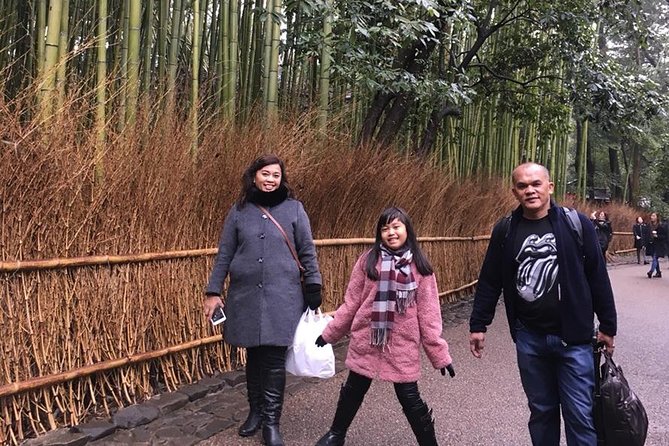
This is a walking tour, but it is not a walk from Kyoto Station to all three attractions. Public transportation connects the stops, and the fare is listed as ¥1,220 per person. The cost is not included in the tour price.
For many people, this is one of the strongest reasons to book. Kyoto’s buses and trains are manageable once you understand them, but the three stops are widely separated. A good guide can point you toward the right platform, bus, or station and help you avoid losing time.
Several families specifically valued this help. One group arrived with charged IC cards and found it useful to have the guide manage the best routes between the sites. Another group appreciated that their guide made the connections feel simple even in rainy weather.
You should prepare before meeting at Kyoto Station. An IC card, such as a Suica card on your phone, can be convenient for local trains, buses, and vending machines, according to one detailed account. The tour data does not require an IC card, so you can ask the operator what payment method is best for your date.
The transport element does mean that the morning has a fixed rhythm. You will not have unlimited time at each shrine or temple, and delays could put pressure on the schedule. That tradeoff is reasonable if your priority is seeing all three places in one morning.
What the private format really gives you
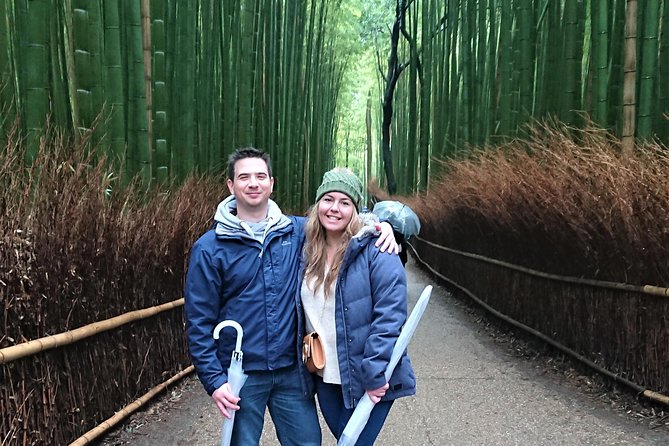
The experience is private, meaning only your own group participates. That does not make the tour slow or leisurely. Instead, it gives you a guide focused on your party and makes it easier to ask questions or request small adjustments.
A family of four found that their guide adjusted the order slightly when asked. Other groups valued guides who checked on restrooms, water, weather, and the needs of children. Akiko was praised for working well with young children and taking family photographs, while Kaz made conversation with younger visitors about Studio Ghibli films.
The guides appear to bring different personalities to the experience, but the strongest pattern is clear: visitors value patience, organization, and cultural explanation. Sumiko has been praised for providing a printed agenda and knowing good photo spots. Makoto-san contacted his group before a rainy tour, introduced himself, shared pictures of the Kyoto Station meeting point, and asked about their interests.
You cannot assume a particular guide will be available unless the operator confirms it. Still, the consistent praise for guides including Akiko, Kaz, Tomoko, Miho, Emiko, Hiro, Naoko, Makiko, Toshi, Miko, and Kazuo suggests that the human side is a major part of the tour’s appeal.
Pace, comfort, and accessibility
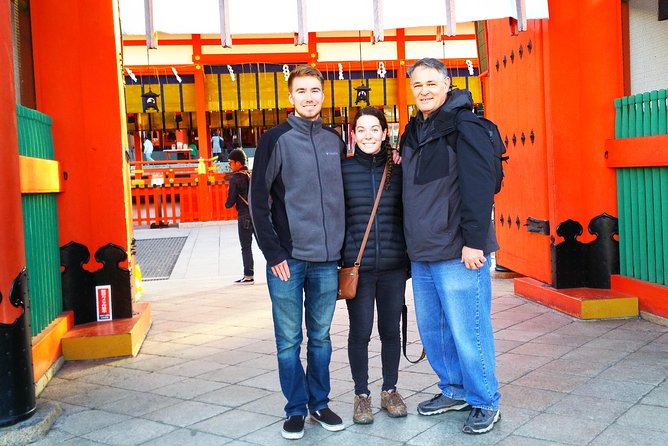
The advertised duration is about five hours and fifteen minutes, though the activity is expected to finish around noon. You start at Kyoto Station and return to the meeting point at the end.
You need comfortable walking shoes. The morning includes shrine paths, temple grounds, station transfers, and the bamboo grove. Bring water, and consider a sun umbrella in summer. A recent participant found a sun umbrella useful, and it is a practical choice in Kyoto’s heat.
The tour is described as suitable for people with limited eyesight and limited mobility, but it also says that a moderate fitness level is needed and that quite a bit of walking is involved. Those details are not contradictory, but they do mean you should discuss your specific needs with KAMNAVI Tours before booking.
Animals or pets are allowed according to the activity information. People with heart conditions are advised not to book. Since the route moves through several sites and uses public transportation, ask ahead about any mobility concern that could affect stairs, boarding, or walking distances.
Rain does not always ruin the outing, but the experience requires good weather and can be canceled if conditions are poor. If that happens, you are offered another date or a full refund.
Is $105.45 per person good value?
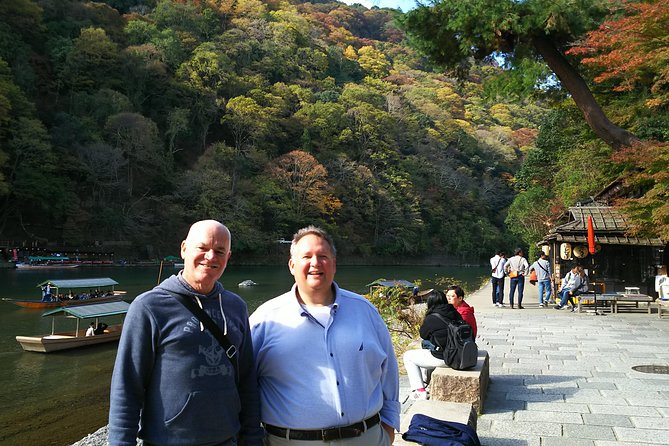
The listed price is $105.45 per person. You then need to add ¥1,220 for public transportation and ¥500 for Kinkaku-ji admission, while food and drinks are also your responsibility.
That makes the tour a significant purchase, especially for a family. The value depends on what you want to avoid. If you are comfortable navigating Kyoto alone, you can visit these places for less. You would need to plan the route, watch opening times, manage transfers, and provide your own historical context.
The price makes more sense if you have limited time in Kyoto or want a smooth first morning. You get a private guide, a carefully timed route, and help moving between three major sights. The tour also protects your afternoon, which has real value on a short trip.
I would consider it particularly worthwhile for first-time visitors, families, and people who feel uneasy using Kyoto’s public transportation. It can also suit anyone dealing with jet lag who wants to turn an early morning into productive sightseeing.
For independent visitors who enjoy slow temple visits, long photography sessions, or exploring one district in depth, the cost and pace may not suit you. You are paying for coordination and guidance, not an all-day private car or an exhaustive tour of each site.
Who should book this Kyoto morning?
Book it if you want the essential views at Fushimi Inari, Kinkaku-ji, and Arashiyama in one organized morning. It is a strong choice for a first day in Kyoto because it gives you an overview of major religious and cultural sights while showing you how the city’s transport system works.
It also fits families well, especially if you appreciate help with photographs, restroom stops, children, and route planning. The private setting means your guide can speak with your group rather than giving a one-size-fits-all speech.
Skip it if you dislike early starts or prefer to linger. You will cover a lot of ground, and the pace is purposeful. I would also avoid booking if a long morning of walking and public transport sounds tiring.
The cancellation policy is generous if your plans change: cancel at least 24 hours before the start time for a full refund. Changes or cancellations inside 24 hours are not accepted for a refund.
Final call: a smart first half-day in Kyoto
I recommend the Kyoto Early Bird Walking Tour for visitors who want to see three headline sights before the crowds take over. The early access feeling at Fushimi Inari and Kinkaku-ji is the main prize, while the bamboo forest gives the morning a calm, scenic finish.
The strongest reason to book is the guide. People such as Akiko, Sumiko, Kaz, Miho, and Makoto-san have been praised for clear explanations, route help, photo-taking, and care with families. The main caution is the price and the brisk walking pace.
If you have only a few days in Kyoto, want help with transport, and can manage an early start, this is a sensible use of one morning. If you have more time and enjoy planning your own route, visit independently and spend the savings on a longer meal or another temple.
FAQ
Where does the Kyoto Early Bird Walking Tour start?
The tour starts at Kyoto Station Building, 901 Higashishiokōjichō, Shimogyo Ward, Kyoto, 600-8216, Japan.
Where does the tour finish?
The activity ends back at the meeting point at Kyoto Station.
How long does the tour last?
The advertised duration is approximately 5 hours and 15 minutes. It is expected to finish around noon.
Which attractions are included?
The tour visits Fushimi Inari-taisha Shrine, Kinkaku-ji Temple, and Arashiyama’s bamboo forest.
Is Kinkaku-ji admission included?
No. Admission to Kinkaku-ji costs ¥500 per person and is not included.
Is public transportation included?
No. Public transportation costs ¥1,220 per person and are not included in the tour price.
Is this a private tour?
Yes. Only your own group participates in the activity.
How much walking is required?
Quite a bit of walking is required, and a moderate level of physical fitness is recommended. Comfortable walking shoes are advised.
Can I cancel for a full refund?
Yes. You can cancel at least 24 hours before the local start time for a full refund. Cancellations or changes made less than 24 hours before the start time are not refunded.
Just added around Kyoto
- Kyoto: Private Customizable Day Trip by Car★ 5.0 · 38 reviews
- Kyoto: Gion Night Walking Tour with Geisha Insight★ 5.0 · 39 reviews
- Kyoto: Full Day Bike Tour★ 4.9 · 39 reviews
- Private Japanese Calligraphy in Kyoto – Learn Shodō with a Master★ 5.0 · 39 reviews
- Experience a tea ceremony in an authentic tearoom, in Kyoto!★ 4.5 · 41 reviews
- Kyoto: Gion Evening Walk with Hidden Gems, Geisha & Sake★ 5.0 · 41 reviews
- Kyoto Private Photo Shoot & Tour by SnapKyoto★ 5.0 · 41 reviews
- The Way of Tea: Kyoto Crafts, Hidden Temples & Wabi-Sabi Walk★ 5.0 · 41 reviews
Walking Tours, compared.
Kyoto Geisha Walking Tour: Gion District & Hidden Gems
Read our review →
Tokyo Tsukiji Fish Market Food and Culture Walking Tour
Read our review →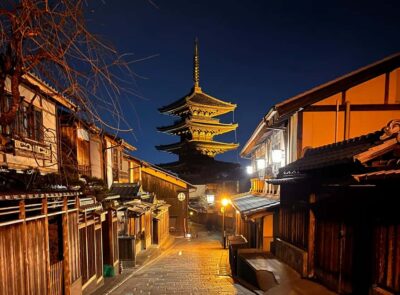
Gion Magical Night Walking Tour with Geisha Trivia
Read our review →
Imperial Palace and Shogun Historical Walking Tour
Read our review →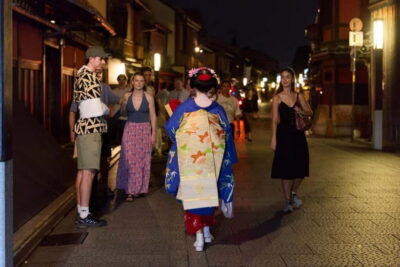
Gion Geisha District Walking Tour – Stories of Geisha
Read our review →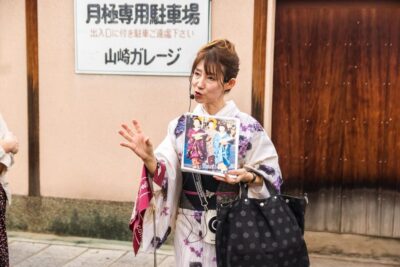

Shinjuku Local Bar and Izakaya Guided Walking Tour
Read our review →
Browse the lists this tour appears in