
Reviewed · WALKING TOURS
Kyoto Fushimi-Inari Night Walking Tour
Kyoto glows differently after dark. This Fushimi Inari night walk gives you a calmer look at Kyoto’s famous red torii gates, with a guide explaining the shrine’s customs, symbols, and stories. I like the cooler evening air and the small-group limit of 12. I also like the chance to notice details you could easily pass by alone. The tradeoff is simple: once dusk fades, parts of the mountain path are genuinely dark, and you’ll need steady walking shoes.
At $43.11 per person, this is not the cheapest way to see Fushimi Inari, since entry to the shrine itself is free. But you are paying for context, route guidance, and a more relaxed visit at a difficult-to-navigate site. Guides such as Jem, Tammy, Hiro, Masaki, Caleb, and Yessi have earned especially warm praise for their clear explanations, friendly manner, and willingness to answer questions.
In This Review
- Key points at a glance
- Why Fushimi Inari works so well at night
- Meeting the guide at the fox statue
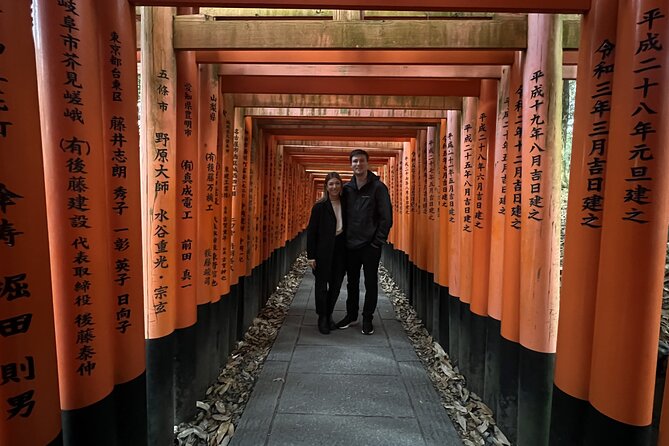
- Walking beneath the torii gates
- Understanding Inari, foxes, and Shinto practice
- The small-group advantage
- What the evening atmosphere feels like
- Guides who shape the experience
- Is $43.11 good value?
- Who should book this Kyoto night walk?
- Practical details before you go
- Final verdict: a worthwhile evening at Fushimi Inari
- FAQ
- Where does the Fushimi Inari night tour meet?
- Where does the tour end?
- How long does the walking tour last?
- How much does the tour cost?
- How large is the tour group?
- Is admission to Fushimi Inari included?
- Should I wear special clothing?
- Can I cancel for a refund?
Key points at a glance
- The torii gates look different after sunset: Lanterns, shadows, and fewer people create a quieter mood than the daytime visit.
- A maximum of 12 people keeps the walk personal: You can ask questions and stay connected with the guide more easily than in a large group.
- The walk lasts about 90 minutes to two hours: Expect an uphill route on paths leading toward Mount Inari.
- Guides explain more than the gates: You’ll learn about Inari, fox statues, prayer customs, smaller shrines, and Shinto traditions.
- The meeting point is easy to identify: Look for the fox statue at the entrance to Fushimi Inari Taisha.
- Bring practical clothing: Walking shoes are important, and layers help in cooler months such as December.
Why Fushimi Inari works so well at night
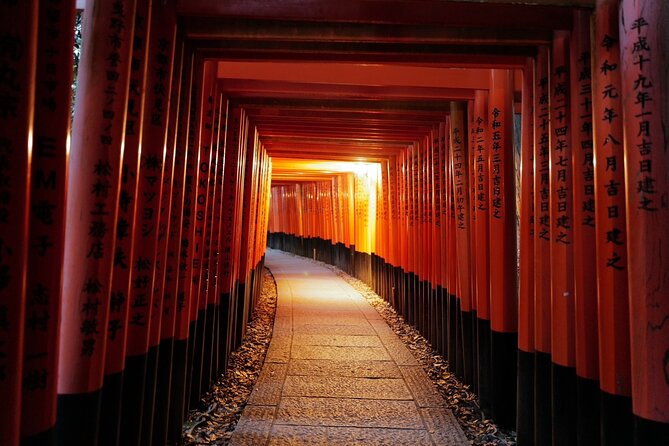
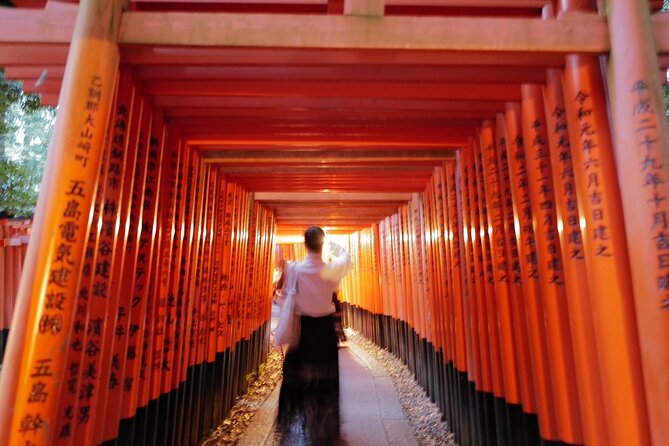
Fushimi Inari Taisha is one of Kyoto’s most recognizable sights because of its thousands of orange-red torii gates. During the day, the first section can feel crowded, with people stopping for photographs beneath the tightly spaced gates.
The evening changes the rhythm. The heat drops, the noise softens, and the gates become a series of glowing frames around the path. You still may encounter people near the entrance, especially at the start of an early evening tour, but the numbers tend to thin as the walk continues.
I like this timing because it gives you two moods in one outing. If your tour begins around 6 p.m., you may start in late daylight and watch the shrine shift into nighttime. One tour participant found the transition especially useful because the path remained lit while the air became cooler and the crowds eased.
Do not expect a completely empty shrine. Fushimi Inari remains a popular place, and the lower approach can still have plenty of people. The point is not total solitude. The point is a more peaceful pace and a different way to see a very familiar sight.
More Walking Tours in Kyoto
- Kyoto Geisha Walking Tour: Gion District & Hidden Gems
★ 4.7 · 3,273 reviews - Kyoto: Gion Magical Night Walking Tour with Geisha Trivia
★ 4.9 · 2,393 reviews - Kyoto: Gion Geisha District Walking Tour – Stories of Geisha
★ 4.7 · 2,187 reviews
Meeting the guide at the fox statue
The tour begins at the fox statue near the entrance to Fushimi Inari Taisha, at the address in the Fushimi Ward area near Inari Station. This detail matters because the shrine grounds can feel confusing once you move beyond the main approach.
Arrive with the meeting point in mind rather than assuming you can simply meet inside the shrine. A guide may contact you through WhatsApp before the walk to confirm the address and attendance. Tammy received particular praise for doing this, which can be reassuring if you are unfamiliar with Kyoto’s station exits and shrine entrance.
The shrine is near public transportation, and the tour ends back at the starting point. That makes it easier to continue with dinner or return to your hotel after the walk. One guide also offered dinner and sightseeing suggestions, a useful bonus if Fushimi is part of a larger Kyoto evening.
The mobile ticket keeps the booking simple. Confirmation is sent at the time of booking, so keep the ticket available on your phone.
Walking beneath the torii gates
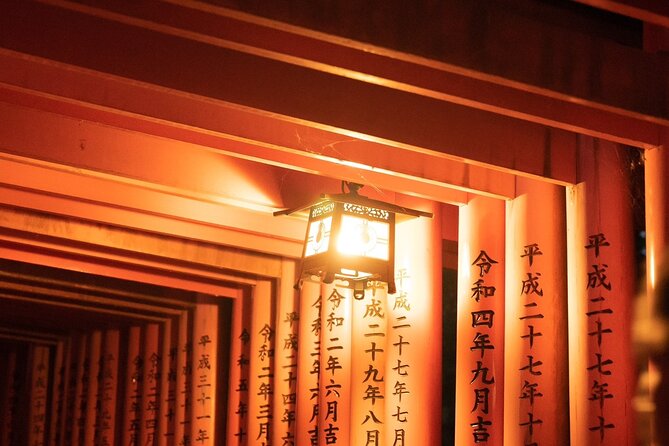
The main event is a guided walk along the paths leading up Mount Inari. The gates are not just a short photo stop at the entrance. You’ll walk through a sequence of paths, pass smaller shrines, and see stone fox statues connected with the worship of Inari.
The route is a small hike, not a flat stroll. You do not need to be a serious hiker, since the activity information says most people can participate, but you should be comfortable walking uphill and standing for much of the tour. Wear shoes with a firm sole. Sandals or slick street shoes will make the stone and mountain paths less comfortable.
The amount of walking is one of the tour’s strengths because it takes you beyond the first crowded gates. It is also the main physical consideration. A two-hour visit can feel longer if you are tired from a full day of sightseeing, so plan your Kyoto schedule with some space before the meeting time.
At night, the walk asks for a little more attention. One detailed account noted that much of the route took place in full darkness rather than at dusk. The paths have lights, but you should still watch your footing and stay with the group.
Understanding Inari, foxes, and Shinto practice
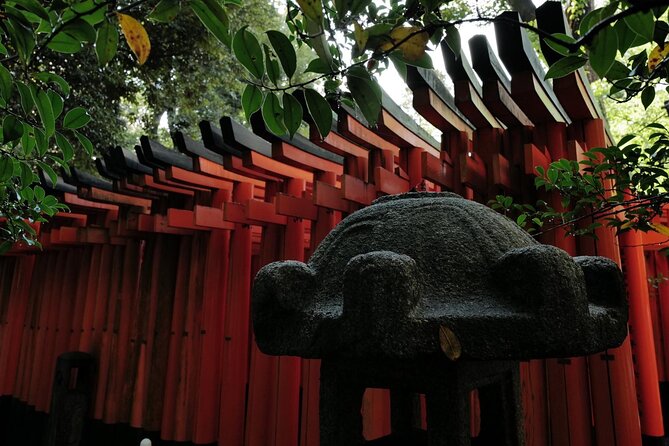
Without explanation, Fushimi Inari can look like an endless corridor of photogenic gates. A good guide helps you understand why the shrine matters and points out things you might otherwise ignore.
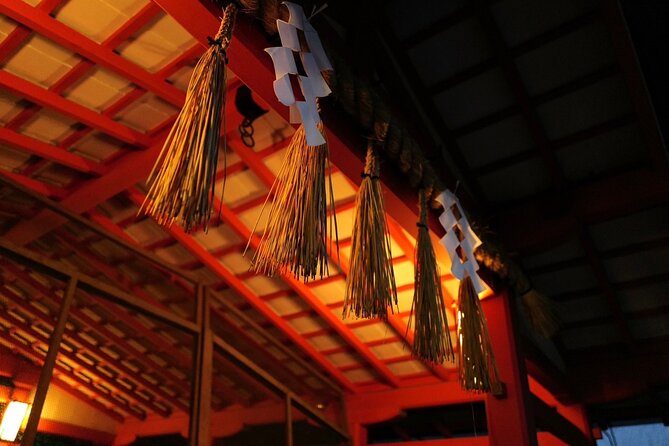
Inari is associated with rice, farming, business, success, health, and happiness. The shrine is a place where people pray for practical hopes, not only admire its architecture. Fox statues appear throughout the grounds because foxes are seen as messengers of Inari.
Guides also explain how to behave and pray at different sites. Yessi was praised for showing the group that separate places within the shrine can involve different rituals. That kind of instruction is valuable because Japanese shrine customs are easy to observe incorrectly when you are moving quickly or copying the nearest person.
You may also learn about the smaller shrines and stone markers tucked beside the main route. These details give the walk more substance. Instead of photographing one gate after another, you begin to see the mountain as a working religious site with many layers of use.
The strongest guides seem to keep the information moving. Caleb was repeatedly praised for giving clear explanations without turning the walk into a lecture. He also made the material understandable for children, using an interactive style that kept families involved.
A completely different kind of day out in Kyoto:
- PERFECT KYOTO 1-Day Bus Tour
★ 5.0 · 13,518 reviews - Kyoto: Fushimi Inari, Kinkakuji, Bamboo Grove 1 Day Bus Tour
★ 4.8 · 4,316 reviews - Kyoto: Tea Ceremony in a Traditional Tea House in Kiyomizu
★ 4.9 · 3,519 reviews - Kyoto: Tea Ceremony Ju-An at Jotokuji Temple
★ 4.9 · 3,207 reviews
The small-group advantage
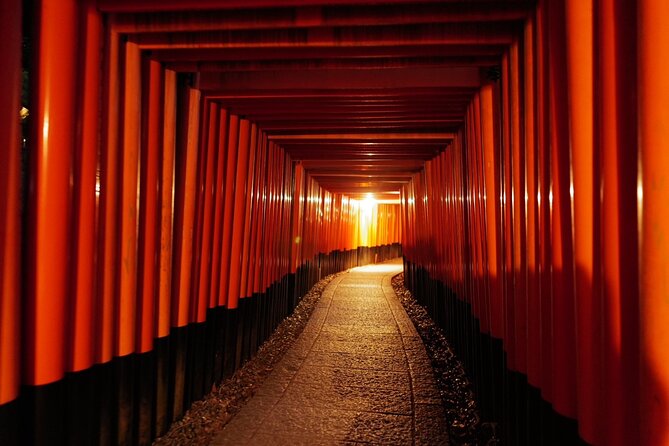
The maximum group size is 12 people. That is large enough to provide company but small enough for the guide to keep the group together on a winding path.
I value this format at Fushimi Inari because the site is easy to lose your bearings in, especially after dark. A guide can manage the route while you concentrate on the gates, lanterns, statues, and views. Hiro was praised not only for explaining the shrine’s traditions but also for helping with navigation.
A small group also improves the question-and-answer part of the experience. You can ask about prayer customs, architecture, local stories, or nearby food without waiting through a long line of people. Masaki was noted for being patient with questions and for allowing time for photographs.
The group size is not a guarantee of silence. You will still hear other people near the entrance, and the mountain path is a public place. But 12 people is far easier to manage than a large sightseeing group.
What the evening atmosphere feels like
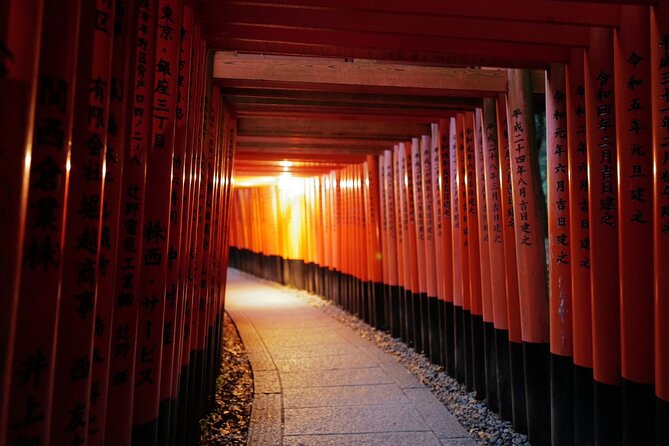
The nighttime setting is the reason to book this particular version of a Fushimi Inari visit. The gates take on a more dramatic look as light falls behind them, and the route feels more atmospheric than it does under bright midday sun.
That atmosphere can be moving, but it is not the same as a private after-hours access experience. The shrine is still open to other people, and the lower area may remain active early in the evening. Set your expectations correctly and you are more likely to enjoy the gradual change from busy to quiet.
The tour can also be a smart response to Kyoto’s summer weather. One August outing was praised because the night visit was much more comfortable than walking the mountain in the afternoon heat. In December, the advice changes: bring layers. Temperatures can drop once you are on the darker, higher paths.
Rain does not necessarily ruin the experience. One small group continued during wet weather and still enjoyed having the shrine to themselves for much of the walk. You should, however, expect slippery conditions and reduced comfort if the weather turns poor.
Guides who shape the experience
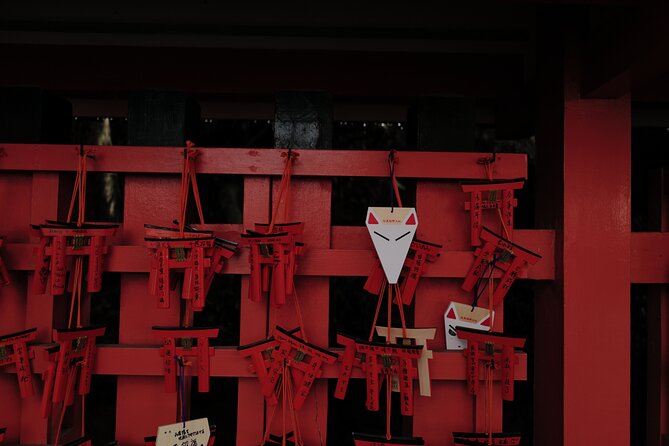
The guide makes a noticeable difference on a cultural walk. This tour has received strong praise for several guides, each bringing a slightly different approach.
Jem is described as organized, friendly, and full of stories. Her strength is keeping the group together while explaining the historical importance of the shrine in a lively way.
Tammy combines preparation with patience. Her pre-tour message can help you reach the correct meeting point, and her explanations focus on the shrine’s importance without losing the friendly feel of the evening.
Hiro received some of the strongest praise for answering questions clearly and making people feel welcome in Japan. His guidance is especially useful for navigation, since the paths can become confusing after dark.
Masaki is a good fit if you want practical conversation along with cultural background. He has helped with photographs, answered questions patiently, and offered suggestions for food and other Kyoto sights.
Caleb’s style is energetic but not overwhelming. He explains the meaning of objects and customs in plain language, keeps children involved, and adds personal stories from his life in Japan. His musical background has also become part of his friendly style.
Yessi focuses on small details and ritual. She can help you understand the different prayer practices around the shrine, making the visit feel more respectful and less like a simple photo walk.
Your guide will not necessarily be one of these exact people, but the consistent praise for this group points to the tour’s main value: human explanation in a place that can otherwise feel visually impressive but hard to understand.
Is $43.11 good value?
The entrance to Fushimi Inari Taisha is free, so the price needs to be judged against the guide service rather than admission.
At $43.11 per person, I would consider this fair value if you want cultural context, help with the route, and a quieter time of day. You are paying for roughly 90 minutes to two hours of walking with a guide, plus the convenience of a small group.
It is less compelling if you are happy to walk through the lower gates on your own, take photographs, and leave without learning about Shinto practice. Independent access costs nothing, and the shrine is easy to reach by public transportation.
The value improves for first-time visitors, families, and anyone who feels unsure about nighttime navigation. It also makes sense for people with limited Kyoto time who want both the main gate corridor and a taste of the mountain paths without planning the route themselves.
The 100 percent recommendation rate and 5 out of 5 score from 320 ratings suggest the experience has performed consistently well. No tour suits every person, but this is a strong signal that the guide-led format is doing what it promises.
Who should book this Kyoto night walk?
You should consider booking if you want:
- A cooler alternative to daytime sightseeing
- A calmer setting for photographs
- Explanations of Shinto customs and shrine symbols
- A small group rather than a large bus-style outing
- Help finding your way through the mountain paths
- A family-friendly cultural activity with clear explanations
- Local suggestions for food and other Kyoto sights
You may prefer an independent visit if you want to set your own pace or avoid walking uphill. You may also prefer daytime if darkness makes you uncomfortable or if your main goal is to see every detail of the shrine architecture.
The walk is best for people who see Fushimi Inari as more than a photograph. If you want to understand the foxes, gates, prayers, and smaller shrines, a guide adds real value.
Practical details before you go
The tour lasts approximately one hour and 30 minutes to two hours, with the longer estimate more realistic if the group pauses for photographs and questions. The listed route includes about two hours at Fushimi Inari, and the activity returns to the meeting point.
Wear walking shoes and bring layers in cool weather. In warm months, the evening timing can make the mountain more comfortable, but you should still prepare for an uphill walk.
Service animals are allowed, and most people can participate. The activity is near public transportation, and the mobile ticket makes arrival straightforward.
Free cancellation is available if you cancel at least 24 hours before the start time. Cancellations or changes made within 24 hours are not refunded or accepted, and the cut-off follows local Kyoto time.
Final verdict: a worthwhile evening at Fushimi Inari
I would book this tour if Fushimi Inari is high on your Kyoto list and you want more than a quick walk under the first gates. The nighttime setting, small group, and practical guidance solve three common problems at once: heat, crowds, and confusion.
The main caution is the darkness and uphill walking. Go prepared with good shoes, suitable layers, and realistic expectations about the route. At $43.11, the experience is not necessary for everyone, but for first-time visitors who want the shrine explained and navigated at a cooler, quieter hour, it is a sensible Kyoto splurge.
FAQ
Where does the Fushimi Inari night tour meet?
The tour meets at the fox statue at the entrance to Fushimi Inari Taisha Shrine, near Inari Station in Kyoto’s Fushimi Ward.
Where does the tour end?
The activity ends back at the meeting point.
How long does the walking tour last?
The tour lasts approximately one hour and 30 minutes to two hours.
How much does the tour cost?
The listed price is $43.11 per person.
How large is the tour group?
The group has a maximum of 12 participants.
Is admission to Fushimi Inari included?
Admission to Fushimi Inari Taisha is free.
Should I wear special clothing?
Wear comfortable walking shoes because the route includes a small uphill hike on mountain paths. Bring layers in cooler weather, including December.
Can I cancel for a refund?
Yes. You can receive a full refund if you cancel at least 24 hours before the experience start time. Changes or cancellations made less than 24 hours before the start time are not accepted or refunded.
Just added around Kyoto
- Kyoto: Private Customizable Day Trip by Car★ 5.0 · 38 reviews
- Kyoto: Gion Night Walking Tour with Geisha Insight★ 5.0 · 39 reviews
- Kyoto: Full Day Bike Tour★ 4.9 · 39 reviews
- Private Japanese Calligraphy in Kyoto – Learn Shodō with a Master★ 5.0 · 39 reviews
- Experience a tea ceremony in an authentic tearoom, in Kyoto!★ 4.5 · 41 reviews
- Kyoto: Gion Evening Walk with Hidden Gems, Geisha & Sake★ 5.0 · 41 reviews
- Kyoto Private Photo Shoot & Tour by SnapKyoto★ 5.0 · 41 reviews
- The Way of Tea: Kyoto Crafts, Hidden Temples & Wabi-Sabi Walk★ 5.0 · 41 reviews
Walking Tours, compared.

Kyoto Geisha Walking Tour: Gion District & Hidden Gems
Read our review →
Tokyo Tsukiji Fish Market Food and Culture Walking Tour
Read our review →
Gion Magical Night Walking Tour with Geisha Trivia
Read our review →
Imperial Palace and Shogun Historical Walking Tour
Read our review →
Gion Geisha District Walking Tour – Stories of Geisha
Read our review →

Shinjuku Local Bar and Izakaya Guided Walking Tour
Read our review →
Browse the lists this tour appears in