
Reviewed · WALKING TOURS
Kyoto: Private Walking Tour with a Local
Kyoto rewards curiosity. This private walk lets you see the city through a local’s daily habits, favorite corners, and practical advice rather than follow a fixed script. I like the one-to-one format and the freedom to shape the route around food, temples, shopping, neighborhoods, or transport. I also like that guides such as Maha and Agustin have helped visitors find quieter temples and useful local places. The main drawback is that you will not get a guaranteed list of Kyoto’s famous sights, and entrance fees, meals, transport, and other costs are extra.
At $82 per person, this experience makes the most sense for a small party that wants personal attention and a useful start to a Kyoto stay. A flexible three to six hours gives you enough time to get oriented, though the value depends heavily on how clearly you explain your interests before meeting your guide.
In This Review
- Key points before you book
- Why a private local walk can work well in Kyoto
- Starting near Kawaramachi or another central meeting point
- What the Kyoto walk can include
- Temples, shrines, markets, and everyday Kyoto
- How much can you cover in three to six hours?
- The people who make or break the experience
- Is $82 per person a fair price?
- Families, accessibility, and different travel styles
- How to prepare for a better day
- Should you book this Kyoto walk?
- FAQ
- How long does the private Kyoto walking tour last?
- How much does the experience cost?
- Is this a private tour?
- Where can the tour begin?
- Which languages are available?
- Are entrance fees included?
- Are meals and drinks included?
- Does the price include public transport or taxis?
- Can children join the tour?
- Is the walk wheelchair accessible?
Key points before you book
- Your route is built around you: Ask for temples, food, cafés, shopping, street culture, transport help, or a blend of several interests.
- You meet a private local guide: There is no shared group, standard commentary, or fixed sightseeing checklist.
- Quiet places can replace crowded icons: Guides have taken visitors to less-visited temples and shrines, including during Kyoto’s busy autumn season.
- Useful city help is part of the appeal: Guides have assisted with train routes, buses, supermarket shopping, and planning the rest of a Kyoto visit.
- The walk lasts three to six hours: Comfortable shoes matter, and public transport or taxis may be used at your expense.
- The price covers the guide and custom walk only: Attraction tickets, food, drinks, taxis, buses, and optional activities are not included.
Why a private local walk can work well in Kyoto
Kyoto is easy to admire and surprisingly easy to misread. You can spend a full day moving between famous temples without learning how the city fits together, where locals eat, or which neighborhoods connect naturally on foot.
This experience takes a different approach. You meet a Lokafyer, a local guide who shapes the walk around your interests. That could mean a first-day orientation, a search for small cafés, an introduction to street art, advice on shopping, or a route through temples away from the most crowded paths.
I like this setup for Kyoto because the city has several distinct personalities. The busy shopping streets around Kawaramachi feel different from the quiet temple grounds near Higashiyama. A good local can help you decide how to spend limited time instead of sending you across town for one more famous photo.
You should not expect a formal lecture or a tightly choreographed sightseeing program. The experience is closer to meeting a well-prepared local friend who can explain what you are seeing and adjust the pace as you go. That relaxed style is its greatest strength, but it also means you need to communicate well.
Before the walk, send a short list of priorities. Say if you care most about food, architecture, traditional culture, contemporary life, photography, shopping, or transport. Include mobility needs and the ages of children in your party. The better your brief, the more useful the route is likely to be.
More Walking Tours in Kyoto
- Kyoto Geisha Walking Tour: Gion District & Hidden Gems
★ 4.7 · 3,273 reviews - Kyoto: Gion Magical Night Walking Tour with Geisha Trivia
★ 4.9 · 2,393 reviews - Kyoto: Gion Geisha District Walking Tour – Stories of Geisha
★ 4.7 · 2,187 reviews
Starting near Kawaramachi or another central meeting point
The listed meeting choices include MACCHA HOUSE Kyoto Kawaramachi and the Kyoto city office for gender equality promotion. You can also begin at your hotel lobby or outside your Airbnb if it is in the city center and located at a clear landmark or intersection.
That pickup flexibility matters. Kyoto’s central streets can be confusing, especially when you are still learning the bus and train system. Meeting at your accommodation saves time and gives the guide a chance to help you get moving right away.
A guide can also meet you at a central point if that suits the route better. Be precise when arranging the meeting place. A large station, shopping street, or intersection can have several exits, and a clear landmark makes the first few minutes much easier.
The opening part of the walk should be used for orientation. Tell your guide what you have already seen, what you have booked, and what you hope to do later. One visitor had a guide help revise a Kyoto plan and sort out transport in only two hours. That kind of practical help can be worth as much as another temple stop.
What the Kyoto walk can include
There is no single sightseeing sequence. The route is described as a guided walk through Kyoto with photo stops, scenic views along the way, and sightseeing shaped to your interests.
That flexibility can produce very different outings. You might spend much of the time around central Kyoto, combine a shrine with a market, or use the walk to reach a quieter part of the city. You might also ask for a route that focuses less on major sights and more on how Kyoto feels as a lived-in place.
Past guide pairings show the range of the experience. Toan took one visitor to Fushimi Inari Shrine, Higashi Honganji Temple, and Nishiki Market, including a walk to the upper part of Fushimi Inari. That is a demanding outing if you try to cover it quickly, so ask for an honest pace estimate before setting several major goals.
Another guide, Maha, brought visitors to a temple and shrine away from the usual route, then to a favorite riverside restaurant where they ate sashimi. The important point is not the promise of that exact restaurant. It is that a private guide can make room for a personal recommendation that would be hard to find from a standard route.
Agustin once helped a visitor find a less crowded temple during the autumn color season. He also followed up with information about a museum exhibition and an antique shop connected with the visitor’s interest in Japanese netsuke. If you have a specialized interest, mention it early. A guide may be able to shape the walk around it or provide useful leads afterward.
The experience can also be quite simple. You might spend the morning learning how buses work, finding a pleasant café, and getting advice about neighborhoods for the rest of your stay. That may not produce a packed photo album, but it can prevent several days of guesswork.
Temples, shrines, markets, and everyday Kyoto
The value of this walk depends less on the number of stops than on the way they connect. A temple visit becomes more useful when you understand how it differs from a shrine, how to behave at the entrance, or why a particular place matters to the surrounding neighborhood.
A guide can also help you avoid treating every stop as the same. Fushimi Inari, Higashi Honganji, and Nishiki Market offer very different experiences, and rushing through all three can leave you with little sense of any of them. Ask your guide to protect time for the places you care about most.
If food is high on your list, say so clearly. Guides have suggested favorite cafés, recommended restaurants, and helped visitors find places they returned to during their stay. Meals and drinks are not included, so you pay directly for anything you choose to order.
Shopping can also fit the route. One visitor interested in netsuke received help locating an antique shop and a museum exhibition. Another guide assisted with supermarket shopping. These are small moments, but they can be especially helpful if you want to buy local food, understand packaging, or find a gift that feels less generic.
You can also request street art and modern culture rather than focusing only on temples. The description specifically allows room for neighborhoods, personal stories, cafés, and local habits. Kyoto is not only an old capital preserved for sightseeing. A flexible guide gives you a better chance to notice its present-day side.
A completely different kind of day out in Kyoto:
- PERFECT KYOTO 1-Day Bus Tour
★ 5.0 · 13,518 reviews - Kyoto: Fushimi Inari, Kinkakuji, Bamboo Grove 1 Day Bus Tour
★ 4.8 · 4,316 reviews - Kyoto: Tea Ceremony in a Traditional Tea House in Kiyomizu
★ 4.9 · 3,519 reviews - Kyoto: Tea Ceremony Ju-An at Jotokuji Temple
★ 4.9 · 3,207 reviews
How much can you cover in three to six hours?
The short end of the schedule, around three hours, is best for a focused route. Choose one area or one main purpose, such as getting your bearings, learning the bus system, visiting a couple of nearby sights, or finding food and shopping recommendations.
A longer six-hour walk gives you room to link more parts of the city, but it does not make Kyoto small. If you add long distances, busy attractions, or public transport, the day can become tiring. You should agree on priorities rather than attempt every famous location.
Walking time is central to the experience. Comfortable shoes are recommended, and you should expect to be on your feet. During the walk, you can choose to use public transport or a taxi, but those costs are yours.
This is one place where the private format helps. You can slow down for a child, pause for photographs, shorten the route, or spend more time on a subject that interests you. A guide also prepared a Kyoto visit for someone using a wheelchair with limited mobility, which shows the benefit of discussing access needs in advance.
The tour is listed as wheelchair accessible, but Kyoto routes can still vary in surface, distance, and transport arrangements. Tell the provider exactly what level of mobility support you need. If you want a private car included, request it ahead of time and expect an additional cost.
The people who make or break the experience
The strongest praise centers on the guides’ warmth, patience, and willingness to adapt. Nicolo was described as friendly, helpful, and accommodating. Maha received praise for her humor, care with a five-month-old baby, and ability to find less crowded places.
Those details tell you what this product is really selling. You are not paying only for facts about Kyoto. You are paying for someone who can listen, adjust, and make the day feel comfortable.
Guide names and backgrounds can vary, so you should not book expecting a particular person unless the provider confirms it. Past guide pairings have included Nicolo, Kokoro, Agustin, Maha, Toan, Iago, Cristobal, Ahmed, Jason, and others. Some were Japanese, while others were international residents with strong knowledge of Kyoto and Japanese culture.
That mix can be an advantage. A guide who has learned Kyoto as an outsider may explain confusing customs in a way that makes immediate sense to you. One guide helped a visitor practice French with a teenage daughter, while another patiently assisted with a meeting point and train directions.
Language support is available in English, Spanish, and German. If you need one of those languages, confirm availability for your chosen time. The private group format is especially useful for families, couples, and friends who want to ask plenty of questions without holding up strangers.
Is $82 per person a fair price?
At $82 per person, the price is not the cheapest way to walk around Kyoto. You are paying for a private guide and a custom route, not for admission to temples or a meal.
The value improves when you use the guide for more than sightseeing. Ask for help with transport, neighborhood planning, food choices, and the practical details that shape the rest of your stay. A two-hour planning session, a first visit to a major attraction, and clear advice for later days can save time and reduce costly wrong turns.
The price works best for a small group. A family or group of friends can share the guide’s attention, making the per-person cost easier to justify. A solo visitor pays the full listed rate alone, so you should have a clear purpose before booking.
You also need to budget for extras. Entrance fees are excluded, including the guide’s admission if you ask them to accompany you into a paid attraction. Public transport, taxis, meals, drinks, and optional activities are separate.
If you want a simple orientation and local advice, three hours may be enough. If you want a full custom day with several stops, the longer option may offer better value, provided you are comfortable walking and paying for transport or tickets along the way.
Families, accessibility, and different travel styles
This is a good match for families because the route can respond to the group rather than force everyone through a fixed schedule. Children under three join free, and children aged three to twelve receive a 50 percent discount.
A private setting also helps if your party needs frequent breaks or has mixed interests. One person can ask about food while another asks about temples, and the guide can adjust the day without negotiating with a large group.
The walk can suit visitors with limited mobility, but planning matters. A guide successfully prepared a route for a wheelchair user, and the activity is listed as wheelchair accessible. Still, explain your needs in detail before the meeting so the route, surfaces, transport, and stop length can be discussed.
First-time visitors will likely get the most from the orientation value. You can use the walk to understand Kyoto’s layout and then return to favorite areas on your own. Repeat visitors may appreciate the chance to request street culture, specialist shopping, small cafés, or corners they missed before.
This is less suitable if you want a precise historical tour with a guaranteed list of major monuments. It is also not ideal if you dislike making choices. The freedom is useful, but you need to tell your guide what kind of day you want.
How to prepare for a better day
Send your guide a short, practical wish list. Put your top two priorities first, then add anything that would be nice if time allows.
You should also mention:
- Your hotel or central meeting point
- Your preferred start time
- The walking pace you prefer
- Any mobility limits
- Children, babies, or older relatives in the group
- Food interests or dietary needs
- Shops, museums, or cultural subjects you want to explore
- Whether you want transport included at your own cost
Requesting a specific time is possible, which helps if you already have restaurant reservations or an afternoon train. Keep some flexibility in the schedule, since the walk is designed to change around your interests and pace.
Wear comfortable shoes. Bring water, and keep enough room in your budget for tickets and transport. If you want a paid attraction included, remember that you cover the guide’s entrance fee as well.
The cancellation rule is generous: you can cancel up to 24 hours before the start for a full refund. That gives you some protection if your Kyoto plans change.
Should you book this Kyoto walk?
Book it if you want personal attention, local recommendations, and a flexible first look at Kyoto. It is especially useful for first-time visitors, families, people with accessibility needs, and anyone who prefers conversation over a prepared speech.
I would also consider it for a short Kyoto stay. A good opening walk can help you choose restaurants, understand transport, and decide which temples deserve your remaining time.
Skip it if you want entrance tickets included, a guaranteed route through every famous sight, or a low-cost group excursion. The $82 price is fair only when you make active use of the guide’s local advice and custom planning.
For the best result, request a focused three-hour route if you have one main goal. Choose closer to six hours if you want several neighborhoods, transport help, and time for meals or shopping. Explain your priorities early, wear good shoes, and treat the guide as a local problem-solver rather than a moving encyclopedia. That is where this experience offers its real value.
FAQ
How long does the private Kyoto walking tour last?
The tour lasts between three and six hours. Starting times depend on availability, and you can request a specific time.
How much does the experience cost?
The listed price is $82 per person.
Is this a private tour?
Yes. It is a private group experience with a customized walking tour and a local guide.
Where can the tour begin?
The listed pickup choices include MACCHA HOUSE Kyoto Kawaramachi and the Kyoto city office for gender equality promotion. You can also begin at your hotel lobby or outside your Airbnb if it is at a central landmark or intersection within the city center.
Which languages are available?
Live guiding is available in English, Spanish, and German.
Are entrance fees included?
No. Entrance fees are not included. If you ask the guide to enter an attraction with you, you must also cover the guide’s entrance fee.
Are meals and drinks included?
No. Meals and drinks are not included in the price.
Does the price include public transport or taxis?
No. You may use public transport or a taxi during the walk, but you pay those costs yourself.
Can children join the tour?
Children under three years old can join free of charge. Children between three and twelve years old receive a 50 percent discount.
Is the walk wheelchair accessible?
Yes, the activity is listed as wheelchair accessible. You should still explain your mobility needs before the tour so the route can be planned appropriately.
Just added around Kyoto
- Kyoto: Private Customizable Day Trip by Car★ 5.0 · 38 reviews
- Kyoto: Gion Night Walking Tour with Geisha Insight★ 5.0 · 39 reviews
- Kyoto: Full Day Bike Tour★ 4.9 · 39 reviews
- Private Japanese Calligraphy in Kyoto – Learn Shodō with a Master★ 5.0 · 39 reviews
- Experience a tea ceremony in an authentic tearoom, in Kyoto!★ 4.5 · 41 reviews
- Kyoto: Gion Evening Walk with Hidden Gems, Geisha & Sake★ 5.0 · 41 reviews
- Kyoto Private Photo Shoot & Tour by SnapKyoto★ 5.0 · 41 reviews
- The Way of Tea: Kyoto Crafts, Hidden Temples & Wabi-Sabi Walk★ 5.0 · 41 reviews
Walking Tours, compared.
Kyoto Geisha Walking Tour: Gion District & Hidden Gems
Read our review →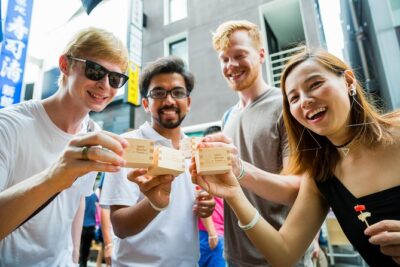
Tokyo Tsukiji Fish Market Food and Culture Walking Tour
Read our review →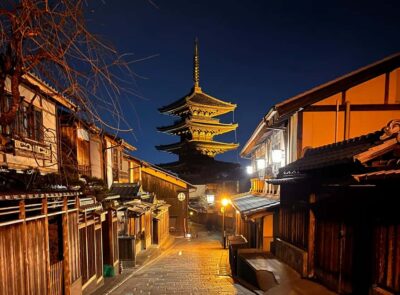
Gion Magical Night Walking Tour with Geisha Trivia
Read our review →
Imperial Palace and Shogun Historical Walking Tour
Read our review →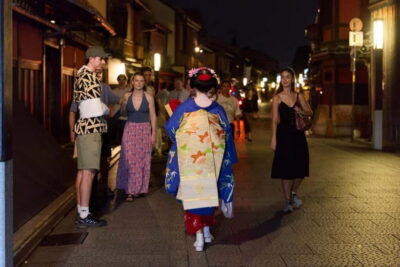
Gion Geisha District Walking Tour – Stories of Geisha
Read our review →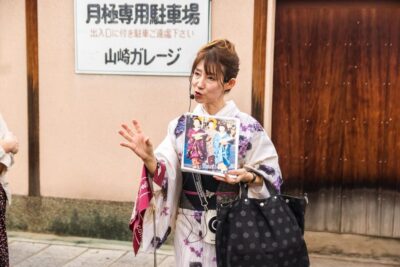

Shinjuku Local Bar and Izakaya Guided Walking Tour
Read our review →
Browse the lists this tour appears in