
Reviewed · SUMO EXPERIENCES
Morning Sumo Practice Viewing in Tokyo
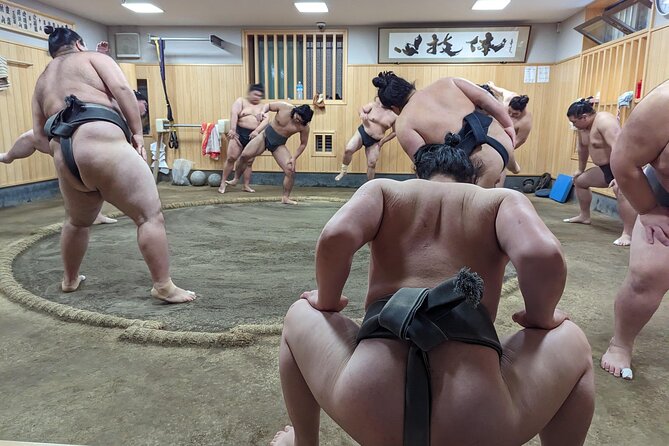
Wake before Tokyo wakes up. This early visit brings you close to real sumo training inside a wrestler’s stable, where you can watch warmups, practice bouts, and traditional rituals from the edge of the action. I like the rare stable access, which is difficult to arrange on your own, and I like the small-group format with an English-speaking local guide. The main drawback is simple: you’ll sit on a cushion on the floor for about two hours, with no chair available.
I also appreciate that the $99.08 price includes a donation to the stable. That makes the cost feel more useful than a standard sightseeing ticket, though you should keep expectations in check. A photo with the wrestlers is likely but not guaranteed, and the possible chanko nabe lunch is described as part of the experience, but it is not clearly listed among the included items.
In This Review
- Key Points Before You Book
- Why Morning Practice Is More Special Than a Sumo Show
- Meeting at Tokyo Skytree at 7:30 am
- Entering Naruto-beya in Sumida
- Learning the Rules Before the Bouts Begin
- The Photo Session and Possible Chanko Nabe
- What the $99.08 Price Buys You
- The Floor Seating Is the Real Practical Test
- Who Will Get the Most From This Morning
- Booking, Weather, and Cancellation
- Should You Book This Sumo Morning?
- FAQ
- Where does the tour begin?
- What time does the experience start?
- Where does the tour end?
- How long does the experience last?
- Are chairs available inside the stable?
- Is a photo with the wrestlers guaranteed?
- Can I cancel for a full refund?
Key Points Before You Book
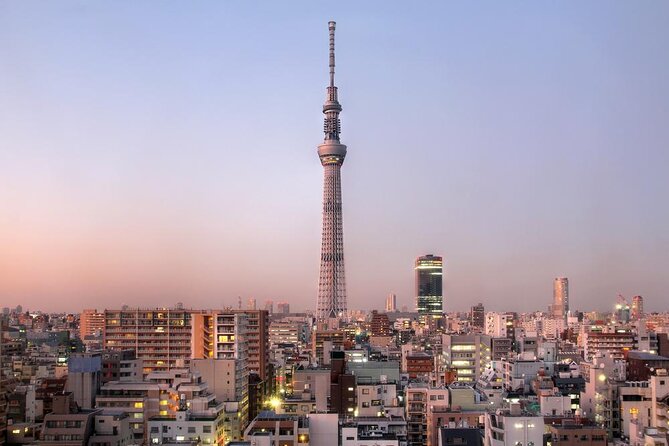
- Watch practice from inside the stable: You sit close to the wrestlers during morning training, rather than viewing sumo from a distant arena seat.
- Start at 7:30 am: The early meeting time helps you reach the stable before practice and gives the group time to learn the rules.
- Learn how to read sumo: Guides explain the sport, its Shinto roots, basic moves, and the etiquette expected inside the stable.
- Prepare for floor seating: Every participant sits on a cushion on a flat floor. There are no chairs.
- Small group, maximum 10 people: The limited size allows for questions and more personal help from the guide.
- Photo opportunities are possible: A photo session with wrestlers will most likely happen, but it is not promised.
Why Morning Practice Is More Special Than a Sumo Show
A professional sumo tournament is exciting, but a morning practice offers something different. You are not watching a polished public event with ceremony, music, and a large audience. You are seeing wrestlers train in a working stable, close enough to notice the repeated drills, physical effort, and quiet concentration.
That setting gives the experience its value. Sumo is not only a contest of size and strength. It also carries Shinto traditions, formal movements, and strict rules of conduct. Before you enter, the guide explains how to behave and what to watch for, so you are less likely to miss the meaning behind the action.
I like this approach because it gives you a way into a part of Japanese culture that can be hard to reach independently. Stable visits are not as simple to arrange as buying a ticket for a tournament. Access is controlled, the setting is private, and visitors need to follow the stable’s rules.
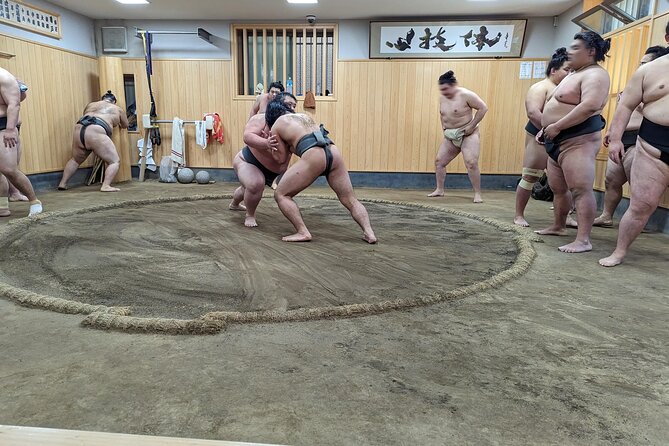
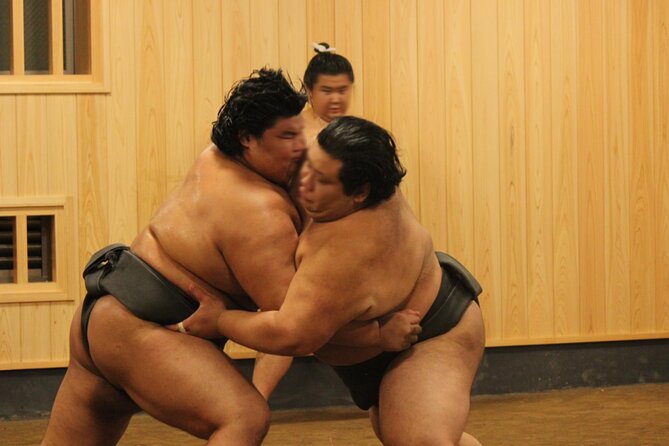
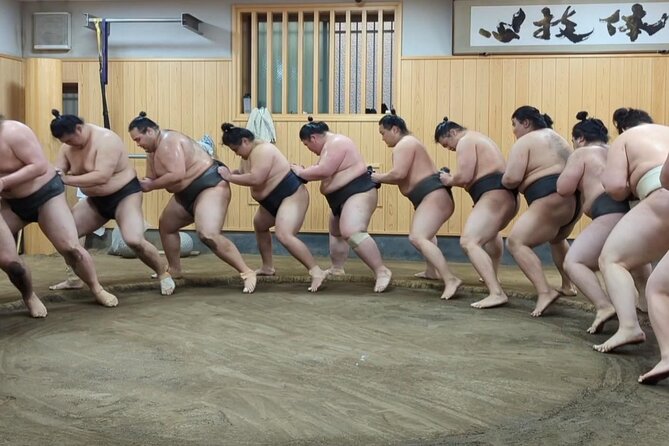
The session lasts about three hours in total. Much of that time is spent at the stable, with the visit itself listed at around two hours. The practice may include wrestlers warming up and facing one another in bouts. You should expect a serious training session, not a staged performance designed around visitors.
More Sumo Experiences in Tokyo
- Tokyo: Sumo Show Experience with Chicken Hot Pot and a Photo
★ 4.8 · 6,678 reviews - Tokyo: Sumo Show and Dining Experience
★ 4.8 · 2,742 reviews - the SUMO show
★ 5.0 · 1,960 reviews
Meeting at Tokyo Skytree at 7:30 am
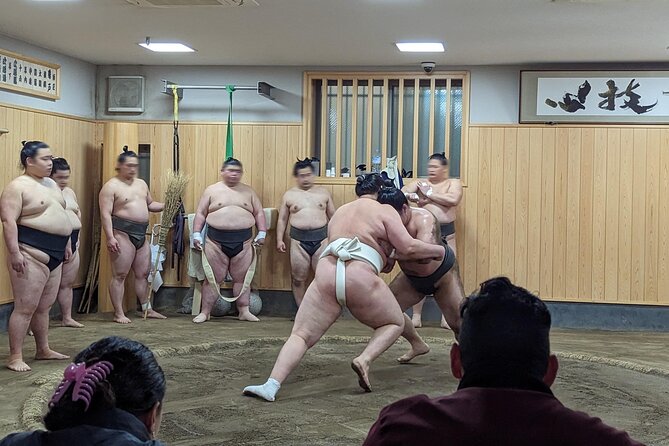
The tour begins at Tokyo Skytree Station, at 1-chōme-1-4 Oshiage in Sumida City. The meeting time is 7:30 am, so plan your route carefully and allow extra time for Tokyo’s railway stations. Early morning travel can be calm, but missing the group would be a poor start to a tightly timed visit.
The first stop is Tokyo Skytree, the huge broadcasting tower that rises above the Sumida area. You do not receive an admission ticket to the tower, and the tour does not include a trip to an observation deck. Instead, this is the meeting point and briefing location.
The guide uses roughly 30 minutes here to explain how to watch sumo and what rules you must follow inside the stable. This briefing matters. The stable is a working space, so good behavior is part of the experience. The guide may also explain basic terms, movements, and customs before you arrive.
Starting at Skytree gives the visit a clear meeting landmark, but it is not a sightseeing stop in the usual sense. If you hoped to go up the tower, you will need to make separate plans. The real focus begins after the briefing.
Entering Naruto-beya in Sumida
From the Skytree area, you continue to a sumo stable in Sumida, ending at Naruto-beya Sumo Stable at 1-chōme-22-16 Mukōjima. The tour ends here, so do not expect a return to Tokyo Skytree or hotel transportation.
Once inside, you sit on a cushion on the flat floor and watch practice. The listing specifies no chairs, and this is the most important physical detail to consider. Two hours on the floor can be uncomfortable, especially if you have knee, hip, or mobility concerns.
The close distance is the great payoff. You are not separated from the training by a stadium barrier or seated high in the stands. You might see wrestlers warming up, practicing techniques, and competing in repeated bouts. The action can be quiet one moment and forceful the next.
The atmosphere is likely to feel focused rather than theatrical. The wrestlers are there to train, and your role is to observe respectfully. The guide helps you understand what is happening without turning the session into a noisy group activity.
This arrangement also explains why the group is limited to a maximum of 10 people. A small party takes up less space and allows the guide to answer questions without disturbing the practice. The experience is described as a private tour with personalized attention, although the stated maximum means you should think of it as a very small group rather than assume you will have the stable entirely to yourself.
Learning the Rules Before the Bouts Begin
Sumo can look simple at first: two wrestlers push, pull, or throw one another out of the ring. The details are more interesting. Small changes in balance, foot placement, timing, and grip can decide a bout quickly.
Your guide explains the basic rules and the traditional background before or during the stable visit. That preparation helps you follow the action. Without it, a short bout may look like two enormous athletes colliding. With it, you can begin to notice the setup, the movements, and the tactics.
The guides are one of the strongest parts of this experience. Joji is praised for giving a useful introduction and helping the group prepare. Dawn is described as especially well informed about sumo. Jeff receives praise for explaining the background clearly, while Aki is noted for covering the rules and moves in advance and providing written information.
You may not have the same guide on every departure, so do not book solely around one name. Still, the repeated pattern is clear: the guiding is intended to add context, not simply escort you from one address to another.
Some guides also provide handouts, including information about wrestlers in training. That can help you keep track of who is practicing and give you something useful to refer to during the session.
A completely different kind of day out in Tokyo:
- Mt Fuji and Hakone 1-Day Bus Tour Return by Bullet Train
★ 5.0 · 26,383 reviews - 1-Day Tokyo Bus Tour
★ 5.0 · 14,250 reviews - Tokyo: TOKYO SKYTREE® Admission ticket
★ 4.5 · 11,192 reviews - Tokyo: teamLab Planets TOKYO Digital Art Museum Entry Ticket
★ 4.6 · 9,779 reviews
The Photo Session and Possible Chanko Nabe
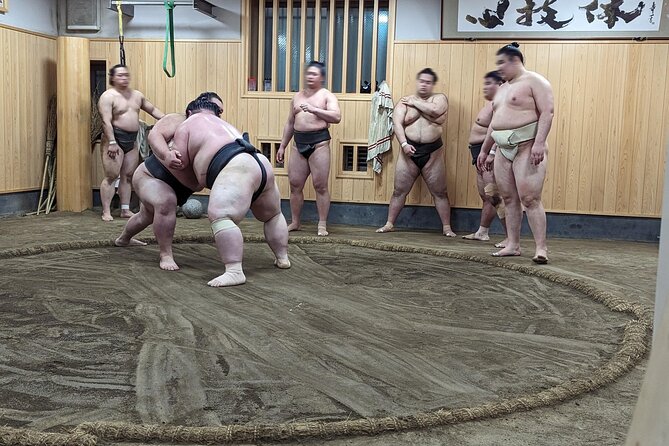
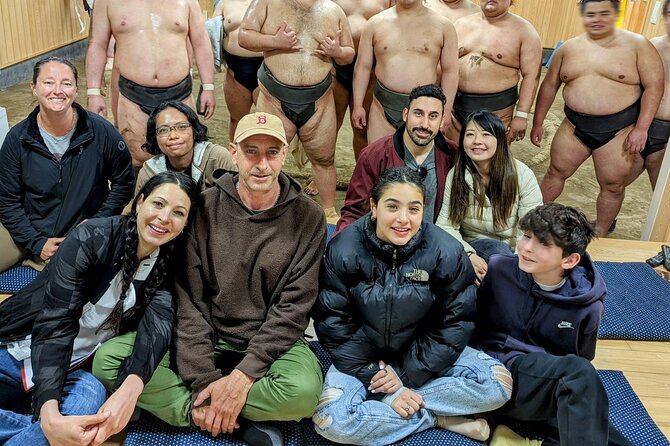
A photo opportunity with the wrestlers will most probably be available after practice. This can be a memorable part of the morning, especially because you have just watched the wrestlers train at close range. But the wording matters: it is a likely opportunity, not a guaranteed meet-and-greet.
You should follow the guide’s instructions and wait for the appropriate moment. The stable is a serious training environment, and the photo session depends on what is possible that day.
The experience description also mentions chanko nabe, the hearty hot pot associated with sumo wrestlers. It presents lunch as something you will probably have a chance to enjoy after the practice. However, chanko nabe is not clearly listed in the included services, so I would confirm the current arrangement before booking if lunch is important to you.
That distinction is useful when judging the $99.08 price. The secure stable access and guide-led instruction are the core value. A photo or meal may add to the morning, but you should not treat either as the main guarantee unless the operator confirms it.
What the $99.08 Price Buys You
At $99.08 per person, this is not a bargain activity in the same way as walking through a public neighborhood or visiting a free temple. You are paying for access, organization, a local certified English-speaking guide, and a donation to the stable.
The donation is an important detail. Your payment supports the place allowing visitors into its training space, rather than treating the stable only as a backdrop for sightseeing. That gives the price a more direct connection to the activity itself.
I think the cost is reasonable for people who specifically want to understand sumo and see practice from inside a stable. It is less convincing for someone who only wants a quick photo with a famous athlete. The visit lasts about three hours, and the limited group size gives the guide time to explain what you are seeing.
Group discounts are available, so the price may work better for families or friends booking together. The maximum group size is 10, and mobile tickets make the booking side straightforward. Hotel pickup and drop-off are not included, so you must arrange your own transport to the station and from the stable.
The tour is booked an average of 19 days ahead, which suggests you should not leave it until the final morning of your Tokyo trip. Early departures and limited stable access can make last-minute planning difficult.
The Floor Seating Is the Real Practical Test
The biggest issue is not the early start. It is the seating.
You sit on a cushion on the floor for the practice, and there are no chairs. One person described being prepared to sit on the floor for about two hours, while another noted the lack of toilets. These details can make a major difference to your comfort.
If you have trouble sitting cross-legged or rising from the floor, consider this carefully before booking. The tour information says most people can participate, but that does not remove the need to judge your own mobility and comfort.
The lack of a toilet is also worth noting. Plan ahead before entering the stable and avoid assuming you can leave and return easily. You are entering a working training space, not a visitor center designed around frequent breaks.
For everyone else, the floor seating is part of the traditional setting. It brings you close to the practice and keeps the visit from feeling like a formal theater show. Just do not confuse authenticity with comfort.
Who Will Get the Most From This Morning
This experience suits you if you have a real interest in Japanese culture, sports, ritual, or local life. You do not need to know sumo in advance, since the guide covers the basic rules and background.
It is also a strong choice for families with older children or teenagers who can manage the early start and floor seating. The close action gives young viewers something concrete to watch, while the guide’s explanations add cultural context.
Photographers may enjoy the proximity, but you should remember that the stable sets the rules. This is not a free-form photo shoot. The possible photo session at the end is an extra benefit, not the whole reason to visit.
I would be more cautious about booking this for very young children, anyone who needs a chair, or anyone looking for a relaxed late-morning activity. The start is early, the seating is fixed, and the practice requires quiet attention.
The tour also works well near the end of a Tokyo stay. One review described waking early on the final day and finding the morning especially memorable. That said, build in enough time afterward for your next plan, since the tour ends at the stable and does not provide a hotel transfer.
Booking, Weather, and Cancellation
Confirmation arrives at the time of booking, and the experience is near public transportation. You receive a mobile ticket, but you still need to reach the 7:30 am meeting point at Tokyo Skytree Station on time.
Free cancellation is available up to 24 hours before the start time for a full refund. Cancellations or changes made inside that 24-hour window are not refunded or accepted. The cutoff uses local Tokyo time.
The activity also requires good weather. If poor weather causes cancellation, you will be offered another date or a full refund. Since the main viewing takes place inside a stable, this condition may seem surprising, but it is part of the stated booking terms and should be kept in mind when arranging a tightly packed itinerary.
Should You Book This Sumo Morning?
Book it if you want a close, guided look at sumo as a living sport and cultural practice. The stable access, small group, strong guide support, and donation included in the price make this much more meaningful than simply seeing sumo on television.
Skip it if you cannot sit on the floor for two hours, need a guaranteed meal or photo, or prefer a flexible morning. You should also leave room in your schedule for the early meeting time and the fact that the tour ends at the stable.
For the right person, this is one of Tokyo’s most personal sports experiences. You arrive before the city is fully awake, learn how to watch, and then sit close to the wrestlers as they train. That mix of access, ritual, and plain physical effort is exactly what makes the morning worth the price.
FAQ
Where does the tour begin?
It begins at Tokyo Skytree Station, at 1-chōme-1-4 Oshiage, Sumida City, Tokyo.
What time does the experience start?
The start time is 7:30 am.
Where does the tour end?
The tour ends at Naruto-beya Sumo Stable at 1-chōme-22-16 Mukōjima, Sumida City, Tokyo.
How long does the experience last?
The total duration is approximately three hours. The stable visit itself is listed at about two hours, with around 30 minutes at Tokyo Skytree for the briefing.
Are chairs available inside the stable?
No. All participants must sit on a cushion on a flat floor, and chairs are not available.
Is a photo with the wrestlers guaranteed?
No. A photo session will most probably be available, but it is not guaranteed.
Can I cancel for a full refund?
Yes. You can cancel at least 24 hours before the start time for a full refund. Changes or cancellations made less than 24 hours before the start time are not accepted or refunded.
Just added around Tokyo
- Tokyo 6hr Instagram Highlights Private Tour with Licensed Guide★ 5.0 · 38 reviews
- Tokyo Small Group Tour with Guide★ 4.5 · 38 reviews
- Tokyo Sumo Experience with Live Show & Audience Challenge★ 5.0 · 38 reviews
- Japanese Food Cooking Class in Asakusa, Tokyo★ 5.0 · 39 reviews
- Very popular in Harajuku♡Animal petting zoo★ 4.6 · 39 reviews
- Ramen Making from Scratch with Tokyo Mom(Vegan Option Available)★ 5.0 · 39 reviews
- Tokyo JDM Night: 600hp C63s AMG Edition 1 (Private)★ 4.9 · 39 reviews
- Tokyo: Kimono Rental inside Shinjuku Gyoen National Garden★ 4.9 · 39 reviews
Sumo Experiences, compared.

Tokyo Shinjuku Sumo Show & Experience with Photo
Read our review →

Sumo Show & Experience w/ Optional Kimono & Hot Pot
Read our review →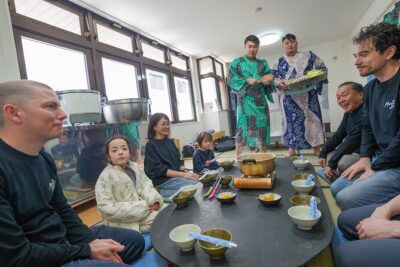
Authentic Sumo Experience in Tokyo: Enter the Sanctuary
Read our review →
Luxury Sumo Show Experience & Japanese cuisine & Drink
Read our review →Browse the lists this tour appears in