
Reviewed · SUMO EXPERIENCES
Nagoya: Grand Sumo Tournament Tour
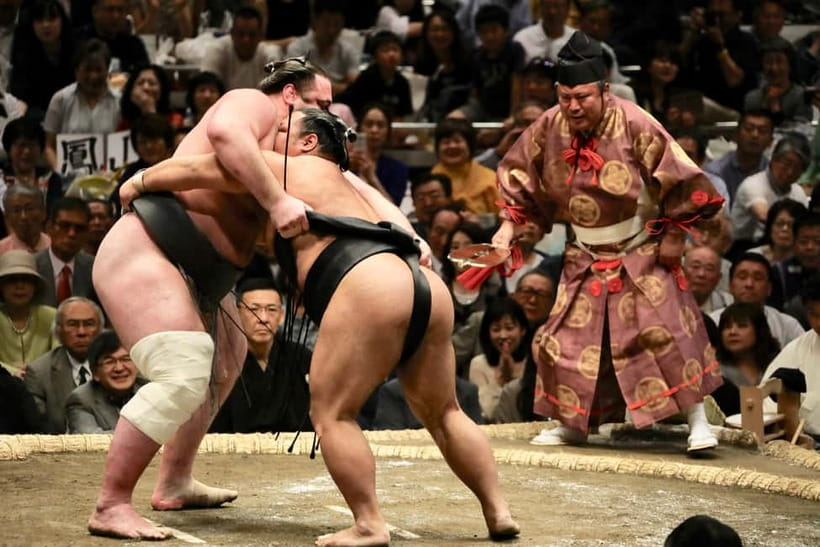
Sumo makes Japan’s old rituals feel wonderfully close. This small-group outing combines top-division bouts with clear, real-time guidance, and I especially like the English wrestler profiles and the chance to cheer one wrestler with a special towel. The optional Nagoya Castle walk adds a useful dose of Japanese history before the action begins.
The main drawback is the price: $225 per person is a serious outlay for about three hours of sumo viewing, even with a guide and Chair S or Chair A seating. Still, if this is your first tournament, the added explanations may make the cost worthwhile.
In This Review
- Key points at a glance
- Why this Nagoya sumo tour is different
- Meeting your guide at Nagoyajo Station
- Nagoya Castle before the tournament
- Reaching the tournament at 15:00
- How the live commentary improves the bouts
- The cheering towel and wrestler profiles
- Is $225 a fair price?
- Who will enjoy this experience most?
- Practical points before you reserve
- Should you book the Nagoya sumo tour?
- FAQ
- Where does the Nagoya sumo tour start?
- Where does the tour end?
- How long do I watch the sumo tournament?
- Is Nagoya Castle included?
- What kind of sumo seats are provided?
- Is the tour conducted in English?
- What materials do I receive?
- Is hotel transportation included?
Key points at a glance
- Three hours of top-division sumo: You watch the main bouts from 15:00, when the tournament reaches its most exciting stage.
- English help during every fight: Your guide explains wrestlers, rules, rituals, and match details through an earphone system.
- Useful sumo materials: You receive a booklet, wrestler profiles with photos, and a cheering towel for one wrestler.
- Optional Nagoya Castle walk: Learn how the Tokugawa clan built and used this major fortress, then see the ornate Honmaru Palace.
- Easy access from Osaka and Kyoto: The stated train journey is about 50 minutes from Osaka and 34 minutes from Kyoto.
- Strong guide-led experience: Guides including Keiko, Yumi, Mari, Yuki, and Sunny Yoko have been praised for warmth and sumo expertise.
Why this Nagoya sumo tour is different
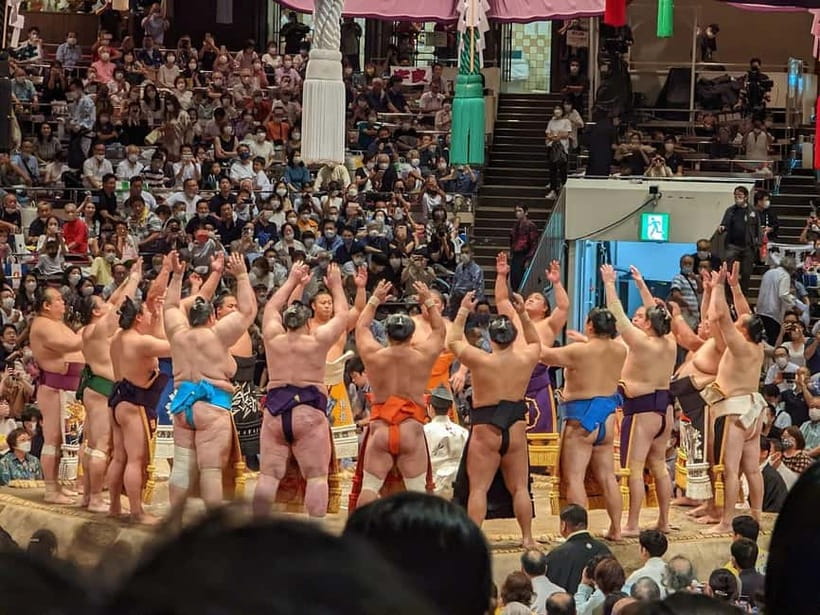
Watching sumo alone can be thrilling, but it can also leave you wondering what just happened. A match may last only seconds, while the ceremony around it carries centuries of meaning. This tour gives you someone who can explain both.
Your guide provides live commentary during the bouts. You hear it through an earphone guide system, so you do not need to stand beside the guide or strain to catch every word. That matters in a large venue, especially when the crowd reacts at the same time.
The guide also uses the English pamphlet during the matches. It includes photos and profiles of the wrestlers, giving you a way to identify who is stepping into the ring and learn about the competitors as the afternoon moves along.
You receive a general sumo booklet as well. It is meant to cover the sport in broad terms, so you can follow the rules, customs, and structure of the tournament with more confidence.
The cheering towel adds a playful touch. Your guide gives you a towel for a particular wrestler and shows you when and how to use it. Cheering for one person makes the event feel less like watching a distant sporting contest and more like joining the room around you.
More sumo experiences in Japan:
- Tokyo: Sumo Show Experience with Chicken Hot Pot and a Photo
★ 4.8 · 6,678 reviews - Tokyo: Sumo Show and Dining Experience
★ 4.8 · 2,742 reviews - the SUMO show
★ 5.0 · 1,960 reviews
Meeting your guide at Nagoyajo Station
The meeting point is Meijo Line Nagoyajo Station, stop M07, at Exit 7 on the ground level. Your guide holds a recognizable signboard, which should make the rendezvous easier once you are in the right place.
You do need to get yourself there. Hotel pickup and drop-off are not included, so allow time to find the station exit and reach the meeting point without rushing.
Nagoya is a practical choice if you are staying in the Kansai area. The stated train time is about 50 minutes from Osaka and 34 minutes from Kyoto. Those figures make the tour possible as a day trip, though you should still check your own train connection and leave a buffer before the meeting time.
Comfortable shoes are the only specific item listed to bring. That advice matters because the castle portion is a walking tour, and you will also be moving through a station and event area.
The activity ends back at the meeting point. That gives you a clear finish, but it also means you should plan your evening transport from there rather than assuming the guide will leave you at your hotel.
Nagoya Castle before the tournament
The castle walk is optional, but I think it adds real value if you have not already visited Nagoya Castle. The tournament arena is in the same general area, so the pairing gives your day a logical shape: first the Tokugawa-era setting, then one of Japan’s best-known traditional sports.
Nagoya grew around the castle built by the Tokugawa clan in the early 17th century. The clan ruled Japan for almost three centuries, and the guide explains the political setting behind the construction. You learn how the Tokugawa family organized feudal lords who had once opposed them.
That lesson helps you see the castle as more than a pretty photo stop. It was also a statement of power and a working fortress. The guide discusses its architectural methods and explains how the design served defensive purposes.
The castle section also covers the building’s effectiveness as a fortress and dungeon. That may sound dry on paper, but it gives you a better reason to notice walls, gates, layouts, and the overall plan as you walk.
The highlight is the Honmaru Palace. Its interiors feature extensive hinoki cypress, decorative metal fittings, and fine art on walls, ceilings, and sliding doors. Your guide points out these details rather than leaving you to pass through a series of beautiful rooms without context.
Keep in mind that the castle tour is optional. If your priority is only the tournament, you can focus on the sumo portion. If you want a fuller Nagoya afternoon, the castle gives the trip a stronger sense of place.
Reaching the tournament at 15:00
The tour begins watching the bouts of the top division at 15:00 and continues for about three hours. This timing is one of the smarter choices in the program.
A sumo tournament includes more than the headline matches. The lower divisions compete earlier, but watching from the start of the day is not automatically better. The tour’s stated experience is that people who arrive much earlier can lose interest and leave before the top-division action begins.
Starting at 15:00 keeps your attention on the wrestlers most visitors have come to see. You get the concentrated part of the tournament instead of spending a long day waiting for the most important bouts.
The tradeoff is simple: you do not get a full-day view of every division. If you are a serious sumo follower who wants the complete tournament rhythm, this shorter window may feel limited. For a first visit, though, three hours is a sensible introduction.
You receive either a Chair S or Chair A seat. The exact seat assignment matters, but the supplied details do not promise a particular section or view. You should therefore think of the package as guaranteed event seating with a guide, not as a promise of ringside access.
A few more Japan experiences worth weighing up
- From Nagoya: Gujo, Hida Takayama, and Shirakawa-go Day Tour
★ 4.4 · 398 reviews - Ghibli Park 1-Day Bus Tour from Nagoya
★ 4.5 · 277 reviews - From Nagoya: Hida Takayama & Shirakawa-go Tour w/Opt. Lunch
★ 4.5 · 256 reviews - Hiking the Historic Nakasendo Trail [1 Day Tour from Nagoya]
★ 5.0 · 104 reviews
How the live commentary improves the bouts
Sumo has a quick pace. The wrestlers may spend time preparing, then settle a match in an instant. Without some background, you can miss why the crowd reacts or why a particular bout matters.
The guide’s commentary fills in those gaps while the action unfolds. You can learn about the wrestlers from the photo pamphlet, follow the rules, and receive explanations of the small rituals that surround the matches.
The earphones are especially useful. In a large venue, a normal speaking voice can disappear quickly. With the audio system, you can watch the ring and still hear the guide clearly from a distance.
This setup also lets you remain focused on the tournament. You do not have to keep turning toward a walking guide or gather around a single spot. That makes the afternoon feel more like a proper sports outing than a lecture beside the seats.
Guides praised in the feedback include Keiko, Yumi, Mari, Yuki, and Sunny Yoko. Their strengths appear consistent: warmth, strong knowledge of the sport, and the ability to make first-time viewers feel involved. One guide, Yuki, even waited for a group that had become lost, which shows how useful a patient meeting arrangement can be.
The tone seems lively rather than formal. Mari was especially good at encouraging the group to support wrestlers, including her own favorites. That personal enthusiasm can make the difference between quietly observing and joining the excitement.
The cheering towel and wrestler profiles
The three included items are not filler. They shape how you watch.
The wrestler pamphlet gives you faces and names in English, which is helpful when the bouts move quickly. Your guide walks you through it as you watch, so you can connect the printed profile with the person entering the ring.
The cheering towel gives you a small role. You are not just waiting for an outcome. You have a wrestler to support, and the guide tells you when to raise the towel and cheer.
The sumo booklet gives you broader background. Taken together, these materials help you understand the sport before the afternoon is over. They are also useful souvenirs, especially if you want to keep learning after leaving Nagoya.
I would not expect the towel to turn a quiet spectator into a lifelong fan. But it does solve one common problem: first-time visitors may not know when or how to join the crowd. Having a clear wrestler and a simple signal removes that hesitation.
Is $225 a fair price?
At $225 per person, this is not a bargain ticket. You are paying for more than admission, though. The price includes Chair S or Chair A seating, the guide’s live instruction, the earphone system, the wrestler pamphlet, the cheering towel, the sumo booklet, and the optional Nagoya Castle walk.
The key question is how much help you want. If you already understand sumo and can arrange a ticket yourself, the premium may be hard to justify. One piece of feedback specifically objected to the price, noting that the guide service appeared to multiply the cost considerably.
For a first tournament, the calculation looks better. Sumo tickets, seating, transport, language support, and the challenge of understanding an unfamiliar sport can be difficult to arrange as separate pieces. The tour turns those pieces into one guided afternoon.
The price is also easier to defend if you value the castle walk. You are not spending the entire amount on three hours in a seat. You are getting a combined cultural and sporting experience in Nagoya.
I would book it if the tournament is a major goal of your Japan trip and you want clear explanations in English. I would skip it if you are comfortable researching sumo yourself or if the $225 price would make the rest of your day feel strained.
Who will enjoy this experience most?
This tour suits first-time sumo spectators especially well. You do not need prior knowledge, and the guide explains the rules, rituals, wrestlers, and tournament action as you watch.
It also works for visitors based in Osaka or Kyoto who want a straightforward day trip. The stated train times make Nagoya close enough to reach without changing hotels.
Families and mixed-interest groups may like the structure. A person fascinated by Japanese history can focus on the castle, while a sports fan can look forward to the tournament. The towel and pamphlet also give younger visitors something concrete to follow.
Even people who are not already interested in sumo may find the event worthwhile because it shows how sport, ceremony, crowd behavior, and Japanese tradition meet in one place. Still, the day is centered on sumo. If you dislike sitting through a sporting event, the castle alone will not make this the right choice.
Practical points before you reserve
The tour is conducted in English. That includes the live commentary and the walking explanation at the castle.
The group is described as small, which should make it easier to ask questions and hear the guide. The earphone system adds another layer of comfort when the group spreads out.
There is no hotel pickup or drop-off. Meet at Meijo Line Nagoyajo Station, Exit 7, on the ground level, and look for the guide’s signboard.
You can reserve now and pay later, which helps if your Japan schedule is still shifting. Cancellation is allowed up to 24 hours in advance for a full refund.
The tour ends at the same meeting point. Plan the rest of your day from there, and wear shoes you can walk in comfortably.
Should you book the Nagoya sumo tour?
Book this tour if you want your first sumo tournament to make sense, not just look impressive. The live English commentary, wrestler profiles, cheering towel, and well-liked guides give you tools to follow the action and take part in it.
The Nagoya Castle portion makes the package more appealing for visitors who want history as well as sport. The weakness is the cost, especially if you mainly want a seat and already know the basics of sumo.
For most first-time visitors, I think the guidance earns its place in the price. You will leave with more than memories of quick bouts. You will understand what you were watching, know which wrestler you were cheering for, and have seen an important piece of Nagoya beyond the tournament hall.
FAQ
Where does the Nagoya sumo tour start?
It starts at Meijo Line Nagoyajo Station, stop M07, Exit 7 on the ground level. Look for the guide holding a recognizable signboard.
Where does the tour end?
The activity ends back at the meeting point.
How long do I watch the sumo tournament?
You watch the top-division bouts for about three hours, starting at 15:00.
Is Nagoya Castle included?
The Nagoya Castle walking tour is optional and included as part of the available tour experience.
What kind of sumo seats are provided?
The package includes either Chair S or Chair A seating at the tournament.
Is the tour conducted in English?
Yes. The tour language is English, including the guide’s live commentary.
What materials do I receive?
You receive an English pamphlet with wrestler photos and profiles, a cheering towel for a particular wrestler, and a sumo booklet.
Is hotel transportation included?
No. Hotel pickup and drop-off are not included, so you must reach the meeting point independently.
Just added around Japan
- Kanazawa private half day/Photoshoot by professional photographer★ 5.0 · 38 reviews
- Osaka Food Tour with 10 Classic Japanese Tastings & Drinks★ 5.0 · 38 reviews
- Osaka: Highlights & Hidden Gems Private Walking Tour★ 4.7 · 38 reviews
- Tokyo Small Group Tour with Guide★ 4.5 · 38 reviews
- Tokyo 6hr Instagram Highlights Private Tour with Licensed Guide★ 5.0 · 38 reviews
- From Tokyo: Kamakura Private Customize Tour by Luxury Van★ 4.6 · 38 reviews
- Tokyo Sumo Experience with Live Show & Audience Challenge★ 5.0 · 38 reviews
- Kyoto: Private Customizable Day Trip by Car★ 5.0 · 38 reviews
Sumo Experiences, compared.
Tokyo Shinjuku Sumo Show & Experience with Photo
Read our review →
Sumo Show & Experience w/ Optional Kimono & Hot Pot
Read our review →
Authentic Sumo Experience in Tokyo: Enter the Sanctuary
Read our review →
Luxury Sumo Show Experience & Japanese cuisine & Drink
Read our review →Browse the lists this tour appears in