
Reviewed · SAMURAI & NINJA EXPERIENCES
Ninja Samurai 2-hour hands-on lesson by Japanese master in Tokyo
Step into Japan’s warrior past. This two-hour class in Tokyo combines ninja meditation, weapons practice, and samurai sword work in a small group of no more than six people. You dress in ninja clothing, learn about feudal-era Japan, and try several traditional tools under the guidance of an English-speaking Japanese master.
I like the personal teaching that comes with such a small class, and I like the range of activities: sword drawing, shuriken throwing, blow darts, ninja movement, and Kuji-In meditation. The main drawback is practical rather than cultural: the location can take some effort to find, and one visitor reported climbing four flights of stairs after finding the elevator out of service.
In This Review
- Key points at a glance
- What the two-hour class is really like
- Starting with Kuji-In and the ninja mindset
- Ninja clothing and the trick-house introduction
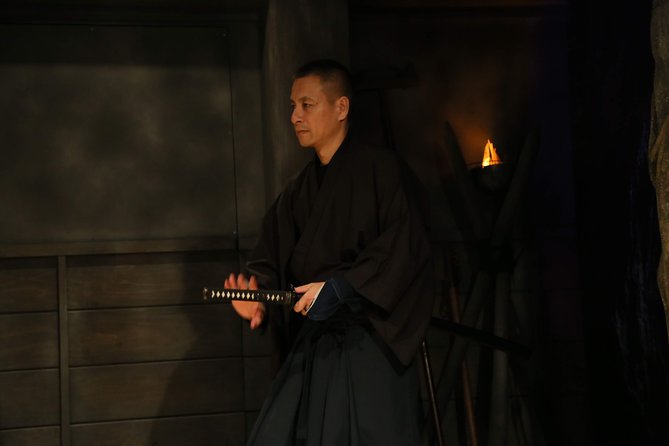
- Sword training: ninja blade and samurai sword
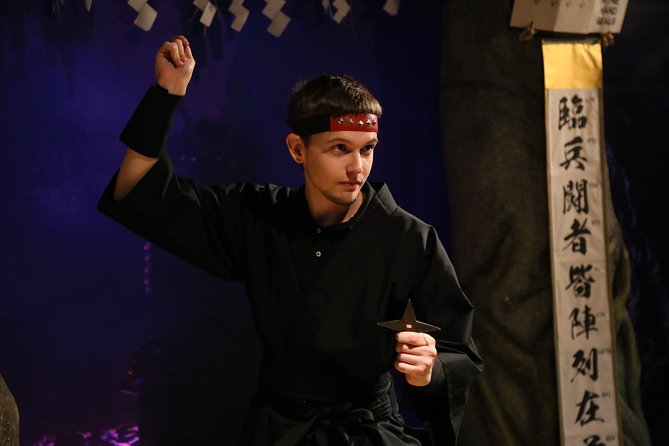
- Shuriken, chopsticks, and blow darts
- The instructors make the difference
- How much value do you get for $86.22?
- Reaching the Shiomi meeting point
- Who will enjoy this most?
- Practical booking advice
- Should you book the ninja and samurai lesson?
- FAQ
- How long does the Ninja Samurai lesson last?
- How many people can join the class?
- Is the class taught in English?
- What activities are included?
- Are ninja clothes included?
- Where does the class begin and end?
Key points at a glance
- Small groups of six or fewer: You get more individual help than in a large theatrical show or crowded workshop.
- Several hands-on skills: Try a ninja sword, samurai sword techniques, shuriken, chopsticks, and a blowgun.
- Kuji-In meditation included: The class covers a spiritual side of ninja practice, not only weapons.
- English-speaking Japanese instruction: Guides such as Hyoga, Onel, Asami, and Buddy have been praised for clear teaching and humor.
- Ninja clothing provided: Changing into an outfit helps make the class feel like an activity rather than a lecture.
- Useful planning note: The class meets in Shiomi, Koto City, and ends at the same place, with free cancellation up to 24 hours before the start time.
What the two-hour class is really like
This is not a staged samurai show where you sit in the dark and watch professionals perform. It is a working lesson with explanations, demonstrations, and time for you to try the techniques yourself.
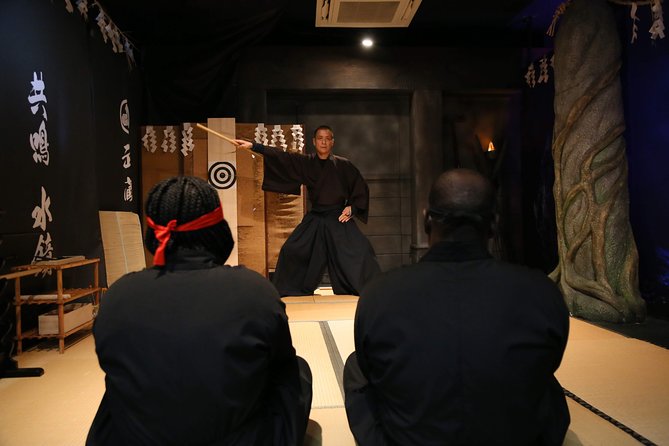
The class begins with an introduction to ninja and samurai traditions, including the ideas and discipline connected with each one. The instruction is in English, and the strongest part of the format is the mix of history and action. You are not simply handed a prop and asked to pose. The instructor explains what you are doing, then gives you a chance to practise.
The exact order can vary, but the session covers ninja meditation called Kuji-In, ninja weapons and tools, a look at a gimmick ninja trick house, sword demonstrations, shuriken practice, and blowgun training. The samurai portion focuses on the Japanese sword, including how to draw it and how to use it correctly.
At the end, you can watch and take part in a samurai performance based on what you learned. That gives the class a clear finish and makes it easier to appreciate the movements as a connected routine rather than a collection of separate tricks.
More Samurai & Ninja Experiences in Tokyo
- Tokyo: Samurai Restaurant Show Ticket with 2 Drinks
★ 4.5 · 1,307 reviews - Tokyo: Samurai Ninja Museum Guided tour and Experience
★ 4.6 · 1,010 reviews - Tokyo: Samurai Sword & Archery Class from Samurai Descendant
★ 5.0 · 603 reviews
Starting with Kuji-In and the ninja mindset
Kuji-In is one of the more unusual parts of the class. It introduces ninja practice through meditation and hand signs rather than starting with weapons. That matters because the experience aims to present ninja life as a discipline and mindset, not only as movie-style stealth.
You should expect a short instructional section, followed by demonstrations and practice. It is a quieter change of pace before the more active parts of the session. If your group includes children, this also gives everyone a chance to settle in before handling equipment.
The class is designed for a wide range of ages and abilities. One family completed it with children aged 11 and 13, while another group included people from their 20s through their 60s. A separate family ranged from age 11 to 73 and found the activities accommodating.
Still, this is not entirely passive. One visitor specifically noted that parts of the class involve running and jumping. You do not need to be an athlete, but you should be comfortable taking part in active movements.
Ninja clothing and the trick-house introduction
Ninja clothes are included, and changing into them is more than a photo opportunity. It helps set the tone and makes the class feel distinct from an ordinary museum visit. Several people especially enjoyed this part because it helped them get into character before beginning the training.
The session also includes an introduction to ninja weapons and tools, along with a look at a gimmick in the ninja trick house. The information provided does not describe every feature of the house, so you should think of it as a short part of the lesson rather than a separate attraction.
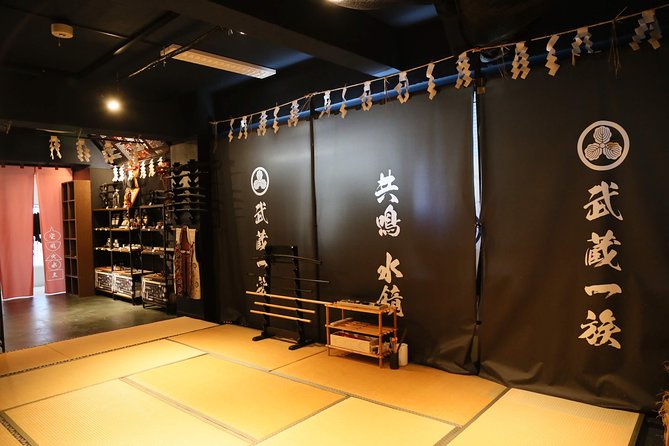
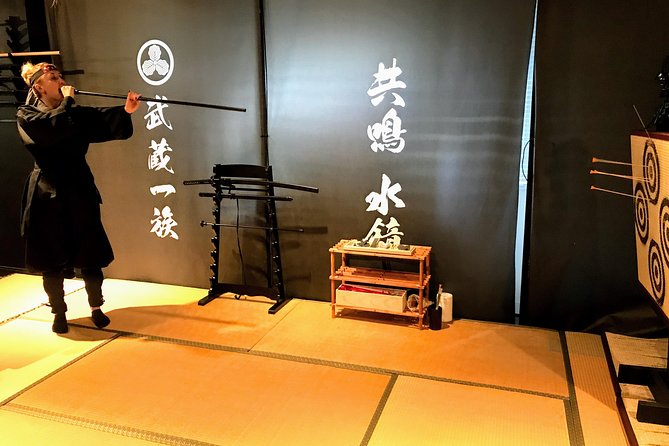
The setting is a true dojo, according to one detailed account, rather than a large polished entertainment venue. That can be a plus if you want a practical class with a traditional feel. It also means the surroundings may be simpler than some promotional photos suggest.
Sword training: ninja blade and samurai sword
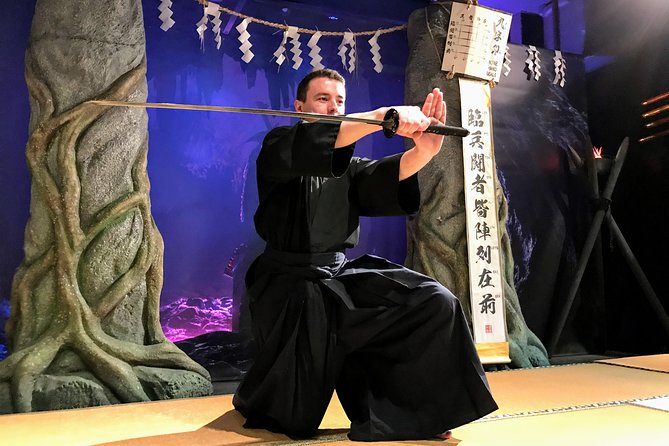
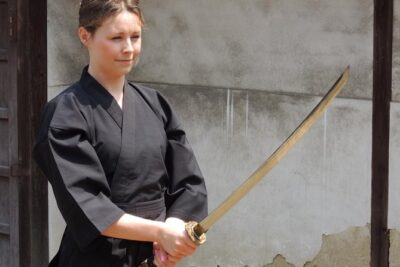
Sword work is the main draw for many people, but the class makes a useful distinction between ninja and samurai swords. You learn how to draw and use a samurai sword, along with basic movements and the spirit behind the practice.
The instructor first demonstrates the technique, then lets you repeat it. Small groups matter here. With six or fewer participants, the master has a better chance to correct your stance and movement instead of simply calling instructions across a room.
The equipment may vary by session. One visitor reported practising with a real metal ninja sword rather than only a wooden substitute. That is not a promise that every participant will use the same equipment, so you should follow the instructor’s directions closely and avoid treating the activity as casual play.
The sword section is also where the class feels most like training rather than dress-up. You learn the difference between drawing a sword and swinging one, and the lesson connects those actions with samurai customs and discipline.
A completely different kind of day out in Tokyo:
- Mt Fuji and Hakone 1-Day Bus Tour Return by Bullet Train
★ 5.0 · 26,383 reviews - 1-Day Tokyo Bus Tour
★ 5.0 · 14,250 reviews - Tokyo: TOKYO SKYTREE® Admission ticket
★ 4.5 · 11,192 reviews - Tokyo: teamLab Planets TOKYO Digital Art Museum Entry Ticket
★ 4.6 · 9,779 reviews
Shuriken, chopsticks, and blow darts
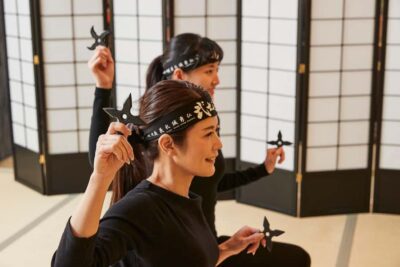
The weapons practice keeps the session moving. You may throw shuriken, commonly called ninja stars, at targets, and some accounts also describe trying sharpened chopsticks as part of the ninja tools lesson.
The blowgun, or ninja blow dart, is another popular activity. You practise aiming and firing at a target under instruction. These sections are short enough to keep the class varied, but substantial enough to give you a feel for how each tool is used.
This variety is one of the strongest reasons to choose the class over a basic sword lesson. If sword work is not your favorite part, the throwing and blowgun exercises give you other ways to participate. If you are visiting with children or a mixed-age family, that variety helps keep everyone involved.
You should also expect a fair amount of waiting while each person gets a turn. A group of six is small, but activities involving targets and equipment naturally move one participant at a time. The good instructors use that time for demonstrations, jokes, and historical explanations.
The instructors make the difference
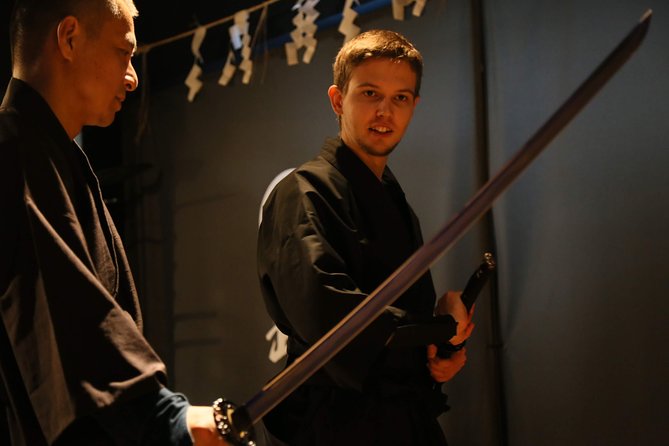
The teaching staff receives unusually strong praise. Hyoga is described as funny, patient, and effective at explaining both ninja and samurai traditions. Onel has been singled out for a warm style and strong English. Asami is praised for explaining history and techniques clearly, while Buddy is described as a master who made the two-hour session both educational and enjoyable.
Those names suggest that your experience can depend partly on which instructor leads your class. The common thread is the teaching style: clear English, humor, patience, and a willingness to work with different ages and skill levels.
That is important because sword movements and meditation signs can feel awkward at first. A stiff instructor could make the class uncomfortable. Here, the repeated praise for friendly teaching suggests you can make mistakes without feeling foolish. One particularly useful piece of advice from a past participant was simply to forget embarrassment and try the exercises.
The instructors also help separate fact from popular images of ninjas and samurai. The class is designed to explain history and techniques, not merely repeat anime or film ideas. If you want cultural context alongside the action, this is a real strength.
How much value do you get for $86.22?
At $86.22 per person, this is not the cheapest two hours you can spend in Tokyo. You are paying for an English-speaking master, clothing rental, admission, a small group, several activities, and instruction rather than a single photo or short demonstration.
The value improves if you want an activity that works for a family or group of friends. Four people can share the experience without needing to book a private class, and the six-person maximum gives the session a personal feel. It also offers more variety than a narrow sword lesson.
I would compare it with the cost of a stage performance, museum ticket, or short cultural workshop. A show may offer more spectacle, but this class gives you something to do. You leave with a better understanding of the tools and movements because you have tried them yourself.
The price is less compelling if you only want a quick costume photo or a polished performance. It is also worth considering that bottled water and private transportation are not included. Bring your own water and plan your route carefully.
Reaching the Shiomi meeting point
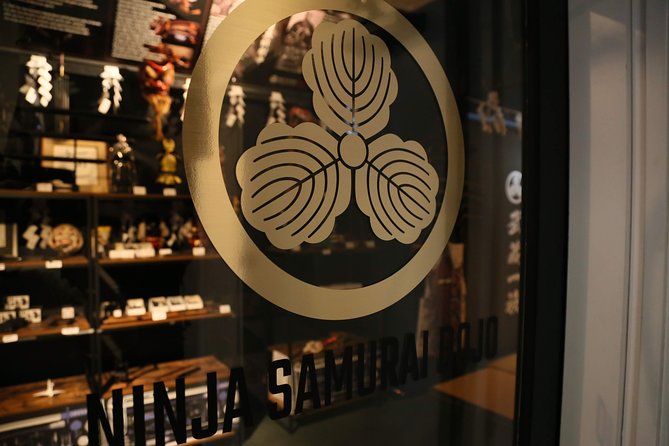
The class meets at NINJA SAMURAI TOKYO in Shiomi, Koto City, at Bayfrere Shiomi, East, 4th floor, postal code 135-0052. It is near public transportation, and several people found it by walking directly from the station.
Allow extra time to find the exact entrance. One person had trouble locating the class even after taking a taxi, while another described the location as taking time to discover but worth the effort. A taxi driver may recognize the address, but you should still have the full location details ready and avoid arriving at the last minute.
The building access deserves attention. One account reports four short flights of stairs because the elevator was not working. That may have been a temporary issue, but it is sensible to check the building entry and contact the operator ahead of time if anyone in your group has difficulty with stairs.
The activity ends back at the meeting point. There is no private transport, so you are responsible for getting there and continuing your Tokyo plans afterward.
Who will enjoy this most?
I would recommend this class to families with older children, couples, friends, and solo visitors who want an active cultural activity. The age range in past sessions has been broad, and the instructors appear used to adjusting their pace and explanations.
It is also a good choice for someone who wants a break from temples, shopping, and train rides. The class gives you a physical way to engage with Japanese history, while the English instruction keeps the explanations accessible.
You do not need previous martial arts experience. Beginners can follow demonstrations and practise at their own level. You should be ready to stand, move, throw, and possibly run or jump during parts of the lesson.
I would be more cautious if you dislike group activities, have limited mobility, or want a quiet historical lecture. The class is hands-on, and the dojo setting is functional rather than luxurious. It may also disappoint anyone expecting movie-style stunts such as leaping backward into trees. The instructor explains real techniques, not fantasy powers.
Practical booking advice
Wear clothes that allow movement, even though ninja clothing is supplied. Bring water, since bottled water is not included, and arrive early enough to handle the route and building entrance without stress.
The maximum group size is six, but the number in your particular class can be smaller. One booking had five people in the ninja class and three in the samurai class, which allowed plenty of personal attention.
The experience has free cancellation if you cancel at least 24 hours before the local start time. Within 24 hours, you do not receive a refund, and late changes are not accepted. The class also requires good weather and a minimum number of participants. If the operator cancels for either reason, you are offered another date or experience, or a full refund.
Should you book the ninja and samurai lesson?
Yes, if you want an active, funny, and personal introduction to ninja and samurai traditions in Tokyo. The best reasons to book are the six-person limit, the range of activities, the English-speaking instructors, and the chance to practise rather than only watch.
Book with realistic expectations. This is a true dojo class, not a grand theatrical production. Finding the building may take a little patience, and some parts of the training are physical. For families, couples, and friends who are willing to join in, the $86.22 price is fair for two hours of instruction, clothing, weapons practice, and cultural background.
FAQ
How long does the Ninja Samurai lesson last?
The class lasts approximately two hours.
How many people can join the class?
The experience has a maximum of six participants.
Is the class taught in English?
Yes. A Japanese sensei who has trained in ninja arts teaches the class in English.
What activities are included?
The class includes Kuji-In ninja meditation, an introduction to ninja weapons and tools, a ninja trick-house introduction, ninja sword training, shuriken practice, blowgun training, and samurai sword instruction.
Are ninja clothes included?
Yes. Ninja clothing rental during the training is included.
Where does the class begin and end?
The class begins at NINJA SAMURAI TOKYO in Shiomi, Koto City, Tokyo, and ends back at the meeting point.
More 2-Hour Experiences
- Tokyo 2-Hour Genuine Samurai Experience: Kendo in Japan
★ 5.0 · 112 reviews - Tokyo: Flagship 2-Hour Street Go-Kart Tour by Street Kart
★ 4.9 · 94 reviews - Tokyo: Shinjuku Izakaya and Golden Gai Bar Hopping Tour (2h)
★ 4.9 · 67 reviews - Kyoto Gion: 2-Hour Geisha Culture & History Walking Tour
★ 5.0 · 1,186 reviews
Just added around Tokyo
- Tokyo 6hr Instagram Highlights Private Tour with Licensed Guide★ 5.0 · 38 reviews
- Tokyo Small Group Tour with Guide★ 4.5 · 38 reviews
- Tokyo Sumo Experience with Live Show & Audience Challenge★ 5.0 · 38 reviews
- Very popular in Harajuku♡Animal petting zoo★ 4.6 · 39 reviews
- Japanese Food Cooking Class in Asakusa, Tokyo★ 5.0 · 39 reviews
- Ramen Making from Scratch with Tokyo Mom(Vegan Option Available)★ 5.0 · 39 reviews
- Tokyo: Kimono Rental inside Shinjuku Gyoen National Garden★ 4.9 · 39 reviews
- Tokyo JDM Night: 600hp C63s AMG Edition 1 (Private)★ 4.9 · 39 reviews
Samurai & Ninja Experiences, compared.
Samurai Ninja Museum Guided tour and Experience
Read our review →
Kendo and Samurai Experience with Uniform and Gear
Read our review →
Samurai Sword Class by Experts in Traditional Arts
Read our review →
Skip the lines Basic Ticket at SAMURAI NINJA MUSEUM KYOTO
Read our review →
Samurai Sword & Archery Class from Samurai Descendant
Read our review →
Browse the lists this tour appears in