
Reviewed · WALKING TOURS
One-Day Walking Tour : Enjoy Kyoto to the fullest!
Kyoto rewards an early start. This private eight-hour tour links the city’s four biggest sights, from the quiet morning paths of Arashiyama to the bright torii gates of Fushimi Inari. I like the way a guide such as Seiya, Naoko, Noriko, or Hironori can turn a complicated day of buses and trains into a clear plan. I also like the personal format, since only your group takes part.
The trade-off is simple: you walk a lot and use public transportation instead of a private car. Add the ¥500 temple fee, about ¥1,500 in transportation, and meals to the $131.14 price, and this is not a cheap sightseeing day. Still, the guidance, route planning, and private attention can make the cost worthwhile, especially if Kyoto is your first stop in Japan.
In This Review
- Key points to know before booking
- Starting at Kyoto Station at 9 a.m.
- Arashiyama Bamboo Grove before the crowds
- Kinkaku-ji and the famous Golden Pavilion
- Gion, geisha culture, and respectful sightseeing
- Fushimi Inari’s orange torii gates
- Why the private guide matters
- Public transit, walking, and the real pace
- Is $131.14 a good value?
- Who should book this Kyoto day?
- Should you book this tour?
- FAQ
- How long does the tour last?
- What time does the tour begin?
- Where does the tour start?
- Where does the tour end?
- Which Kyoto sights are included?
- Is transportation included?
- Is the Kinkaku-ji admission fee included?
- Is this a private tour?
- How much walking is required?
Key points to know before booking
- Four major Kyoto sights in one day: Visit the Arashiyama Bamboo Grove, Kinkaku-ji, Gion, and Fushimi Inari.
- A private tour for your group: You do not share the guide with a large bus group.
- Public transit is part of the experience: Your guide helps with trains and buses, but this is not a car tour.
- Early bamboo grove visit: The morning timing aims to reach Arashiyama before the paths become crowded.
- A demanding walking day: Previous guests have reported roughly 20,000 to 30,000 steps, with heat making the day much harder.
- Strong guide service: Guides including Kazuhiro, Koichi, Saori, Fuji, and Lynn have been praised for pacing, local insight, transit help, and flexibility.
Starting at Kyoto Station at 9 a.m.
You meet your guide at the Kyoto Station Building at 9 a.m. The listed starting point is 901 Higashishiokōjichō in Shimogyo Ward, and the day finishes back at the same meeting point.
That central location makes sense. Kyoto Station is the city’s main transport hub, so it is a practical place to begin a day that crosses the city. It also means you should allow time to find the correct part of the station building. Your guide will then lead the way, rather than leaving you to decode Kyoto’s train and bus system alone.
The route covers a wide area. Arashiyama lies on the western side of Kyoto, while Fushimi Inari is to the south. Kinkaku-ji sits in the northwest, and Gion is closer to the traditional center. The result is a full day of movement, not a slow stroll around one neighborhood.
That distinction matters. I would book this experience to get your bearings fast and see the headline sights efficiently. I would not book it if you want long café stops, extended temple meditation, or a gentle pace with little transit.
More Walking Tours in Kyoto
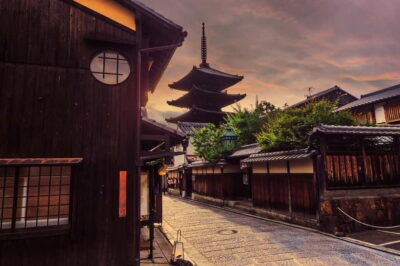
- Kyoto Geisha Walking Tour: Gion District & Hidden Gems
★ 4.7 · 3,273 reviews - Kyoto: Gion Magical Night Walking Tour with Geisha Trivia
★ 4.9 · 2,393 reviews - Kyoto: Gion Geisha District Walking Tour – Stories of Geisha
★ 4.7 · 2,187 reviews
Arashiyama Bamboo Grove before the crowds
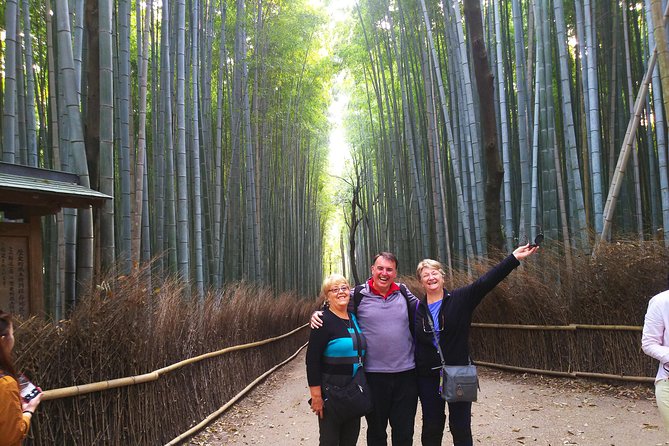
The first stop is Bamboo Forest Street, with about an hour set aside for the grove. Reaching the bamboo in the morning is one of the smartest parts of the plan. The light can filter through the tall green stalks, and the air may feel cooler before the day heats up.
This is also the most photo-driven part of the day. The path is famous for its tall bamboo walls and narrow walking route. Your guide can give the scene context, help with photos, and keep the visit moving so the rest of the day does not slip behind schedule.
The entrance is free, but free does not mean empty. Arashiyama is one of Kyoto’s best-known sights, and the path can become crowded later. The early visit improves your chances of a more pleasant walk, though no guide can guarantee solitude.
You should also keep your expectations sensible. The bamboo grove is a short scenic walk, not a wilderness hike. The supplied schedule allows about an hour, so you will have time to enjoy the setting, but not an entire morning to explore every corner of Arashiyama.
The stop works best when you appreciate atmosphere and photography. If you have mobility concerns, ask about the route in advance, since the day includes repeated walking between sights and stations.
Kinkaku-ji and the famous Golden Pavilion
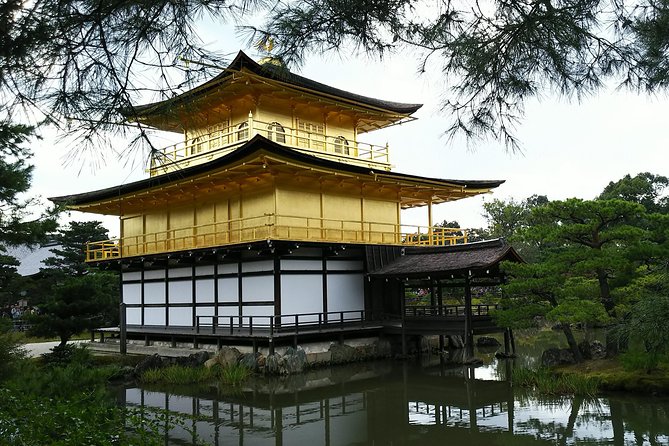
Next comes Kinkaku-ji, also called the Golden Pavilion, with about an hour at the temple. The main building is covered in gold leaf and reflects beautifully in the pond, making this one of Kyoto’s most instantly recognizable views.
The site began as the villa of a retired shogun and later became a temple after his death. That connection gives the pavilion more meaning than a quick photo stop. Your guide can explain how the building relates to samurai-era power, religious practice, and the changing use of elite residences.
Admission is not included. The listed fee is ¥500 per person, so bring enough Japanese yen or be ready to pay by the accepted method at the entrance. The cost is modest compared with the tour price, but it is worth knowing about before the day begins.
One hour is a reasonable amount of time for the main view and the grounds. You can enjoy the pavilion, walk the prescribed path, and take photographs without turning the stop into a long temple visit. The drawback is that Kinkaku-ji is a set-route attraction. You do not wander freely through every building, and the main pavilion draws most of the attention.
The guide adds real value here if you want more than a picture. Several guides have been praised for explaining sites in plain English and pointing out details that are easy to miss alone. Naoko, Seiya, and Koichi are among the guides singled out for strong explanations and good control of the day’s timing.
Gion, geisha culture, and respectful sightseeing
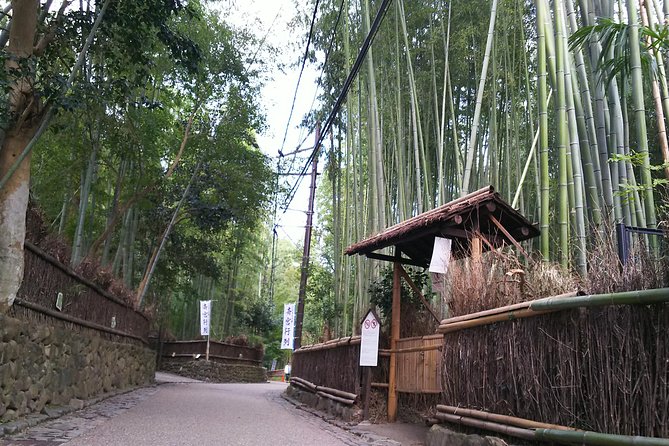
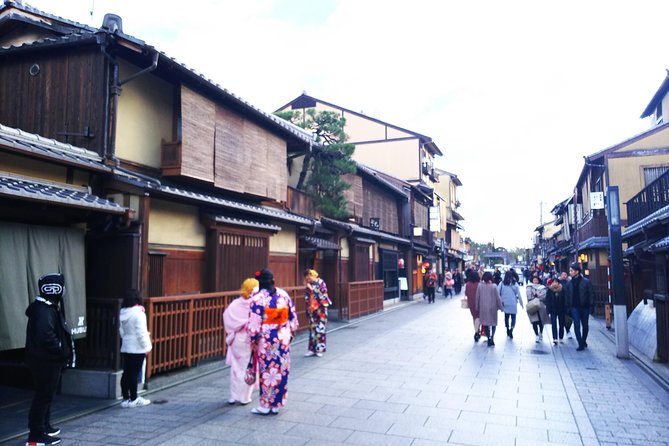
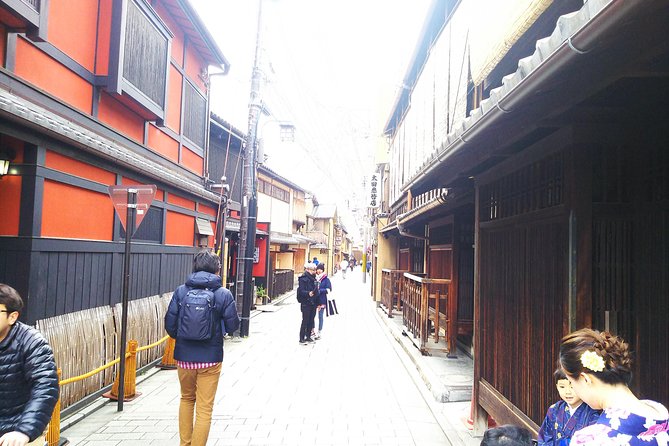
The Gion walk lasts about 40 minutes. This is the shortest scheduled stop, but it gives you a look at one of Kyoto’s best-known traditional districts.
Gion is associated with geisha, who travel from their boarding houses to tea houses where they perform for guests. You might see one walking through the area, but this is luck, not a promised part of the tour. That is important. The district is a living neighborhood, not a stage arranged for photographs.
A good guide can help you understand the customs and setting without reducing the area to a geisha-spotting exercise. The best use of these 40 minutes is to notice the traditional streets, listen to the explanation of local culture, and behave with care if a performer passes by.
This stop may feel brief compared with the scale of Gion. You will not have hours to explore every lane or sit down for tea. The short visit makes sense in a highlights tour, but it may disappoint you if Gion is your main reason for booking.
The private format helps here. You can ask questions about local customs, and the guide can adjust the explanation to your interests. Saori was praised for sharing local history and customs, while other guides were noted for making the day feel personal rather than mechanical.
A completely different kind of day out in Kyoto:
- PERFECT KYOTO 1-Day Bus Tour
★ 5.0 · 13,518 reviews - Kyoto: Fushimi Inari, Kinkakuji, Bamboo Grove 1 Day Bus Tour
★ 4.8 · 4,316 reviews - Kyoto: Tea Ceremony in a Traditional Tea House in Kiyomizu
★ 4.9 · 3,519 reviews - Kyoto: Tea Ceremony Ju-An at Jotokuji Temple
★ 4.9 · 3,207 reviews
Fushimi Inari’s orange torii gates
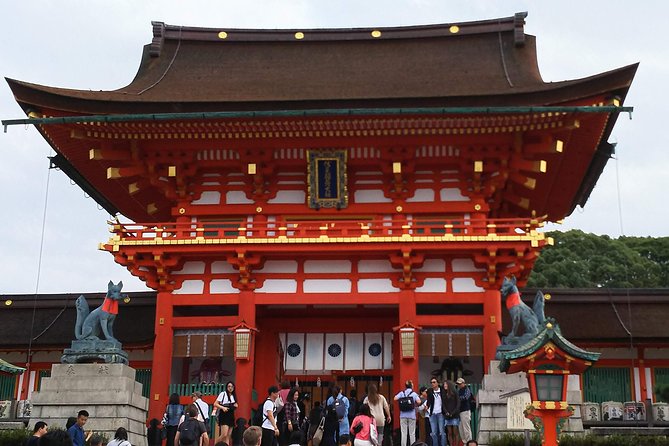
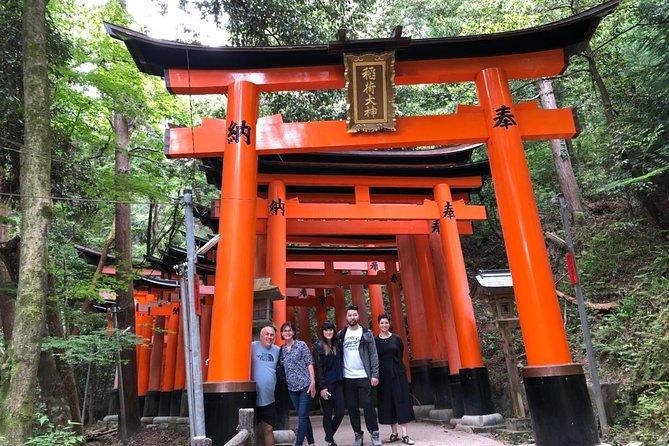
The final major stop is Fushimi Inari-taisha Shrine, with about an hour to walk through the famous tunnel of vermilion torii gates. Worshippers offer these gates as thanks for good fortune received from the shrine’s deity, creating one of Kyoto’s most memorable routes.
The first section is especially striking. The gates form a repeating corridor of orange-red beams, with Japanese inscriptions on their supports. The view changes as you walk, and the scale of the shrine becomes clear even if you do not go far up the mountain.
An hour gives you a strong introduction, but not enough time to complete every path. The shrine complex is large, and the walking can become steep as you continue upward. Your guide will help you judge how far to go while keeping the return to Kyoto Station on schedule.
This is another free stop, but free entry does not remove the physical demand. By this point, you may already have walked through Arashiyama, Kinkaku-ji, Gion, and several transport connections. Comfortable shoes are essential.
Fushimi Inari also rewards curiosity. Ask your guide about the meaning of the gates, shrine customs, and how the offerings connect worshippers with the deity. The visit is more satisfying when you understand what you are seeing, rather than treating the torii as a long orange photo booth.
Why the private guide matters
The strongest reason to choose this tour is not simply the list of sights. You can reach all four places on your own. The value comes from having someone manage the order, transit, timing, and cultural explanation.
Guides have helped groups navigate trains, buses, and other public transport while keeping the day on track. One guide, Fuji, was praised for leading a long cross-city route using public transit. Noriko helped with the train system and added information that would have been easy to miss. Kazuhiro was praised for keeping the schedule without making the group feel rushed.
That service can save more than time. Kyoto’s transport network is manageable once you understand it, but a first visit can involve confusing station layouts, transfers, bus stops, and unfamiliar signs. If your group includes older relatives, children, or anyone nervous about transit, a private guide can remove much of the stress.
The guide may also help shape the day around your group. A family of six was able to adjust the program and skip a formal lunch to use the time more efficiently. Another group with a one-year-old in a stroller received extra patience and a comfortable pace.
The experience is not identical with every guide. Some guests have praised guides for storytelling, humor, and warm conversation. One four-star account wanted a more interactive storyteller and felt the guide mainly answered questions. That is a fair reminder to tell your guide what you want: more history, more local customs, better photo stops, or less commentary.
Public transit, walking, and the real pace
This is called a walking tour, but it is really a walking and public transportation tour. You will use trains and buses to connect distant parts of Kyoto, and you may also use taxis depending on the guide and the day.
The physical effort is the biggest practical issue. One group recorded around 20,000 steps in hot weather. Another reported about 30,000 steps while still praising the pacing. These figures are not a guaranteed step count, but they show what a full day can demand.
Weather changes the experience sharply. Guides have helped with water and shade during very hot conditions, and another group enjoyed the day despite several hours of rain. Still, you should not assume the weather will be easy. Wear supportive shoes, carry water, and dress for the forecast.
The schedule allows roughly an hour at each of the main sights, with 40 minutes in Gion. That is enough for a clear first look. It is not enough for a relaxed, unplanned exploration of Kyoto.
I like this format for a first day in the city because it gives you a useful map in your head. Afterward, you can return to the place that interested you most. I would avoid it on the day you arrive from a long international flight, unless you are comfortable with a very active start.
Is $131.14 a good value?
The listed price is $131.14 per person. The guide fare is included, but the ¥500 admission fee, roughly ¥1,500 in public transportation, and meals are extra.
For one person, the total cost is higher than visiting the sights independently. You could certainly plan the same broad route yourself for less. The key question is how much you value convenience, private attention, and explanation.
For a couple or family, the private arrangement can make financial sense when compared with a larger guided group or a private vehicle. You are paying for a person who handles the route and helps you make the most of eight hours. You are not paying for luxury transportation.
The tour also offers group discounts, which may improve the per-person value for a larger party. A family or small group can share the guide while keeping the experience private.
I would call it good value for a first-time visitor with limited time, especially if public transit feels intimidating. I would call it poor value for an experienced Kyoto visitor who already knows the train system and prefers to set an unhurried pace.
Who should book this Kyoto day?
This tour suits you best if:
- You have only one full day for Kyoto.
- You want the major sights rather than a narrow neighborhood focus.
- You prefer a private guide to a large group.
- You want help with trains and buses.
- You enjoy learning about Japanese history, customs, and society.
- You can manage a full day of walking.
- You are traveling with family and want the schedule adjusted to your group.
It is less suitable if you want a car and driver, long meals, extensive shopping, or a relaxed schedule. One disappointed guest expected private vehicle service and instead found a guide-led public transit day. The description makes the transport arrangement clear, so treat this as a walking and transit experience.
English ability has generally been praised, with guides such as Naoko, Seiya, Noriko, Hironori, and Kazuhiro receiving especially warm comments for clear explanations and friendly service. Even so, guide style can vary. If storytelling matters greatly to you, tell the operator that when booking.
Free cancellation is available up to 24 hours before the 9 a.m. start time for a full refund. Changes made inside that window are not accepted, and poor weather may lead to another date or a full refund. Confirmation arrives at booking, and service animals are allowed.
Should you book this tour?
Book it if you want to see Kyoto’s four biggest postcard sights in one well-managed day and you would rather ask a guide than puzzle over every train and bus connection. The private format, early bamboo grove visit, and strong guide support make the day far more personal than a bus excursion.
Skip it if you want to explore slowly or if the idea of 20,000 steps sounds grim. You can visit these places independently for less money, but you will spend more time planning and navigating. For a first visit with limited time, I think the price is justified, as long as you understand that the guide leads you through Kyoto rather than driving you around it.
FAQ
How long does the tour last?
The experience lasts about eight hours.
What time does the tour begin?
It starts at 9 a.m.
Where does the tour start?
The meeting point is the Kyoto Station Building at 901 Higashishiokōjichō, Shimogyo Ward, Kyoto, 600-8216, Japan.
Where does the tour end?
The tour ends back at the meeting point.
Which Kyoto sights are included?
The day includes the Arashiyama Bamboo Grove, Kinkaku-ji Temple, the Gion district, and Fushimi Inari-taisha Shrine.
Is transportation included?
The guide fare is included, but public transportation costs are not. The listed transportation estimate is ¥1,500 per person.
Is the Kinkaku-ji admission fee included?
No. The admission fee is listed separately at ¥500 per person.
Is this a private tour?
Yes. Only your group participates in the activity.
How much walking is required?
A moderate level of physical fitness is advised, and quite a bit of walking is required. The day also includes public transportation between Kyoto’s main sights.
Just added around Kyoto
- Kyoto: Gion Night Walking Tour with Geisha Insight★ 5.0 · 39 reviews
- Kyoto: Private Customizable Day Trip by Car★ 5.0 · 38 reviews
- Kyoto: Full Day Bike Tour★ 4.9 · 39 reviews
- Private Japanese Calligraphy in Kyoto – Learn Shodō with a Master★ 5.0 · 39 reviews
- Experience a tea ceremony in an authentic tearoom, in Kyoto!★ 4.5 · 41 reviews
- Kyoto: Gion Evening Walk with Hidden Gems, Geisha & Sake★ 5.0 · 41 reviews
- Kyoto Private Photo Shoot & Tour by SnapKyoto★ 5.0 · 41 reviews
- The Way of Tea: Kyoto Crafts, Hidden Temples & Wabi-Sabi Walk★ 5.0 · 41 reviews
Walking Tours, compared.
Kyoto Geisha Walking Tour: Gion District & Hidden Gems
Read our review →
Tokyo Tsukiji Fish Market Food and Culture Walking Tour
Read our review →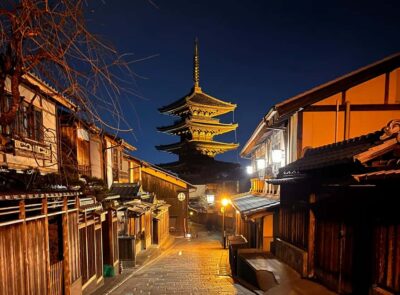
Gion Magical Night Walking Tour with Geisha Trivia
Read our review →
Imperial Palace and Shogun Historical Walking Tour
Read our review →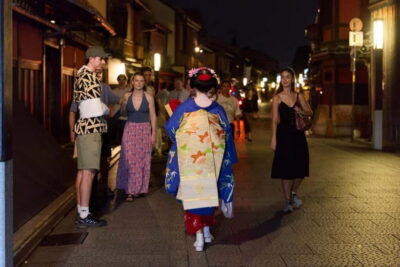
Gion Geisha District Walking Tour – Stories of Geisha
Read our review →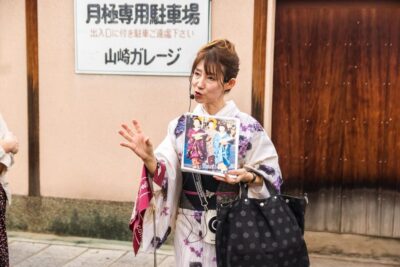

Shinjuku Local Bar and Izakaya Guided Walking Tour
Read our review →
Browse the lists this tour appears in