
Reviewed · FOOD & DRINK
Osaka Food Adventure Tour: Walking with a Local Guide
Osaka eats best on foot. This three-hour walk takes you from Shinsekai to Dotonbori, stopping for six to ten local foods, one drink, and plenty of neighborhood context along the way. I like the small maximum of eight people, which gives guides such as Ayako, Chiyoe, Kaoru, Hiro, Sue, and Sumiyo room to adjust the food choices and answer questions. I also like that the tour teaches you how to use Osaka’s public transportation, not just where to eat. The main drawback is that the ¥190 subway fare from Shinsekai to Namba is extra, and the tasting list can change with shop availability and dietary needs.
This is a useful first-day activity for anyone who wants help ordering food and finding small eateries without spending hours guessing. The route includes Tsutenkaku, Hozenji Yokocho, Takashimaya’s food basement, and Dotonbori, so you get a strong first look at southern Osaka. Just arrive ready to walk, stand, share food, and eat ingredients that may include meat, seafood, wheat, and dairy.
In This Review
- Key points to know before booking
- Why this three-hour Osaka food walk works
- Starting near Ebisucho Station and Tsutenkaku
- Eating through Shinsekai’s old food streets
- Moving from Shinsekai to Namba
- Takashimaya’s depachika food hall
- Hozenji Yokocho’s narrow lane
- Finishing beneath the Glico Sign in Dotonbori
- What the guides add to the experience
- Price, food value, and practical limits
- Who should book this Osaka food tour?
- Should you book the Osaka Food Adventure Tour?
- FAQ
- How long does the Osaka Food Adventure Tour last?
- How many local foods are included?
- Is a drink included?
- What foods might be served?
- Where does the tour begin?
- Where does the tour end?
- Is the Tsutenkaku observation deck admission included?
- Is the subway fare included?
- How many people can join the tour?
- Can the tour accommodate food allergies?
Key points to know before booking
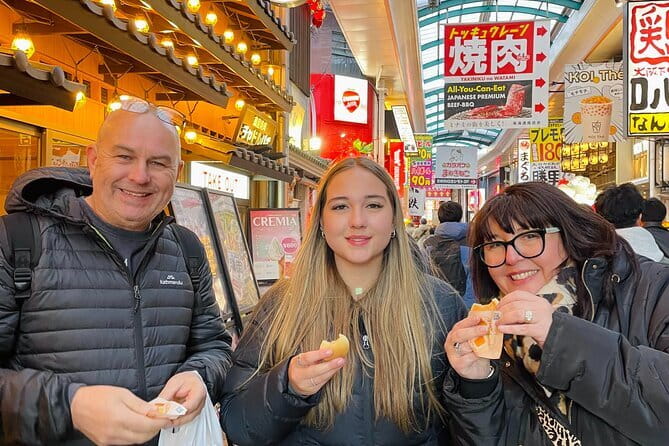
- Six to ten local tastings: Expect foods such as kushikatsu, takoyaki, wagashi, croquettes, and steamed meat buns, with the exact menu changing each day.
- A small group of eight or fewer: The size allows the guide to ask what you like and avoid, then shape the stops around the group when possible.
- Shinsekai gives the tour its character: Tsutenkaku and the old-fashioned food streets offer a different feel from polished shopping districts.
- The route ends at the Glico Sign: You finish in Dotonbori, close to one of Osaka’s best-known evening areas.
- Public transportation help is included: Your guide can show you how to move around Osaka, but the subway ride to Namba costs ¥190 per person.
- English and Japanese guidance: The tour is designed for English-speaking visitors and includes one alcoholic or non-alcoholic drink.
Why this three-hour Osaka food walk works
The best feature here is the mix of eating and orientation. You are not simply brought to one restaurant for a fixed meal. Instead, you move through several food settings: a historic butcher shop, a long-running sweets store, Shinsekai snack counters, and the department store food hall at Takashimaya.
That variety matters. Osaka food culture is not one dish or one neighborhood. You get fried food, sweets, savory snacks, and prepared foods sold in places with very different styles. A guide can explain what you are looking at, help you order, and point out options you might otherwise pass by.
I also like the timing. You can choose a lunch or dinner departure, so the food becomes a proper meal rather than a string of small bites squeezed between sightseeing stops. The total amount is substantial enough that you should not plan a large meal immediately afterward.
The 4.9 rating from 119 ratings and 98 percent recommendation figure suggest a consistently strong experience. The praise centers on the guides’ warmth, humor, food explanations, and ability to take people to places they would not have tried alone. That is important here, because the value comes less from the number of landmarks and more from having a friendly local interpreter beside you.
More Food Tours in Osaka
- Osaka: Shinsekai Food Tour with 13-15 Dishes at 5 Eateries
★ 4.8 · 2,204 reviews - Osaka Food Tour: 13 Dishes at 5 Local Eateries
★ 5.0 · 2,149 reviews - Hungry Osaka Street Food Tour:15 Tastings & 3 Drinks with a Local
★ 5.0 · 1,727 reviews
Starting near Ebisucho Station and Tsutenkaku
The meeting point is outside Ebisucho Station, at 5 Chome-13 Nipponbashi in Naniwa Ward. A practical tip is to use the station exit closest to Shinsekai. Tsutenkaku Tower should be visible from that side, which makes the starting area easier to identify.
Your first landmark is Tsutenkaku, the 103-meter tower that has represented Shinsekai for generations. The original tower was built in 1912 and rebuilt in 1956. The tour allows about 30 minutes here, but admission to the observation decks is not included.
That wording matters. You can see the tower and learn about its place in the district, but you should not assume that an observation-deck visit forms part of the paid tour. If you want to go up, ask your guide about timing and pay the admission separately. Since the activity is built around food and walking, the tower is best treated as an orientation point unless your group has time for more.
Tsutenkaku also helps you understand the character of Shinsekai. The district feels older and more informal than the sleek commercial areas of Osaka. Neon signs, small eateries, and long-running shops surround the tower, creating the right setting for a food walk that favors local habits over a polished restaurant circuit.
Eating through Shinsekai’s old food streets
You spend about an hour and a half in Shinsekai, the longest stop on the route. This is where much of the food identity of the experience takes shape.
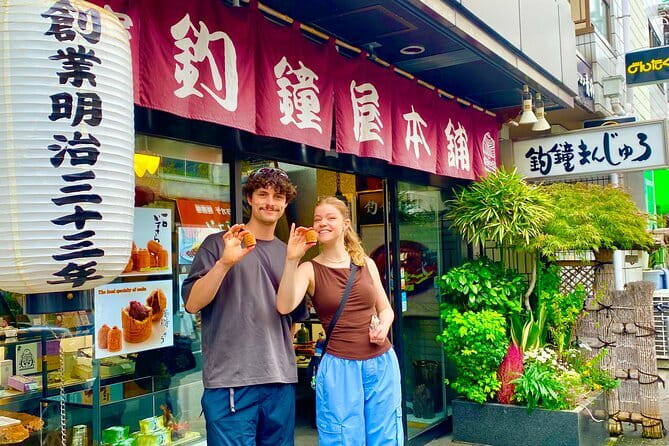
The best-known taste here is kushikatsu, deep-fried meat, seafood, and vegetables served on skewers. It is a classic Shinsekai food, and the guide helps you understand what you are ordering. You may also try takoyaki, Osaka’s familiar octopus-filled batter balls, from a shop described as the city’s oldest takoyaki shop.
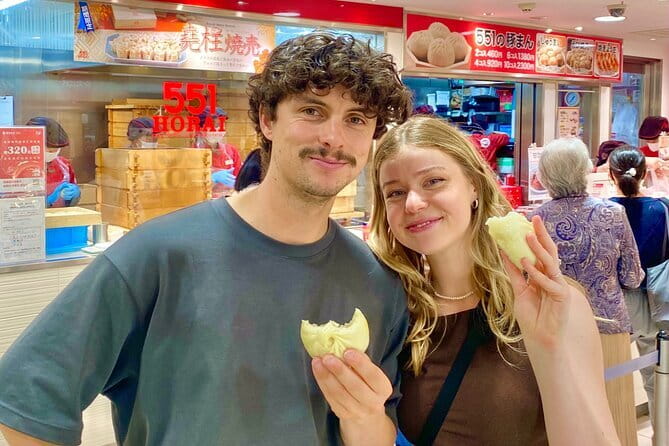
The other possible tastings help keep the meal from becoming repetitive. A croquette from a historic butcher shop gives you a simple, everyday bite. Traditional wagashi from a 200-year-old sweets store adds a completely different texture and level of sweetness. Steamed meat buns, known as butaman, bring another favorite that locals enjoy.
The exact selection depends on the group’s preferences and which shops are open and available that day. That flexibility is a strength if you are open to suggestions, but it means you should not book expecting a guaranteed list of every food named above.
I would tell you to arrive hungry, especially for a dinner departure. Six to ten tastings can add up quickly. The tour includes lunch, local foods, and one choice of alcoholic or non-alcoholic drink, but extra snacks and food beyond the provided meal are not included.
Shinsekai is also where the walking feels most useful. Your guide can explain the food streets and the district’s past while leading you between stops. Chiyoe, also called Aunty, was praised for caring for the group in crowded streets and explaining both the area and the food. Other guides, including Bryan and Sue, were singled out for humor, clear explanations, and taking people away from the main streets.
Moving from Shinsekai to Namba
The tour includes practical transportation help, which is easy to overlook when comparing food walks. After Shinsekai, you take public transportation toward Namba, with the ¥190 subway fare paid separately per person.
For a first visit to Osaka, this small lesson can be worth more than it sounds. Osaka’s stations can feel confusing, particularly when you are changing lines or trying to match station names with a map. A guide can show you the route and help you get comfortable using the system.
The cost is modest, but bring cash or a suitable payment method for the subway fare. The tour price does not cover it. You also need to allow for walking through stations and getting on and off trains, so the activity is not a stationary tasting session.
That transportation leg gives the tour a useful rhythm. You begin with Shinsekai’s older streets, then shift toward Namba’s shopping, nightlife, and canal-side crowds. The contrast makes the route feel like a short introduction to several sides of Osaka rather than a single neighborhood crawl.
More Walking Tours in Osaka
- Osaka: Hotspots & Hidden Gems Walking Tour Private or Group
★ 4.9 · 1,300 reviews - Osaka Local Foodie Walking Tour in Dotonbori and Shinsekai
★ 5.0 · 985 reviews - Osaka Bar Hopping Night Walking Tour in Namba (3 bars, 6 tastes)
★ 5.0 · 958 reviews - Osaka: Deep Backstreets Walking Tour with Dinner Option
★ 4.9 · 902 reviews
Takashimaya’s depachika food hall
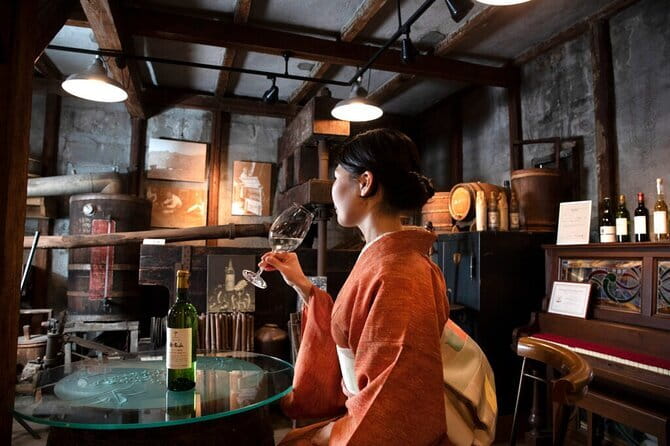
The route includes about 15 minutes at Takashimaya Osaka Store. The store’s basement food hall, called a depachika, is a fine place to see how carefully prepared Japanese food is presented for shoppers.
You may find sushi, sweets, fresh produce, and prepared meals arranged with a level of care that can make a simple food stop feel like a visual tour. It is a useful contrast with Shinsekai’s small eateries. Here, the emphasis is on selection, packaging, presentation, and the range of food bought for home or gifts.
Because the stop is short, do not expect a long shopping session or a separate meal here. The point is to see another part of Osaka’s food culture and perhaps taste something selected by the guide. Extra snacks are not included, so any additional purchases come out of your own pocket.
This stop may appeal most to people interested in how Japanese food is sold, not only how it tastes. If you prefer a tour made entirely of sit-down restaurants, the brief department store visit may feel less central. For a first introduction, though, it widens the picture.
Hozenji Yokocho’s narrow lane
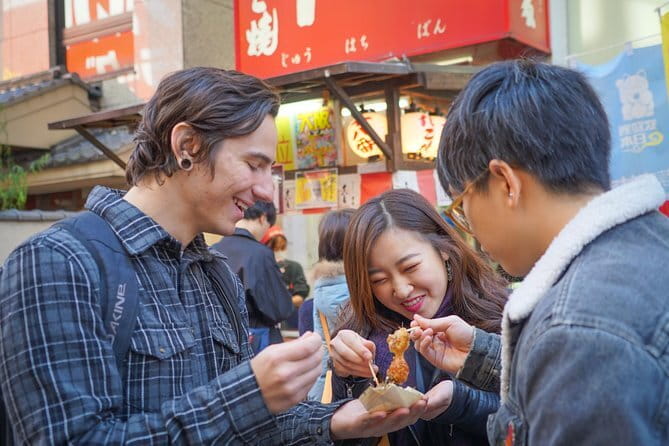
Hozenji Yokocho receives about ten minutes, making it the shortest stop. The narrow lane near Hozenji Temple has traditional buildings, small restaurants, and a quieter mood than the larger streets nearby.
The short visit works as a change of pace. After the signs and food stalls of Shinsekai, you get a compact look at an older Osaka lane before reaching Dotonbori. The route does not treat the alley as a long sightseeing stop, so you should see it as a brief atmosphere break rather than a full temple visit.
A guide adds value here by pointing out the setting and connecting it to the surrounding neighborhood. Ten minutes is enough to look around, take a few photographs, and understand why this small lane is included. It is not enough for an extended exploration.
Finishing beneath the Glico Sign in Dotonbori
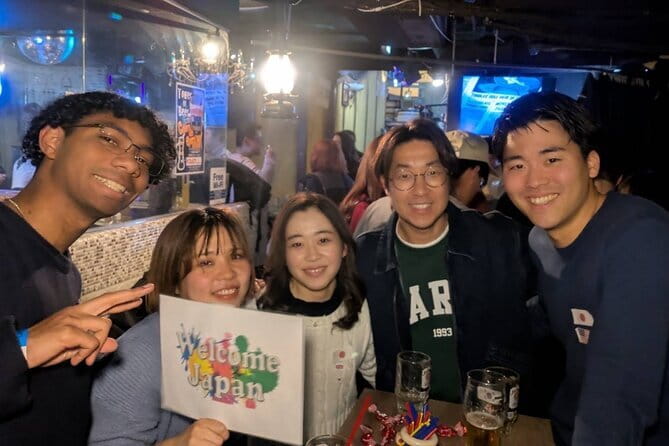
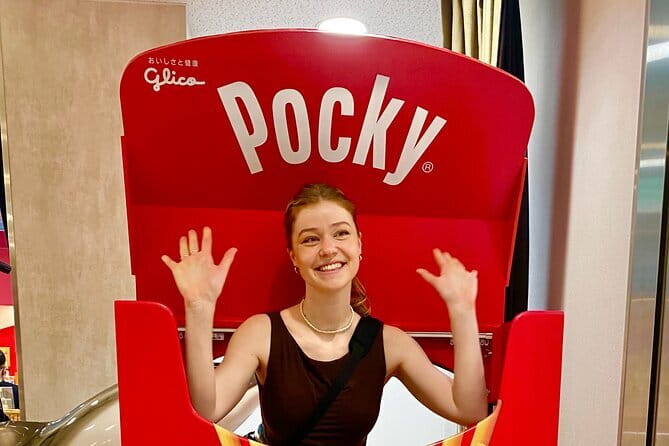
The final 30 minutes take place in Dotonbori, ending at the bridge in front of the Glico Sign at 1 Chome-10-4 Dotonbori. This is a lively entertainment district beside the canal, famous for enormous signs, bright lights, and Osaka street food.
The Glico Sign is an easy finish point and a practical place to continue your evening. You are close to restaurants, shops, and the rest of Namba. Since the tour ends here rather than returning you to Ebisucho Station, plan your next stop before you arrive.
Dotonbori can be crowded, particularly at night. That makes the guide’s presence helpful during the final stretch, but it also means you should stay close to the group and wear shoes that feel good on hard pavement. The tour is three hours, and the walking is moderate rather than strenuous, but you will be on your feet for most of it.
The ending also gives you a chance to compare the district with Shinsekai. Both areas are strongly linked to Osaka food, yet Dotonbori has a louder, more commercial energy. Finishing here works well if you want dinner-area suggestions or plan to keep exploring after the tour.
What the guides add to the experience
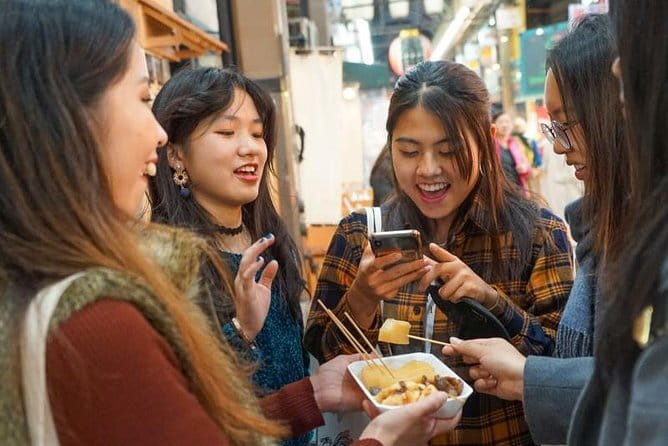
The guide is the reason to choose this tour over simply sampling Dotonbori on your own. Ayako was praised for introducing unfamiliar foods and offering a closer look at everyday food culture. Kaoru was described as funny, helpful, and good at recommending places to visit after the tour.
Hiro’s connection to Osaka was especially useful for people who wanted local context about the neighborhoods and dishes. Sumiyo was noted for warmth and fun facts, while Sue helped explain snacks that would be difficult to identify or order without assistance. Bryan and Chiyoe added humor and an easygoing tone.
The guide style can vary, of course. Still, the pattern is clear: you get explanations, ordering help, and a chance to say what you like or dislike. That last point is valuable for picky eaters, first-time visitors, and anyone unsure about seafood or unfamiliar textures.
The tour is offered in English and Japanese. The small group limit of eight gives the guide a better chance to hear your questions than a large bus-style food tour would.
Price, food value, and practical limits
At $79.28 per person, the price is reasonable if you value variety, guidance, and a full three-hour introduction to Osaka food. Six to ten tastings plus one drink can represent a useful amount of food, especially when the route includes several different types of shop.
You are also paying for the guide’s time and local judgment. A guide can help you avoid ordering too much of one dish, explain what is in front of you, and direct you to foods you may not notice alone. The public transportation lesson adds another useful skill for the rest of your trip.
The price is less attractive if you only want a cheap meal or already know Osaka’s food districts well. You will still pay for the subway, admission to the Tsutenkaku observation decks if you choose to visit, extra snacks, and any tips you wish to leave for excellent service.
Tell the provider about allergies or dietary restrictions before booking. The food may include meat, seafood, wheat, and dairy, and the available substitutions are not specified. The tasting choices can change, so people with strict dietary needs should confirm what can be accommodated rather than relying on assumptions.
A moderate fitness level is recommended. You will walk between food stops, stand in shops and restaurants, use public transportation, and move through crowded streets. The tour requires good weather, and a cancellation caused by poor weather results in a different date or a full refund.
Who should book this Osaka food tour?
I would choose this for a first visit to Osaka, especially if you want to eat local food but feel uncertain about ordering. It also suits people staying in Kyoto who are making a day trip to Osaka. One participant used the guide’s help to navigate the train back to Kyoto, which shows how the transportation guidance can remain useful after the tour ends.
Food-focused couples, small families, and solo visitors who like meeting people should fit comfortably in a group of eight or fewer. The lunch and dinner choices make it easy to place the tour into a sightseeing day.
I would hesitate if you need a fixed menu, dislike walking, or want a formal cooking lesson. This is a moving tasting tour, and the dishes depend on shop availability and the preferences of the group. It is also not the best match if you want to spend a long time inside Tsutenkaku or at each sightseeing stop.
Should you book the Osaka Food Adventure Tour?
Book it if you want a friendly introduction to Osaka’s food streets, several small tastings, and help using public transportation. The strongest reasons are the compact group, the range of foods, and guides who bring humor and personal knowledge to the route.
Skip it if you already have a firm food plan or need guaranteed dishes for medical or religious reasons. For most first-time visitors, though, $79.28 buys more than a meal. It gives you a route through Shinsekai, Hozenji Yokocho, Takashimaya, and Dotonbori, plus the confidence to order and explore on your own afterward.
FAQ
How long does the Osaka Food Adventure Tour last?
The tour lasts approximately three hours.
How many local foods are included?
The tour includes six to ten local foods. The exact tasting selection can change based on group preferences and shop availability.
Is a drink included?
Yes. One alcoholic or non-alcoholic drink is included.
What foods might be served?
Possible foods include croquettes from a historic butcher shop, wagashi from a 200-year-old sweets store, kushikatsu, takoyaki, and steamed meat buns called butaman.
Where does the tour begin?
The meeting point is Ebisucho Station, at 5 Chome-13 Nipponbashi, Naniwa Ward, Osaka.
Where does the tour end?
The tour ends at the bridge in front of the Glico Sign in Dotonbori.
Is the Tsutenkaku observation deck admission included?
No. Admission to the Tsutenkaku observation decks is not included.
Is the subway fare included?
No. The subway ride from the Shinsekai area to Namba costs ¥190 per person and is paid separately.
How many people can join the tour?
The tour has a maximum of eight people.
Can the tour accommodate food allergies?
The provided meal may include meat, seafood, wheat, and dairy. If you have allergies or dietary restrictions, contact the provider before booking to discuss possible accommodations.
Just added around Osaka
- Osaka Food Tour with 10 Classic Japanese Tastings & Drinks★ 5.0 · 38 reviews
- Osaka: Highlights & Hidden Gems Private Walking Tour★ 4.7 · 38 reviews
- Kyoto private tour (Shore excursion available from Osaka or Kobe port)★ 5.0 · 39 reviews
- Osaka Private Day Trip – Enjoy Your First-Time Visit to Osaka!★ 5.0 · 39 reviews
- Kyoto & Nara & Uji: Full Day Sightseeing Tour from Osaka or Kyoto★ 4.5 · 39 reviews
- Authentic SUSHI Course Cooking Class★ 5.0 · 39 reviews
- Osaka: Mind & Spirit Balance Temple Reiki Healing★ 5.0 · 41 reviews
- Osaka: Gluten-Free Ramen and Gyoza Cooking Class★ 5.0 · 42 reviews
Food & Drink, compared.
Shinjuku Food Tour (13 Dishes at 4 Local Eateries)
Read our review →
Tokyo Tsukiji Fish Market Food and Culture Walking Tour
Read our review →
Shinsekai Food Tour with 13-15 Dishes at 5 Eateries
Read our review →
Osaka Food Tour: 13 Dishes at 5 Local Eateries
Read our review →
Shinjuku Food Tour (15 Dishes and 4 Eateries)
Read our review →
Best of Shinjuku: Izakaya Food Tour (4 Stops, 14+ Tastings)
Read our review →
Kyoto Night Foodie Tour in Gion (9+ dishes + 6 Sake tastings)
Read our review →
Hungry Osaka Street Food Tour:15 Tastings & 3 Drinks with a Local
Read our review →Browse the lists this tour appears in