
Reviewed · SAMURAI & NINJA EXPERIENCES
Samurai Experience – Learn Bushido through Kendo, in Tokyo
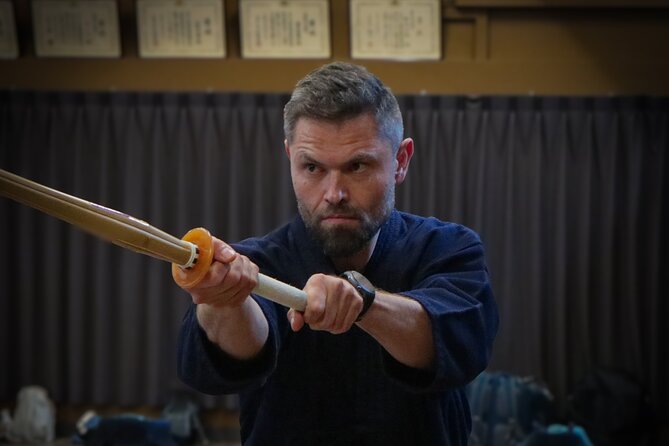
The sword comes last. That is what makes this two-hour Kendo Spirit session more thoughtful than a quick samurai photo stop. You begin with etiquette, focus, footwork, and the meaning of Kendo before picking up a bamboo sword. I like the respectful pace, and I like that instructors such as Daichi and Makoto treat Kendo as a living discipline rather than a costume show.
The main consideration is physical effort. You will practice movements, wear protective equipment, and take part in a short match, so this is not a passive cultural talk. The price is $103 per person, which feels fair if you want hands-on instruction, provided equipment, drinks, souvenirs, and a small group capped at eight.
In This Review
- At a glance: what makes this Kendo class special
- Why Kendo offers more than a samurai costume
- Your first lesson: bowing before the bamboo sword
- Ki, Tai, and Ken: the three building blocks
- Putting on Kendo clothing and protective gear
- The first strikes: learning control before speed
- The match: your chance to face a Kendo instructor
- The instructor demonstration: speed, timing, and control
- Photos, souvenirs, and the value of the $103 price
- Getting there and planning your visit
- Who will enjoy this experience most
- FAQ
- How long does the Samurai Experience last?
- How much does the experience cost?
- Where is the dojo located?
- Is the experience taught in English?
- Do I need previous Kendo experience?
- Is equipment provided?
- Will I take part in a Kendo match?
- Can I receive photos or videos?
- Can I book a private session?
- Should you book Kendo Spirit in Tokyo?
At a glance: what makes this Kendo class special
- Training begins with etiquette: You bow, settle your mind, and learn why respect guides every part of Kendo.
- Spirit, body, and sword come together: The session teaches Ki, Tai, and Ken before combining them as Ki-Ken-Tai-Itchi.
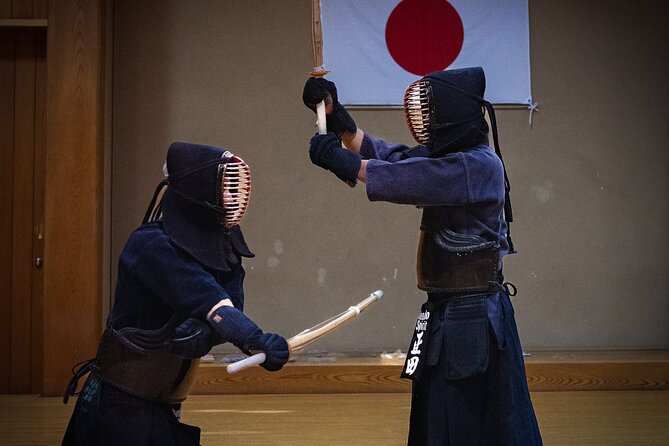
- You practice in full Kendo gear: The uniform and protective equipment make the lesson feel like real training, not a staged photo opportunity.
- You may face an instructor: A short match lets you test the basics while a protected Kendo teacher controls the pace.
- The final demonstration has real force: Instructors show the speed, precision, and control that beginners cannot yet produce.
- The dojo is easy to reach: It is within about 15 minutes of Tokyo Station, and all equipment is supplied.
Why Kendo offers more than a samurai costume
Kendo grew from the sword traditions of the samurai, but modern practice is not simply a museum version of sword fighting. It carries forward Bushido through disciplined movement, formal greetings, controlled attacks, and attention to your opponent.
That distinction matters. Tokyo offers many ways to dress as a samurai and pose with a blade. Here, the clothing is part of a lesson. You learn how to stand, move, greet, hold the shinai, and show intent. The instructors frame Kendo as a path of self-improvement, not a chance to act out a battle scene.
I especially like the way this changes your idea of Japanese martial arts. Strength alone is not the goal. A clean strike requires the right spirit, body position, timing, and sword movement at once. That combination is called Ki-Ken-Tai-Itchi, and the class builds toward it step by step.
You do not need previous martial arts experience. Most people begin as complete beginners. You do need to listen carefully and accept that the session may ask more of you than a standard sightseeing stop.
More Martial Arts Experiences in Tokyo
- Tokyo: Samurai Sword & Archery Class from Samurai Descendant
★ 5.0 · 603 reviews - Tokyo:Samurai sword and archery class from a samurai descendant
★ 5.0 · 121 reviews - Tokyo 2-Hour Genuine Samurai Experience: Kendo in Japan
★ 5.0 · 112 reviews
Your first lesson: bowing before the bamboo sword
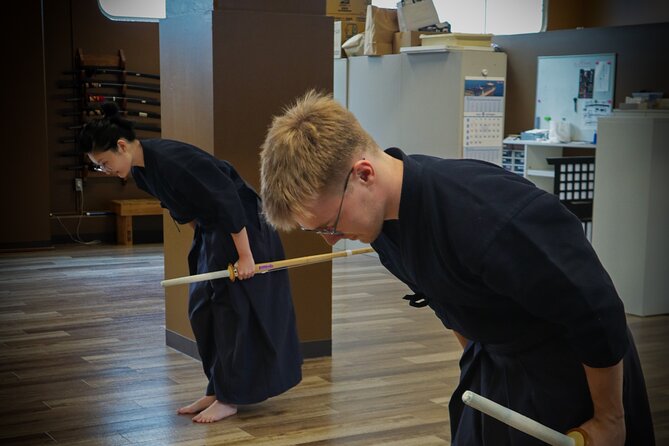
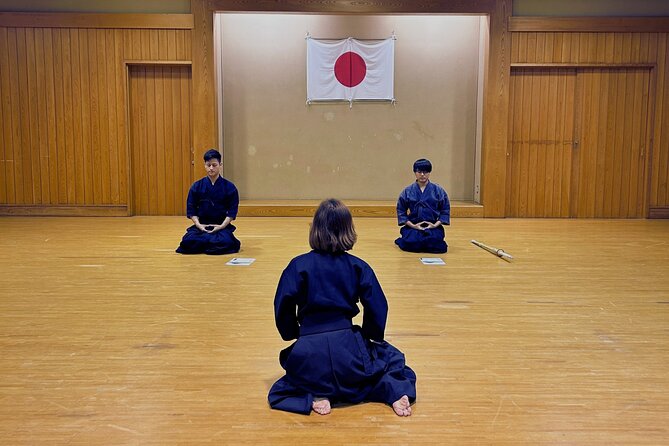
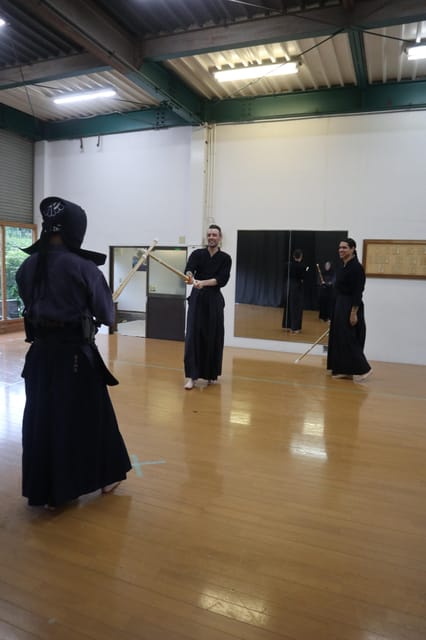
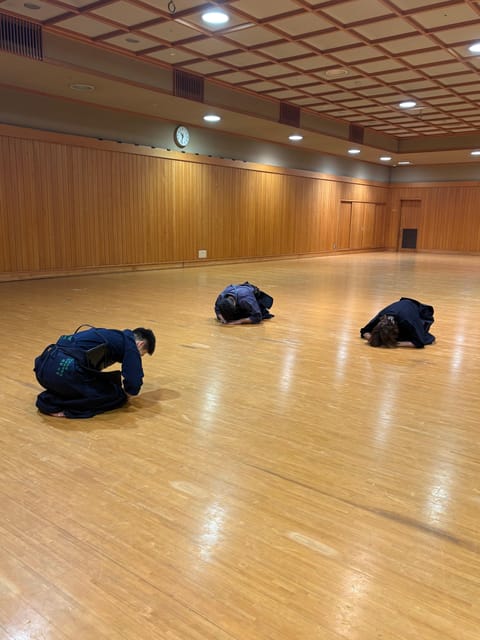
The experience begins with an explanation of Kendo and its connection to Bushido. Before training starts, you learn basic etiquette and bow to the practice space and the people around you.
This is not treated as a decorative ritual. The bow signals that you are ready to train with respect and attention. For a first-time visitor, it also gives the session a clear rhythm. You are not rushed into swinging a sword before knowing how to behave in the dojo.
The instructors explain the ideas behind Kendo in English, with Japanese also available. Several participants have praised the clear explanations and careful demonstrations. Daichi is repeatedly singled out as a warm and effective instructor, while Makoto is also noted for making the practice friendly and easy to follow.
The tone matters. A martial arts class can feel intimidating if you are unfamiliar with the rules. Here, the small group format helps. With no more than eight participants, the instructors can watch your movements and adjust the pace.
Ki, Tai, and Ken: the three building blocks
The teaching follows three simple ideas.
Ki means spirit. You learn how to project focused intent. In Kendo, this is not shouting in anger or trying to look fierce. It is the steady presence you bring to the action.
Tai means body. You practice traditional footwork, balance, and posture. The goal is to stay grounded and ready rather than lunge wildly at a target.
Ken means sword. Only after the earlier work do you learn how to hold and swing the shinai, the bamboo practice sword used in Kendo.
This order is one of the strongest parts of the class. Beginners often want to start with the exciting object, but a sword without correct posture and footwork is just a stick in your hand. By waiting, the instructors show why Kendo is a complete practice.
You will work through movements in stages. The group learns how to greet, handle the shinai, and use basic steps. One participant described learning how to draw and fold the shinai, while another highlighted the four main attack points and the step technique. These details give the class structure and help you understand what you are doing before practice becomes faster.
Putting on Kendo clothing and protective gear
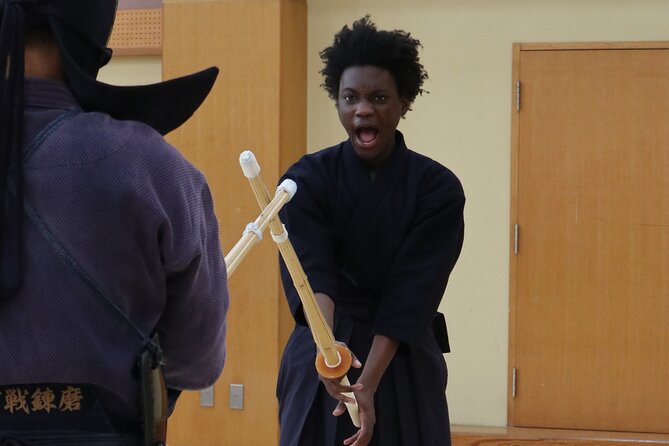
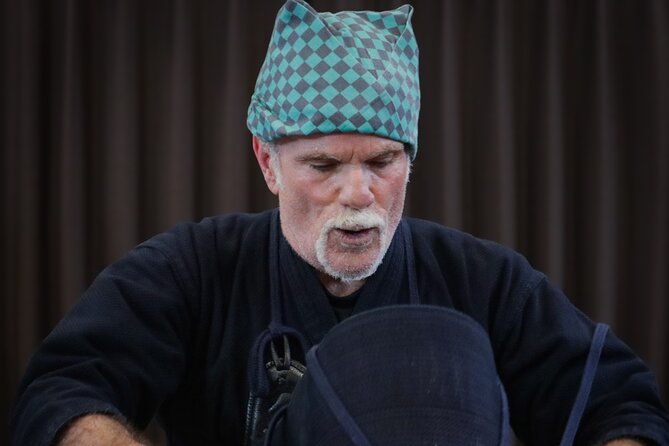
The session includes Kendo attire, so you do not need to bring or rent anything. Wearing the uniform changes the feel of the lesson. You are no longer simply holding a sword for a photograph. You are preparing for training.
The protective armor is an important part of the experience. One participant described putting on the full equipment as a major highlight, while another said the armor made the session feel like a step into another era. The helmet and protective pieces also make the later practice match possible.
There is a practical catch: the gear can feel warm, especially when combined with movement. One participant specifically found the heat uncomfortable, though cold water and rest periods helped. Dress as if you are going for a light run, rather than wearing heavy sightseeing clothes.
The experience includes drinks, and water is useful because the session can become a genuine workout. You should expect activity, not just instruction from the sidelines.
More Samurai & Ninja Experiences in Tokyo
- Tokyo: Samurai Restaurant Show Ticket with 2 Drinks
★ 4.5 · 1,307 reviews - Tokyo: Samurai Ninja Museum Guided tour and Experience
★ 4.6 · 1,010 reviews - Best Samurai Experience in Tokyo
★ 5.0 · 458 reviews - Ninja Experience (Family Friendly) at Samurai Ninja Museum TOKYO
★ 5.0 · 441 reviews
The first strikes: learning control before speed
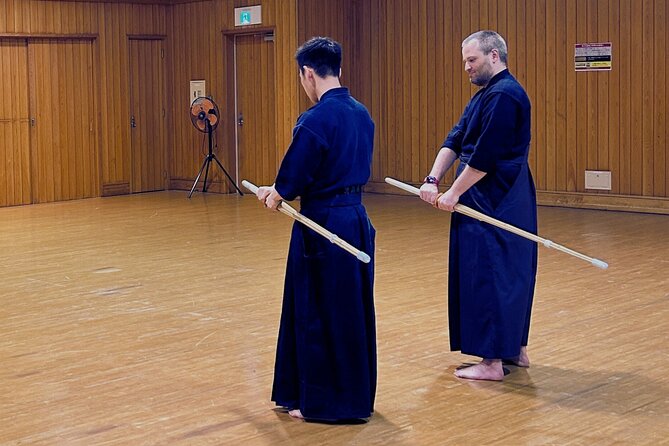
With the basics in place, you begin handling the shinai and practicing sword movements. The instructors demonstrate each new action, then give you time to try it.
This is where the class becomes physical. You work on combining your steps with your strike, keeping your body balanced and directing the sword correctly. The aim is not to hit hard. It is to move with purpose and control.
I like this part because it gives you a better sense of how demanding Kendo can be. A short movement may look simple when performed by an expert. Repeating it yourself reveals how much attention goes into your feet, hands, posture, timing, and focus.
The teachers keep the atmosphere encouraging. Beginners describe the pace as comfortable and the directions as clear. You can ask questions throughout the session, and the class is conducted in English, so you are not left guessing about the rules.
If you are not athletic, do not let that stop you. The format is designed for first-timers, and the instructors guide the group carefully. Still, you should be willing to move, repeat drills, wear gear, and concentrate for two hours.
The match: your chance to face a Kendo instructor
The most memorable section for many people is the practical match. After learning the basic techniques, you may put on the protective gear and face an instructor in a short, controlled bout.
This is not a tournament, and you are not expected to perform like a trained Kendo student. The instructor sets the pace and keeps the activity suitable for a beginner. The point is to feel the pressure of facing another person, then apply the footwork, sword movement, and focus you have just practiced.
That pressure can be surprisingly strong. One participant described freezing for a moment when the sword pointed toward them. That reaction is useful: it shows the difference between practicing a strike in the air and responding to a person standing in front of you.
The match also gives the earlier lessons a purpose. Etiquette is no longer an abstract rule. Footwork is no longer a slow drill. Ki becomes the focus you need when your attention narrows and the action begins.
If you dislike physical contact or feel uneasy in protective gear, this is worth considering before booking. The match is friendly and instructional, but it remains the active part of the session.
The instructor demonstration: speed, timing, and control
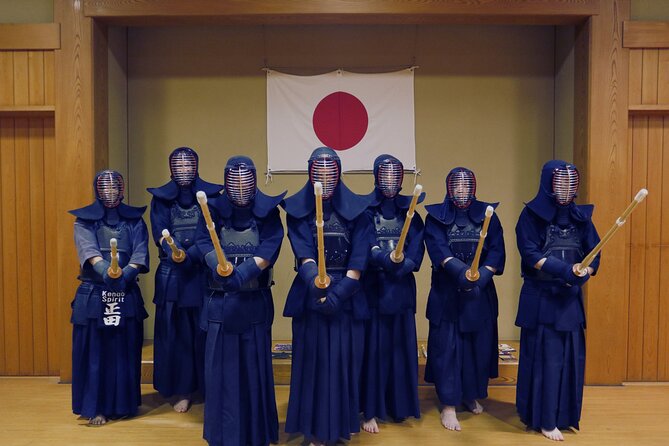
After your own practice, the instructors perform a Kendo match. This is the point where you see the gap between beginner movements and trained technique.
The demonstration is intense without being theatrical. You can watch how quickly an experienced practitioner changes distance, maintains posture, and commits to an attack. The action may be brief, but the force comes from precision and timing rather than wild swings.
This closing match is one of the best reasons to choose a real Kendo lesson over a costume experience. You first struggle through the basic movements, then see what years of practice can produce. The demonstration gives meaning to the discipline you have just attempted.
It also provides a quiet cultural lesson. Kendo is not presented as uncontrolled aggression. The match begins and ends within rules of respect, and the final bow matters as much as the strikes.
Photos, souvenirs, and the value of the $103 price
At $103, this is not the cheapest activity in Tokyo. The value depends on what you want from a cultural experience.
You receive two hours of instruction, Kendo clothing, a bamboo sword, drinks, and souvenirs. The group size is limited to eight, which is important because personal correction matters in a movement class. Photos and videos are taken during the session with your agreement and sent to you by email afterward.
That combination makes the price easier to justify for someone who wants an active, guided experience. You are paying for teaching, equipment, access to a dojo setting, and a chance to participate in a formal martial art. You are not paying only for a short performance.
The value is weaker if you mainly want a polished samurai photograph or a quick introduction lasting 30 minutes. This session asks for your time and energy. It pays off when you care about understanding the practice and trying it with your own body.
The included drinks are a small but welcome detail. The souvenirs add a physical reminder of the day, while the digital photos let you remember the less polished moments, such as learning the steps or preparing for the match.
Getting there and planning your visit
The dojo is located within approximately 15 minutes of Tokyo Station, making this one of the easier martial arts experiences to fit into a city visit. You do not need to plan a long trip to the edge of Tokyo.
The activity lasts two hours, and starting times vary, so check availability before building the rest of your day around it. Arrive ready to take part, not just watch.
Nothing special is required to bring because the equipment is supplied. Practical clothing is still wise. Choose something comfortable for exercise, especially if you do not enjoy heat. Alcohol and drugs are not allowed.
The activity is not suitable for pregnant women, babies under one year, or people over 95. Large groups can be arranged with advance contact, while private sessions are available as an add-on before payment on dates that still show eight available places.
Cancellation is flexible: you can cancel up to 24 hours before the activity for a full refund. You can also reserve now and pay later, which helps if your Tokyo plans are still shifting.
Who will enjoy this experience most
I would recommend this session to you if you want:
- A hands-on introduction to a Japanese martial art
- Cultural context along with physical practice
- A small group and careful instruction
- An activity near central Tokyo
- A chance to wear Kendo gear and face an instructor
- A meaningful alternative to a standard sightseeing stop
Families with older children may also enjoy it. A parent and 15-year-old took the class together and found the two-hour format manageable. The key is interest and willingness to follow instructions, not athletic ability.
It is less suitable if you want a quiet activity, dislike exercise, or expect to spend most of the time taking photographs. The class has fun moments, but its focus is discipline, etiquette, and practice.
FAQ
How long does the Samurai Experience last?
The experience lasts two hours.
How much does the experience cost?
The listed price is $103 per person.
Where is the dojo located?
The dojo is within approximately 15 minutes of Tokyo Station.
Is the experience taught in English?
Yes. The instructors speak English and Japanese, and the session is conducted in English.
Do I need previous Kendo experience?
No. The experience is designed for beginners, including people with no prior martial arts experience.
Is equipment provided?
Yes. Kendo attire and a bamboo sword, called a shinai, are included. Drinks and souvenirs are also provided.
Will I take part in a Kendo match?
The experience includes a practical match, and those with the courage to do so may challenge a veteran Kendo instructor. The session also includes a demonstration match between instructors.
Can I receive photos or videos?
Yes. Photos and videos are taken during the experience with your agreement and sent to you by email afterward.
Can I book a private session?
Yes. Before payment, add the Exclusive Private Session option, with one add-on per group. Private sessions are available only on dates that still show eight available places.
Should you book Kendo Spirit in Tokyo?
Book it if you want to understand Kendo through action, not just hear a short explanation or put on armor for a photograph. The careful progression from bowing and footwork to sword practice and sparring gives the session real substance.
The strongest parts are the friendly instruction from Daichi, Makoto, and the teaching team, the small group size, the full protective gear, and the final demonstration. The main drawbacks are the price and the physical heat of the equipment.
For a curious first-timer, this is a memorable two hours near Tokyo Station. Come ready to listen, move, sweat a little, and bow with respect. That is when the samurai theme becomes more than a costume.
Just added around Tokyo
- Tokyo 6hr Instagram Highlights Private Tour with Licensed Guide★ 5.0 · 38 reviews
- Tokyo Small Group Tour with Guide★ 4.5 · 38 reviews
- Tokyo Sumo Experience with Live Show & Audience Challenge★ 5.0 · 38 reviews
- Japanese Food Cooking Class in Asakusa, Tokyo★ 5.0 · 39 reviews
- Very popular in Harajuku♡Animal petting zoo★ 4.6 · 39 reviews
- Ramen Making from Scratch with Tokyo Mom(Vegan Option Available)★ 5.0 · 39 reviews
- Tokyo JDM Night: 600hp C63s AMG Edition 1 (Private)★ 4.9 · 39 reviews
- Tokyo: Kimono Rental inside Shinjuku Gyoen National Garden★ 4.9 · 39 reviews
Samurai & Ninja Experiences, compared.
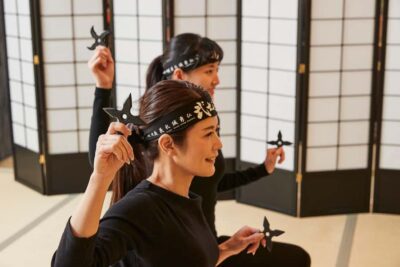
Samurai Ninja Museum Guided tour and Experience
Read our review →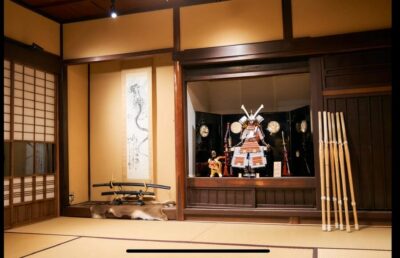
Kendo and Samurai Experience with Uniform and Gear
Read our review →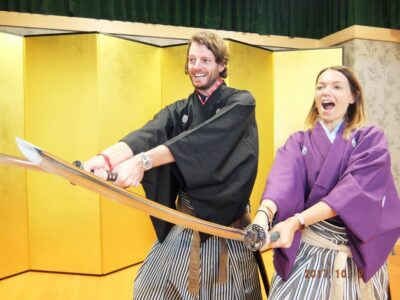
Samurai Sword Class by Experts in Traditional Arts
Read our review →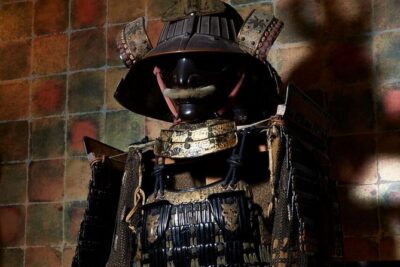
Skip the lines Basic Ticket at SAMURAI NINJA MUSEUM KYOTO
Read our review →
Samurai Sword & Archery Class from Samurai Descendant
Read our review →
Browse the lists this tour appears in