
Reviewed · SAMURAI & NINJA EXPERIENCES
Samurai Experience – Learn Bushido through Kendo, in Tokyo
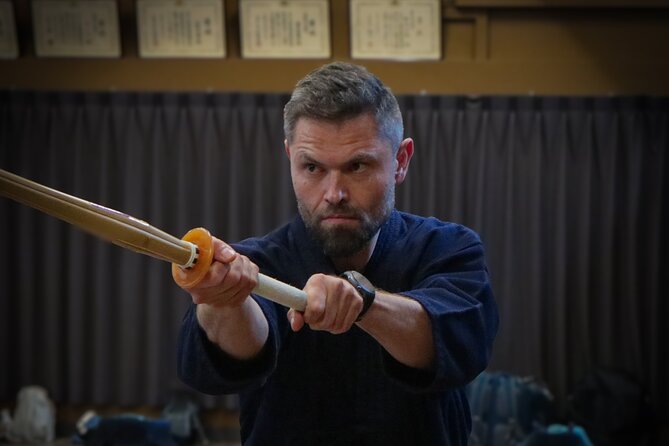
Trade sightseeing for sword practice. This two-hour Tokyo session takes you into a working dojo, where Daichi and his fellow instructors teach kendo with a bamboo sword, formal movement, and plenty of good-natured encouragement. I like the genuine setting and the chance to practice a living Japanese tradition rather than simply pose in a costume.
I also like that the class is built for beginners, with small groups capped at eight people, English instruction, and clothing provided. The main consideration is price: at $132.14 per person, this is not a cheap photo stop. You are paying for personal instruction, equipment, photographs, and a rare hands-on cultural experience, so it makes the most sense if you want active participation rather than a quick cultural demonstration.
In This Review
- Key points before you book
- Entering the Nihonbashi dojo at 10 a.m.
- Getting dressed for kendo
- Daichi’s lesson: posture, timing, and focus
- Bushido as practice, not decoration
- The hands-on part makes the $132.14 price easier to judge
- Photos, videos, and the final souvenir
- Who will enjoy this most
- What may disappoint you
- Planning the morning in Nihonbashi
- A better cultural break than another photo stop
- Should you book Kendo Spirit?
- FAQ
- Where does the kendo experience begin?
- What time does the experience start?
- How long does the session last?
- Is the activity suitable for complete beginners?
- Do I need to speak Japanese?
- What equipment and clothing are included?
- Are photos included?
Key points before you book
- Train with Daichi, a practitioner with 19 years of kendo experience, rather than receiving a short theatrical sword lesson.
- Practice inside a genuine working dojo used by Japanese kendo practitioners.
- Wear rented kendo clothing and use a shinai, the flexible bamboo sword used for training.
- Expect English instruction, with Daichi able to explain the activity and answer questions.
- Groups are limited to eight people, which matters when you need help with posture, footwork, and timing.
- Photos and videos are sent by email afterward, giving you a record of the session without asking you to hold a phone during practice.
Entering the Nihonbashi dojo at 10 a.m.
The experience begins at 10 a.m. in Nihonbashikobunachō, in Tokyo’s Chuo City, at the address listed as 29 Sec日本橋ビル. The meeting point is near public transportation, and the activity returns to the same location. That makes it easy to fit into a morning plan, though you should allow enough time to find the building in central Tokyo.
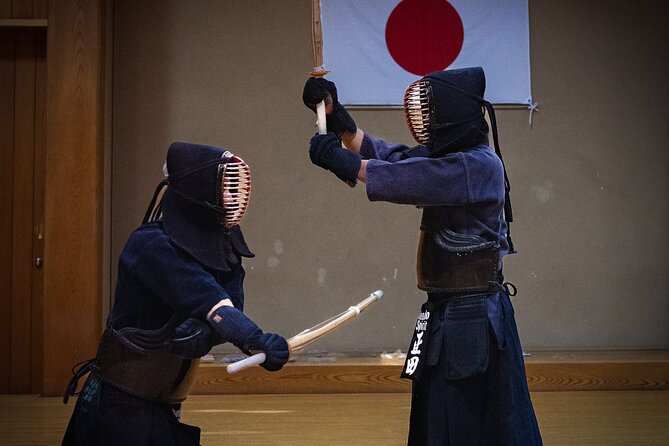
The setting is important. You are not practicing in a theme park or a staged samurai village. You train in a real dojo where Japanese practitioners work on their sword skills. That does not make the session a reconstruction of medieval samurai life, and it is best not to expect a historical battle lesson. Kendo is a modern martial art with older roots, practiced through strict form, controlled strikes, focus, and respect.
That difference is one of the experience’s strengths. You get a look at Japan through a practice still used today, not only through objects in a museum. The room itself becomes part of the lesson. The etiquette, clothing, footwork, and repeated movements show how discipline is built through the body.
More Martial Arts Experiences in Tokyo
- Tokyo: Samurai Sword & Archery Class from Samurai Descendant
★ 5.0 · 603 reviews - Tokyo:Samurai sword and archery class from a samurai descendant
★ 5.0 · 121 reviews - Tokyo 2-Hour Genuine Samurai Experience: Kendo in Japan
★ 5.0 · 112 reviews
Getting dressed for kendo
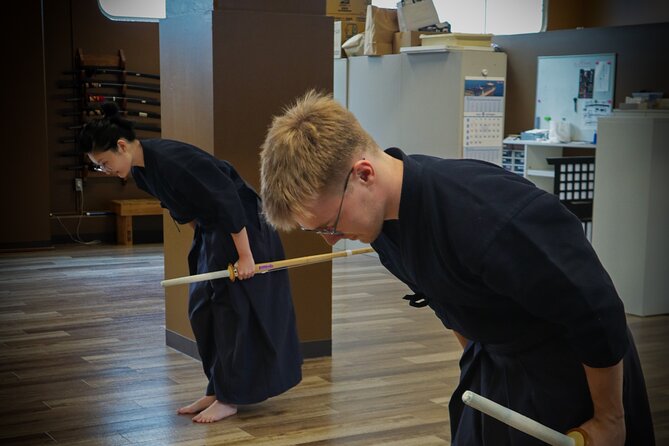
You do not need to pack special equipment. The fee includes kendo attire, a shinai, other Japanese cultural experience tools, and bottled water. The organizers also provide a T-shirt and pants to wear beneath the uniform, so you can arrive in ordinary clothes and change there.
The clothing is more than a costume. Wearing the uniform helps you understand the formal character of the activity and makes it easier to move as instructed. You will also look the part in the photographs taken during the session, although the main value comes from training rather than dressing up.
This is useful for families and first-time participants. A parent and 12-year-old son took part together, and the experience worked well even though the child already had some karate background. If you are bringing a child, the available information confirms that this pair participated successfully, but it does not provide a specific minimum age policy. Ask the provider if age is a concern.
Daichi’s lesson: posture, timing, and focus
Daichi leads the instruction and brings 19 years of kendo practice to the session. That experience matters because beginners need more than a sword and a few dramatic swings. They need someone to correct stance, explain the order of movement, and show how a strike is controlled.
The teaching moves from basic ideas toward practical action. You learn how to hold and swing the shinai, how to position your body, and how footwork supports a strong hit. One participant with some taekwondo experience found that footwork helped, while another with a fencing background enjoyed comparing the two sports. You do not need either background, though. More than 90 percent of participants are beginners, and the lesson is designed to proceed slowly.
I like the emphasis on the whole body. Kendo is not simply arm strength. The practice connects posture, movement, timing, and mental focus. You are asked to pay attention to the moment of the strike and to move with purpose. That gives the activity more substance than a standard tourist photo session.
Daichi speaks fluent English and has overseas work experience, so language should not be a major barrier. You can ask questions during the session, and the teaching is intended for people who have never touched a shinai before. Some assistants may not speak English, but the instructors can still help with the physical parts of the practice.
Bushido as practice, not decoration
The word Bushido is often used loosely in tourism. Here, the useful part is not pretending to be a samurai for an hour. It is learning how ideas such as discipline, respect, composure, and commitment appear in physical movement.
The session presents kendo as the way of the sword, but modern kendo is a sport and martial art rather than a chance to fight with a metal blade. You use a bamboo sword, and the training focuses on safe technique. The physical work gives the cultural ideas a practical shape. You must listen, remember the sequence, control your body, and respond under pressure.
That mental side receives strong emphasis. The instructors describe the experience as a battle of the mind, and the lesson includes more than mechanics. The goal is not simply to hit something hard. You learn why posture and timing matter, and why a focused action carries more value than a wild swing.
The energy rises as the class continues. Participants work toward stronger strikes and more confident movement. Several sessions have finished with an exciting match or duel-style test against an instructor or assistant. Since the exact format can vary, you should treat that as a possible final challenge rather than a guaranteed tournament.
More Samurai & Ninja Experiences in Tokyo
- Tokyo: Samurai Restaurant Show Ticket with 2 Drinks
★ 4.5 · 1,307 reviews - Tokyo: Samurai Ninja Museum Guided tour and Experience
★ 4.6 · 1,010 reviews - Best Samurai Experience in Tokyo
★ 5.0 · 458 reviews - Ninja Experience (Family Friendly) at Samurai Ninja Museum TOKYO
★ 5.0 · 441 reviews
The hands-on part makes the $132.14 price easier to judge
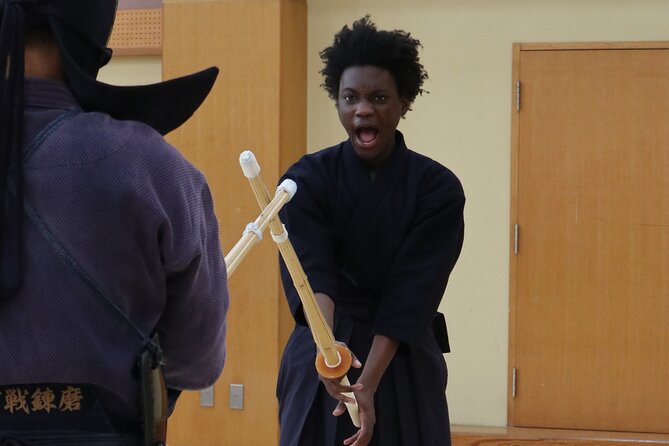
At $132.14 per person, this activity costs more than many introductory cultural workshops in Tokyo. The price becomes easier to understand when you count what is included: a two-hour guided session, uniform rental, shinai rental, cultural tools, bottled water, a souvenir, and a photographer who takes photos and video.
The small group is another part of the value. With a maximum of eight people, the instructors can give more attention than you would receive in a large demonstration. Kendo movements may look simple from across the room, but small changes in foot position or posture can affect the result. Personal correction is useful here.
The experience also gives you a skill to continue after Japan. One participant left considering kendo lessons at home in Canada. That does not mean you will leave as a trained swordsman after two hours, but you can leave with enough exposure to decide if further practice interests you.
The price is harder to justify if you only want photos in Japanese clothing. Tokyo offers many cheaper ways to dress up and take pictures. Book this experience for the instruction and physical participation, with the photos as a welcome extra.
Photos, videos, and the final souvenir
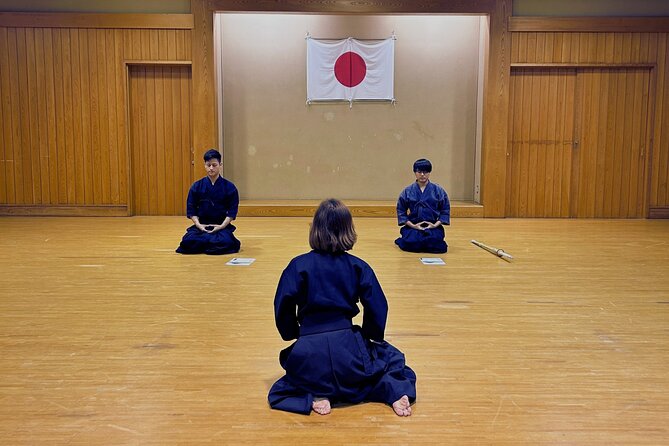
A photographer takes both still photos and videos during the session. The files are sent by email after the experience, so you can concentrate on the lesson instead of managing a phone or asking someone to record every strike.
This arrangement has practical value. You can watch your stance later and see how your movement changed from the first attempts to the final exercises. The photos also capture details you may miss while concentrating, such as the uniform, the dojo, and the formal movements.
A souvenir is included as well. The supplied details do not specify what the souvenir is, so do not book this expecting a particular item. Think of it as a small reminder of the session rather than the main reason to attend.
Who will enjoy this most
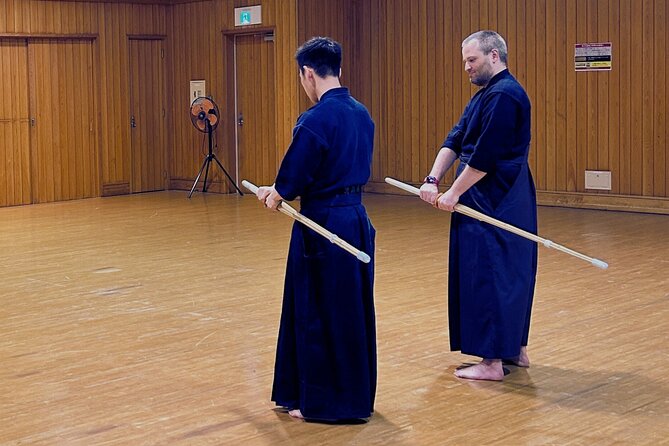
I would recommend the experience to several types of visitors:
- First-time kendo participants who want patient instruction and a clear introduction.
- Martial arts fans who want to compare kendo with karate, taekwondo, or fencing.
- Families with older children, provided the child meets any age requirements confirmed with the provider.
- Active sightseers who need a break from temples, shops, and train rides.
- People curious about modern Japanese culture, especially the connection between etiquette, discipline, and movement.
- Visitors considering kendo at home, since the session offers a useful first taste before committing to regular lessons.
You do not need to be athletic. The organizers specifically state that beginners are welcome, and the class is taught carefully. Still, it is a physical activity. You will be standing, moving, swinging, and concentrating for much of the two hours. If you want a quiet cultural talk, this is not the right choice.
The experience also suits solo participants and couples, though a private group may find the small class especially comfortable. With only eight places, the atmosphere should allow more direct contact with the instructors than a large group activity.
What may disappoint you
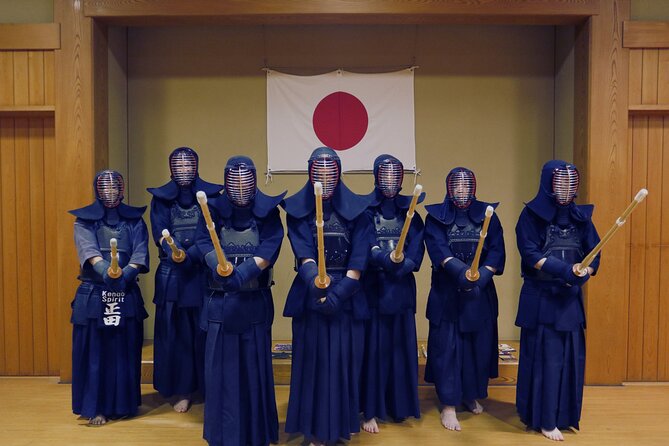
The session is authentic in the sense that it takes place in a functioning dojo and teaches a current Japanese martial art. It is not a full historical account of the samurai period, and you should not expect armor, steel swords, or a theatrical battlefield scene.
The two-hour length is enough for an introduction, but not enough to master kendo. You will learn basic movements and experience the spirit of the practice. You will not develop advanced technique in one morning.
The English support is strong through Daichi, but not every assistant necessarily speaks English. That should not prevent participation, since much of the instruction is shown physically, but you may want to direct detailed questions to Daichi.
Finally, the listing includes bottled water but not snacks. Eat beforehand if you need fuel, particularly if you are joining soon after a long flight. The start time is 10 a.m., so a light breakfast should fit easily into your morning.
Planning the morning in Nihonbashi
The activity starts and ends at the same meeting point, which keeps the logistics simple. You can pair it with other central Tokyo plans after the session, though the supplied information does not give an exact end time beyond the approximate two-hour duration.
A useful plan is to arrive with enough time to locate the building, then keep the rest of the morning flexible. You will need to change into the provided clothing and listen carefully before practice begins. Rushing from a distant neighborhood could make the start stressful.
The mobile ticket is convenient, and confirmation is provided when you book. The activity is near public transportation, and most people can participate. If you have a specific physical limitation or concern, contact the provider before reserving, since no detailed accessibility information is provided.
Free cancellation is available when you cancel at least 24 hours before the local start time. Changes or cancellations inside that window are not accepted for a refund, so check your Tokyo schedule before the deadline.
A better cultural break than another photo stop
Tokyo can fill your days with famous sights, but passive sightseeing has limits. You look, take a photo, and move on. Kendo asks you to listen, repeat, adjust, and take part.
That active quality is the heart of the experience. You learn about Japanese culture through your own posture and timing. The lesson also gives you a chance to meet instructors who practice the art, not actors hired only to perform it.
The tone sounds serious but not cold. The instructors are described as friendly, enthusiastic, and encouraging, and the feedback includes plenty of attention to effort and spirit. That balance matters for beginners. You want correction, but you also want to feel comfortable making mistakes.
The final match can add a playful note. You may find yourself cheering after a clean strike or laughing when an assistant gives you a tougher challenge than expected. The aim is not to declare you a master. It is to let you feel how much concentration goes into a single controlled action.
Should you book Kendo Spirit?
Book it if you want a genuine, active introduction to a modern Japanese martial art, especially if you value small groups and direct instruction. The dojo setting, Daichi’s long experience, English support, equipment rental, and photo package make the $132.14 fee reasonable for the right kind of visitor.
Skip it if you are seeking a cheap costume photo, a detailed samurai history lecture, or a completely relaxed morning. This is physical, focused, and structured.
For most people who want to do something in Tokyo rather than simply see something, I think it is a strong choice. You may leave with a sore arm, a better understanding of kendo, and a new activity to look for when you return home.
FAQ
Where does the kendo experience begin?
It begins at Japan, 103-0024 Tokyo, Chuo City, Nihonbashikobunachō, 29 Sec日本橋ビル.
What time does the experience start?
The start time is 10 a.m.
How long does the session last?
The experience lasts approximately two hours.
Is the activity suitable for complete beginners?
Yes. More than 90 percent of participants are beginners, and the class is taught slowly and carefully.
Do I need to speak Japanese?
No. Instructor Daichi speaks fluent English and has overseas work experience.
What equipment and clothing are included?
Kendo attire, a T-shirt and pants to wear beneath the uniform, a bamboo sword called a shinai, and other Japanese cultural experience tools are provided.
Are photos included?
Yes. A photographer takes photos and videos, and the files are sent to you by email after the session.
Just added around Tokyo
- Tokyo 6hr Instagram Highlights Private Tour with Licensed Guide★ 5.0 · 38 reviews
- Tokyo Small Group Tour with Guide★ 4.5 · 38 reviews
- Tokyo Sumo Experience with Live Show & Audience Challenge★ 5.0 · 38 reviews
- Very popular in Harajuku♡Animal petting zoo★ 4.6 · 39 reviews
- Japanese Food Cooking Class in Asakusa, Tokyo★ 5.0 · 39 reviews
- Ramen Making from Scratch with Tokyo Mom(Vegan Option Available)★ 5.0 · 39 reviews
- Tokyo: Kimono Rental inside Shinjuku Gyoen National Garden★ 4.9 · 39 reviews
- Tokyo JDM Night: 600hp C63s AMG Edition 1 (Private)★ 4.9 · 39 reviews
Samurai & Ninja Experiences, compared.
Samurai Ninja Museum Guided tour and Experience
Read our review →
Kendo and Samurai Experience with Uniform and Gear
Read our review →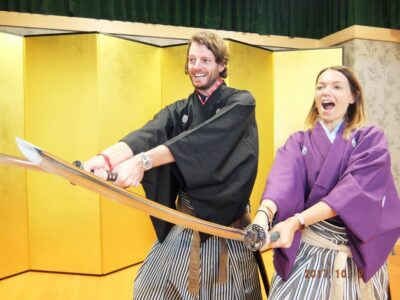
Samurai Sword Class by Experts in Traditional Arts
Read our review →
Skip the lines Basic Ticket at SAMURAI NINJA MUSEUM KYOTO
Read our review →
Samurai Sword & Archery Class from Samurai Descendant
Read our review →
Browse the lists this tour appears in