
Reviewed · SUMO EXPERIENCES
Sumo Morning Training Watch in Tokyo,Hotel-pickup w/English guide
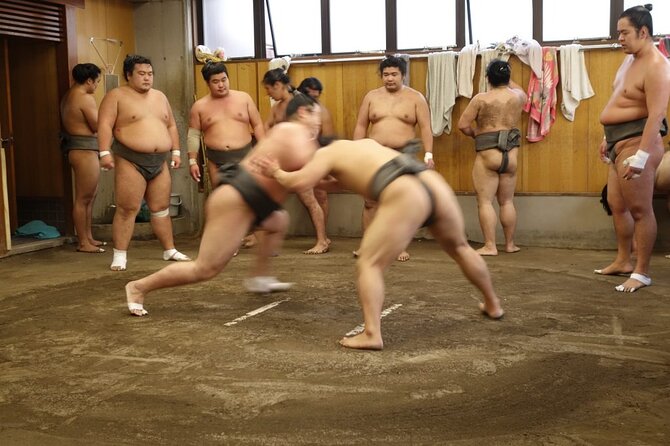
Sumo is best seen before the crowds arrive. This three-hour Tokyo experience takes you inside a genuine sumo stable, where you watch professional wrestlers stretch, drill, and face one another in serious practice bouts. I like the close-up setting and the chance to see sumo as daily work rather than a staged performance. I also like having an English-speaking guide to explain the rules, rituals, and small details that are easy to miss.
The main drawback is that hotel pickup does not mean a private car ride. Guides often lead you by train, bus, and on foot, so you need good shoes and enough energy for an early morning. The stable can also be difficult to find alone, and one guide may explain far more than another.
In This Review
- Key things to know before booking
- Why morning sumo feels different from a tournament
- The 7:30 am hotel pickup
- Learning the rules before entering the stable
- Inside an authentic sumo stable
- What the training session includes
- The guide makes or breaks the morning
- Is $159.88 a fair price?
- Timing, blackout dates, and practical limits
- Who will enjoy this most?
- Should you book the Sumo Morning Training Watch?
- FAQ
- What time does the sumo training tour start?
- Is hotel pickup included?
- Is hotel drop-off included?
- Will the tour use public transportation?
- How long does the experience last?
- Can I take photos with the sumo wrestlers?
- Is an English-speaking guide included?
- Can I cancel for a full refund?
Key things to know before booking
- You sit close to the dohyo: Some groups sit on cushions only a couple of feet from the wrestlers.
- Training is real, not a tourist show: You watch drills, conditioning, and serious practice matches inside an active stable.
- Your guide handles the route: Hotel pickup helps you manage Tokyo trains and local streets, but you still use public transportation.
- Silence matters inside the stable: Questions are often written on paper or a dry-erase board while the wrestlers train.
- Photos may be possible afterward: A picture with wrestlers can happen, but it depends on the stable and the day.
- The early start is important: Pickup begins around 7:30 am, and late arrival may mean missing part of the session.
Why morning sumo feels different from a tournament
A grand sumo tournament is polished, public, and easy to understand as a spectator event. Morning practice gives you something less packaged. You watch wrestlers preparing for competition, repeating movements, testing strength, and working under the eye of the stable master.
That difference matters. There is no announcer guiding you through every bout. There may be no dramatic music, formal introductions, or comfortable stadium view. Instead, you see the repetition and discipline behind the sport.
The training can include exercises for the legs, hips, and upper body. You may see wrestlers building strength, stretching, pushing one another across the floor, and practicing techniques. Serious bouts take place between two wrestlers at a time, often with other wrestlers continuing their own drills nearby.
I like this setting because it shows sumo as a demanding routine. The sport’s power is obvious, but so is its patience. A wrestler may repeat a movement many times before taking part in a bout. Even if you know little about sumo, the physical effort is easy to understand when you are sitting close enough to hear the impact.
More Sumo Experiences in Tokyo
- Tokyo: Sumo Show Experience with Chicken Hot Pot and a Photo
★ 4.8 · 6,678 reviews - Tokyo: Sumo Show and Dining Experience
★ 4.8 · 2,742 reviews - the SUMO show
★ 5.0 · 1,960 reviews
The 7:30 am hotel pickup
The tour begins early, usually with your guide meeting you at your Tokyo hotel around 7:30 am. This is one of the most useful parts of the package. Tokyo’s train system is efficient, but getting from a hotel to a small neighborhood stable can involve several steps, and the stable itself may not be simple to locate.
Guides such as Hiromi, Midori, Mari, Yuka, Atsushi, Tadashi Umebayashi, Koichiro Shimotamari, Kyoko, and Hiro have been praised for arriving on time and helping with the route. The strongest guides do more than point you toward a platform. They explain what you are seeing, answer questions about Japan, and help you arrive ready for the training.
You should understand the transportation arrangement clearly. Hotel pickup is included, but hotel drop-off is not. The journey to the stable may involve walking, subway trains, and sometimes a bus. One useful tip is to carry a Suica card or another convenient transit option, along with comfortable walking shoes.
This route can add value rather than take away from the experience. Guides have used the ride to explain sumo, Japanese customs, and sights along the way. Some have also made a short detour to a local shrine or temple after the training, though that is not a guaranteed part of the program.
Learning the rules before entering the stable
A good guide gives you enough background to make the quiet viewing session easy to follow. Sumo has many rituals, ranks, rules, and techniques. Without context, you may see two large men pushing and wonder why one bout lasts only a few seconds.
The guide may use handouts, sketches, notes, or a dry-erase board. This is practical because conversation inside the stable is restricted. You need to stay quiet while the wrestlers train, so explanations often happen before the session, during pauses, or after practice ends.
I especially like the written-question system. It lets you ask what a particular wrestler is doing without disturbing the room. One strong guide answered about 20 questions this way during the practice session, explaining techniques and pointing out wrestlers with promising ability.
The quality of this part depends heavily on the individual guide. Most of the guide reports are very positive, with an overall rating of 4.9 from 72 reviews and a 97 percent recommendation rate. Still, one person received only a basic explanation of the stable rules and felt left out while other groups received more commentary.
That is a fair warning. If you want the tour to be educational, ask questions early and directly. The more specific your questions, the more you are likely to learn. A guide who is passionate about sumo can turn the same training session into a much fuller experience.
Inside an authentic sumo stable
The stable is not a theater built for sightseeing. It is a working place where wrestlers train. That gives the visit its value, but it also means you must follow the house rules.
You may sit on cushions near the edge of the training area. Some people have found themselves roughly two feet from the wrestlers. Low chairs may be available, though they are still close to the floor and can be difficult for some people to rise from.
The viewing area may be small. A maximum of 15 people can join the tour, but the room and the number of groups present can affect how much space you have. You should expect a quiet, respectful atmosphere rather than a free-moving sightseeing stop.
Do not expect to walk around during practice or chat freely. The wrestlers are working, and visitors must avoid interrupting them. Your guide may point out who is who, explain the action in writing, and help you follow the training without breaking the silence.
This is also why punctuality matters. One person arrived after the session had started and missed some of the preparation. Since the morning schedule belongs to the stable, not the tour company, a delay can cost you part of the experience.
A completely different kind of day out in Tokyo:
- Mt Fuji and Hakone 1-Day Bus Tour Return by Bullet Train
★ 5.0 · 26,383 reviews - 1-Day Tokyo Bus Tour
★ 5.0 · 14,250 reviews - Tokyo: TOKYO SKYTREE® Admission ticket
★ 4.5 · 11,192 reviews - Tokyo: teamLab Planets TOKYO Digital Art Museum Entry Ticket
★ 4.6 · 9,779 reviews
What the training session includes
The order and length can vary by stable and day, but the session generally follows three stages.
First comes basic conditioning. This can include exercises that build the legs, hips, and upper body, along with muscle-building routines. Sumo depends on balance and lower-body power, so these exercises help you see that the sport is not simply about body size.
Next come practice matches. Two wrestlers face one another in serious bouts, while the rest of the room may continue stretching or working on drills. These matches can be surprisingly forceful. You are close enough to see the speed of the movement and feel how much power is used in a short exchange.
The practice period may last around 90 minutes to nearly two hours, depending on the day. During a hon-basho, or grand tournament period, training may be lighter for some wrestlers. That does not make the session uninteresting, but it can affect how much action you see.
Afterward, there may be a chance to take photographs with some of the wrestlers. This is one of the most memorable possibilities, but it is not guaranteed. It depends on the stable’s schedule and the wrestlers’ availability. Some groups have received photos with several wrestlers, while others had a shorter opportunity with one or two.
Treat the photo as a bonus, not the main reason to book. The training itself is the part you can count on.
The guide makes or breaks the morning
The best guides add a personal layer to the visit. Koichiro Shimotamari, for example, has been praised for his passion for sumo, thoughtful answers, humor, and care with the group’s onward plans. Other guides have helped with train connections, offered advice about Tokyo, and made sure people reached their next destination.
That last point is useful if you are fitting this into a busy day. The tour does not include hotel drop-off, but a guide can help you return to a station or continue toward your next stop. Some guides have even walked people back to their hotel when it was convenient, but you should not count on that.
Guides also vary in how much they add beyond the stable. One guide took a small group through a quiet local area after the session. Another stopped at a shrine and a supermarket, giving the morning a broader look at everyday Tokyo.
I would book this experience for the guide support as much as for the sumo. The stable may be hard to find, the rules may be unfamiliar, and the silent viewing makes it difficult to ask questions on your own. A strong guide fills those gaps.
Is $159.88 a fair price?
At $159.88 per person, this is not a cheap morning activity. You are paying for access to a setting most people cannot arrange easily, an English-speaking nationally licensed guide, hotel pickup, and help with public transportation.
The value depends on what you want. If you only want to see sumo once, a tournament ticket may be a better fit during tournament season. If you want to understand the sport and see daily training at very close range, this tour offers something a stadium seat cannot.
The small group limit of 15 also matters. A small group gives the guide more opportunity to answer questions, and several groups have had only a few people attending. But the actual stable may contain other visitors, and the level of personal attention can change from one departure to another.
There is no food or drink included. Since the start is early, eat before pickup or carry something appropriate for afterward. You should also budget for your own train or bus fares if they are not covered separately, and keep in mind that your morning ends away from your hotel.
Timing, blackout dates, and practical limits
This experience requires an early start. A 7:30 am pickup can be difficult after a late arrival or a long flight, but it also places you at the stable during the most useful part of the day.
Training schedules are not available every day. The stated 2025 unavailable periods are May 10 through June 5, June 26 through August 6, September 13 through October 8, and October 23 through December 3. Check the date carefully before you plan your Tokyo schedule.
Confirmation is sent within 48 hours of booking, subject to availability. The activity is near public transportation, and most people can participate. The listing does not promise wheelchair-specific arrangements, so anyone with mobility concerns should ask before booking, especially because the visit can involve walking and low seating.
You can cancel for a full refund up to 24 hours before the start time. Changes or cancellations inside that window are not accepted for a refund.
Who will enjoy this most?
I recommend this tour to anyone with even a passing interest in sumo, especially if you want to see the sport away from the tournament crowds. It is also a strong choice if you are new to Japan and want a guide to handle the first complicated train journey of your trip.
It suits people who enjoy sports, tradition, discipline, and behind-the-scenes access. You do not need to understand the rules in advance. A good guide can bring you up to speed quickly.
Families and older people should consider the early start, walking, silence, and low seating. Most people can participate, but this is not a relaxed hop-on, hop-off outing. You need to be comfortable sitting quietly and following the stable’s instructions.
I would be more cautious if your main goal is a guaranteed photo or a guaranteed long series of matches. The session changes according to the stable, tournament calendar, and training schedule. The photo opportunity is possible, not promised.
Should you book the Sumo Morning Training Watch?
Yes, if you want real training, close viewing, and help understanding what is happening. The best part is the sense that you are watching athletes at work, not attending a performance arranged only for visitors.
Book it with the right expectations. You will likely take public transportation after hotel pickup, walk through local streets, sit low, remain quiet, and finish without a hotel ride back. Ask questions before training begins, bring comfortable shoes, and treat wrestler photos as an extra.
For $159.88, I think the experience is worthwhile for first-time visitors who value access and interpretation. The guide quality can vary, but the combination of a genuine stable, close-up practice, and a carefully managed route makes this one of Tokyo’s more memorable cultural mornings.
FAQ
What time does the sumo training tour start?
The stated start time is 7:30 am. Hotel pickup is included, so your guide will arrange the meeting details for your departure.
Is hotel pickup included?
Yes. Hotel pickup is included in the tour price.
Is hotel drop-off included?
No. Hotel drop-off is not included. Your guide may help you return to a train station or continue toward your next destination.
Will the tour use public transportation?
Yes, the route to the stable may involve walking, subway trains, and buses. A Suica card and comfortable walking shoes are useful.
How long does the experience last?
The tour lasts approximately three hours. The actual training session may last around 90 minutes to nearly two hours, depending on the stable and schedule.
Can I take photos with the sumo wrestlers?
You may have a chance to take photos with the wrestlers after training, but this depends on the stable’s schedule and availability.
Is an English-speaking guide included?
Yes. The tour includes a nationally licensed English-speaking guide who explains sumo traditions, rules, history, training, and rituals.
Can I cancel for a full refund?
Yes. You can cancel at least 24 hours before the experience start time for a full refund. Cancellations or changes made less than 24 hours before the start are not accepted for a refund.
Just added around Tokyo
- Tokyo 6hr Instagram Highlights Private Tour with Licensed Guide★ 5.0 · 38 reviews
- Tokyo Small Group Tour with Guide★ 4.5 · 38 reviews
- Tokyo Sumo Experience with Live Show & Audience Challenge★ 5.0 · 38 reviews
- Japanese Food Cooking Class in Asakusa, Tokyo★ 5.0 · 39 reviews
- Very popular in Harajuku♡Animal petting zoo★ 4.6 · 39 reviews
- Ramen Making from Scratch with Tokyo Mom(Vegan Option Available)★ 5.0 · 39 reviews
- Tokyo JDM Night: 600hp C63s AMG Edition 1 (Private)★ 4.9 · 39 reviews
- Tokyo: Kimono Rental inside Shinjuku Gyoen National Garden★ 4.9 · 39 reviews
Sumo Experiences, compared.
Tokyo Shinjuku Sumo Show & Experience with Photo
Read our review →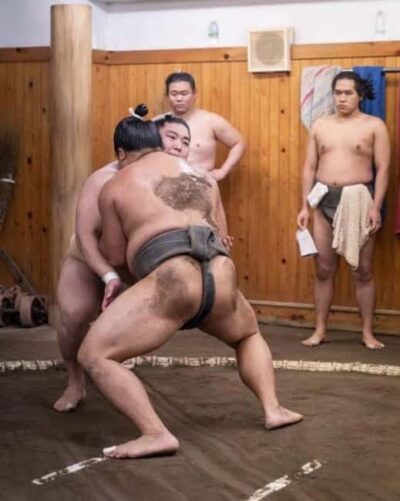

Sumo Show & Experience w/ Optional Kimono & Hot Pot
Read our review →
Authentic Sumo Experience in Tokyo: Enter the Sanctuary
Read our review →
Luxury Sumo Show Experience & Japanese cuisine & Drink
Read our review →Browse the lists this tour appears in