
Reviewed · SUMO EXPERIENCES
Sumo Wrestlers Morning Practice Tour – Tokyo Sumida District
Sumo starts before breakfast. This two-hour visit in Tokyo’s Sumida District offers something a tournament cannot: a close look at the discipline, silence, repetition, and daily routine behind the sport. I especially like the ringside view of morning practice and the chance to hear directly from the stable master afterward. The main drawback is simple but important: you sit cross-legged on the floor for about 90 minutes, with no chairs available.
You meet near Tokyo Skytree at 7:30am, walk about 15 minutes to the stable, and watch the wrestlers train rather than perform for an audience. I also like that an English-speaking guide, including guides such as Yuriko, helps explain the customs and translate questions. Practice can finish early, and the guide’s sumo background may feel brief to people hoping for a full lesson on rules and training methods.
In This Review
- Key points to know before you go
- Why this sumo visit feels different from a tournament
- Meeting at Oshiage before Tokyo wakes up
- Stop one: the walk to the sumo stable
- Stop two: watching 90 minutes of real practice
- The guide’s role and the amount of explanation
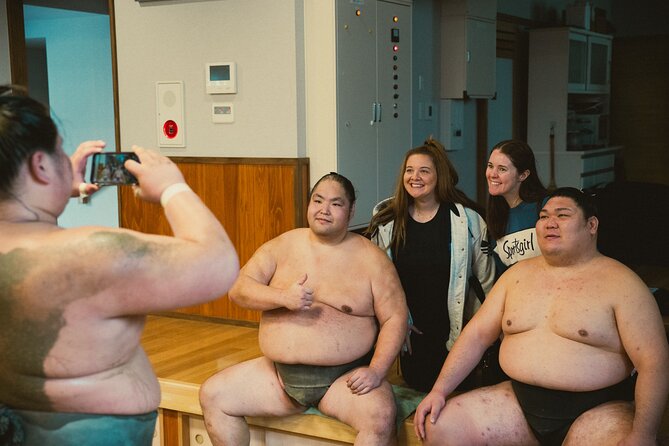
- Stop three: photos with the wrestlers
- Is $83.23 a fair price?
- Who will enjoy this most?
- Planning the morning well
- Should you book the Sumida morning practice tour?
- FAQ
- Where does the sumo practice tour meet?
- What time should I arrive?
- How long does the tour last?
- How far is the stable from the meeting point?
- Are chairs available inside the stable?
- Can I take photos or videos?
- Can I take a photo with the wrestlers?
- What happens if I arrive late?
Key points to know before you go
- Morning practice, not a staged show: You watch a real training session, so the pace and amount of wrestling can vary.
- About 15 minutes on foot: The group meets at Oshiage near Tokyo Skytree, then walks to the stable together.
- Floor seating only: You must sit cross-legged and keep your legs tucked away from the ring.
- Quiet rules matter: No food, gum, smoking, hats, sunglasses, or flash photography inside the stable.
- A useful cultural add-on: After practice, you may speak with the stable master and take photos with wrestlers.
- Good use of an early morning: The tour ends back near Skytree, leaving most of your day free.
Why this sumo visit feels different from a tournament
A tournament gives you the drama of competition. You get ranked wrestlers, a formal bout, a crowd, and the clear result of one man defeating another. This visit gives you the work behind that spectacle.
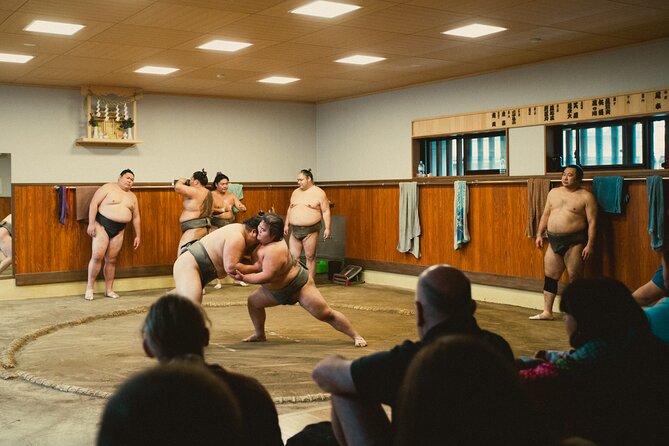
Inside the stable, you watch wrestlers repeat movements, stretch, push, and prepare their bodies. The atmosphere is quiet and serious. You are not there to cheer or ask the athletes to pose during training. You are watching a working practice session, and that distinction shapes the whole experience.
I think this is the best reason to book the tour. Sumo is not only about two huge bodies crashing together. The practice reveals flexibility, balance, timing, and stamina. Several visitors were surprised by how agile the wrestlers were, particularly given their size. That contrast is one of the memorable parts of the morning.
The sport also has a strong connection to Shinto, Japan’s traditional religion. Your guide explains the rules, customs, and meaning behind what you see, helping you understand why the ring is treated as a sacred place. You gain more from the session when you know why certain actions are done and why the stable demands such careful behavior.
More Sumo Experiences in Tokyo
- Tokyo: Sumo Show Experience with Chicken Hot Pot and a Photo
★ 4.8 · 6,678 reviews - Tokyo: Sumo Show and Dining Experience
★ 4.8 · 2,742 reviews - the SUMO show
★ 5.0 · 1,960 reviews
Meeting at Oshiage before Tokyo wakes up
The meeting point is at 1-chōme-8-21 Oshiage, close to Tokyo Skytree. You are asked to arrive at 7:10am, even though the group leaves at 7:30am sharp. That 20-minute cushion is useful because the group cannot simply wait for late arrivals.
The location is convenient if you are staying near Skytree or using public transportation to Oshiage. It also gives you a clear landmark for the start and end of the tour. After practice, you return to the same area, so you can continue with Skytree, Sumida, Asakusa, or another Tokyo plan.
Do not confuse the meeting point with the stable itself. The walk takes about 15 minutes. You travel as a group, and the guide leads you through the local streets to the training site. A few people would prefer to meet at the stable and skip the walk, but the shared departure helps prevent visitors from arriving at the wrong place or entering without the guide.
Wear comfortable clothes and sensible shoes. You will remove your shoes at the stable, and rain can make the walk unpleasant for bare feet later. Bring a small towel if rain is in the forecast. It is also smart to use the restroom before joining, since the tour asks you to do so and the stable is not presented as a place for frequent breaks.
Stop one: the walk to the sumo stable
The walk is short, but it is part of the experience. You leave the busy Skytree area and head toward the stable where the wrestlers train. Your guide is there to handle communication and explain the cultural rules before you enter.
This is where the tour’s language support matters most. A stable is not a normal sightseeing attraction, and visitors are expected to behave correctly without interrupting the training. The guide helps you avoid mistakes such as standing at the wrong time, pointing your feet toward the ring, or making noise during a serious part of practice.
If you arrive late, contact the tour provider before trying to find the stable yourself. You cannot enter without contacting the guide. That rule is reasonable: the stable is an active workplace and a traditional setting, not a public hall with an open door.
Stop two: watching 90 minutes of real practice
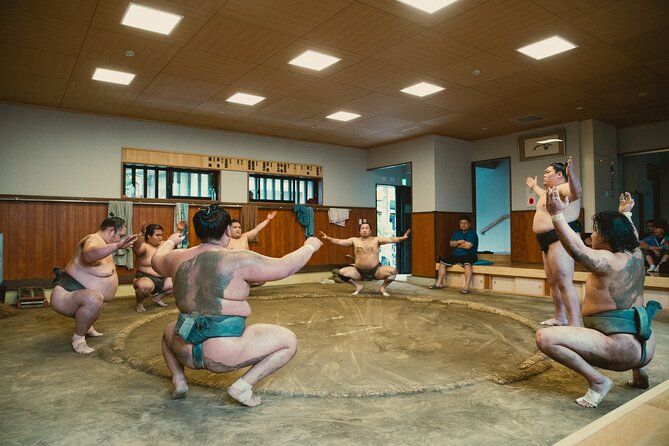
The main portion lasts about 90 minutes, though the timing can change. Some sessions may be shorter or longer depending on the day’s training. During tournament season, the schedule may also change, so check the direct tour message before setting your morning plans.
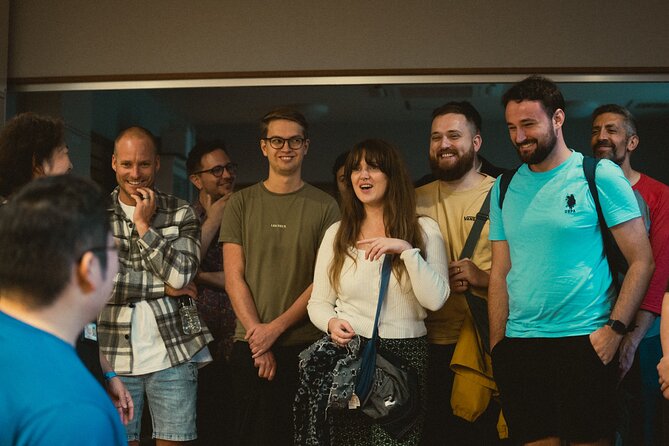
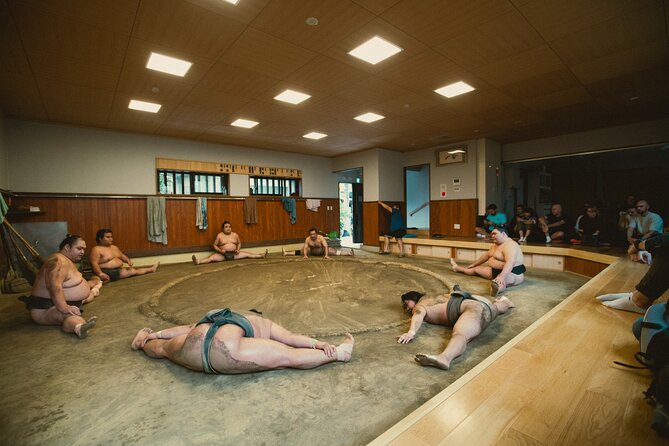
You sit on the floor and watch quietly. There are no chairs, raised platforms for the group, or promise that every person will have a completely unobstructed front-row view. With a group of up to 25 people, some members may sit behind another row. Even so, the setting places you much closer to the athletes than a normal tournament seat would.
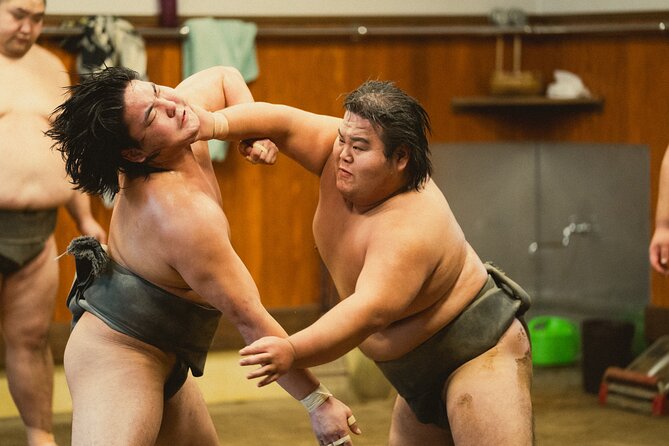
The practice itself is not designed to entertain you. That is worth keeping in mind before booking. You might see intense contact, but you might also spend time watching warmups, stretching, footwork, preparation, and repeated drills. The striking images used to promote sumo often show full-contact action. A normal practice session can be less dramatic.
That is not a weakness if you want to understand the sport. The quiet repetition shows how much discipline the wrestlers need. You can see that strength is only one part of their work. Flexibility and control are just as important, and the training can change your idea of what a sumo athlete does each morning.
The rules inside the stable are strict for good reason:
- Keep your cellphone on silent.
- Do not use flash photography or shutter sounds.
- Do not eat, chew gum, smoke, or bring candy.
- Water is allowed.
- Do not stand up or move around during practice.
- Keep your legs tucked in, and never point the soles of your feet toward the wrestlers.
- Never step onto the ring or the sandy area.
- Wear modest clothing.
- Remove your shoes when you enter the raised wooden floor.
- Hats and sunglasses are not allowed inside.
You may take photographs and videos, but you cannot upload them to social media platforms. Follow the guide’s directions carefully. This is one of those rare Tokyo experiences where being a respectful observer matters more than collecting constant phone footage.
A completely different kind of day out in Tokyo:
- Mt Fuji and Hakone 1-Day Bus Tour Return by Bullet Train
★ 5.0 · 26,383 reviews - 1-Day Tokyo Bus Tour
★ 5.0 · 14,250 reviews - Tokyo: TOKYO SKYTREE® Admission ticket
★ 4.5 · 11,192 reviews - Tokyo: teamLab Planets TOKYO Digital Art Museum Entry Ticket
★ 4.6 · 9,779 reviews
The guide’s role and the amount of explanation
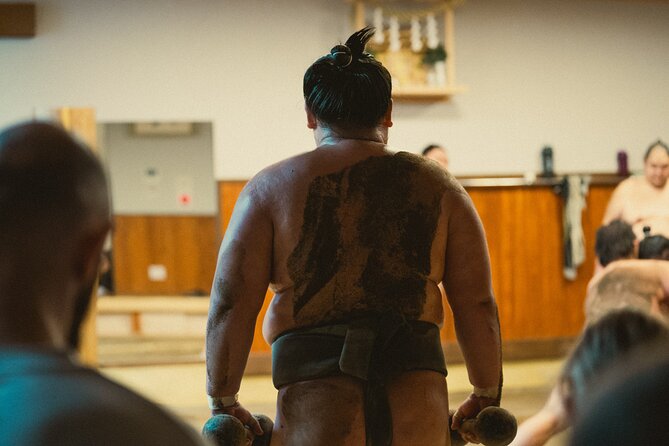
The guide translates Japanese into English and helps explain what is happening. That support makes the session far easier to follow, especially if you know little about sumo rules or stable life.
Guide quality can shape your morning. Yuriko received particular praise for her patience and clear explanations. Other visitors felt the guide’s information about the sport and training was a little light. I would set your expectations in the middle: you should receive helpful translation and cultural context, but this is not a long classroom lecture.
The strongest explanation may come after the practice. The stable master or owner sometimes speaks with the group and answers questions about the wrestlers’ diet, training, and lifestyle. That conversation adds a human side to what you have just watched. It can also fill in details that are difficult to understand while the athletes are moving.
If sumo rules are your main interest, prepare a few questions before you go. Ask about the exercises, the training schedule, food, rankings, or the difference between practice and tournament bouts. The Q&A is a valuable chance to learn directly from someone connected to the stable, so use it well.
Stop three: photos with the wrestlers
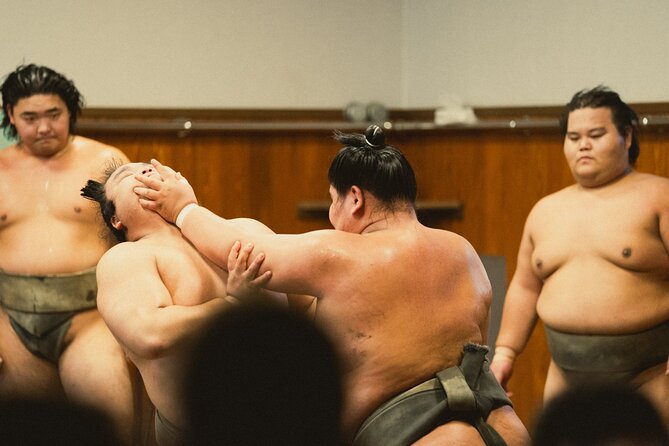
At the end, you may have the chance to take photographs with the wrestlers. This is a pleasant finish, but it should not be treated as guaranteed entertainment or a long meet-and-greet. The athletes have their own schedule, and the practice may end earlier than expected.
Some groups receive photos with a couple of wrestlers. The exact arrangement can vary, so do not assume you will get a picture with every athlete in the stable. Photos are allowed during the tour only within the stated rules, and flash and shutter sounds are prohibited.
The best approach is to enjoy the training first and treat the photo as a bonus. The wrestlers are described as warm and approachable after practice, which can make the final few minutes feel personal rather than rushed. Still, keep your interaction polite and brief, and follow the guide’s instructions.
Is $83.23 a fair price?
At $83.23 per person, this is not a cheap way to fill two hours. You are paying for access to a setting that most independent visitors cannot enter, along with translation, guidance, and help with local customs.
The value depends on your interest. If you only want to see a few sumo bouts, a tournament ticket may suit you better. If you want to understand how wrestlers prepare and how a stable functions, this tour offers a more personal view than watching from the stands.
The price also covers convenience. You meet at a clear train station area, walk with a guide, receive explanations, and return to the same place. You do not need to work out how to locate the stable or worry about entering without permission. For a first visit to Japan, that guidance is worth something.
The group can include up to 25 people, which keeps the cost lower than a private visit but means the view may not be equal for everyone. If you are very short, have difficulty sitting behind another person, or need plenty of space, the group setting may frustrate you.
Who will enjoy this most?
I would recommend the tour to first-time visitors who want a cultural experience before a full day of sightseeing. The 7:30am start is early, but you are finished near Skytree with the rest of the day available.
It suits adults, couples, families with children aged six and up, and anyone curious about Japanese customs. Children must remain quiet and still. If a child is noisy, moves around, or cannot watch respectfully, the family may be asked to leave the stable.
This is also a good choice for anyone who has already seen a tournament and wants a different view of sumo. The practice shows the athletes as workers and students of the sport, not only as dramatic competitors.
I would think twice if you cannot sit cross-legged on the floor for roughly 90 minutes. There are no chairs, and you cannot stretch your legs toward the ring. This is the most important physical consideration, far more important than the short walk from the meeting point.
I would also choose another activity if you need a fast-moving tour with constant narration, guaranteed full-contact wrestling, or unrestricted photography. The stable’s rules are part of the experience, and you need to accept them before booking.
Planning the morning well
Arrive at 7:10am, not 7:29am. The group leaves at 7:30am sharp, and late arrivals must contact the provider before attempting to go to the stable alone.
Use the restroom first, bring water, and carry a small towel if rain could wet your feet. Dress modestly and avoid relying on a hat or sunglasses for the stable, since both are prohibited inside.
Keep your phone silent and be ready to leave it alone for long stretches. The best moments may come when you stop trying to record every movement and simply watch the wrestlers work.
The activity offers free cancellation if you cancel at least 24 hours before the local start time. Changes or cancellations made less than 24 hours before the tour do not qualify for a refund.
Should you book the Sumida morning practice tour?
Book it if you want close-up access to authentic training, can sit quietly on the floor, and value cultural context more than a staged spectacle. The combination of serious practice, guide translation, a possible conversation with the stable master, and a photo opportunity gives you a strong look at sumo beyond the tournament arena.
Skip it if floor seating is not manageable, your schedule cannot handle an early start, or you need guaranteed wrestling action. Practice varies by day, and it can end sooner than planned.
For the right visitor, the tour is a memorable use of a Tokyo morning. You see the discipline behind the sport, learn how to behave in a traditional stable, and finish near Tokyo Skytree with hours left for exploring. With a 4.9 rating and 98 percent recommendation rate, it has proved a popular choice, but the floor seating and quiet rules are the details that should decide your booking.
FAQ
Where does the sumo practice tour meet?
The meeting point is at 1-chōme-8-21 Oshiage, Sumida City, Tokyo, near Tokyo Skytree. The tour ends back at the same meeting point.
What time should I arrive?
You should arrive at 7:10am. The group leaves at 7:30am sharp.
How long does the tour last?
The planned duration is about two hours. Practice may finish earlier or last longer depending on the content of the session.
How far is the stable from the meeting point?
The walk from the meeting point to the stable takes about 15 minutes.
Are chairs available inside the stable?
No. You must sit on the floor, cross-legged, for approximately 90 minutes.
Can I take photos or videos?
Photos and videos are allowed, but flash and shutter sounds are not permitted. Cellphones must be silent, and photos and videos cannot be uploaded to social media platforms.
Can I take a photo with the wrestlers?
You may have the opportunity to take photos with the wrestlers after practice. The exact photo arrangement can vary, and a photo with every wrestler is not guaranteed.
What happens if I arrive late?
Contact the tour provider if you will miss the meeting time. You cannot enter the stable without contacting the provider first.
Just added around Tokyo
- Tokyo 6hr Instagram Highlights Private Tour with Licensed Guide★ 5.0 · 38 reviews
- Tokyo Small Group Tour with Guide★ 4.5 · 38 reviews
- Tokyo Sumo Experience with Live Show & Audience Challenge★ 5.0 · 38 reviews
- Japanese Food Cooking Class in Asakusa, Tokyo★ 5.0 · 39 reviews
- Very popular in Harajuku♡Animal petting zoo★ 4.6 · 39 reviews
- Ramen Making from Scratch with Tokyo Mom(Vegan Option Available)★ 5.0 · 39 reviews
- Tokyo JDM Night: 600hp C63s AMG Edition 1 (Private)★ 4.9 · 39 reviews
- Tokyo: Kimono Rental inside Shinjuku Gyoen National Garden★ 4.9 · 39 reviews
Sumo Experiences, compared.
Tokyo Shinjuku Sumo Show & Experience with Photo
Read our review →

Sumo Show & Experience w/ Optional Kimono & Hot Pot
Read our review →
Authentic Sumo Experience in Tokyo: Enter the Sanctuary
Read our review →
Luxury Sumo Show Experience & Japanese cuisine & Drink
Read our review →Browse the lists this tour appears in