
Reviewed · SUSHI-MAKING CLASSES
Sushi Class in Osaka Dotonbori
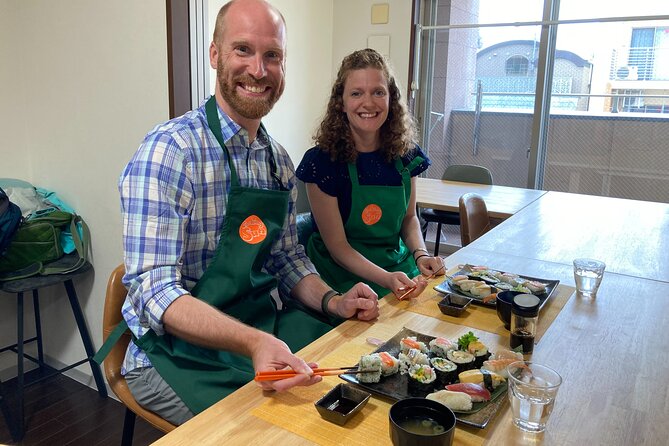
Make lunch, then eat it. This three-hour Osaka sushi class turns a familiar Japanese dish into a hands-on lesson, with three styles to prepare: salad roll, nigiri, and Kansai-style oshizushi. I like the small maximum of eight people, which gives the teachers room to correct your technique, and I like that the meal includes miso soup rather than ending with a quick demonstration. The main consideration is finding the classroom, since it is inside Masters Residence Dotonbori I and map apps have sent some people to the building across the street.
You begin with prepared ingredients, an apron, and clear demonstrations. I also like the practical food choices: the class can accommodate vegetarians with or without eggs, as well as people needing gluten-free food, but you must request these options when booking. At $71.16 per person, the value is strongest if you want both a meal and a skill you can use at home, not simply a short cultural demonstration.
In This Review
- Key points to know before booking
- What makes this Osaka sushi class worthwhile
- Finding Room 807 in Dotonbori
- Starting with the salad roll
- Shaping nigiri with careful hands
- Pressing Osaka-style oshizushi
- Teachers who keep the class beginner-friendly
- The meal at the end
- Group size, timing, and overall value
- Dietary choices and practical requests
- Who should book this class?
- Cancellation and booking advice
- Should you book the Dotonbori sushi class?
- FAQ
- Where does the sushi class meet?
- What time does the class start?
- How long does the sushi class last?
- Where does the class end?
- How many people can join the class?
- Which types of sushi will I make?
- Is miso soup included?
- Are vegetarian options available?
- Is a gluten-free option available?
- Is cancellation free?
Key points to know before booking
- Three distinct sushi styles: Make a salad roll, hand-shaped nigiri, and Osaka-style pressed sushi.
- Small class size: The maximum is eight people, creating a more personal setting for questions and hands-on help.
- A full, prepared meal: You eat the sushi you make, along with miso soup.
- Dietary requests are possible: Vegetarian versions with or without eggs and gluten-free options must be requested in advance.
- Useful arrival tip: Go early and look for the Masters Residence Dotonbori I sign, then call Room 807 using the building intercom.
- Family and solo friendly: The class has worked well for children, couples, and people attending alone.
What makes this Osaka sushi class worthwhile
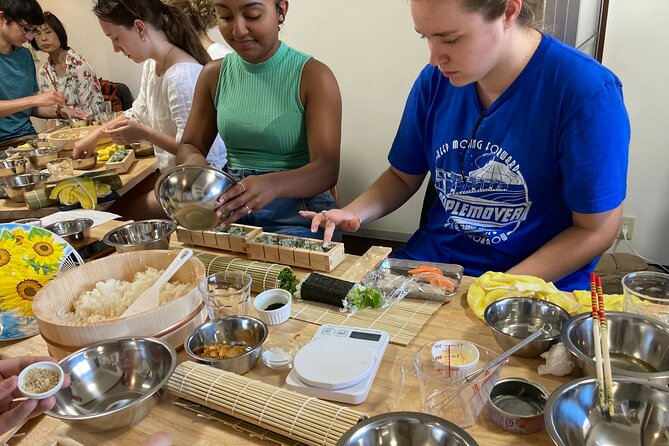
Many food activities give you a taste and a few facts, then send you on your way. This class gives you a series of small tasks that build into lunch. You see how sushi rice supports different forms, how fillings are arranged, and how pressure changes the final shape.
The lesson is also a good introduction to regional Japanese food. Nigiri is the style most familiar outside Japan, with a topping placed over a small piece of vinegared rice. Salad roll is more approachable and forgiving, while oshizushi connects the class to Osaka and the wider Kansai region.
I particularly like that the class does not focus on only one showy technique. You make three kinds of sushi, each with a different method. That variety keeps the three-hour session active and gives you more than one skill to take home.
The experience has earned a perfect five-star rating from 37 ratings, with all recommendations marked positively. That strong response fits the most consistent praise: patient instruction, clear English, tasty ingredients, and the pleasure of eating food made by your own hands.
More Sushi-Making Classes in Osaka
- Sushi Making Osaka Roll and Authentic Japanese Sushi Class
★ 5.0 · 1,220 reviews - Osaka Sushi Making Experience
★ 5.0 · 400 reviews - Osaka Sushi Making Class – Hands-On Nigiri & Rolls (Same-Day OK)
★ 5.0 · 352 reviews
Finding Room 807 in Dotonbori
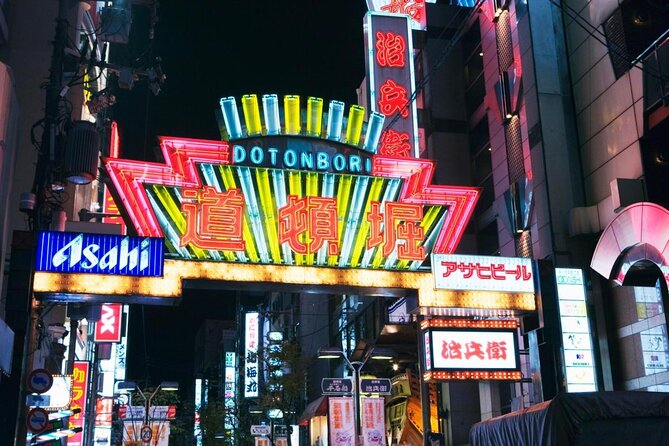
The meeting point is Cooking Sun at Masters Residence Dotonbori I, 2-9-14 Shimanouchi, Chuo Ward, Osaka, postal code 542-0082. The class begins at 9:30 am and ends back at the same location.
The address is practical for a morning near Dotonbori, but the building can be easy to miss. Masters Residence Dotonbori I is a residential-style building, not an obvious street-level cooking school. One useful sign identifies the correct building, and the classroom is Room 807.
When you arrive, press 807 and then press the button marked 呼出, which means call. The staff will open the door. Because map apps have occasionally directed people to the building across the street, I would arrive early rather than cutting it close at 9:29.
That small bit of planning matters. The class is intimate, so a late arrival can be more disruptive than it would be in a large cooking studio. Give yourself enough time to identify the building, use the intercom, and reach the eighth floor.
Starting with the salad roll
The first sushi is a salad roll, a friendly place to begin because the ingredients are familiar and the rolling process lets you practice without the pressure of shaping individual pieces.
The filling includes crab-flavored kamaboko, lettuce, cucumber, avocado, tuna mixed with mayonnaise, and tamagoyaki, or Japanese rolled omelet. Nori wraps around the ingredients and rice. You learn how to position the filling and apply enough pressure to create a firm roll without crushing it.
This is also where the value of prepared ingredients becomes clear. The hard kitchen work is already done, so you can concentrate on assembly, balance, and technique. The class is not designed as professional chef training. It is a practical introduction that lets a beginner succeed during one morning.
The tamagoyaki gives the roll a sweet, eggy note, while avocado and cucumber add softness and crunch. If you enjoy sushi but feel intimidated by raw fish, this first section offers a comfortable start.
Shaping nigiri with careful hands
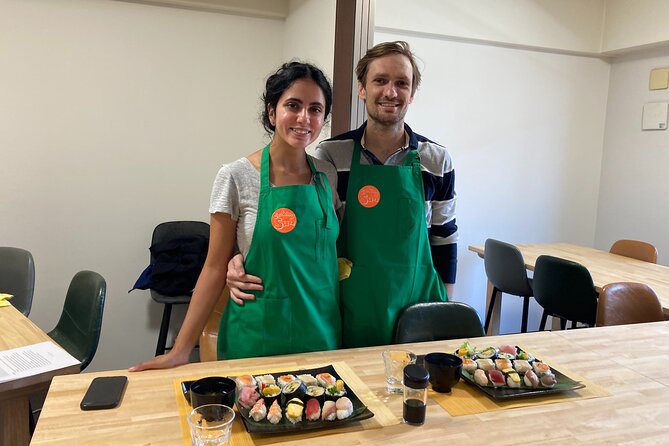
Nigiri is the most instantly recognizable style in the lesson. It consists of a bite-sized piece of vinegared rice with a topping placed over it. The topping may be fish, shellfish, or omelet, and the class introduces the basic relationship between rice size, shape, and topping.
Nigiri looks simple on a plate, but small differences in pressure matter. Too much handling can compact the rice. Too little can leave it loose. The teachers demonstrate the process and guide you through each stage, which is useful if your first attempt looks more like a rice mound than a neat sushi piece.
This section is especially good for beginners because you are not expected to arrive with prior kitchen experience. One class member with some sushi-making experience still received detailed answers to more advanced questions, while beginners received patient explanations. That suggests the lesson can serve a mixed group without leaving either end behind.
The food itself is a major part of the appeal. The ingredients are prepared for you, and the finished sushi becomes your lunch. You are not merely practicing with food that goes to waste.
A completely different kind of day out in Osaka:
- Osaka Go Karting Tour with Funny Costume
★ 5.0 · 2,658 reviews - Osaka Castle: Museum and Tower Entry Ticket
★ 4.5 · 2,380 reviews - Osaka: Shinsekai Food Tour with 13-15 Dishes at 5 Eateries
★ 4.8 · 2,204 reviews - Osaka Food Tour: 13 Dishes at 5 Local Eateries
★ 5.0 · 2,149 reviews
Pressing Osaka-style oshizushi
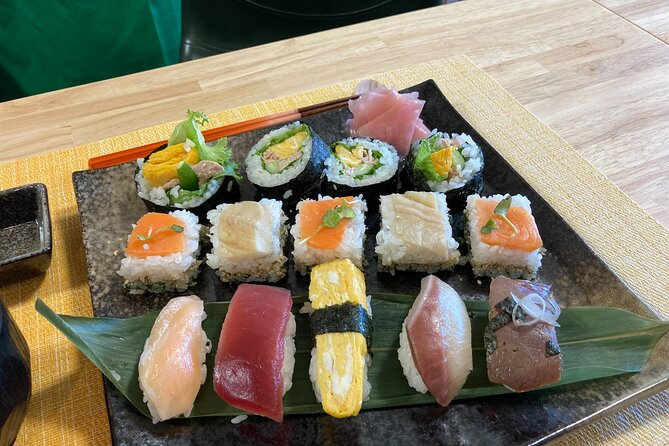
Oshizushi, or pressed sushi, is the class’s most local touch. It is a traditional Kansai form, also called box sushi in Osaka. Instead of shaping each piece by hand, you fill a square wooden frame with sushi rice and toppings, then press the mixture so the rice bonds with what sits above it.
The finished sushi is square and should be cut into pieces just before eating. That shape gives it a different feel from nigiri and rolls, and the wooden mold makes the process easy to understand. You are using pressure and structure rather than relying only on your fingers.
I find this the most valuable part for anyone interested in Osaka beyond its famous neon streets and food stalls. It connects the cooking lesson to a regional style that may be less familiar than standard nigiri. The class presents sushi as a varied Japanese food tradition, not one single recipe.
Oshizushi is also a nice reminder that local food often reflects local methods. Here, the box and pressing technique create a compact, shareable form. You get to make it, cut it, and eat it while it is fresh.
Teachers who keep the class beginner-friendly
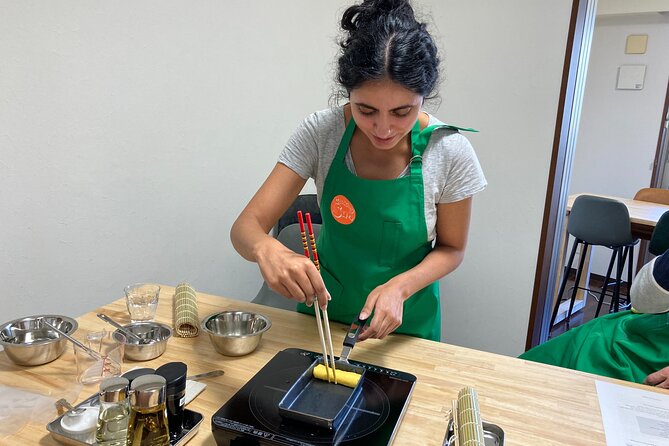
The instructors are repeatedly praised for being friendly, patient, and clear in English. Several people appreciated that they spoke slowly and did not rush anyone. That is important in a class involving unfamiliar words, hand movements, and food preparation.
The teaching style appears more calm than theatrical. One person found the hosts very kind but not especially dynamic. If you want a loud, fast-paced cooking show, this may feel subdued. If you want time to ask questions and get help with your hands, the quieter pace is likely an advantage.
The teachers also explain Japanese food culture, ingredient background, and some history of sushi. You can ask questions as you work, rather than listening to a long lecture before touching anything.
The class has suited solo participants, couples, and families. A 12-year-old successfully made sushi with a parent after receiving patient instruction, and a child was able to sit with a family and take part. The small group format helps here, since the teachers can pay attention to different skill levels.
The meal at the end
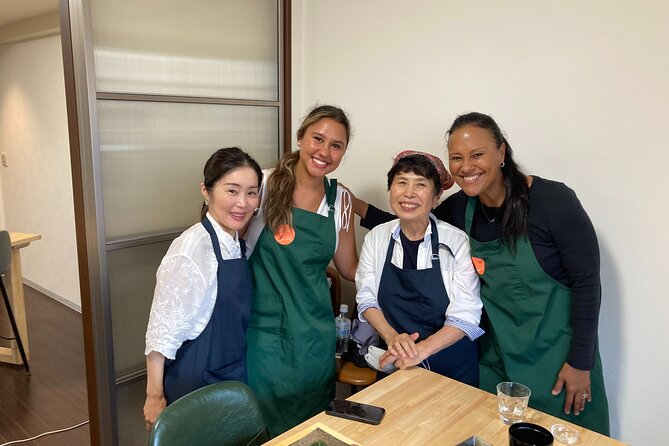
The final meal is the payoff. You sit down with the sushi you prepared and miso soup. For many people, this becomes a filling lunch rather than a small sample.
There is a particular satisfaction in eating food that has required concentration. Your roll may not look identical to the teacher’s model, but it is still yours. The class makes the meal feel earned without turning the work into a test.
The preparation is organized so that the focus stays on technique. Ingredients are ready, an apron is provided, and the teachers guide each step. That makes the experience accessible for people who have limited cooking time in Osaka or are staying in a small hotel room without a useful kitchen.
The food receives especially strong praise. People describe the sushi as delicious, with some calling it among the best food they had during their time in Japan. Since the meal is the result of your own work, taste is only part of the reward. You also leave with a better sense of what goes into a simple-looking piece of sushi.
Group size, timing, and overall value
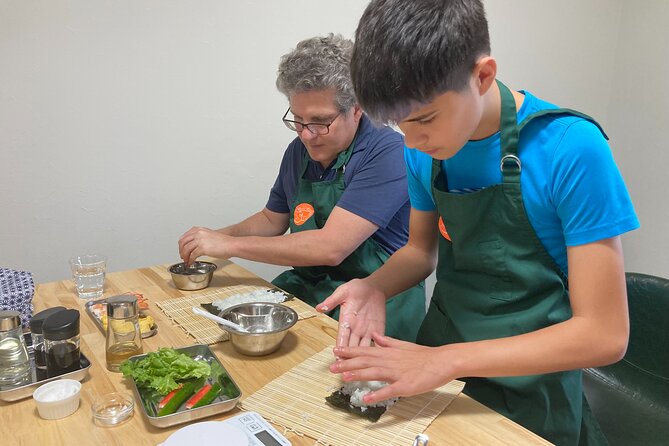
The class lasts about three hours and starts at 9:30 am. That morning schedule works well if you want lunch afterward without losing a full day of sightseeing. It also leaves time to explore Dotonbori and Namba later.
The maximum group size is eight. That is small enough for individual assistance but large enough to keep the class social. Solo participants should feel comfortable booking, and families can take part together.
At $71.16 per person, this is not the cheapest meal you can buy in Osaka. You could eat sushi for less, especially if your only goal is to sample the food. The price makes more sense when you count the instruction, ingredients, apron, cultural explanation, three sushi styles, and miso soup.
I would call it good value for a visitor who wants an activity with a useful result. You can take the methods home and try new combinations later. One participant even went to Kitchen Street afterward to buy ingredients and continue experimenting.
The class is less compelling if you already make sushi regularly and want advanced knife work or restaurant-level presentation. It is aimed at beginners and casual home cooks, though people with some experience can still ask more detailed questions.
Dietary choices and practical requests
Vegetarian food is available in two forms: with eggs or without eggs. Gluten-free food is also available. You need to request these choices when booking, so do not wait until you arrive.
The standard salad roll includes tuna mixed with mayonnaise, crab-flavored kamaboko, and tamagoyaki. Nigiri may include fish, shellfish, or omelet. If you avoid one of these foods, state your needs clearly in advance.
The supplied information does not give a full ingredient list for every alternative menu. For that reason, anyone with a serious allergy should confirm the details before booking rather than relying only on the general dietary labels.
An apron is provided, which helps keep the class simple for a sightseeing morning. Ingredients are prepared for you, so you do not need to arrive with cooking tools or supplies.
Who should book this class?
I would recommend it most strongly to:
- First-time sushi makers who want patient instruction
- Couples looking for an interactive morning activity
- Families with children old enough to follow kitchen directions
- Solo visitors who prefer a structured activity with other people
- Food lovers who want to learn an Osaka-specific style
- Vegetarians and people needing gluten-free food who request it in advance
It is also a good choice for anyone who likes taking a practical memory home. You learn enough to repeat parts of the process, and the class may send you shopping for sushi ingredients before your trip is over.
You may want to skip it if you dislike rice, nori, mayonnaise-based fillings, or hands-on food preparation. It is also not the best fit if you want a high-energy demonstration or a professional sushi apprenticeship.
Cancellation and booking advice
You receive confirmation when booking, and the activity is near public transportation. Free cancellation is available up to 24 hours before the 9:30 am start time for a full refund. Cancellations or changes made less than 24 hours before the start are not refunded or accepted.
Because the class is often booked about 74 days ahead, I would reserve early if your Osaka dates are fixed. This matters most for families, solo visitors with limited free mornings, and anyone requiring a vegetarian or gluten-free option.
Should you book the Dotonbori sushi class?
Yes, if you want more than a meal and less than a full culinary course. The small group, calm English instruction, prepared ingredients, and three different sushi styles create a well-balanced introduction to Japanese food.
My biggest practical warning is the location. Find Masters Residence Dotonbori I, not just the general Dotonbori area, and allow extra time for Room 807. Once inside, the class appears carefully organized and welcoming.
At $71.16, I would book it for the hands-on learning and the generous final meal, not simply for the amount of sushi. You leave with a full belly, a better understanding of nigiri and oshizushi, and techniques you can try again at home. For a first sushi class in Osaka, that is a fair exchange.
FAQ
Where does the sushi class meet?
The class meets at Cooking Sun in Masters Residence Dotonbori I, Room 807, at 2-9-14 Shimanouchi, Chuo Ward, Osaka, postal code 542-0082.
What time does the class start?
The class starts at 9:30 am.
How long does the sushi class last?
The experience lasts approximately three hours.
Where does the class end?
The activity ends back at the meeting point.
How many people can join the class?
The maximum group size is eight people.
Which types of sushi will I make?
You will make a salad roll, nigiri, and oshizushi, which is pressed sushi.
Is miso soup included?
Yes. You eat miso soup with the sushi you prepare.
Are vegetarian options available?
Yes. Vegetarian options are available with eggs or without eggs. You must request your preferred option when booking.
Is a gluten-free option available?
Yes. A gluten-free option is available if you request it when booking.
Is cancellation free?
You can cancel up to 24 hours before the experience start time for a full refund. Changes or cancellations made less than 24 hours before the start are not accepted or refunded.
Just added around Osaka
- Katsuo-ji Temple, Arashiyama Forest, & Nara Park★ 4.0 · 37 reviews
- Osaka:SUMO BEATS SHOWCASE: Taiko Drum and Wagyu burger!★ 4.2 · 37 reviews
- Osaka: Cup Noodles Museum Guided Tour (90 Minutes)★ 4.8 · 38 reviews
- Osaka Food Tour with 10 Classic Japanese Tastings & Drinks★ 5.0 · 38 reviews
- Osaka: Highlights & Hidden Gems Private Walking Tour★ 4.7 · 38 reviews
- Kyoto private tour (Shore excursion available from Osaka or Kobe port)★ 5.0 · 39 reviews
- Osaka Private Day Trip – Enjoy Your First-Time Visit to Osaka!★ 5.0 · 39 reviews
- Kyoto & Nara & Uji: Full Day Sightseeing Tour from Osaka or Kyoto★ 4.5 · 39 reviews
Sushi-Making Classes, compared.
Sushi Making Tokyo Roll and Authentic Japanese Sushi Class
Read our review →
Roll and Authentic Sushi Making Class in Asakusa
Read our review →
Make Sushi and Create Unforgettable Memories in Tokyo
Read our review →
Sushi Making Class in a Happi Coat near a Famous Spot
Read our review →
Sushi Making Osaka Roll and Authentic Japanese Sushi Class
Read our review →
Tokyo Sushi Making Class in Tsukiji with Professional Chef
Read our review →
Tsukiji Fish Market Guided Tour and Sushi Making with Pro Chef
Read our review →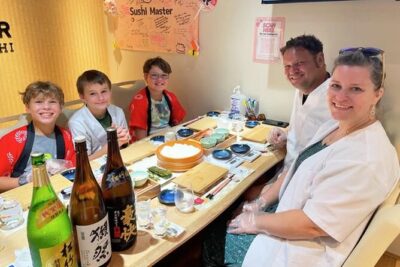
Sushi Making in Kyoto! Same-day bookings welcome!
Read our review →Browse the lists this tour appears in