
Reviewed · SUMO EXPERIENCES
Tokyo: Challenge Sumo Wrestlers and Enjoy Meal
Sumo turns tradition into a hands-on show. This 90-minute experience in Tokyo’s Kanto Region brings you close to former professional wrestlers, explains the customs and techniques of Japan’s national sport, and lets you step into the ring yourself. You watch a demonstration, learn familiar sumo terms, enjoy a Japanese meal, and finish with photographs beside the wrestlers.
I especially like the friendly, interactive format and the fact that you learn from former wrestlers rather than watching a distant performance. I also like that the meal is built into the experience, with tonkatsu for the lunch option or sukiyaki for dinner. It gives the event a relaxed social rhythm instead of making it feel like a short stage show.
The main consideration is sound and seating. Commentary and questions are easier to follow from a seat near the front, and loud conversation from other groups can get in the way. The experience is also non-refundable, so you will want to be sure of your plans before booking.
In This Review
- What makes this sumo experience worth your time
- From Kikukawa Station to the sumo hall
- A clear introduction to Japan’s national sport
- The demonstration puts technique before brute force
- Your turn in the ring
- Lunch or dinner keeps the event relaxed
- Questions and photographs with the wrestlers
- How the $117 price works for you
- Who should book this Tokyo activity?
- Booking and practical advice
- Should you book the Tokyo sumo experience?
- FAQ
- Where does the Tokyo sumo experience begin?
- Where does the experience end?
- How long does the activity last?
- Is the explanation available in English?
- What food is included?
- Can I try sumo wrestling myself?
- Is transportation included?
- Can I bring my own food and drinks?
What makes this sumo experience worth your time
- Former wrestlers explain the sport: You get an English explanation of sumo from people who have competed professionally.
- A real dohyo-style demonstration: Watch the wrestlers use sumo techniques, terminology, and ritual knowledge in a close-up exhibition.
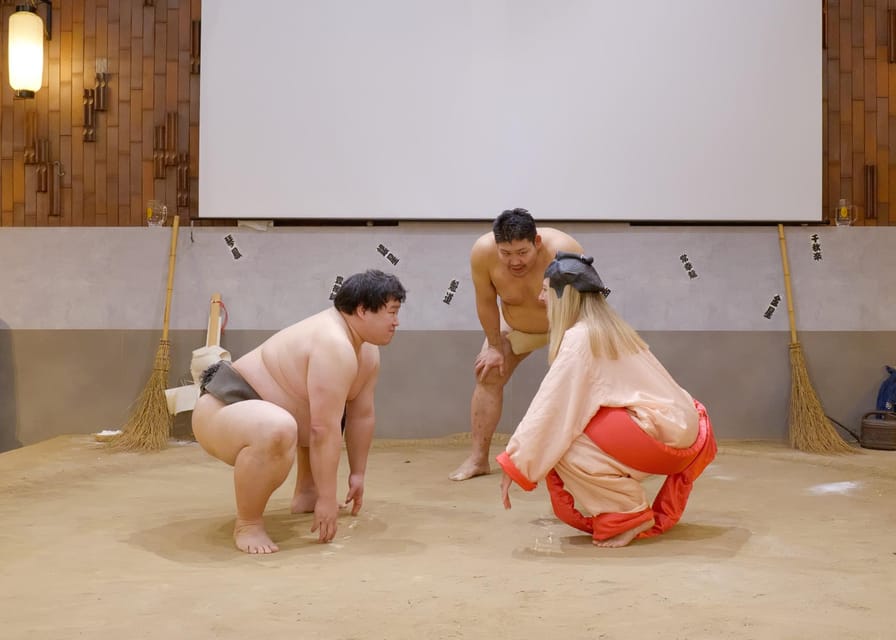
- You can wear a sumo costume: Step into the ring and test your strength in a playful match against the experts.
- The meal is part of the cultural experience: Choose tonkatsu at lunch or sukiyaki at dinner, depending on your booking.
- Family-friendly participation: Children joined in happily during the meal, photographs, and wrestling activities, making this a strong choice for families.
- A practical alternative to tournament tickets: When a grand tournament is not taking place, this offers a lively introduction to sumo without requiring access to a training stable.
From Kikukawa Station to the sumo hall
Getting to the venue is straightforward, but you need to allow time for the walk. Take the Toei Shinjuku Line to Kikukawa Station, leave through Exit A1, and walk about five to eight minutes to the meeting point.
This is not a hotel pickup experience. You arrange your own transportation to the restaurant and return to the same meeting point when the event ends. That makes the activity easy to pair with other plans in eastern Tokyo, though you should check your route before leaving. The experience begins and ends in the same place, which is useful if you are carrying shopping bags or planning dinner afterward.
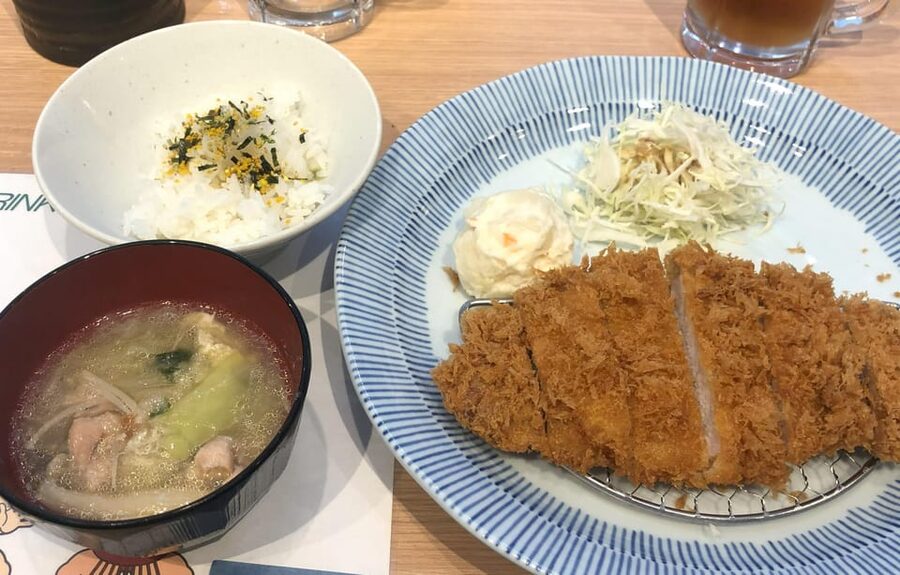
The venue itself is appropriate for the subject: you are not simply sitting in a large theater watching a screen or a distant performance. The wrestlers operate close enough for you to see their footwork, balance, and physical control. Seating is arranged according to booking order, and larger groups may be split between tables. If being together matters, book early and tell the operator about your group.
More Sumo Experiences in Tokyo
- Tokyo: Sumo Show Experience with Chicken Hot Pot and a Photo
★ 4.8 · 6,678 reviews - Tokyo: Sumo Show and Dining Experience
★ 4.8 · 2,742 reviews - the SUMO show
★ 5.0 · 1,960 reviews
A clear introduction to Japan’s national sport
Sumo can look simple at first glance. Two large wrestlers face each other, push, pull, and try to force one another out of the ring. The rules are much more exact than that, and the explanation helps you understand what is happening.
During the presentation, you learn commonly used sumo terms and get an introduction to the sport’s relationship with Japanese culture. The dohyo is not just a piece of flooring. It is treated as a sacred ring, and the ceremony and behavior around it matter as much as the bout itself.
The English explanation is one of the strongest parts of the event. The presenter’s English has been praised as easy to follow, and humor keeps the talk from feeling like a lecture. That balance matters. You get enough information to understand the movements, but the event does not turn into a long history lesson.
The former wrestlers are also part of the entertainment. Their size and athletic ability make the demonstrations exciting, yet their good humor keeps the mood comfortable. You are seeing real expertise, but the atmosphere is designed for participation rather than solemn observation.
The demonstration puts technique before brute force
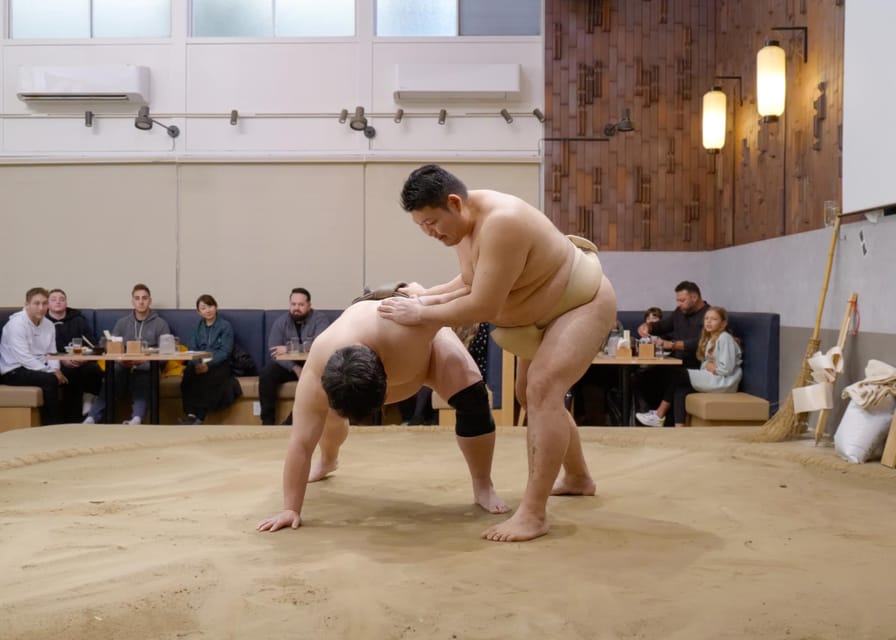
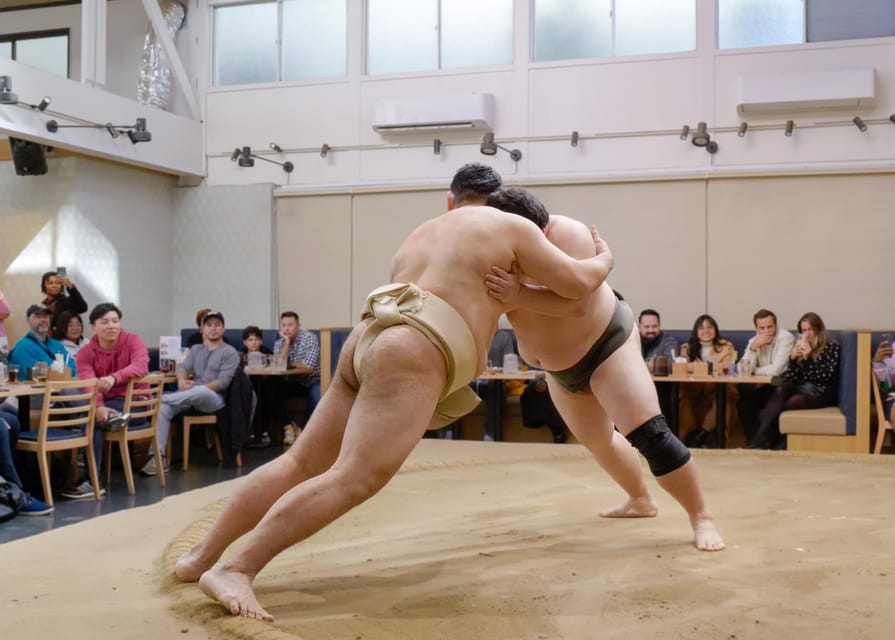
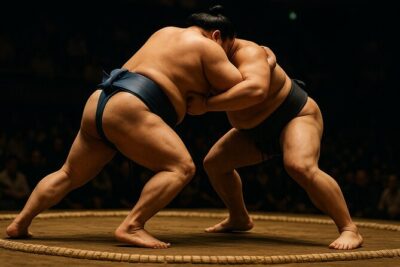
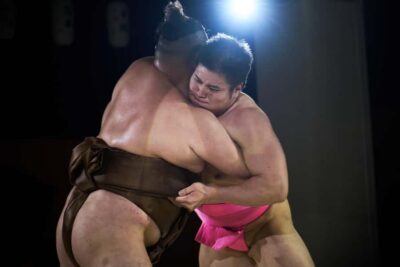
The exhibition match is the point at which the explanation starts to make sense. You can see how a small shift in balance, a firm grip, or a well-timed push can decide the result.
The wrestlers demonstrate sumo maneuvers with energy and comic timing. The presentation is light-hearted, but the physical skill is serious. Former professionals know how to control their bodies and their opponents, and that becomes clear even in a friendly demonstration.
I like this format because it avoids a common problem with cultural shows: too much explanation before anything happens. Here, the teaching and performance support each other. You hear a term, then see the technique. You learn about the ring, then watch the wrestlers use it.
You should sit near the front if possible. This is not necessarily because the view is dramatically better, but because the commentary and question-and-answer portion are easier to hear. If people at other tables talk loudly, you may miss some of the explanation. The event is at its best when the room gives the wrestlers and presenter its full attention.
Your turn in the ring
After the demonstration, you can put on a sumo costume and try the sport yourself. This is the most playful part of the experience, and it gives you a new respect for how difficult the wrestlers’ movements are.
The activity is built around friendly competition, not a serious athletic test. You challenge the former wrestlers under staff guidance, feel the pressure of their strength, and discover that pushing harder is not always enough. Balance, timing, and position matter.
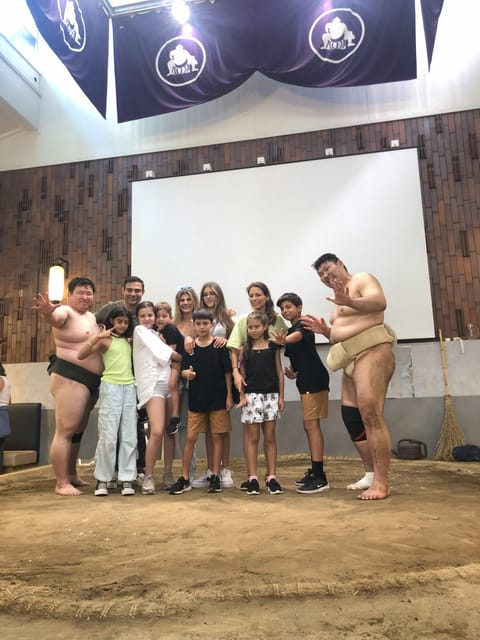
You do not have to wrestle if you would rather not. One useful detail is that the final photo opportunity is available to everyone, so you do not need to enter the ring simply to get a picture with the wrestlers. That makes the activity easier for mixed groups, especially when one person wants to participate and another prefers to watch.
Families can make especially good use of this section. Children have enjoyed taking part, and the wrestlers are described as kind and accommodating. Still, follow the staff’s instructions closely. You are entering an organized activity with large, powerful athletes, so good judgment is expected.
A completely different kind of day out in Tokyo:
- Mt Fuji and Hakone 1-Day Bus Tour Return by Bullet Train
★ 5.0 · 26,383 reviews - 1-Day Tokyo Bus Tour
★ 5.0 · 14,250 reviews - Tokyo: TOKYO SKYTREE® Admission ticket
★ 4.5 · 11,192 reviews - Tokyo: teamLab Planets TOKYO Digital Art Museum Entry Ticket
★ 4.6 · 9,779 reviews
Lunch or dinner keeps the event relaxed
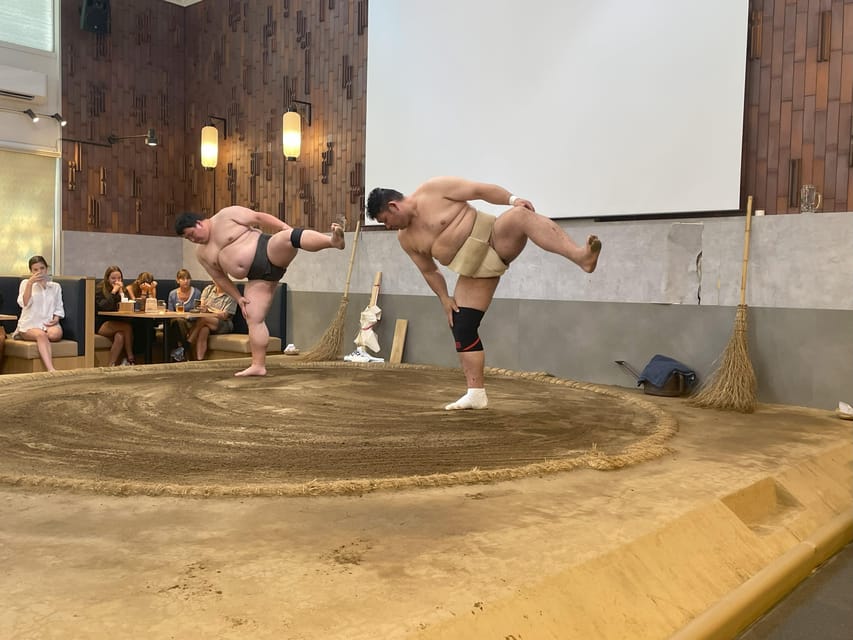
The meal gives the experience more substance than a quick demonstration followed by a goodbye. For lunch, the included dish is tonkatsu, a deep-fried pork cutlet. For dinner, the included meal is sukiyaki, beef and vegetables cooked in a sweetened soy broth.
Tonkatsu is a satisfying choice after the energetic presentation. It is familiar enough for many first-time visitors, but still a classic Japanese meal. Sukiyaki gives the evening option a warmer, shared-table feeling, with the sweet soy broth adding a distinctly Japanese flavor.
The food has generally been well received, though you should keep expectations sensible. You are paying for a combined cultural activity and meal, not booking a specialist restaurant tasting. The value comes from the complete package: former wrestlers, explanations, entertainment, participation, photographs, and food in one compact visit.
The included meal does not cover extra food or drinks. You may bring your own food and drink, and you should advise the operator of dietary requirements when booking. Infant meals are not included, and infant pricing applies only when the infant does not occupy a seat.
Some descriptions of the meal have varied among bookings, so check the exact lunch or dinner option shown when you select your date. The confirmed choice is the important detail.
Questions and photographs with the wrestlers
The question-and-answer period gives the event a personal finish. You can ask about the sport and get responses from people who have lived its demanding routines, rather than relying only on a scripted presentation.
This is also where the experience feels most personal. You are not merely watching a performance from a fixed seat. You have already seen the wrestlers compete, met them through the explanation, and perhaps challenged them in the costume. The conversation helps connect those parts.
The final photo opportunity is a major benefit. You can take a memorable picture beside the wrestlers, whether or not you tried the wrestling activity. If you are visiting Japan with children, the photograph gives them a clear keepsake from the day. If you are traveling as a couple or group, it also creates a shared record of an unusual Tokyo experience.
The full program may run closer to two hours on some days, even though the stated duration is 1.5 hours. The usual sequence can include the introduction, exhibition match, costume activity, photographs, meal, and questions. Keep your later plans flexible rather than scheduling a train or reservation immediately afterward.
How the $117 price works for you
At $117 per person, this is not a cheap meal or a free cultural event. The price makes more sense when you count everything included: access to former wrestlers, English explanations, a live demonstration, the chance to wear a costume and participate, a meal, and photographs.
A sumo tournament is a different experience. A tournament lets you see official competition, but tickets can be difficult to arrange and tournaments take place only during set periods. A visit to a sumo stable offers another kind of access, but age restrictions may prevent younger children from entering training areas. This experience fills that gap with a scheduled, family-friendly introduction.
The value is strongest if you want interaction. If all you want is to watch professional bouts in silence, this may feel too playful. If you want context, contact with former athletes, and a chance to take part, the price is easier to justify.
The high overall rating of 4.7 from 54 ratings reflects the event’s broad appeal, particularly its interactive character, welcoming wrestlers, amusing presentation, and good meal. The praise is not only about the novelty. The strongest reactions focus on the way the event combines instruction and fun without asking you to already understand sumo.
Who should book this Tokyo activity?
I would recommend it for families, first-time visitors to Japan, and anyone curious about sumo but unable to attend a grand tournament. It also suits couples and small groups who want an evening activity that includes food rather than adding another restaurant reservation.
It is a good choice for children because the program is not built around sitting quietly for a long period. They can watch, ask questions, dress up, and possibly challenge a wrestler. The staff’s instructions still matter, and young children should be supervised throughout the interactive portion.
You will also appreciate it if English access is important. The hosts speak English and Japanese, and the explanations make the sport easier to follow for someone who has never watched sumo before.
I would be more cautious if you dislike audience participation, have no interest in Japanese food, or need a tightly timed schedule. The event is deliberately social and playful. You may be asked to take part, though you are not required to wrestle for the photograph.
Booking and practical advice
Book as early as possible if you care about seating. The best available seats are arranged in booking order, and larger groups may be placed at separate tables. A front position can also help you hear the commentary and questions.
Check the starting time carefully because several times may be available. Confirmation is sent within 24 hours of booking, subject to availability. Since the activity is non-refundable, confirm your date, party size, food requirements, and route to Kikukawa Station before paying.
Wear something that allows comfortable movement if you plan to try the costume activity. The information provided does not set out a formal dress code, but loose, practical clothing is a sensible choice for any activity that may involve stepping into the ring.
Most of all, arrive ready to participate a little. The event works best when you ask questions, listen to the explanation, and accept the playful spirit. You can still enjoy it as an observer, but the hands-on portion is what gives the visit its character.
Should you book the Tokyo sumo experience?
Book it if you want a lively, accessible introduction to sumo with real former wrestlers, a meal, and a chance to step into the ring. It is especially useful when a tournament is not running or when children in your group cannot visit a training stable.
Skip it if you are seeking a formal tournament, a quiet meal, or a highly structured athletic demonstration with no audience participation. For most curious visitors, though, the combination of expert explanation, humor, food, and photographs makes the $117 cost reasonable. Just choose your seating and timing carefully, and remember that this is a friendly cultural show rather than official sumo competition.
FAQ
Where does the Tokyo sumo experience begin?
It begins near Kikukawa Station on the Toei Shinjuku Line. From Exit A1, the meeting point is approximately a five to eight-minute walk away.
Where does the experience end?
The activity ends back at the meeting point.
How long does the activity last?
The stated duration is 1.5 hours. Some sessions may run closer to two hours when the presentation, wrestling activity, meal, photographs, and question period take longer.
Is the explanation available in English?
Yes. The hosts and greeters speak English and Japanese, and the sumo explanation is provided in English.
What food is included?
The lunch option includes tonkatsu, a deep-fried pork cutlet. The dinner option includes sukiyaki, beef and vegetables in a sweetened soy broth. The exact meal depends on the option selected when booking.
Can I try sumo wrestling myself?
Yes. You can put on a sumo costume and try a friendly match against the former wrestlers. You do not need to wrestle in order to take a photograph with them.
Is transportation included?
No. Hotel pickup, hotel drop-off, and transportation to and from the restaurant are not included. You make your own way to the Kikukawa meeting point.
Can I bring my own food and drinks?
Yes, bringing your own food and drink is acceptable. You should also advise the operator about any specific dietary requirements when booking.
Just added around Tokyo
- Tokyo 6hr Instagram Highlights Private Tour with Licensed Guide★ 5.0 · 38 reviews
- Tokyo Small Group Tour with Guide★ 4.5 · 38 reviews
- Tokyo Sumo Experience with Live Show & Audience Challenge★ 5.0 · 38 reviews
- Japanese Food Cooking Class in Asakusa, Tokyo★ 5.0 · 39 reviews
- Very popular in Harajuku♡Animal petting zoo★ 4.6 · 39 reviews
- Ramen Making from Scratch with Tokyo Mom(Vegan Option Available)★ 5.0 · 39 reviews
- Tokyo JDM Night: 600hp C63s AMG Edition 1 (Private)★ 4.9 · 39 reviews
- Tokyo: Kimono Rental inside Shinjuku Gyoen National Garden★ 4.9 · 39 reviews
Sumo Experiences, compared.
Tokyo Shinjuku Sumo Show & Experience with Photo
Read our review →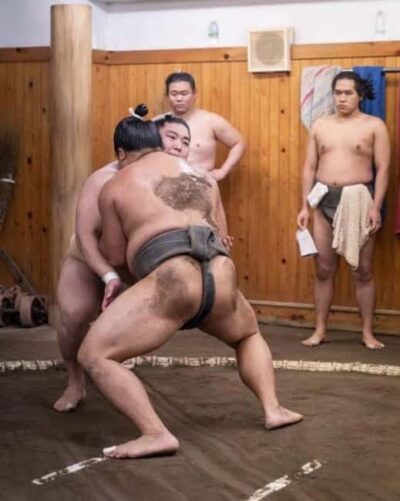
Sumo Show & Experience w/ Optional Kimono & Hot Pot
Read our review →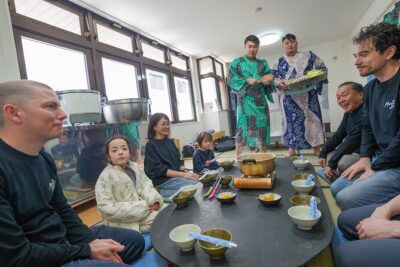
Authentic Sumo Experience in Tokyo: Enter the Sanctuary
Read our review →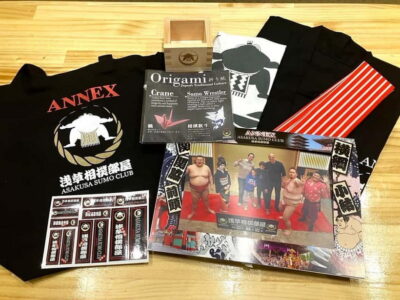
Luxury Sumo Show Experience & Japanese cuisine & Drink
Read our review →Browse the lists this tour appears in