
Reviewed · SUMO EXPERIENCES
Tokyo: Grand Sumo May Tournament
Sumo is far more than two wrestlers colliding. This six-hour Tokyo experience pairs a Ryogoku walking tour with live tournament action, so you learn the rituals, ranks, and local customs before the bouts begin. I especially like the guide’s real-time explanations through personal earphones and the chance to finish with chanko-nabe, the hot-pot meal associated with sumo wrestlers. The main caution is price: at $198.20 per person, you pay a sizeable premium for the guide, reserved access, and added context.
The two-hour neighborhood walk is optional, and so is dinner. That flexibility is useful, but it also means you should check exactly which combination you are booking. The experience is promoted as private and personal, yet the maximum group size is 35, so the level of individual attention may depend on the group and guide.
In This Review
- Key things to know before booking
- Why Ryogoku is the right place to learn sumo
- Inside Ryogoku Kokugikan before the bouts
- Understanding the action from your seat
- Choosing between balcony chairs and floor boxes
- Chanko-nabe near the arena
- Is $198.20 a fair price?
- What kind of visitor will enjoy this most?
- The bottom line for the May tournament
- FAQ
- How long does the Grand Sumo May Tournament experience last?
- Is the Ryogoku walking tour required?
- Are arena seats included?
- Can I hear the guide during the matches?
- Is dinner included?
- Can I cancel for a full refund?
Key things to know before booking
- Ryogoku comes first: The walk visits sumo-related landmarks, a shrine, and the area around training stables before you enter the arena.
- Your guide explains the action live: For groups of three or more, headsets let you hear commentary while watching the bouts.
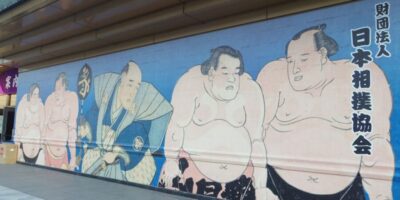
- The arena visit includes more than your seat: You see large murals, championship prizes, the sumo museum, and images of past yokozuna.
- Chair seats are easier for many visitors: The tour uses chair B or C seats on the balcony, rather than floor cushions in a first-floor box.
- Chanko-nabe is optional: Dinner is near the arena, and drinks cost extra.
- Book ahead for tournament dates: This experience is often reserved about 41 days in advance, and major tournament tickets can sell quickly.
Why Ryogoku is the right place to learn sumo
Tokyo has many cultural attractions, but sumo makes the most sense in Ryogoku. This is the city’s traditional sumo district, centered around Ryogoku Kokugikan and the nearby streets connected with stables, shrines, and the sport’s long customs.
The walking portion runs from 1 p.m. to 3 p.m. It is not simply a stroll before the main event. The goal is to give you enough background to understand what you see later, when a match may last only a few seconds but carry years of training and ceremony behind it.
You might visit sumo-related historical landmarks, see the exterior of a training stable, and stop at a sumo shrine. One guide, Ken, was praised for singing a sumo song at the shrine and sharing local lore. That kind of moment gives the neighborhood a human scale that you miss if you go straight to your seat.
The walk is especially useful if you know little about sumo. You learn why wrestlers belong to stable groups, how the ranking system works, and why the ceremony matters as much as the physical contest. The package of tournament information, wrestler profiles, and ranking details adds to this preparation.
You do not need to join the walk to attend the tournament portion. Still, I think skipping it weakens the experience. A sumo match can look confusing at first, with wrestlers entering, stamping, throwing salt, and waiting through formal movements. The walk gives those actions a place in the larger picture.
Keep the timing in mind. The walk lasts two hours, and much of it takes place outdoors in the neighborhood. Wear comfortable shoes and allow enough time to arrive at the meeting place in Ryogoku. Hotel pickup and drop-off are not included, but the district is near public transportation.
More Sumo Experiences in Tokyo
- Tokyo: Sumo Show Experience with Chicken Hot Pot and a Photo
★ 4.8 · 6,678 reviews - Tokyo: Sumo Show and Dining Experience
★ 4.8 · 2,742 reviews - the SUMO show
★ 5.0 · 1,960 reviews
Inside Ryogoku Kokugikan before the bouts
From 3 p.m. to 6 p.m., the focus shifts to Ryogoku Kokugikan. Your guide takes you through the building before or around the tournament viewing, pointing out details that are easy to miss when you are eager to find your seat.
The arena visit includes several stops:
- Large murals measuring about 10 meters
- Displays of championship prizes
- The sumo museum, with about 15 minutes set aside for it
- Paintings and photographs of successive yokozuna, the sport’s grand champions
These stops matter because the tournament is not only a sporting event. The art, trophies, rankings, and formal presentation show how sumo connects athletics with ceremony and national tradition.
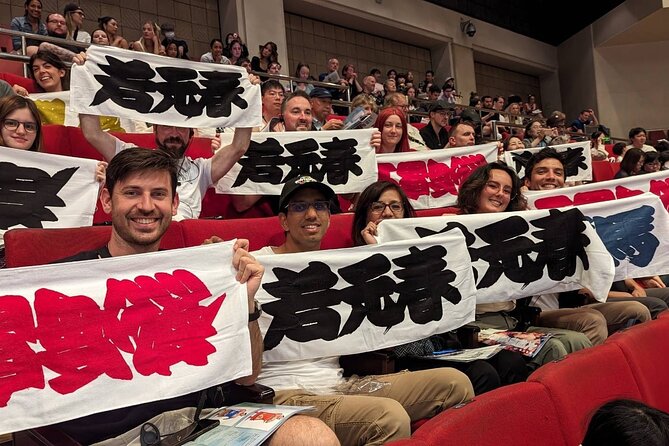
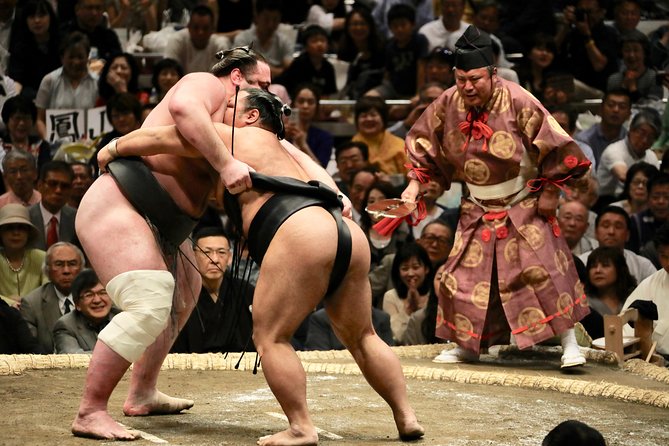
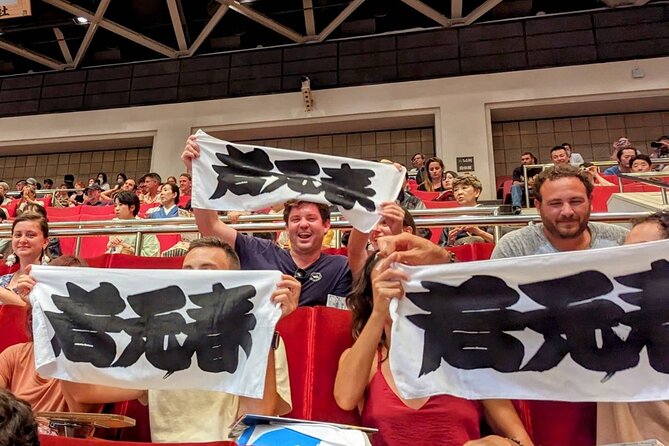
The arena itself adds plenty of atmosphere. The top division wrestlers are preceded by grand ring-entering ceremonies, and the crowd responds strongly to familiar names and favorites. The supplied cheer-up goods let you root for a particular wrestler, which makes the afternoon feel more participatory.
The guides are the strongest reason to pay for this experience instead of simply buying a ticket. Yoko, Aki, Yosh, Ali, Ken, Sue, and Ichirio are among the guides praised for explaining sumo clearly and answering questions. Several visitors said the guide changed the event from a spectacle into something they could follow.
That benefit is not guaranteed to feel identical every time. One quiet guide received criticism for offering only brief explanations unless asked. If your guide is reserved, ask direct questions early. Ask about the ranking system, the rules for winning, the wrestlers’ stable affiliations, or the meaning of the rituals. A private-style format works best when you take part in the conversation.
Understanding the action from your seat
The live commentary is delivered through personal earphones. For groups of three or more, headsets are supplied for each person, so you can hear the guide even when you are some distance away or the arena grows loud.
This is a practical feature, not a fancy extra. Sumo has a slow build and a fast payoff. The wrestlers may spend more time preparing than actually grappling, and the short bout can be difficult to understand without context. Commentary helps you notice stance, balance, timing, technique, and the importance of forcing an opponent outside the ring.
You also get explanations of the ring-entering ceremonies and the routines before the matches. Those details are easy to dismiss as empty pageantry if nobody explains them. With context, the salt, foot stamps, bowing, and pauses become part of the contest’s identity.
The experience focuses on the afternoon viewing period from 3 p.m. to 6 p.m. That includes bouts by top-division wrestlers and grand champions, along with their formal ceremonies. The exact wrestlers appearing can vary by tournament day, so you should not book with one particular champion in mind unless the date information confirms it.
The tournament is held only during selected Grand Sumo Tournament dates. If you happen to be in Tokyo during the May tournament, this is one of the more direct ways to connect a major sporting event with Japanese culture. If you are not a sports fan, the ceremony and setting still give you plenty to watch, but the three-hour arena portion is best for anyone willing to follow the matches rather than simply take a quick look.
Choosing between balcony chairs and floor boxes
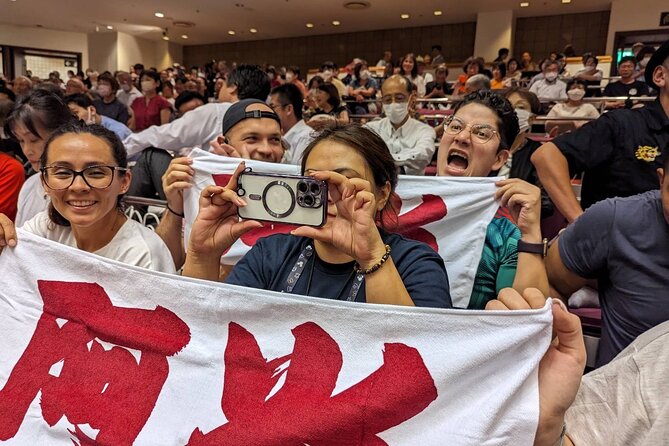
Seat type is an important detail. This tour uses chair B or C seats on the balcony. You sit in a chair throughout the event, which many people will find more comfortable than the traditional first-floor arrangement.
First-floor box seats use a flat floor area measuring about 1.3 by 1.3 meters, with four spectators seated on cushions. That setup is part of the classic sumo experience, but it is not ideal for everyone. If you prefer back support, easier movement, or a familiar seating position, the balcony chair option is the sensible choice.
The tradeoff is distance. Balcony seats may place you farther from the ring than first-floor seats. You gain comfort but give up some closeness. The supplied binoculars are not mentioned, so do not assume they are included. The guide’s commentary and the arena’s own atmosphere help offset the distance, but dedicated fans may prefer a nearer view.
One unusually positive detail is that some visitors received great second-floor seats and still felt close to the excitement. Another person described being seated beside the guide, which allowed constant questions during the tournament. Seating appears to be assigned by the tour organizer, so you should not assume that every booking places you directly next to the guide.
A completely different kind of day out in Tokyo:
- Mt Fuji and Hakone 1-Day Bus Tour Return by Bullet Train
★ 5.0 · 26,383 reviews - 1-Day Tokyo Bus Tour
★ 5.0 · 14,250 reviews - Tokyo: TOKYO SKYTREE® Admission ticket
★ 4.5 · 11,192 reviews - Tokyo: teamLab Planets TOKYO Digital Art Museum Entry Ticket
★ 4.6 · 9,779 reviews
Chanko-nabe near the arena
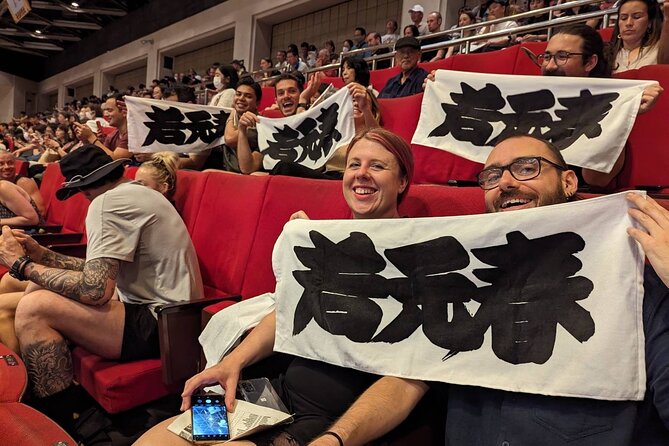
After the tournament, the optional dinner begins around 6 p.m. and lasts about an hour. The guide takes you to a chanko-nabe restaurant near the arena, which keeps the evening simple after several hours of walking and sitting.
Chanko-nabe is a hot-pot dish strongly linked with sumo wrestlers’ diets. It is designed as a filling meal for athletes building body weight and muscle, so expect something hearty rather than delicate. The meal gives you a flavorful connection to the sport’s daily life, not just its public ceremonies.
Dinner is arranged so the food is ready upon arrival, according to one particularly useful account. That means less waiting after the tournament. The restaurant is described as a short walk from the arena, another advantage when the streets are crowded around a major event.
Food preferences deserve attention. One person warned that fish was mixed into much of the hot-pot meal, making it a poor fit for someone who does not eat fish. The available information does not give a full ingredient list, so ask about the contents before choosing the dinner option if you have dietary restrictions.
The dinner option does not include drinks. You order and pay for those separately. Since chanko-nabe is optional, you can also finish the tour without adding the meal if you have other evening plans or want to keep the cost down.
Is $198.20 a fair price?
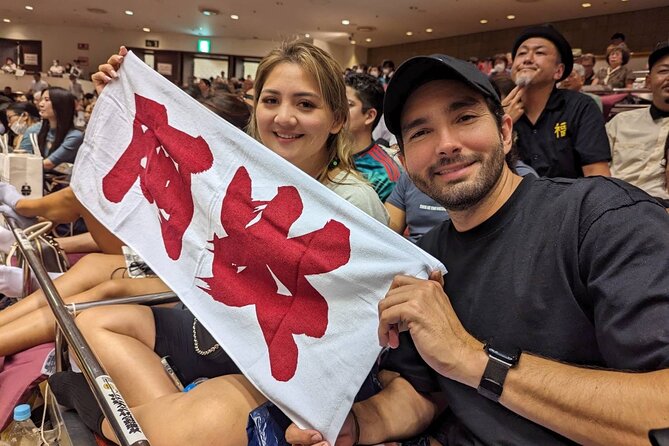
At $198.20 per person, this is not a cheap way to see sumo. The price includes all listed fees and taxes, English guiding by a sumo expert, tournament information, rankings and wrestler profiles, cheer-up goods, and the arena ticket. Dinner is not necessarily part of every package, and drinks are extra.
The value depends on how much help you want. If you already understand sumo and can obtain a ticket on your own, the tour may feel expensive. One unhappy customer compared the package price with the much lower face value of an individual ticket and felt the guide added too little.
That criticism is fair to consider. You are paying for access and interpretation, not only for a seat. The guide may also save you the work of researching the rules, finding the arena’s key exhibits, and working out what is happening during the ceremonies. When the guide is active and clear, that extra service appears to be the part that makes the cost worthwhile.
Ticket access is another factor. Grand Sumo Tournament tickets can sell very quickly, particularly for popular dates. Several people considered the advance booking the reason they were able to attend at all. An expensive ticket is still useful if the alternative is missing the tournament entirely.
The price is easiest to justify for a first-time visitor, a person with limited time, or anyone who wants an English explanation throughout the event. It is harder to justify for a serious sumo follower who prefers to arrange an inexpensive seat and study the sport independently.
What kind of visitor will enjoy this most?
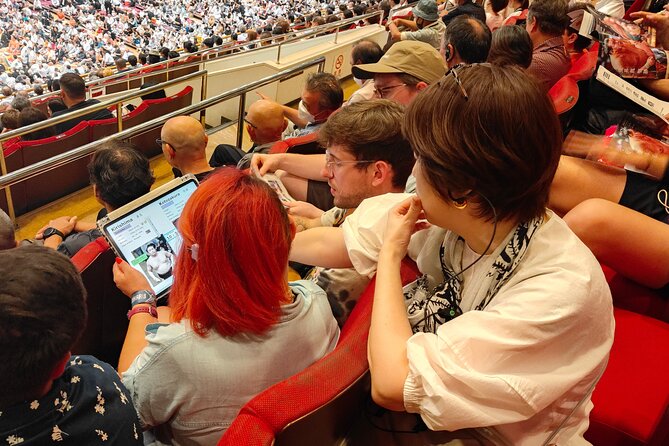
I would choose this experience if you want a guided introduction rather than a bare ticket. It suits families, couples, and first-time visitors who want the rituals explained in plain English. The walking tour also helps anyone interested in traditional Japanese culture beyond the match itself.
Sports fans gain the most from the live commentary. You can ask questions as the tournament unfolds, then see the museum, prizes, murals, and photographs with a better sense of what they represent.
The experience can also work for people who are not sure they like sumo. The neighborhood walk and arena tour provide variety, while the cheer-up goods give you a simple way to join the crowd. Still, you should enjoy watching a three-hour sporting program. This is not a quick photo stop.
The group limit is 35 people. That is small enough for an organized experience but larger than the word private may lead you to expect. Guide quality also matters. Guides such as Yoko, Aki, and Ichirio were praised for clear explanations and warm service, while one quieter guide left a less favorable impression. Go in ready to ask questions, and you are more likely to get the full value.
Confirmation is provided at booking, and most people can participate. The meeting point is in Ryogoku rather than at your hotel, so plan your own route by public transportation. Free cancellation is available until 24 hours before the local start time. After that, refunds are not available and changes are not accepted.
The bottom line for the May tournament
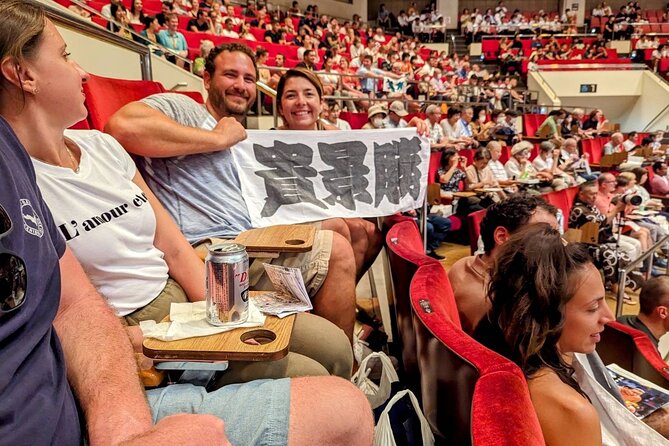
I recommend booking this tour if seeing sumo is a priority and you want someone to explain what you are watching. The combination of Ryogoku landmarks, arena exhibits, chair seating, live earphone commentary, and optional chanko-nabe makes for a full afternoon rather than a ticket-only outing.
Book it well ahead, especially for a preferred tournament date. Before paying, confirm whether your selection includes the neighborhood walk, the dinner, and the chair seating option. If you are comfortable arranging a ticket yourself and already know the sport, go independently and save money. For everyone else, the added context can turn a puzzling afternoon into one of Tokyo’s most memorable cultural experiences.
FAQ
How long does the Grand Sumo May Tournament experience last?
The main experience lasts about six hours. The optional neighborhood tour runs from 1 p.m. to 3 p.m., the arena visit from 3 p.m. to 6 p.m., and the optional chanko-nabe dinner adds about one hour after the tournament.
Is the Ryogoku walking tour required?
No. The two-hour walk is optional. It visits sumo-related landmarks and provides background intended to make the tournament easier to understand.
Are arena seats included?
Yes. The arena admission ticket is included. The tour uses chair B or C seats on the balcony, depending on the selected option. First-floor box seating uses cushions on a flat floor instead.
Can I hear the guide during the matches?
For groups of three or more, each person receives a headset to hear the guide’s commentary clearly, even from a distance. The guide provides live explanations during the tournament.
Is dinner included?
Chanko-nabe dinner is an optional part of the experience. Drinks are not included and must be ordered separately.
Can I cancel for a full refund?
You can cancel at least 24 hours before the experience’s local start time for a full refund. Cancellations or changes made less than 24 hours in advance are not accepted for a refund.
Just added around Tokyo
- Tokyo 6hr Instagram Highlights Private Tour with Licensed Guide★ 5.0 · 38 reviews
- Tokyo Small Group Tour with Guide★ 4.5 · 38 reviews
- Tokyo Sumo Experience with Live Show & Audience Challenge★ 5.0 · 38 reviews
- Japanese Food Cooking Class in Asakusa, Tokyo★ 5.0 · 39 reviews
- Very popular in Harajuku♡Animal petting zoo★ 4.6 · 39 reviews
- Ramen Making from Scratch with Tokyo Mom(Vegan Option Available)★ 5.0 · 39 reviews
- Tokyo JDM Night: 600hp C63s AMG Edition 1 (Private)★ 4.9 · 39 reviews
- Tokyo: Kimono Rental inside Shinjuku Gyoen National Garden★ 4.9 · 39 reviews
Sumo Experiences, compared.
Tokyo Shinjuku Sumo Show & Experience with Photo
Read our review →
Sumo Show & Experience w/ Optional Kimono & Hot Pot
Read our review →
Authentic Sumo Experience in Tokyo: Enter the Sanctuary
Read our review →
Luxury Sumo Show Experience & Japanese cuisine & Drink
Read our review →Browse the lists this tour appears in