
Reviewed · SUMO EXPERIENCES
Tokyo – Grand Sumo Tournament
Sumo turns sport into ceremony. This paper-ticket admission gives you a direct way to see Japan’s national sport at Ryōgoku Kokugikan, where the crowd reacts with the force of a major league game and every bout carries centuries of ritual. I like the simple setup: your place is secured before you arrive, and you do not need to manage Japanese-language ticketing on tournament day.
I also like that you can choose an upgraded seat for a clearer view. The main drawback is just as important: this is a ticket-only event, not a guided cultural tour. Transportation is not included, and the $565 price per person is a serious outlay for an experience listed at about two hours.
In This Review
- Key points to know before you book
- Why a sumo tournament feels different from ordinary sports
- Ryōgoku Kokugikan is the right place to see it
- What your ticket includes, and what it does not
- Seat upgrades can change the experience
- A tournament day needs a little preparation
- Tokyo and Osaka dates are not interchangeable
- What makes this worth $565
- The gap between a tournament ticket and a training tour
- Who will enjoy this most
- Small practical points that matter
- Should you book the Tokyo tournament?
- FAQ
- Where does the Tokyo sumo tournament experience take place?
- How much does the experience cost?
- How long does the experience last?
- Is transportation included?
- Is a tour guide included?
- What type of ticket do I receive?
- Are upgraded seats available?
- Which 2026 dates are in Tokyo?
Key points to know before you book
- The event takes place at Ryōgoku Kokugikan, Tokyo’s famous sumo arena in the Ryōgoku district.
- Admission is included, but you receive a paper ticket rather than a digital pass.
- There is no tour guide, so you should learn the basic rules and rituals before arriving if you want more context.
- Upgraded seats cost extra, which may matter if seeing the action clearly is your main reason for booking.
- Tokyo dates in 2026 are January 11 to 25 and May 10 to 24.
- The March 8 to 22, 2026 tournament is in Osaka, not Tokyo.
Why a sumo tournament feels different from ordinary sports
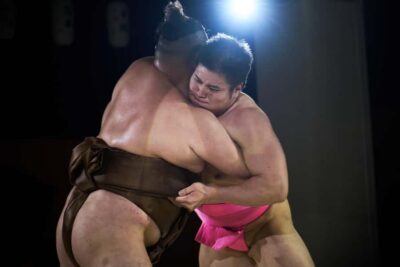
Sumo is easy to watch but rewarding to understand. Two wrestlers enter the ring, perform ritual movements, and try to force an opponent out of the circular ring or make any part of the body other than the soles of the feet touch the ground. The actual bout can last only seconds, yet the build-up may feel just as important as the collision.
That build-up is one reason I recommend a live tournament over a video clip. You see the wrestlers enter, prepare, stamp, throw salt, and face each other beneath the roof of the ring. The audience responds loudly, but the action also has a formal, almost ceremonial rhythm.
The sport carries links to both Shinto practice and wider Japanese religious culture. You will not get a lecture from this ticket-only option, so you will need to bring that background with you. Even a little preparation helps you understand why the ring, gestures, clothing, and behavior matter.
The atmosphere is another major reason to go. Sumo fans cheer, react to upsets, and follow individual wrestlers with real passion. If you expect a quiet museum display, you may be surprised. If you enjoy live sports, the crowd may be the part you remember best.
More Sumo Experiences in Tokyo
- Tokyo: Sumo Show Experience with Chicken Hot Pot and a Photo
★ 4.8 · 6,678 reviews - Tokyo: Sumo Show and Dining Experience
★ 4.8 · 2,742 reviews - the SUMO show
★ 5.0 · 1,960 reviews
Ryōgoku Kokugikan is the right place to see it
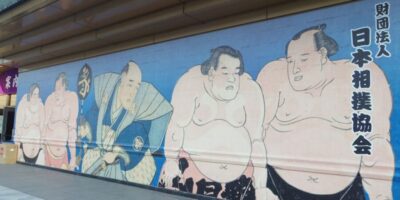
Ryōgoku Kokugikan is in Sumida City, in the Ryōgoku area of Tokyo. The stated meeting point is Ryōgoku Edo NOREN, at 1-chōme 3-20, first floor, near public transportation. The listed start time is 10:00 am.
The arena is not just a neutral sports hall. Ryōgoku is closely tied to sumo, so attending a tournament here gives the experience a proper sense of place. You are watching the sport in one of its central Tokyo homes, rather than treating it as an add-on attraction in an unrelated part of the city.
The listed itinerary names one stop, Ryōgoku Kokugikan, and describes the activity as lasting about two hours. This makes the plan easy to fit into a day of sightseeing, but it also means you should not assume that the ticket includes a full-day visit from morning through the final bout. The exact amount of tournament action available to you should be confirmed when you receive your ticket.
The activity ends back at the meeting point. That wording is slightly awkward for a ticket-only event, since no transport or guided return is provided. I would treat the meeting point as the place where you collect or receive the paper ticket, then plan to make your own way into and out of the arena.
What your ticket includes, and what it does not
The admission ticket is included in the $565 price. The booking is confirmed at the time of purchase, and a paper ticket is provided. Prebooking matters because the major tournaments are popular, and arranging admission in advance removes one difficult task from your Tokyo planning.
The ticket does not include transportation. You must reach the stated meeting point and the arena on your own. Since the activity is near public transportation, this should be manageable, but you should allow time to find the correct place and handle the paper ticket before the event begins.
There is no guide. That is not a small detail. Several sumo experiences in Tokyo involve explanations, temple visits, training demonstrations, or practice with an instructor. This one, as described, is different. You are paying for access to the live tournament, not for an escorted lesson.
You also do not receive a listed meal, hotel pickup, training-stable visit, or cultural walking tour. If you want those extras, you will need to arrange them separately. The simple format can be a strength for independent visitors, but it may feel thin if you expected a hosted experience.
Seat upgrades can change the experience
The booking offers upgraded seats for an additional fee. The exact seat category included in the base price is not specified, so I would ask about the view before paying the full amount.
At a live sumo tournament, distance matters. The ring is the focus, and small details such as foot placement, a quick slap, or the moment a wrestler loses balance can be hard to catch from a poor location. A better seat may be worth considering if you care more about seeing technique than simply feeling the arena’s energy.
On the other hand, the crowd and ceremony remain meaningful even if you are not close to the ring. Sumo is a sport of sharp bursts surrounded by ritual, sound, and anticipation. A less expensive seat can still give you the atmosphere, while an upgrade is most useful for visitors who want a more precise view of the bouts.
Because the price is already $565 per person, I would not automatically add the upgrade. First find out exactly what the standard ticket provides. If the base seat is distant, compare the added fee with the cost of other Tokyo activities you may have to skip.
A completely different kind of day out in Tokyo:
- Mt Fuji and Hakone 1-Day Bus Tour Return by Bullet Train
★ 5.0 · 26,383 reviews - 1-Day Tokyo Bus Tour
★ 5.0 · 14,250 reviews - Tokyo: TOKYO SKYTREE® Admission ticket
★ 4.5 · 11,192 reviews - Tokyo: teamLab Planets TOKYO Digital Art Museum Entry Ticket
★ 4.6 · 9,779 reviews
A tournament day needs a little preparation
A live sumo event becomes easier to follow if you know a few basics before arriving. Learn the difference between a win by pushing an opponent out and a win by forcing the opponent down. Read a short explanation of the pre-bout rituals, the ranking system, and the meaning of a yokozuna, the highest rank in sumo.
I would also watch a few short bouts before your visit. You do not need to become an expert. You simply want to recognize when the wrestlers are preparing, when the referee has begun the bout, and why the crowd reacts to a particular throw or charge.
The listed start time is 10:00 am, but the activity is described as approximately two hours. Since the schedule can be difficult to interpret from the supplied details, contact the provider if you need to know whether 10:00 am is ticket collection, arena entry, or the start of the viewing period.
A paper ticket also deserves attention. Keep it safe, dry, and easy to reach. Unlike a phone code, it cannot be reloaded if misplaced. You should have the meeting-point address saved in Japanese and English, especially if you are using a taxi or asking for directions.
Tokyo and Osaka dates are not interchangeable
The 2026 Tokyo tournaments listed for this experience run from January 11 through January 25 and May 10 through May 24. The March 8 through March 22 tournament is in Osaka.
That distinction matters if your trip includes only Tokyo. The title points to Tokyo, but the schedule includes both cities. Check the date and city carefully before paying, since a March booking will not place you at Ryōgoku Kokugikan.
For a Tokyo visit, the relevant venue is Ryōgoku Kokugikan. The March dates belong to Osaka, so you would need to be in Osaka for that event. This is an easy mistake to make when planning a longer Japan itinerary.
Tournament dates are fixed windows, but the details of attendance can still affect your day. The experience is listed as having a maximum of 20 participants, though the event itself takes place in a much larger public arena. The small booking group may help with ticket handling, but the sumo audience will be far bigger than 20 people.
What makes this worth $565
At $565 per person, this is not a casual bargain. The value rests mainly in securing admission to a popular live event and avoiding the uncertainty of arranging tickets yourself. If obtaining a ticket in advance is difficult or stressful for you, that convenience has real value.
The price is harder to justify if you expect a guided cultural program. There is no guide, no transport, and no stated meal or extended neighborhood visit. You are buying access, not a full interpretation of sumo culture.
I would compare this price with the importance of the tournament on your personal Japan itinerary. If seeing live sumo is one of your main reasons for visiting Tokyo, paying more may be reasonable. A visitor who simply wants to sample Japanese culture can find less expensive options, including museums, temples, and other sporting events.
The booking is non-refundable and cannot be changed for any reason. That makes the decision more serious. Do not reserve it until your Tokyo dates are firm, and double-check the city, tournament window, meeting point, seat type, and start time.
The gap between a tournament ticket and a training tour
This distinction deserves plain language. A tournament ticket is not the same as a visit to a sumo stable.
A stable is where wrestlers train and live under a particular stablemaster. Training visits can be tightly controlled, and schedules may change. This experience does not promise entry into a stable, access to wrestlers’ living quarters, or a demonstration by a professional athlete.
Some similar sumo activities in Tokyo have included introductions to professional wrestlers, practice demonstrations, hands-on moves, temple visits, shrine stops, gardens, and local food. Those are separate elements and should not be assumed here. The present booking promises tournament admission at Ryōgoku Kokugikan, not that wider program.
That clarity helps you avoid the most common disappointment. Book this if your goal is to sit in an arena and watch live sumo. Do not book it expecting a personal lesson, a photo opportunity with wrestlers, or an escorted tour of the Ryōgoku district.
Who will enjoy this most
I think the experience suits three kinds of visitors especially well.
First, it works for independent travelers who want a guaranteed place at a major Japanese sporting event and are comfortable handling transportation and orientation alone. You can keep the rest of your day flexible instead of following a long group itinerary.
Second, it suits serious sumo fans. If sumo is a central part of your Japan plans, the cost may feel worthwhile because the live setting is the main attraction. The crowd, ritual, and sudden force of the bouts are difficult to reproduce elsewhere.
Third, it can suit families and mixed-interest groups if everyone enjoys live sports. The loud reactions and visual ceremony can hold attention even when not every rule is understood.
I would hesitate if you need detailed explanations in English, assistance throughout the day, or a full cultural program. The listing says no guide, so you should be ready to create your own context before you arrive.
Small practical points that matter
The meeting point is near public transportation, and most people can participate. Service animals are allowed. The activity has a maximum group size of 20, although the sumo arena will naturally be a large public setting.
The start point is Ryōgoku Edo NOREN, not simply the arena entrance as described in the basic details. Give yourself time to locate it. If your paper ticket is handed over there, you will want enough room to check the information before heading onward.
The experience ends back at the meeting point according to the supplied details. Since transportation is excluded, plan your return route yourself. Keep your schedule after the event loose enough to handle any delay in ticket collection, entry, or arena procedures.
The most useful question to ask before booking is simple: What exact seat and tournament access does the $565 ticket provide? The answer will determine the value far more than the general promise of a sumo experience.
Should you book the Tokyo tournament?
Book it if live sumo is a priority, your dates match the January or May Tokyo tournament, and you value guaranteed admission more than guided instruction. Ryōgoku Kokugikan gives you the right setting, and the crowd supplies the excitement.
Skip it if you expected a stable visit, wrestler training, a temple tour, or a hands-on class. You can enjoy the tournament, but you must arrange your own transport and bring your own background information.
My advice is to confirm the seat category and exact 10:00 am procedure before committing. At $565, this should be a deliberate choice, not an impulse purchase. For a committed sumo fan, it may become a major Tokyo memory. For everyone else, the price demands careful comparison.
FAQ
Where does the Tokyo sumo tournament experience take place?
The event takes place at Ryōgoku Kokugikan in Tokyo’s Ryōgoku district. The stated meeting point is Ryōgoku Edo NOREN, 1-chōme 3-20, first floor, in Sumida City.
How much does the experience cost?
The listed price is $565 per person.
How long does the experience last?
The activity is listed as approximately two hours.
Is transportation included?
No. Transportation is not included, so you must make your own way to the meeting point and venue.
Is a tour guide included?
No. This is described as a ticket-only event with no tour guide.
What type of ticket do I receive?
The experience provides a paper ticket. Confirmation is received at the time of booking.
Are upgraded seats available?
Yes. Upgraded seats are available for an additional fee, although the exact seat categories are not specified.
Which 2026 dates are in Tokyo?
The Tokyo dates are January 11 to 25, 2026, and May 10 to 24, 2026. The March 8 to 22, 2026 tournament is in Osaka.
Just added around Tokyo
- Tokyo 6hr Instagram Highlights Private Tour with Licensed Guide★ 5.0 · 38 reviews
- Tokyo Small Group Tour with Guide★ 4.5 · 38 reviews
- Tokyo Sumo Experience with Live Show & Audience Challenge★ 5.0 · 38 reviews
- Japanese Food Cooking Class in Asakusa, Tokyo★ 5.0 · 39 reviews
- Very popular in Harajuku♡Animal petting zoo★ 4.6 · 39 reviews
- Ramen Making from Scratch with Tokyo Mom(Vegan Option Available)★ 5.0 · 39 reviews
- Tokyo JDM Night: 600hp C63s AMG Edition 1 (Private)★ 4.9 · 39 reviews
- Tokyo: Kimono Rental inside Shinjuku Gyoen National Garden★ 4.9 · 39 reviews
Sumo Experiences, compared.
Tokyo Shinjuku Sumo Show & Experience with Photo
Read our review →
Sumo Show & Experience w/ Optional Kimono & Hot Pot
Read our review →
Authentic Sumo Experience in Tokyo: Enter the Sanctuary
Read our review →
Luxury Sumo Show Experience & Japanese cuisine & Drink
Read our review →Browse the lists this tour appears in