
Reviewed · SUMO EXPERIENCES
Tokyo: Not a show- a professional sumo practice with experts
Sumo is best understood from the floor beside the ring. This three-hour Ryogoku experience takes you into Takasago-beya Sumo Stable to watch professional wrestlers train, then adds a photo opportunity and an extended question session with Shinya, a sumo specialist and national newspaper journalist. I like the close view of real training and the serious, respectful tone. I also like that the tour includes nearby sumo landmarks rather than ending at the stable door.
The main drawback is simple: you sit on the floor for much of the practice, and the seating can become uncomfortable after 90 minutes. This is also training, not a staged performance, so there may be stretches when you watch quietly without live commentary.
In This Review
- The essential details at a glance
- Why this is more than a sumo show
- Meeting in Ryogoku and reaching the stable
- Inside Takasago-beya: watching the real training
- The guide’s role makes the difference
- From the stable to Ryogoku Kokugikan
- Ryōgoku Edo NOREN and the final half-hour
- Is $103 a fair price?
- Comfort, etiquette, and who should book
- What makes the experience memorable
- My verdict: book it for access, not entertainment
- FAQ
- Where does the sumo practice tour meet?
- How long does the experience last?
- Is this a staged sumo show?
- Can I take a photo with a sumo wrestler?
- Is an English-speaking guide provided?
- Can I ask questions about sumo?
- Do I sit on the floor?
- Are children under five allowed?
The essential details at a glance
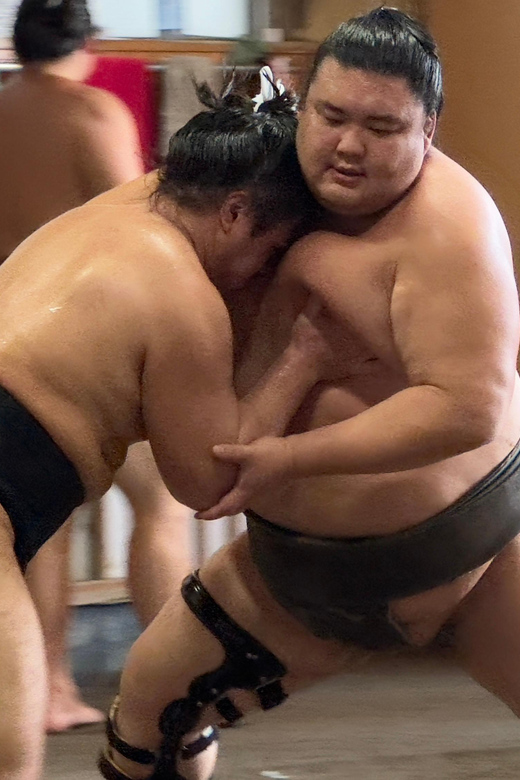
- Real morning training at Takasago-beya: You watch professional wrestlers warm up, practice techniques, and work through demanding drills inside an active sumo stable.
- Very small group: The group is limited to 10 people, which makes it easier to see the action and ask direct questions.
- Shinya’s specialist insight: Your guide is also a sumo journalist, giving the visit context beyond basic explanations of rules and rituals.
- Photo with a wrestler: A commemorative photograph with a sumo wrestler is included.
- Ryogoku’s sumo landmarks: The route includes Ryogoku Kokugikan and Ryōgoku Edo NOREN, the latter offering time for sightseeing and shopping.
- Plan for floor seating: A cushion is provided, but this may still be difficult if you are very tall, heavy, stiff, or simply not fond of sitting low.
Why this is more than a sumo show
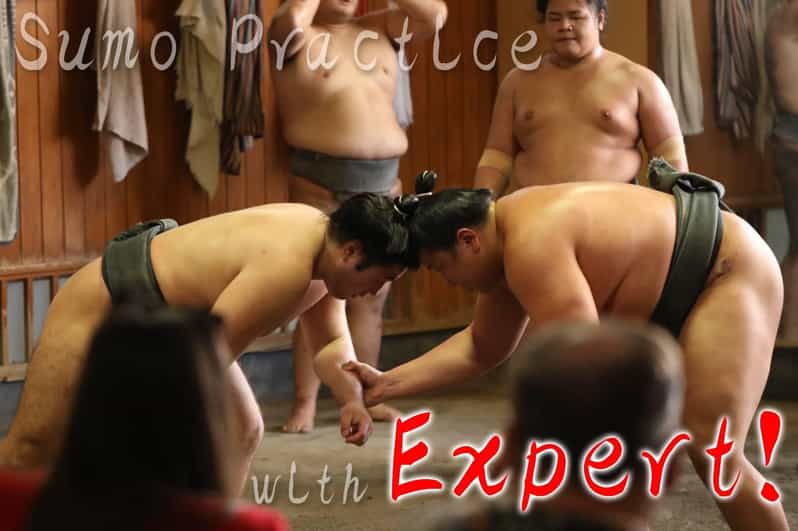
Tokyo offers sumo-themed entertainment designed for visitors. Those events can be fun, especially for families who want a lively introduction. This experience takes a different path. You enter a working stable and observe the wrestlers during their morning routine, with no promise that they will perform for the audience.
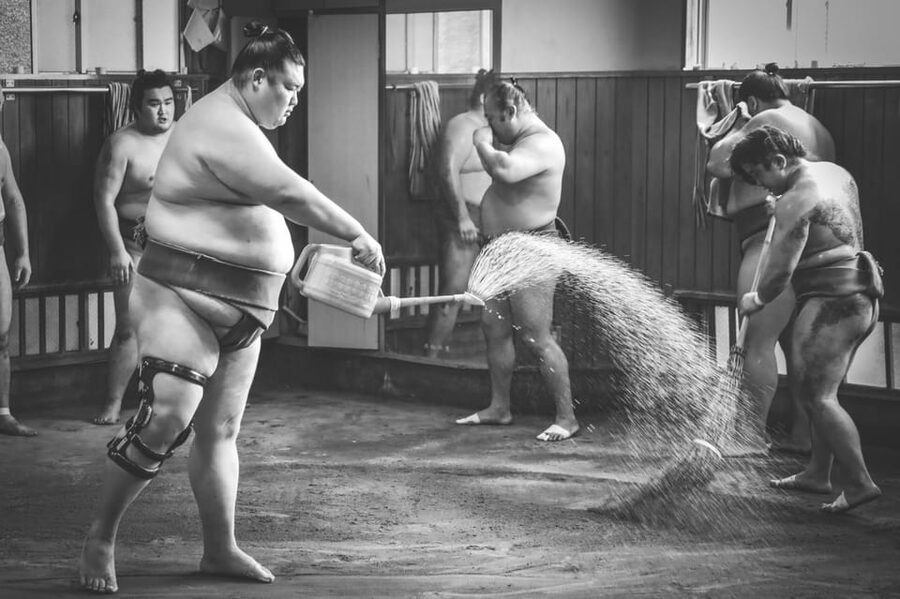
That difference matters. You see the sport as work: repeated practice, physical strain, formal behavior, and close attention from the wrestlers around them. One particularly interesting part is watching more experienced wrestlers guide younger men. The stable setting gives the sport a sense of daily discipline that a short stage presentation cannot easily reproduce.
You must also adjust your expectations. The wrestlers are not there to entertain you. You are a quiet observer in a place that has granted special permission for the visit. Phones should be switched off, and respectful silence is part of the experience.
That restraint is a strength, but it can surprise anyone expecting constant explanation. One useful improvement would be more commentary during the practice itself. The guide explains plenty before and after, but there may be questions you want answered while you are watching a particular exercise.
More Sumo Experiences in Tokyo
- Tokyo: Sumo Show Experience with Chicken Hot Pot and a Photo
★ 4.8 · 6,678 reviews - Tokyo: Sumo Show and Dining Experience
★ 4.8 · 2,742 reviews - the SUMO show
★ 5.0 · 1,960 reviews
Meeting in Ryogoku and reaching the stable
The meeting point is at the 両国HANAWAビル, close to Ryogoku Station. From the Toei Oedo Line, use Ryogoku Station, E12, Exit A2 at ground level. The location is also about a five-minute walk from the east exit of JR Ryogoku Station.
Read the meeting instructions carefully before setting out. The operator contacts you with final details before the tour date, and an early start is likely because you are attending morning practice. A few minutes of delay can create real trouble when a group is entering a private training facility.
The walk to the training building takes about five minutes. One practical warning: the pace may feel brisk, and crossing lights can separate a group. Stay near the guide, especially if you walk slowly or are managing children.
The small-group limit of 10 is important here. Ryogoku’s streets are easy enough to navigate, but the stable itself is not a large public attraction with broad visitor facilities. A small group keeps the visit quieter and helps everyone get a clear view.
Inside Takasago-beya: watching the real training
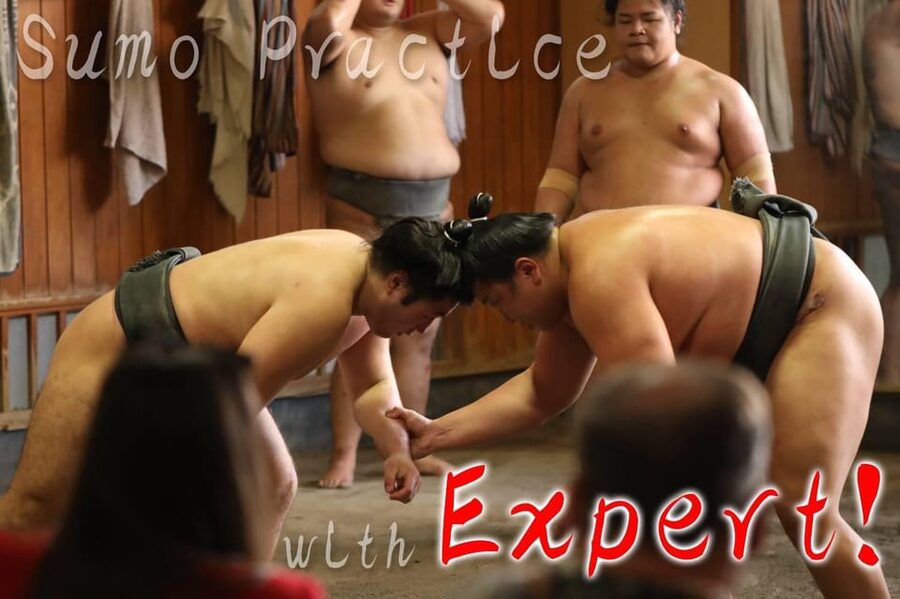
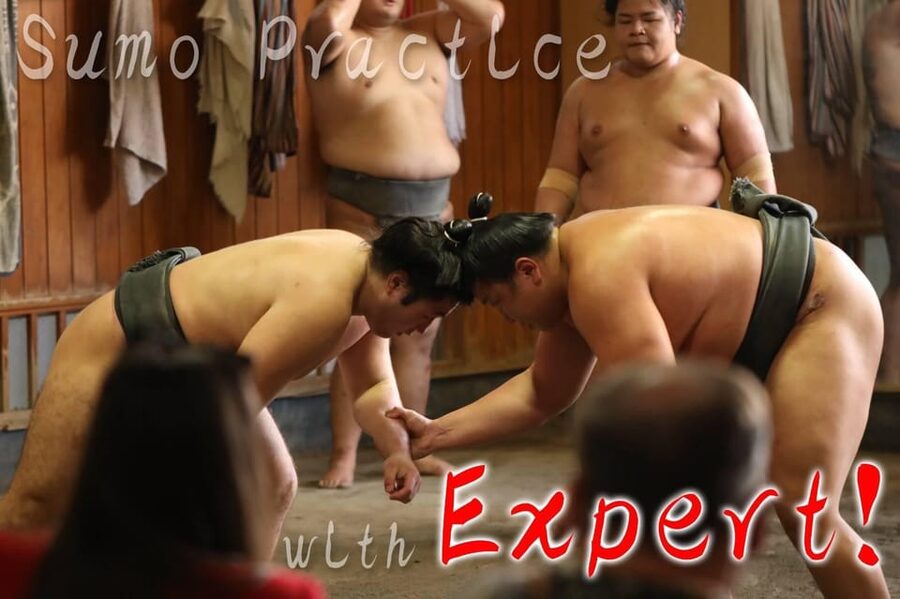
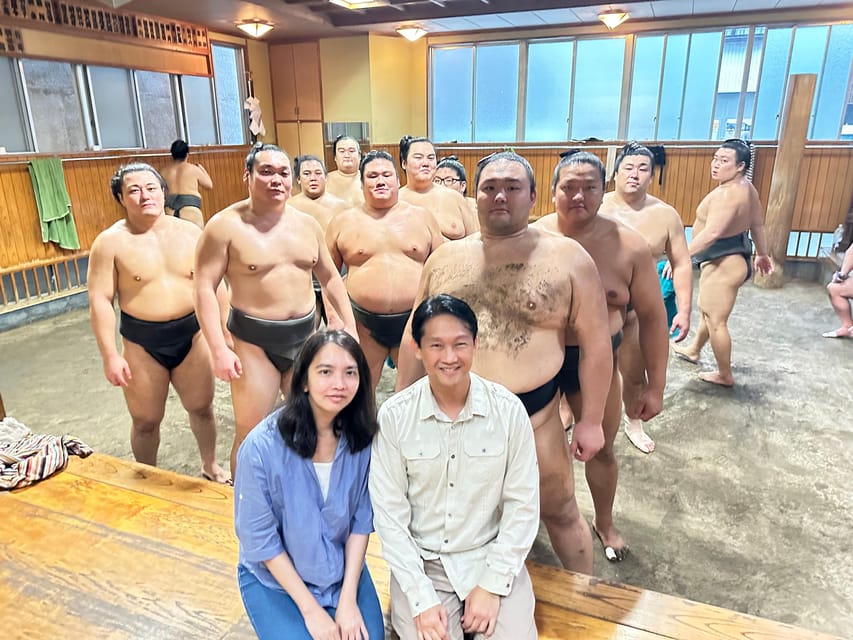
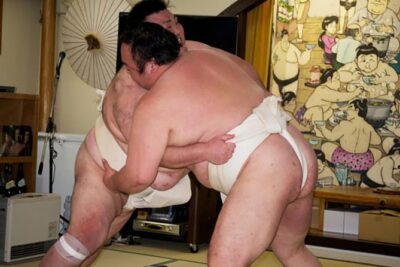
The stable visit lasts about two hours, making it the heart of the morning. You sit on the floor, with a floor cushion available, and watch the wrestlers from a very close position. One account describes being only about five inches from the men, which gives you an idea of the viewing distance.
From that position, sumo feels physical in a way television cannot show. You see the warm-ups, repeated bouts, training exercises, and cool-down period. You also hear and feel the force of the movement at close range. The practice can be intense enough that you lose track of time, even though you are only watching.
The order and ritual are part of the lesson. Your guide introduces sumo customs and explains what you are seeing, including the behavior surrounding practice. If you already follow tournaments, you can use the session to ask more technical questions about the wrestlers, training, rankings, or customs.
The pace is not built around a visitor schedule. The wrestlers decide when the session is finished. That is part of the authenticity, but it also means the experience is less predictable than a museum visit or a timed show. You may watch a long period of repetition, and that is exactly what serious training involves.
Respect is not optional. Keep quiet, turn off your phone, and avoid treating the wrestlers like performers. Photography is included at the proper point, but the stable is not a place for constant snapping.
The guide’s role makes the difference
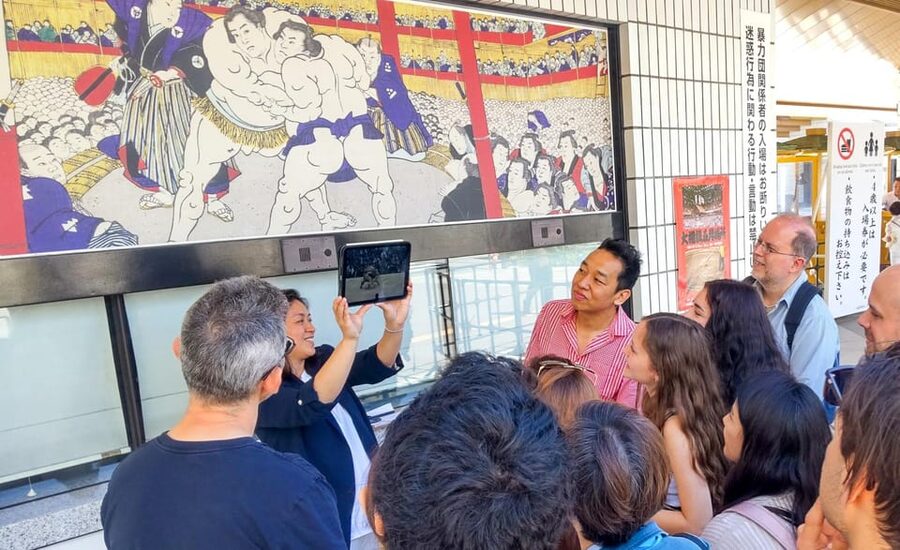
Shinya is presented as both a sumo specialist and a national newspaper journalist. That background is the most valuable part of the tour after the practice itself. He can explain the sport, its rituals, its people, and the tournament world with more authority than a guide who has only memorized a few facts.
His role also gives the visit a human angle. You can ask the questions that often get skipped in a standard introduction. People who already know the basics of sumo may get as much from the question session as first-time viewers, since the specialist is able to handle more detailed subjects.
The guide’s English is described as understandable and engaging, though not necessarily polished in every moment. That is a fair trade for direct experience in the sumo world and years spent covering the sport. Shinya’s enthusiasm comes through, and he is also noted as a useful source of general Tokyo advice.
The schedule includes a Q&A and photo session after the practice. Make a note of your questions before you arrive. The practice can be absorbing, and it is easy to remember your best question only after the group has moved on.
A completely different kind of day out in Tokyo:
- Mt Fuji and Hakone 1-Day Bus Tour Return by Bullet Train
★ 5.0 · 26,383 reviews - 1-Day Tokyo Bus Tour
★ 5.0 · 14,250 reviews - Tokyo: TOKYO SKYTREE® Admission ticket
★ 4.5 · 11,192 reviews - Tokyo: teamLab Planets TOKYO Digital Art Museum Entry Ticket
★ 4.6 · 9,779 reviews
From the stable to Ryogoku Kokugikan
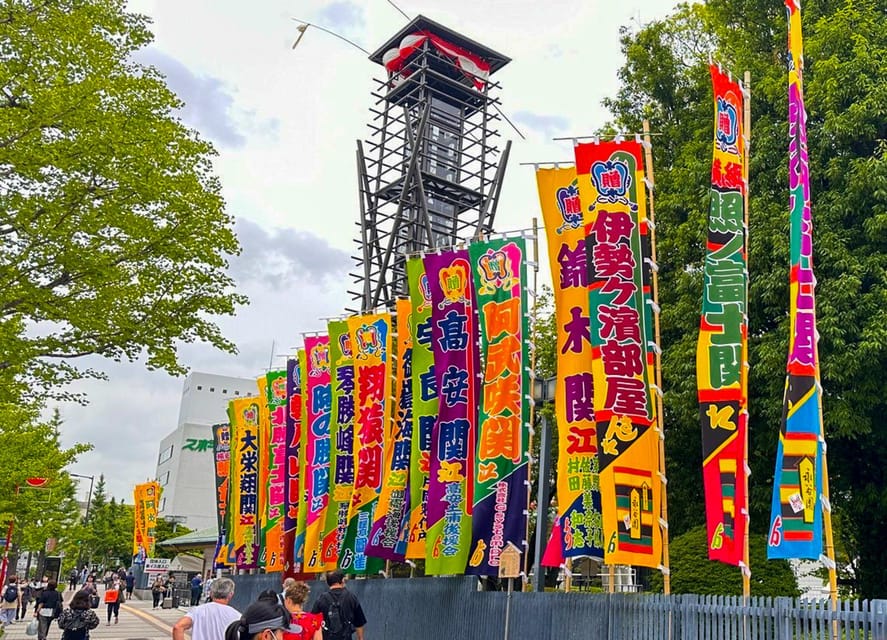
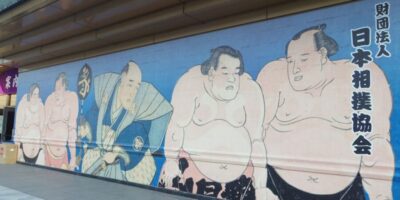
After the stable, the tour continues to Ryogoku Kokugikan, Tokyo’s best-known sumo arena, for about 15 minutes. This is a short guided visit, not a tournament ticket and not a full arena tour.
Even so, the stop helps connect what you have just seen in training with professional competition. The Kokugikan is central to the identity of Ryogoku, and seeing it after watching a stable session gives the neighborhood more meaning. You are not just looking at a famous building. You have already seen the preparation that leads toward the bouts held there.
Keep your expectations in proportion to the time. Fifteen minutes is enough for an introduction and a few useful stories, but not a detailed museum visit. If your main aim is attending an actual tournament, this experience does not replace a tournament ticket.
It can, however, be a good choice when tournament tickets are unavailable. You still get close to the sport and gain context that can make a future tournament easier to understand.
Ryōgoku Edo NOREN and the final half-hour
The final part takes you to Ryōgoku Edo NOREN for a 15-minute guided introduction followed by about 30 minutes for sightseeing and shopping. This gives the morning a softer ending after the concentration required inside the stable.
The stop is useful for getting your bearings in the neighborhood and for browsing at your own pace. It also makes the experience feel like a short Ryogoku tour rather than a single-access visit. The tour finishes at Ryogoku Station, so you can continue exploring or take the train to your next Tokyo stop.
Do not expect the final 45 minutes to match the importance of the stable visit. The training is the reason to book this experience. The arena and Edo NOREN portions add local setting, but they are supporting pieces.
Is $103 a fair price?
At $103 per person, this is not a cheap morning activity. You are paying for access to a private sumo stable, a small group, an English-speaking guide, a photo with a wrestler, and specialist time with someone who covers sumo professionally.
The value depends on what you want. If you only need a quick introduction to sumo, a museum or public tournament broadcast will cost less. If you want a real training session at close range, this price is easier to justify because access to a stable is not something most independent visitors can arrange.
The tour also saves you from having to interpret the setting alone. Without guidance, you might see wrestlers moving through exercises but miss the significance of the rituals, the relationships between older and younger wrestlers, or the details behind the training.
Food and drinks are not included, and tipping is not included either. Bring your own plan for refreshments after the tour. The experience lasts three hours, so it fits neatly into a Tokyo morning without taking an entire day.
Free cancellation is available up to 24 hours before the start for a full refund, and you can reserve now and pay later. Those terms are useful if your Tokyo schedule is still shifting.
Comfort, etiquette, and who should book
The floor seating deserves serious attention. A cushion is supplied, but a cushion does not turn floor sitting into chair seating. After 90 minutes or more, your legs, hips, or back may complain. One person specifically warned that tiny stools and low seating were difficult when flexibility and body size were concerns.
I would choose this tour if you are comfortable sitting on the floor and can remain still and quiet. If you have mobility issues or strongly dislike low seating, ask the operator for more information before booking. The supplied details do not promise chair seating.
Children under five are not accepted. Older children may enjoy the spectacle and the photo, but parents should explain the etiquette first. This is not a noisy family show. Children must be able to sit quietly during the practice.
The experience suits:
- Sumo fans who want to see training rather than a staged demonstration
- First-time visitors who want a clear explanation of customs and technique
- People unable to obtain tournament tickets
- Visitors who prefer small groups and direct access to a specialist
- Anyone interested in Japanese sporting traditions and everyday discipline
It may not suit you if you need constant narration, want a full tournament, or expect to move freely around the stable. You are entering a working environment, not a public exhibit.
What makes the experience memorable
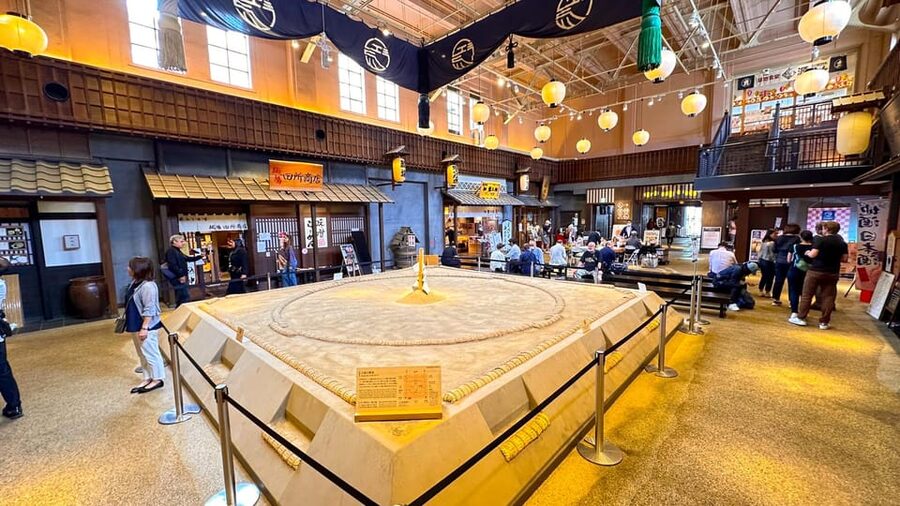
The strongest feature is the distance. Seeing a wrestler on television gives you the outline of the sport. Sitting only inches away lets you notice the physical effort, the repeated motions, and the quiet attention around the bouts.
The second strength is the combination of access and explanation. The stable visit alone would be unusual, but the journalist-led discussion helps turn observation into understanding. You can ask why a ritual happens, how a practice differs from a match, or what details to watch for in future tournaments.
The photo is a pleasant extra, but it is not the main reason I would book. The real value is the chance to observe professional training without the comic routines and artificial competition used in some visitor-oriented sumo packages.
The tour has earned an overall 4.9 rating from 67 reviews, with repeated praise for the authentic setting, the guide’s enthusiasm, and the quality of the explanations. The most consistent practical complaint is not about the content. It is the seating and, to a lesser extent, the lack of commentary during every moment of practice.
My verdict: book it for access, not entertainment
I recommend this tour if you want the real working side of sumo and are willing to follow the rules of the stable. The close viewing, specialist guide, wrestler photo, and Ryogoku setting create a rare three-hour experience that goes well beyond a staged demonstration.
Book it especially if you could not get tournament tickets or if you already know a little about sumo and want answers to harder questions. Skip it if floor seating is a serious problem, if you need a highly narrated show, or if your main goal is watching a formal tournament bout.
For the best experience, arrive early, wear something comfortable for sitting, prepare questions in advance, and treat the stable as a place of work. Do that, and $103 buys something far more useful than a quick photo opportunity: a close look at how professional sumo is practiced before the public ever sees the competition.
FAQ
Where does the sumo practice tour meet?
It meets at 両国HANAWAビル. The meeting point is near Toei Oedo Line Ryogoku Station, E12, Exit A2 at ground level, and about a five-minute walk from the east exit of JR Ryogoku Station.
How long does the experience last?
The experience lasts three hours. About two hours are spent at Takasago-beya Sumo Stable, followed by visits to Ryogoku Kokugikan and Ryōgoku Edo NOREN.
Is this a staged sumo show?
No. You watch professional wrestlers during a real morning practice at a sumo stable. The wrestlers are training rather than performing a visitor-focused show.
Can I take a photo with a sumo wrestler?
Yes. A photo with a sumo wrestler is included in the experience.
Is an English-speaking guide provided?
Yes. The tour includes an English-speaking guide, and Japanese is also available. The guide is a sumo specialist and national newspaper journalist.
Can I ask questions about sumo?
Yes. A Q&A session with a long-time sumo expert is included.
Do I sit on the floor?
Yes. Customers sit on the floor to watch the practice, and a floor cushion is available.
Are children under five allowed?
No. The experience is not suitable for children under five.
Just added around Tokyo
- Tokyo 6hr Instagram Highlights Private Tour with Licensed Guide★ 5.0 · 38 reviews
- Tokyo Small Group Tour with Guide★ 4.5 · 38 reviews
- Tokyo Sumo Experience with Live Show & Audience Challenge★ 5.0 · 38 reviews
- Japanese Food Cooking Class in Asakusa, Tokyo★ 5.0 · 39 reviews
- Very popular in Harajuku♡Animal petting zoo★ 4.6 · 39 reviews
- Ramen Making from Scratch with Tokyo Mom(Vegan Option Available)★ 5.0 · 39 reviews
- Tokyo JDM Night: 600hp C63s AMG Edition 1 (Private)★ 4.9 · 39 reviews
- Tokyo: Kimono Rental inside Shinjuku Gyoen National Garden★ 4.9 · 39 reviews
Sumo Experiences, compared.
Tokyo Shinjuku Sumo Show & Experience with Photo
Read our review →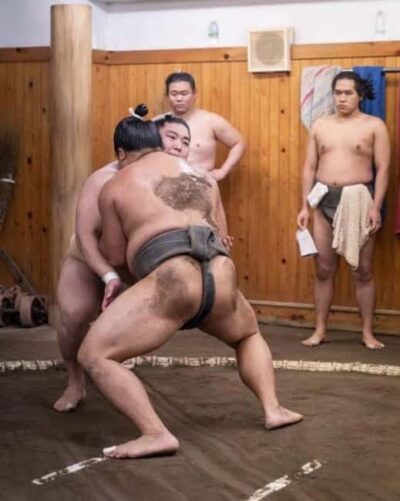
Sumo Show & Experience w/ Optional Kimono & Hot Pot
Read our review →
Authentic Sumo Experience in Tokyo: Enter the Sanctuary
Read our review →
Luxury Sumo Show Experience & Japanese cuisine & Drink
Read our review →Browse the lists this tour appears in