
Reviewed · SUMO EXPERIENCES
Tokyo Ryogoku Sumo Morning Practice + Photo Shoot with Wrestlers
Sumo training is far more intense than a match.
This two-hour morning visit takes you into a working sumo stable in Ryogoku, Tokyo’s sumo district, where you can watch wrestlers train at close range. I like the unstaged practice, which can include warm-ups, strength work, technique drills, and full bouts between wrestlers. I also like the chance to learn about sumo customs from a local guide and possibly take photos with the wrestlers afterward. The main drawback is that the experience depends heavily on the stable’s rules, timing, seating, and the quality of your guide.
The tour costs $98.16 per person and is capped at seven people. That is a fair price for genuine access to a stable, but it is not a good fit if you want a polished show, guaranteed front-row seating, or a long formal lecture about sumo. You will need to sit quietly on the floor, often on tatami, for much of the practice.
In This Review
- Key points to know before booking
- Why morning practice feels different from a sumo tournament
- Meeting at JR Ryogoku Station East Exit
- The walk through Ryogoku to a working stable
- Inside the stable: quiet, close, and very real
- What you may learn about sumo life
- Photography and the possible wrestler photo
- Ryogoku Kokugikan and the short neighborhood stop
- Is $98.16 a good value?
- Weather, schedule changes, and cancellation rules
- Who should book this sumo experience?
- My recommendation: book it for access, not polish
- FAQ
- Where does the sumo morning practice tour meet?
- Which Ryogoku station should I use?
- How long does the experience last?
- Can children join the tour?
- Will I be able to take photos of the wrestlers?
- Can I take a photo with a sumo wrestler?
- Do I need to sit on the floor?
- What happens if the practice is canceled?
Key points to know before booking
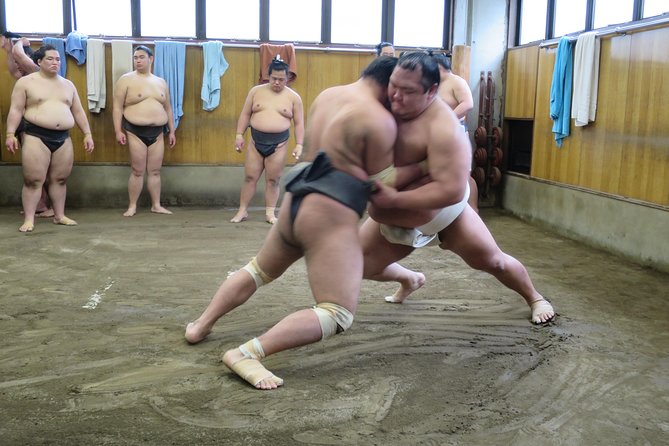
- Watch real morning training: This is a working practice session, not a performance staged for visitors.
- Meet at the correct Ryogoku station: Use the JR Ryogoku Station East Exit, not Ryogoku Station on the Oedo Line.
- Expect floor seating: Most stables do not provide chairs, and practice can last longer than expected.
- Photos are not guaranteed: The stable decides if photography and posed photos with wrestlers are allowed that day.
- Guides can make a big difference: Strong guides such as Mayu, Masao, Ayaka, Yumiko, Tommy, and Kate have helped explain the sport and customs.
- Arrive early: The meeting time is 8:00 a.m., with a strict late-arrival policy. Missing the group usually means no refund or rescheduling.
Why morning practice feels different from a sumo tournament
A tournament gives you the public face of sumo. You see the colorful entrance ceremonies, formal bouts, referees, ranked wrestlers, and packed arena atmosphere. A stable visit shows the daily work behind that spectacle.
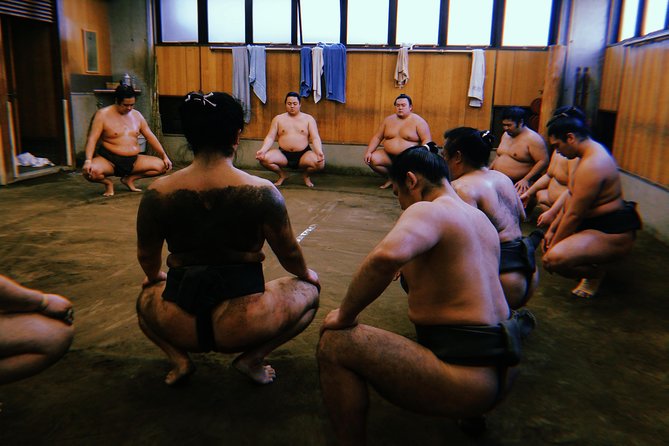
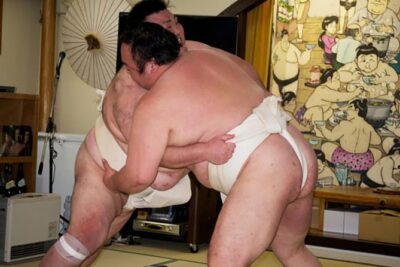
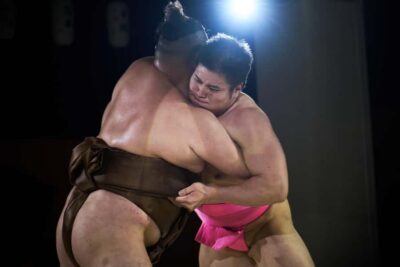
The wrestlers are not putting on a special show for your group. They are training for their own reasons, and that changes the mood. You may see quiet warm-ups, repeated exercises, intense pushing matches, and bouts that look surprisingly physical. One of the best parts of the experience is seeing how quickly the room can shift from calm and almost ceremonial to forceful and loud.
Several people who enjoyed this experience were surprised by how much real wrestling they saw. The session can include warm-ups and general exercises, but it may also include serious practice bouts. You are close enough to notice the wrestlers’ effort, concentration, and respect for the rules.
That closeness comes with responsibility. You are entering a place where wrestlers live and train, not an attraction designed around constant visitor comfort. Silence during practice is often required. Photography may be banned until the session ends, and the stable can impose rules about masks, sitting posture, movement, and where you may go.
I think this is the right setting for learning about sumo’s discipline. It also explains why the experience can feel less convenient than a normal sightseeing tour. The restrictions are not decorative. They protect the training environment.
More Sumo Experiences in Tokyo
- Tokyo: Sumo Show Experience with Chicken Hot Pot and a Photo
★ 4.8 · 6,678 reviews - Tokyo: Sumo Show and Dining Experience
★ 4.8 · 2,742 reviews - the SUMO show
★ 5.0 · 1,960 reviews
Meeting at JR Ryogoku Station East Exit
The tour begins at 8:00 a.m. at the JR Ryogoku Station East Exit. Look for your guide holding a red or orange MagicalTrip board. The listed meeting point is beneath the station tracks near Re.Ra.Ku Ryogoku Ekimae, at 1-chome 35 Yokoami, Sumida City.
Take the station warning seriously. Tokyo has two Ryogoku stations, and the meeting point is not at Ryogoku Station on the Toei Oedo Line. Going to the wrong station can create a stressful start, especially because the tour does not wait long.
I would arrive at least 15 minutes early. The instructions say that you can be refused entry if you are more than 15 minutes late after the designated meeting time, and there is no refund or rescheduling in that case. This is not the kind of activity where you can quietly catch up later. The group walks into the stable together, and a late arrival could interrupt the practice.
The meeting area is convenient for public transportation, but it may not be quiet. One person found the initial explanation difficult to hear because of passing cars and people near the station. If your guide is speaking outside, stay close and ask for clarification before leaving for the stable.
The walk through Ryogoku to a working stable
From the station, the guide walks with the group to whichever stable is available that day. The walk can take about five to 30 minutes, so the exact location is not fixed.
That uncertainty matters. You are not booking a visit to one named building with a guaranteed layout. Sumo stables control their schedules and access, and the operator may need to use a different stable based on training plans, tournament timing, and the wrestlers’ condition.
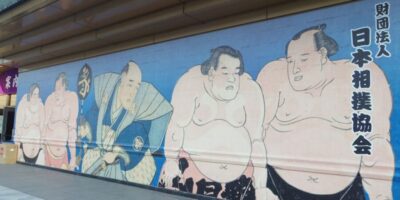
The walk is also a useful introduction to Ryogoku. This is Tokyo’s sumo neighborhood, and the guide may point out local landmarks or explain how the district connects to the sport. A short stop around Ryogoku Kokugikan is included, with roughly 10 minutes to look around the area.
Some tours have also included a short visit to Ekoin Temple, a place connected with memorial traditions. Since the published plan specifically promises a walk through Ryogoku and a stop around Ryogoku Kokugikan, treat any extra stop as a possible bonus, not a guarantee.
Inside the stable: quiet, close, and very real
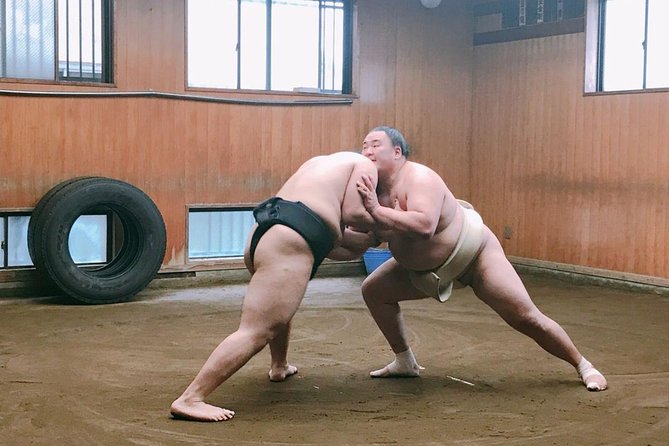
The central part of the experience lasts about 90 minutes, though practice may run longer. You enter with the guide, take a place in the permitted tatami area, and watch the training from close range.
The stable decides where the group sits. Seating is first come, first served, especially when several tour companies are present. If your group arrives late, you may be two or three rows back rather than near the front. You can still see the action, but the difference matters when you are hoping for an intimate view of the wrestlers.
Most stables do not offer chairs. You may sit on the floor for an hour and 20 minutes or longer, sometimes for the whole practice. If your knees, hips, or back do not tolerate floor seating well, this should be a serious part of your decision.
You may also be unable to use the toilet during practice. Go before the tour starts, even if you do not think you need to. Only the tatami areas are open to visitors, and other parts of the stable are off-limits.
The best approach is to treat the first part as observation rather than entertainment. Keep quiet. Follow the guide’s instructions. Do not wander around for a better angle. The rules can feel strict, but they are part of showing respect to the wrestlers and the stable.
A completely different kind of day out in Tokyo:
- Mt Fuji and Hakone 1-Day Bus Tour Return by Bullet Train
★ 5.0 · 26,383 reviews - 1-Day Tokyo Bus Tour
★ 5.0 · 14,250 reviews - Tokyo: TOKYO SKYTREE® Admission ticket
★ 4.5 · 11,192 reviews - Tokyo: teamLab Planets TOKYO Digital Art Museum Entry Ticket
★ 4.6 · 9,779 reviews
What you may learn about sumo life
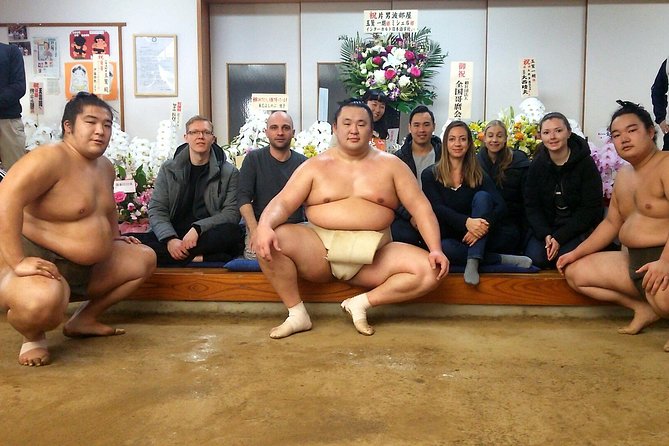
The quality of the explanation varies. Some guides have offered detailed background on the ranking system, the number of stables, training routines, daily life, hierarchy, hygiene, business side, and the path toward becoming a professional wrestler.
Mayu was praised for explaining sumo’s past and present. Masao helped explain stable life and the structure of the sport. Ayaka gave a clear introduction before the group walked to the stable, while Yumiko used written notes during practice to help explain what was happening without breaking the silence.
That last detail is especially useful. During training, the guide may not be able to speak freely. A guide who prepares you beforehand or writes short explanations can help you understand the action without disturbing the wrestlers.
Still, you should set reasonable expectations. The tour does not promise a full classroom lesson, printed briefing, or detailed explanation sheet. Some people received only a brief introduction and felt they needed more context about the origins of sumo and the wrestlers’ way of life.
I would read this as a culture visit with commentary, not a formal history seminar. If you already follow sumo, you may want to prepare a few questions in advance. If you know little about the sport, ask about ranking, stable organization, training routines, and the meaning of the rituals when the session ends.
Photography and the possible wrestler photo
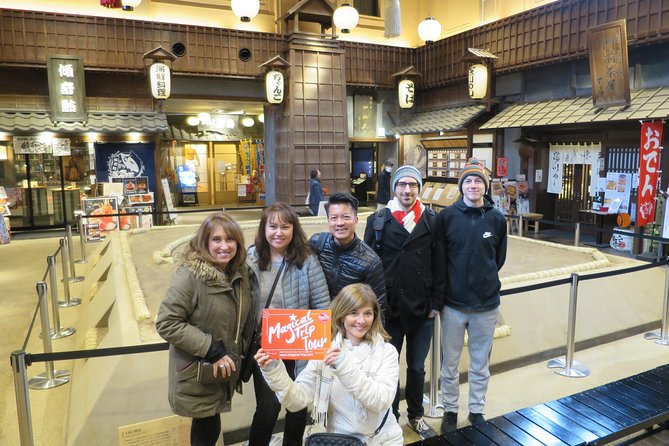
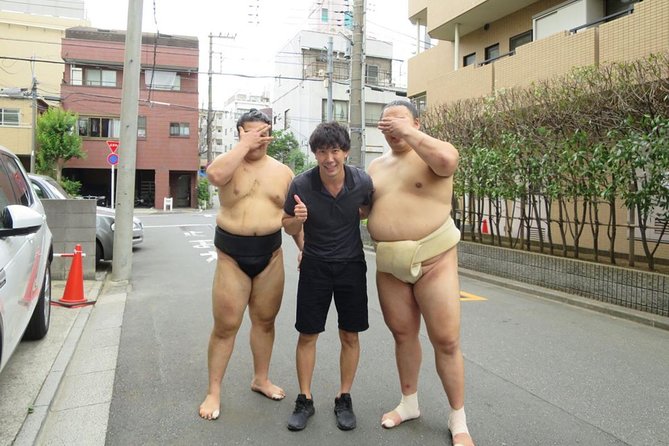
The title includes a photo shoot, but photos are not guaranteed. The stable has the final say on photography during practice and on posed photos with wrestlers afterward.
That means the experience can range from watching quietly with no practice photography to taking pictures during training and posing with wrestlers once practice ends. One of the most memorable versions includes friendly wrestlers answering questions and taking a group photo after the session.
Do not assume that a photo with a wrestler is part of every visit. The stable may refuse photography for any reason, and the operator cannot promise an alternative. The tour includes photos taken during the experience, but the exact photo arrangement depends on permission and conditions at the stable.
This is a place where you should put the camera away when asked. Some people have found that other visitors were allowed to photograph or behave differently, which can feel unfair when your group has been told to remain silent and follow stricter rules. The safest plan is to follow the instructions given to your group and view the photo opportunity as a bonus.
Ryogoku Kokugikan and the short neighborhood stop
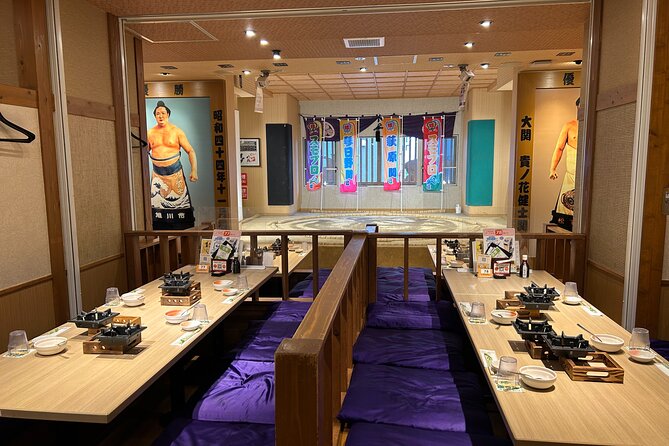
After practice, the guide walks with you around Ryogoku and toward Ryogoku Kokugikan. The stop is brief, about 10 minutes, so it is more of a local orientation than a full museum visit.
That short walk helps place the stable experience in context. Ryogoku is not simply a station near an arena. Sumo is part of the area’s identity, and the Kokugikan is the district’s best-known landmark.
The transition after practice should be made clear. One person became confused when the guide began walking away from the stable and did not explain that another stop was planned. Stay with the group until the guide confirms the final return to the station.
The tour ends back at the original meeting point. There is no lunch included, though one separate account described hot pot food at the end of that particular experience. Do not book this expecting a meal. The confirmed plan is the stable visit, the Ryogoku walk, and the return to the station.
Is $98.16 a good value?
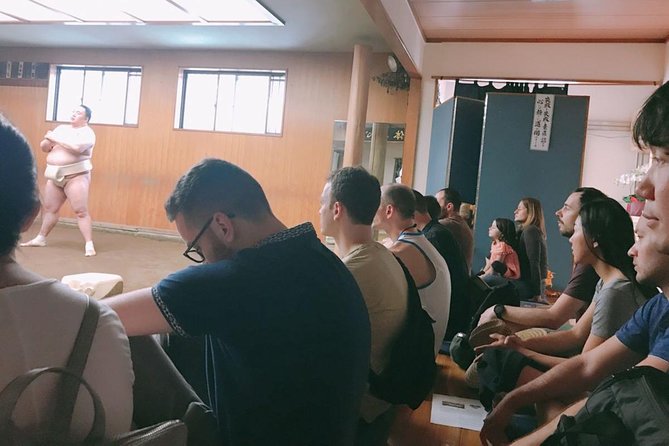
At $98.16, this is not the cheapest way to look at sumo. You are paying for access arranged through a local operator, a small group of no more than seven people, a guide, and help navigating a stable that can be difficult to visit without local assistance.
The value is strongest if you care about close access and cultural explanation. Watching actual practice from a few feet away can be a rare experience, even for people living in Japan. You are seeing the work that supports the public tournament, not just buying a seat in an arena.
The value is weaker if you mainly want a photo. A posed photo may not happen. The session may be shorter than expected, you may sit at the back, and the guide may provide only a short explanation. In those cases, the price can feel high for watching a practice that is also attended by people who arrange access directly.
The small group size helps. A maximum of seven makes it easier to hear the guide, ask questions, and avoid the feel of a large bus tour. It does not guarantee front-row seating, though. The stable’s own seating rules come first.
Weather, schedule changes, and cancellation rules
The stable can change its schedule at the last minute because of tournament plans or a wrestler’s condition. The practice can also be canceled. If the operator cancels because the training session changes or disappears, you are offered a full refund.
The terms also say the activity requires good weather. If poor weather causes cancellation, you are offered another date or a full refund. If you need to cancel yourself, do so at least 24 hours before the 8:00 a.m. start for a full refund. Changes or cancellations inside that 24-hour window are not accepted.
This flexibility is helpful, but the strict late-arrival rule remains. Give yourself extra time for the train, the correct station exit, and finding the meeting board.
For summer visits, bring water and wear a hat for the walk. Tokyo can be very hot and humid, and the morning may still become uncomfortable before you return to the station.
Who should book this sumo experience?
I would recommend it most strongly to:
- Sumo fans who want to see training rather than only tournament bouts.
- First-time visitors who want a close look at a traditional Japanese sport.
- People who enjoy quiet observation and do not need a constant stream of entertainment.
- Solo visitors, since the practice requires silence and does not depend on having a companion.
- Adults and older children, provided everyone in the group is at least 12.
I would think twice if you have difficulty sitting on the floor, need regular toilet access, or expect a fully scripted tour. Children under 12 cannot enter the stable, even if they are accompanied by an adult.
The experience also suits people who can accept uncertainty. The stable may change, photography may be refused, the seating may be poor, and the practice may end early or continue longer than planned. Those are not small details. They define the outing.
My recommendation: book it for access, not polish
I would book this tour if your main goal is to see sumo wrestlers training at close range in a real stable. The strongest parts are the physical intensity of the practice, the quiet respect of the setting, and the chance to understand the sport beyond a tournament crowd.
I would not book it solely for the photo shoot or a guaranteed front-row view. Ask yourself if you are comfortable sitting silently on the floor for around 90 minutes and accepting the stable’s rules. If yes, $98.16 can buy a rare look at the daily work behind Japan’s national sport. If you need comfort, flexibility, or a carefully produced show, spend your money on a tournament seat or a more conventional cultural tour instead.
FAQ
Where does the sumo morning practice tour meet?
The group meets at 8:00 a.m. at the JR Ryogoku Station East Exit, near Re.Ra.Ku Ryogoku Ekimae beneath the station tracks. The guide carries a red or orange MagicalTrip board.
Which Ryogoku station should I use?
Use JR Ryogoku Station. Do not go to Ryogoku Station on the Oedo Line, since it is a different station and not the meeting point.
How long does the experience last?
The activity lasts approximately two hours. The stable visit is scheduled for about 90 minutes, but practice can continue longer and may cause the tour to finish late.
Can children join the tour?
Only people aged 12 and over can enter the sumo stable. Children under 12 are not allowed inside and will be denied entry without a refund.
Will I be able to take photos of the wrestlers?
Photography depends on the stable’s rules that day. The stable may allow photos during practice, restrict them until afterward, or refuse photography altogether.
Can I take a photo with a sumo wrestler?
A posed photo with wrestlers may be possible after practice, but it is not guaranteed. The stable decides if those photos are allowed.
Do I need to sit on the floor?
You should expect to sit on the floor, often on tatami, because most stables do not provide chairs. You may remain seated for an hour and 20 minutes or longer.
What happens if the practice is canceled?
The stable can cancel or change practice because of its schedule or the wrestlers’ condition. If the operator cancels the booking, you receive a full refund. A cancellation caused by poor weather offers a different date or a full refund.
Just added around Tokyo
- Tokyo 6hr Instagram Highlights Private Tour with Licensed Guide★ 5.0 · 38 reviews
- Tokyo Small Group Tour with Guide★ 4.5 · 38 reviews
- Tokyo Sumo Experience with Live Show & Audience Challenge★ 5.0 · 38 reviews
- Japanese Food Cooking Class in Asakusa, Tokyo★ 5.0 · 39 reviews
- Very popular in Harajuku♡Animal petting zoo★ 4.6 · 39 reviews
- Ramen Making from Scratch with Tokyo Mom(Vegan Option Available)★ 5.0 · 39 reviews
- Tokyo JDM Night: 600hp C63s AMG Edition 1 (Private)★ 4.9 · 39 reviews
- Tokyo: Kimono Rental inside Shinjuku Gyoen National Garden★ 4.9 · 39 reviews
Sumo Experiences, compared.
Tokyo Shinjuku Sumo Show & Experience with Photo
Read our review →
Sumo Show & Experience w/ Optional Kimono & Hot Pot
Read our review →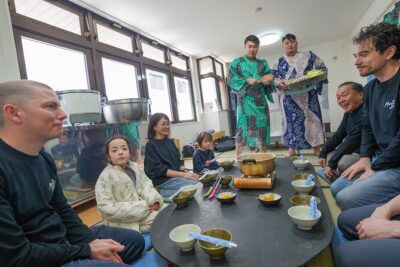
Authentic Sumo Experience in Tokyo: Enter the Sanctuary
Read our review →
Luxury Sumo Show Experience & Japanese cuisine & Drink
Read our review →Browse the lists this tour appears in