
Reviewed · SUMO EXPERIENCES
Tokyo Sumo Experience: Chanko & Mochi with a Former Pro
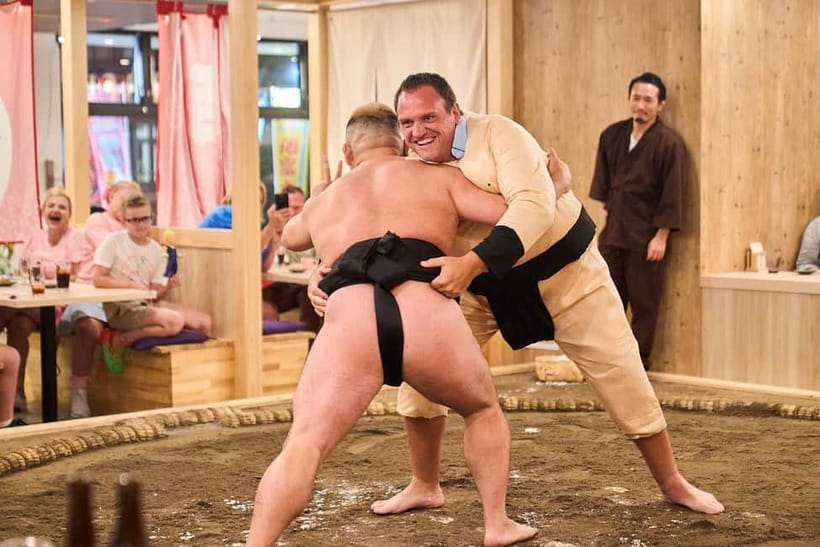
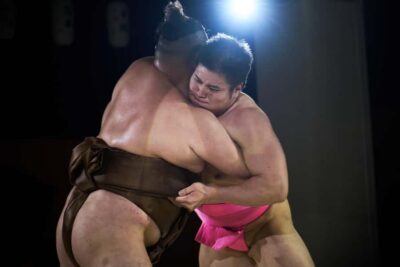
Sumo is much bigger up close. In Ryogoku, Tokyo’s sumo district, this two-hour experience brings former professionals onto the dohyo for demonstrations, simple lessons, and friendly wrestling matches. I like the close-up action and the chance to eat chanko nabe, the hearty hot pot associated with sumo stables. The main consideration is that this is an entertaining cultural show, not a serious morning training visit.
I also like how much you get to do for the $103 price. You can help pound mochi, learn basic sumo techniques, and step onto the ring yourself. The program works especially well for families because children and adults are encouraged to join in, though standard seating requires a separate reservation for every person, including a child sitting on a lap.
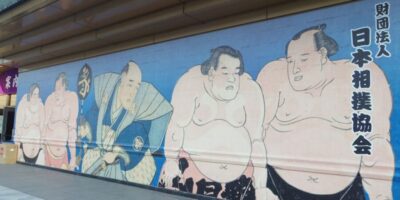
The venue is easy to reach from Ryogoku Station, but the sign and flags can still be easy to miss if you arrive in a hurry. Go a little early, look for the large sumo wrestler sign on the first floor, and wear clothes that let you move comfortably.
In This Review
- Key points at a glance
- Why Ryogoku is the right place for sumo
- Taking your seat around the dohyo
- Chanko nabe, the meal behind the wrestlers
- Watching former professionals demonstrate the sport
- Learning sumo techniques before you wrestle
- Stepping onto the dohyo with a wrestler
- Pounding mochi with the wrestlers
- What the two-hour schedule feels like
- Is $103 a fair price?
- Who should book this sumo experience?
- Should you book it?
- FAQ
- How long does the Tokyo sumo experience last?
- Where is the meeting point?
- Is the meal vegetarian, vegan, or gluten-free?
- Can halal meals be provided?
- Can children join the experience?
- Is this a serious sumo training tour?
Key points at a glance
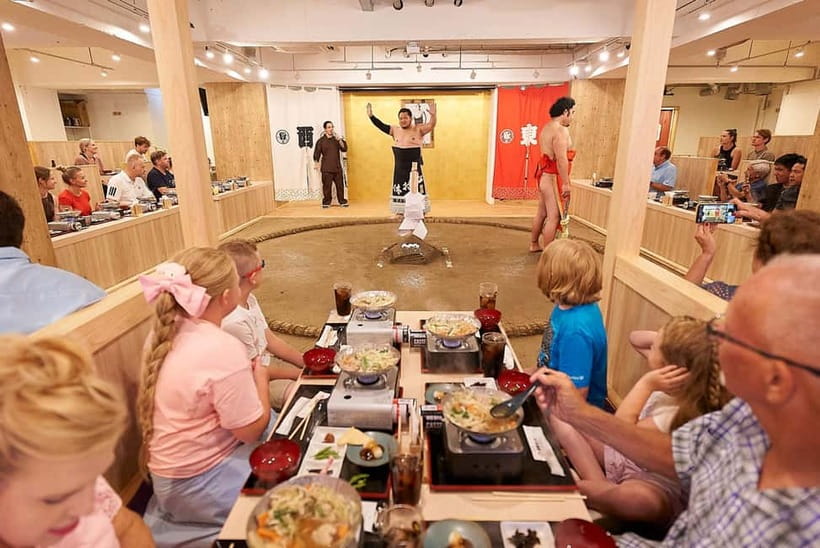
- Former professional wrestlers lead the action: You get demonstrations, explanations of training, and a chance to meet the wrestlers up close.
- Chanko nabe is part of the experience: The hot pot is prepared under the supervision of sumo wrestlers from an actual stable.
- You can enter the dohyo: Audience members may try sumo techniques and wrestle a professional in a controlled, playful match.
- Mochi making is hands-on: You can help pound rice into mochi, then eat the sweet result for dessert.
- Ryogoku makes a natural base: The venue is near Asakusa, Akihabara, Nihonbashi, and Tokyo Skytree.
- This is entertainment, not a training tour: It explains sumo and includes real demonstrations, but it is designed for fun and participation.
Why Ryogoku is the right place for sumo
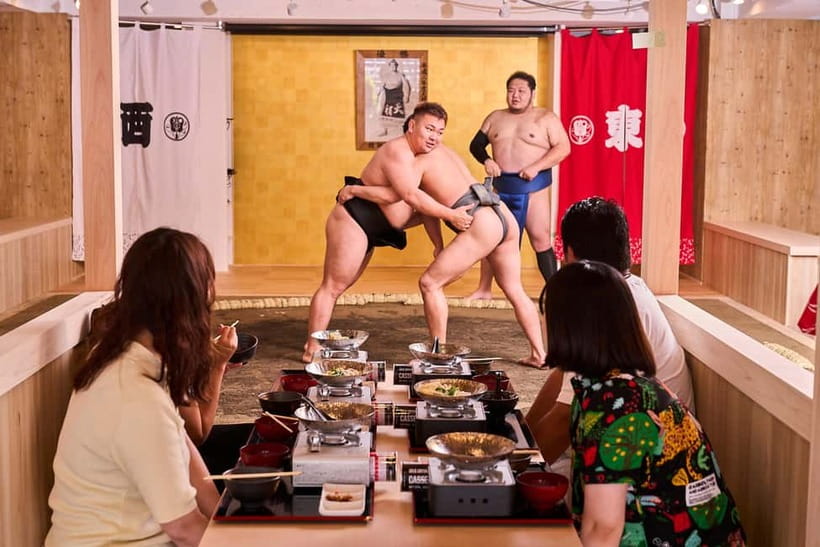
Ryogoku is the natural setting for this experience. It is widely known as Tokyo’s sumo district, so you are not being taken to a random theater for a generic cultural performance. The neighborhood around Ryogoku Station has long-standing links to sumo life, and the venue’s dohyo gives the activity a clear connection to the sport.
The meeting point is on the first floor, a short walk from Ryogoku Station. Look for the large sumo wrestler sign and the flags outside. One useful tip is to allow extra time to find the entrance. The building is close to the station, but the sign can be easier to miss than you might expect.
Ryogoku also fits neatly into a day of sightseeing. You can combine the experience with Asakusa, Akihabara, Nihonbashi, or Tokyo Skytree. Since the activity lasts two hours, it is long enough to feel substantial without taking over your day.
That location matters because sumo can otherwise be hard to fit into a Tokyo visit. Tournament tickets are limited and morning training visits can require strict etiquette, advance planning, or early starts. This program gives you a simpler way to understand the sport and meet wrestlers, particularly when no tournament is taking place.
More Sumo Experiences in Tokyo
- Tokyo: Sumo Show Experience with Chicken Hot Pot and a Photo
★ 4.8 · 6,678 reviews - Tokyo: Sumo Show and Dining Experience
★ 4.8 · 2,742 reviews - the SUMO show
★ 5.0 · 1,960 reviews
Taking your seat around the dohyo
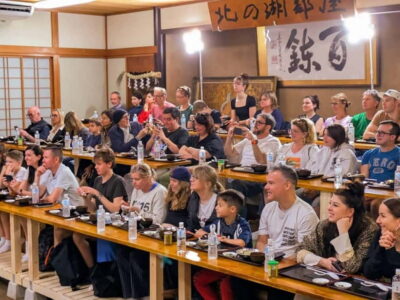
When you arrive, you settle into a seat around the dohyo, the raised sumo ring. The arrangement places the action close to you, and the small distance helps you notice the force of each movement. Sumo looks slow on television at times, but the sudden shove, stomp, and clash are much more impressive from nearby.
Your seat is assigned by the venue. You cannot choose a particular place or request a preferred section, so keep that in mind if you are planning a special view or hoping to sit beside another booking. The assigned seating keeps the room organized, but it removes some control from you.
Families should pay close attention to the seating rules. In standard seats, holding a child on your lap is considered unsafe, so you need to reserve a place for every person. Box seats are safer for this purpose and can hold up to six people. A child may sit on an adult’s lap in a box seat.
The format is friendly and social rather than formal. An MC helps explain what is happening, keeps the pace moving, and invites people to take part. The tone is lively, with plenty of laughter, but the demonstrations also provide useful information about sumo training, technique, food, and daily life.
Chanko nabe, the meal behind the wrestlers
The meal is not an afterthought. Chanko nabe is a hot pot closely linked with sumo stables, where it is used as a filling group meal. Here, the dish is supervised by wrestlers from an actual stable, giving you a direct connection to the food culture of sumo.
You can expect a warm, satisfying meal rather than a small tasting plate. The dish contains fresh ingredients and has been praised for being both delicious and filling. One useful point for families is that even a six-year-old was reported to enjoy it, so the meal is not aimed only at adventurous adult eaters.
The food also helps explain the sport. Sumo is not just about oversized athletes stepping into a ring. Training, rest, and diet are all part of the wrestler’s life, and chanko nabe gives you a simple, practical example of that diet. You learn through eating rather than through a long lecture.
Vegetarian, vegan, and gluten-free meals can be arranged if you request them at least two days before your booking date. Halal meals cannot be provided, but you may bring your own food. If you have allergies, dietary restrictions, or an alcohol allergy, ask about every drink and side item in advance. One person specifically could not drink the complimentary sour plum drink because of an alcohol allergy.
Watching former professionals demonstrate the sport
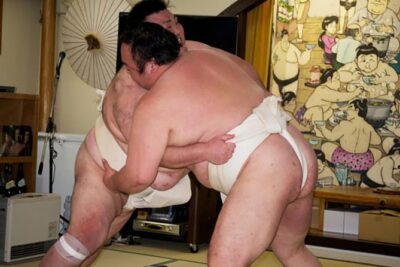
The strongest part of the program is the demonstration. Former professionals show you how sumo works at close range, including basic techniques and examples of training. You may see several rounds of wrestling, and some sessions include four different rounds.
This is not a full tournament. You will not get the long ceremony, strict silence, or competitive tension of a professional basho. Instead, the wrestlers and MC explain what you are seeing and keep the mood open to children, first-time visitors, and people who know little about sumo.
That trade-off is worth understanding before you book. If you want to observe serious morning practice, this is not the right choice. If you want to learn the basics, laugh with the performers, and see the sport from a few feet away, the format makes good sense.
I like that the demonstrations are not limited to a single bout. The program gives you several ways to understand sumo: watching the movements, hearing about training and technique, seeing the wrestlers compete, and then trying some of it yourself.
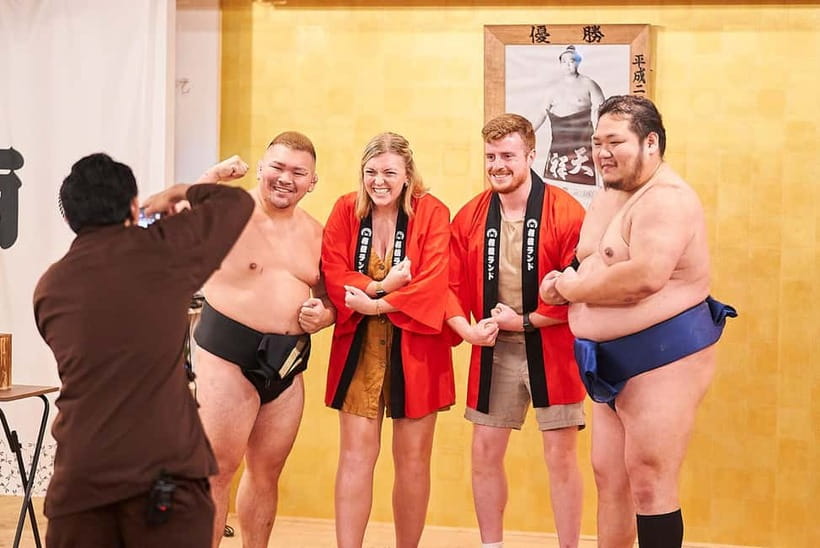
The former professionals are also central to the mood. The wrestlers are described as friendly and encouraging, and the best parts of the experience come from their willingness to interact with the audience. You get photo opportunities, but the personal contact matters more than simply posing beside a large athlete.
A completely different kind of day out in Tokyo:
- Mt Fuji and Hakone 1-Day Bus Tour Return by Bullet Train
★ 5.0 · 26,383 reviews - 1-Day Tokyo Bus Tour
★ 5.0 · 14,250 reviews - Tokyo: TOKYO SKYTREE® Admission ticket
★ 4.5 · 11,192 reviews - Tokyo: teamLab Planets TOKYO Digital Art Museum Entry Ticket
★ 4.6 · 9,779 reviews
Learning sumo techniques before you wrestle
Before you step into the ring, the program introduces simple sumo techniques. This is valuable because the sport is not just a test of size. Balance, footwork, timing, and pushing technique all matter, and the demonstrations give you a basic sense of how a bout works.
The instruction is designed for beginners. You do not need previous experience, and you can watch instead of participating if you prefer. Still, I would encourage you to join in if you feel comfortable. The people who take part often describe the experience as the funniest and most memorable part of the session.
The activity is controlled and intended for both adults and children. That does not mean you should treat it like a rough contact sport. Follow the staff’s directions, wear comfortable clothes, and be honest about your physical limits.
Comfortable clothing is listed as an essential item, and that advice is practical. Even a short turn on the dohyo can involve crouching, pushing, or getting down low. You should also bring a camera, since the demonstrations and participation create better photos than a standard seated show.
Stepping onto the dohyo with a wrestler
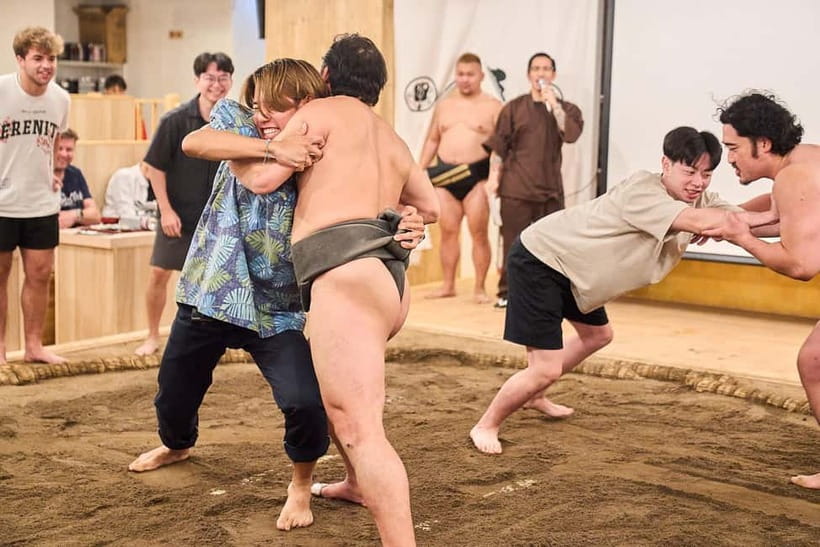
The chance to wrestle with a professional makes this more than a performance. You step onto the dohyo and try your strength against a wrestler, usually in a playful, carefully managed encounter. It is not intended to be a real contest, and the wrestler controls the pace.
Adults often enjoy the absurdity of trying to move someone who seems built from solid wood. Children get a different kind of thrill from entering the same ring they have just seen used for demonstrations. The staff encourages participation without forcing anyone to take a turn.
The audience involvement is broad. You can watch, cheer, take photos, help with mochi, learn techniques, and wrestle if you choose. That gives the two hours a good rhythm and prevents the event from feeling like a lecture with dinner attached.
One honest warning: the wrestling portion may not appeal to everyone. If you dislike public participation, you can still enjoy the food and demonstrations, but you may feel that part of the program is too theatrical. The experience is built around interaction, so it is best for people who are willing to join the fun, at least a little.
Pounding mochi with the wrestlers
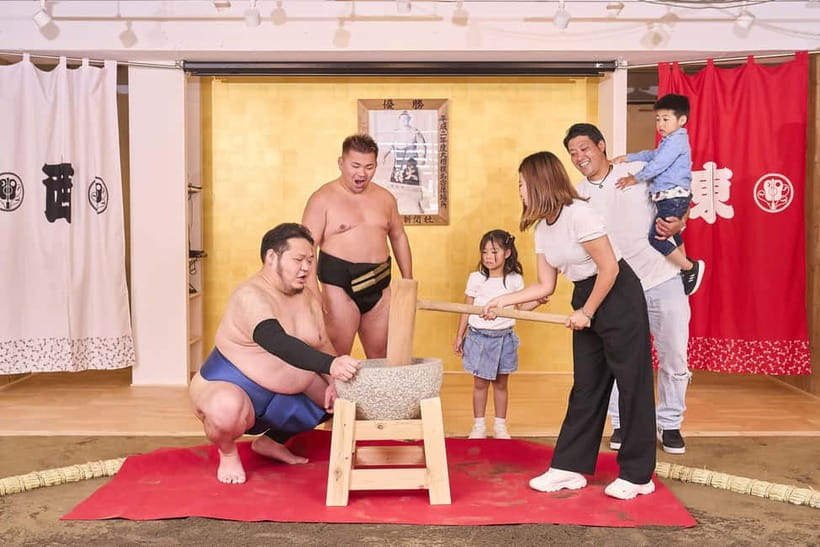
The mochi activity adds a second traditional element to the meal. You watch a mochi pounding demonstration, learn about the process, and then get a chance to pound the rice yourself with the wrestlers.
Mochi starts with cooked glutinous rice that is repeatedly pounded until it becomes smooth and sticky. The rhythm and teamwork are part of the appeal. One person handles the mallet while another turns or works with the rice, so the demonstration requires attention as well as strength.
You then eat sweet mochi for dessert. The contrast with the savory chanko nabe works well, and the activity gives children a clear task they can understand. Several participants have singled out mochi pounding as their favorite part, which is not surprising: it is noisy, visual, and easy to remember.
As with the sumo match, the staff manages the activity. You are not left to guess when to swing or where to stand. Listen carefully, keep your hands clear, and follow the instructions. The demonstration is entertaining, but it also shows how a familiar Japanese sweet is made.
What the two-hour schedule feels like
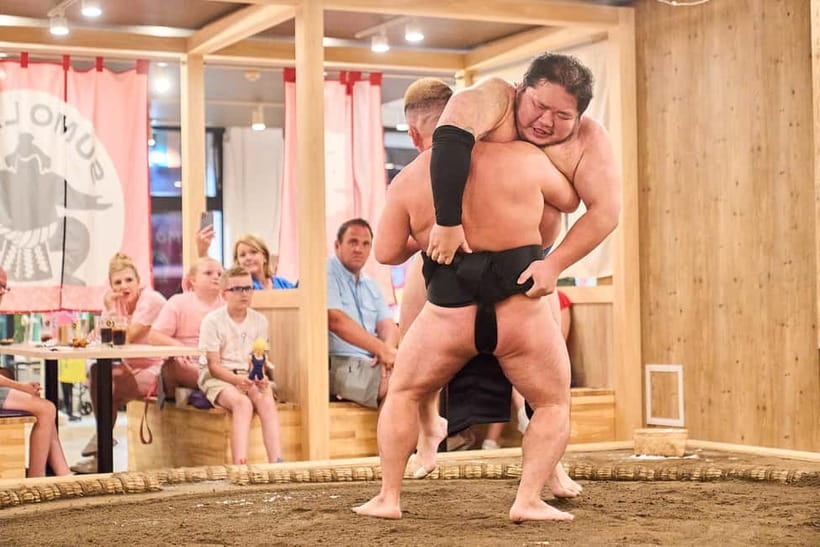
The exact running order can vary, but the experience brings together four main pieces: the sumo demonstration, chanko nabe, mochi making, and audience participation in sumo. That combination gives you more variety than a short stage show.
You may spend part of the time eating while the wrestlers perform nearby, then shift into hands-on activities. The MC connects the sections and explains sumo culture, training, techniques, and the wrestlers’ lifestyle. That variety is why the session works for mixed-age groups.
The two-hour length is a good middle ground. It is long enough to include a proper meal and several activities, but short enough to pair with another Tokyo stop. If you book it after sightseeing in Asakusa or near Tokyo Skytree, allow time for transit and finding the entrance rather than arriving at the last minute.
The current score is 4.8 out of 5 from 567 ratings, and the praise focuses on the same practical strengths: friendly wrestlers, good food, active participation, clear explanations, and a clean, well-run venue. The consistent enthusiasm suggests that the format delivers what it promises, though it does not change the fact that the show is staged for entertainment.
Is $103 a fair price?
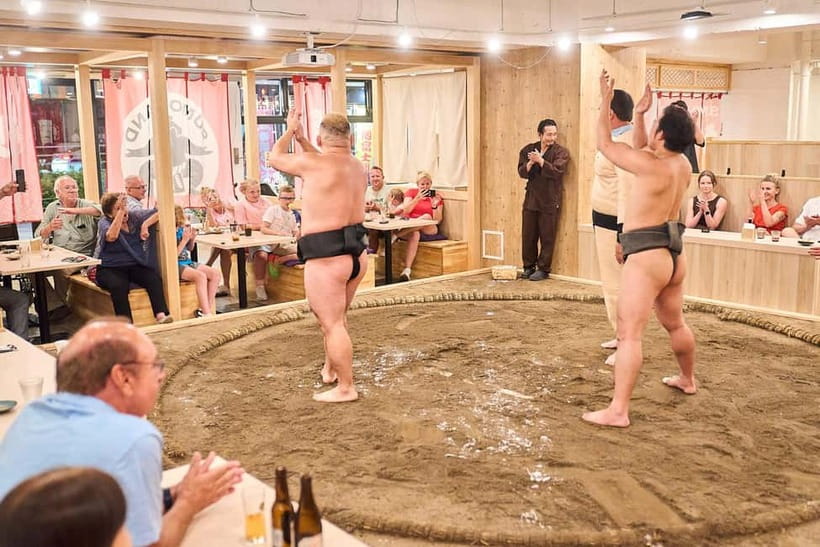
At $103 per person, this is not a budget meal. You are paying for more than chanko nabe, though. The price covers a two-hour cultural program, former professional wrestlers, demonstrations, an organized meal, mochi making, and the chance to enter the dohyo.
I see the value most clearly for families and small groups. Everyone can choose a role, and the activity creates shared memories instead of leaving one person watching while others eat. The food is also reported to be better and more filling than expected, which strengthens the overall value.
Solo visitors and couples should ask themselves how much they enjoy audience participation. If you want a quiet meal or a serious sports event, $103 may feel high. If you want a compact Tokyo activity that combines food, culture, comedy, and direct contact with performers, the price is easier to justify.
The experience also offers value during the off-season. You do not need to plan your visit around a tournament to see sumo up close. That flexibility can save you from building an entire Tokyo schedule around limited match dates.
Who should book this sumo experience?
I would recommend it most strongly to families with school-age children, first-time visitors to Japan, and anyone curious about sumo but unsure how to attend a tournament. The mix of food, demonstration, and participation keeps the activity accessible.
It also suits groups looking for something different from temples, shopping, and observation decks. The experience gives you a shared story to talk about later, especially if one member of your group ends up being pushed around the dohyo.
You should think twice if you use a wheelchair, since the activity is not suitable for wheelchair users. You should also consider your comfort with assigned seating, audience participation, and physical activity.
English and Japanese are available, so English-speaking visitors can follow the explanations. Smoking is not allowed, and comfortable clothes are the sensible choice.
Cancellation is flexible: you can cancel up to 24 hours before the activity for a full refund. You can also reserve now and pay later, which helps if your Tokyo schedule is still shifting.
Should you book it?
Book this experience if you want friendly, hands-on sumo rather than a formal tournament or serious training visit. The strongest reasons are the close demonstrations, the wrestler-supervised chanko nabe, the mochi pounding, and the chance to step onto the dohyo.
I would skip it only if you want a quiet meal, dislike participation, need wheelchair access, or expect authentic morning practice. For everyone else, especially families and first-time visitors, this is a lively and well-priced way to connect sumo with everyday Japanese food and tradition.
FAQ
How long does the Tokyo sumo experience last?
The experience lasts two hours. Starting times vary, so check availability for the date you want.
Where is the meeting point?
The venue is on the first floor, a short walk from Ryogoku Station. Look for the large sumo wrestler sign and flags.
Is the meal vegetarian, vegan, or gluten-free?
Vegetarian, vegan, and gluten-free meals can be provided if you request them at least two days before the reservation date.
Can halal meals be provided?
Halal meals cannot be provided. You may bring your own food.
Can children join the experience?
Yes. The activity is designed for adults and children. In standard seats, you must reserve a place for every person because holding a child on your lap is considered unsafe. Box seats can seat up to six people and allow a child to sit on an adult’s lap.
Is this a serious sumo training tour?
No. It is an entertaining sumo experience with demonstrations, explanations, audience participation, mochi making, and wrestling activities. It is different from a serious morning training tour.
Just added around Tokyo
- Tokyo 6hr Instagram Highlights Private Tour with Licensed Guide★ 5.0 · 38 reviews
- Tokyo Small Group Tour with Guide★ 4.5 · 38 reviews
- Tokyo Sumo Experience with Live Show & Audience Challenge★ 5.0 · 38 reviews
- Japanese Food Cooking Class in Asakusa, Tokyo★ 5.0 · 39 reviews
- Very popular in Harajuku♡Animal petting zoo★ 4.6 · 39 reviews
- Ramen Making from Scratch with Tokyo Mom(Vegan Option Available)★ 5.0 · 39 reviews
- Tokyo JDM Night: 600hp C63s AMG Edition 1 (Private)★ 4.9 · 39 reviews
- Tokyo: Kimono Rental inside Shinjuku Gyoen National Garden★ 4.9 · 39 reviews
Sumo Experiences, compared.
Tokyo Shinjuku Sumo Show & Experience with Photo
Read our review →
Sumo Show & Experience w/ Optional Kimono & Hot Pot
Read our review →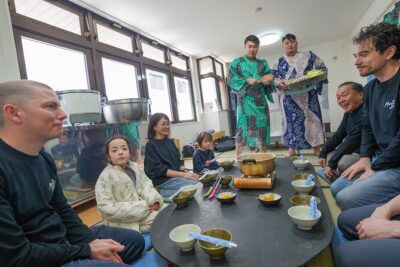
Authentic Sumo Experience in Tokyo: Enter the Sanctuary
Read our review →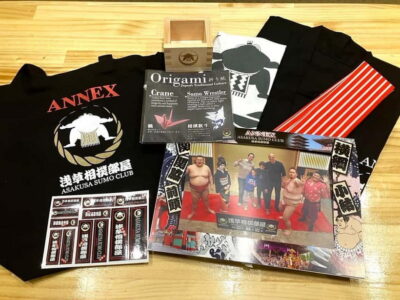
Luxury Sumo Show Experience & Japanese cuisine & Drink
Read our review →Browse the lists this tour appears in