
Reviewed · SUMO EXPERIENCES
Tokyo Sumo Morning Practice Tour at Stable
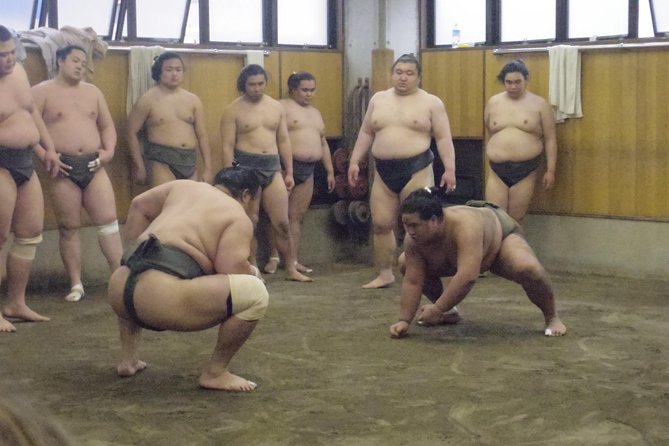
The ring is sacred, and you watch in silence. This early-morning visit to a working sumo stable gives you a close look at wrestlers training without the ceremony and ticket cost of a full tournament. I especially like the authentic setting and the chance to see repeated practice bouts from only a short distance away. The main drawback is that the commentary headset can be hard to hear, and sitting on the floor or a low stool may not suit everyone.
You meet near Ryogoku Station at 7:45 a.m., then walk or take a short train ride to one of Tokyo’s active stables. The experience lasts about two hours and usually includes roughly 90 minutes of practice. It costs $83.57 per person, which is a fair price if you value access to a real training room, but it can feel high if you expect a polished show with constant explanation and a long photo session.
The tour has earned a 4.8 rating from 298 ratings, with 96 percent recommending it. That fits the experience well: it is exciting, unusual, and often moving, but you must follow strict rules, accept a very early start, and understand that the stable controls the schedule.
In This Review
- Key points to know before booking
- Why a training stable can beat a tournament
- Starting at Ryogoku Station at 7:45 a.m.
- Entering the stable and taking your seat
- Watching the wrestlers train for about 90 minutes
- How the English commentary helps, and where it falls short
- The short photo opportunity at the end
- Heat, clothing, and practical comfort
- Is $83.57 a good value?
- Who will enjoy this morning most?
- Booking, cancellation, and final advice
- Should you book the Tokyo Sumo Morning Practice Tour?
- FAQ
- Where does the Tokyo Sumo Morning Practice Tour begin?
- How long does the experience last?
- Can children join the tour?
- Are photographs allowed inside the stable?
- Can I eat or drink inside the stable?
- Can I leave during practice?
- What is the cancellation policy?
Key points to know before booking
- Watch real morning practice: You see professional wrestlers carry out their daily training in a working sumo stable, not a staged dinner performance.
- Arrive early for better seats: The front row may be reserved for sponsors or other special visitors, but arriving early can help you claim a second-row position.
- Expect close views: The practice area is small, and even seats farther back can provide a clear look at the wrestlers.
- Use the guide as your interpreter: English commentary explains sumo traditions, rankings, training, rituals, and the tournament calendar.
- Plan for heat and silence: There is no air conditioning, and you must watch quietly without video, flash, food, or casual movement.
- Allow for schedule changes: Practice can run shorter or longer depending on what the stable is doing that morning.
Why a training stable can beat a tournament
A formal sumo tournament is a major Japanese sporting event, complete with entrance ceremonies, rituals, rankings, and bouts spread across an entire day. It is exciting, but the action is broken up by introductions and formal pauses.
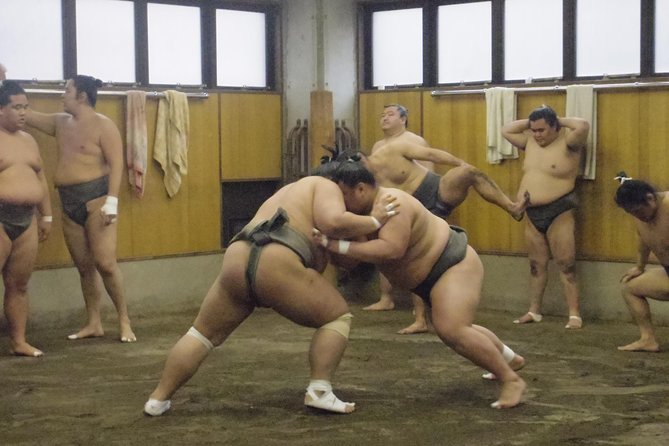
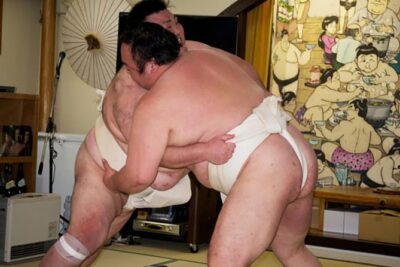
At a stable, you see the work behind the public spectacle. Wrestlers repeat drills, stretch, practice throws, and face one another again and again. You may watch dozens of exchanges in a morning, with little wasted time between them. The action can feel rough, repetitive, and intensely physical because this is training, not entertainment made for an audience.
That difference gives the tour its value. You are not simply watching large athletes collide. You are seeing how they prepare for the six annual Grand Tournaments, each lasting 15 days. Three take place in Tokyo, while Osaka, Nagoya, and Fukuoka each host one.
The visit also helps explain why sumo is more than a sport. Its roots reach back at least 1,500 years, and its rituals remain tied to Shinto traditions. The salt, the ring, the gestures, and the careful conduct all carry meaning. You gain much more from the practice once you understand that the ring is a sacred place, not just a patch of sand.
More Sumo Experiences in Tokyo
- Tokyo: Sumo Show Experience with Chicken Hot Pot and a Photo
★ 4.8 · 6,678 reviews - Tokyo: Sumo Show and Dining Experience
★ 4.8 · 2,742 reviews - the SUMO show
★ 5.0 · 1,960 reviews
Starting at Ryogoku Station at 7:45 a.m.
The morning begins at Ryogoku Station Gallery or another specified meeting point, depending on the option you book. Your confirmation email is important here, since the meeting location can vary.
Ryogoku is Tokyo’s sumo district, so the setting already puts you in the right frame of mind. You meet the guide, receive an introduction to the sport, and learn what behavior is expected inside the stable. The guide then leads the group to the training location. In some cases, the group takes a train after meeting.
The station meeting is practical, but you should build in extra time. One person had trouble finding the location because Google Maps placed it about a block away. Another group experienced confusion when no representative appeared at the station and chose to walk directly to the stable. They still arrived in time, but this is a good reason to check the confirmation instructions carefully and keep the guide’s contact details available.
The group can include up to 20 people. That is not a private visit, but it is still a fairly small audience compared with a tournament arena. Once inside, the guide helps everyone settle into the viewing area without disturbing practice.
Entering the stable and taking your seat
The stable is a working place, not a visitor center. That is part of the appeal, but it also means comfort and access come second to the wrestlers’ routine.
Seating can be on low stools or on the floor, depending on the stable and the arrangement that day. One account praised the stools as comfortable, while the tour information warns you to use the restroom before arriving. Once practice begins, leaving in the middle is strongly discouraged. If you exit, you cannot re-enter.
You also need to sit in a respectful position. Do not stretch your legs toward the ring, since showing the soles of your feet to the wrestlers is considered rude. Never step onto the ring or sandy area. The ring is sacred, and the stable is not a place for wandering around to improve your camera angle.
The best seating may go to sponsors or other invited people. For a better chance at a clear view, arrive early and line up promptly. A second-row spot can be excellent, and the viewing area is close enough that even people who are not in front may see the training clearly.
Watching the wrestlers train for about 90 minutes
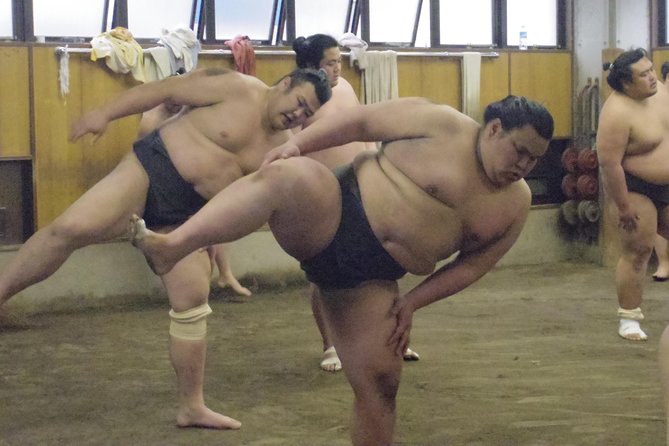
The heart of the visit is the practice itself. You watch the wrestlers complete their training routine, including warmups, exercises, sparring, and repeated bouts. The pace and length depend on the stable’s schedule, so the session may be a little shorter or longer than two hours overall.
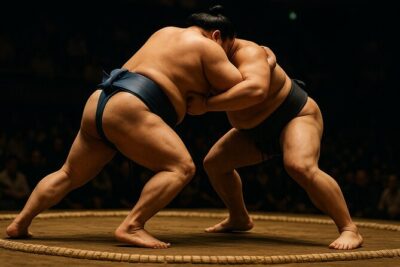
The first impression is physical. Sumo wrestlers are imposing, but the power you see is not only about size. They work on balance, footwork, timing, stamina, and the ability to drive another person from the ring. Close up, the sounds, movement, and effort make the training feel far more serious than a quick television clip.
The practice may include younger or less experienced wrestlers, followed by more seasoned athletes. One especially fortunate visit became longer and more intense when a sponsor of the stable arrived. That kind of variation is possible because you are observing a real practice session rather than a fixed performance.
This unpredictability is both a strength and a limitation. You might see a long series of hard-fought exchanges, or you might find that the stable finishes sooner than expected. You cannot select the wrestlers, request a certain move, or ask them to pose during practice. Your job is to sit quietly and let the training unfold.
Cellphones must be silent. Photos are allowed only without flash or shutter sounds, and videos are not permitted. You should also avoid sudden movement, conversation, or anything that might break a wrestler’s concentration. These rules may feel strict, but they protect the focus of the athletes and keep the visit from becoming a noisy tourist show.
A completely different kind of day out in Tokyo:
- Mt Fuji and Hakone 1-Day Bus Tour Return by Bullet Train
★ 5.0 · 26,383 reviews - 1-Day Tokyo Bus Tour
★ 5.0 · 14,250 reviews - Tokyo: TOKYO SKYTREE® Admission ticket
★ 4.5 · 11,192 reviews - Tokyo: teamLab Planets TOKYO Digital Art Museum Entry Ticket
★ 4.6 · 9,779 reviews
How the English commentary helps, and where it falls short
The guide provides explanations through a headset, often while you watch the practice. This can be very useful if you know little about sumo. You may learn about the ranking system, wrestler life, Shinto connections, tournament locations, and the meaning behind what you see.
Guides named in praise include Seiji, Yumi, Noriko, Nobu, Cameo, and others. The strongest guides do more than recite facts. They point out what is happening, explain the wrestlers’ roles, and help you understand why a particular exchange matters. Cameo, for example, was praised for giving a careful explanation before practice and holding a question-and-answer session afterward. Noriko was noted for clear instructions and easy explanations.
The audio system is not perfect. Several people found the headsets difficult to hear, with static or weak sound. One thoughtful criticism was that a continuous stream of commentary can compete with the spectacle itself. It is hard to watch a fast exchange and listen to a long explanation at the same time.
I would treat the headset as a useful guide, not as the main event. Listen during slower moments, then focus on the ring when the action intensifies. If you have a chance to ask questions afterward, save the points you want clarified until then. The tour would benefit from a short handout or written introduction, but you should not count on receiving one unless your booking details say so.
The short photo opportunity at the end
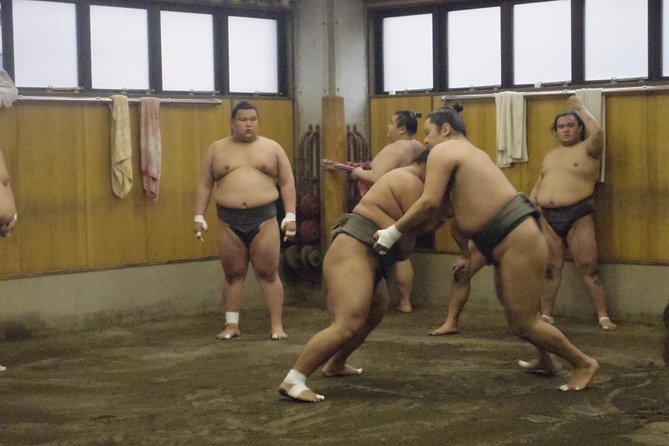
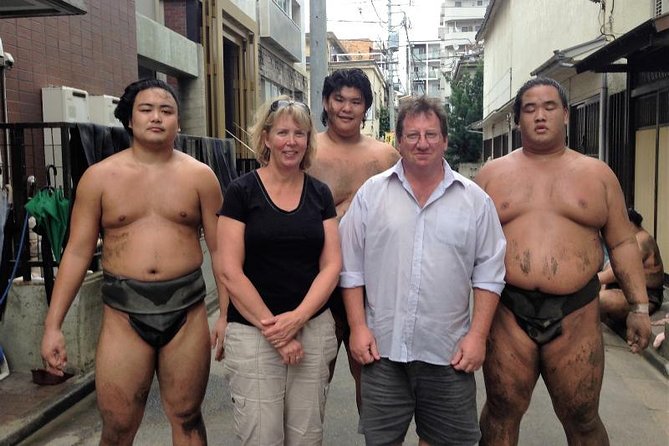
Some visits finish with a chance to take photographs with wrestlers. This is a memorable extra, especially after watching the athletes work at close range. A few groups were able to pose with two wrestlers, while other accounts describe a photo period of around five minutes or less.
Keep your expectations modest. The photo opportunity is not guaranteed to be long, and you may be moved along quickly so the stable can return to its normal routine. You cannot ask for photographs while practice is still in progress. Follow the guide’s instructions, and never treat the wrestlers as performers who are available on demand.
There are also privacy and image-rights rules. Unauthorized use of photographs is strictly prohibited. Take pictures only as permitted, and ask before sharing or using them for anything beyond personal memories.
Heat, clothing, and practical comfort
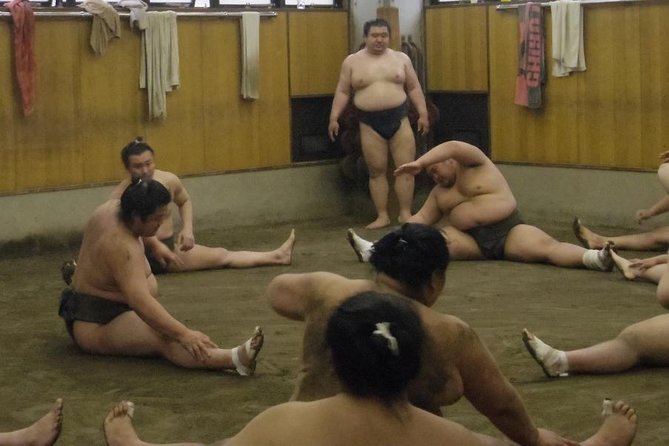
Tokyo can be extremely hot in summer, and the stable has no air conditioning. This is one of the most important details to take seriously. Bring water or a sports drink during the summer months, when drinking inside the stable is allowed, and consider packing an ice pack or cold towel.
Eating is not allowed. Sunglasses and hats must be removed inside. Wear light, comfortable clothing, but also choose something suitable for sitting quietly in a confined space for an extended period.
If you feel unwell, do not join the tour. Heat, an early start, and stillness can be tiring, especially during summer. The restroom warning is practical: use one before you reach the stable because you may not be able to leave without disrupting the session.
Children must be at least 12 years old. Kids 11 and under cannot enter the stable, so this is not a good choice for families with younger children. Older children who can sit silently and follow instructions may find it fascinating.
Is $83.57 a good value?
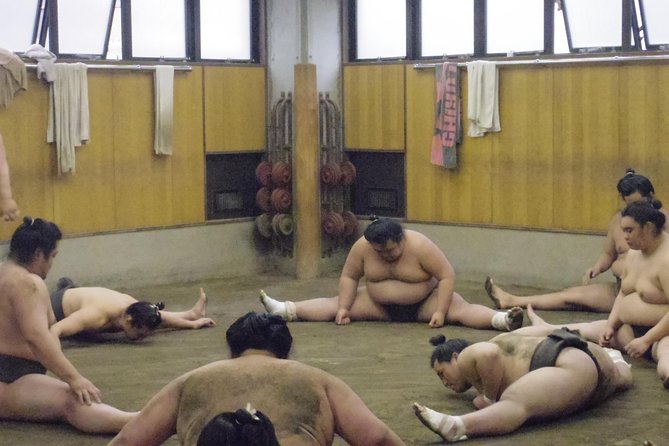
At $83.57, this is not a bargain activity, but it offers something you cannot easily arrange on your own: entry to an active sumo stable with guidance in English.
The price makes more sense if you are visiting outside one of the six tournament periods, if tournament tickets are sold out, or if you want to understand how wrestlers train rather than only watch official bouts. You are paying for access, translation, coordination, and the chance to sit close to a part of Japanese culture that is normally difficult for outsiders to enter.
The value is weaker if you expect a polished stage show, a guaranteed length of practice, or a lengthy personal meeting with wrestlers. You may also feel disappointed if poor headset sound prevents you from following the explanations.
For many people, the access alone justifies the price. You see real training, not a demonstration made for tourists. A Japanese taxi driver reportedly recognized the stable as legitimate after seeing a photograph, which says something about how uncommon this kind of visit can be.
Who will enjoy this morning most?
I would recommend the tour to anyone with an interest in Japanese culture, traditional sports, or the daily discipline behind public competition. It is especially helpful if you know little about sumo, since the guide gives you enough background to make the practice understandable.
It also suits repeat visitors to Tokyo who want something beyond temples, shopping districts, and observation decks. The experience feels local because the stable is still operating on its own terms.
You should think twice if you dislike early mornings, hot indoor spaces, floor-level seating, silence, or fixed rules. It is also a poor fit if you need to leave at a precise time, since practice can vary and exiting halfway is discouraged.
Booking, cancellation, and final advice
Confirmation arrives when you book, and you can cancel for a full refund up to 24 hours before the local start time. Changes or cancellations within 24 hours are not accepted for a refund.
Check the meeting point in your confirmation email, arrive early, use the restroom first, and keep your phone silent. Do not bring expectations of a theatrical event. Bring patience, respect, and a willingness to watch people work.
Should you book the Tokyo Sumo Morning Practice Tour?
Book it if you want real sumo training at close range, not a themed performance. The intense practice, small viewing area, and strong guides can give you a much better feel for the sport than a quick visit to a museum or a staged dinner show.
I would book this for a first Tokyo visit, especially if you cannot attend a Grand Tournament. Just accept the tradeoffs: early arrival, uncertain practice length, limited photography, possible headset problems, and no air conditioning in summer. If those conditions sound manageable, this is one of the most memorable ways to see how sumo wrestlers prepare for the ring.
FAQ
Where does the Tokyo Sumo Morning Practice Tour begin?
The standard meeting point is near Ryogoku Station at 7:45 a.m. The exact location can differ depending on the option you book, so check your confirmation email carefully.
How long does the experience last?
The tour lasts about two hours. The stable visit includes approximately 90 minutes of practice, but the session may be shorter or longer depending on the training schedule.
Can children join the tour?
The minimum age is 12. Children aged 11 and under cannot enter the sumo stable.
Are photographs allowed inside the stable?
Yes, photographs are allowed without flash or shutter sounds. Videos are not allowed, and unauthorized use of photographs is strictly prohibited.
Can I eat or drink inside the stable?
Eating and drinking are generally not allowed. During the summer months, water and sports drinks are permitted because the stable has no air conditioning.
Can I leave during practice?
You should make every effort to stay until practice ends. Once you leave the stable, you cannot re-enter.
What is the cancellation policy?
You can cancel at least 24 hours before the experience start time for a full refund. Cancellations or changes made less than 24 hours before the start time are not accepted for a refund.
Just added around Tokyo
- Tokyo 6hr Instagram Highlights Private Tour with Licensed Guide★ 5.0 · 38 reviews
- Tokyo Small Group Tour with Guide★ 4.5 · 38 reviews
- Tokyo Sumo Experience with Live Show & Audience Challenge★ 5.0 · 38 reviews
- Japanese Food Cooking Class in Asakusa, Tokyo★ 5.0 · 39 reviews
- Very popular in Harajuku♡Animal petting zoo★ 4.6 · 39 reviews
- Ramen Making from Scratch with Tokyo Mom(Vegan Option Available)★ 5.0 · 39 reviews
- Tokyo JDM Night: 600hp C63s AMG Edition 1 (Private)★ 4.9 · 39 reviews
- Tokyo: Kimono Rental inside Shinjuku Gyoen National Garden★ 4.9 · 39 reviews
Sumo Experiences, compared.
Tokyo Shinjuku Sumo Show & Experience with Photo
Read our review →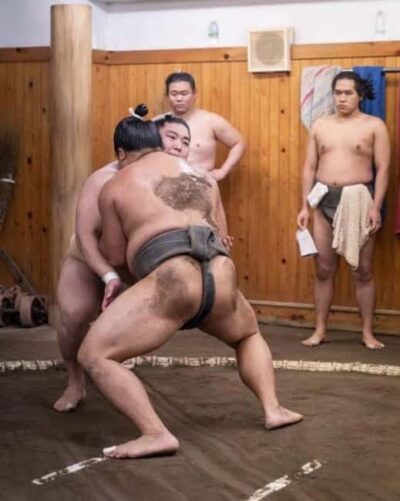
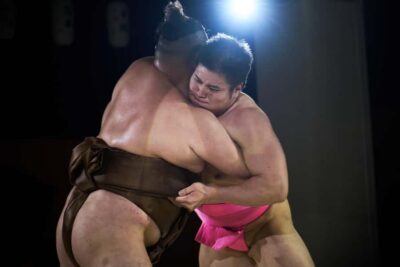
Sumo Show & Experience w/ Optional Kimono & Hot Pot
Read our review →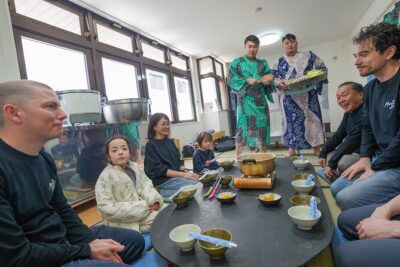
Authentic Sumo Experience in Tokyo: Enter the Sanctuary
Read our review →
Luxury Sumo Show Experience & Japanese cuisine & Drink
Read our review →Browse the lists this tour appears in