
Reviewed · SUMO EXPERIENCES
Tokyo Sumo Morning Practice: Viewing & Exclusive Interaction
Hear the ring before breakfast. This Tokyo sumo morning practice offers a rare look at real training, not a staged tourist show. I like the close seating and the chance to meet wrestlers afterward, while the optional Japanese brunch gives the morning a tasty finish. The main concern is value: at $95.77, the price feels high if your visit is brief or the stable limits interaction.
I also like that the experience fits neatly into a Tokyo sightseeing day. The guide explains sumo customs before you enter the stable, and guides such as Sarah, Haru, Momo, Peach, Taka, and Moana have been praised for making the rituals easier to understand. Just remember that practice length can vary, and a few people have found the actual visit much shorter than the advertised two and a half to three hours.
In This Review
- Key things to know before you book
- Why a morning at a sumo stable feels different
- Meeting at Narihira Park in Sumida
- Watching the 90-minute practice session
- The rituals before the impact
- Meeting the wrestlers after practice
- Returning to the park with a sumo souvenir
- Adding the Japanese brunch
- Is $95.77 a fair price?
- Who will enjoy this Tokyo sumo morning?
- My call: book it for access, not spectacle
- FAQ
- How long does the Tokyo sumo morning practice experience last?
- Where does the experience begin and end?
- Is an English-speaking guide included?
- Can I take photos with the wrestlers?
- Can visitors enter the sumo ring?
- Is brunch included in the tour price?
- What is included in the $95.77 price?
Key things to know before you book
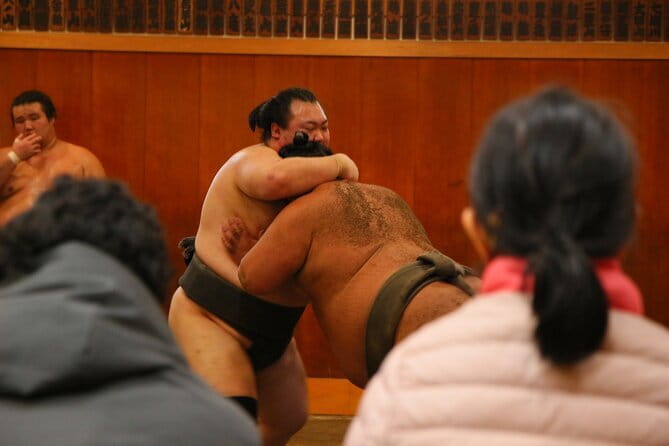
- You sit only meters from genuine morning training: Expect heavy impacts, repeated exercises, and a serious working atmosphere rather than a polished performance.
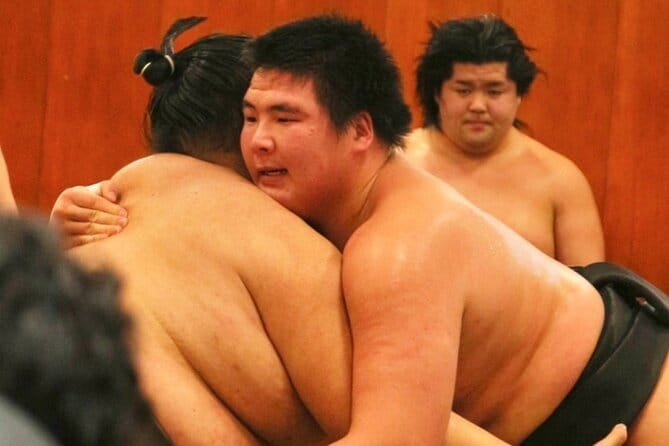
- The wrestlers meet you after practice: A Q&A and photo session follows, with some male participants invited into the ring for a brief push.
- The first 20 minutes matter: Your guide explains sumo history, rituals, stable etiquette, and the athletes you are about to watch.
- Silence is part of the experience: Training can require quiet sitting for a long stretch, so younger children may struggle.
- Brunch is optional: It adds a Japanese meal and guide assistance, with one estimate placing food costs around 1,000 to 2,000 yen.
- Allow for schedule changes: The listed duration is about two hours and 30 minutes to three hours, but the practice and interaction may finish earlier.
Why a morning at a sumo stable feels different
Tokyo has sumo tournaments only a few times each year. If your visit falls outside tournament dates, this morning session gives you another way to see the sport at close range.
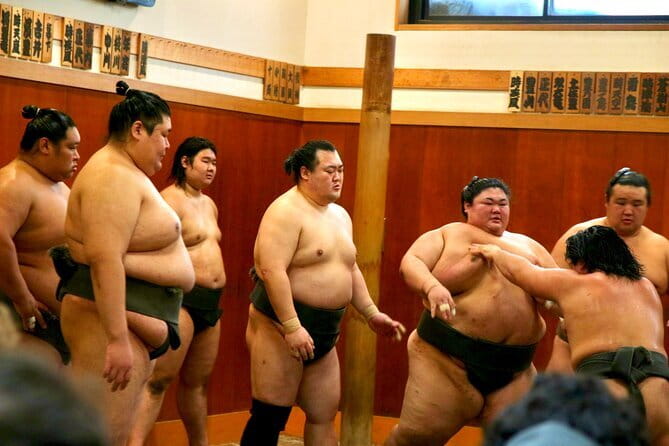
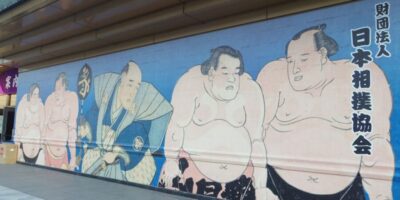
A tournament is the polished public face of sumo. You see the ring, the ceremony, the crowd, and the official bouts. At a stable, you see the work behind that display: repeated movements, conditioning, ritual gestures, and wrestlers testing one another under the watch of their training group.
That difference matters. This is not a theatrical demonstration built around a tourist audience. The wrestlers are training. The pace, length, and intensity depend on the stable’s own morning routine. You may see several practice bouts, but they are part of preparation, not a competition staged for you.
I find that setting especially useful if you know little about sumo. Without guidance, a practice session can look like a series of powerful collisions. With an English-speaking guide beside you, you get context for the exercises, the bowing, the ring customs, and the discipline that shapes a wrestler’s daily life.
More Sumo Experiences in Tokyo
- Tokyo: Sumo Show Experience with Chicken Hot Pot and a Photo
★ 4.8 · 6,678 reviews - Tokyo: Sumo Show and Dining Experience
★ 4.8 · 2,742 reviews - the SUMO show
★ 5.0 · 1,960 reviews
Meeting at Narihira Park in Sumida
The experience begins at Narihira Park in Sumida City, near the multipurpose restroom. The stated meeting address is 2-chōme-3-番 Narihira, Sumida City, Tokyo 130-0002.
This first meeting is more than a roll call. Your guide gives an orientation of about 20 minutes before the group goes to the stable. Guides have sent meeting instructions and pre-reading material the day before, which is useful in a city where one wrong turn can make a simple meeting point feel much harder than it should.
I recommend reading the supplied sumo material before arriving. One guide was praised for explaining the basic history and rules before practice, and that preparation makes a real difference. You will recognize more of what you are seeing instead of spending the whole session wondering why the wrestlers repeat the same actions.
The group can contain as many as 45 people, although the stable itself may feel much smaller. One particularly intimate visit had a group of eight watching seven wrestlers. Group size is therefore worth considering. A smaller gathering allows easier viewing and a more personal Q&A, while a full departure may feel less private.
Watching the 90-minute practice session
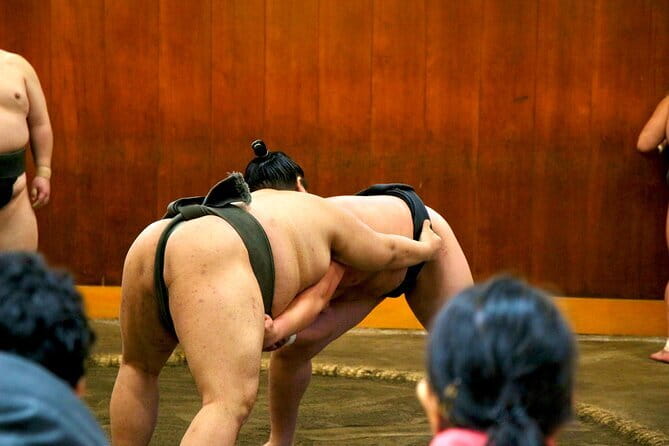
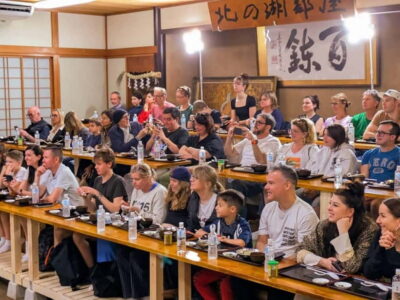
The main viewing period is listed at about one hour and 30 minutes. You sit close to the action, sometimes only a few meters away. That proximity is the heart of the experience.
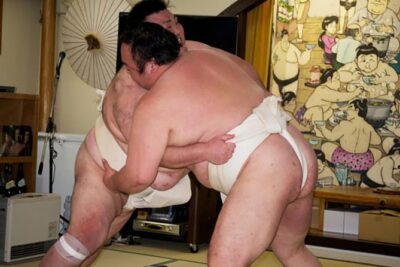
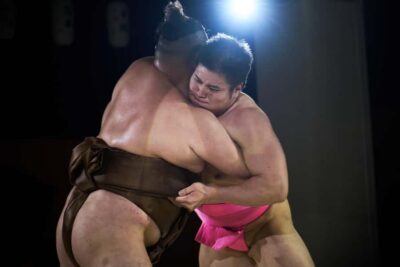
You can expect to see wrestlers perform exercises and practice techniques at close range. The force is striking. You hear the impact and feel the seriousness of the work in a way that television cannot provide. One of the most praised features is the chance to watch several practice bouts, each showing different styles and personalities.
Keep your expectations realistic. This is not a tournament match. The wrestlers are not fighting for a win in front of a cheering audience. Training may include repetition, instruction, pauses, and stretches of quiet observation. That can be fascinating if you want an honest look at preparation, but less exciting if you need constant action.
Silence and proper behavior inside the stable matter. The guide explains how to act, but you should be prepared to sit quietly for up to two hours, depending on the length and intensity of the morning’s training. This is one reason I would think twice before bringing very young children. Families have enjoyed the visit, and children have sometimes taken part in the later interaction, but the viewing itself demands patience.
The practice also gives you a better sense of the athletes’ commitment. You see the exercises as work, not entertainment. Several people have come away with a new respect for the strength and discipline required to reach the tournament ring.
The rituals before the impact
Sumo carries a formal structure that can be easy to miss from the spectator seats at a tournament. At the stable, the opening orientation helps you notice the ritual side of the sport.
Your guide discusses the history and traditions of sumo, along with details about the stable you are visiting. You may learn what the wrestlers are doing, why certain movements are repeated, and how the training atmosphere differs from a public match.
I would pay close attention during this briefing. The practice is visually powerful, but the customs give it meaning. The bows, preparation, exercises, and controlled exchanges show that sumo is not simply two large athletes pushing one another. It is a traditional sport with strict behavior and a demanding daily routine.
The guide’s role can vary. Sarah, Haru, Momo, Peach, Taka, and Moana have all been singled out for clear explanations, helpful answers, or warm interaction. Still, one person felt the guide mainly translated questions and provided limited additional explanation. If you already know sumo well, the tour may feel light on new information. If you are a beginner, the introduction can be very useful.
A completely different kind of day out in Tokyo:
- Mt Fuji and Hakone 1-Day Bus Tour Return by Bullet Train
★ 5.0 · 26,383 reviews - 1-Day Tokyo Bus Tour
★ 5.0 · 14,250 reviews - Tokyo: TOKYO SKYTREE® Admission ticket
★ 4.5 · 11,192 reviews - Tokyo: teamLab Planets TOKYO Digital Art Museum Entry Ticket
★ 4.6 · 9,779 reviews
Meeting the wrestlers after practice
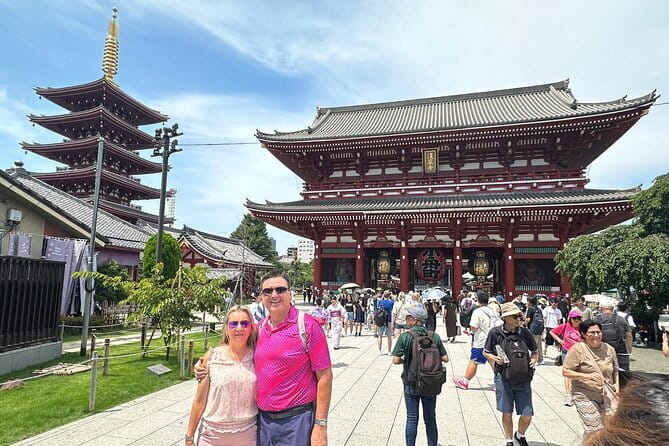
After viewing, the group has about 30 minutes for an interaction session. This is where the morning becomes more personal.
You can ask the wrestlers questions about their lives and training, then take photos with them. The athletes have been described as friendly and open, and this direct contact is a major reason the experience costs more than simply watching a practice from a distance.
The exact exchange depends on the stable’s schedule and the number of people in your group. One account described a limit of up to five questions, while another praised the open Q&A. I would prepare a few thoughtful questions rather than assume you can conduct a long interview. Questions about daily training, entering sumo, travel for competitions, and life in the stable should give you more than a quick snapshot.
Photo opportunities are included, but be respectful of the setting. You are visiting a working training environment. The guide helps manage the interaction, and the wrestlers decide how much time is available.
Some male participants may also be invited into the ring for a brief push against a wrestler. This has been a memorable part of the morning for adults, sons, and grandsons. It is playful, but the strength difference is obvious, and the wrestler controls the exchange.
There is an important cultural restriction: women are not allowed into the ring because of long-standing sumo traditions. Women can still watch practice, ask questions, and take photos with the wrestlers, but they should not expect to take part in the ring push. This is a real limitation for some visitors, especially those hoping for equal participation.
Returning to the park with a sumo souvenir
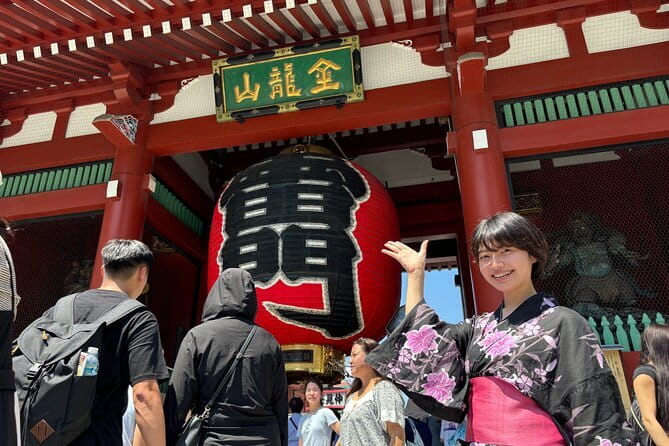
The closing session takes place back at Narihira Park and is listed at about 30 minutes. Your guide presents an official banzuke, or sumo ranking sheet, in a specially designed original folder.
This is a small but worthwhile touch. A banzuke is more meaningful than a generic tour gift because it connects directly to the sport’s ranking system. It also gives you something useful to keep if you want to follow sumo after returning home.
The closing time may include extra questions and a final chance to clarify what you saw. It also gives the guide a chance to explain details that were difficult to discuss inside the stable.
The full advertised duration is about two hours and 30 minutes to three hours. However, one dissatisfied participant reported spending only about an hour at the actual experience, mainly watching practice, asking questions, and taking photos. This does not necessarily describe every departure, but it is a fair warning: stable schedules can affect how long the visit lasts.
Adding the Japanese brunch
After the main activity, you can join an optional Japanese brunch. It is not included in the $95.77 tour price, so treat it as an add-on rather than part of the core admission.
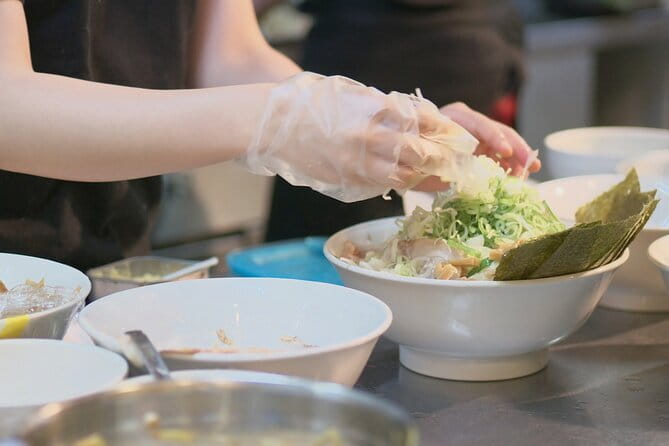
The meal may be especially helpful if you have not yet tried a traditional Japanese-style diner. Guides have helped people understand the dishes and choose what to order. One practical estimate put the meal at roughly 1,000 to 2,000 yen, depending on what you eat.
Do not picture a European brunch spread. The meal has been described as closer to lunch than brunch, with Japanese dishes and a more everyday dining style. That is part of its appeal. You get to continue the conversation while trying food you might not order confidently on your own.
Allow extra time if you choose this option. The main tour leaves the rest of the day open, but brunch changes the morning’s length. It works well after the stable if you want a slower cultural morning before moving on to another part of Tokyo.
Is $95.77 a fair price?
At $95.77 per person, this is not a budget activity. The price includes the English-speaking guide, the sumo practice viewing fee, and the official banzuke souvenir set with folder. Brunch costs extra.
I think the price makes sense for visitors who place a high value on access. You are paying for a close view of working wrestlers, interpretation of the customs, and the chance to ask questions and take photos afterward. A normal tournament ticket gives you a grander public spectacle, but it does not usually provide this sort of direct contact.
The value becomes weaker if the practice is short, the group is large, or the Q&A is tightly limited. A guide who offers only basic translation may also leave you feeling that the fee is high for what you received. The experience is strongest when the stable is active, the viewing lasts as expected, and the interaction has enough time for genuine exchange.
I would compare it with your priorities, not just with the cost of other Tokyo tours. If you want a rare cultural encounter and may not see a tournament, the price can be justified. If you mainly want to watch sumo bouts, save the money for a tournament ticket when one is available.
Who will enjoy this Tokyo sumo morning?
This suits first-time visitors who want an introduction to sumo without committing to a full tournament day. It also works for families with older children who can sit quietly and follow instructions during the practice.
I would recommend it to anyone interested in Japanese customs, athletic training, photography, or the daily lives of performers who usually remain behind the public spectacle. It is particularly useful for a morning because you can continue sightseeing afterward.
It may not suit you if you dislike sitting quietly, expect a fully staged show, or want guaranteed participation in the ring. Women should also understand the ring restriction before booking. Everyone can watch and interact, but only men may be permitted to enter the ring for the pushing activity.
The mobile ticket and proximity to public transportation make the outing fairly straightforward. Confirmation arrives at booking, and most people can participate. Check the meeting address carefully, though. One person reported that the location printed on a ticket was incorrect, so I would rely on the confirmed meeting instructions for Narihira Park rather than assume every platform displays the same address.
Free cancellation is available if you cancel at least 24 hours before the local start time. Changes or cancellations inside that window are not accepted for a refund.
My call: book it for access, not spectacle
I would book this experience if I wanted to see how sumo wrestlers train and had no Tokyo tournament during my visit. The close practice viewing, friendly wrestler interaction, photo session, and thoughtful banzuke souvenir offer something a standard sightseeing tour cannot.
I would not book it expecting a three-hour show with nonstop bouts. The morning is a working practice, and its length and pace can change. Read the pre-tour material, arrive at the exact park meeting point, prepare a few questions, and decide in advance if the optional Japanese brunch fits your schedule.
For a respectful look at sumo’s daily discipline, this is one of Tokyo’s more unusual cultural activities. At the price, I would choose it only if that personal access matters to you. If it does, the chance to sit close to real training and speak with the wrestlers can make the morning worthwhile.
FAQ
How long does the Tokyo sumo morning practice experience last?
The stated duration is approximately two hours and 30 minutes to three hours. The schedule can vary because the wrestlers are following their own morning training routine, and one reported visit was much shorter.
Where does the experience begin and end?
You meet at Narihira Park in Sumida City, near the multipurpose restroom, at 2-chōme-3-番 Narihira, Tokyo 130-0002. The activity ends back at the same meeting point.
Is an English-speaking guide included?
Yes. An English-speaking guide is included and provides an orientation about sumo history, rituals, stable etiquette, and the practice you will see.
Can I take photos with the wrestlers?
Yes. A photo session with the wrestlers is included after practice, subject to the stable’s schedule and the time available for the group.
Can visitors enter the sumo ring?
Some male participants may be invited into the ring for a brief push with a wrestler. Women are not allowed to enter the ring because of long-standing sumo traditions.
Is brunch included in the tour price?
No. Japanese brunch is optional and costs extra. An estimate given for the meal is about 1,000 to 2,000 yen, depending on what you order.
What is included in the $95.77 price?
The price includes the English-speaking guide, the sumo morning practice viewing fee, and an official banzuke ranking sheet in an original souvenir folder.
Just added around Tokyo
- Tokyo 6hr Instagram Highlights Private Tour with Licensed Guide★ 5.0 · 38 reviews
- Tokyo Small Group Tour with Guide★ 4.5 · 38 reviews
- Tokyo Sumo Experience with Live Show & Audience Challenge★ 5.0 · 38 reviews
- Japanese Food Cooking Class in Asakusa, Tokyo★ 5.0 · 39 reviews
- Very popular in Harajuku♡Animal petting zoo★ 4.6 · 39 reviews
- Ramen Making from Scratch with Tokyo Mom(Vegan Option Available)★ 5.0 · 39 reviews
- Tokyo JDM Night: 600hp C63s AMG Edition 1 (Private)★ 4.9 · 39 reviews
- Tokyo: Kimono Rental inside Shinjuku Gyoen National Garden★ 4.9 · 39 reviews
Sumo Experiences, compared.
Tokyo Shinjuku Sumo Show & Experience with Photo
Read our review →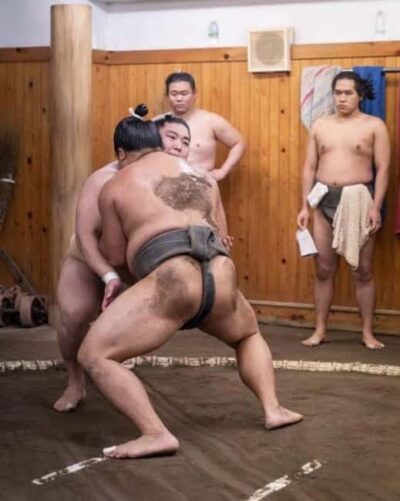
Sumo Show & Experience w/ Optional Kimono & Hot Pot
Read our review →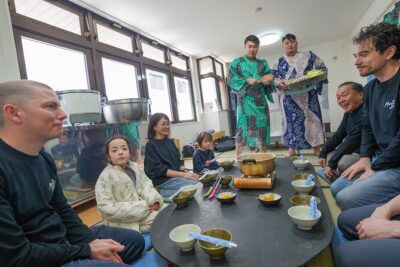
Authentic Sumo Experience in Tokyo: Enter the Sanctuary
Read our review →
Luxury Sumo Show Experience & Japanese cuisine & Drink
Read our review →Browse the lists this tour appears in