
Reviewed · SUMO EXPERIENCES
Tokyo: Sumo Morning Practice Viewing Tour at a Real Stable
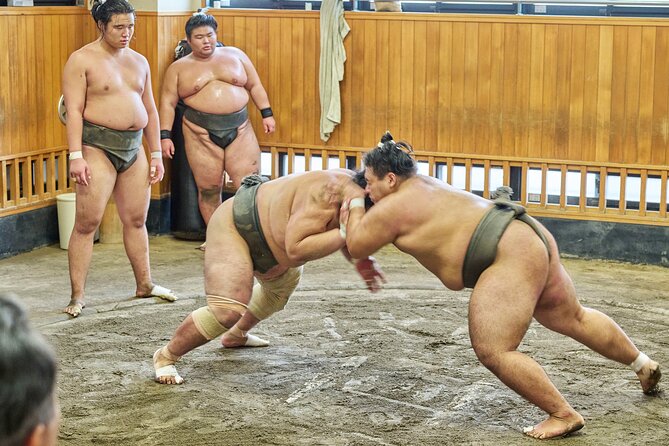
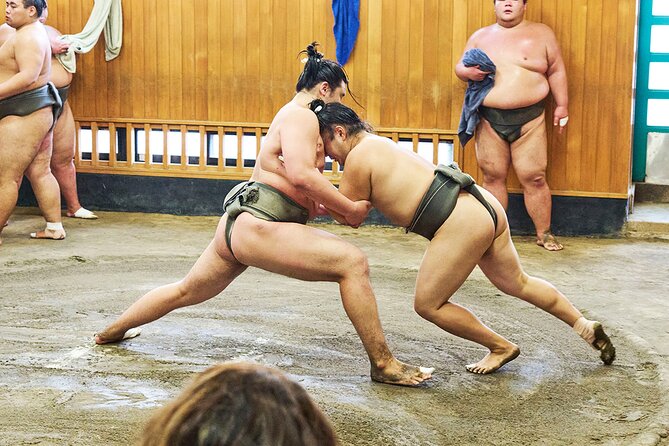
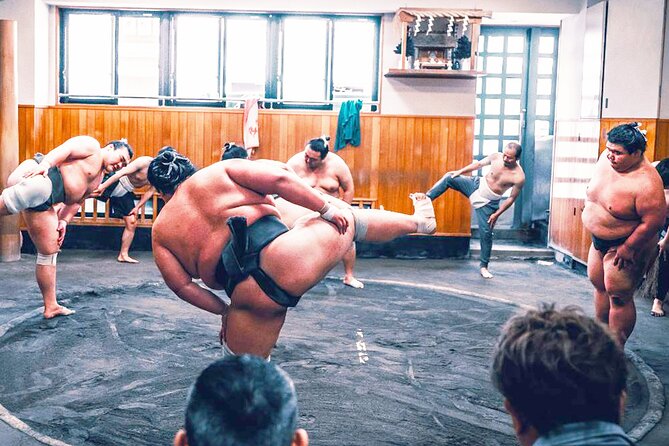
Sumo is best seen before the crowds arrive. This two-hour morning experience takes you to a real sumo training stable near Kiyosumi-shirakawa Station, where you can watch wrestlers practice rather than perform a tourist show. I like the genuine access and the chance to see daily training at close range. I also like that guides such as Tomo and Mao explain the rules and customs, so you are not left guessing at every slap, shove, and ritual.
The main consideration is that this is a quiet observation experience, not an interactive spectacle. You must respect the stable’s rules during practice, and a group of up to 50 people may be possible. Still, the chance to take photos with wrestlers afterward, when available, adds a friendly finish.
In This Review
- Key points at a glance
- Why a real stable matters more than a sumo show
- Meeting at Kiyosumi-shirakawa at 8:30 am
- Inside the 1.5-hour training session
- The guide makes the difference
- Photos with wrestlers after practice
- What the price means at $118.92
- What this tour does not include
- Who will enjoy the stable visit most?
- Practical tips for a smoother morning
- Should you book this Tokyo sumo experience?
- FAQ
- Where does the sumo practice tour begin?
- What time does the tour start?
- How long does the experience last?
- Where does the activity end?
- Is the training held at a real sumo stable?
- Is this a sumo tournament or a performance?
- Can I take photos with sumo wrestlers?
- Do I need to understand sumo rules before I go?
- Do I need to stay quiet during the training?
- How many people can join the activity?
- Is the tour near public transportation?
- Can I cancel for a full refund?
Key points at a glance
- Real morning practice: Watch athletes train inside a working sumo stable, not a staged demonstration.
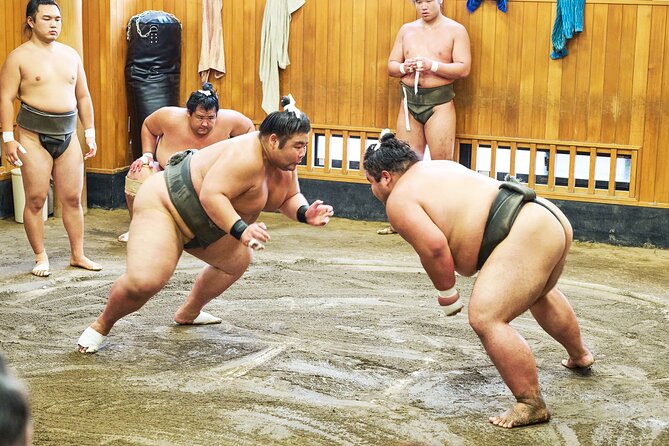
- A 1.5-hour viewing window: The practice session gives you enough time to understand the rhythm of training without taking up your whole morning.
- Guidance from Tomo or Mao: Your guide explains rules, rituals, and customs, with Mao using a WhatsApp group for questions during the silent session.
- A strict quiet atmosphere: You observe respectfully while the wrestlers train, which makes the experience feel more authentic.
- Possible photos with wrestlers: A photo opportunity can provide a memorable personal memento after practice.
- Simple Tokyo meeting point: Meet at 8:30 am near Kiyosumi-shirakawa Station and return to the same meeting point.
Why a real stable matters more than a sumo show
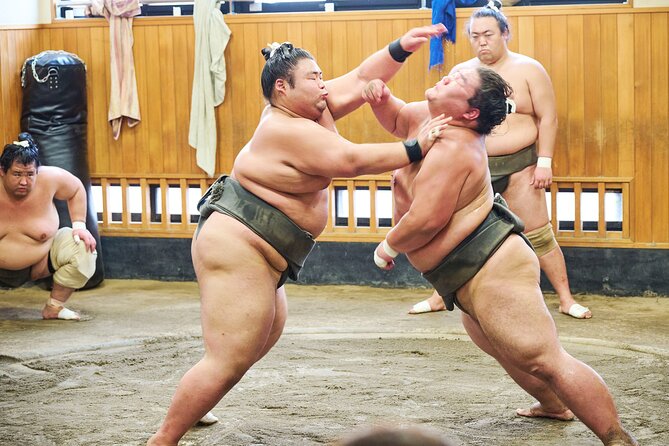
Sumo is easy to reduce to a few familiar images: enormous wrestlers, salt thrown into the ring, a sudden charge, and a bout that ends almost before it begins. A morning at a working stable gives you a wider picture.
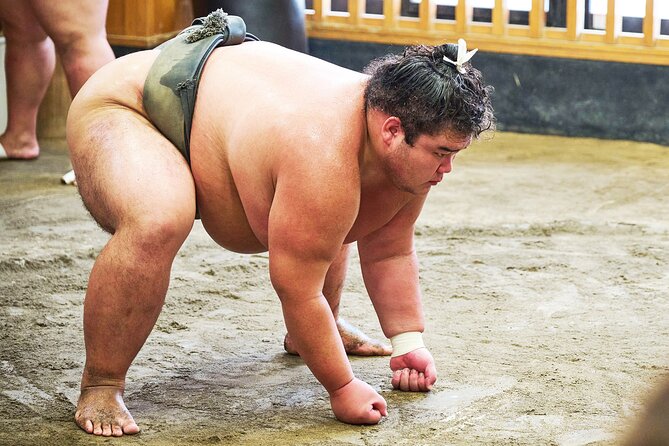
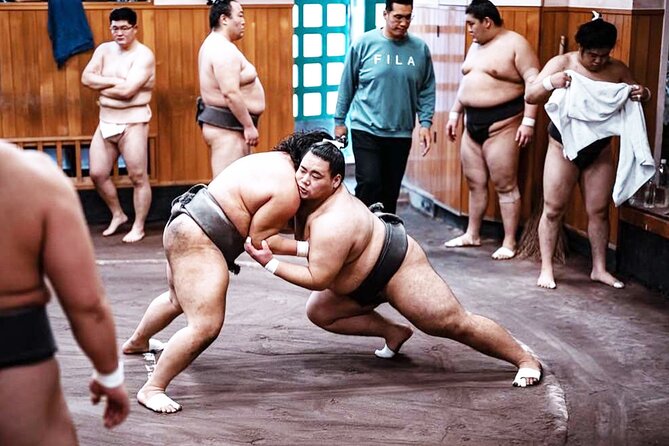
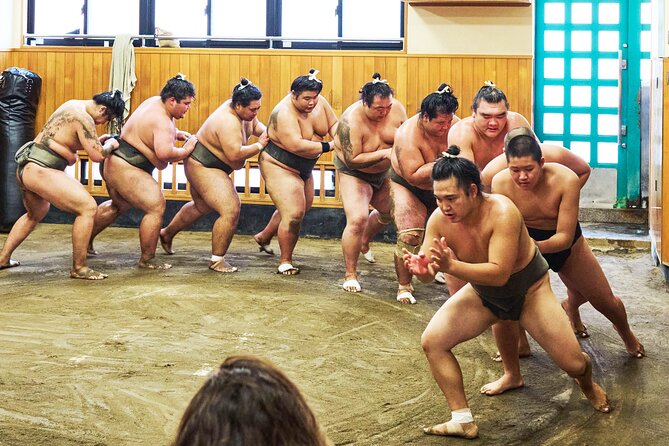
Here, the focus is training. You see the athletes prepare, repeat movements, push against one another, and work through the physical demands of the sport. The point is not to entertain you with a planned display. It is to let you observe a normal part of a wrestler’s day.
That difference matters. A performance is designed around the audience. Practice is designed around the wrestlers. You may not see a neat sequence of explanations or a series of polished bouts, but you gain something better: a look at the work behind the public matches.
The setting also gives the guide room to explain what you are seeing. Without help, the training can seem intense but hard to read. A guide can point out the rules, rituals, and traditions that give meaning to the movements.
I especially value this for first-time visitors. You do not need to study sumo before arriving, memorize Japanese terms, or watch tournament footage in advance. The guide supplies the basic context as the morning unfolds.
More Sumo Experiences in Tokyo
- Tokyo: Sumo Show Experience with Chicken Hot Pot and a Photo
★ 4.8 · 6,678 reviews - Tokyo: Sumo Show and Dining Experience
★ 4.8 · 2,742 reviews - the SUMO show
★ 5.0 · 1,960 reviews
Meeting at Kiyosumi-shirakawa at 8:30 am
The tour begins at 8:30 am at Kiyosumi-shirakawa Station, at 1-chome-6-13 Shirakawa in Koto City. The area is served by public transportation, and the activity ends back at the same meeting point.
That early start is part of the appeal. Morning practice is the reason to book this experience, so this is not a tour for anyone hoping to sleep late. You should allow time to reach the station without rushing. A punctual start matters because the group needs to arrive at the stable in an orderly way.
Your local guide meets you at the designated point and takes you to the stable. One particularly useful detail from the feedback is that guides have helped people find the meeting point and get on their way without trouble. That kind of help is valuable in Tokyo, where a station may have several exits and a street address can be less useful than a clear landmark.
The meeting point is also practical for planning the rest of your day. Since the activity lasts about two hours and returns you to the starting area, you can continue sightseeing afterward. You might pair it with other parts of eastern Tokyo, but the tour information does not promise any additional stops, meals, or neighborhood walk. Plan on sumo being the main event.
Inside the 1.5-hour training session
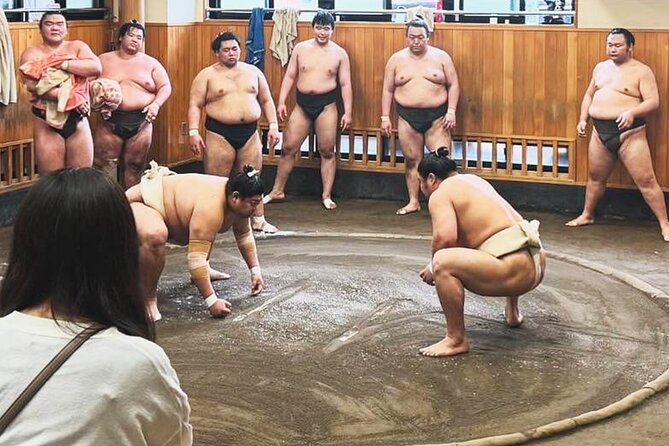
The central portion lasts about one hour and 30 minutes. During this time, you observe training at an authentic stable with your guide nearby.
Expect the session to feel concentrated rather than chatty. The wrestlers are there to work, and the audience is expected to remain quiet. That silence is not a flaw. It is one of the reasons the visit feels different from a regular attraction. You are watching a serious practice, and your behavior helps protect that atmosphere.
Mao has used a WhatsApp group so people can send questions while the training continues. This is a smart solution to the no-talking rule. You can stay silent in the room and still receive explanations or ask about something you have just seen.
The length is well judged. At roughly 90 minutes, the practice is long enough for you to notice patterns and absorb the setting. It is also short enough for most people to remain focused, especially children who understand in advance that quiet behavior is required.
Do not expect every minute to look like a tournament bout. Training has its own pace, with repetition and preparation. You might find some moments more visually dramatic than others. That is normal, and it is part of seeing sport as work rather than as a finished product.
The guide makes the difference
The stable provides the access, but the guide turns that access into an experience you can understand.
Tomo has been praised for answering questions and offering useful suggestions for places to eat in Tokyo. That extra local help can be welcome after an early morning, particularly if you want to turn the outing into a food stop.
Mao has also received strong praise for clear information and for managing questions during the silent practice. Her approach shows why a guide is important here. You are not simply standing in a room watching large athletes train. You are learning how to read the rules, customs, and rituals around the sport.
The guide can also help you understand what not to do. At a working stable, courtesy is more important than getting the perfect picture or the loudest reaction. The tour’s instructions about staying quiet are central, not a minor footnote.
If you have children or teenagers, explain this before you arrive. One family found that even energetic children managed the silence once they understood the rule. That suggests the experience can work for young people, but only if they are ready to observe calmly for the full session.
A completely different kind of day out in Tokyo:
- Mt Fuji and Hakone 1-Day Bus Tour Return by Bullet Train
★ 5.0 · 26,383 reviews - 1-Day Tokyo Bus Tour
★ 5.0 · 14,250 reviews - Tokyo: TOKYO SKYTREE® Admission ticket
★ 4.5 · 11,192 reviews - Tokyo: teamLab Planets TOKYO Digital Art Museum Entry Ticket
★ 4.6 · 9,779 reviews
Photos with wrestlers after practice
A photo opportunity with sumo wrestlers is one of the tour’s appealing extras. It gives you a personal souvenir and a moment to remember the people you have just watched training.
Keep your expectations sensible. The main product is observation, and the tour does not promise a long meet-and-greet or a private conversation with every wrestler. The photo chance should be treated as a bonus rather than the reason to book.
The contrast can be especially memorable. During practice, you remain quiet and keep your distance. Afterward, a photo can make the experience feel more personal. It connects the disciplined training session with a simple holiday memory.
You should follow the guide’s instructions closely. At a working stable, the schedule and the wrestlers’ availability come first. The supplied details confirm the opportunity to take photos, but they do not guarantee a specific wrestler, a set number of pictures, or a particular length of time.
What the price means at $118.92
At $118.92 per person, this is not a budget morning activity. You are paying for access that is difficult to arrange independently, along with a local guide who explains the sport and manages the visit.
The value depends on what you want from Tokyo. If your goal is simply to see sumo at the lowest possible cost, you may prefer to research tournament tickets or watch public coverage. Those options are different, though. This tour focuses on a stable and morning practice, not a competition in a stadium.
I think the price makes the most sense for someone who values rare access and clear cultural context. You get about 90 minutes of observation, guide support, transport orientation from the station to the stable, and the possibility of a photo with wrestlers. The guide’s help with questions and Tokyo food suggestions adds practical value, too.
The group limit can be as high as 50 people. That is worth considering before you book. A group of that size could feel less personal than the most intimate stable visit, even though the practice itself may still offer close viewing. The supplied information does not state the usual group size on a given date, so you should not assume a small gathering.
What this tour does not include
A clear idea of the limits will help you decide.
This is not a sumo tournament ticket. You are not watching official competition between wrestlers in a public arena.
It is not a staged cultural show. The practice follows the stable’s routine, and the guide cannot promise a specific series of bouts or demonstrations.
It is not a full-day Tokyo tour. The listed activity lasts about two hours, begins and ends at Kiyosumi-shirakawa, and includes one main stop.
It is not a talkative experience during the training itself. You need to remain quiet, with questions handled through the guide’s system when available.
Finally, no meal is included in the information provided. Tomo may offer food suggestions, but you should plan your own breakfast or later meal.
These limits are not deal-breakers. They simply tell you what kind of morning you are buying: focused, respectful, and built around access to real practice.
Who will enjoy the stable visit most?
I would recommend this experience to first-time sumo fans who want help understanding what they see. The guide removes the need for advance research and gives the practice a clear frame.
It also suits people who prefer local experiences over large attractions. The stable is a working place, and the quiet rules make the visit feel less like a standard sightseeing stop.
Families can enjoy it if children can follow instructions and stay quiet for about 90 minutes. The experience has a strong visual pull, but it is not ideal for children who need constant movement or conversation.
Photography fans may like the chance to see training up close and possibly take a photo with wrestlers. Still, you should not book it solely for pictures. The atmosphere and the practice are the main reasons to go.
It is less suitable for anyone with a tight morning schedule, anyone unwilling to follow silence rules, or anyone expecting a lively entertainment program. The early start also rules it out for visitors who want a slow hotel morning.
Practical tips for a smoother morning
Book with the 8:30 am start in mind. Give yourself time to reach Kiyosumi-shirakawa Station and locate the exact meeting point at 1-chome-6-13 Shirakawa.
Read the instructions carefully before you go. The most important rule is simple: remain quiet during training. Tell children in advance that this is an observation visit, not a show where they can call out or ask questions aloud.
Use the guide as your main source of information. Tomo and Mao have both been singled out for helpful explanations, and Mao’s WhatsApp arrangement allows questions without breaking the silence.
Keep the possible photo opportunity in perspective. It can be a wonderful extra, but it may depend on the stable’s schedule and the wrestlers’ availability.
The activity is near public transportation, and most people can participate. The available information does not provide detailed accessibility specifications, so anyone with particular mobility needs should confirm those details before booking.
Free cancellation is available if you cancel at least 24 hours before the local start time. Cancellations or changes made less than 24 hours before the start are not accepted for a refund.
Should you book this Tokyo sumo experience?
I would book it if you want to see sumo as a demanding daily discipline rather than just a formal match. The access to a real stable, the long viewing period, and the guidance from Tomo or Mao give the morning real substance.
The price is high for a two-hour activity, and a group of up to 50 could affect the sense of intimacy. You also need to accept an early start and a strict quiet period.
Book it for the stable, the training, and the chance to understand rituals that are easy to miss on your own. If that sounds more appealing than a polished performance, this is a strong choice for a Tokyo morning.
FAQ
Where does the sumo practice tour begin?
It begins at Kiyosumi-shirakawa Station, at 1-chome-6-13 Shirakawa, Koto City, Tokyo 135-0021, Japan.
What time does the tour start?
The start time is 8:30 am.
How long does the experience last?
The overall experience lasts about two hours. The training viewing portion is listed as approximately one hour and 30 minutes.
Where does the activity end?
The activity ends back at the meeting point near Kiyosumi-shirakawa Station.
Is the training held at a real sumo stable?
Yes. The experience takes you to an authentic working sumo training stable.
Is this a sumo tournament or a performance?
No. You watch morning training rather than an official tournament or staged performance.
Can I take photos with sumo wrestlers?
The experience includes an opportunity to take photos with sumo wrestlers. The provided details do not guarantee a specific wrestler or length of time for photos.
Do I need to understand sumo rules before I go?
No. The guide explains the rules, rituals, and traditions during the experience.
Do I need to stay quiet during the training?
Yes. Visitors are expected to remain quiet while the wrestlers practice. Mao has used a WhatsApp group to handle questions during the silent session.
How many people can join the activity?
The maximum group size is listed as 50 people.
Is the tour near public transportation?
Yes. The meeting point is at Kiyosumi-shirakawa Station, and the activity is listed as being near public transportation.
Can I cancel for a full refund?
Yes, if you cancel at least 24 hours before the experience’s start time. Cancellations or changes made less than 24 hours before the start time are not accepted for a refund.
Just added around Tokyo
- Tokyo 6hr Instagram Highlights Private Tour with Licensed Guide★ 5.0 · 38 reviews
- Tokyo Small Group Tour with Guide★ 4.5 · 38 reviews
- Tokyo Sumo Experience with Live Show & Audience Challenge★ 5.0 · 38 reviews
- Very popular in Harajuku♡Animal petting zoo★ 4.6 · 39 reviews
- Japanese Food Cooking Class in Asakusa, Tokyo★ 5.0 · 39 reviews
- Ramen Making from Scratch with Tokyo Mom(Vegan Option Available)★ 5.0 · 39 reviews
- Tokyo: Kimono Rental inside Shinjuku Gyoen National Garden★ 4.9 · 39 reviews
- Tokyo JDM Night: 600hp C63s AMG Edition 1 (Private)★ 4.9 · 39 reviews
Sumo Experiences, compared.
Tokyo Shinjuku Sumo Show & Experience with Photo
Read our review →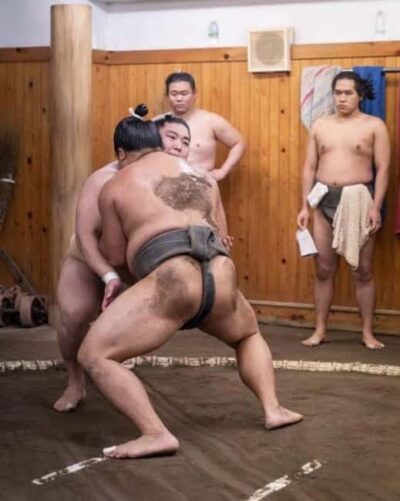
Sumo Show & Experience w/ Optional Kimono & Hot Pot
Read our review →
Authentic Sumo Experience in Tokyo: Enter the Sanctuary
Read our review →
Luxury Sumo Show Experience & Japanese cuisine & Drink
Read our review →Browse the lists this tour appears in