
Reviewed · SUMO EXPERIENCES
Tokyo Sumo Morning Training/ Sumo Practice with Wrestlers
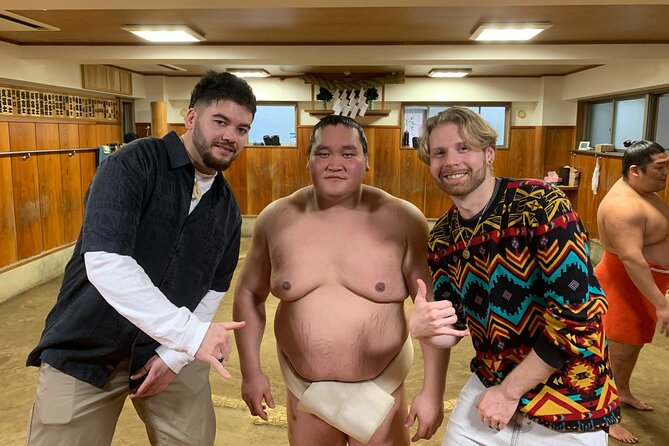
Sumo is best seen before the crowds arrive. This Tokyo experience takes you into a working sumo stable, where you can watch wrestlers train at close range rather than seeing only the polished spectacle of a tournament. I like the ringside view of daily practice and the guide’s explanations of sumo rules, training, and stable life. I also like that the experience includes a photo with a wrestler.
The main catch is that this is a quiet observation session, not a staged show. Practice schedules can change, sessions can end early, and you may sit on the floor for close to an hour or longer. You must also stay until practice ends, so this tour rewards patience and respect more than quick sightseeing.
In This Review
- Key points to know before you book
- What you are really buying for $99.10
- Meeting in Sumida and walking to the stable
- Inside the 55-minute practice session
- Why the silence and etiquette matter
- Floor seating, shoes, and comfort
- The guide’s role: translation, context, and timing
- Meeting a wrestler after practice
- Authentic practice or tourist activity?
- Timing around tournaments and changing schedules
- Who will enjoy this most?
- Booking, cancellation, and practical value
- Should you book the Tokyo sumo stable visit?
- FAQ
- How long does the Tokyo sumo practice experience last?
- Where does the experience meet?
- Can I take photos or videos inside the stable?
- Can I leave during the practice?
- Can women join the Sumo Practice with Wrestlers option?
- Do I need to remove my shoes?
- What is the cancellation policy?
Key points to know before you book
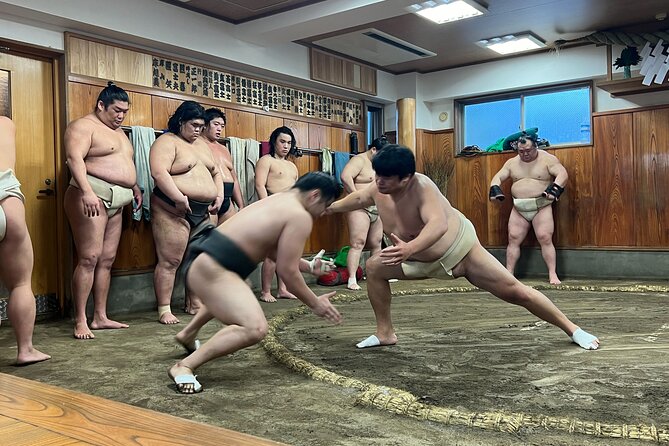
- You enter a working sumo stable: This is a training space, not a theater, so silence and good manners matter.
- Practice can be intense and repetitive: You may see warmups, drills, bouts, and the steady physical work behind professional sumo.
- The guide adds useful context: Explanations cover sumo history, rules, wrestler training, and daily life. Some sessions use a headset or written notes.
- The stable and start time can change: You receive the exact meeting details after booking, and the schedule may shift around major tournaments.
- You may sit on the floor: Some stables have no chairs, and you must remove your shoes before entering certain practice areas.
- The best moment may come afterward: A photo and brief interaction with a wrestler can give the visit a personal finish.
What you are really buying for $99.10
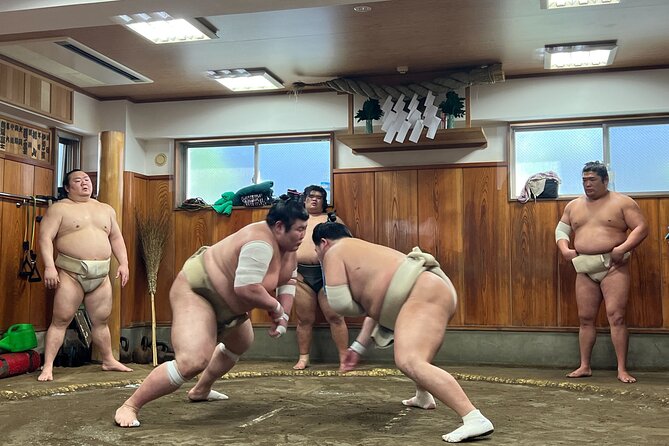
At $99.10 per person, this is not a cheap way to fill an hour in Tokyo. You are paying for access to a place most independent visitors cannot simply enter, plus a guide who explains what you are seeing. The value depends on your interest in sumo and your expectations.
If you want to watch real wrestlers train at close range, the cost can make sense. Sumo stables are private working environments, and access is controlled. You are not just buying a seat at a public performance. You are paying for the chance to observe the sport’s daily discipline in the place where it happens.
I would hesitate if you mainly want action every minute. Practice includes repetition, silence, waiting, and technical drills. One session may be packed with hard bouts, while another may feel slower. The experience is not designed like a stage performance, and you should not expect a tournament match.
The price also includes the guide’s role before and during the practice, plus a photo with a wrestler. The group can reach 25 people, so this is organized access rather than a private visit. Ten or more bookings in a recent month suggest steady demand, but the high 4.8 rating from 135 evaluations and 96 percent recommendation rate should not hide the important condition: the quality depends heavily on the day’s practice schedule.
More Sumo Experiences in Tokyo
- Tokyo: Sumo Show Experience with Chicken Hot Pot and a Photo
★ 4.8 · 6,678 reviews - Tokyo: Sumo Show and Dining Experience
★ 4.8 · 2,742 reviews - the SUMO show
★ 5.0 · 1,960 reviews
Meeting in Sumida and walking to the stable
The listed starting point is 1-chōme-2-8 Chitose in Sumida City, Tokyo. The activity ends back at the meeting point, which makes the logistics simple once you arrive. The area is near public transportation, but you should not assume the listed address is fixed for every date.
The exact stable location and meeting time can vary. After booking, Japan Wonder Travel sends the specific details. Check your messages carefully, especially on the day before the visit. If you do not receive the information, contact the operator rather than guessing where to go.
The opening briefing takes about five minutes. You meet the guide, hear an introduction to sumo, and then head to the stable. This short explanation matters because the training can look confusing at first. Sumo has its own routines, etiquette, rankings, and vocabulary, and a little context helps you understand why the wrestlers repeat certain movements.
One practical warning: arrive early. A cancellation caused by a stable scheduling conflict has occurred with very little notice in at least one case, and late arrival may mean losing the booking. The operator says it cannot compensate you if you miss the meeting point or arrive late without checking its messages.
Inside the 55-minute practice session
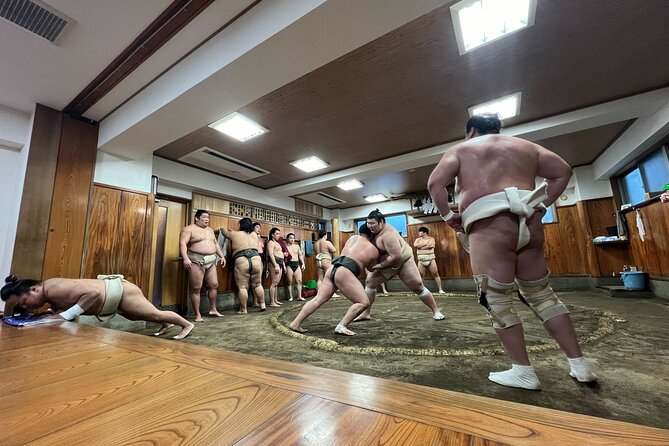
The scheduled stable visit lasts about 55 minutes, making the full advertised experience roughly one hour. You enter, settle into the assigned viewing area, and watch the wrestlers carry out their daily routine.
This is the heart of the experience. You may see stretching, warmup exercises, strength work, and bouts between wrestlers. The exact sequence depends on the stable and the day. Some sessions have been described as lasting close to two hours, but you should treat that as a possibility rather than a promise. The official timing is approximately one hour, and practice may be shorter or longer.
The best part is the lack of a performance curtain. You see the physical cost of the sport: repeated collisions, balance work, controlled foot movement, and long periods of concentration. The wrestlers are training for themselves, not putting on a show for your camera.
That also means you may encounter stretches with little visible action. One person may find the guide’s talking helpful, while another may feel there is too much explanation and not enough wrestling. I suggest treating the commentary as a tool, not the main event. Watch the wrestlers first, then use the guide’s notes or headset explanation to understand what just happened.
Some sessions use English commentary through a headset. Another account praised notes passed by the guide during practice. These details may vary by date and stable, but both approaches solve the same problem: you can observe quietly without asking questions at the wrong moment.
Why the silence and etiquette matter
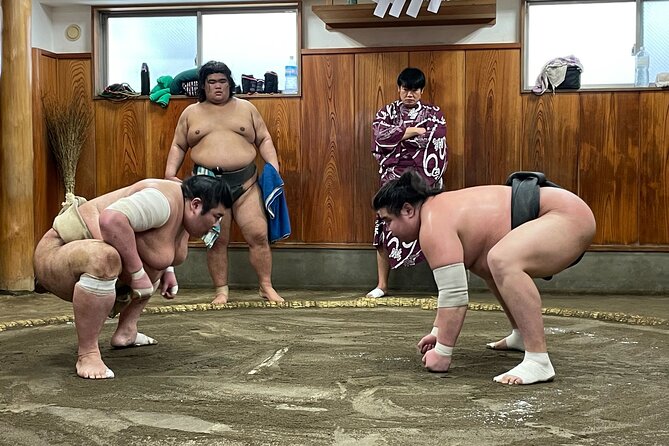
This is a rare public look at a private training environment, so the rules are not decorative. Cellphones must be silent. Photos are allowed without flash or shutter sounds, but videos are not allowed.
You cannot leave halfway through practice and then return. The instruction is to remain until the session ends, so use the restroom before arriving. Eating is forbidden inside the stable, although water and sports drinks are allowed.
Your posture also matters. Do not stretch your legs toward the ring or show the soles of your feet to the wrestlers. This is considered impolite. You should watch quietly and avoid anything that breaks the wrestlers’ concentration.
These restrictions can feel strict if you are used to hop-on, hop-off sightseeing. Here, they protect the training itself. I think that is a fair trade for access. You are entering a place where athletes work, not a photo attraction built around visitors.
A completely different kind of day out in Tokyo:
- Mt Fuji and Hakone 1-Day Bus Tour Return by Bullet Train
★ 5.0 · 26,383 reviews - 1-Day Tokyo Bus Tour
★ 5.0 · 14,250 reviews - Tokyo: TOKYO SKYTREE® Admission ticket
★ 4.5 · 11,192 reviews - Tokyo: teamLab Planets TOKYO Digital Art Museum Entry Ticket
★ 4.6 · 9,779 reviews
Floor seating, shoes, and comfort
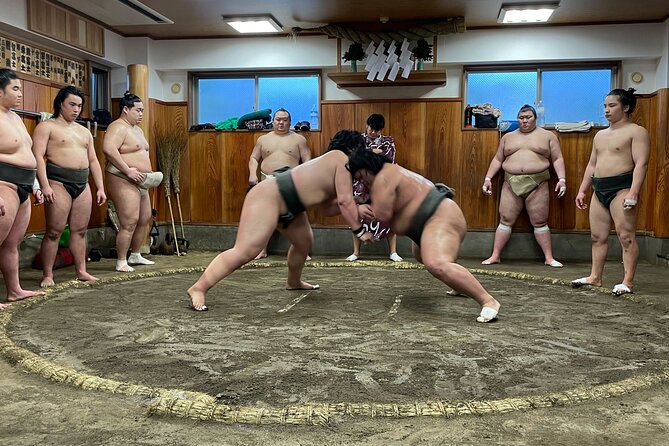
Some stables do not have chairs. You may sit on a floor mat, often cross-legged, for the length of the practice. One account praised the close view but found sitting cross-legged difficult for more than two hours. Since the standard duration is about an hour, the position may be manageable for many people, but it is still worth considering before you book.
Wear comfortable clothing, particularly for the Sumo Practice with Wrestlers option. You remove your shoes before entering the practice areas. Men must remove their shoes before stepping onto the dohyo, the sumo ring.
The stable can also be cold. A December session on a rainy day involved waiting outside and a chilly interior. Tokyo mornings can be mild, but an unheated training space and floor seating can make you feel the weather more than expected. Dress in layers and bring a compact umbrella if rain is possible.
The supplied instructions do not promise chairs, heating, or a covered waiting area. Plan for a practical sports facility, not a comfortable indoor attraction.
The guide’s role: translation, context, and timing
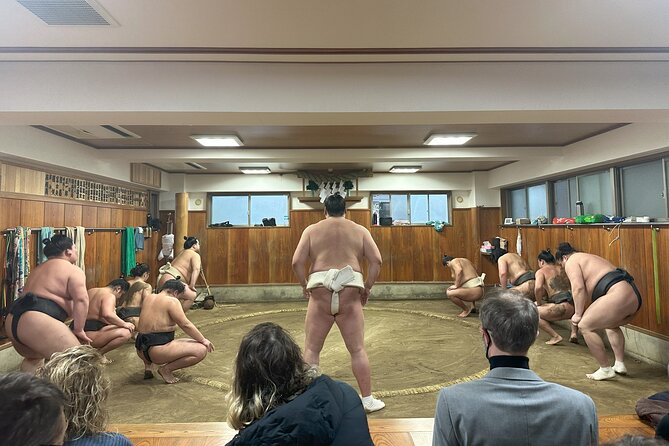
The guide is especially useful before and after the practice. You can ask questions along the way, and the briefing gives you a basic framework for understanding the sport. Several comments praise the explanations of sumo history, rules, training, and the daily life of a professional wrestler.
The guide also helps you avoid cultural mistakes. Inside the stable, you cannot casually interrupt or approach wrestlers during practice. A good guide tells you when it is appropriate to take photos or speak.
The quality of the explanation may depend on where the briefing takes place. One session’s introduction was given near a main road, making it difficult to hear. If traffic noise gets in the way, move closer to the guide and use the headset if one is provided.
I would not book this expecting a nonstop lecture. The guide is there to make a quiet observation meaningful, not to fill every pause. If you find commentary distracting, focus on the practice and save your questions for the appropriate moment.
Meeting a wrestler after practice
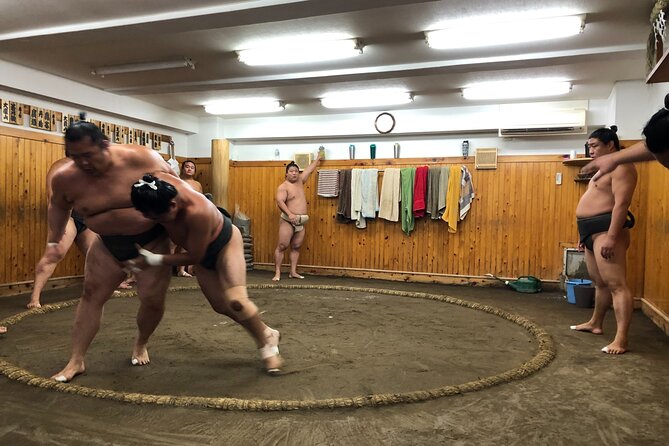
The experience includes a photo with a sumo wrestler, which gives the visit a clear personal ending. Several accounts describe the chance to talk with wrestlers and pose for photos as one of the strongest parts of the day.
Keep your expectations measured. You are not guaranteed to meet a particular champion or Yokozuna. The stable is one where a Yokozuna trains, but it is not known until the morning of the experience if he will actually be present.
The post-practice contact is also not the same as a long interview. It may be brief, and you should follow the guide’s instructions. Still, after sitting quietly and watching the wrestlers work, even a short photo moment can feel meaningful.
The information also includes an option called Sumo Practice with Wrestlers. Women may join, but cultural and religious traditions at that facility prevent female participants from entering the dohyo. Women can still take part fully from designated seating areas. Men must remove their shoes before stepping onto the ring. These rules are specific to the facility and should be understood before booking.
Authentic practice or tourist activity?
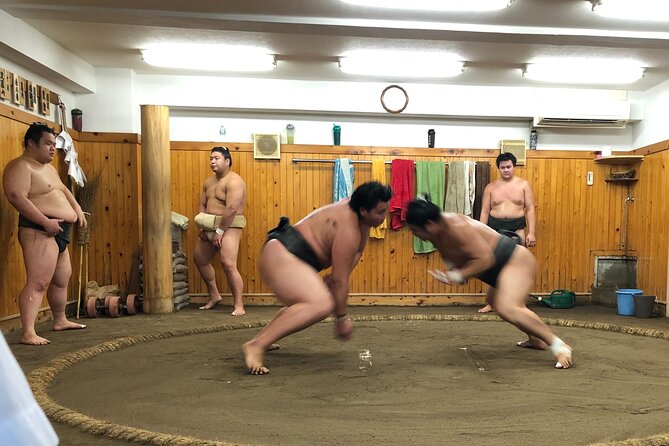
This is where you need to read the experience correctly. The stable observation portion is presented as access to a real practice setting. The wrestlers’ daily work, the quiet atmosphere, and the lack of a staged match make it more authentic than a theatrical sumo demonstration.
At the same time, not every experience connected with the Sumo Practice with Wrestlers option appears to involve active professional wrestlers. One account described retired sumo wrestlers or taxi drivers taking part, while another felt the activity offered only a short amateur sumo segment. That suggests the options can differ, and you should check exactly which version you are reserving.
The distinction matters. If you want to watch current wrestlers train, choose the stable observation experience and confirm the details after booking. If you want hands-on exercises or interaction, the wrestlers option may be more suitable, but do not assume it is identical to watching a professional morning practice.
You may also find a session that includes warmup exercises, hands-on training, or even chanko, the traditional wrestler’s stew. Those elements are not guaranteed in the basic one-hour description, so treat them as possible additions rather than promised features.
Timing around tournaments and changing schedules
Sumo practice does not run on a tourist timetable. The stable’s schedule can change by date, and the tour’s duration may shift, especially before a Grand Tournament. Practice may end earlier than usual, which can make the experience shorter than the stated time.
This uncertainty is part of the deal. You might see a strong lineup of high-ranking wrestlers, or you might visit on a quieter training day. A former Yokozuna, Hakuho, also known as Miyagino Oyakata, has been present at one session, but no individual wrestler is guaranteed.
I recommend keeping the rest of your schedule loose. Do not place a timed restaurant booking or long cross-city trip immediately afterward. The operator says the practice can be shorter or longer depending on what is happening inside the stable.
The tour is capped at 25 people. That is not a tiny private group, but it keeps the visit more controlled than a large sightseeing coach. Your actual viewing position and ability to hear may still vary depending on the room.
Who will enjoy this most?
I recommend this experience to anyone who already follows sumo or wants to understand it beyond the tournament arena. It is also a good choice for first-time visitors who enjoy watching skilled people train and who can sit quietly for an extended period.
Families can enjoy it, especially if children are old enough to respect the silence and remain in place. The wrestlers can be friendly and accommodating after practice, but this is not a loud, hands-on children’s show.
You should think twice if you need comfortable chairs, frequent movement, guaranteed champions, or constant action. You should also avoid joining if you feel unwell, since you cannot leave halfway through practice and re-enter.
Photography is welcome within the rules, but video is not. If recording is central to your travel memories, this restriction may disappoint you. For everyone else, the no-flash rule is a small price for keeping the room calm.
Booking, cancellation, and practical value
You receive confirmation at booking, and cancellation is free up to 24 hours before the start time for a full refund. Changes or cancellations inside that 24-hour window are not accepted and are not refunded.
Because the meeting point and time may change, the most important booking habit is simple: read every message from Japan Wonder Travel. The operator specifically warns that missing an update can leave you at the wrong place or make you late.
Bring water, wear easy-to-remove shoes, dress comfortably, and use the restroom before arrival. Keep your phone silent, leave the camera flash off, and be ready to sit on the floor. Those few preparations will make the experience much easier.
Should you book the Tokyo sumo stable visit?
Book it if you want a close look at the discipline behind sumo and you are willing to observe on the stable’s terms. The strongest reasons are the near-ring view, the guide’s useful explanations, and the chance to meet a wrestler afterward. The experience can give you a better understanding of sumo than a short tournament appearance alone.
Skip it if you want a guaranteed Yokozuna, a polished show, or a fixed schedule. Practice can be quiet, chilly, shorter than expected, or changed by the stable. At $99.10, that uncertainty makes this a considered purchase, not an automatic bargain.
For a sumo fan, I think the access can justify the price. For a casual sightseer, a tournament ticket or a less expensive cultural activity may offer better value. Book with flexible plans, respect the rules, and you will give yourself the best chance of seeing sumo as a demanding daily craft rather than a tourist performance.
FAQ
How long does the Tokyo sumo practice experience last?
The advertised duration is approximately one hour. The itinerary allows about five minutes for the introduction and 55 minutes inside the stable, but the practice may be shorter or longer depending on the day.
Where does the experience meet?
The listed meeting point is 1-chōme-2-8 Chitose, Sumida City, Tokyo 130-0025, Japan. The exact location and time may vary by tour date, so check the specific details sent after booking.
Can I take photos or videos inside the stable?
Photos are allowed without flash or shutter sounds. Videos are not allowed.
Can I leave during the practice?
No. You cannot leave the stable in the middle of practice and re-enter. Use the restroom before arriving and plan to stay until the session ends.
Can women join the Sumo Practice with Wrestlers option?
Yes. Women may join the tour, but at the specified facility they cannot enter the dohyo due to religious and cultural traditions. They can watch and participate from designated seating areas.
Do I need to remove my shoes?
Yes. Shoes must be removed before entering the practice areas. Men must remove their shoes before stepping onto the dohyo for the Sumo Practice with Wrestlers option.
What is the cancellation policy?
You can cancel at least 24 hours before the experience start time for a full refund. Cancellations or changes made less than 24 hours before the start time are not accepted and are not refunded.
Just added around Tokyo
- Tokyo 6hr Instagram Highlights Private Tour with Licensed Guide★ 5.0 · 38 reviews
- Tokyo Small Group Tour with Guide★ 4.5 · 38 reviews
- Tokyo Sumo Experience with Live Show & Audience Challenge★ 5.0 · 38 reviews
- Japanese Food Cooking Class in Asakusa, Tokyo★ 5.0 · 39 reviews
- Very popular in Harajuku♡Animal petting zoo★ 4.6 · 39 reviews
- Ramen Making from Scratch with Tokyo Mom(Vegan Option Available)★ 5.0 · 39 reviews
- Tokyo JDM Night: 600hp C63s AMG Edition 1 (Private)★ 4.9 · 39 reviews
- Tokyo: Kimono Rental inside Shinjuku Gyoen National Garden★ 4.9 · 39 reviews
Sumo Experiences, compared.
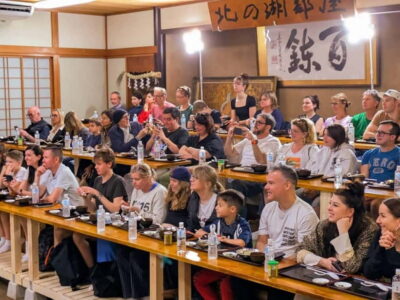
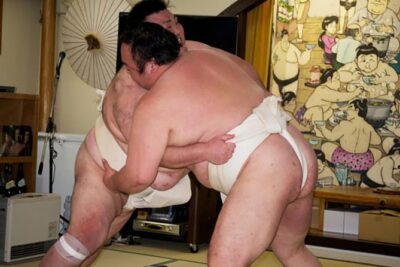
Tokyo Shinjuku Sumo Show & Experience with Photo
Read our review →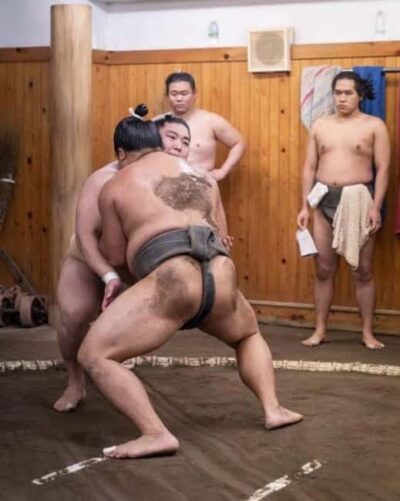
Sumo Show & Experience w/ Optional Kimono & Hot Pot
Read our review →
Authentic Sumo Experience in Tokyo: Enter the Sanctuary
Read our review →
Luxury Sumo Show Experience & Japanese cuisine & Drink
Read our review →Browse the lists this tour appears in