
Reviewed · SUMO EXPERIENCES
Ultimate Sumo Tournament: Tokyo, Osaka, Nagoya, Fukuoka
Sumo makes more sense once someone explains it. This experience gives you reserved seats at an official tournament in Tokyo, Osaka, Nagoya, or Fukuoka, plus an English-speaking sumo expert to explain the rituals, rankings, and lightning-fast matches. I especially like the live headset commentary and the chance to add a chanko hot pot dinner. The main drawback is the fixed schedule and non-refundable booking, with tournament tickets sometimes confirmed only weeks before the event.
I also like that this is more than a ticket handoff. Your guide meets you, helps you understand the arena, and gives context as the bouts unfold. Guides such as Hiro, Myoko, Yumi, Taku, Izumi, Shunsuke, and Seizo have been praised for making an unfamiliar sport easier to follow. Still, the standard seats are on the second floor, and the quality of the experience depends partly on how actively your guide explains things.
In This Review
- Key points to know before booking
- Why sumo is worth fitting into your Japan trip
- Four cities, four tournament months
- Ryogoku Kokugikan: Tokyo’s classic sumo setting
- Osaka, Nagoya, and Fukuoka: the same sport, different trip
- What your guide adds to the afternoon
- The difference between standard and private seating
- Chanko dinner: a useful cultural extension
- The off-season stable visit near Warabi Station
- Timing, group size, and the small practical details
- Is $184.38 a fair price?
- Who will enjoy this most?
- FAQ
- When do the official sumo tournaments take place?
- Where does the Tokyo tournament take place?
- What seats are included in the standard tour?
- What seats are included in the private tour?
- Is transportation from my hotel included?
- Is dinner included?
- What happens on an off-season date?
- Should you book it?
Key points to know before booking
- Official tournaments run only six times a year: Tokyo hosts January, May, and September, while Osaka, Nagoya, and Fukuoka host the March, July, and November events.
- You get a reserved tournament seat: Standard group places are B or C chair seats on the second floor, while private tours use S or A seats closer to the ring.
- A headset keeps the commentary audible: This matters inside a noisy arena, though one person found the lowest volume setting still quite loud.
- The guide turns quick bouts into understandable sport: You learn about wrestler rankings, techniques, rituals, and tournament form.
- Chanko dinner is an optional cultural add-on: The hot pot usually uses chicken or pork broth, with a vegetarian request possible in advance.
- Off-season dates are different: You may visit a sumo stable near Warabi Station for morning practice, but that option does not include a tournament ticket.
Why sumo is worth fitting into your Japan trip
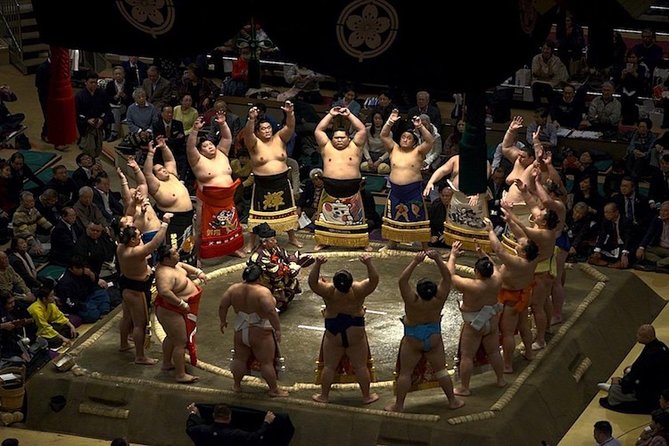
A sumo tournament is one of the clearest ways to see old Japanese customs still functioning as a living public event. The ring rituals, wrestler rankings, ceremonial movements, and strict behavior are not staged for tourists. They are part of the sport.
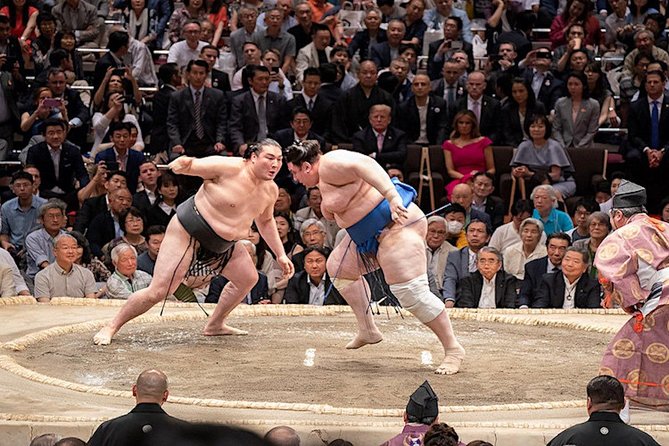
The matches themselves are short. Some end almost immediately, which can surprise first-time spectators. The buildup is part of the pleasure: wrestlers enter, perform ritual movements, face one another, and wait for the right moment. Then the bout may be over in seconds.
That speed can make sumo hard to follow on your own. You may see a wrestler step out, fall, or get pushed down without understanding the technique or the significance of the result. An expert guide helps connect those quick moments to the wider tournament.
I would not book this only for nonstop action. You are paying for a cultural afternoon, not four hours of continuous wrestling. Between bouts, you have time to look around, buy food and drinks inside the arena, visit the museum when conditions allow, and listen to explanations about the sport.
More Sumo Experiences in Tokyo
- Tokyo: Sumo Show Experience with Chicken Hot Pot and a Photo
★ 4.8 · 6,678 reviews - Tokyo: Sumo Show and Dining Experience
★ 4.8 · 2,742 reviews - the SUMO show
★ 5.0 · 1,960 reviews
Four cities, four tournament months
Japan’s official tournaments, called basho, take place six times each year. Each lasts 15 days, beginning and ending on a Sunday.
Tokyo hosts the January, May, and September tournaments at Ryogoku Kokugikan. Osaka hosts the March tournament at EDION Arena Osaka. Nagoya hosts the July tournament at IG Arena, and Fukuoka hosts the November tournament at Fukuoka Kokusai Center.
This schedule is the first thing to check. If your visit does not overlap one of those 15-day periods, you cannot simply attend an official basho on a convenient weekday. The off-season option described below gives you a different sumo experience, but it is not a substitute for a tournament.
The city also affects your trip planning. In Tokyo, the sumo venue is in Ryogoku, an area closely connected with sumo culture. Osaka, Nagoya, and Fukuoka require you to build the arena visit around the city’s tournament dates. The meeting point and final instructions are sent by email at least one week before the tour, so do not assume the exact meeting place from the general booking page.
Ryogoku Kokugikan: Tokyo’s classic sumo setting
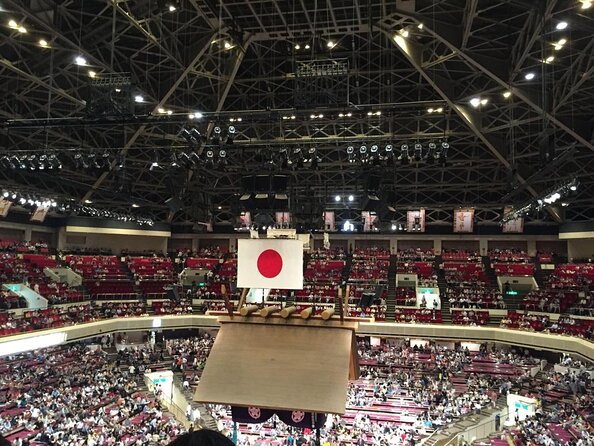
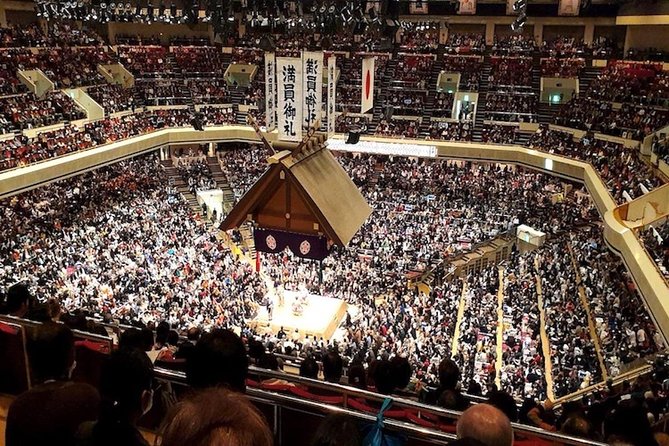
The Tokyo experience takes place at Ryogoku Kokugikan, Japan’s official sumo arena. This is the strongest choice for visitors who want sumo to be a central part of their Tokyo sightseeing, especially during the January, May, or September basho.
The tour lasts about four hours. You meet at 2:00 pm, then your guide leads you into the venue and helps you understand the setting before you settle into your seat. Depending on the day and group movement, there may be a wait before entering or before seating, since the staff sometimes need to wait for matches to finish.
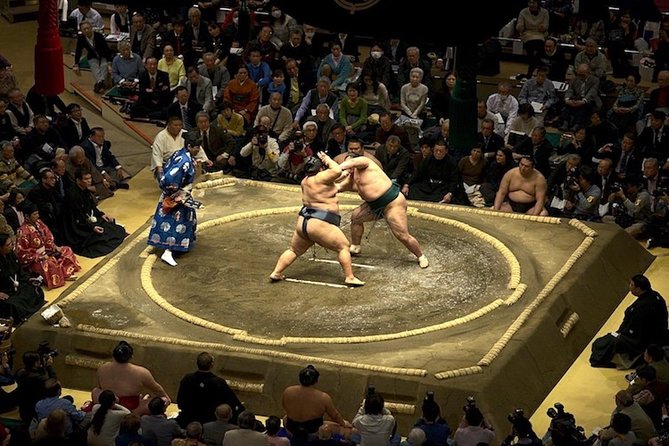
Standard group seats are B or C chair seats on the second floor. The stated B-seat rows are generally rows 7 through 11, though seating depends on the allocation. Up to 20 people may sit in the same area with the English-speaking guide.
From the second floor, you will not have the close-up view provided by the private option. You will, however, see the full ring and the flow of the tournament. For many people, the commentary matters more than being closest to the clay. If you want a near-ring perspective, choose the private tour, which uses S or A-class seating.
The arena can run warm, so light clothing is useful. Food and drinks cannot be brought in from outside, but vendors inside sell refreshments. One useful small tip: the soft-serve ice cream on the second floor has received special praise. Sumo need not be all solemn ritual.
Osaka, Nagoya, and Fukuoka: the same sport, different trip
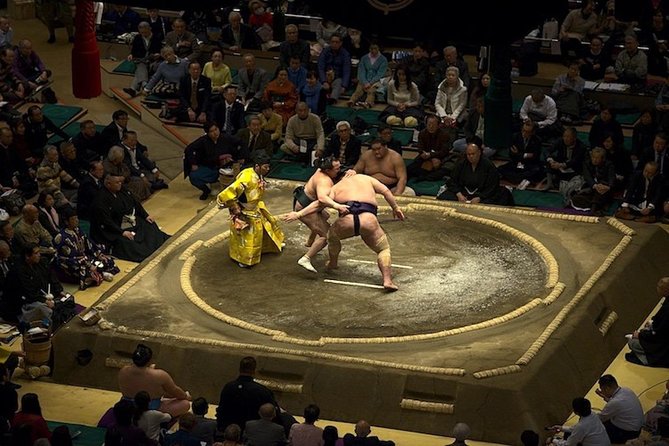
The Osaka tournament takes place in March at EDION Arena Osaka. This is a four-hour guided visit during the city’s spring basho. If your Japan trip centers on Kansai, this can be easier than making a separate journey to Tokyo.
Nagoya hosts the July tournament at IG Arena. The summer timing may affect how you plan your day, and the tour again runs about four hours. It gives you the same basic structure: reserved entry, guide support, headset commentary, and an introduction to the rules and customs.
Fukuoka Kokusai Center hosts the November tournament. This year-end basho offers the same chance to see the top divisions and follow the final tournament of the official calendar.
The core experience is similar in all four cities, but the exact seating and meeting arrangements can vary. Confirm the city and date carefully before paying. The published price begins at $184.38 per person, but the private option and any dinner add-on may change the total.
A completely different kind of day out in Tokyo:
- Mt Fuji and Hakone 1-Day Bus Tour Return by Bullet Train
★ 5.0 · 26,383 reviews - 1-Day Tokyo Bus Tour
★ 5.0 · 14,250 reviews - Tokyo: TOKYO SKYTREE® Admission ticket
★ 4.5 · 11,192 reviews - Tokyo: teamLab Planets TOKYO Digital Art Museum Entry Ticket
★ 4.6 · 9,779 reviews
What your guide adds to the afternoon
The best part of this experience is the explanation during the matches. A guide can show you how to read the banzuke, the official ranking table, and explain why certain wrestlers matter.
You receive a sumo information pamphlet and a banzuke-hyo. These are useful tools, not just souvenirs. Sumo uses a ranking system that can feel like a wall of names at first. With the chart, you can follow a wrestler’s position and understand the difference between divisions.
The headset is also important. A large arena is not an easy place for quiet commentary, and several guides have used receivers so the group can hear clearly. The commentary may cover the wrestler’s style, age, ranking, recent form, famous figures from sumo history, and the meaning of the ceremonies.
The guide is not supposed to talk over every second of the tournament. You get free time to buy food, use the bathroom, shop, and watch without constant instruction. That balance is useful, but guide performance can vary. One person felt the explanations were too limited, while most of the available feedback praises guides for giving clear play-by-play and cultural background.
If you want maximum value, ask questions. Guides such as Hiro, Myoko, Taku, Yumi, Izumi, Shunsuke, and Seizo have been singled out for their passion and ability to explain the sport to complete beginners. The strongest guides make a difference because they help you notice things you would otherwise miss.
The difference between standard and private seating
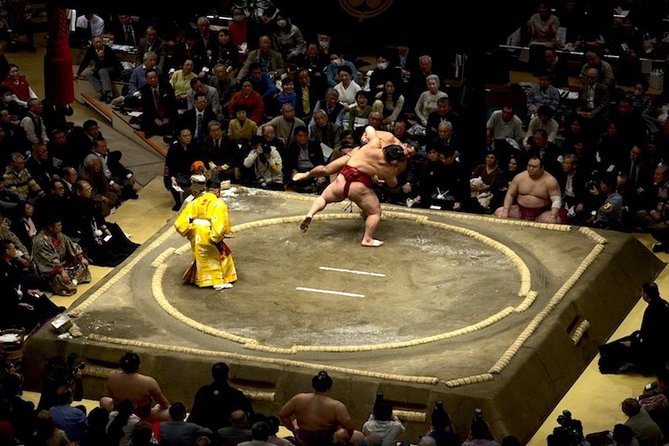
The standard tour is a join-in group experience with B or C seats on the second floor. It costs less and suits you if your main goal is to enter the arena, see the tournament, and receive guidance without paying for premium proximity.
The private tour includes S or A seats closer to the ring. This is the better choice for a special occasion, a small family group, or anyone who cares strongly about seeing the wrestlers at close range. The supplied price of $184.38 applies to the advertised experience, but you should check the final cost for the private category before choosing it.
There is a practical tradeoff. A private tour may offer better seating, but a lively and helpful guide can be just as important for a first visit. Standard seats still let you see the full tournament atmosphere, and many people consider the commentary the feature that makes the ticket worthwhile.
Chanko dinner: a useful cultural extension
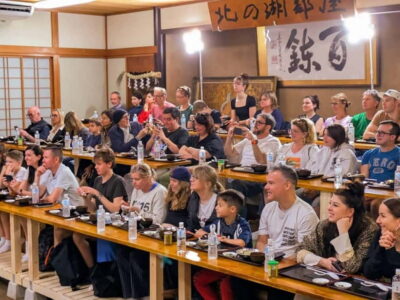
You can add dinner at a local chanko hot pot restaurant. Chanko nabe is the hearty stew traditionally associated with sumo wrestlers. It is cooked in a large pot with broth, vegetables, and usually chicken or pork.
The meal gives you a chance to connect the sport with the food culture around it. Chanko is practical: a large quantity can be prepared at once, making it suitable for hungry wrestlers after training. Dinner does not include drinks unless specifically stated, so plan for that extra cost.
Vegetarian requests are possible, but you need to write this in the special requirements field at checkout. Traditional broth usually contains pork or chicken, and the restaurant may substitute a vegetarian broth. Once the dinner request has been accepted, changes cannot be made one week before the tour date.
This is a worthwhile add-on if you want a fuller sumo-themed afternoon. If you already have dinner plans or prefer to keep the day flexible, the tournament itself is the essential part.
The off-season stable visit near Warabi Station
When no official tournament is taking place, the alternative is a morning practice visit at a sumo stable near Warabi Station, about 30 minutes from Tokyo Station.
This option runs from 8:00 am to noon and includes a guided look at wrestlers training, audio headsets, and chanko lunch after the session. The join-in group normally includes 8 to 16 people.
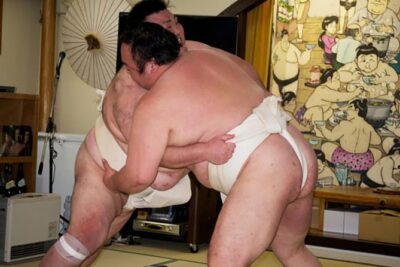
A stable visit offers a different kind of access. Instead of watching a public competition, you see training, routine, and discipline in a working sumo environment. It can feel more intimate than an arena, but you must understand exactly what you are buying.
The off-season stable experience does not include a tournament seat ticket. No basho is taking place on those dates. If you specifically want to watch official bouts, choose a tournament date rather than the stable option.
The meeting point directions arrive one week before the visit. Transportation is not included, so you must make your own way to Warabi Station and the meeting point.
Timing, group size, and the small practical details
The advertised tournament experience lasts about four hours and begins at 2:00 pm. The exact rhythm can vary. You may wait before entering, move through a crowded museum area, or visit parts of the arena independently if the group is too large to move comfortably.
The Sumo Museum can become congested. Your guide may ask you to look around on your own rather than lead the entire group through it. That is not a major flaw, but it means the visit may be brief or self-guided.
There is no hotel pickup or included transportation. You need to reach the meeting point yourself. The final location is sent by email at least one week before the date, so check your inbox and keep the message available on the day.
The tour is rated 4.9 out of 5 from 468 ratings, with 97 percent recommending it. The praise centers on smooth organization, hard-to-get tickets, clear headset commentary, and guides who bring real enthusiasm to the subject. One person found the headset volume too strong, so bring earplugs or volume-dampening earbuds if you are sensitive to sound.
Most people can participate, and the meeting points are near public transportation. Group discounts are available, which can improve the price for families or larger parties.
Is $184.38 a fair price?
At $184.38 per person, this is not a cheap afternoon. The value comes from three things: access to a ticket that can be difficult to secure, reserved seating, and a guide who explains a sport that is unfamiliar to many first-time visitors.
Official tickets can sell out very quickly. One person reported that tickets on the official sumo website disappeared within five minutes. That makes an arranged ticket useful, especially if your Japan schedule is fixed and you do not want to gamble on availability.
You are also paying a service fee for ticket arrangement and seating allocation. That cost is easier to justify if you value certainty and commentary. If you already understand sumo, speak Japanese, or only want to sit quietly and watch, a guide package may feel less necessary.
Book as early as possible, ideally three months before your visit and at least one month ahead. Group tickets are released by the Sumo Association only about four to seven weeks before the tournament date. If tickets cannot be obtained, the operator says it will notify you within four weeks and offer another date or a full refund.
The booking is non-refundable and cannot normally be changed. That makes date selection important. Do not reserve this before confirming that the tournament month fits your actual itinerary.
Who will enjoy this most?
I would recommend this to a first-time sumo spectator, a family with older children, a couple looking for a distinctly Japanese cultural event, or anyone who wants more than a quick photo outside an arena.
It is especially useful if you have little knowledge of the sport. The bouts are fast, the rules are formal, and the ranking system takes time to understand. A good guide turns confusion into part of the fun.
You may want to skip it if you dislike fixed schedules, do not want a group setting, or are visiting Japan outside the six tournament periods. The stable visit is a good alternative, but it is a training session, not tournament day.
FAQ
When do the official sumo tournaments take place?
Official basho take place six times each year. Tokyo hosts January, May, and September; Osaka hosts March; Nagoya hosts July; and Fukuoka hosts November. Each tournament lasts 15 days.
Where does the Tokyo tournament take place?
The Tokyo tournament takes place at Ryogoku Kokugikan.
What seats are included in the standard tour?
Standard group participants receive B or C chair seats on the second floor. B seats are generally in rows 7 through 11, subject to seating allocation.
What seats are included in the private tour?
The private tour uses S or A-class seats, which are closer to the ring than the standard second-floor seats.
Is transportation from my hotel included?
No. Hotel pickup and transportation are not included. You must make your own way to the meeting point, which is provided in the tour details sent by email at least one week before the date.
Is dinner included?
Dinner is optional. If you select the dinner add-on, the default meal is chanko hot pot without drinks. Vegetarian requests can be made at checkout.
What happens on an off-season date?
The off-season option is a morning practice visit at a sumo stable near Warabi Station. It runs from 8:00 am to noon and includes a guide, headset, and chanko lunch, but it does not include a tournament seat ticket.
Should you book it?
Book this experience if you want help understanding sumo and value having a tournament ticket arranged for you. The strongest reasons are the official venue, reserved seating, audio commentary, and guides who explain the sport with real enthusiasm.
Choose a tournament date rather than the stable visit if seeing live bouts is your priority. Choose the private category if ring proximity matters more than price. For most first-time visitors, the standard tour with optional chanko dinner offers the best balance: you get the event, the context, and a memorable taste of sumo culture without having to decode the whole spectacle alone.
Just added around Tokyo
- Tokyo 6hr Instagram Highlights Private Tour with Licensed Guide★ 5.0 · 38 reviews
- Tokyo Small Group Tour with Guide★ 4.5 · 38 reviews
- Tokyo Sumo Experience with Live Show & Audience Challenge★ 5.0 · 38 reviews
- Japanese Food Cooking Class in Asakusa, Tokyo★ 5.0 · 39 reviews
- Very popular in Harajuku♡Animal petting zoo★ 4.6 · 39 reviews
- Ramen Making from Scratch with Tokyo Mom(Vegan Option Available)★ 5.0 · 39 reviews
- Tokyo: Kimono Rental inside Shinjuku Gyoen National Garden★ 4.9 · 39 reviews
- Tokyo JDM Night: 600hp C63s AMG Edition 1 (Private)★ 4.9 · 39 reviews
Sumo Experiences, compared.
Tokyo Shinjuku Sumo Show & Experience with Photo
Read our review →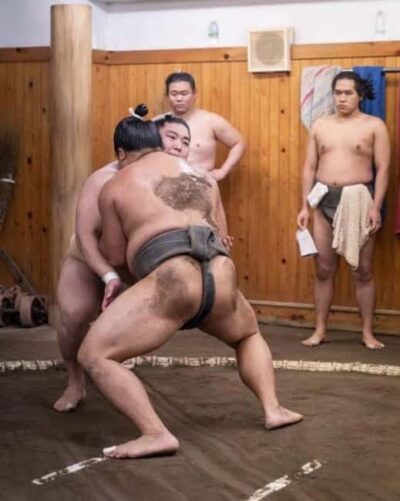
Sumo Show & Experience w/ Optional Kimono & Hot Pot
Read our review →
Authentic Sumo Experience in Tokyo: Enter the Sanctuary
Read our review →
Luxury Sumo Show Experience & Japanese cuisine & Drink
Read our review →Browse the lists this tour appears in