
Reviewed · SUMO EXPERIENCES
Watch Sumo Morning Practice at Stable in Tokyo
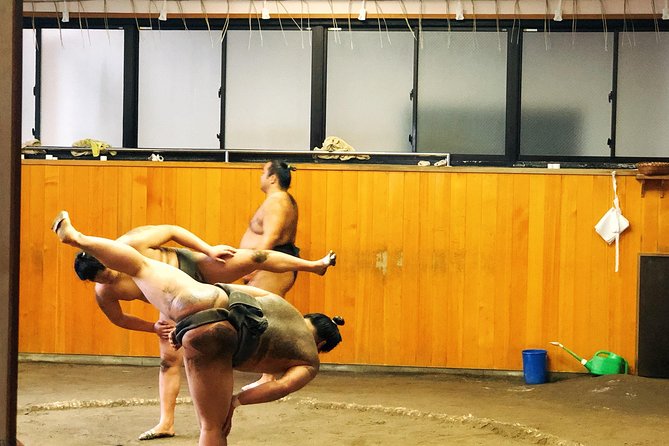
Sumo begins long before the tournament. This morning visit takes you inside a working sumo stable, where wrestlers stretch, drill, spar, and follow a strict daily routine away from the stadium crowd. I like the close view of the action and the chance to see sumo as a serious sport rather than a staged show. I also like the small-group format, with no more than 10 people listed for the activity. The main catch is simple: you must sit quietly on the floor for a long time, and the practice may last anywhere from 30 minutes to 90 minutes.
I love the gradual build of the training. You may first see stretching and repeated exercises, then the mood shifts as wrestlers collide in the dohyo, or sumo ring. I also appreciate the photos with the wrestlers at the end, though this part is not guaranteed if practice runs late. The experience costs $95.77 per person, which is fair for rare access to a private training setting, but it feels expensive if you expect a guided lesson or constant action.
This is a good choice for anyone curious about Japanese tradition, athletic discipline, and the human scale of sumo. It is less suitable if you need a chair, want lots of explanations, or prefer a fast-moving sightseeing tour.
In This Review
- Key points to know before booking
- What happens at the morning meeting point
- Entering a working sumo stable
- Reading the practice from warmup to sparring
- The floor seating is the real test
- Photos with the wrestlers at the end
- How much value do you get for $95.77?
- Who will enjoy this and who should skip it
- Practical advice for a smoother visit
- Should you book the sumo stable visit?
- FAQ
- How long does the sumo practice last?
- Is the activity held every month?
- Do I have to sit on the floor?
- Is food or drink included?
- Can I take photographs during practice?
- What is the cancellation policy?
Key points to know before booking
- Watch the complete training rhythm: Practice can move from quiet warmups and stretching to forceful sparring.
- Prepare to sit on the floor: The activity requires an extended seated period, often with legs tucked or crossed.
- Expect silence inside the stable: Talking loudly, eating, and intrusive cameras or flash photography are not allowed.
- The exact stable may be confirmed late: Conditions depend on the stable schedule, with details confirmed about one week before.
- Practice times change during tournament months: In Tokyo tournament periods, practice can last only 30 to 40 minutes.
- Arrive early for the best view: The space may be tight, and a front position makes a major difference.
What happens at the morning meeting point
You make your own way to the Tokyo meeting point. After meeting the guide and the rest of the small group, you go together to the sumo training center.
The itinerary lists Ryogoku Kokugikan as the stop, but you should not assume that the practice itself takes place inside the tournament arena. The stable location and operating conditions depend on the wrestlers’ schedule. Exact venue information may arrive only a few days before, and stable conditions can be confirmed about one week before the visit.
That late notice matters. Sumo stables are working training homes, not regular museums with fixed public opening hours. Practice can change, and the ending time varies from day to day. I recommend keeping your morning flexible and allowing extra time for transport, especially if you have a flight, train, or timed attraction afterward.
Some people find the meeting arrangements easy, while others have found the stable difficult to locate. A taxi can save trouble if the address is out of the way, but make sure you have the address written in Japanese. A prearranged meeting point helps, yet this is not a tour where you should casually wander over at the last minute.
More Sumo Experiences in Tokyo
- Tokyo: Sumo Show Experience with Chicken Hot Pot and a Photo
★ 4.8 · 6,678 reviews - Tokyo: Sumo Show and Dining Experience
★ 4.8 · 2,742 reviews - the SUMO show
★ 5.0 · 1,960 reviews
Entering a working sumo stable
The appeal begins when you step inside. This is not a theater performance built for an audience. You are watching professional wrestlers train, so your behavior matters.
You sit to one side of the room and keep quiet while the wrestlers work. Do not eat, speak loudly, or use a camera with a bright flash or intrusive sound. The room is meant for training, and the group is expected to observe without getting in the way.
That restraint is part of the experience. You see the sport on its own terms, with no artificial commentary or staged introductions. At the same time, it can leave you with questions. Some arrangements include a guide who explains the history and customs of sumo, while others may offer little more than help getting through the door. If background information is important to you, confirm exactly what guide service is included before paying.
A few names have been associated with especially helpful arrangements, including Hiroko and Ricko. Still, guide support may vary by booking and date, so do not assume that a full English explanation is guaranteed.
Reading the practice from warmup to sparring
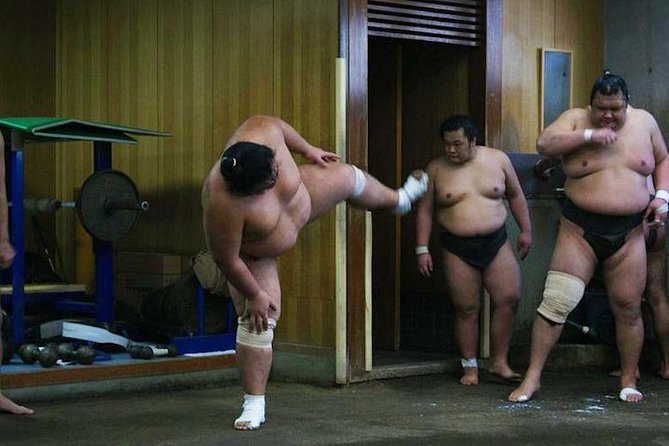
The training normally builds slowly. You may see stretching, warmup drills, footwork, and repeated sumo movements before the wrestlers begin more forceful contact work.
At first, the repeated exercises can look uneventful. That is the point of practice. Sumo depends on balance, leg strength, timing, posture, and the ability to absorb a powerful impact. Watching the same movement repeated helps you notice the discipline behind the spectacle.
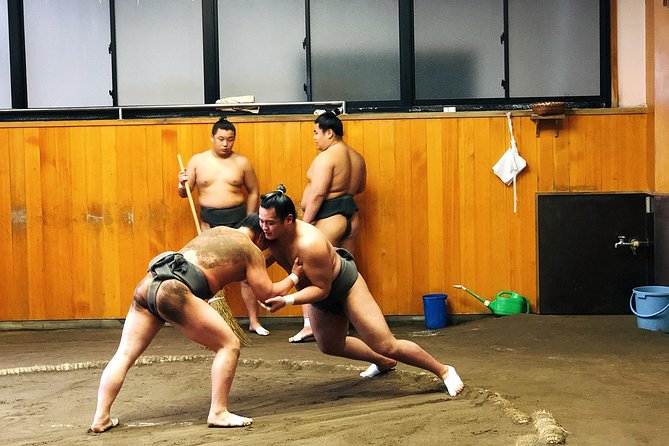
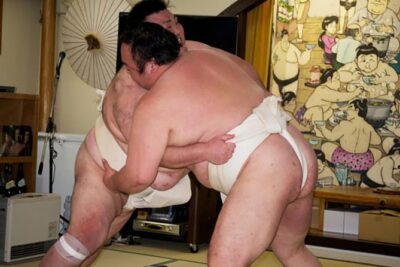
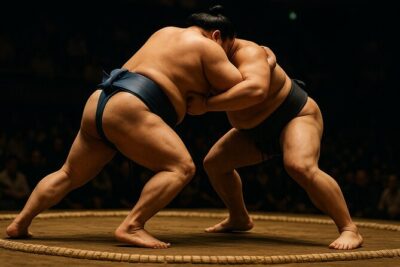
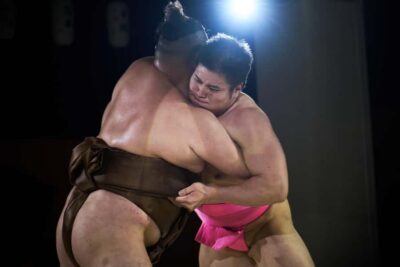
The contact portion is where the room changes. The sound and force of two large athletes meeting at close range can be startling. You may see wrestlers encourage younger or less experienced members, joke with one another, or offer advice between bouts. Those small moments show that a stable is also a team, with seniority and training roles shaping the room.
The full session may last 60 to 90 minutes, but it is not fixed. During Tokyo tournament season in January, May, and September, usually around the 15th to 25th, practice may be reduced to 30 to 40 minutes. The price remains the same even when the training period is shorter.
That shorter session can still be worthwhile if you care about seeing the wrestlers close up. But if you are booking mainly for a long practice, avoid those tournament periods when possible. Tournaments are held in other months too, and a stable may be closed during competition periods. Dates vary each year, so check the operating dates carefully.
The floor seating is the real test
The biggest practical issue is not the early start. It is the seating.
You may sit on a thin mat over a hard floor for much of the practice. The activity information warns that you need to sit on the floor for an extended period, and that warning deserves attention. Some people manage comfortably. Others develop painful legs, hips, knees, or back problems and leave before the practice ends.
Chairs may be available on request, but the supply is limited. One account described the available seats as small stools, and the view can be poor from a chair. Ask for one in advance if you need it. Do not wait until you arrive and assume there will be a comfortable seat waiting.
Your position also matters. The viewing area can become crowded, and someone sitting in front of you may block much of the ring. A coach’s cushion or sitting position may obstruct the view, too. Arriving early gives you a better chance at the front, although group size and stable layout control the final result.
You also need to keep your feet pointed away from the ring and avoid shifting around more than necessary. This is a quiet, respectful setting, not a place to stretch your legs whenever you like. If sitting on the floor is painful for you, the price will not make the experience good value.
A completely different kind of day out in Tokyo:
- Mt Fuji and Hakone 1-Day Bus Tour Return by Bullet Train
★ 5.0 · 26,383 reviews - 1-Day Tokyo Bus Tour
★ 5.0 · 14,250 reviews - Tokyo: TOKYO SKYTREE® Admission ticket
★ 4.5 · 11,192 reviews - Tokyo: teamLab Planets TOKYO Digital Art Museum Entry Ticket
★ 4.6 · 9,779 reviews
Photos with the wrestlers at the end
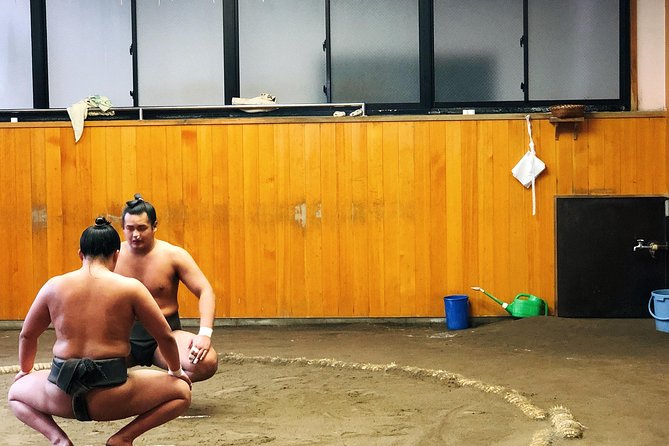
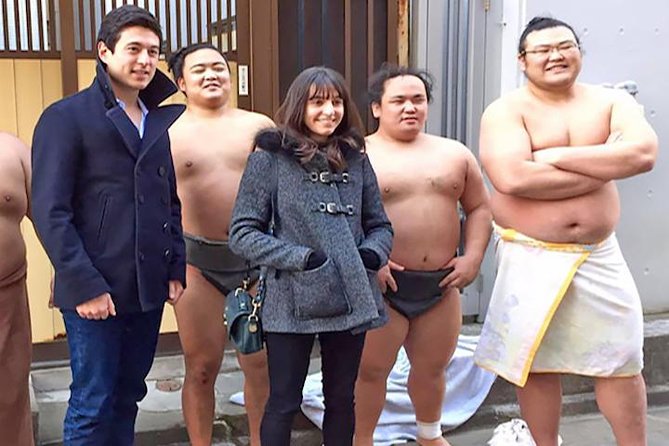
Photos with the sumo wrestlers are included, and they provide a pleasant finish to the visit. After the practice, there is usually time to take pictures before you say goodbye and return to the meeting point.
This is a short photo opportunity, not a long personal meeting. The wrestlers have been training and may need to continue their routine, so keep your expectations modest.
Timing is the main risk. Practice can run longer than expected, and when that happens, the photo session may be shortened or missed. The ending time is not guaranteed because the stable controls the schedule. If the photos are essential to you, avoid scheduling another activity immediately afterward.
The photo option adds value to the $95.77 price, but the real reason to book is the training itself. Think of the picture as a bonus, not the main event.
How much value do you get for $95.77?
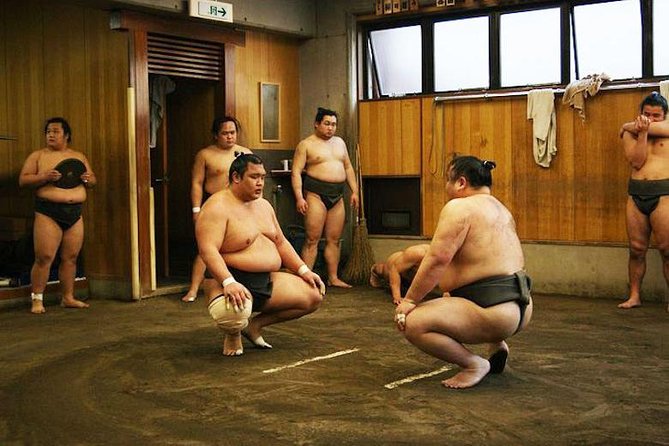
At $95.77 per person, this is not a cheap way to fill an hour in Tokyo. You are paying for access to a private sumo environment, entrance arrangements, and a controlled visit that would be difficult to organize independently.
I think the value is strongest if you have a real interest in sumo or Japanese customs. Seeing the wrestlers’ strength from only a short distance gives you an understanding that television cannot provide. The heavy collisions, repeated drills, and formal behavior make the visit feel different from attending a tournament as a spectator.
The value is weaker if you expect a detailed lecture, guaranteed two-hour access, or a polished attraction with comfortable seating. The advertised schedule covers two hours in some descriptions, but the actual practice is generally 60 to 90 minutes and can be shorter. A one-hour listing also appears in the tour details. Treat the schedule as approximate.
A maximum of 10 participants should make the experience feel more personal, but the accounts of crowded seating suggest that the group arrangement can differ in practice. Ask about the expected group size and seating setup if the view is especially important to you.
Who will enjoy this and who should skip it
I would recommend this experience to you if you:
- Want to see sumo training rather than only attend a public tournament.
- Enjoy observing customs without needing constant entertainment.
- Can sit quietly on the floor for at least an hour.
- Are comfortable with an early morning start.
- Have room in your schedule for an uncertain finish.
- Want an unusual cultural activity in Tokyo.
I would be cautious if you:
- Have back, knee, hip, or leg problems.
- Need a guaranteed chair.
- Want a guide explaining every movement.
- Expect to ask questions during practice.
- Need to finish at a precise time.
- Are mainly booking for the photo session.
Children under 13 cannot take part, and the minimum age is 13. Most people can participate, but the floor seating is the important physical requirement.
Practical advice for a smoother visit
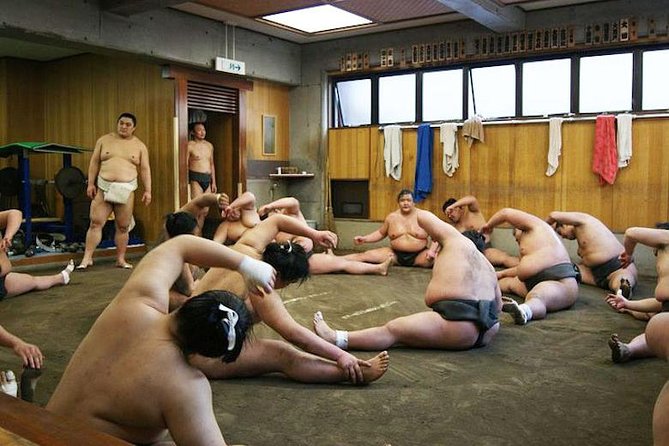
Keep your clothing comfortable enough for floor sitting. You may spend much of the session in one position, so avoid planning a long walk immediately afterward if your legs tend to go numb.
Arrive early. A good place near the front can change what you see, especially when the viewing area is low and compact. If you arrive late, you may have little choice about where to sit.
Use a quiet camera setting. Flash photography and intrusive sounds are not appropriate. Eat and drink before you enter because food and beverages are not included, and eating inside the stable is not allowed.
Read a little about sumo rank and etiquette before you go. Even a basic understanding of the wrestler hierarchy, the ring, and the purpose of warmup exercises will make the repeated drills easier to follow. The sport becomes more interesting when you know what to watch for.
Build flexibility into your day. Practice can end early, run long, or be shortened during tournament season. The experience is best paired with plans that do not depend on leaving at exactly 10:00 a.m.
Confirmation is sent within 48 hours of booking, subject to availability. Date changes are not accepted within three days of the experience, and the stated cancellation policy allows a full refund when you cancel at least six full days before the start time. A 50 percent refund applies two to six full days before the start, while cancellations less than two full days ahead receive no refund. The listed policy also says poor weather may lead to a different date or a full refund.
Should you book the sumo stable visit?
Book it if you want a quiet, close look at the work behind Japan’s most famous traditional sport. The powerful sparring, strict etiquette, and sight of wrestlers supporting one another can make this a highlight of a Tokyo visit.
Skip it if floor seating sounds miserable or if you need a tour guide to explain every part of what you see. This is authentic precisely because it is not a highly produced show. For the right person, that is the charm. For someone expecting a comfortable cultural performance, it may feel slow and under-explained.
My advice is to book during a non-tournament practice period, request a stool well ahead of time if needed, arrive early, and keep the rest of your morning open. Do that, and $95.77 buys a rare look at sumo before the crowds and bright lights take over.
FAQ
How long does the sumo practice last?
The practice usually lasts between 60 and 90 minutes, but the ending time varies. During Tokyo tournament season in January, May, and September, it may last only 30 to 40 minutes.
Is the activity held every month?
No. Sumo stables may close during tournament periods, and the exact operating dates vary each year. The listed opening periods include February 2 to 14, March 31 to April 30, and May 1 to 9, 2026, from Monday through Saturday, 8:00 a.m. to 10:00 a.m.
Do I have to sit on the floor?
Yes. Participants must be able to sit on the floor for an extended period. A limited number of stools or chairs may be available on request, but the view from them may not be as good.
Is food or drink included?
No. The experience does not include food or beverages, and eating inside the stable is not permitted.
Can I take photographs during practice?
You must avoid bright flash photography and cameras with intrusive sounds. There is time for photos with the wrestlers at the end, although this may be missed if practice runs late.
What is the cancellation policy?
You can receive a full refund by canceling at least six full days before the start time. A 50 percent refund applies when canceling two to six full days before the start, and cancellations less than two full days before the start are not refunded.
Just added around Tokyo
- Tokyo 6hr Instagram Highlights Private Tour with Licensed Guide★ 5.0 · 38 reviews
- Tokyo Small Group Tour with Guide★ 4.5 · 38 reviews
- Tokyo Sumo Experience with Live Show & Audience Challenge★ 5.0 · 38 reviews
- Japanese Food Cooking Class in Asakusa, Tokyo★ 5.0 · 39 reviews
- Very popular in Harajuku♡Animal petting zoo★ 4.6 · 39 reviews
- Ramen Making from Scratch with Tokyo Mom(Vegan Option Available)★ 5.0 · 39 reviews
- Tokyo JDM Night: 600hp C63s AMG Edition 1 (Private)★ 4.9 · 39 reviews
- Tokyo: Kimono Rental inside Shinjuku Gyoen National Garden★ 4.9 · 39 reviews
Sumo Experiences, compared.
Tokyo Shinjuku Sumo Show & Experience with Photo
Read our review →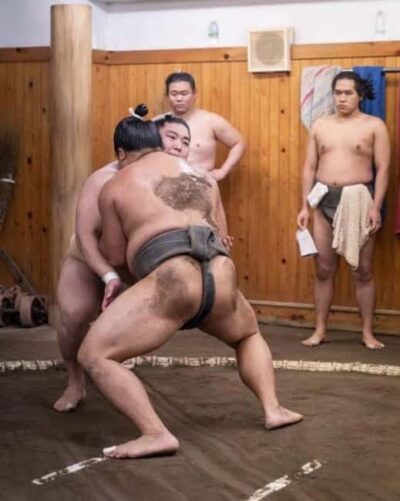
Sumo Show & Experience w/ Optional Kimono & Hot Pot
Read our review →
Authentic Sumo Experience in Tokyo: Enter the Sanctuary
Read our review →
Luxury Sumo Show Experience & Japanese cuisine & Drink
Read our review →Browse the lists this tour appears in