
Reviewed · HISTORICAL TOURS
Yanaka District: Historical Walking Tour in Tokyo’s Old Town
Old Tokyo still has quiet corners. This 210-minute walk through Yanaka trades skyscraper views for narrow lanes, local shops, shrine gates, and the easy rhythm of an old neighborhood. I especially like the small groups of seven or fewer and the chance to paint your own Maneki neko in an old house cafe. The main drawback is simple: you need comfortable walking shoes, and some paths are not suitable for wheelchairs or strollers.
I also like how the tour links several kinds of local life instead of stopping at one famous sight. You visit Nezu Shrine, pass through residential streets, sample food at Yanaka Ginza, and hear explanations from an English-speaking guide. The 75-minute cafe break helps, but this remains a long walking tour, and Tokyo’s summer heat can make it tiring.
In This Review
- Key points to know before booking
- Why Yanaka feels unlike central Tokyo
- Nezu Shrine and its red Torii gates
- Hebimichi and the quieter residential lanes
- The 75-minute cafe break and lucky cat craft
- Yanaka Ginza and the flavors of old Tokyo
- What the small group adds
- Is $79 a fair price?
- Walking, weather, and comfort
- Who will enjoy this Yanaka walk most?
- Should you book the Yanaka District tour?
- FAQ
- Where does the Yanaka walking tour meet?
- How long does the tour last?
- What language is the tour conducted in?
- How large is the group?
- What is included in the price?
- Should I bring cash?
- Is the tour suitable for wheelchairs or strollers?
- Can I cancel the tour for a refund?
Key points to know before booking
- Nezu Shrine comes early, with red Torii gates, traditional architecture, and an introduction to Shinto beliefs.
- Yanaka survived wartime damage and major earthquakes, giving the district its old Tokyo character.
- The cafe stop lasts about 75 minutes, including a drink, sweet treat, and Maneki neko painting.
- Yanaka Ginza is the food finale, with local deli items, sweets, and snacks to try with cash.
- Groups are capped at seven people, making it easier to ask questions and adjust the conversation.
- The tour costs $79 per person, a fair price if you value a guide, craft activity, food samples, and a personal look at daily life.
Why Yanaka feels unlike central Tokyo
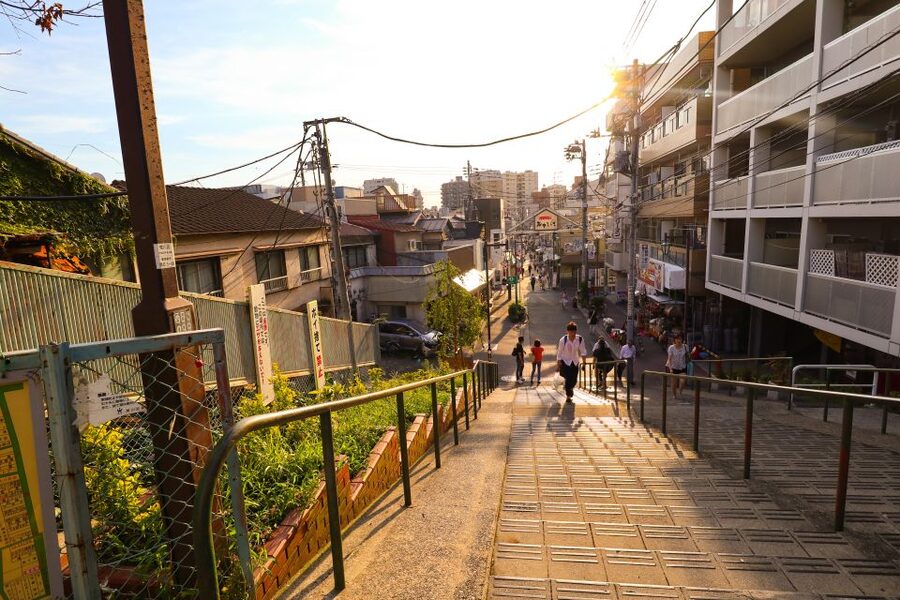
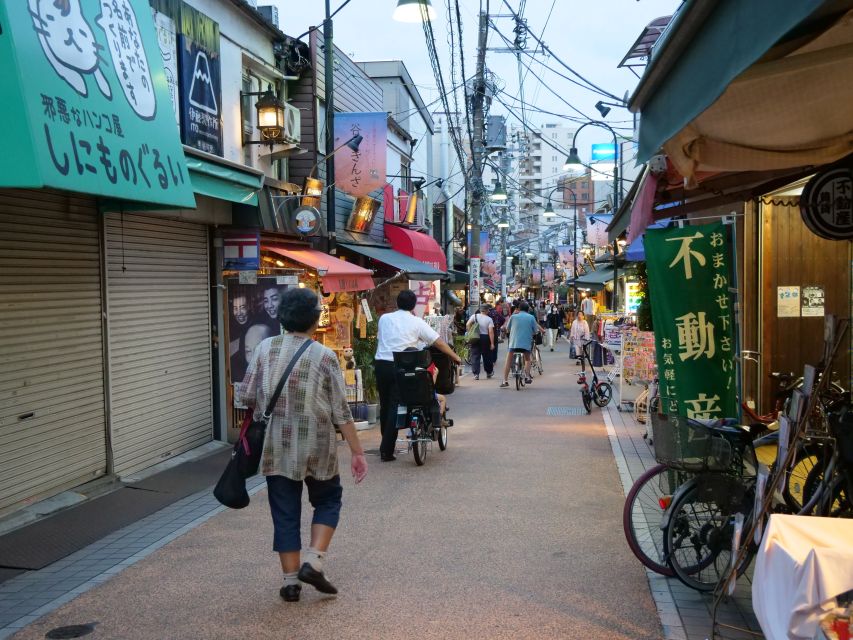
Tokyo can seem built for speed. Shinjuku and Shibuya give you towers, giant crossings, bright signs, and crowds moving in every direction. Yanaka offers a slower view of the city, with low buildings, small shops, winding lanes, temples, cemeteries, and homes that feel far removed from modern downtown.
That contrast is the point of this outing. You are not simply ticking off a shrine and a shopping street. You are walking through a district where ordinary routines remain part of the scene. A shop opens for the day, a local buys food, a quiet lane turns toward a temple, and your guide explains what you are seeing.
Yanaka is known for surviving the attacks of World War II and the major earthquakes that reshaped much of Tokyo. That survival helps explain the area’s nostalgic appearance. You should not expect every building to be ancient, but the neighborhood has kept a scale and mood that modern Tokyo often lacks.
The tour begins outside Tokyo Metro Nezu Station Exit 1. Your guide holds a red or orange MagicalTrip sign and waits at street level, directly in front of the stairs. Arrive early. If you miss the group, you cannot join later, reschedule, or receive a refund.
More History Tours in Tokyo
- Tokyo: Imperial Palace and Shogun Historical Walking Tour
★ 5.0 · 2,251 reviews - Tokyo: Imperial Palace Japanese History Walking Tour
★ 4.9 · 987 reviews - Yanaka Walking Tour: Historic and Traditional District of Tokyo
★ 5.0 · 530 reviews
Nezu Shrine and its red Torii gates
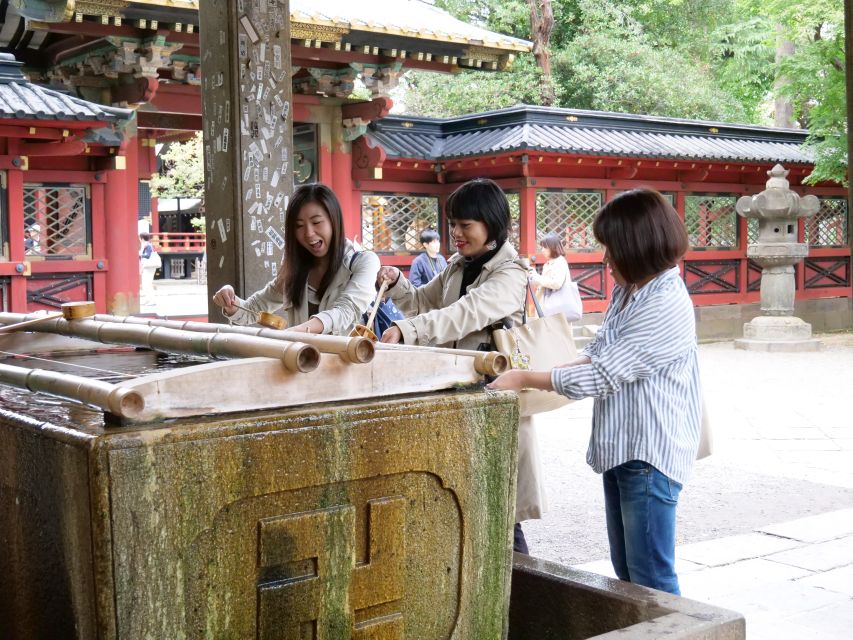
The first stop is Nezu Shrine, reached from the meeting point at Nezu Station. The shrine visit lasts about 20 minutes, so this is an introduction rather than a full archaeological or architectural study.
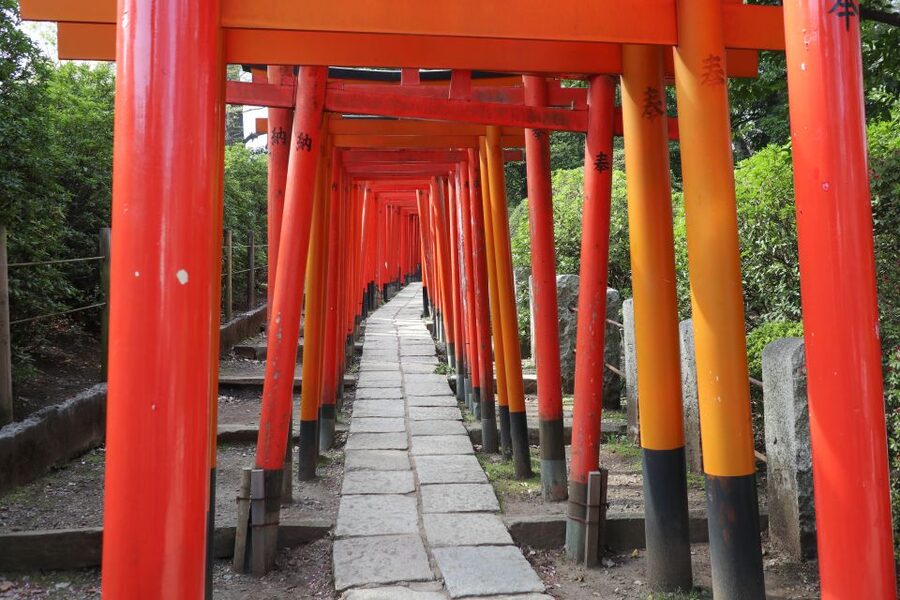
The red Torii gates are the visual prize. They create one of the tour’s best photo opportunities, especially for anyone who wants a clear sense of traditional Japanese shrine design. Your guide explains Shinto, Japan’s indigenous religious tradition, and helps you understand how religion appears in everyday Japanese life.
That explanation matters. A shrine is not simply a decorative site with gates and a place to take pictures. Your guide can explain the customs and ideas behind the setting, giving you a better foundation for later shrine visits during your trip. Hina has been praised for answering cultural and historical questions in clear English, while Masae gave a detailed explanation of Nezu Shrine before leading the group into Yanaka’s smaller streets.
You should allow time to listen rather than rush through the gates. The stop is short, but it gives the rest of the walk a useful frame. You begin with a major religious site, then move into the homes, shops, and food streets where local life continues.
Hebimichi and the quieter residential lanes
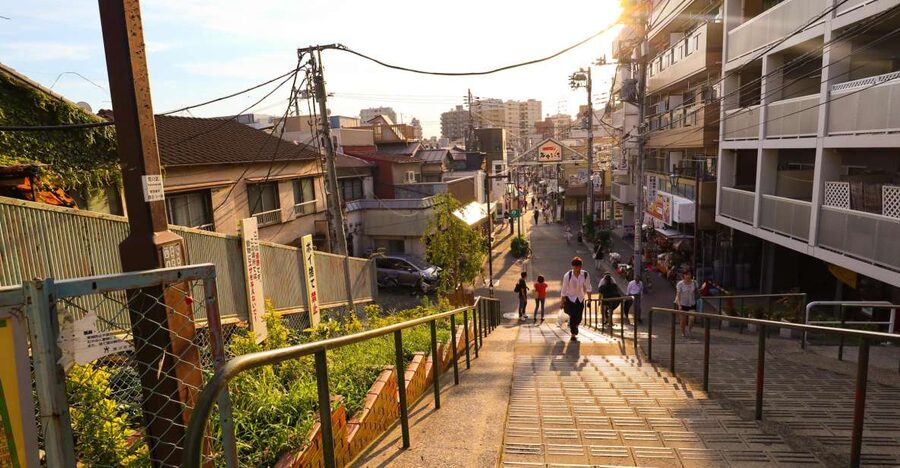
After Nezu Shrine, the route moves through Hebimichi and nearby residential areas. This section takes about 45 minutes and is where the tour begins to feel less like sightseeing and more like a neighborhood walk.
The streets are narrow and winding, with local shops and small stalls along the way. Your guide points out details you could easily miss alone and explains how the district developed. Kenji, Hina, Yoko, Inok, and Hana are among the guides praised for answering questions, sharing local stories, and adapting the walk to the group’s interests.
This is a good stretch for conversation. In a large tour, you might hear a short speech at a landmark and then move on. With fewer than seven people, you can ask about architecture, religion, food, shopping, or ordinary Japanese customs as they arise. One guide even helped connect a participant with an art gallery, showing the benefit of having a local person beside you rather than relying only on a map.
There is one important limit. If you want a technical survey of historic architecture, the information may feel light in places. One particularly history-focused participant wanted more detail about which buildings were genuinely old and what Yanaka looked like in earlier decades. The guide offers context, but this is not a specialist preservation tour.
The 75-minute cafe break and lucky cat craft
The cafe stop is the tour’s change of pace. You spend about 75 minutes at a local cafe, receive one drink and a sweet treat, and paint a small Japanese beckoning cat, known as a Maneki neko.
This is more than a quick coffee stop. After walking through shrine grounds and residential lanes, you get time to sit, talk, and make something with your hands. The craft also gives solo participants and families an easy way to connect with the rest of the group. Several people especially enjoyed this part as a calm break between two longer walking sections.
The painting is suitable for people who like simple creative activities, but you should not book this expecting a formal art class. The appeal is the relaxed setting and the personal souvenir. Your finished cat becomes a small reminder of Yanaka rather than another shop-bought item in your luggage.
The cafe includes a drink and sweet, but additional food and drinks cost extra. Bring cash, since many older shops in the district do not accept credit cards. Dietary needs require care as well. The food is prepared in kitchens outside the tour company’s control, allergy-free arrangements are not guaranteed, and substitutions may not be possible at every stop.
More Walking Tours in Tokyo
- Tokyo Tsukiji Fish Market Food and Culture Walking Tour
★ 5.0 · 3,184 reviews - Tokyo: Shinjuku Local Bar and Izakaya Guided Walking Tour
★ 4.9 · 1,794 reviews - Tokyo: Tsukiji Fish Market Food and Walking tour
★ 5.0 · 1,724 reviews - Tokyo: Asakusa Walking Tour with Sensoji Temple Visit
★ 4.8 · 1,583 reviews
Yanaka Ginza and the flavors of old Tokyo
The largest portion of the walk is around Yanaka District, including roughly 100 minutes at Yanaka Ginza. This shopping street is the food-focused finish, with shops selling deli foods, sweets, and other local snacks.
Yanaka Ginza works well as the final stop because it brings together the sights and ideas introduced earlier. You have seen the shrine, walked past homes and smaller businesses, and learned about the neighborhood’s past. Here, you get to taste the district in a more direct way.
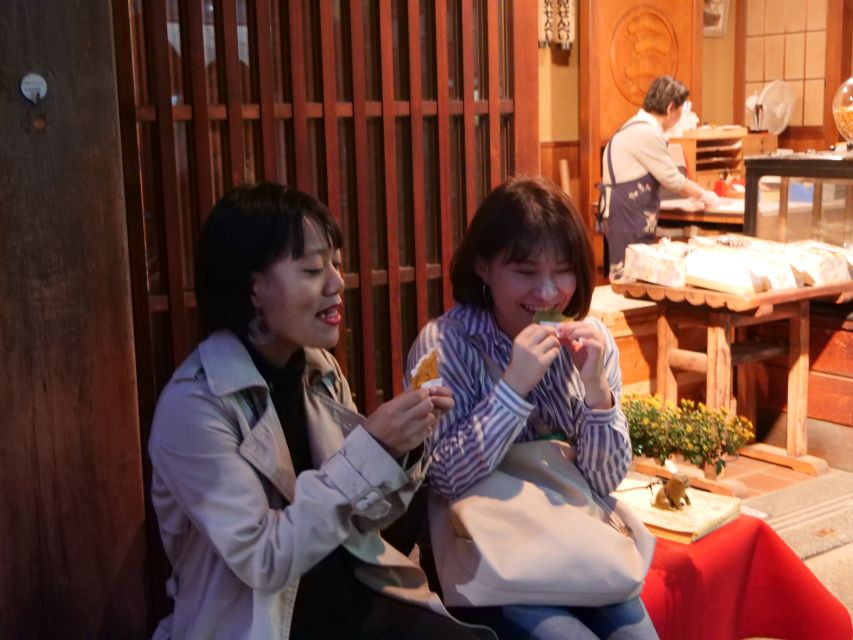
The included samples are local snacks and sweets, with deli foods available to try. You may also want to buy something extra, especially if you see a gift or snack that is difficult to find in the newer shopping districts. Marcus offered the practical tip of saving souvenir shopping for this part of the tour, where the guide can help identify handcrafted and locally appropriate items.
The street is not just a food court for visitors. It serves as a shopping area tied to the neighborhood, which is why the experience feels more grounded than a standard tasting stop. Still, it is a working shopping street, not a staged historical attraction. Conditions can vary, shops may be crowded, and the range of samples depends on what is available during the visit.
You finish back at Nezu Station, making the route convenient for your next Tokyo activity. The tour does not include transportation between stops because the experience is built around walking.
What the small group adds
A group limit of seven is one of the strongest reasons to choose this outing. Yanaka’s narrow streets are better suited to a small party, and you can usually hear the guide without the feel of a large procession.
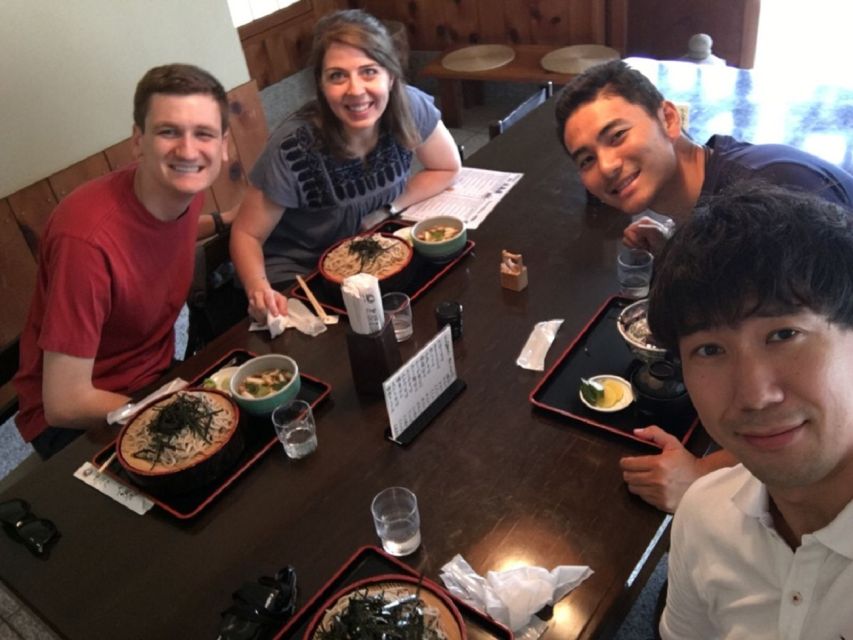
The format also makes the experience more personal. Guides such as Yoko, Hina, Ken, Hana, Ramesh, and Mark have been praised for friendly conversation, clear explanations, photos, and practical Japan advice. One participant was the only person booked on a particular departure and received a more personal walk, while another family enjoyed having enough space to ask questions and paint cats together.
A small group does not guarantee the same guide or the same conversation every time. Your experience will depend on the guide assigned that day. The supplied information identifies English as the tour language, and the consistent strength of the experience is the chance to hear real local explanations rather than follow a script silently.
The guide can also help you notice the less obvious parts of Yanaka. You might pass a cemetery, a quiet temple, a small gallery, or a shop you would never find while moving between Tokyo’s headline districts. The tour’s value lies in these transitions.
Is $79 a fair price?
At $79 per person, this is not the cheapest way to walk around Yanaka. You could visit Nezu Shrine and Yanaka Ginza independently for far less. If you are comfortable researching Shinto customs, finding the lanes yourself, and choosing your own snacks, a self-guided visit will cost less.
The price makes more sense when you count what is bundled in. You receive a 210-minute guided walk, an English-speaking local guide, a drink and sweet at the cafe, the lucky cat painting, food samples, and tour photos. You also get help with interpretation, shopping, and neighborhood context that can be hard to find on your own.
I consider it good value for a first visit to Tokyo, especially if you want a cultural orientation without committing to a full-day tour. It is also useful early in a Japan trip. Hina, for example, has given practical travel tips that helped participants later in their journeys.
The value is weaker if you dislike group activities, do not care about local food, or want a long historical lecture at each site. The tour is built around variety and conversation. You move from shrine to lane to cafe to market, rather than spending hours at one monument.
Walking, weather, and comfort
The total duration is three and a half hours, and you should treat it as a real walking outing. Wear shoes and clothes you can comfortably use on narrow streets and for extended periods.
Tokyo’s weather can be extreme. Summer temperatures may reach 40°C, while winter temperatures can fall to minus 5°C. Heat, cold, and rain can change how enjoyable the walk feels, so check the forecast and dress for the season. One participant appreciated a guide lending an umbrella for shade during a very hot day, but you should not rely on that being available for every departure.
The route includes locations that are not accessible to wheelchairs or strollers. The experience is not suitable for people with mobility impairments. Even if you walk well, keep the weather in mind and take advantage of the cafe break as a chance to rest.
Cash is essential. Older shops often do not take cards, and the tour does not cover extra food or drinks. Carry enough for optional purchases and snacks beyond the included samples.
Who will enjoy this Yanaka walk most?
I would recommend this tour to you if you want to see a side of Tokyo that does not appear in the usual downtown itinerary. It suits first-time visitors who need local context, repeat visitors who want something beyond major sights, and solo participants who prefer a friendly small group.
Families can enjoy the craft and food stops, provided everyone is comfortable walking. Couples may like the quiet lanes and shared painting activity. People interested in Japanese religion, traditional neighborhoods, local shopping, and everyday customs will get the most from the guide’s explanations.
The tour is less suitable if you need step-free access, have strict dietary restrictions, or want to avoid walking in hot or cold weather. It is also not the right choice for anyone looking for a fast list of famous Tokyo sights. Yanaka rewards patience and attention.
Should you book the Yanaka District tour?
Book it if you want a gentle but substantial introduction to old Tokyo, with a shrine, local streets, a hands-on craft, and food sampling in one compact outing. The strongest features are the small group size, friendly English-speaking guides, and the way the route connects history with ordinary neighborhood life.
I would schedule it near the beginning of your Tokyo stay, then use the shopping advice and cultural background elsewhere in the city. Bring cash, arrive early at Nezu Station Exit 1, and expect a walk rather than a ride. If that sounds like your kind of afternoon, $79 buys a well-rounded experience with enough structure to be easy and enough local character to feel personal.
FAQ
Where does the Yanaka walking tour meet?
Meet outside Tokyo Metro Nezu Station Exit 1. Go upstairs to street level, where the guide waits in front of the stairs with a red or orange MagicalTrip sign.
How long does the tour last?
The tour lasts 210 minutes, or three and a half hours. The route finishes back at Nezu Station.
What language is the tour conducted in?
The tour is conducted in English with a live local guide.
How large is the group?
The group is limited to seven participants, creating a small-group experience.
What is included in the price?
The price includes the walking tour, local guide, one drink and sweet treat at a cafe, the lucky cat painting activity, local snack and sweet samples, and tour photos.
Should I bring cash?
Yes. Bring cash for extra food, drinks, and purchases because many older shops in Yanaka do not accept credit cards.
Is the tour suitable for wheelchairs or strollers?
No. Some locations on the route are not accessible by wheelchair or stroller, and the tour is not suitable for people with mobility impairments.
Can I cancel the tour for a refund?
You can cancel without charge up to 24 hours before the tour start time for a full refund. Arriving late and missing the group does not qualify for a refund or rescheduling.
Just added around Tokyo
- Tokyo 6hr Instagram Highlights Private Tour with Licensed Guide★ 5.0 · 38 reviews
- Tokyo Small Group Tour with Guide★ 4.5 · 38 reviews
- Tokyo Sumo Experience with Live Show & Audience Challenge★ 5.0 · 38 reviews
- Japanese Food Cooking Class in Asakusa, Tokyo★ 5.0 · 39 reviews
- Very popular in Harajuku♡Animal petting zoo★ 4.6 · 39 reviews
- Ramen Making from Scratch with Tokyo Mom(Vegan Option Available)★ 5.0 · 39 reviews
- Tokyo JDM Night: 600hp C63s AMG Edition 1 (Private)★ 4.9 · 39 reviews
- Tokyo: Kimono Rental inside Shinjuku Gyoen National Garden★ 4.9 · 39 reviews
Historical Tours, compared.
World Heritage Shirakawa-go and Experience Tours from Kanazawa
Read our review →
Imperial Palace and Shogun Historical Walking Tour
Read our review →
World Heritage Kyoto & Nara Uji Authentic Matcha Experience
Read our review →
Kyoto Gion: 2-Hour Geisha Culture & History Walking Tour
Read our review →
World Heritage Shirakawa-go Morning Guided Tour
Read our review →
Hiroshima Historical Walking Tour – Why A-Bomb was Dropped
Read our review →
Hiroshima Peace (Heiwa) Walking Tour at World Heritage Sites
Read our review →Browse the lists this tour appears in