
Reviewed · RAMEN & NOODLE TOURS
90 min Shared Handmade Udon Experience
Feet make better udon than hands alone. At UDONZIN美糸 in Osaka, you knead Sanuki udon dough with your feet, then enjoy noodles cooked by the chef in a small restaurant that appeared in the Michelin Guide from 2018 through 2023. I like the hands-on work and the chance to eat the result right away. I also like that you take home a recipe, so the class has value beyond one meal.
The main drawback is the fixed 90-minute schedule and shared format. You may work with a group of up to 20 people, and the restaurant needs you to arrive on time before regular service resumes. This is also a poor fit for anyone with a wheat allergy.
In This Review
- Key points about this Osaka udon class
- Making udon with your feet in Osaka
- From flour to a bowl of fresh noodles
- What the Michelin connection really adds
- The instructors and the family factor
- A 90-minute schedule that stays focused
- What your $52.85 includes
- Food restrictions and vegetarian participation
- The social side of a shared class
- Photos, the recipe, and what you take home
- Cancellation and planning advice
- Who should book the udon experience?
- Should you book this Osaka udon class?
- FAQ
- How long does the handmade udon experience last?
- Where does the class meet?
- Is the udon tasting included in the price?
- Are drinks included?
- Can vegetarians join?
- Is the class suitable for children?
- Can I cancel for a full refund?
Key points about this Osaka udon class
- You knead Sanuki udon with your feet, creating the firm yet smooth texture this noodle style is known for.
- The chef cooks your noodles for you, serving them hot or cold with broth made from kombu, shiitake mushrooms, and katsuobushi.
- The class takes place at a Michelin-listed restaurant, featured in the guide from 2018 through 2023.
- Keiko and Nozomi are praised instructors, with families and larger groups especially enjoying their warm, clear teaching.
- The fee includes a recipe and class photos, while sake, beer, tempura, and extra udon cost extra.
- Vegetarians can participate, but you should share dietary restrictions in advance.
Making udon with your feet in Osaka
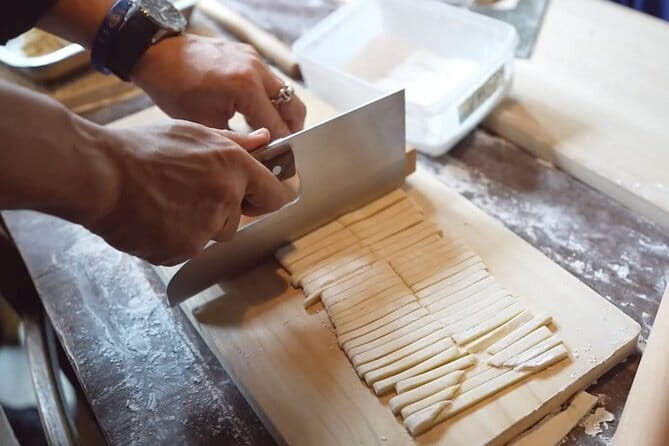
The heart of this experience is simple, practical, and a little funny: you make udon dough by stepping on it. This is the Sanuki method, associated with noodles that are firm but not tough, smooth but not limp.
You begin with a lesson in the process and the background of udon. The exact teaching order may vary, but the class is built around hands-on preparation rather than a demonstration where you only watch. That matters if you want to understand how the dough changes under pressure and why handmade noodles feel different from packaged ones.
Using your feet is not a gimmick added for tourists. It is part of the traditional method described for Sanuki udon. The pressure helps develop the dough and gives the finished noodles their distinctive bite. You do not need cooking experience, and children aged two and above can take part.
I would wear trousers or other comfortable clothes that you do not mind getting messy. The activity is meant to be relaxed and social, but flour and dough are part of the deal. Families should also remember that the class fee for children is ¥5,000, while the listed adult price is $52.85 per person.
The class requires at least two participants. If you are alone, or if your party is one adult with children, contact Udonzin Beat before booking so the team can find a suitable session. That rule is important because a solo booking may not fit the class format.
More Ramen Tours in Osaka
- Osaka: Five Must-See Highlights Walking Tour & Ramen Lunch
★ 4.7 · 411 reviews - Osaka: Ramen and Gyoza Cooking Class in Dotonbori
★ 5.0 · 378 reviews - Ramen and Gyoza Cooking Class in Osaka
★ 5.0 · 202 reviews
From flour to a bowl of fresh noodles
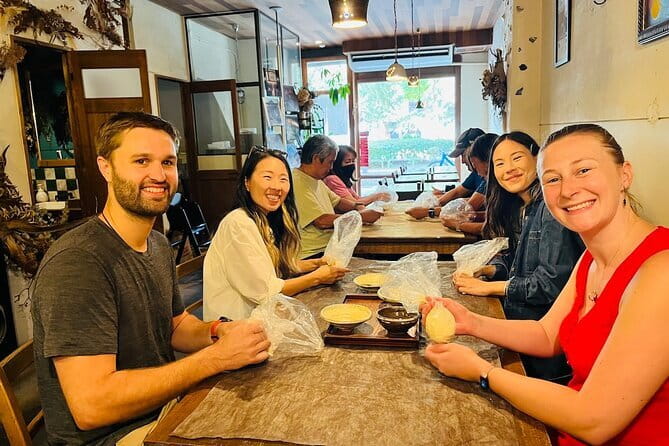
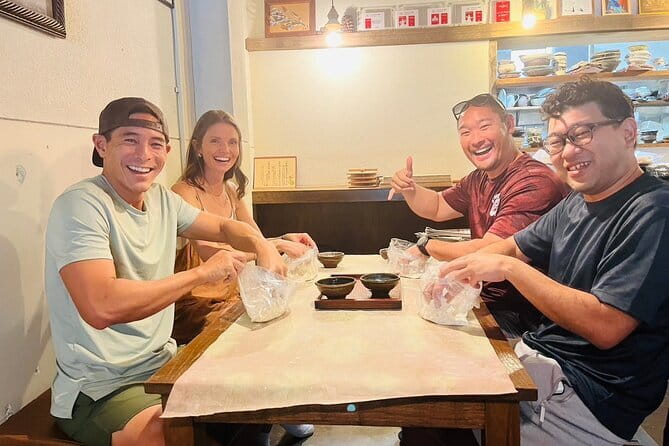
After you prepare the dough, the chef cooks your noodles. You do not have to manage a hot kitchen while trying to enjoy the social part of the class. The result is served as an udon tasting, either hot or cold.
The broth is made with natural, additive-free ingredients: kombu, shiitake mushrooms, and katsuobushi, also known as bonito stock. These ingredients are central to Japanese cooking, and the broth gives the finished noodles a clear sense of place. The meal is not just a sample of what you made. It shows how the noodles work in a complete dish.
You may prefer hot udon if you want a comforting bowl with warm broth. Cold udon offers a different way to notice the noodles themselves, especially their smoothness and firm texture. The choice is useful because it lets you match the dish to your appetite and the day.
The noodles are served in attractive bowls, which adds a pleasant restaurant touch to the final stage. The class is not a cooking lesson followed by a rushed taste at a worktable. The chef takes over the cooking and presents your udon as a proper dish.
You can order extra udon or side dishes such as tempura, but these are not included in the class fee. Sake and beer are also available for purchase. I would treat these as optional additions rather than assume they are part of the package, since they can change the final cost.
What the Michelin connection really adds
UDONZIN美糸 was featured in the Michelin Guide from 2018 through 2023. That does not turn a short noodle class into a formal fine-dining event, and you should not expect a long tasting menu. The value is more specific: you get to learn a regional noodle technique in the restaurant where the food is served professionally.
The restaurant setting also gives the class more context than a generic cooking studio. You are making one of Japan’s everyday foods in a working udon restaurant, then eating it in the same place. That connection between preparation and meal is one of the best reasons to choose this class.
The setting is described as small, cozy, clean, and carefully decorated. A small restaurant can make the class feel more personal, particularly when the instructor is explaining the dough or helping children take part. It can also feel crowded when the group is large, so keep the maximum size of 20 in mind.
A group of 11 friends, including three families and five children, was accommodated in one session. That tells you the class can handle a lively group, though the experience may feel more social and less quiet when many people attend. If you prefer close, individual instruction, ask about the expected group size before confirming.
The instructors and the family factor
Keiko is praised for creating a warm, welcoming class atmosphere. She has guided families with children as young as four, as well as larger groups. Her approach appears suited to people who want a friendly activity rather than a technical culinary course.
Nozomi is also singled out for clear and kind teaching. I would especially look for a session led by either instructor if your booking allows a choice, though the available teacher may depend on the date.
The class works well for families because the main activity is physical and easy to understand. Children do not need to sit still through a long lecture. They can help with the dough, watch it change, and then eat the finished noodles.
That said, very young children may need close adult help. The minimum age is two, but the information does not promise a separate child program or special equipment. Parents should be ready to supervise, particularly during the kneading process and while moving around a working restaurant.
Adults without cooking experience are welcome too. You do not need to know how to make dough, and the instructor provides guidance. The atmosphere sounds more encouraging than strict, which is helpful if you feel uncertain about using your feet to prepare food.
A completely different kind of day out in Osaka:
- Osaka Go Karting Tour with Funny Costume
★ 5.0 · 2,658 reviews - Osaka Castle: Museum and Tower Entry Ticket
★ 4.5 · 2,380 reviews - Osaka: Shinsekai Food Tour with 13-15 Dishes at 5 Eateries
★ 4.8 · 2,204 reviews - Osaka Food Tour: 13 Dishes at 5 Local Eateries
★ 5.0 · 2,149 reviews
A 90-minute schedule that stays focused
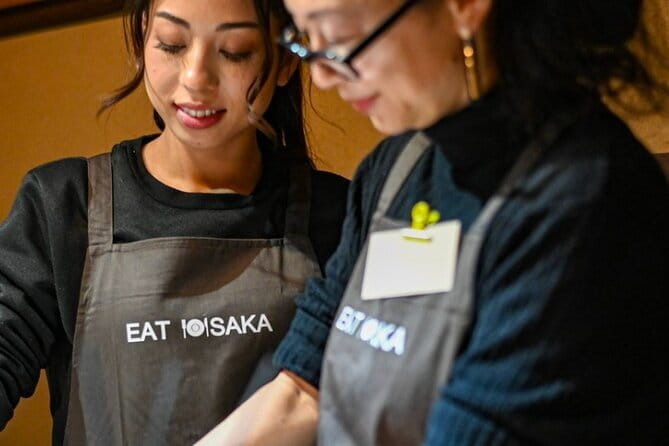
The total duration is about 1 hour and 30 minutes. That is long enough to learn the basic method, prepare the noodles, and eat your finished dish, but short enough to fit into a busy Osaka day.
You should arrive on time. The restaurant resumes regular customer service after the class, so late arrival could affect your participation. I would leave extra time to reach the meeting point at 1-chōme-16-17 Shinmachi, Nishi Ward, Osaka, 550-0013.
The location is near public transportation, and the activity ends back at the same address. There is no separate transfer or complicated final meeting point. You can plan another nearby activity afterward without needing to arrange transport from a distant suburb.
The schedule has a practical rhythm:
- An introduction to udon and the Sanuki method
- Hands-on dough preparation and foot kneading
- Guidance from the instructor as you shape the noodles
- Cooking by the chef
- A hot or cold udon tasting
- Photos taken during the experience and a recipe to take home
The supplied details do not promise an exact minute-by-minute timetable, so do not plan a tight connection immediately afterward. A little flexibility is wise, especially if the group is large.
What your $52.85 includes

At $52.85 per person, this is priced above a simple bowl of udon, but you are paying for instruction, ingredients, a prepared meal, and a cultural activity. The included recipe adds lasting value because you can try the technique again at home.
You also receive photos taken by the instructor during the class. This is useful for families and groups because someone in the party does not have to miss the activity while acting as photographer. The photos also capture the unusual foot-kneading stage, which is likely to be the most memorable part of the session.
The tasting is included, as are local taxes. Alcohol is not included, and neither are tempura, extra udon, or other side dishes. I would budget a little extra if you want to turn the tasting into a larger meal or pair it with sake or beer.
The price makes the most sense if you value participation. If you only want to eat udon, ordering a bowl at a restaurant will cost less. If you want to understand the preparation, meet the people teaching you, and leave with a recipe and photos, the fee is easier to justify.
Food restrictions and vegetarian participation
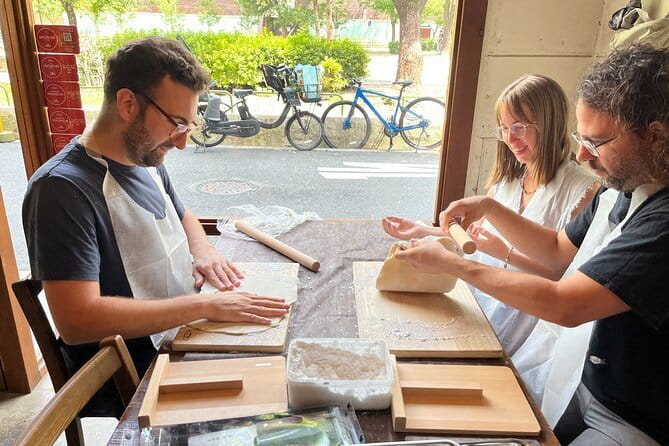
Vegetarians are welcome, but you need to notify the restaurant in advance. This is especially important because the standard broth uses katsuobushi, or bonito stock, as well as kombu and shiitake mushrooms.
The information confirms a vegetarian option but does not spell out every ingredient or preparation detail. If you avoid fish, meat, or specific seasonings, explain your needs clearly when booking so the kitchen can advise you.
This class is not recommended for people with a wheat allergy. Udon is a wheat-based noodle, and the central activity involves handling wheat dough. A preference for gluten-free food should not be confused with a minor request here, since wheat is the main ingredient and purpose of the experience.
The social side of a shared class
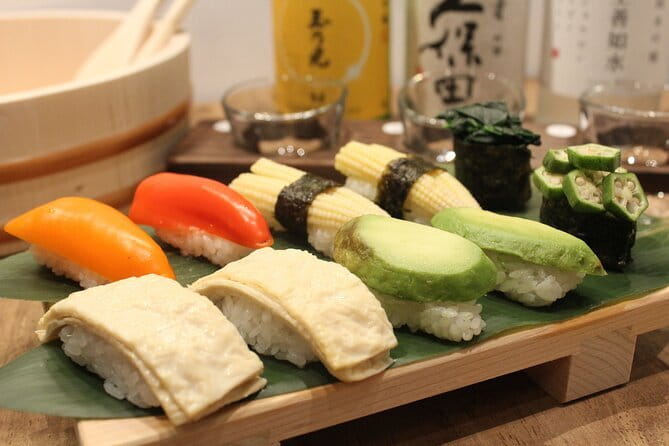
This is a shared experience, not a private lesson. You may be grouped with other participants, and the maximum group size is 20. That arrangement can be a plus if you enjoy meeting people and sharing a lighthearted activity.
It can also affect the pace. With a larger group, you may have to wait briefly while the instructor moves between participants. The class is designed for participation, but it will not provide the same level of uninterrupted attention as a private cooking lesson.
The strongest part of the shared format is the common task. Foot-kneading udon is unusual enough to break the ice quickly, and the class has been used successfully by families and a group of friends. If you are traveling alone, contact the provider first because the class requires a minimum of two participants.
The restaurant is small and cozy rather than spacious. That helps create a local feel, but it also means you should not expect a large cooking school with separate stations for every person. Keep your expectations focused on a friendly restaurant class.
Photos, the recipe, and what you take home
The recipe is one of the most useful inclusions. Many food activities end when the meal is finished, but a written recipe gives you a way to repeat the process after returning home.
Recreating the exact restaurant result may take practice. Udon dough texture depends on kneading and handling, and the class is only 90 minutes. Still, the lesson gives you a starting point and lets you understand the method rather than simply buying noodles from a shop.
The instructor also takes and shares photos. You should be comfortable being photographed during the activity. For parents, this is a handy feature because it records the children taking part without requiring one adult to step away from the class.
Cancellation and planning advice
You can cancel up to 24 hours before the start time for a full refund. Changes or cancellations made less than 24 hours before the scheduled start are not accepted for a refund, and the cut-off follows Osaka local time.
The experience needs a minimum number of participants. If the provider cancels because that minimum is not reached, you will be offered another date or experience, or receive a full refund.
I would book this class earlier in your Osaka plans if the date matters, then avoid placing an important timed reservation immediately afterward. Use a mobile ticket, confirm the meeting details, and arrive at the restaurant with clean, comfortable clothes that can handle flour and dough.
Who should book the udon experience?
I would recommend it most strongly to families, food-minded visitors, and anyone who prefers doing something active over sitting through a standard meal. Children from age two can participate, and the class has worked well for groups with several children.
It is also a good choice if you want a local food activity with a clear result. You make the dough, the chef cooks it, and you eat the noodles before leaving. There is little risk of finishing the class hungry.
I would be more cautious if you want a quiet, private lesson, have a strict schedule, or dislike shared activities. The group can reach 20 people, the restaurant is small, and the class runs on a fixed timetable.
Vegetarians can join with advance notice. Anyone with a wheat allergy should skip it. If you are traveling alone, do not assume an individual booking will work, since the class requires at least two participants.
Should you book this Osaka udon class?
Book it if you want more than a meal and like the idea of learning through your hands and feet. The combination of Sanuki-style kneading, a chef-cooked bowl, natural broth, photos, and a take-home recipe gives the $52.85 price a fair value.
I would choose this over a standard food tour if you want one focused activity with a clear beginning and end. I would skip it if your main goal is inexpensive dining or if you need a private, highly technical cooking lesson.
For most families and curious food lovers, this is a cheerful and useful way to spend 90 minutes in Osaka. Bring flexible expectations, arrive promptly, tell the restaurant about dietary needs, and prepare to leave with flour on your clothes and a better sense of why good udon has such a satisfying bite.
FAQ
How long does the handmade udon experience last?
The class lasts approximately 1 hour and 30 minutes.
Where does the class meet?
It begins and ends at UDONZIN美糸, 1-chōme-16-17 Shinmachi, Nishi Ward, Osaka, 550-0013, Japan.
Is the udon tasting included in the price?
Yes. The fee includes a hot or cold udon tasting prepared by the chef.
Are drinks included?
No. Alcoholic drinks are not included, though you can order Japanese sake or beer separately.
Can vegetarians join?
Yes. A vegetarian option is available, but you must inform the provider in advance about dietary restrictions.
Is the class suitable for children?
Yes. Children aged two and above can participate. The listed child fee is ¥5,000.
Can I cancel for a full refund?
Yes, if you cancel at least 24 hours before the experience start time. Cancellations made less than 24 hours before the start are not refunded.
Just added around Osaka
- Osaka Food Tour with 10 Classic Japanese Tastings & Drinks★ 5.0 · 38 reviews
- Osaka: Highlights & Hidden Gems Private Walking Tour★ 4.7 · 38 reviews
- Kyoto private tour (Shore excursion available from Osaka or Kobe port)★ 5.0 · 39 reviews
- Osaka Private Day Trip – Enjoy Your First-Time Visit to Osaka!★ 5.0 · 39 reviews
- Kyoto & Nara & Uji: Full Day Sightseeing Tour from Osaka or Kyoto★ 4.5 · 39 reviews
- Authentic SUSHI Course Cooking Class★ 5.0 · 39 reviews
- Osaka: Mind & Spirit Balance Temple Reiki Healing★ 5.0 · 41 reviews
- Osaka Afternoon Walking Tour with Osaka River Cruise★ 3.5 · 42 reviews
Ramen & Noodle Tours, compared.
Ramen Cooking Class at Ramen Factory in Kyoto
Read our review →
Eat and Drink Like a Local: Tokyo Ueno Food Tour-Taverns&Ramen
Read our review →
Ramen & Gyoza Cooking Class in Tokyo with Local Supermarket Visit
Read our review →
Ramen Cooking Class at a Ramen Factory with Souvenir
Read our review →
Five Must-See Highlights Walking Tour & Ramen Lunch
Read our review →
Browse the lists this tour appears in