
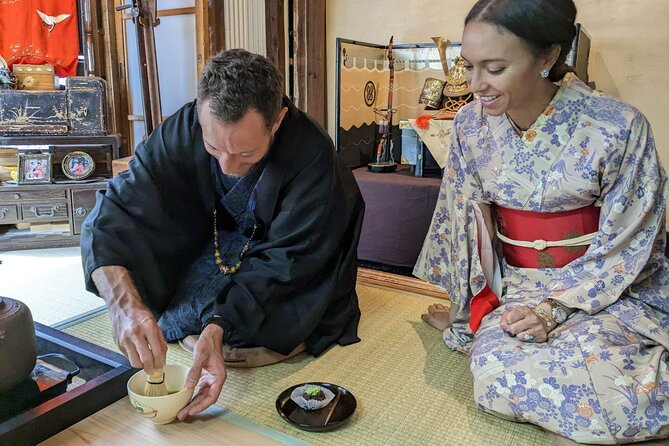
Reviewed · TEA CEREMONY EXPERIENCES
A Unique Antique Kimono and Tea ceremony Experience in English
Slow down with tea and silk. This small Kyoto experience combines a traditional matcha ceremony with a rare antique kimono rental in a quiet, 100-year-old house near Katsura Imperial Villa. I especially like the personal attention from Toku and his family, plus the calm setting away from central Kyoto crowds. The chance to choose from old kimono and have the ceremony explained in English makes this feel more meaningful than a quick costume photo stop.
I also like the six-person maximum, which keeps the event intimate and gives you room to ask questions. The main consideration is the setting: this takes place in a private residential house rather than a temple garden or grand tea pavilion, and one dissatisfied participant felt the $99.10 price was high for the amount of tea instruction provided.
In This Review
- Key points to know before booking
- What happens inside the old Kyoto house
- Choosing an antique kimono and obi
- Meeting Toku and his family
- Learning the etiquette of tea ceremony
- Why the small group makes a difference
- What the 90 minutes include
- Getting to Katsura from central Kyoto
- Is $99.10 a fair price?
- The setting: personal authenticity or a missed visual opportunity?
- Who will enjoy this most?
- Booking and cancellation details
- Should you book this Kyoto tea ceremony?
- FAQ
- How long does the antique kimono and tea ceremony experience last?
- What is included in the price?
- Where does the experience begin and end?
- Is the tea ceremony available in English?
- How many people can join?
- Can I cancel for a full refund?
Key points to know before booking
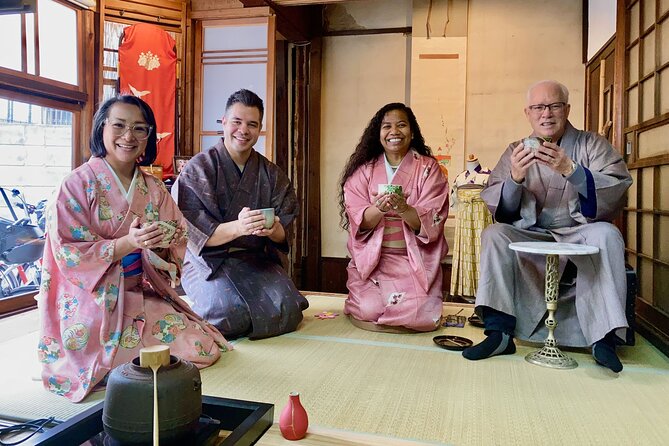
- Antique kimono included: You choose from a large selection of old kimono, obi, and accessories, with dressing help included in the price.
- A quiet Katsura setting: The house is near Katsura Imperial Villa, in a calmer residential area away from Kyoto’s busiest sightseeing streets.
- Toku leads the experience: The host has more than 20 years of tea ceremony experience and explains etiquette, manners, family background, and the connection between samurai and tea.
- Small group format: The experience is capped at six people, though some bookings may have only two participants.
- About 90 minutes: The time includes kimono selection and dressing, photographs, tea ceremony instruction, green tea, and Japanese sweets.
- Best for culture and personal contact: This suits you if you want a family-run introduction to Japanese tradition more than a grand historic setting.
What happens inside the old Kyoto house
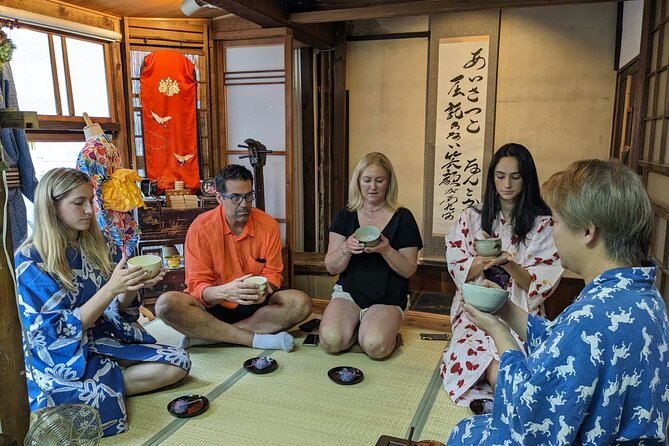
The experience begins at Miyagawa Tokusaburo Shoten, a 100-year-old private house at 32-4 Katsuranozatocho in Kyoto’s Nishikyo Ward. You return to this same meeting point at the end, so there is no need to manage a second drop-off location.
The first impression depends on what you want from a tea ceremony. If you picture a formal temple, manicured garden, or polished tea pavilion, this may feel modest. The house is in an ordinary residential area, and one unhappy participant found the kimono storage less elegant than expected. That is a fair warning.
I see the setting differently, though not without reservations. The private-house atmosphere is part of the appeal for you if you prefer meeting a local family in a working neighborhood. It gives the visit a personal scale. You are not simply seated in a staged cultural room and moved along with a large crowd.
The quiet location near Katsura Imperial Villa also changes the mood. Central Kyoto can be noisy and packed, especially around famous temples and shopping streets. Here, the point is to sit still, listen, and give the ceremony some breathing room.
More Kimono Experiences in Kyoto
- Kimono Tea Ceremony at Kyoto Maikoya, NISHIKI
★ 5.0 · 911 reviews - Kyoto: Kimono Rental with Hairstyling and Accessories
★ 4.8 · 653 reviews - Kyoto: Kimono Tea Ceremony at Orizuruya Gion
★ 4.9 · 618 reviews
Choosing an antique kimono and obi
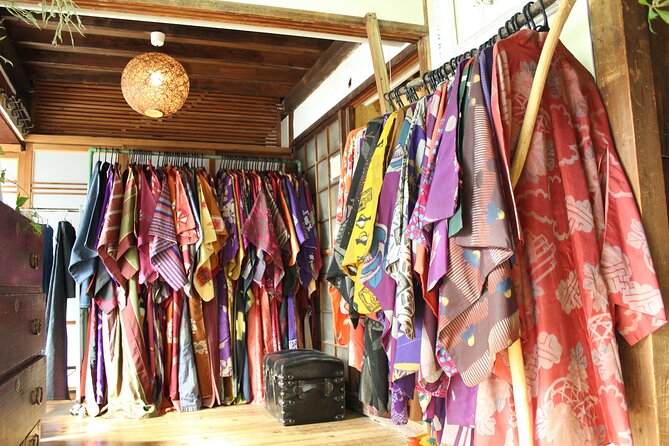
The kimono portion is one of the strongest reasons to book. Antique kimono rental is included, and the garments are described as rare pieces more than 80 years old. Toku helps you select a kimono, match it with an obi, and choose accessories.
This is not just a quick robe thrown over your clothes for a photograph. The dressing process receives real attention. Toku is known for his skill as a kimono fitter, and the experience includes help with hair and decorative hair accessories in some sessions. You may also be able to take photographs in the costume, and the hosts have taken many photographs for participants.
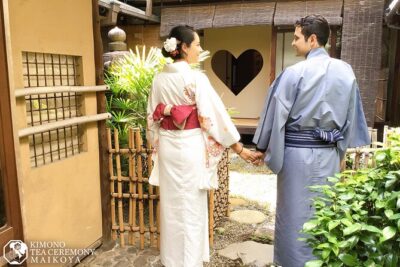
The large selection adds fun, especially if you are visiting with a partner, children, or friends. You can take time to choose a color and pattern that suits you instead of accepting one standard outfit. Families with young children have also found the hosts patient and welcoming, including one child aged two and a half.
Keep your expectations sensible. These are antique garments, not necessarily the elaborate costume pieces you may see in Kyoto rental shops or staged photos near major temples. One critical experience described the kimono as folded and piled inside a regular residence rather than displayed in an exotic setting. If visual grandeur matters most to you, this may disappoint.
If you care more about wearing a genuine older garment and learning how it is fitted, the plain setting may matter less. The value is in the handling, selection, and conversation around the kimono.
Meeting Toku and his family
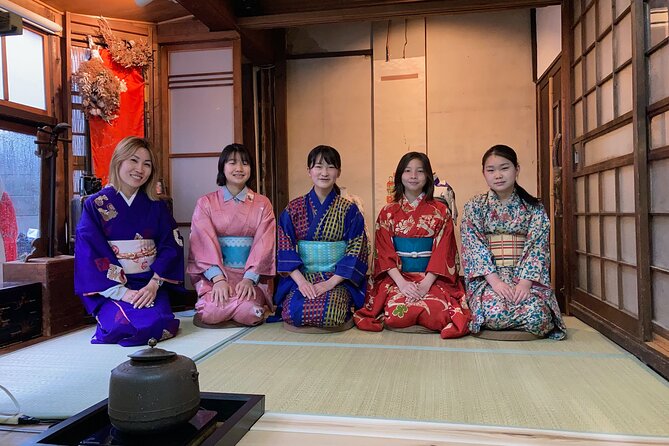
Toku is the central personality of the experience. He explains his background and how he became a kimono fitter, while also sharing his experience with tea ceremony. His wife and an assistant help with the dressing and hosting.
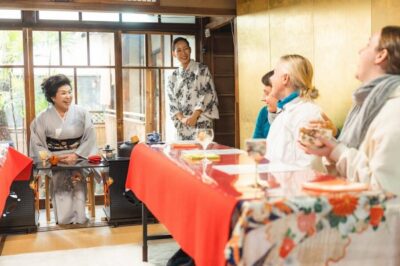
The family-run format receives especially strong praise. The hosts are described as warm, friendly, patient, and attentive. They take time to make people comfortable, explain each stage in clear English, and include children. That warmth matters because a tea ceremony can feel intimidating if you are unfamiliar with the manners.
You should not expect a distant master performing behind a screen. You are encouraged to ask questions, take photographs, and follow along. The tone appears welcoming rather than severe, even though the ceremony itself remains solemn.
Several experiences have been adapted to individual needs. For example, one participant could not kneel, so Toku adjusted the ceremony. That suggests a practical attitude, although the supplied information does not give a full list of mobility arrangements. Service animals are allowed, and the meeting point is near public transportation.
Learning the etiquette of tea ceremony
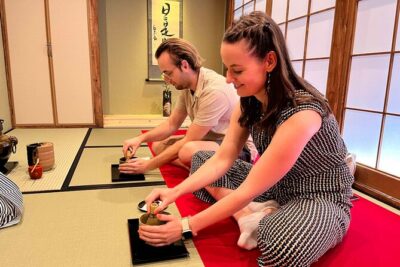
After dressing, you move into the tea ceremony itself. Toku explains the manners and etiquette step by step, rather than assuming you already understand what to do.
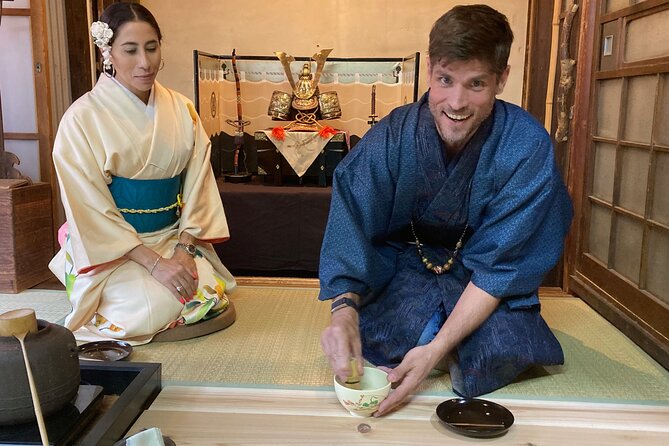
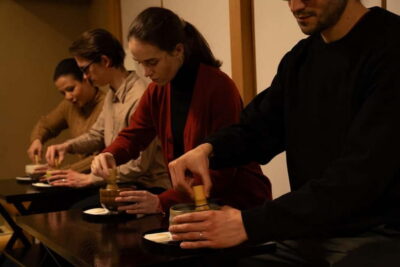
You learn how the ceremony is structured, how tea is prepared and served, and why each movement matters. The emphasis is not only on drinking matcha. The hosts explain the spirit of sharing time together, the meaning behind the ritual, and the role of attention and respect.
The experience also covers the link between samurai culture and tea ceremony. That detail gives the ritual a wider setting. Tea was not simply a refreshment. It carried ideas about discipline, hospitality, status, and conduct, and the samurai connection helps explain why the movements can be so deliberate.
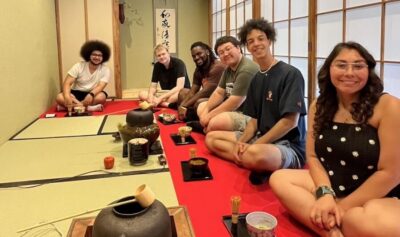
You also get the special chance to learn how matcha is made. Green tea and Japanese sweets are included, and the ceremony is conducted in English. The English explanation is important here. Without it, the quiet gestures can look beautiful but remain hard to understand.
The ceremony is intentionally slow. For most people, that is a benefit. You have time to watch, copy the movements, and ask why something is done. One critical participant, however, felt that simple tasks were stretched to fill the 90-minute schedule and expected more about tea production and a wider tasting of special teas.
That criticism is useful. Book this for a guided cultural ritual, not for an advanced lesson in tea agriculture or a tasting flight. You receive green tea and sweets, but the information does not promise several varieties of tea.
More Tea Ceremonies in Kyoto
- Kyoto: Tea Ceremony in a Traditional Tea House in Kiyomizu
★ 4.9 · 3,519 reviews - Kyoto: Tea Ceremony Ju-An at Jotokuji Temple
★ 4.9 · 3,207 reviews - Kyoto: 45-Minute Tea Ceremony Lesson Experience
★ 4.3 · 2,378 reviews - Kyoto: Table-Style Tea Ceremony at a Kyo-Machiya
★ 4.9 · 1,211 reviews
Why the small group makes a difference
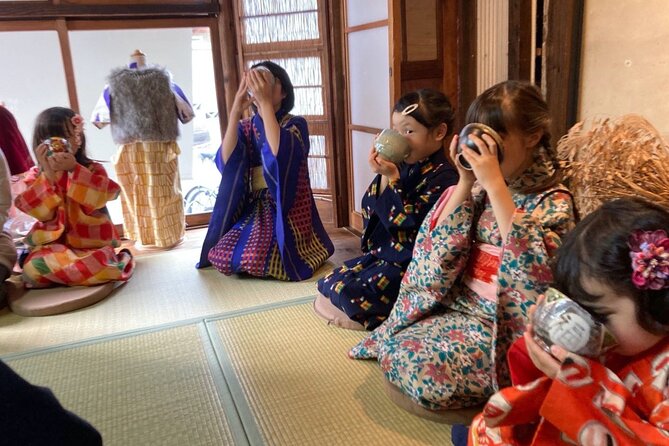
The maximum group size is six people. That is small enough for direct conversation and individual help with kimono fitting.
A smaller group also protects the quiet quality of the ceremony. You are less likely to spend the entire session watching the backs of other people’s heads or waiting for your turn to ask something. Children can receive attention, and couples may get more room for photographs.
Some bookings are intimate enough to include only two participants. That can make the visit feel almost like a private appointment. You should not assume you will be alone, but the six-person limit keeps the scale manageable.
The small group also helps with the practical parts. Choosing clothing, adjusting the obi, styling hair, and learning the tea movements all take patience. With a large group, these steps could feel rushed or mechanical. Here, the hosts have more chance to notice whether you are comfortable.
What the 90 minutes include
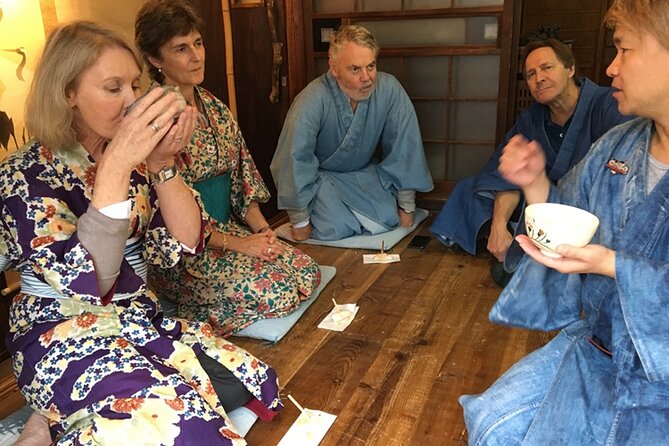
The advertised duration is about one hour and 30 minutes. That is a compact block, but it contains several parts:
- Arrival at the old private house
- Selection of kimono, obi, and accessories
- Dressing and possible hair styling
- Photographs in traditional clothing
- Explanation of tea ceremony history, manners, and etiquette
- Demonstration and participation in matcha preparation
- Green tea and Japanese sweets
- Return to the meeting point
The exact balance can vary. If you spend a long time choosing clothing or taking photographs, less time may be available for discussion of tea itself. That is worth remembering when comparing this with a class focused mainly on matcha.
For me, the combination is the point. You are paying for a personal cultural encounter that joins clothing, family tradition, tea, and conversation. It is not a pure tea lesson and not simply a kimono rental.
Getting to Katsura from central Kyoto
The meeting point is in Nishikyo Ward, near Katsura Imperial Villa. It is not presented as a central Kyoto walking tour, so plan your route before the appointment.
The location is near public transportation. One experience described it as easy to reach by metro and another called it an easy 15-minute taxi ride. Since the starting address is specific and the activity ends there, a taxi can be the simplest choice if you are carrying bags or traveling with children.
The quieter setting comes with a trade-off: you spend time getting out of the central sightseeing zone. That is worthwhile if you want a calmer visit, but less convenient if you are trying to stack this between several attractions in Gion, Higashiyama, and northern Kyoto.
I would schedule it alongside Katsura Imperial Villa or other western Kyoto plans if your timing allows. The experience itself does not include lunch or dinner, so you will need to arrange food separately.
Is $99.10 a fair price?
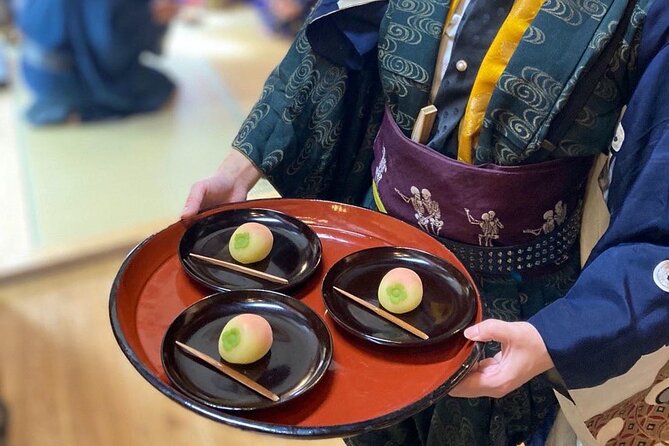
At $99.10 per person, this is not the cheapest tea experience in Kyoto. The price makes more sense when you count what is included: antique kimono rental, dressing assistance, tea ceremony instruction, green tea, Japanese sweets, and a small group capped at six.
The kimono is the major value item. A basic kimono rental elsewhere may cost less, but this experience adds selection help, fitting, a family setting, and the ceremony. The age and rarity of the garments also give the clothing a different character from a standard modern rental.
The price is less convincing if you mainly want to taste several teas or learn the full process of producing matcha. The activity includes an introduction to how matcha is made, but not a meal, dinner, or multiple special teas.
I would call it fair for the right person. You are paying for personal attention and a carefully guided cultural experience, not for quantity. Couples, families, and first-time visitors who want photographs plus context are likely to see better value than serious tea students looking for technical instruction.
The setting: personal authenticity or a missed visual opportunity?
This is the key decision point. The house is old, quiet, and connected to a family-run operation. That supports a personal, local feel. You can meet Toku and his wife, hear about their background, and see how the experience is presented in a real residential area.
But the house is not described as a temple, formal garden, or luxury tea room. If you need scenic grounds and carefully arranged architecture in every photograph, you may prefer a ceremony in a more polished setting.
The same feature can work both ways. A regular home can feel more genuine than a staged attraction, yet it may look less impressive in photographs. I would choose this experience for the people, clothing, and explanations. I would not choose it solely for architecture.
Who will enjoy this most?
I would recommend this to you if you want:
- A small, English-language cultural experience
- A chance to wear an antique kimono
- Direct contact with a friendly local family
- A gentle introduction to tea ceremony manners
- A quieter alternative to central Kyoto attractions
- An activity that can work for couples and families
- Photographs in traditional clothing without joining a large group
It is also a good choice if you cannot kneel comfortably, since the ceremony has been adapted for at least one participant. Still, contact the provider before booking if you have specific access needs, because the available information does not describe the house in detail.
I would hesitate if your priorities are a grand temple setting, a garden view, a long technical tea lesson, or a broad tasting of different teas. The one-hour-30-minute schedule is full, but the experience is broad rather than specialized.
Booking and cancellation details
Your mobile ticket is accepted for the activity. Confirmation is normally sent at booking, though reservations made within one day of the start time are confirmed as soon as possible and depend on availability.
You can cancel for a full refund up to 24 hours before the start time. Changes or cancellations made less than 24 hours before the experience are not accepted for a refund, and cut-off times follow Kyoto local time.
Because the group maximum is six, I would reserve ahead if your dates are fixed. The 97 percent recommendation rate and 4.9 rating from 109 ratings indicate strong demand, though no rating removes the need to match the experience to your own expectations.
Should you book this Kyoto tea ceremony?
Book it if you want a warm, personal introduction to Japanese culture, with antique clothing and tea in the same visit. Toku, his wife, and their assistant appear to make the experience special through patience, clear English explanations, photographs, and genuine care for each person.
The strongest reason to go is not the house alone. It is the combination of a rare kimono, a quiet neighborhood, a small group, and a host who can explain both clothing and tea. I would especially suggest it for families, couples, and first-time visitors who want more meaning than a quick costume rental.
Skip it if you expect a spectacular temple garden or a serious matcha workshop. At $99.10, you should be comfortable paying for intimacy and guidance rather than a large number of tastings or grand scenery. If that sounds right, this is a memorable way to spend 90 minutes in Kyoto.
FAQ
How long does the antique kimono and tea ceremony experience last?
The experience lasts approximately one hour and 30 minutes, including kimono selection, dressing, photographs, tea ceremony instruction, green tea, and Japanese sweets.
What is included in the price?
The price includes antique kimono rental, the tea ceremony experience, green tea, and Japanese sweets. Lunch and dinner are not included.
Where does the experience begin and end?
It begins at Miyagawa Tokusaburo Shoten, 32-4 Katsuranozatocho, Nishikyo Ward, Kyoto, 615-8073, Japan. The activity ends back at the same meeting point.
Is the tea ceremony available in English?
Yes. The experience is available in English, and the host explains the ceremony’s etiquette, manners, and background.
How many people can join?
The group has a maximum of six participants. Some sessions may have fewer people, depending on the booking.
Can I cancel for a full refund?
Yes. You can cancel at least 24 hours before the start time for a full refund. Cancellations or changes made less than 24 hours before the start time are not accepted for a refund.
Just added around Kyoto
- Kyoto: Gion Night Walking Tour with Geisha Insight★ 5.0 · 39 reviews
- Kyoto: Private Customizable Day Trip by Car★ 5.0 · 38 reviews
- Kyoto: Full Day Bike Tour★ 4.9 · 39 reviews
- Private Japanese Calligraphy in Kyoto – Learn Shodō with a Master★ 5.0 · 39 reviews
- Kyoto: Gion Evening Walk with Hidden Gems, Geisha & Sake★ 5.0 · 41 reviews
- Experience a tea ceremony in an authentic tearoom, in Kyoto!★ 4.5 · 41 reviews
- Kyoto Private Photo Shoot & Tour by SnapKyoto★ 5.0 · 41 reviews
- The Way of Tea: Kyoto Crafts, Hidden Temples & Wabi-Sabi Walk★ 5.0 · 41 reviews
Tea Ceremony Experiences, compared.
Tea Ceremony in a Traditional Tea House in Kiyomizu
Read our review →
Browse the lists this tour appears in