
Reviewed · GEISHA & GION DISTRICT TOURS
Authentic Kyoto Gion Geisha/Maiko Cultural Experience
Gion opens a door few visitors find. This 90-minute experience takes you from Gion-Shijo Station along Hanamikoji Street and into a traditional teahouse, where you can watch dance and music, ask questions through an English-speaking guide, and enjoy matcha in a tatami room. I like the small group of 10 and the chance to speak directly with a maiko or geiko, rather than simply watching one from a distance.
I also like the way the walking portion gives the visit some useful setting. Guides such as Yuko, Yoshi, Youko, and Tomato-San have been praised for explaining Gion in clear English and adding personal insight into Kyoto life. The main drawback is the price, $155.22 per person, and you cannot choose in advance whether a maiko or geiko will appear.
In This Review
- Key points to know before booking
- Walking into Gion by way of Hanamikoji Street
- What happens inside the one-hour teahouse visit
- The dance and music are the main reason to go
- Meeting a maiko or geiko, and knowing the difference
- Matcha, sweets, and the tea ceremony
- Why the group size changes the experience
- Is $155.22 good value?
- Who will enjoy this Gion experience most?
- Timing, booking, and cancellation details
- Should you book the Gion maiko experience?
- FAQ
- Where does the experience begin?
- Where does the experience end?
- How long does the tour last?
- How many people can join?
- Will I meet a maiko or a geiko?
- Is an English-speaking guide included?
- Are children allowed to join?
- What should I wear or bring?
Key points to know before booking
- A small teahouse group: The maximum is 10 people, which allows time for questions, photos, and conversation.
- A guided walk through Gion: The route from Gion-Shijo Station includes Hanamikoji Street and takes about 15 minutes.
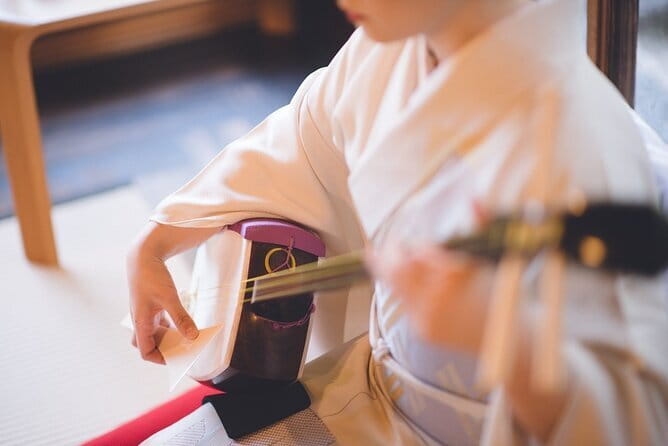
- Live traditional arts: You can watch a maiko or geiko dance, with music from the teahouse owner or another performer depending on the day.
- Matcha and Japanese sweets: The visit includes tea, a flour sweet, and, according to the experience details, matcha ice cream.
- The performer is assigned: You may meet a maiko or geiko, but you cannot select which one.
- Tatami etiquette matters: Wear socks, and keep wet clothing, bags, and feet dry before entering.
Walking into Gion by way of Hanamikoji Street
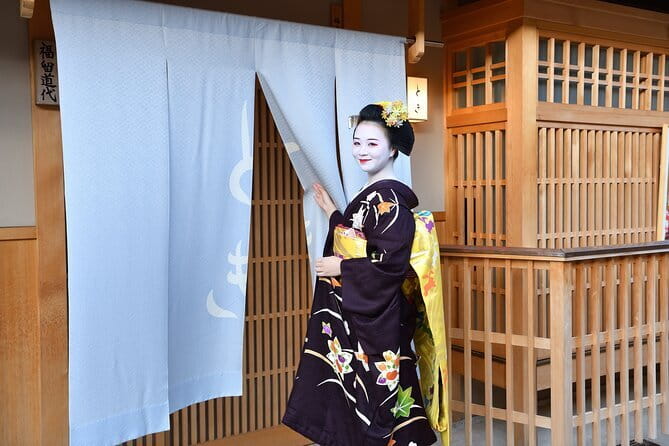
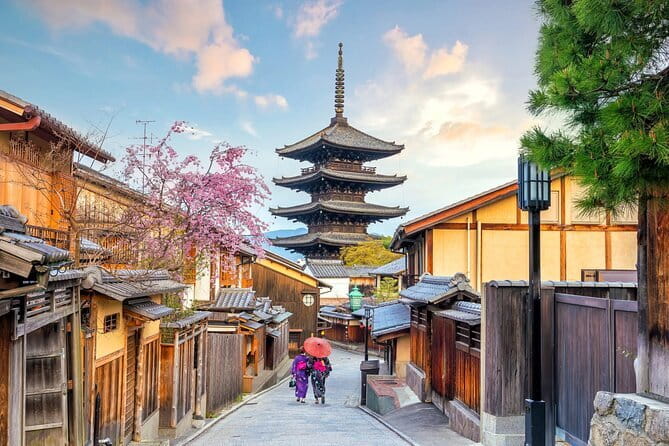
The experience begins at Gion-Shijo Station, at 1 Chome Miyagawasuji in Kyoto’s Higashiyama Ward. From there, your English-speaking guide leads you toward the teahouse, with about 15 minutes of walking through Gion.
That short walk matters. Gion is not just a backdrop for photographs. Its narrow streets, traditional facades, and old entertainment district customs help explain why the teahouse visit feels different from a stage show at a large theater. Hanamikoji Street is one of the area’s best-known lanes, and the guide points out details you could easily miss if you simply walked through with a map.
Guides have received especially strong praise for this part of the experience. Yoshi has been described as friendly and entertaining, while Youko and Yuko have been praised for explaining local customs and details of Gion in excellent English. One guide, Tomato-San, was singled out for keeping the pace lively without rushing the group.
You should not expect a long historical tour. The walk is a brief introduction before the main event. Still, it gives you a better sense of place and helps set a respectful tone before entering the teahouse.
The route ends at Gionmachi Minamigawa, where the teahouse is located. Since the tour ends there rather than returning you to the station, plan your next stop from Gion. That is easy enough in central Kyoto, but you should note the arrangement if you have a tight evening schedule.
More geisha district walks in Kyoto:
- Kyoto Geisha Walking Tour: Gion District & Hidden Gems
★ 4.7 · 3,273 reviews - Kyoto: Gion Magical Night Walking Tour with Geisha Trivia
★ 4.9 · 2,393 reviews - Kyoto: Gion Geisha District Walking Tour – Stories of Geisha
★ 4.7 · 2,187 reviews
What happens inside the one-hour teahouse visit
The main visit lasts about one hour. You enter a beautifully designed tatami room and sit in a small group of no more than 10 people. Depending on the day, you are accompanied by either a maiko or a geiko, along with a tea master.
This is the heart of the experience. You are not only watching a performance. You also have a chance to ask questions and hear explanations about the profession, the arts, and the customs surrounding geisha culture. The guide translates and supplies context, which is essential because the conversation may otherwise be difficult to follow.
The setting makes a real difference. In a large cultural show, you may see the choreography clearly but have little contact with the performer. Here, the small group creates room for direct interaction. The experience details also emphasize photographs, so you can take pictures during the visit and, when permitted, have photos taken with the maiko or geiko.
The timing is compact. The one-hour teahouse session usually includes conversation, dance, music, tea, sweets, and pictures. That means no single part should be mistaken for a long workshop. You receive a focused introduction to several traditions rather than an extended lesson in one art.
The dance and music are the main reason to go
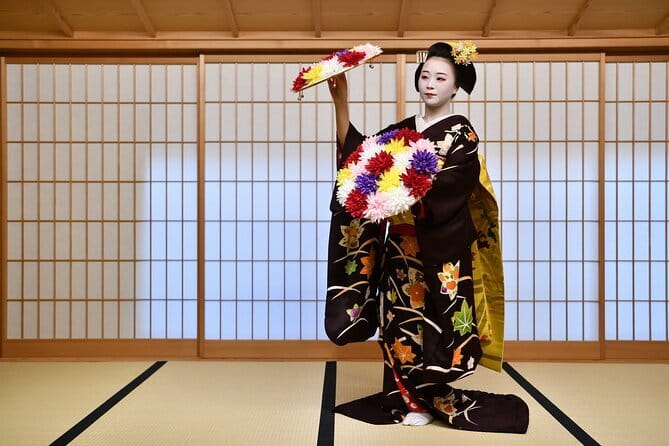
The traditional dance is the most distinctive part of the visit. The performance gives you a glimpse of the controlled movements, posture, costume, and musical rhythm associated with maiko and geiko culture.
The dances are not presented as a casual photo opportunity. They are treated as an art form, and the guide helps explain what you are seeing. Some participants have described seeing two dances, while the listed experience promises traditional dance viewing. The exact program can vary by day, so you should allow for that small uncertainty.
Music is also part of the setting. One account describes the teahouse owner, a former geiko, playing an instrument. That detail points to one of the experience’s strongest qualities: the visit can connect the performer, the teahouse, and the older traditions of the district in one room.
You will not be choosing songs or requesting a private performance. The program is arranged for the group. Still, a live dance in a teahouse has a sense of intimacy that a public cultural show cannot easily copy.
Meeting a maiko or geiko, and knowing the difference
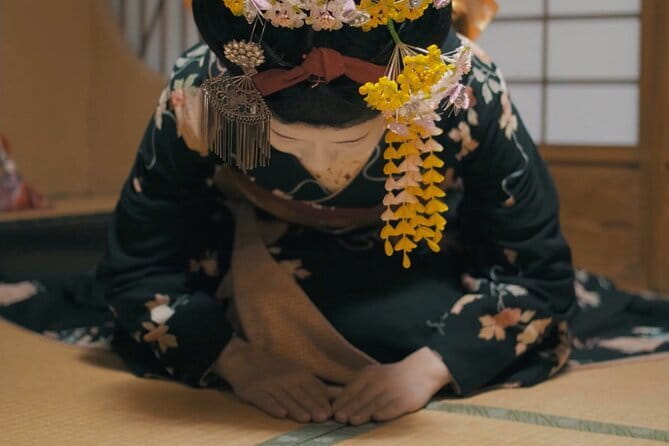
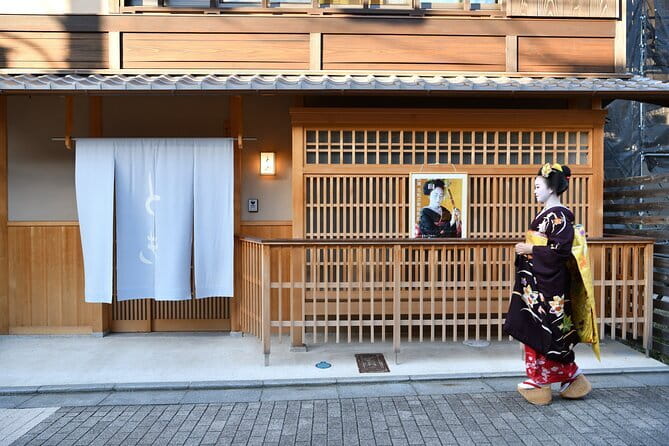
The experience may feature a maiko or a geiko. A maiko is an apprentice geisha, while geiko is the term commonly used for a fully trained geisha in Kyoto.
You cannot pick which one will be present. That is important if you are booking because you have your heart set on seeing a maiko in particular. The schedule depends on availability, and the description specifically says that the performer cannot be selected.
The conversation is one of the most valued parts of the visit. You can ask questions directly, with the guide translating and adding context. This gives the experience an educational side that goes beyond costume and performance.
A guide may also explain proper behavior before you enter. One account describes being taught the do’s and don’ts of the teahouse, which is useful because the tatami setting calls for care and respect. You do not need to know Japanese etiquette in advance. You do need to listen, follow the guide’s instructions, and avoid treating the setting like a noisy photo studio.
A few more Kyoto experiences worth weighing up
- PERFECT KYOTO 1-Day Bus Tour
★ 5.0 · 13,518 reviews - Kyoto: Fushimi Inari, Kinkakuji, Bamboo Grove 1 Day Bus Tour
★ 4.8 · 4,316 reviews - Kyoto: Tea Ceremony in a Traditional Tea House in Kiyomizu
★ 4.9 · 3,519 reviews - Kyoto: Tea Ceremony Ju-An at Jotokuji Temple
★ 4.9 · 3,207 reviews
Matcha, sweets, and the tea ceremony
The tea portion is a ceremonial matcha experience. You can expect matcha tea and a traditional flour sweet, with matcha ice cream also described as part of the refreshments.
This is not presented as a full-day tea school or a long technical class. Instead, it offers a compact look at Japanese hospitality, presentation, and the careful rhythm of preparing and serving tea. The combination of tea, sweets, and performance keeps the visit varied.
The food has also been a pleasant surprise for many people, with particular praise for the dessert, tea, and ice cream. If you already enjoy matcha, this will be a welcome part of the visit. If you find matcha bitter, the sweet and ice cream may make the tasting easier, though the experience remains centered on traditional tea rather than a café-style dessert stop.
Remember the practical tatami rule: wear socks. On a rainy day, dry your feet, clothes, and bag before entering. The teahouse asks visitors to help keep the tatami clean, and that request is both reasonable and easy to follow.
Why the group size changes the experience
A maximum of 10 people is a useful middle ground. The group is large enough to make the activity feel social, but small enough for direct questions and photos.
Small does not mean private. You are still sharing the room and the performance with other people. If all 10 participants want several questions and individual pictures, the schedule may feel full. Even so, the group limit is far more appealing than a crowded public viewing where you might struggle to see or hear.
The guide’s role becomes especially important in a group. An effective interpreter keeps the conversation moving, explains unfamiliar points, and makes sure the performer is not left answering the same question repeatedly. The strongest praise has gone to guides who were punctual, warm, informative, and able to add personal stories about growing up in Kyoto.
That human element is a major part of the value. You are paying not only for admission to a teahouse, but also for translation and a structured encounter that would be difficult to arrange independently.
Is $155.22 good value?
At $155.22 per person, this is not a bargain attraction. You are paying a premium for access, interpretation, a small group, live arts, tea, and the setting.
I think the price makes more sense if geisha culture is a major reason you are visiting Kyoto. A regular theater performance may cost less, but it will not normally include a guided walk through Gion, direct questions, teahouse etiquette, matcha, and photos with the performer.
The value is also tied to the group size. Ten people is still a group, but it offers a better chance to speak and be seen than a large event. People who have long wanted to learn about maiko and geiko traditions may find the personal contact worth the cost.
You may feel less satisfied if you mainly want a long dance performance. The dance is one part of a broader 90-minute program, not the entire program. You also cannot select the performer, and the exact balance of conversation, music, dance, and tea may vary.
The experience receives a 5 out of 5 rating from 48 reviews, with 100 percent recommending it. That does not erase the price concern, but it does show that the format has consistently met expectations for people seeking a close cultural introduction.
Who will enjoy this Gion experience most?
I would recommend it most strongly to adults and older children who are curious about Kyoto’s traditional performing arts and want more than a street photograph.
It suits you if:
- You want direct conversation with a maiko or geiko.
- You value a guide who can translate and explain local customs.
- You prefer a small group to a large cultural show.
- You enjoy tea, dance, music, and Japanese etiquette in one short visit.
- You are comfortable paying more for access to a special setting.
It may be less suitable if you dislike sitting on tatami, have no interest in tea or traditional performance, or need a completely predictable schedule. Children aged 0 to 5 cannot join. Anyone under 18 needs written parental permission, and anyone under 15, or not yet enrolled in middle school, must be accompanied by a parent or guardian.
The walking is limited, with about 15 minutes between the station and teahouse. Most people can participate, but you should still consider your comfort with the tatami room and the need to keep wet belongings dry.
Timing, booking, and cancellation details
The experience lasts about 1 hour and 30 minutes in total, including the walk. It is commonly booked about 17 days ahead, so I would not leave it until the last moment if your Kyoto dates are fixed.
Confirmation is sent within 48 hours of booking, subject to availability. At least two participants are needed. If that minimum is not met 10 days before the scheduled date, the tour may be canceled.
The mobile ticket is convenient for a day of sightseeing. Keep the meeting point at Gion-Shijo Station easy to find, and arrive with socks and dry belongings ready.
Free cancellation is available up to 24 hours before the start time for a full refund. Cancellations or changes made less than 24 hours before the start time are not accepted for a refund. The cutoff follows local Kyoto time.
Should you book the Gion maiko experience?
Book it if you want a respectful, small-group introduction to maiko and geiko culture, and if direct conversation matters as much to you as the performance. The combination of a Gion walk, a real teahouse, live dance, music, translated questions, matcha, and photos is hard to reproduce on your own.
I especially like the guides’ role. Names such as Yuko, Yoshi, Youko, and Tomato-San come up for good reason: the right guide turns an unusual meeting into a clear and meaningful cultural experience.
Skip it if the $155.22 price is beyond your budget or if you only want a dance show. For everyone else, this is one of Kyoto’s strongest choices for seeing Gion’s traditions up close without losing the explanations that make them understandable.
FAQ
Where does the experience begin?
It begins at Gion-Shijo Station, at 1 Chome Miyagawasuji in Kyoto’s Higashiyama Ward.
Where does the experience end?
The experience ends at the teahouse in Gion, in the Gionmachi Minamigawa area.
How long does the tour last?
The total duration is approximately 1 hour and 30 minutes. The walk takes about 15 minutes, followed by about one hour in the teahouse.
How many people can join?
The maximum group size is 10 people. The minimum number required is two participants.
Will I meet a maiko or a geiko?
You will be accompanied by either a maiko or a geiko, depending on the day. You cannot choose which one.
Is an English-speaking guide included?
Yes. An English-speaking guide leads the walk, provides cultural context, and translates during the teahouse experience.
Are children allowed to join?
Children aged 0 to 5 cannot participate. Anyone under 18 needs written parental permission, and anyone under 15, or not yet enrolled in middle school, must attend with a parent or guardian.
What should I wear or bring?
You should wear socks. If your feet, clothing, or bag become wet, dry them before entering the teahouse so the tatami remains clean.
Just added around Kyoto
- Kyoto: Gion Night Walking Tour with Geisha Insight★ 5.0 · 39 reviews
- Kyoto: Private Customizable Day Trip by Car★ 5.0 · 38 reviews
- Kyoto: Full Day Bike Tour★ 4.9 · 39 reviews
- Private Japanese Calligraphy in Kyoto – Learn Shodō with a Master★ 5.0 · 39 reviews
- Kyoto: Gion Evening Walk with Hidden Gems, Geisha & Sake★ 5.0 · 41 reviews
- Experience a tea ceremony in an authentic tearoom, in Kyoto!★ 4.5 · 41 reviews
- Kyoto Private Photo Shoot & Tour by SnapKyoto★ 5.0 · 41 reviews
- The Way of Tea: Kyoto Crafts, Hidden Temples & Wabi-Sabi Walk★ 5.0 · 41 reviews
Geisha & Gion District Tours, compared.

Kyoto Geisha Walking Tour: Gion District & Hidden Gems
Read our review →
Gion Magical Night Walking Tour with Geisha Trivia
Read our review →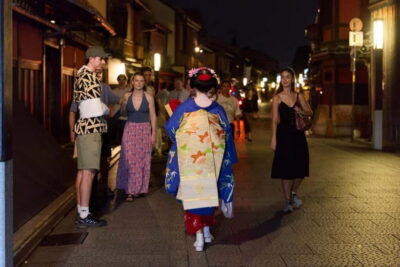
Gion Geisha District Walking Tour – Stories of Geisha
Read our review →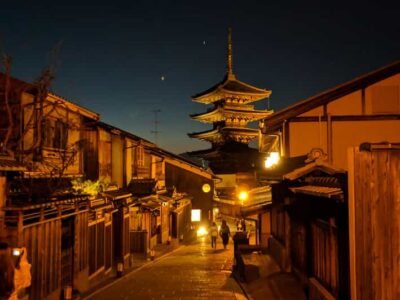
Best of Kyoto: Gion, Geisha, Pagodas & Cobblestones
Read our review →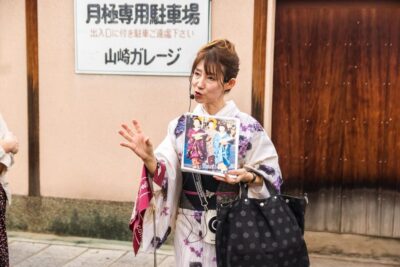

Kyoto Night Foodie Tour in Gion (9+ dishes + 6 Sake tastings)
Read our review →
Kyoto Gion Geisha District Walking Tour – The Stories of Geisha
Read our review →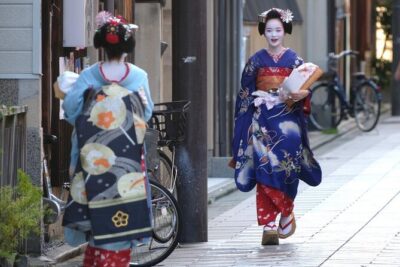
Kyoto Gion: 2-Hour Geisha Culture & History Walking Tour
Read our review →Browse the lists this tour appears in