
Reviewed · GEISHA & GION DISTRICT TOURS
Dance and Game with Maiko
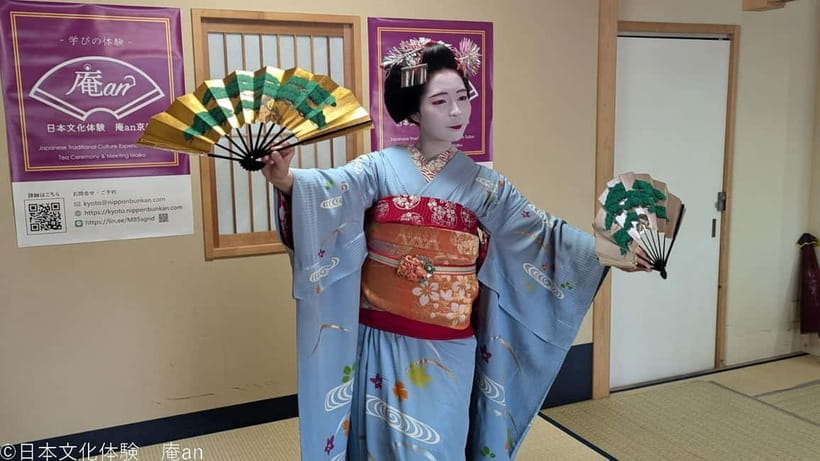
Kyoto offers a rare close-up look at maiko. This short program brings you near a maiko for two graceful dances, a playful traditional game, and a commemorative photo, all for about $28 per person. It is a useful choice when your Kyoto schedule is tight.
I especially like the chance to watch two different dances, since the movements express more than simple choreography. I also like the personal finish: you stand beside a maiko for a photo and receive a small Senjafuda lucky charm. The main drawback is timing. Although the booking is sold as 45 minutes, some recent bookings ended after about 30 minutes.
The venue is not an ochaya, or traditional teahouse. It is inside a building near Gojo Station, with a relaxed setting and friendly staff. Depending on the day, a geiko may appear instead of a maiko, and lunch or dinner may be taking place in the same room.
In This Review
- Key points at a glance
- A quick meeting with Kyoto’s maiko
- Finding the venue near Gojo Station
- The opening dances, graceful and carefully staged
- The traditional game brings everyone into the room
- Photos and the Senjafuda keepsake
- Is 45 minutes enough?
- What the $28 price really buys
- Language, atmosphere, and cultural value
- Who should book this maiko program?
- Booking advice before you go
- Should you book Dance and Game with Maiko?
- FAQ
- Where is Dance and Game with Maiko held?
- How long does the activity last?
- Is the venue a traditional Japanese teahouse?
- Is the program offered in English?
- Can children join for free?
- Can I cancel for a full refund?
Key points at a glance
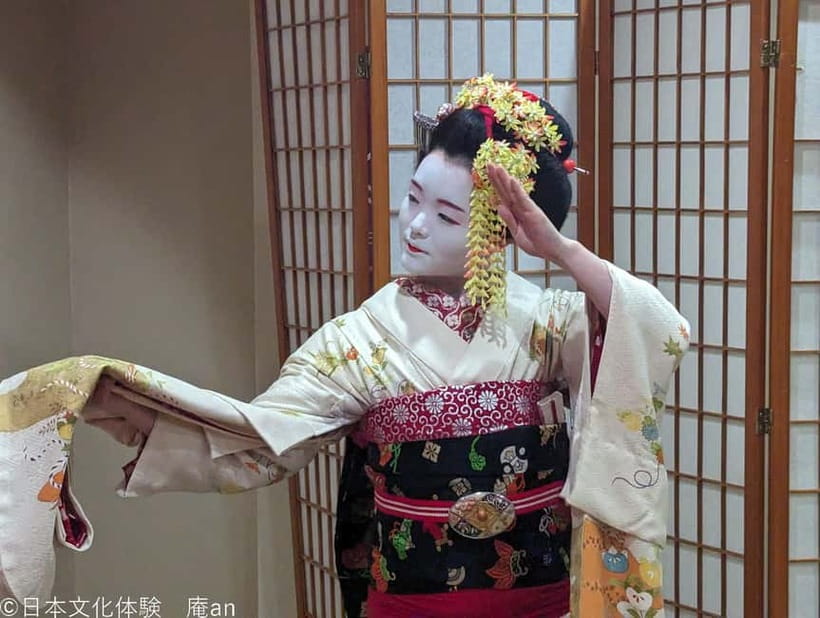
- Two maiko dances: Watch elegant performances shaped by Japanese seasons, romance, and daily life.
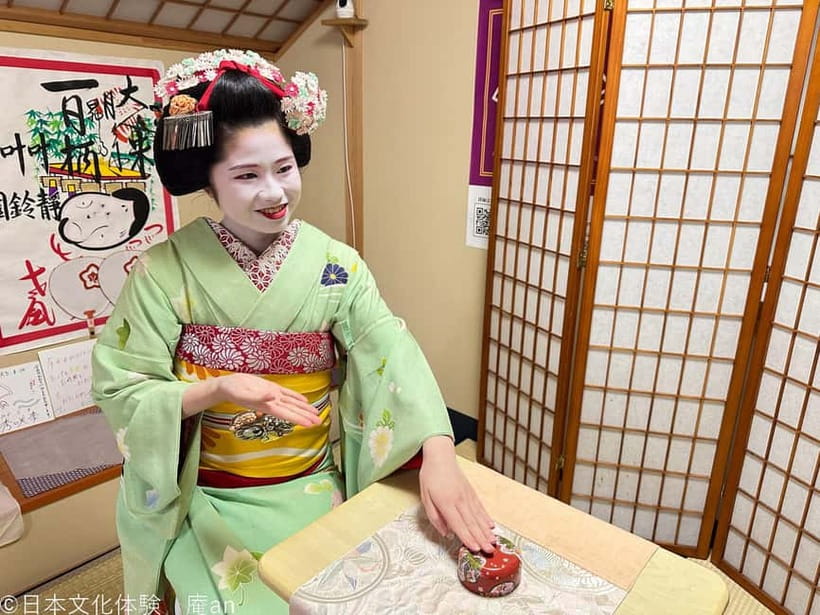
- A traditional audience game: Volunteers may play directly with the maiko, while everyone else claps and watches.
- A close photo opportunity: Take a commemorative picture beside a maiko after the formal program.
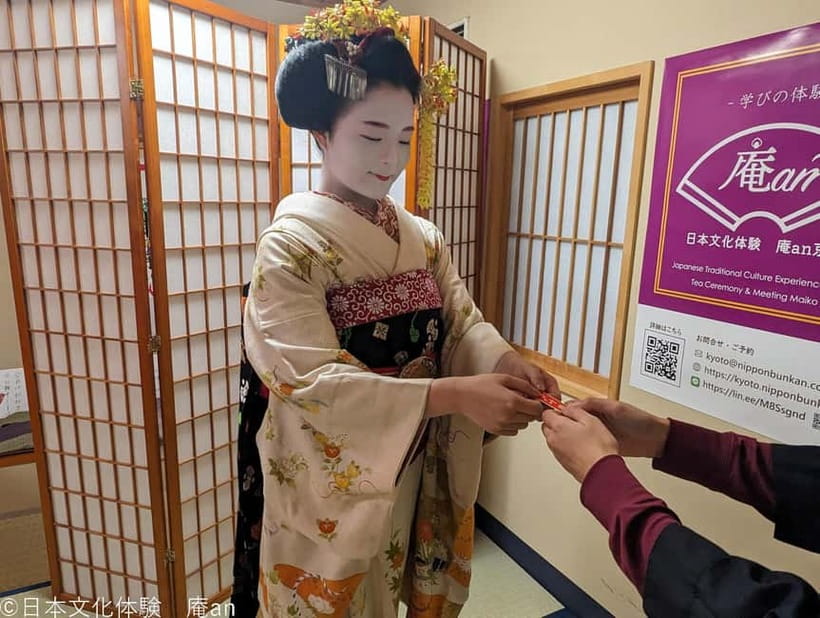
- A Senjafuda keepsake: Receive a small lucky charm to remember your Kyoto visit.
- Easy Gojo Station access: The meeting point is one minute from Exit 1 of the Subway Karasuma Line.
- Short but not always 45 minutes: The public program may finish around 30 minutes, with photos and chatting extending the visit.
A quick meeting with Kyoto’s maiko
Maiko are apprentice geisha, known for their elaborate hairstyles, colorful kimono, formal makeup, and carefully trained arts. Seeing one from a distance on a Kyoto street can be exciting, but it tells you little about the discipline behind the appearance. This program gives you a closer, more structured look.
You are not stepping into a private entertainment house or a preserved traditional residence. The setting is a building near Gojo Station, and that matters when you set expectations. You come for the performance and interaction, not for the architecture.
I see the plain venue as a fair trade for the low price and central location. You can reach it quickly from the subway, attend a compact program, and continue sightseeing without giving up half a day. If you want tatami rooms, a tea ceremony, or a more elaborate cultural presentation, choose one of the separate tea ceremony programs instead.
The program is conducted in Japanese. English translation may be provided as much as possible if you request it in advance, but you should not expect every part to be fully interpreted. The dances, music, gestures, and game are still fairly easy to follow without fluent Japanese.
More geisha district walks in Kyoto:
- Kyoto Geisha Walking Tour: Gion District & Hidden Gems
★ 4.7 · 3,273 reviews - Kyoto: Gion Magical Night Walking Tour with Geisha Trivia
★ 4.9 · 2,393 reviews - Kyoto: Gion Geisha District Walking Tour – Stories of Geisha
★ 4.7 · 2,187 reviews
Finding the venue near Gojo Station
The meeting point is about one minute from Exit 1 of Gojo Station on the Subway Karasuma Line. The entrance faces Gojo-dori, a main street, so you should have a simpler arrival than you would at a small address hidden down a side lane.
Give yourself extra time. The activity cannot be held for people who arrive late, and the operator does not promise to adjust the program for delays. This is especially important if you are transferring from another train line or trying to fit the event between major sights.
There is no elevator in the building. You will need to use stairs to reach the venue, so this is not a good pick if stairs are difficult for you. The activity itself lasts less than an hour, but the access point and stair arrangement are worth knowing before you pay.
The operating hours are 10:00 to 17:00. Reservations received after 17:00 are processed the next day. That processing detail is easy to miss if you are booking late in the evening while already in Japan.
The opening dances, graceful and carefully staged
The formal program begins with maiko dance performances. You watch two dances, each using controlled hand movements, posture, footwork, and facial expression to suggest a scene or feeling.
The dances may portray the seasons, love stories, or ordinary life in Japan. They are not long stage productions, but their small gestures reward close attention. Look at the hands, the angle of the head, and the way the kimono sleeves move. The performance is quiet and refined rather than flashy.
This is the strongest part of the program for anyone interested in traditional Japanese arts. You are not simply posing with a performer in costume. You see a form of dance that depends on restraint and symbolism, where a small motion can carry the meaning.
Bring a camera if you want photographs of the dances. The program specifically welcomes photography during this memorable moment, though you should still follow any instructions given in the room. Try to watch with your own eyes first. A phone held up for the entire performance can make a short presentation feel even shorter.
Depending on the circumstances, the performer may be a geiko rather than a maiko. That is not a lower-quality substitute. A geiko is an established geisha, while a maiko is still in training. The visual style and role may differ, but both are connected to Kyoto’s traditional entertainment culture.
The traditional game brings everyone into the room
After the dances, the tone changes. The maiko leads a simple traditional game involving people from the audience.
Volunteers may be invited to play directly with the maiko. If you prefer not to participate, you can watch, clap, and cheer. The game is designed to create a shared moment, and the fun comes partly from seeing how the selected players respond in front of the room.
You do not need special preparation. The game is meant to be accessible, and the staff can explain what is happening as much as possible. Still, the social part may feel slightly awkward for shy children or adults. One family booking noted that children wanted to join but felt embarrassed playing in a room full of people.
That is useful advice if you are booking for a family. The activity may work best if you tell children in advance that participation is optional. Watching can be just as enjoyable, and nobody needs to volunteer to get value from the program.
The size of the room and number of participants can affect the mood. On one recent visit described in the booking feedback, only a few people took part in the game. That can make the activity feel intimate, but it also means the experience may not have much of a large-stage feel.
A few more Kyoto experiences worth weighing up
- PERFECT KYOTO 1-Day Bus Tour
★ 5.0 · 13,518 reviews - Kyoto: Fushimi Inari, Kinkakuji, Bamboo Grove 1 Day Bus Tour
★ 4.8 · 4,316 reviews - Kyoto: Tea Ceremony in a Traditional Tea House in Kiyomizu
★ 4.9 · 3,519 reviews - Kyoto: Tea Ceremony Ju-An at Jotokuji Temple
★ 4.9 · 3,207 reviews
Photos and the Senjafuda keepsake
The listed schedule places the photo opportunity after the formal 30-minute program. You can take a commemorative picture beside the maiko, giving you a more personal memory than a photograph taken from your seat.
This is one of the best parts of the $28 price. You are not paying only to watch a short performance. You also receive a small physical memento and a moment of direct contact. The photo is especially useful if this is your first or only chance to meet a maiko in Kyoto.
The lucky charm is called a Senjafuda, sometimes spelled Senjafuda or Senjyafuda in the activity information. It is a small souvenir associated with the visit. Do not expect an expensive gift, but it is a thoughtful touch and easy to carry home.
After the picture, the maiko leaves the room. The remaining time is set aside for chatting, and the full schedule allows up to 45 minutes before you depart. This explains why the activity may feel shorter than the headline duration. The dance and game may be finished by the 30-minute point, while the photo and conversation make up the rest.
The exact flow can vary. Some people may be having lunch or dinner in the same building or room, so the setting may feel more like a cultural dining venue than a private salon. If you want complete quiet and a fully private presentation, this is not the right format.
Is 45 minutes enough?
For most people, yes, if you want a brief introduction rather than a full cultural workshop. The program delivers its main pieces quickly: two dances, one game, photos, and a charm.
The practical issue is that the advertised duration and the perceived performance time are not always the same. A recent booking described the activity as lasting only 30 minutes instead of 45, and another called it shorter than expected. You should think of 30 minutes as the core program, with the photo and chatting period potentially bringing the whole visit closer to 45 minutes.
That is not necessarily a serious problem. A short meeting can fit neatly into a day that already includes Nishiki Market, Gion, Kiyomizu-dera, or a meal. If you have come specifically for a long maiko presentation, though, you may leave wanting more.
I would not book this as the main cultural event of an entire Kyoto day. I would use it as a compact appointment between other activities. Its strength is convenience.
What the $28 price really buys
At approximately $28 per person, this is one of the easier ways to add a maiko encounter to a Kyoto itinerary without committing to a costly dinner or a lengthy private arrangement.
The value comes from four parts:
- Two live dance performances
- A traditional game with audience participation
- A photo beside the maiko
- A Senjafuda lucky charm
The price is strongest if you care about the photo and direct interaction. If you only want to watch dance, the short length may make the cost feel less impressive. If you want a quick introduction plus a personal souvenir, the package is more convincing.
Children under two are free if they sit on a parent’s lap. If a child under two needs a separate seat or meal, the regular one-person fee applies. Children who are old enough to participate can enjoy the game, but do not assume they will want to volunteer. The activity includes a public element that can make some children shy.
Any optional extras are not included in the base price. If you want an additional option, select it during booking. The supplied information does not specify the details or prices of those extras, so check carefully before confirming.
Language, atmosphere, and cultural value
The official language is Japanese. That may sound limiting, but the program depends heavily on visual performance and simple interaction. You can follow the dances without translation, and the game should be understandable with basic guidance.
If you want English help, contact the operator and request it. English translation is offered as much as possible, but it is not presented as a guaranteed full-English program. I would send the request before arrival rather than hoping for a bilingual explanation on the spot.
The relaxed building setting may actually help some people. You do not need to know the rules of a formal tea ceremony, wear special clothing, or prepare for an elaborate etiquette lesson. You arrive, watch, play if you wish, take a photo, and leave with a small charm.
At the same time, this is not a private meeting. People may be eating lunch or dinner nearby, and the building is not an ochaya. That makes the event less polished than a high-end cultural package, but it also keeps the cost down and the mood approachable.
Who should book this maiko program?
I would recommend it to you if you have limited time in Kyoto and want a direct introduction to maiko culture. It suits first-time visitors, families who can manage stairs, photographers, and anyone who wants a small keepsake rather than a long formal ceremony.
It is also a good fit if you are curious about traditional dance but unsure about booking a full tea ceremony. The program gives you a taste of the music, movement, costume, and social customs without asking for much time or preparation.
You may want another option if you need:
- A traditional Japanese house or ochaya setting
- A guaranteed maiko rather than the possibility of a geiko
- A fully English-language presentation
- A long performance lasting well beyond 30 minutes
- An elevator-accessible venue
- A private and quiet room
The activity is not a substitute for a complete Kyoto cultural evening. It is a compact encounter with a clear focus.
Booking advice before you go
Book at least eight days before the date if you want the option of a full refund after cancellation. Cancellations made later may incur a fee, and changing the date or time after a fee applies can create an additional specified charge.
Do not count on recovering transportation costs if you cancel. Also, anyone who does not participate in the activity cannot enter the venue, so a family member who only wants to watch from the side should not assume they can come inside free of charge.
Arrive early, especially if you are unfamiliar with Gojo Station. Check the street-facing entrance, allow time for stairs, and keep your schedule flexible after the activity in case the photo and chatting portion runs close to the full 45 minutes.
The overall rating is 3.9 out of 5 from 46 ratings. The most praised elements are consistent: the maiko is beautiful, the game is fun, and the experience feels memorable. The main criticism is also clear: the actual program can feel shorter than promised.
Should you book Dance and Game with Maiko?
Book it if you want an affordable, short, visually memorable meeting with Kyoto’s traditional performing arts. The two dances, audience game, photo, and Senjafuda offer good value at $28, especially when your sightseeing plan is already full.
Skip it if the building setting, Japanese-language presentation, stairs, or possible 30-minute core program will bother you. For a deeper cultural visit, choose the separate tea ceremony with Maiko or premium tea ceremony program.
My practical call is simple: treat this as a compact maiko introduction, not a grand evening show. With that expectation, it can be a lovely little stop in Kyoto.
FAQ
Where is Dance and Game with Maiko held?
The meeting point is one minute from Exit 1 of Gojo Station on the Subway Karasuma Line. The entrance faces Gojo-dori.
How long does the activity last?
The stated duration is 45 minutes. The dance and game portion ends at about 30 minutes, followed by photos, the Senjafuda gift, and chatting time. The exact length may vary.
Is the venue a traditional Japanese teahouse?
No. The venue is inside a building and is not an ochaya or traditional Japanese house. Lunch or dinner may also be taking place in the room or building.
Is the program offered in English?
The official language is Japanese. English translation will be provided as much as possible if you contact the operator and request it.
Can children join for free?
Children under two are free when sitting on a parent’s lap. If a separate seat or meal is needed, the same fee as one person applies.
Can I cancel for a full refund?
You can cancel up to eight days in advance for a full refund. Later cancellations may involve a fee, and transportation costs are not compensated if the activity is canceled.
Just added around Kyoto
- Kyoto: Gion Night Walking Tour with Geisha Insight★ 5.0 · 39 reviews
- Kyoto: Private Customizable Day Trip by Car★ 5.0 · 38 reviews
- Kyoto: Full Day Bike Tour★ 4.9 · 39 reviews
- Private Japanese Calligraphy in Kyoto – Learn Shodō with a Master★ 5.0 · 39 reviews
- Kyoto: Gion Evening Walk with Hidden Gems, Geisha & Sake★ 5.0 · 41 reviews
- Experience a tea ceremony in an authentic tearoom, in Kyoto!★ 4.5 · 41 reviews
- Kyoto Private Photo Shoot & Tour by SnapKyoto★ 5.0 · 41 reviews
- The Way of Tea: Kyoto Crafts, Hidden Temples & Wabi-Sabi Walk★ 5.0 · 41 reviews
Geisha & Gion District Tours, compared.
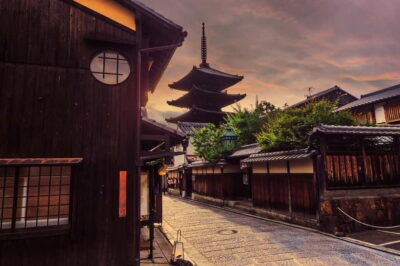
Kyoto Geisha Walking Tour: Gion District & Hidden Gems
Read our review →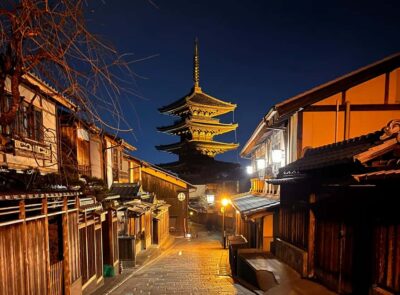
Gion Magical Night Walking Tour with Geisha Trivia
Read our review →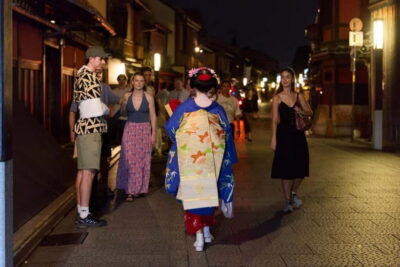
Gion Geisha District Walking Tour – Stories of Geisha
Read our review →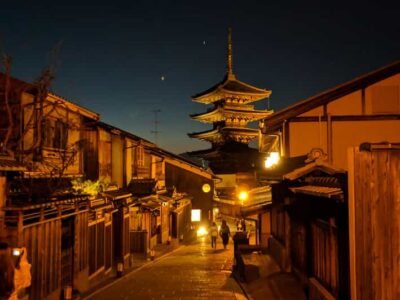
Best of Kyoto: Gion, Geisha, Pagodas & Cobblestones
Read our review →

Kyoto Night Foodie Tour in Gion (9+ dishes + 6 Sake tastings)
Read our review →
Kyoto Gion Geisha District Walking Tour – The Stories of Geisha
Read our review →
Kyoto Gion: 2-Hour Geisha Culture & History Walking Tour
Read our review →Browse the lists this tour appears in