
Reviewed · GEISHA & GION DISTRICT TOURS
Gion Nocturno: Secretos y Leyendas de las Geishas
Gion changes after dark. This small-group walking tour offers a calmer way to see Kyoto’s famous geisha district, moving from the Minamiza Theater through Tatsumi Bridge, Hanamikoji Street, Gion Corner, and Yasaka Shrine. I especially like the 15-person maximum, which keeps the walk personal, and the chance to see Gion when the daytime crowds have thinned.
The $21.80 price is also appealing for a two- to three-hour introduction to one of Kyoto’s most famous areas. The main consideration is that the route gives you outside views and cultural explanation rather than entry into private teahouses or a full evening performance. Gion Corner admission is not included, so you should budget separately if you want to attend a show there.
In This Review
- Key points to know before booking
- Why Gion works better after sunset
- Starting at the Minamiza Theater
- Tatsumi Bridge and the Gion Shinbashi lanes
- Hanamikoji Street and the old machiya facades
- Gion Corner and the question of admission
- Yasaka Shrine adds a spiritual side
- What the $21.80 price really buys
- The guide can make or break this walk
- Who will enjoy this experience most
- Cancellation and planning details
- Should you book Gion Nocturno?
- FAQ
- How much does Gion Nocturno cost?
- How long does the tour last?
- What is the maximum group size?
- Where does the tour begin?
- Where does the tour end?
- Which places are included on the route?
- Is admission to Gion Corner included?
- Can I cancel for a full refund?
Key points to know before booking
- Small groups of up to 15 people: This is a more manageable size for narrow lanes and questions.
- Five central Gion stops: The route links the Minamiza Theater, Tatsumi Bridge, Hanamikoji Street, Gion Corner, and Yasaka Shrine.
- A night-focused view of Kyoto: The tour is designed for the quieter mood of Gion after sunset.
- Strong overall rating: It has a 4.9 rating from 140 reviews, with 99 percent recommending it.
- Guides can shape the experience: Sergio has been praised for historical detail, while Michael was described as polite and engaging.
- Good value at $21.80: You pay mainly for the guide’s local context and a carefully arranged walk, not for attraction admissions.
Why Gion works better after sunset
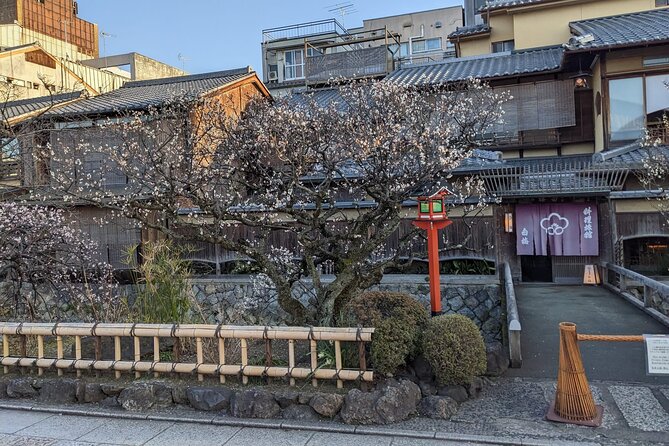
Gion is famous for wooden machiya houses, traditional teahouses, narrow lanes, and the geisha world associated with Kyoto. During the day, the district can feel crowded and camera-heavy. A night walk changes the pace. You have a better chance to notice the lines of the streets, the restrained fronts of the buildings, and the way old Kyoto is presented without the same daytime pressure.
That does not mean the tour guarantees a geisha sighting. The description presents the geisha world in its real setting, but no performance or encounter is promised. You should book this for the setting and explanations, not as a wildlife-style search for maiko or geiko.
I like the timing in principle because Gion’s character is tied to evening dining and entertainment. The walk lets you look at the district at the hour when its traditional purpose becomes easier to understand. At the same time, you should respect the area. Keep your camera ready, but do not treat people working in Gion as part of a show.
The tour lasts about two to three hours, although each listed stop is planned for roughly 10 minutes. That suggests the remaining time is used for walking, orientation, and guide commentary. Wear comfortable shoes, since the experience is entirely on foot.
More geisha district walks in Kyoto:
- Kyoto Geisha Walking Tour: Gion District & Hidden Gems
★ 4.7 · 3,273 reviews - Kyoto: Gion Magical Night Walking Tour with Geisha Trivia
★ 4.9 · 2,393 reviews - Kyoto: Gion Geisha District Walking Tour – Stories of Geisha
★ 4.7 · 2,187 reviews
Starting at the Minamiza Theater
The meeting point is the Minamiza Theater at the eastern end of Shijo Bridge, in Kyoto’s Higashiyama Ward. This is a practical starting place because the theater is easy to identify and sits close to the entrance to Gion.
Minamiza is one of Japan’s best-known Kabuki theaters. Kabuki is known for elaborate costumes, strong makeup, dramatic movement, and stories built for the stage. The tour allows about 10 minutes here, so expect an introduction and an exterior look rather than a full theater visit. Admission is free for this stop.
This opening works well because it sets up a useful theme: Gion is not only about geisha culture. It is also linked to older forms of Japanese theater, music, dance, and evening entertainment. A good guide can help you see how these traditions fit together rather than presenting Gion as a collection of pretty streets.
If you are meeting your guide at night, give yourself time to find the theater and the correct side of the bridge. The supplied meeting address is Kyoto-shi Higashiyama-ku Shijo Ohashi Higashizume, Nakanocho, Kyoto 605-0075. Since the tour begins near public transportation, you do not need a private vehicle or a complicated transfer.
Tatsumi Bridge and the Gion Shinbashi lanes
The next stop is Tatsumi Bridge, in the Gion Shinbashi area. This is one of the locations that best expresses the quiet, traditional side of Gion. Cobblestone lanes, wooden buildings, and teahouses create a much smaller scale than the main shopping streets.
The stop is scheduled for about 10 minutes and has no admission charge. That may sound brief, but a guide can make a short pause useful by pointing out details you could easily walk past alone. The value here comes from learning how to read the street, not from spending a long time at a single monument.
This is also where the small group matters. Gion’s lanes are not designed for a large crowd with a flag in front. With no more than 15 people, you should have a better chance to hear the guide and stay together without blocking the passage.
The route description connects this area with the subtle presence of geisha in the evening. Again, keep expectations sensible. You might see people connected with Gion’s traditional entertainment world, but the experience does not promise that. The respectful approach is to enjoy the architecture and listen to the cultural explanation rather than chasing photographs.
Hanamikoji Street and the old machiya facades
Hanamikoji Street is probably the most recognizable part of the walk. It runs through central Gion and is lined with elegant wooden machiya buildings, traditional restaurants, and teahouses. The route allows another 10 minutes here.
For many people, this is the visual payoff. The dark wood fronts and carefully maintained facades give the street a strong sense of place. Yet Hanamikoji is not a museum. Restaurants and teahouses still operate here, and the street is part of a living neighborhood. That makes the guide’s interpretation especially useful.
I would pay close attention to explanations about who can enter certain establishments, how the traditional entertainment world works, and the difference between a public street and a private business. The supplied comments describe the tour as instructive, with Sergio receiving particular praise for his historical experience and his explanations of geisha careers and daily life.
There is one reason to stay alert during any history-focused walk. One person who took a Kyoto walking tour with Michael found him polite and engaging but felt that some historical statements were not accurate. That does not cancel the strong overall rating, but it is a reminder to treat broad claims with care. If a detail sounds surprising, ask a polite follow-up question. The best guides welcome that.
A few more Kyoto experiences worth weighing up
- PERFECT KYOTO 1-Day Bus Tour
★ 5.0 · 13,518 reviews - Kyoto: Fushimi Inari, Kinkakuji, Bamboo Grove 1 Day Bus Tour
★ 4.8 · 4,316 reviews - Kyoto: Tea Ceremony in a Traditional Tea House in Kiyomizu
★ 4.9 · 3,519 reviews - Kyoto: Tea Ceremony Ju-An at Jotokuji Temple
★ 4.9 · 3,207 reviews
Gion Corner and the question of admission
The walk finishes at Gion Corner, a cultural venue near Hanamikoji Street. It is described as a place where several Japanese traditional arts are presented in one setting. The tour allows about 10 minutes here and ends outside the theater.
This is an important distinction: Gion Corner admission is not included. The walking tour may explain the venue and bring you to its entrance, but you should not assume that the price includes a performance.
That arrangement can be useful. You can decide for yourself if you want to buy a separate ticket or simply finish the walk there. If your main interest is seeing Gion’s streets at night, the tour already provides its central experience. If you want a stage presentation of traditional arts, Gion Corner may be worth considering as an additional plan.
The ending point is listed as 570-2 Gionmachi Minamigawa, Higashiyama Ward, Kyoto 605-0074, in front of Gion Corner. This makes the tour easy to combine with the rest of an evening in central Kyoto, though no post-tour activity is included.
Yasaka Shrine adds a spiritual side
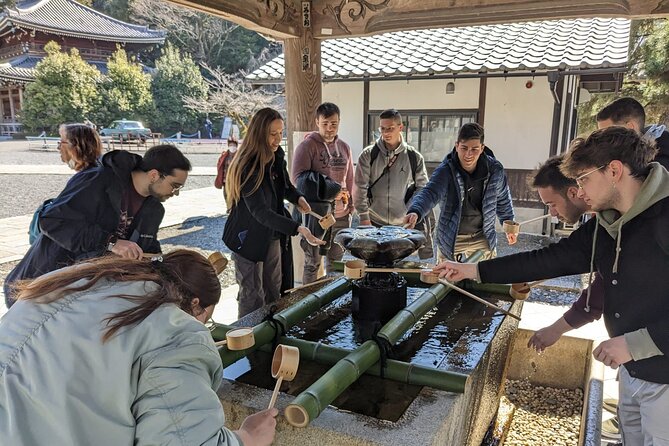
Yasaka Shrine, also called Yasaka Jinja or Gion Shrine, is another listed stop and has no admission charge. It is one of Kyoto’s best-known Shinto shrines and is located directly within the Gion area. The stop is planned for roughly 10 minutes.
This part of the route broadens the tour beyond entertainment districts and geisha traditions. A shrine gives you a chance to consider the religious side of the neighborhood and the customs that shaped daily life in Kyoto. You might find the contrast useful: Gion’s teahouses and theaters show one part of the city’s culture, while Yasaka Shrine points to another.
The supplied description notes that the shrine is more than 1,000 years old. A short stop cannot cover everything connected with the site, but it gives the guide a natural place to explain Shinto traditions and the shrine’s importance to the surrounding district.
Because the walk ends at Gion Corner rather than Yasaka Shrine, the exact order or timing may vary. The advertised route includes both places, but you should follow the guide’s instructions on the night. The five stops are close enough to form a sensible central Gion walk, with the walking time between them making up much of the total duration.
What the $21.80 price really buys
At $21.80 per person, this is not an expensive Kyoto activity. You are not paying for entry to multiple attractions. Minamiza Theater, Tatsumi Bridge, Hanamikoji Street, and Yasaka Shrine are listed as free stops, while Gion Corner is extra.
The value comes from the route and the explanation. Gion is easy to reach, but it is not always easy to understand. A guide can explain why the district looks the way it does, how geisha careers fit into Kyoto’s cultural life, and which details deserve your attention.
The price is strongest for a first visit to Kyoto or for anyone who wants a short orientation before exploring independently. It is less compelling if you already know Gion well, have spent several evenings walking its lanes, or want a paid performance rather than a walking tour.
The 4.9 rating from 140 reviews and 99 percent recommendation rate suggest that the experience delivers well for its intended purpose. The praise is especially strong for the guides’ personal manner, the number of worthwhile places covered, and the sense of seeing Gion in a more authentic setting.
One comment even described a missed morning tour that was replaced with a 2:30 p.m. walking tour, which suggests some flexibility may be possible in certain circumstances. Do not rely on that as a guarantee. Your confirmed start time is the one that matters.
The guide can make or break this walk
The route itself is attractive, but the guide is the main reason to book a paid walk through an area you could visit for free. Several comments praise the tour for being well guided and full of useful information. Sergio is singled out for his historical experience and for explaining the careers and lives of geisha.
Michael is described as polite and engaging. That is important on a small-group walk, where the guide’s speaking style affects the whole evening. A calm guide who gives clear directions and makes room for questions can turn a simple stroll into a useful introduction to Kyoto.
Still, no guide is perfect on every subject. One comment raised concerns about the accuracy of some historical points. I would keep this in perspective: the overall rating remains very high, and the walk’s main strength is its combination of place, atmosphere, and cultural context. If you are a specialist in Japanese history, you may want to check a few details later rather than expecting an academic lecture.
Who will enjoy this experience most
I would choose this tour if you want:
- A gentle introduction to Gion before exploring alone
- A night walk rather than a daytime sightseeing circuit
- A small group instead of a large organized crowd
- Clear explanations about geisha culture and Kyoto traditions
- A route that combines streets, theater, shrine, and cultural venue
- A reasonably priced activity lasting two to three hours
It is also a good fit if you are unsure how to behave around geisha and traditional businesses. The guide can provide context and help you observe without turning the district into a photo stop.
I would think twice if you want an actual geisha performance, a meal in a teahouse, or guaranteed contact with a maiko or geiko. None of those are included in the supplied details. I would also choose something else if you dislike walking or want to spend most of the evening inside heated or seated venues.
The walk is suitable for most people according to the activity information, and it is near public transportation. The mobile ticket makes the practical side simple. Confirmation is provided at booking, and the group is capped at 15 people.
Cancellation and planning details
You can cancel for a full refund up to 24 hours before the scheduled start time. Cancellations made less than 24 hours before the start are not refunded, and changes inside that window are not accepted. The cut-off follows Kyoto local time.
The tour requires a minimum number of participants. If that minimum is not reached and the activity is canceled, you are offered another date or experience, or a full refund.
Book ahead if your schedule is tight. The average booking lead time is 38 days, which indicates that many people arrange this well before arrival. That is not a rule requiring you to book that early, but it is a useful warning for busy Kyoto travel dates.
Should you book Gion Nocturno?
I would book it for a first or second Kyoto visit, especially if you want a compact evening walk with strong cultural context. The $21.80 price is fair because you are buying access to a guide’s explanations, a well-chosen route, and the calmer mood of Gion after dark.
Go in with realistic expectations. You are walking through public streets, not entering the private world of every teahouse. Gion Corner costs extra, and a geisha sighting is not guaranteed. If those limits suit you, this is an easy, well-priced way to understand why Gion remains one of Kyoto’s most memorable districts.
FAQ
How much does Gion Nocturno cost?
The tour costs $21.80 per person.
How long does the tour last?
The walking experience lasts approximately two to three hours.
What is the maximum group size?
The tour accepts a maximum of 15 people.
Where does the tour begin?
The meeting point is the Minamiza Theater at Kyoto-shi Higashiyama-ku Shijo Ohashi Higashizume, Nakanocho, Higashiyama Ward, Kyoto 605-0075, Japan.
Where does the tour end?
The walk ends in front of Gion Corner at 570-2 Gionmachi Minamigawa, Higashiyama Ward, Kyoto 605-0074, Japan.
Which places are included on the route?
The route includes the Minamiza Theater, Tatsumi Bridge, Hanamikoji Street, Gion Corner, and Yasaka Shrine.
Is admission to Gion Corner included?
No. Admission to Gion Corner is not included in the tour price. The other listed stops have no admission charge.
Can I cancel for a full refund?
Yes. You can cancel up to 24 hours before the experience start time for a full refund. Cancellations or changes made less than 24 hours before the start are not accepted for a refund.
Just added around Kyoto
- Kyoto: Gion Night Walking Tour with Geisha Insight★ 5.0 · 39 reviews
- Kyoto: Private Customizable Day Trip by Car★ 5.0 · 38 reviews
- Kyoto: Full Day Bike Tour★ 4.9 · 39 reviews
- Private Japanese Calligraphy in Kyoto – Learn Shodō with a Master★ 5.0 · 39 reviews
- Experience a tea ceremony in an authentic tearoom, in Kyoto!★ 4.5 · 41 reviews
- Kyoto: Gion Evening Walk with Hidden Gems, Geisha & Sake★ 5.0 · 41 reviews
- Kyoto Private Photo Shoot & Tour by SnapKyoto★ 5.0 · 41 reviews
- The Way of Tea: Kyoto Crafts, Hidden Temples & Wabi-Sabi Walk★ 5.0 · 41 reviews
Geisha & Gion District Tours, compared.
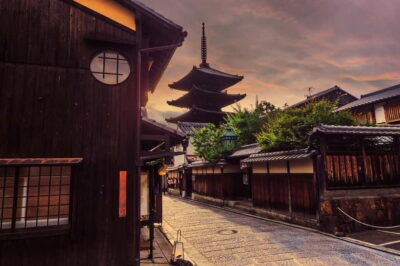
Kyoto Geisha Walking Tour: Gion District & Hidden Gems
Read our review →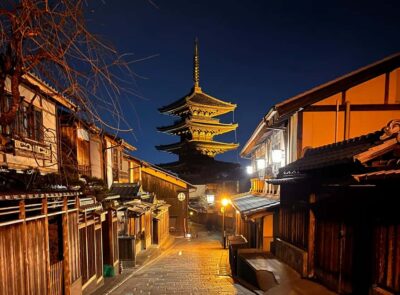
Gion Magical Night Walking Tour with Geisha Trivia
Read our review →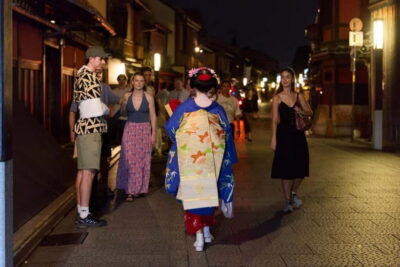
Gion Geisha District Walking Tour – Stories of Geisha
Read our review →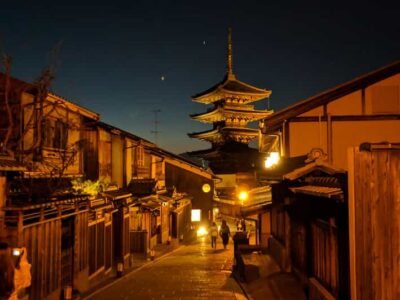
Best of Kyoto: Gion, Geisha, Pagodas & Cobblestones
Read our review →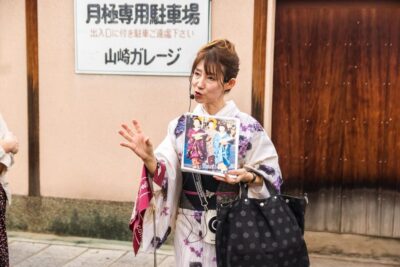
Kyoto Night Foodie Tour in Gion (9+ dishes + 6 Sake tastings)
Read our review →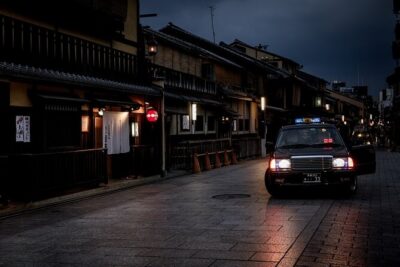
Kyoto Gion Geisha District Walking Tour – The Stories of Geisha
Read our review →
Kyoto Gion: 2-Hour Geisha Culture & History Walking Tour
Read our review →Browse the lists this tour appears in