
Reviewed · CITY TOURS
Hiroshima: Private City Highlights Walking Tour
Hiroshima asks you to remember. This private walking tour makes that difficult story easier to understand, pairing the Peace Memorial Park and Museum with a local guide who can explain what you are seeing. I like the personal format, which lets you ask direct questions, and I like the walk beyond the main monuments to Hiroshima Castle and lesser-known sites. The main drawback is pace: four hours on foot, with a one-hour museum visit and many stops, can feel long in Hiroshima’s heat or rain.
Guides such as Maria, Ali, Ihsan, Wajid, and Ishan have earned especially warm praise for their empathy, clear English, flexibility, and ability to adjust the route. I also appreciate the practical touches: some guides have stopped for fresh juice, ice cream, or local okonomiyaki. Still, your experience depends on the individual guide, and the itinerary covers serious material that may feel emotionally heavy.
In This Review
- Key points at a glance
- Why this four-hour Hiroshima walk works
- Starting at the Gates of Peace and Prayer Fountain
- One hour inside the Peace Memorial Museum
- Memorials that make the park personal
- The Atomic Bomb Dome and the city before 1945
- Walking on to Hiroshima Castle
- The guides make the difference
- Is $90 per person good value?
- Who should book this walking tour?
- Practical ways to get more from the morning
- Should you book it?
- FAQ
- How long is the Hiroshima City Highlights Walking Tour?
- Where does the tour start and finish?
- Is the Hiroshima Peace Memorial Museum admission included?
- Is the Atomic Bomb Dome admission included?
- What languages are available?
- Is the tour private and wheelchair accessible?
Key points at a glance
- The Peace Park comes first: You begin among the central memorials, where each monument carries a specific purpose and story.
- One hour inside the museum: The guide provides context before and after your visit, but you will spend much of the museum time exploring quietly on your own.
- Private means flexible: You can ask questions, change the pace, and give more time to sites that matter most to you.
- The route reaches Hiroshima Castle: The tour moves beyond the bombing memorials to show the city’s earlier history and rebuilt identity.
- Expect a serious walking morning: The route covers many sites, and heat, rain, or tired feet can affect the experience.
- The price includes admissions: At $90 per person, the value rests mainly in the private guide and the extra context, not just the entry tickets.
Why this four-hour Hiroshima walk works
Hiroshima is easy to visit on your own in a basic sightseeing sense. You can find the Peace Memorial Park, walk to the Atomic Bomb Dome, enter the museum, and take a tram elsewhere. What is harder is understanding how the monuments relate to one another, what the city looked like before August 6, 1945, and how Hiroshima rebuilt itself afterward.
That is where a private guide earns the fee. You get a human explanation at each stop rather than a string of plaques and photographs. Guides have also adjusted the tour for individual interests, family needs, delayed trains, and changing energy levels. One guide even helped a guest find medicine at a pharmacy after the walk.
The tour is conducted in English, Malay, Urdu, Hindi, or Punjabi. It is a private group experience, so you are not sharing the guide with strangers. That makes it easier to ask about difficult subjects, pause when needed, or request more detail about Japanese culture, local food, or the city’s geography.
The meeting point is at 1-2 Nakajimachō in Naka Ward. The tour ends back at the same meeting point. You arrange your own transport to and from the walk, and food and drinks are not included, though guides have sometimes added a refreshment stop when the pace and weather called for it.
More Walking Tours in Hiroshima
- Hiroshima Historical Walking Tour – Why A-Bomb was Dropped
★ 4.8 · 893 reviews - Hiroshima Peace (Heiwa) Walking Tour at World Heritage Sites
★ 5.0 · 872 reviews - Hiroshima City 4hr Private Walking Tour with Licensed Guide
★ 5.0 · 437 reviews
Starting at the Gates of Peace and Prayer Fountain
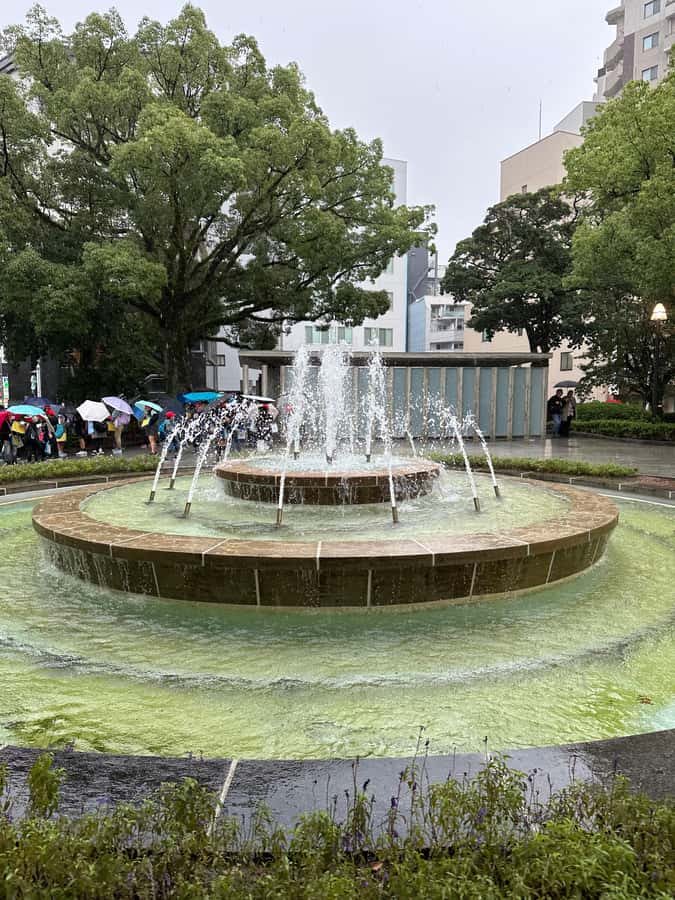
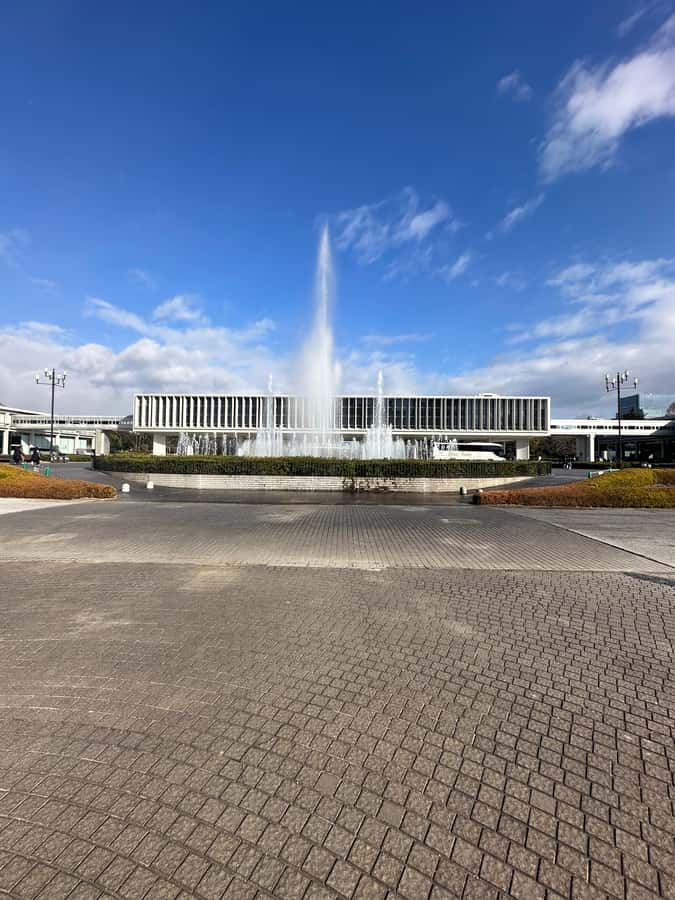
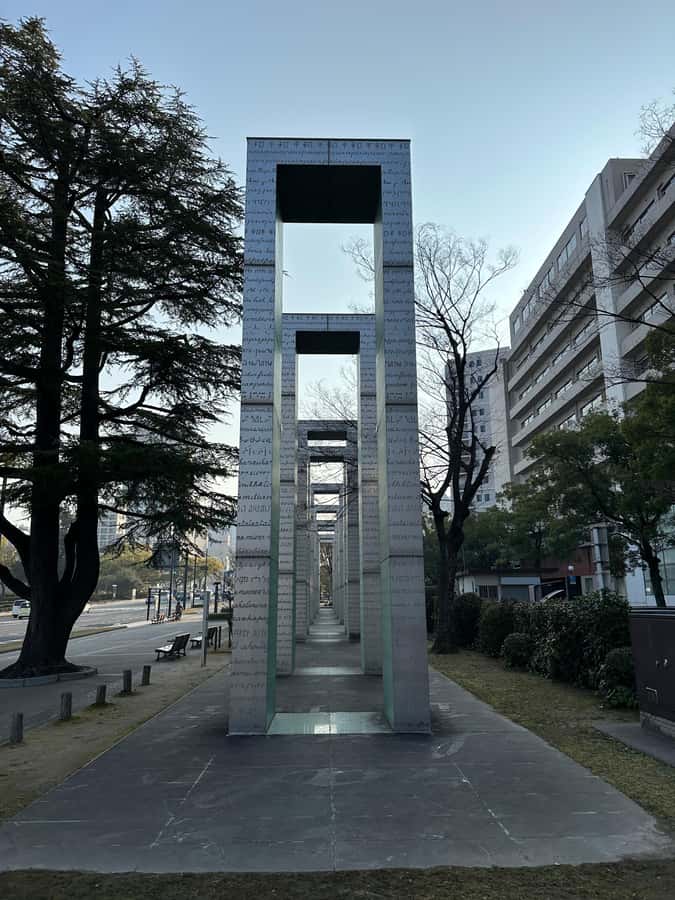
The first stops, the Gates of Peace and Prayer Fountain, ease you into the Peace Memorial Park. The Gates of Peace photo stop lasts about 15 minutes, followed by roughly 10 minutes at the fountain.
These are not throwaway introductions. The guide can explain how the park’s design, memorials, and symbols fit together before you enter the museum. I find that useful because the park can initially feel open and spacious, yet each feature has a deliberate meaning connected to remembrance, mourning, or the hope for peace.
The Prayer Fountain is also a natural place to slow down. The tour is not simply racing from one famous object to another. You have time to hear the story, look around, and ask questions. Still, if you prefer a quiet personal visit, you may find the guided explanations at every stop a little dense. Tell your guide when you want a silent moment.
One hour inside the Peace Memorial Museum
The Hiroshima Peace Memorial Museum is the emotional center of the tour. You receive admission, and the scheduled visit lasts about one hour. The displays cover the events of August 6, 1945, through objects, photographs, documents, and personal accounts.
A guide cannot make the museum easy. The subject is painful, and the exhibits are designed to confront you with the human cost of the bombing rather than offer a comfortable historical overview. I recommend entering with time to process what you see. Do not plan a demanding activity immediately afterward if you know museums of war and loss affect you strongly.
Your guide’s greatest value here is context. Ishan, Ihsan, Maria, and other guides have been praised for explaining key exhibits clearly, answering questions patiently, and helping families understand the significance of the displays. One important practical point: much of the museum visit is necessarily quiet and self-directed. Your guide may point out important sections or discuss them with you afterward, but this is not a continuous talk delivered beside every exhibit.
The one-hour limit gives you a useful first visit, but it may not satisfy visitors who want to read every panel. If the museum is your main reason for coming to Hiroshima, you may want to arrange additional independent time. For a first overview, though, the hour helps keep the full walking route on schedule.
Memorials that make the park personal
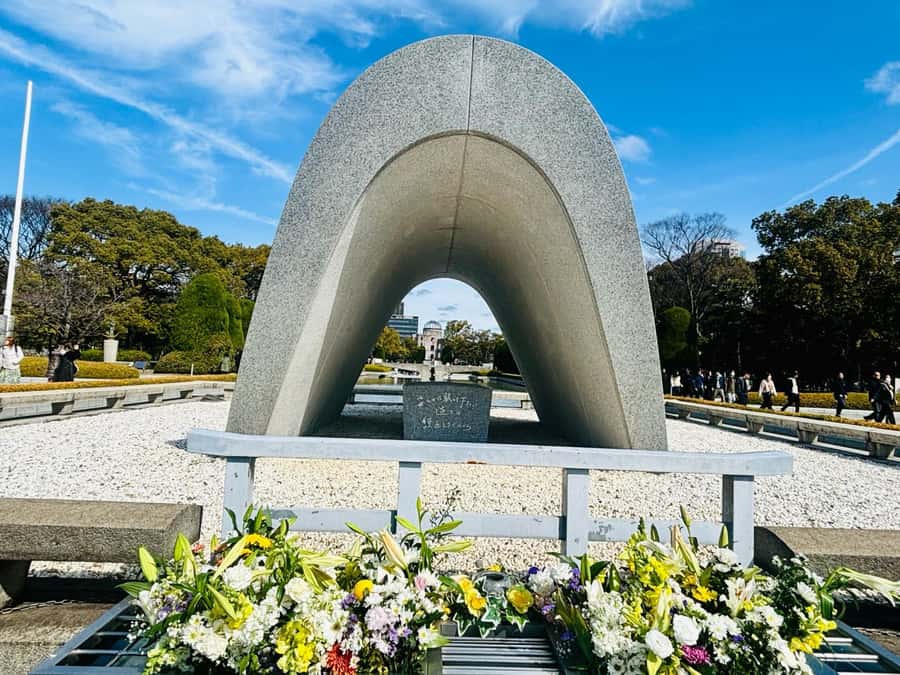
After the museum, the route moves through several memorials. At the Hiroshima Victims Memorial Cenotaph, you have about 15 minutes. This is one of the park’s central places of remembrance, and your guide can explain its role in honoring those who died.
The Flame of Peace receives about five minutes. It is a short stop, but the guide can connect it to the wider message of the park. You will not need much time for photographs here, and the brief visit helps balance the longer museum and monument stops.
The Korean Atomic Bomb Victims Cenotaph receives approximately 15 minutes. This stop matters because it broadens the story beyond a single national experience. A local guide can help you understand that people from different backgrounds were caught in the bombing and that remembrance in Hiroshima includes more than the most familiar Japanese narratives.
The Bell of Peace is scheduled for another 15 minutes. Here, you may have time to look closely, take photographs, and ask why bells and sound carry such importance in memorial spaces. The walk remains serious, but the steady movement between sites prevents the experience from becoming one long indoor museum visit.
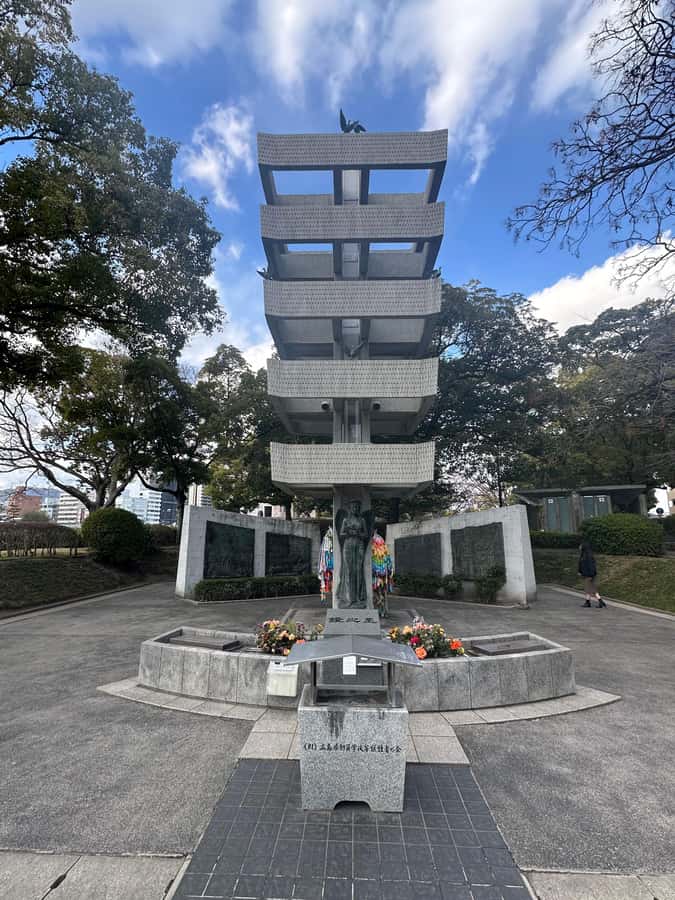
At the Children’s Peace Monument, the tour spends about 15 minutes. This memorial is tied to the children affected by the bombing and is among the most moving stops for families. Guides have been particularly praised for explaining the monument with care, especially when children or teenagers are part of the group.
The strength of this sequence is the detail. Instead of treating the Peace Park as one attraction, you encounter several distinct acts of memory. The limitation is that some visitors may prefer to linger at one or two sites rather than follow a fixed sequence. The private format helps: ask your guide to slow down at the places that speak most strongly to you.
A completely different kind of day out in Hiroshima:
- Peaceful Hiroshima & Miyajima UNESCO 1 Day Bus Tour
★ 5.0 · 5,309 reviews - Hiroshima: Hiroshima and Miyajima UNESCO Sites 1-Day Tour
★ 4.9 · 2,330 reviews - Hiroshima / Miyajima Full-day Private Tour with Government Licensed Guide
★ 5.0 · 1,298 reviews - Hiroshima in a Nutshell: Morning Bike Adventure
★ 5.0 · 524 reviews
The Atomic Bomb Dome and the city before 1945
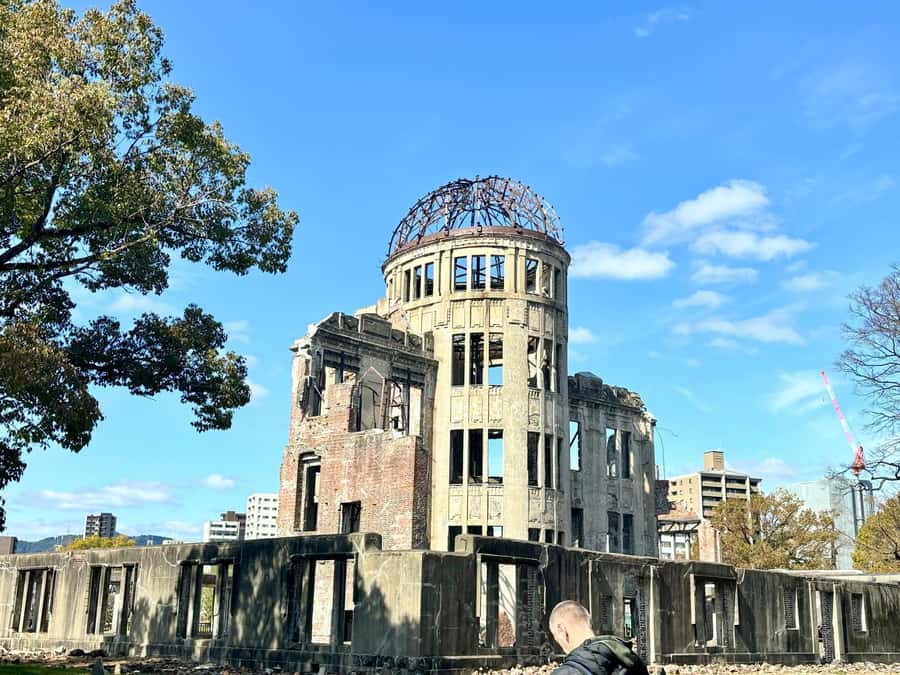
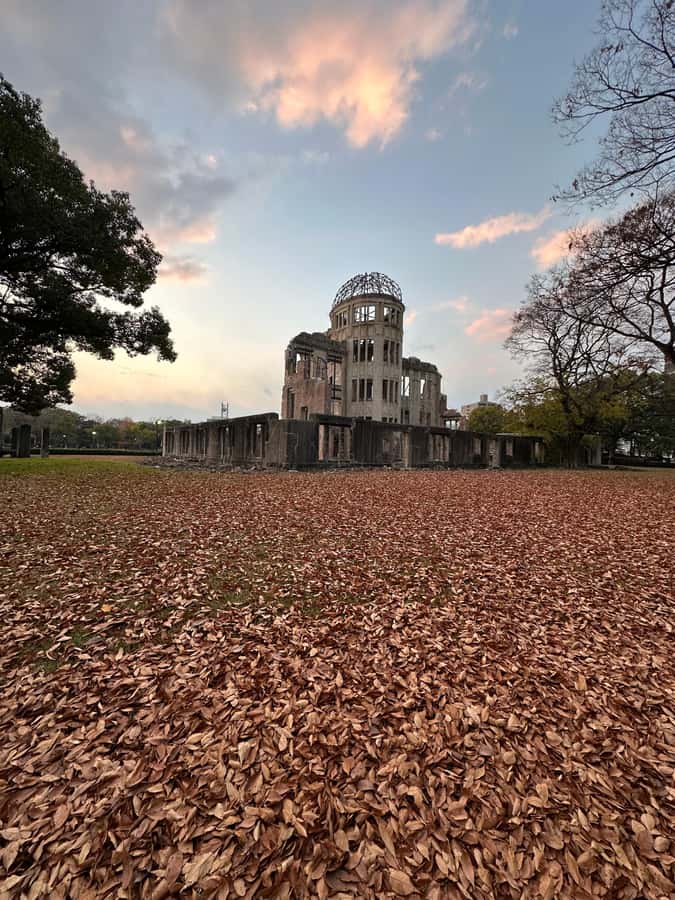
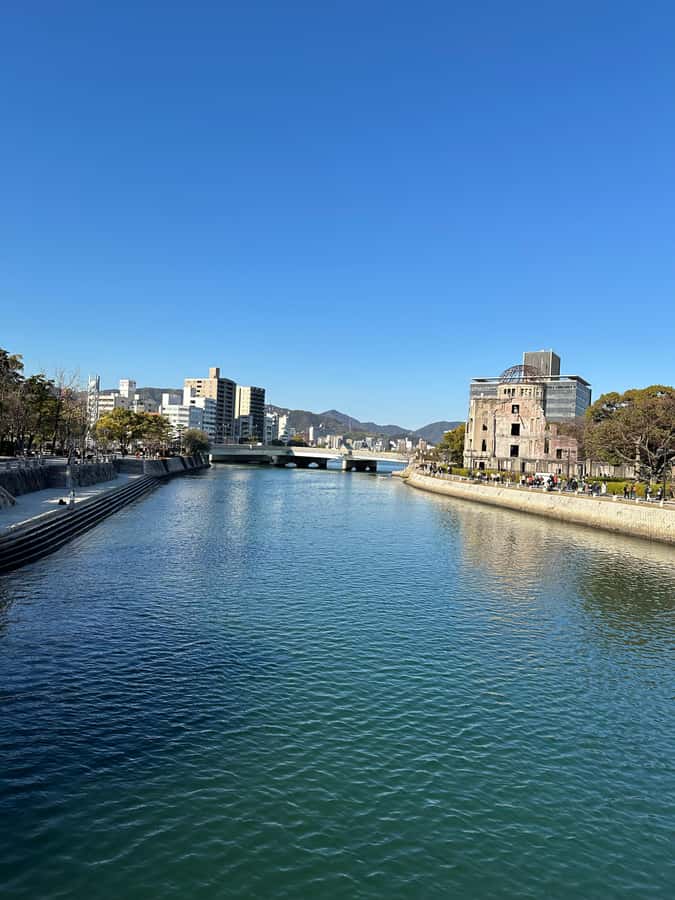
The Atomic Bomb Dome is scheduled for about 20 minutes. You will see the preserved structure from close by and hear about its place in Hiroshima’s memory. The damaged building is visually powerful because it is not a reconstruction. Its exposed remains offer a direct link to the destruction of 1945.
The guide also helps place the Dome in the city that existed before the bombing. One of the advertised aims of the walk is to show Hiroshima before and after the event, not to reduce the city to a single date. That wider frame is important. Hiroshima was a developed city with its own civic life, architecture, and local identity before it became known worldwide as a symbol of nuclear destruction.
The Dome is a popular photo stop, but I would not rush through it. Look at the structure, listen to the guide, and consider the contrast between the preserved ruins and the rebuilt city around them. This is also a good place to ask questions about what was preserved, what was rebuilt, and how Hiroshima presents its past today.
Walking on to Hiroshima Castle
The final major stop is Hiroshima Castle, with roughly 40 minutes for a photo stop, guided visit, and walk. This changes the tone of the tour. After the concentrated memorial experience, you move toward Hiroshima’s older political and cultural story.
The castle dates to the 16th century and gives the tour a longer time frame than the events of the 20th century. That matters because Hiroshima did not begin in 1945. You get a better sense of the city as a place with centuries of development, not only as the setting of a tragedy.
The schedule says Hiroshima Castle, but the exact interior experience can depend on timing and circumstances. One group arrived late after a train delay and missed the inside, though the guide still explained the castle’s history and significance. That is a useful warning: the route has many stops, so delays can reduce time at the final attraction.
Some guides have also added gardens or nearby landmarks outside the main park. Ali took guests to places such as a school and a bank connected to the events of August 6, locations they would probably not have found on their own. These additions are one of the strongest reasons to choose a private guide. They turn the walk from a standard checklist into a more local, connected reading of the city.
The guides make the difference
The clearest strength of this experience is the guiding. Maria is often described as warm, thoughtful, flexible, and precise with her explanations. She adjusted the pace for individual visitors, answered questions in clear English, and made room for simple pleasures such as ice cream.
Ihsan and Ishan have been praised for enthusiasm, humor, passion, and detailed knowledge of Hiroshima and Japan. Their style seems especially suited to people who want to ask many questions. One guide finished the tour by pointing guests toward a local restaurant serving Hiroshima-style okonomiyaki, the city’s famous layered savory pancake.
Ali is a strong choice for visitors who want extra historical context. His route has included sites outside the Peace Park, including a school and a bank tied to the bombing. Wajid has also been praised for continuing thoughtfully despite rain and for showing guests gardens and food spots beyond the standard route.
Names and guide assignments can change, so you should not book solely to secure a particular person unless the operator confirms that in advance. What you can reasonably expect is a guide who speaks one of the listed languages and can shape a private walk around your questions and interests.
The guides’ personal qualities matter here. Hiroshima requires sensitivity, not just facts. The best moments come when the guide explains without turning the tragedy into a performance, gives you space to think, and connects the memorials to the living city.
Is $90 per person good value?
At $90 per person, this is not the cheapest way to see Hiroshima’s central sights. You are paying for a private four-hour guide, museum admission, access to the Peace Park and Atomic Bomb Dome, and the convenience of a planned route.
The value improves when you have two or more people sharing the private experience. A family, couple, or small group can ask questions freely and avoid the stop-and-start rhythm of a large tour. The private format is also useful if you want the guide to adapt for children, older family members, a specific language, or a strong interest in military and social history.
The price is harder to justify if you only want a quick look at the Dome and a short museum visit. You can visit parts of the area independently, and the tour does not include transport, meals, or drinks. It is also worth remembering that the listed stop times add up to about three and a half hours before walking between locations, so the four-hour duration is an active morning rather than four hours of uninterrupted commentary.
For me, the fee makes sense when you want understanding rather than simple access. The admission tickets are helpful, but the real purchase is the guide’s ability to explain connections, answer questions, and lead you to places outside the obvious route.
Who should book this walking tour?
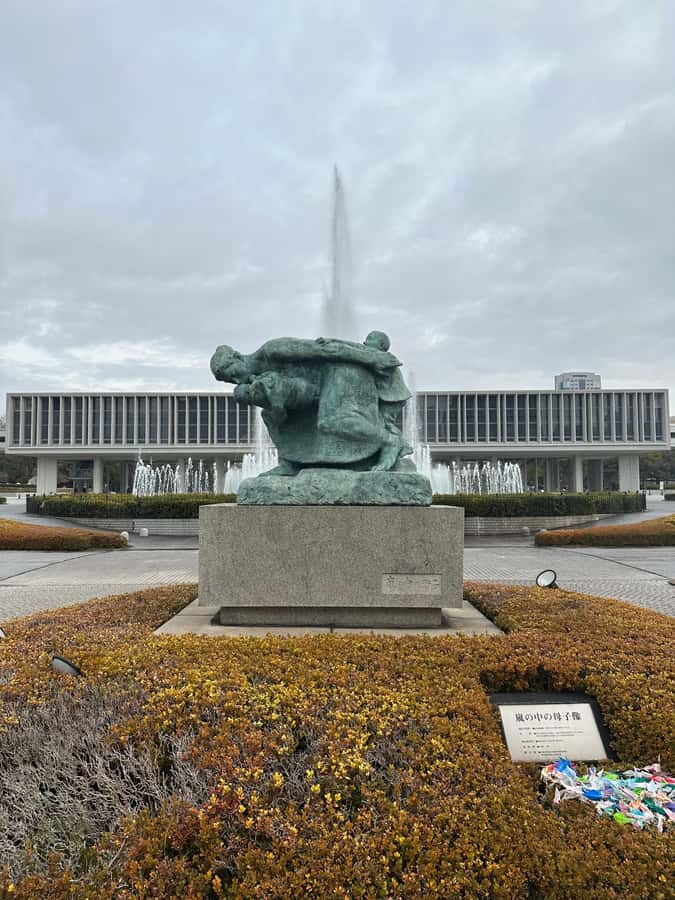
I would recommend it to first-time visitors who want a clear introduction to Hiroshima in half a day. It suits families, couples, solo visitors, and small groups who value conversation over a fixed script.
It is also a good match if you want:
- A respectful explanation of the Peace Park and museum
- Help connecting the 1945 bombing with Hiroshima’s earlier history
- A flexible pace and private group setting
- Extra local food or sightseeing suggestions
- A guide who can answer questions in English, Malay, Urdu, Hindi, or Punjabi
You should think twice if you dislike walking, strongly prefer independent museum visits, or want to spend a long time at only one attraction. Four hours can feel long, particularly in heat, humidity, or rain. Comfortable shoes, water, and sensible weather protection will make a real difference, even though refreshments are not included.
Wheelchair accessibility is listed, which is useful for planning, but you should still discuss your specific mobility needs when booking because the route includes outdoor walking between several sites.
Practical ways to get more from the morning
Start with questions. Ask your guide what the city looked like before the bombing, which memorials local people consider especially important, and how Hiroshima rebuilt itself. The private format is wasted if you simply follow along silently.
Give the museum your full attention. The guide can frame the visit, but you should expect to spend much of the hour reading and reflecting independently. If you need more time with the exhibits, say so early, knowing that it may shorten the time at Hiroshima Castle.
Keep the final stop in mind when managing your pace. The route has a lot packed into four hours, and a late arrival or long pause at the museum can affect the castle visit. One group’s train delay meant missing the castle interior, although the guide adapted well.
Finally, leave room for the city’s food. Several guides have recommended Hiroshima-style okonomiyaki or taken guests toward a local restaurant after the formal tour. Food is not included, but that extra suggestion can turn a solemn morning into a fuller picture of present-day Hiroshima.
Should you book it?
Book this tour if you want Hiroshima explained with care, structure, and room for questions. The strongest guides, including Maria, Ali, Ihsan, Ishan, and Wajid, have made the walk personal without losing sight of the facts. The best feature is not the number of monuments. It is the connection between them.
At $90 per person, I would choose it for a first visit, a family trip, or any day when you want to understand more than you could gather from signs alone. I would skip it only if you prefer a short independent visit or need a slower, less ambitious schedule. For most visitors with four hours to spare, this is a thoughtful and useful way to meet Hiroshima.
FAQ
How long is the Hiroshima City Highlights Walking Tour?
The tour lasts four hours. Starting times vary, so you need to check availability when booking.
Where does the tour start and finish?
You meet the guide at 1-2 Nakajimachō in Naka Ward, Hiroshima. The activity ends back at the meeting point.
Is the Hiroshima Peace Memorial Museum admission included?
Yes. The entry ticket to the Hiroshima Peace Memorial Museum is included.
Is the Atomic Bomb Dome admission included?
Yes. The activity information lists an entry ticket to the Atomic Bomb Dome as included.
What languages are available?
Live guiding is available in English, Malay, Urdu, Hindi, and Punjabi.
Is the tour private and wheelchair accessible?
Yes. It is offered as a private group tour and is listed as wheelchair accessible. Food, drinks, and transportation are not included.
Just added around Hiroshima
- Hiroshima & Miyajima: Private Full-Day Tour with a Local Guide★ 5.0 · 39 reviews
- Hiroshima and Miyajima 1 Day Walking Tour★ 5.0 · 43 reviews
- Hiroshima History Tour : A-Bomb Dome, Peace Memorial & City★ 5.0 · 43 reviews
- The Journey of Hiroshima from Tragedy to Peace★ 4.8 · 44 reviews
- Cultural Activities :Kimono, tea ceremony, Calligraphy and Amulet★ 5.0 · 44 reviews
- Miyajima: Private Rickshaw Tour to Itsukushima Shrine★ 4.9 · 45 reviews
- Hiroshima Private Tour: Best Highlights in a Day★ 5.0 · 49 reviews
- Hiroshima & Miyajima All-Inclusive Tour w/Licensed guide Pancho★ 5.0 · 54 reviews
City Tours, compared.

Private City Highlights Tour with Local Guide
Read our review →
Asakusa, Skytree & Akhihabara Go-Kart City Experience
Read our review →
Hiroshima City 4hr Private Walking Tour with Licensed Guide
Read our review →

Private Haneda Airport (HND) to Central Tokyo City Transfer
Read our review →
3-hour Guided E-Bike Tour of the City’s Hidden Gems
Read our review →
Browse the lists this tour appears in