
Reviewed · HISTORICAL TOURS
Kamakura Historical Walking Tour with the Great Buddha
Kamakura rewards curious walkers. This five-hour tour brings together street food, Shinto tradition, temple gardens, a forest trail, the Great Buddha, and the coast in one well-planned outing. I like the way the route mixes major sights with time on foot, and I like that entrance fees, snacks, photos, and a temple lunch are included.
The small group, capped at seven people, is another strong point. Guides such as Isao, Mark, Ken, Fujii, Yoko, and Rookie have been praised for friendly explanations and thoughtful help. The main caution is simple: this is a walking and hiking tour, not an easy sightseeing stroll, and some trail sections can be slippery or steep.
In This Review
- Five things to know before you book
- Why Kamakura works so well as a day trip
- Meeting at Kamakura Station at 10 a.m.
- Starting with snacks on Komachi Street
- Tsurugaoka Hachimangu and the customs of Kamakura
- The forest trail and Hasedera Temple
- Meeting the Great Buddha at Kotoku-in
- A coastal finish at Yuigahama Beach
- What the $98.44 price includes
- The guide can make or break the day
- Who should book this Kamakura tour?
- Final verdict: a strong first Kamakura outing
- FAQ
- How long does the Kamakura Historical Walking Tour last?
- Where does the tour begin and end?
- Is the Great Buddha entrance fee included?
- Is Hasedera Temple admission included?
- Is lunch provided?
- How much walking is involved?
- What happens if it rains?
Five things to know before you book
- The 2.5-kilometer hiking trail adds real variety, taking you through wooded paths and toward views of Yuigahama Beach.
- Street-food samples on Komachi Street give you a quick taste of local life before the temples begin.
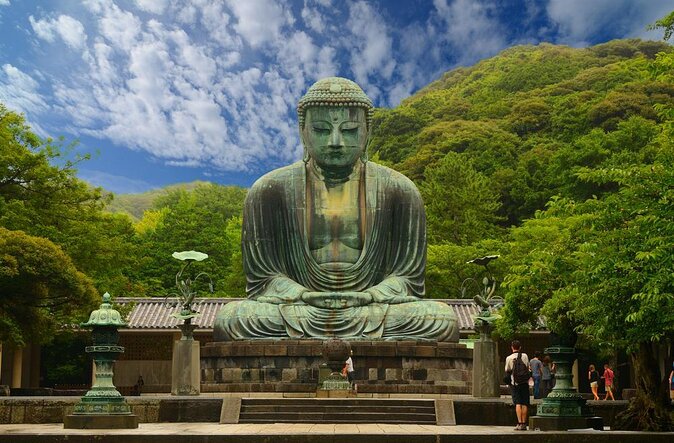
- The Great Buddha and Hasedera entrance fees are included, which makes the $98.44 price easier to judge.
- A vegetarian or vegan temple lunch is available, though the choices may be limited and allergy-free meals cannot be guaranteed.
- Rain changes the route, replacing the hiking trail with a train ride to see the Great Buddha.
- The tour ends where it begins, at the clock tower plaza outside Kamakura Station’s west exit.
Why Kamakura works so well as a day trip
Kamakura is one of the easiest ways to move beyond Tokyo’s modern streets and see an older side of Japan. The town combines religious sites, shopping streets, wooded hills, and the Pacific coast. You get a lot of contrast without spending the night away from the capital.
The challenge is knowing how to connect the sights. Kamakura’s temples and shrines are spread across town, and a short visit can become a string of rushed train rides. This tour gives you a route, a guide, and a bit of local context, so you can focus on what you are seeing instead of constantly checking directions.
The five-hour length is useful for a first visit. You will not see every important site in Kamakura, but you will cover several of the best-known places and get a good sense of how the town fits together. The pace includes about five kilometers of walking and hiking, so comfortable shoes matter more than stylish ones.
More history tours in Japan:
- World Heritage Shirakawa-go and Experience Tours from Kanazawa
★ 5.0 · 4,049 reviews - Tokyo: Imperial Palace and Shogun Historical Walking Tour
★ 5.0 · 2,251 reviews - World Heritage Kyoto & Nara Uji Authentic Matcha Experience
★ 5.0 · 1,573 reviews
Meeting at Kamakura Station at 10 a.m.
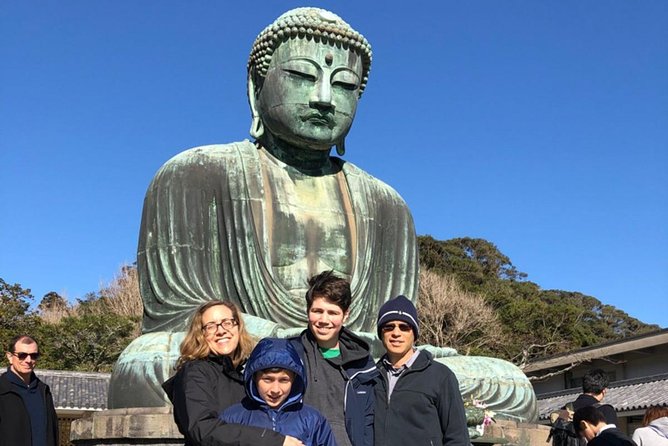
The tour begins at 10 a.m. at the clock tower plaza outside the west exit of JR Kamakura Station, at 12-3 Onarimachi. This is an important detail because Kamakura Station has more than one exit. Give yourself enough time to find the west side and locate the meeting point before the start time.
The operator stresses punctuality, and that is fair for a small group. A late arrival can delay everyone, especially when the route includes timed admissions and a train alternative in poor weather. Keep your phone charged, since the ticket is mobile and the guide may need to contact you.
A maximum of seven people creates a more personal setting than a large coach tour. You can ask questions about customs, shrine etiquette, food, and local life without trying to catch a guide’s voice across a crowd. Guides have also helped with practical matters, including working out which train to take back toward Yokohama.
Starting with snacks on Komachi Street
The first stop is Komachi Street, the shopping road that runs from the east side of Kamakura Station toward Tsurugaoka Hachimangu Shrine. You receive food samples here, and those snacks are included in the tour price.
This is a smart beginning. You can get your bearings, try Japanese street food, and start the day with something more useful than a long lecture about dates and rulers. Komachi Street also gives you a quick look at present-day Kamakura, where shops and food stalls meet the town’s older religious sites.
The visit lasts about 20 minutes, so think of it as a tasting stop rather than a full shopping session. Additional food is available for purchase, but it is not included. If you have a particular snack in mind, you may need to return to the street later on your own.
Tsurugaoka Hachimangu and the customs of Kamakura

Tsurugaoka Hachimangu is the main Shinto shrine in Kamakura and one of the key cultural stops on the route. You spend about 30 minutes here learning about Japanese culture, shrine customs, and the role this place played in Kamakura’s past.
A guide adds real value at a shrine. Without explanation, you may notice gates, purification areas, offering boxes, and prayer rituals but miss what they mean. A good guide can show you how Shinto spaces differ from Buddhist temples and explain the basic etiquette that helps you visit respectfully.
The time here is enough for an introduction and a look around, but not an exhaustive examination of every corner. If you want quiet time for photography or prayer, you may feel the schedule is a little brisk. That is the tradeoff for fitting several major sites into one morning and afternoon.
More walking tours in Japan:
- Kyoto Geisha Walking Tour: Gion District & Hidden Gems
★ 4.7 · 3,273 reviews - Tokyo Tsukiji Fish Market Food and Culture Walking Tour
★ 5.0 · 3,184 reviews - Kyoto: Gion Magical Night Walking Tour with Geisha Trivia
★ 4.9 · 2,393 reviews - Kyoto: Gion Geisha District Walking Tour – Stories of Geisha
★ 4.7 · 2,187 reviews
The forest trail and Hasedera Temple
Hasedera is one of the tour’s richest stops, with about 50 minutes allotted. The temple is known for its gardens, coastline views, and a small cave area. It also provides a change of mood after the busy shopping street and formal shrine grounds.
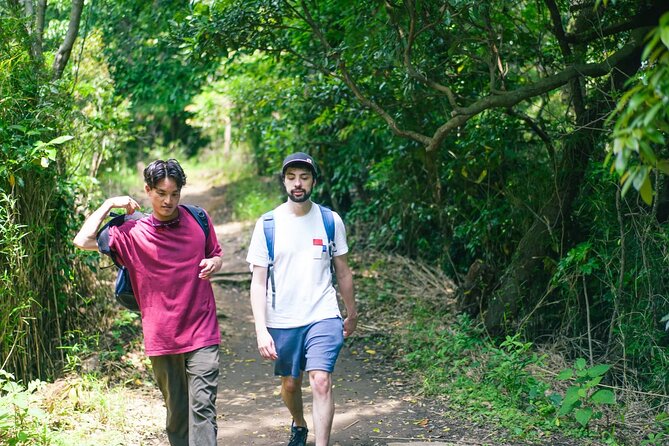
The route includes a hiking trail of about 2.5 kilometers. Depending on conditions and the exact route used that day, you may walk through wooded sections before reaching views toward Yuigahama Beach and the sea. The trail is not described as extreme, but it can become steep and slippery. A basic level of hiking ability is sensible.
Wear shoes with a good grip. Sandals, smooth-soled sneakers, or dress shoes are poor choices here. Bring water and a towel, especially in warm weather. Japan’s summer temperatures can reach 40°C, while winter temperatures can fall to -5°C, so the same five-hour walk feels very different depending on the season.
Hasedera itself rewards a slower eye. Look for the manicured gardens, the religious details, and the cave rather than treating the temple as a quick photo stop. The guide can help explain why the site matters and answer questions that would be hard to resolve from signs alone.
The included temple lunch fits naturally into this part of the day. A vegetarian menu is available, and a vegan menu can be provided. Still, the choices are limited, and the operator cannot promise allergy-free food because the meals come from kitchens it does not control. If you have serious allergies or strict dietary needs, ask before booking and carry a backup snack.
Meeting the Great Buddha at Kotoku-in
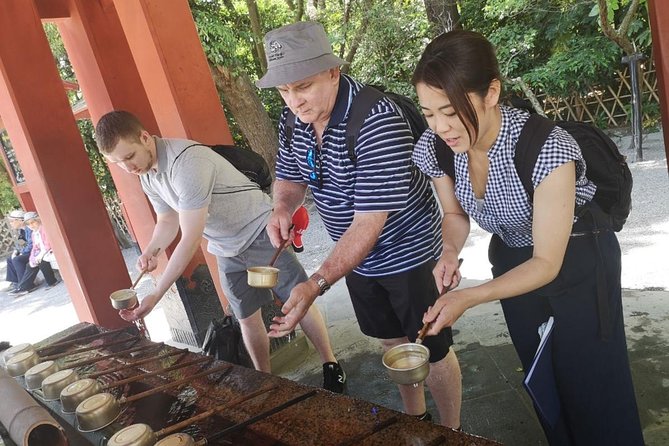
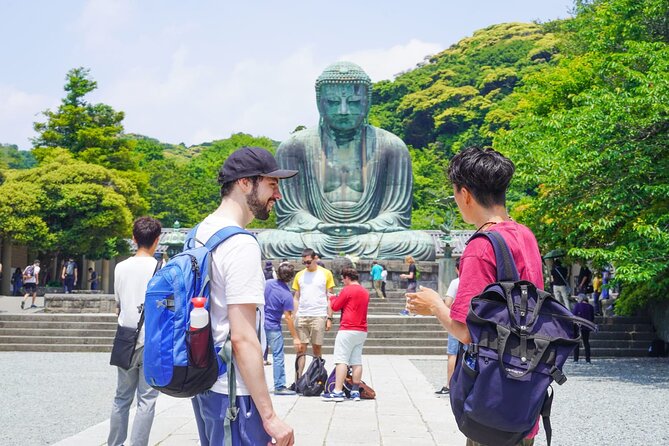
The Great Buddha of Kamakura is the tour’s headline sight. You spend about 40 minutes at Kotoku-in Temple, where the large bronze statue has been displayed for more than 750 years.
The statue has a calm presence, but the visit is not only about scale. This is where the tour’s earlier discussion of Japanese religious tradition can come together. Your guide can explain the Buddhist setting and give the statue a place in Kamakura’s wider story, rather than leaving you with a single impressive photograph.
The entrance fee is included, which removes one small task and adds value to the fixed price. Forty minutes should give you time to see the Buddha, explore the grounds, take photos, and listen to the explanation. It is enough for a focused visit, though anyone who wants extended photography or quiet reflection may wish for more time.
In rainy weather, the operator uses a train to reach the Great Buddha instead of the hiking trail. That is practical, but it changes the feel of the day. You lose some of the woodland walking, yet you still retain one of Kamakura’s essential sights.
A coastal finish at Yuigahama Beach
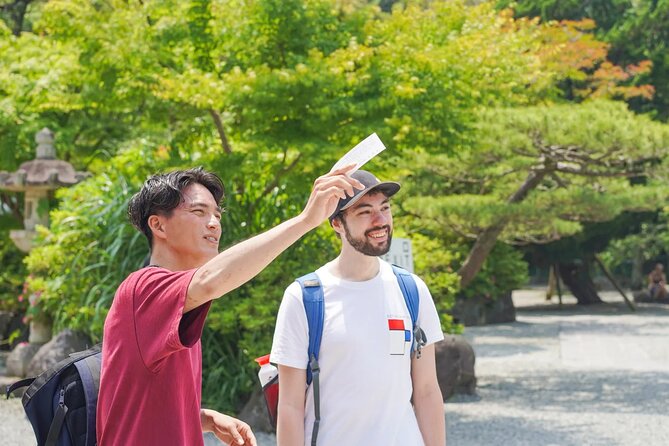
The route continues toward Yuigahama Beach and Kamakura Seaside Park’s Yuigahama area. Each receives about 20 minutes, with time for photos and views across the water.
Yuigahama is known for sandy shores and shallow water. On a clear day, you may be able to see Mount Fuji across the ocean, though that depends entirely on visibility. The beach offers a useful contrast to the temples: after hours of religious sites and forest paths, you finish with open space, sailboats, and sea air.
The route also passes by Enoshima Island. Passing by means you should not expect a full visit or an extended stop there. If Enoshima is a major priority, you will need a separate outing.
The two beach-related stops may feel repetitive to some people, particularly if the weather is gray or the views are limited. For many visitors, though, they provide a relaxed end to a fairly active day and a chance to take photographs without rushing through another indoor site.
What the $98.44 price includes
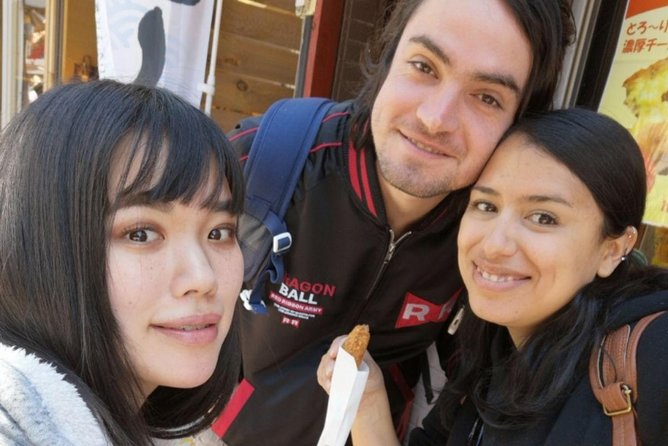
At $98.44 per person, this is not the cheapest way to see Kamakura. You could arrange a self-guided visit using local trains and pay individual admission fees. The tour earns its price through the guide, route planning, food, and small group size.
Included items are:
- Entrance to the Great Buddha
- Entrance to Hasedera Temple
- Street-food samples on Komachi Street
- A temple lunch
- Vegetarian and vegan menu options, with limitations
- Photos
- A certified MagicalTrip guide
Transportation is the main extra cost. The stated transportation fee is 440 yen, and food beyond the included samples or lunch is also your responsibility. Since the route is mostly on foot, that transport charge is modest, but you should still budget for it.
I see the best value here for a first visit. You receive a full half-day of structure and explanation, rather than paying only for admission to two sites. The value is weaker if you already know Kamakura well, dislike group schedules, or want to choose every temple and restaurant yourself.
The guide can make or break the day
The strongest part of this experience is likely to be the person leading it. Isao, also called Isaac, has been praised for explaining shrine and temple history in an enjoyable way. Mark has helped visitors understand both the sites and the train system afterward. Ken has been described as patient and attentive, especially when discussing customs.
Fujii has received praise for friendly English and for making the hike feel like an outing with friends. Yoko has led a route that included Inari Jinja, wooded paths, Yuigahama Beach, Hasedera, and a Japanese-style lunch. Rookie has taken people to less-visited shrines and temples and answered questions about etiquette and everyday Japanese culture.
You cannot choose a particular guide from the information provided, so treat these names as examples of the standard you might encounter, not a promise. What you can reasonably expect is a local guide who adds meaning to the route and adjusts explanations to the group’s interests.
Who should book this Kamakura tour?
I would recommend it most strongly to first-time visitors to Japan or the Tokyo area who want a guided introduction to Kamakura. It suits you if you enjoy walking, want help understanding religious customs, and prefer a compact route that covers the major sights.
It is also a good match for solo visitors who want company without joining a large group. A maximum of seven people leaves room for questions and conversation. Families and older visitors can participate if they are comfortable with five kilometers of walking, but the slippery trail deserves serious attention.
You may want another plan if you have limited mobility, dislike hills, need a guaranteed allergy-free meal, or want a slow visit to each temple. The route changes in bad weather, and the tour requires you to keep moving. This is not a hop-on, hop-off experience.
Bring:
- Grippy walking shoes
- Water and a towel
- Weather-appropriate clothing
- A charged phone for the mobile ticket
- Extra money for additional food and transport
- Any backup food required for strict dietary needs
Free cancellation is available if you cancel at least 24 hours before the 10 a.m. start time. A cancellation inside that window is not refundable. If poor weather forces the operator to cancel, you are offered another date or a full refund.
Final verdict: a strong first Kamakura outing
I would book this tour if I had one day for Kamakura and wanted the main sights explained clearly. The combination of Komachi Street snacks, Tsurugaoka Hachimangu, Hasedera, the Great Buddha, and Yuigahama Beach gives you a satisfying picture of the town in five hours.
The best reasons to choose it are the small group, included admissions and food, and the chance to ask a local guide about customs instead of simply walking past them. The main limits are the fixed pace, the 5-kilometer route, the slippery trail, and the limited food flexibility.
If those conditions suit you, $98.44 is a fair price for a well-supported half-day. Wear proper shoes, arrive early at the west exit, and keep your expectations focused on a lively introduction rather than a complete survey of every Kamakura sight.
FAQ
How long does the Kamakura Historical Walking Tour last?
The tour lasts approximately five hours and starts at 10 a.m.
Where does the tour begin and end?
It begins at the clock tower plaza outside the west exit of JR Kamakura Station, at 12-3 Onarimachi, Kamakura. The activity ends back at the meeting point.
Is the Great Buddha entrance fee included?
Yes. The entrance fee for the Great Buddha at Kotoku-in Temple is included.
Is Hasedera Temple admission included?
Yes. Admission to Hasedera Temple is included in the tour price.
Is lunch provided?
Yes. A temple lunch is included. Vegetarian and vegan options are available, but choices may be limited, and allergy-free meals cannot be guaranteed.
How much walking is involved?
The tour covers about five kilometers of walking and hiking. The hiking trail is about 2.5 kilometers, and some sections may be steep or slippery.
What happens if it rains?
If rain makes the hiking trail unusable, the route changes and the group takes a train to see the Great Buddha instead. If poor weather causes the entire activity to be canceled, you are offered a different date or a full refund.
Just added around Japan
- Kanazawa private half day/Photoshoot by professional photographer★ 5.0 · 38 reviews
- Osaka Food Tour with 10 Classic Japanese Tastings & Drinks★ 5.0 · 38 reviews
- Osaka: Highlights & Hidden Gems Private Walking Tour★ 4.7 · 38 reviews
- Tokyo Small Group Tour with Guide★ 4.5 · 38 reviews
- Tokyo 6hr Instagram Highlights Private Tour with Licensed Guide★ 5.0 · 38 reviews
- From Tokyo: Kamakura Private Customize Tour by Luxury Van★ 4.6 · 38 reviews
- Tokyo Sumo Experience with Live Show & Audience Challenge★ 5.0 · 38 reviews
- Kyoto: Private Customizable Day Trip by Car★ 5.0 · 38 reviews
Historical Tours, compared.
World Heritage Shirakawa-go and Experience Tours from Kanazawa
Read our review →
Imperial Palace and Shogun Historical Walking Tour
Read our review →
World Heritage Kyoto & Nara Uji Authentic Matcha Experience
Read our review →
Kyoto Gion: 2-Hour Geisha Culture & History Walking Tour
Read our review →
World Heritage Shirakawa-go Morning Guided Tour
Read our review →
Hiroshima Historical Walking Tour – Why A-Bomb was Dropped
Read our review →
Hiroshima Peace (Heiwa) Walking Tour at World Heritage Sites
Read our review →Browse the lists this tour appears in