
Reviewed · CITY TOURS
Kamakura Walking Tour – The City of Shogun
Kamakura rewards slow walking. This 3.5-hour tour links the city’s major sights with clear cultural context, and I especially like the small group capped at 10 people and the chance to finish near Hase with time left for your own exploring. Guides such as Miyu, Midori, and Maki are praised for making Japanese history easy to follow, though you should budget extra for transport and 1,200 yen in admission fees.
The route begins at Kamakura Station and ends at Hase Station, a useful point-to-point plan rather than a loop back to where you started. You’ll visit Tsurugaoka Hachimangu Shrine, Komachi Street, the Great Buddha, and Hasedera Temple, but the tour is less appealing if you want a slow meal, extensive shopping, or long visits inside every site.
In This Review
- Key points to know before booking
- Why this Kamakura tour works well in three and a half hours
- Starting at Tsurugaoka Hachimangu Shrine
- A short food stop on Komachi Street
- Meeting the Kamakura Great Buddha at Kotoku-in
- Hasedera Temple and the final views
- What the guides add to the experience
- The $35 price and the extra 1,200 yen
- Timing, transport, and physical demands
- Who should book this walking tour
- FAQ
- Where does the Kamakura walking tour begin?
- What time does the tour start?
- Where does the tour end?
- How long does the experience last?
- Are admission fees and transportation included?
- How many people can join the tour?
- Can I cancel for a refund?
- Should you book the Kamakura Walking Tour?
Key points to know before booking
- Four major Kamakura sights in one morning: See Tsurugaoka Hachimangu, Komachi Street, the Great Buddha, and Hasedera Temple.
- A useful route from Kamakura to Hase: Finish near Hase Station, close to more of the city’s sights and coastal area.
- Small groups capped at 10 people: The format should allow questions and more personal guidance than a large bus tour.
- Admission and transport cost extra: Plan on about 1,200 yen beyond the $35 tour price.
- Guides praised for clear explanations: Miyu, Midori, and Maki receive repeated compliments for history, customs, pacing, and friendly help.
- Free cancellation up to 24 hours ahead: Poor weather may lead to a new date or a full refund.
Why this Kamakura tour works well in three and a half hours
Kamakura is compact enough to visit from Tokyo, but its temples, shrines, shopping streets, and train connections can make a first visit feel scattered. This tour gives you a simple line through the city. You start at the Kamakura City Tourist Information Center at 10:00 a.m. and finish at Hase Station.
That route matters. You do not spend the last part of the morning retracing your steps to Kamakura Station. Instead, you end near the Great Buddha, Hasedera, and other sights in the Hase area, leaving you in a good position for more sightseeing afterward.
I also like the balance between famous places and daily Kamakura life. Tsurugaoka Hachimangu and the Great Buddha are essential stops, but Komachi Street adds food, small shops, and a sense of how the city feels between monuments. The tour also includes traditional rituals, artistic details, coastal views, and local food suggestions.
The pace is active. Four stops are listed, with about 30 minutes at Tsurugaoka Hachimangu, 20 minutes on Komachi Street, 30 minutes at the Great Buddha, and 40 minutes at Hasedera. Walking and transportation fit between those visits, so you should wear comfortable shoes and avoid treating this as a leisurely temple photography session.
More walking tours in Japan:
- Kyoto Geisha Walking Tour: Gion District & Hidden Gems
★ 4.7 · 3,273 reviews - Tokyo Tsukiji Fish Market Food and Culture Walking Tour
★ 5.0 · 3,184 reviews - Kyoto: Gion Magical Night Walking Tour with Geisha Trivia
★ 4.9 · 2,393 reviews
Starting at Tsurugaoka Hachimangu Shrine
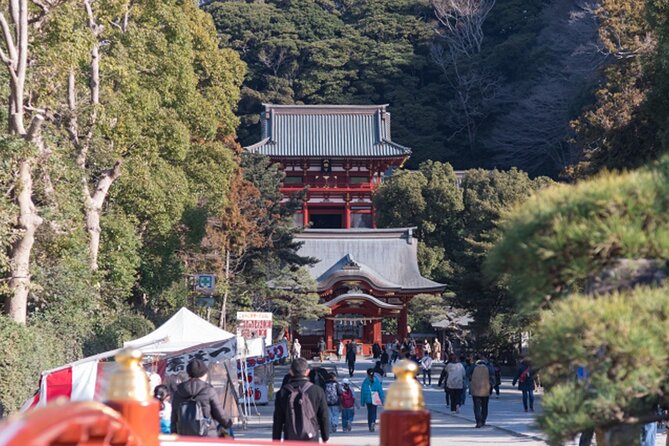
Your first major stop is Tsurugaoka Hachimangu, Kamakura’s best-known Shinto shrine. It was founded in the 12th century by Minamoto no Yoritomo and dedicated to Hachiman, the Shinto god associated with warriors and the Minamoto family.
A guide adds real value here because the site is more than a collection of gates, steps, and buildings. You can learn how Shinto customs work, what visitors are doing at the shrine, and how Japanese religious practice continues today. One of the strongest themes in the guide feedback is the ability to explain the difference between Shinto shrines and Buddhist temples in plain language.
The scheduled visit is about 30 minutes. That is enough for an introduction and a look at the main areas, but not enough for every corner of the grounds. If you already know Kamakura well, you may want extra time here later. For a first visit, the short stop is sensible because several important sights follow.
The shrine is also a good place to ask questions. Guides Maki, Miyu, and Midori are repeatedly praised for answering questions and explaining customs in a way families can understand. That is useful when you want more than dates and names.
A short food stop on Komachi Street
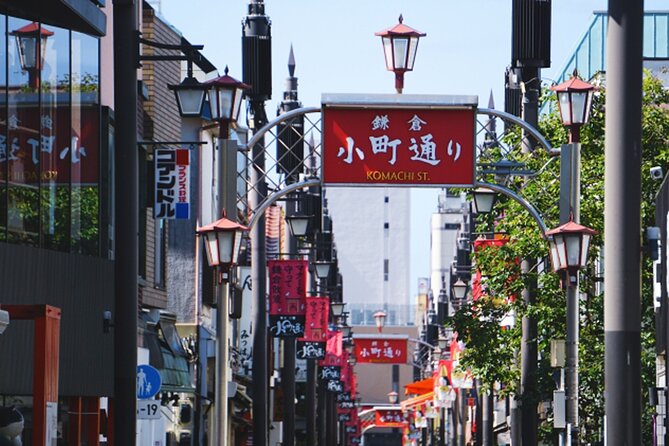
Komachi Street takes about 20 minutes on this route. This pedestrian shopping street runs through the center of Kamakura and is known for snacks, local food, and small shops. Its name comes from Ono no Komachi, a celebrated Japanese poet.
Do not expect a long food tour at this point. Twenty minutes is better understood as an introduction and a chance to note places for later. The tour description includes local cuisine and food suggestions, so your guide may point you toward traditional dishes or less obvious places to eat, but the supplied details do not promise a full tasting menu.
That limitation is worth knowing. If food is your main reason for visiting Kamakura, you will need to return after the tour or plan lunch separately. The benefit is that you can ask your guide for ideas before choosing where to eat.
Komachi Street can also be busy, so keep your group together and watch your pace. Its value here is not a long shopping session. It breaks up the temple and shrine visits and gives you a quick look at Kamakura’s modern street life.
Meeting the Kamakura Great Buddha at Kotoku-in
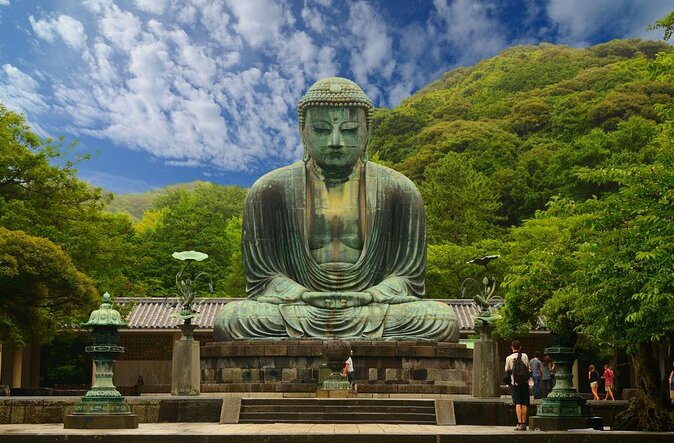
The Kamakura Great Buddha, or Kamakura Daibutsu, is the visual centerpiece of the tour. The bronze statue is about 13.35 meters tall, roughly 44 feet, and dates from the 13th century.
The scheduled visit lasts about 30 minutes. That gives you time to see the statue, understand its place in Kamakura’s Buddhist tradition, and take photographs without letting one sight swallow the entire morning. The admission fee is not included, so set aside part of the stated 1,200 yen total for entry and transport.
The statue’s scale is impressive, but the guide’s explanation helps you see more than size. You can ask about Buddhist temples, the role of Buddha images, and the differences between this stop and the Shinto shrine earlier in the morning. Several guide accounts praise this kind of side-by-side explanation, especially for people visiting Japanese temples and shrines for the first time.
The Great Buddha is also a good family stop. One guide, Midori, is praised for keeping children interested throughout the route, and the statue gives younger visitors an immediate point of focus. Still, this is a popular sight, so your experience may feel less quiet than at smaller temple areas.
A few more Japan experiences worth weighing up
- Tokyo: Kamakura & Enoshima Day Trip including Temple Tickets
★ 4.5 · 1,375 reviews - From Tokyo: Kamakura & Enoshima 1-Day Bus Tour
★ 4.5 · 189 reviews - Kamakura Historical Walking Tour with the Great Buddha
★ 5.0 · 129 reviews - Kamakura Private Tour: Temples, Nature, and the Great Buddha
★ 5.0 · 121 reviews
Hasedera Temple and the final views
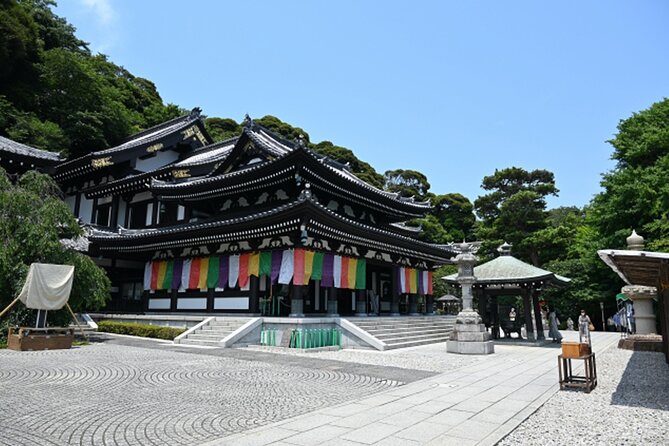
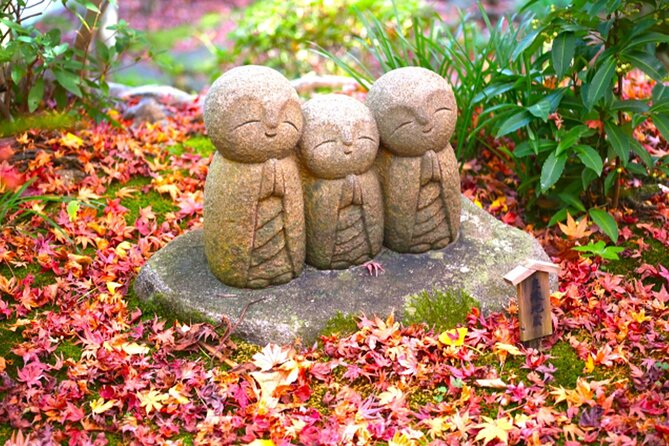
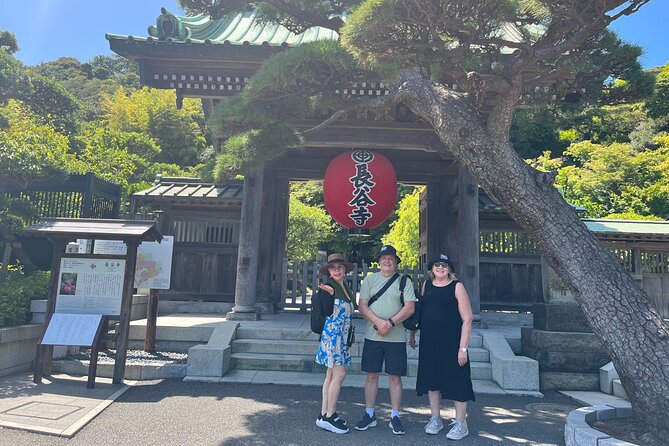
Hasedera, also called Hase Kannon Temple, receives the longest scheduled visit at about 40 minutes. It is known for its calm atmosphere, gardens, and a large wooden statue of the Kannon deity.
This stop gives the tour a different mood. Tsurugaoka Hachimangu introduces Shinto practice, the Great Buddha gives you a major Buddhist landmark, and Hasedera brings together religious art, gardens, and views toward the coast. The tour description also highlights artistic treasures and coastal scenery, both of which fit naturally into this final section.
Forty minutes is helpful, though still not unlimited. You can get a good introduction to the temple and its main features, but you may want to return if you prefer sitting quietly, taking garden photographs, or examining religious artwork at length.
The end at Hase Station is one of the tour’s practical strengths. You can continue exploring the area instead of heading back immediately to Kamakura Station. The guides also give additional ideas for the afternoon, which is useful if you arrive without a fixed plan.
What the guides add to the experience
The strongest part of this tour is the human guidance. The comments supplied for the experience repeatedly praise Miyu, Midori, and Maki for being friendly, energetic, clear, and well prepared.
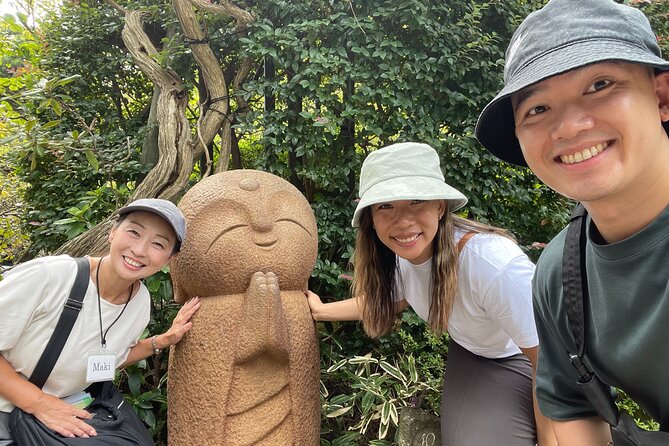
Miyu is praised for answering questions, making the tour engaging, and suggesting places to visit later in the day. Midori is noted for sharing fun spots along the way, taking photographs, and helping children enjoy the route. Maki receives praise for her pleasant manner, clear explanations of Buddhist temples and Shinto shrines, and affection for the Kamakura community.
Those details matter because Kamakura can be visited independently. You can take the train, walk between major sites, and read signs as you go. What you are paying for here is not simply movement from one place to another. You are paying for context, an organized route, help with customs, and someone who can turn separate monuments into a connected story.
The group size helps. With a maximum of 10 people, you should have a better chance to hear the guide and ask questions than you would on a large coach tour. The exact group size on your date is not stated, so do not assume it will always be full or nearly private.
The $35 price and the extra 1,200 yen
At $35 per person, the tour is reasonably priced for a guided half-day experience in a major historic city. The guide’s fee is included, while transport and admission are not. The provided cost estimate for those extras is 1,200 yen total.
That makes the real comparison simple. If you are comfortable planning trains, entrances, directions, and explanations yourself, an independent visit may cost less. If you value a smooth route and want help understanding what you see, the added fee is justified.
The tour also saves planning time. You do not need to decide which sight comes first, how to connect Kamakura and Hase, or how to fit the major stops into one morning. The cost is most worthwhile on a first visit, especially if you have only one day in Kamakura.
Food is not listed as included, so plan to pay separately for anything you buy on Komachi Street or later. The tour description promises food guidance, not a meal.
Timing, transport, and physical demands
The meeting time is 10:00 a.m. at the Kamakura City Tourist Information Center, located at 1-chōme-1-1 Komachi. Arrive with enough time to find the center and check your ticket on your phone. Mobile tickets are supported, and confirmation is sent at booking.
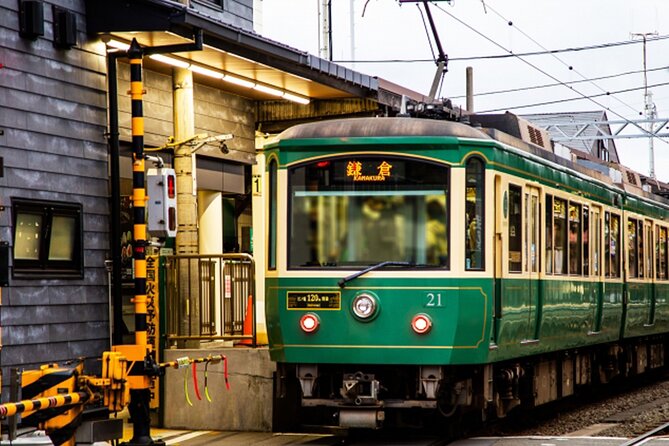
Transportation is not included. The route between Kamakura and Hase involves local movement, and an Enoden train ride is part of the experience described by one participant. Since the exact transport plan can vary, carry enough yen for fares and admissions rather than assuming the $35 covers everything.
Most people can participate, and service animals are allowed. Even so, you should expect several hours on foot, time at temple and shrine grounds, and some standing. Comfortable shoes are more important than stylish ones here.
Weather matters. This tour requires good weather, and poor conditions can lead to a different date or a full refund. Free cancellation is available if you cancel at least 24 hours before the start time. Cancellations or changes made later are not refunded or accepted.
Who should book this walking tour
I would recommend this tour to first-time visitors who want Kamakura’s main sights explained in a clear order. It is also a strong choice for families, since the guides are praised for keeping children interested and making the material easy to understand.
You will get the most from it if you enjoy asking questions about customs, temples, shrines, and local life. The tour is also useful for anyone who wants a few suggestions for the rest of the day rather than a guide who disappears at the final stop.
It may be less suitable if you want long, quiet visits at each temple, extensive shopping, or a full food experience. The schedule is built around coverage, not lingering. Independent visitors who already understand Kamakura’s main sights may prefer to set their own pace.
FAQ
Where does the Kamakura walking tour begin?
The tour begins at the Kamakura City Tourist Information Center, 1-chōme-1-1 Komachi, Kamakura, Kanagawa 248-0006, Japan.
What time does the tour start?
The scheduled start time is 10:00 a.m.
Where does the tour end?
The tour ends at Hase Station, 2 Chome-14 Hase, Kamakura, Kanagawa 248-0016, Japan.
How long does the experience last?
The walking tour lasts approximately 3 hours and 30 minutes.
Are admission fees and transportation included?
No. Transportation and admission fees are not included. The stated total for these additional costs is 1,200 yen.
How many people can join the tour?
The maximum group size is 10 people.
Can I cancel for a refund?
Yes. You can cancel at least 24 hours before the start time for a full refund. If poor weather causes the tour to be canceled, you will be offered another date or a full refund.
Should you book the Kamakura Walking Tour?
Book it if you want a well-organized first look at Kamakura, with the Great Buddha, Hasedera, Tsurugaoka Hachimangu, and Komachi Street covered in one morning. The guide’s explanations are the main value, and the repeated praise for Miyu, Midori, and Maki suggests that the personal side of the tour is its strongest feature.
Skip it if you prefer complete freedom, long temple visits, or a food-focused outing. For most first-time visitors, though, $35 plus about 1,200 yen in extra costs is a fair price for a small-group route that leaves you at Hase with the afternoon still ahead.
Just added around Japan
- Kanazawa private half day/Photoshoot by professional photographer★ 5.0 · 38 reviews
- Osaka Food Tour with 10 Classic Japanese Tastings & Drinks★ 5.0 · 38 reviews
- Osaka: Highlights & Hidden Gems Private Walking Tour★ 4.7 · 38 reviews
- Tokyo Small Group Tour with Guide★ 4.5 · 38 reviews
- Tokyo 6hr Instagram Highlights Private Tour with Licensed Guide★ 5.0 · 38 reviews
- From Tokyo: Kamakura Private Customize Tour by Luxury Van★ 4.6 · 38 reviews
- Tokyo Sumo Experience with Live Show & Audience Challenge★ 5.0 · 38 reviews
- Kyoto: Private Customizable Day Trip by Car★ 5.0 · 38 reviews
City Tours, compared.

Private City Highlights Tour with Local Guide
Read our review →
Asakusa, Skytree & Akhihabara Go-Kart City Experience
Read our review →
Hiroshima City 4hr Private Walking Tour with Licensed Guide
Read our review →

Private Haneda Airport (HND) to Central Tokyo City Transfer
Read our review →
3-hour Guided E-Bike Tour of the City’s Hidden Gems
Read our review →
Browse the lists this tour appears in