
Reviewed · GEISHA & GION DISTRICT TOURS
Kioto: Gion Tour, recorrido a pie (Español/Castellano)
Gion rewards you for slowing down. This two-hour Spanish walking tour shows you the district through its old lanes, shrines, bridges, and three historic hanamachi, rather than treating Gion as a quick photo stop. I especially like the small group of up to six people and the chance to ask detailed questions about Japanese life, Kyoto, maiko, geiko, and anything else along the way.
I also like that the route goes beyond the best-known streets. You visit Pontocho, Gion-Kobu, and Gion-Higashi, with explanations of places that are easy to pass without understanding. The main consideration is that Hanamikoji-Dori is not included, and a maiko or geiko sighting is never promised. At $35 per person, the tour offers good value if you want context and conversation, but less so if your only goal is the famous postcard view of Gion.
José and Juan receive especially warm praise for being friendly, flexible, and ready to explain subjects beyond the planned route. The tour is conducted in Spanish, though one account notes that José could also explain things clearly in English when needed.
In This Review
- Key points before you book
- Why this Gion tour is more than a geisha walk
- Meeting near Disney Kyoto Shijo-Kawaramachi
- Pontocho Alley and Pontocho Kaburenjo
- Sanjo Ohashi, Yamato Dori, and the Kamo River
- Gion-Kobu and the preserved streets of Gion Shirakawa
- Tatsumi Jinja and Tatsumi Bridge
- Gion-Higashi and Yasaka Shrine
- What the Spanish guide adds
- Night walks, blossoms, and timing choices
- Is $35 a fair price?
- Who should book this walk?
- Final verdict: book it for the stories behind Gion
- FAQ
- Is the tour conducted in Spanish?
- How long does the Gion walking tour last?
- How far do you walk?
- How many people can join the group?
- Which hanamachi are included?
- Is Hanamikoji-Dori included?
- Will I see a maiko or geiko?
- Does the tour visit Yasaka Shrine?
- Can I learn about the Gion Festival?
- What should I bring?
- Where is the meeting point?
- Can the tour be canceled for a full refund?
- Can I reserve now and pay later?
Key points before you book
- Three hanamachi in two hours: Visit Pontocho, Gion-Kobu, and Gion-Higashi rather than seeing only one corner of Gion.
- A short route with plenty of context: The walk covers about 3.3 kilometers, or 2 miles, at a useful pace for first-time visitors.
- Spanish guidance for a small group: The group is limited to six participants, making questions easier and explanations more personal.
- Yasaka Shrine adds historical depth: The former Gion Shrine helps explain where the district got its name and connects to the Gion Festival.
- No guaranteed geisha sighting: Maiko and geiko may not appear, so book this for the district itself, not for a photo opportunity.
- The famous Hanamikoji street is excluded: The route focuses on other important areas, including Gion Shirakawa and Gion Shinbashi.
Why this Gion tour is more than a geisha walk
Gion is often reduced to wooden facades, women in kimono, and visitors waiting with cameras. That misses much of what gives the area its character. This tour places Gion inside the wider story of Kyoto, Japan’s old capital, and the entertainment districts called hanamachi.
You learn how the neighborhood developed, how the local streets are arranged, and how maiko and geiko life fits into Kyoto’s traditions. The guide also explains ordinary Japanese life through personal experience, which can make cultural details easier to understand than a string of dates and names.
I like the promise of open questions here. You can ask about what you see, Japanese customs, local routines, food, history, or the meaning of a particular building. That flexibility matters in a small group because your interests can shape the conversation instead of leaving you with a fixed speech.
The tour’s five-star rating from 65 reviews supports the idea that the guide’s approach is a major part of the experience. José is praised for making the walk friendly and clear, while Juan receives credit for showing hidden passages and sharing a high level of detail. Those comments point to a tour that depends as much on the guide as on the streets.
More geisha district walks in Kyoto:
- Kyoto Geisha Walking Tour: Gion District & Hidden Gems
★ 4.7 · 3,273 reviews - Kyoto: Gion Magical Night Walking Tour with Geisha Trivia
★ 4.9 · 2,393 reviews - Kyoto: Gion Geisha District Walking Tour – Stories of Geisha
★ 4.7 · 2,187 reviews
Meeting near Disney Kyoto Shijo-Kawaramachi
The meeting point is directly in front of the Disney Kyoto Shijo-Kawaramachi store. Kyoto has only one Disney store, so the location should be easy to identify. Look for the guide holding an iPad displaying the tour title in Spanish along with the scheduled time.
This is a practical central meeting point, but you should arrive with enough time to orient yourself. The activity information does not include transport from your hotel, so you need to make your own way there. Your confirmation should provide the exact start time, since several departure times are offered.
The tour lasts two hours and covers 3.3 kilometers. That is not an extreme distance, but you will be walking through streets and historic neighborhoods rather than sitting on a bus. Wear comfortable shoes, carry water, and prepare for sun or rain with a hat, sunscreen, or umbrella.
The tour is listed as personal and private in style, but the group can include up to six people. That is small enough for conversation without assuming you will have the guide entirely to yourself.
Pontocho Alley and Pontocho Kaburenjo
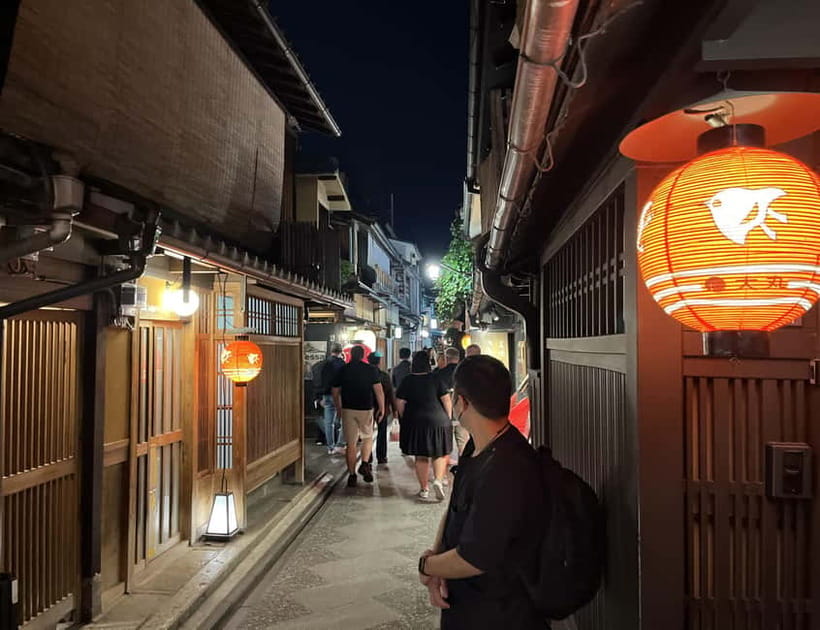
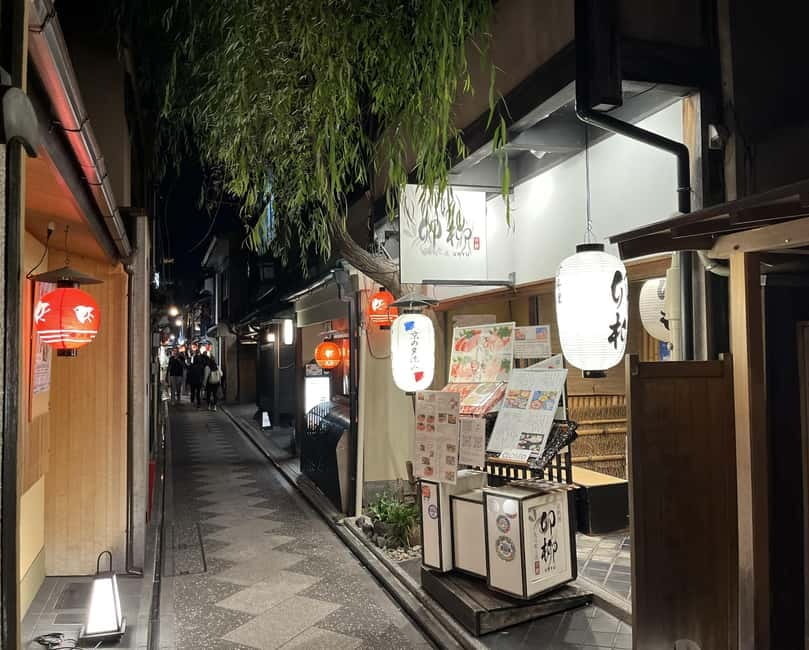
The walk begins in the Pontocho area, one of Kyoto’s best-known historic entertainment districts. Pontocho Alley is narrow and atmospheric, with traditional buildings packed close to the route. Your guide uses this setting to explain the hanamachi system and the role these districts have played in Kyoto’s cultural life.
Pontocho Kaburenjo is another important stop. The word refers to a theater associated with the local geisha district, and it gives the guide a useful point for discussing performances and the public side of maiko and geiko culture.
This section is likely to suit you if you enjoy seeing how a place functions, not just how it looks. The value comes from connecting the street, theater, local customs, and district structure. Without that explanation, Pontocho can seem like a pretty alley with restaurants. With context, it becomes part of a larger system.
The route then reaches the Kamo River, including the Yagi-san and Kita-san statues. These details may be easy to overlook on your own. That is one reason a guide can help here: the tour points out small markers and explains why they matter instead of rushing toward a famous landmark.
Sanjo Ohashi, Yamato Dori, and the Kamo River
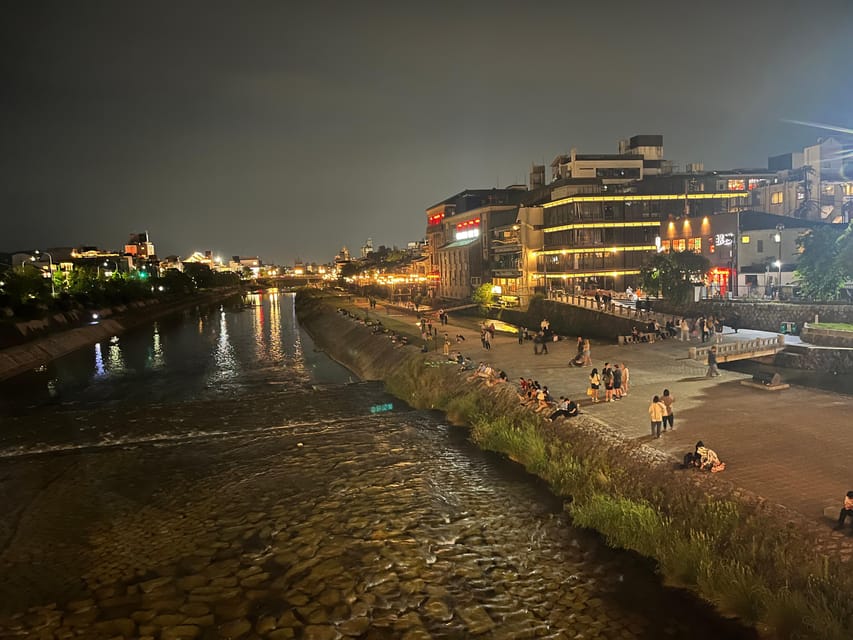
Sanjo Ohashi is one of the major bridges in central Kyoto. The route uses the bridge and nearby Yamato Dori to link Pontocho with the Gion side of the city.
You get a sense of how the districts connect across the river, rather than visiting isolated points on a map. The bridge also provides a change from narrow lanes and wooden buildings, giving you a wider view of central Kyoto before the walk turns toward Gion.
The route is compact, but it includes a fair amount of walking. If you have mobility limits, ask the activity provider about the 3.3-kilometer route before booking, since the supplied information does not give accessibility details. The tour is best for anyone comfortable walking for two hours with regular stops for explanation.
A few more Kyoto experiences worth weighing up
- PERFECT KYOTO 1-Day Bus Tour
★ 5.0 · 13,518 reviews - Kyoto: Fushimi Inari, Kinkakuji, Bamboo Grove 1 Day Bus Tour
★ 4.8 · 4,316 reviews - Kyoto: Tea Ceremony in a Traditional Tea House in Kiyomizu
★ 4.9 · 3,519 reviews - Kyoto: Tea Ceremony Ju-An at Jotokuji Temple
★ 4.9 · 3,207 reviews
Gion-Kobu and the preserved streets of Gion Shirakawa
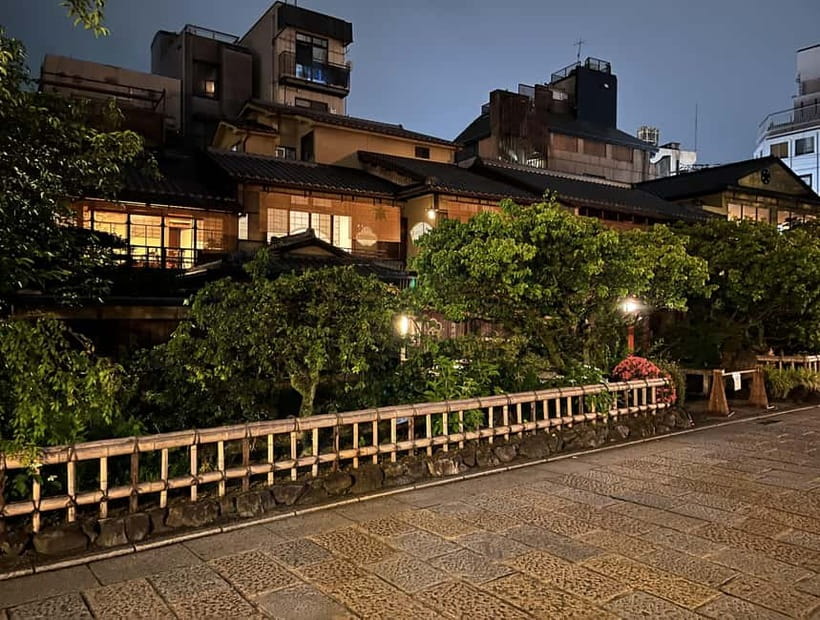
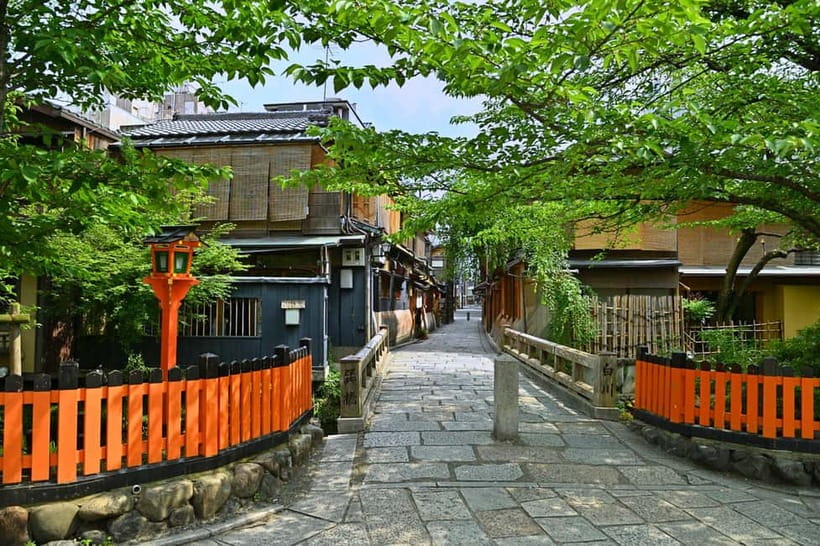
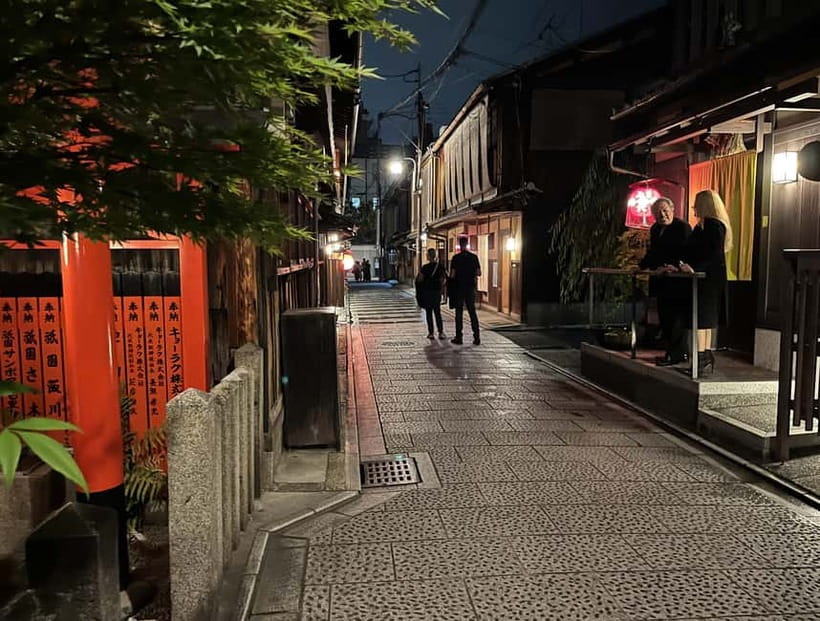
Gion-Kobu is one of Kyoto’s hanamachi, and the tour visits both the Gion Shinbashi area and Gion Shirakawa. These streets are among the places where the old character of Gion is most apparent, with wooden machiya houses and traditional neighborhood design.
The guide explains the history of Gion-Kobu and the routines connected with maiko and geiko life. You learn about practices, activities, and the way this profession fits into the district. The topic is often surrounded by mystery, so clear explanations can help you see the people and institutions behind the costumes and performances.
Gion Shirakawa is also a strong part of the route for visual reasons. The preserved streets and waterways create the kind of scene many people associate with Kyoto. Still, you should remember that this is a living neighborhood, not a stage set. The tour’s focus on history and daily life helps keep the visit respectful.
One important limitation is that Hanamikoji-Dori is not part of this itinerary. If that street is at the top of your Kyoto wish list, you will need to visit it separately. The omission is not necessarily a weakness, since the tour deliberately covers other sections of Gion, but it is an easy detail to miss when planning.
Tatsumi Jinja and Tatsumi Bridge
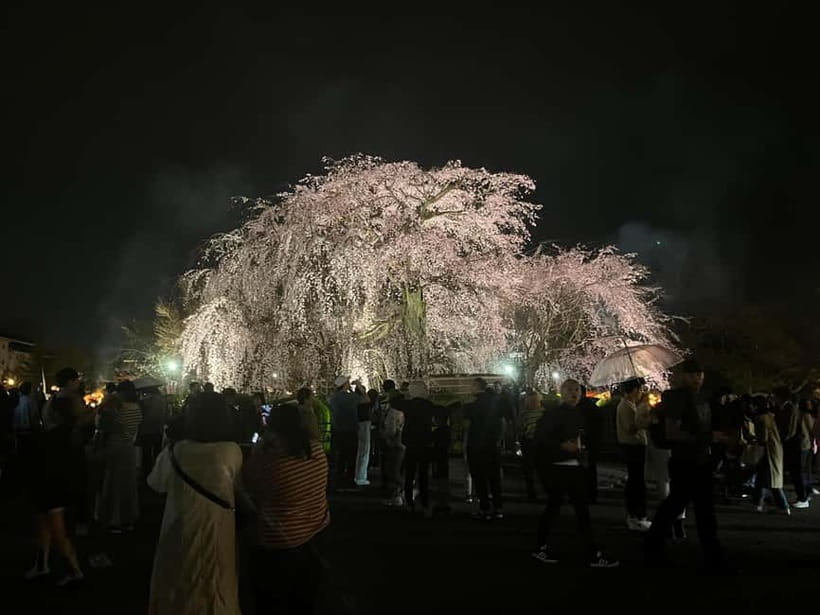
Tatsumi Jinja and Tatsumi Bridge bring the walk into another picturesque section of Gion. Small shrines and bridges can look minor beside Kyoto’s grand temples, yet they often reveal how local neighborhoods use sacred spaces.
Your guide can explain what you are seeing and answer questions as they come up. That makes these stops more worthwhile than a simple photo pause. If you are interested in Japanese religious customs, neighborhood traditions, or the relationship between shrines and daily life, this is a good point to speak up.
The tour is not built around long interior visits. Much of the experience takes place outdoors, on streets, bridges, and around shrines. That means the quality of the explanation matters, but it also means weather can affect your comfort. Bring an umbrella and sunscreen as needed.
Gion-Higashi and Yasaka Shrine
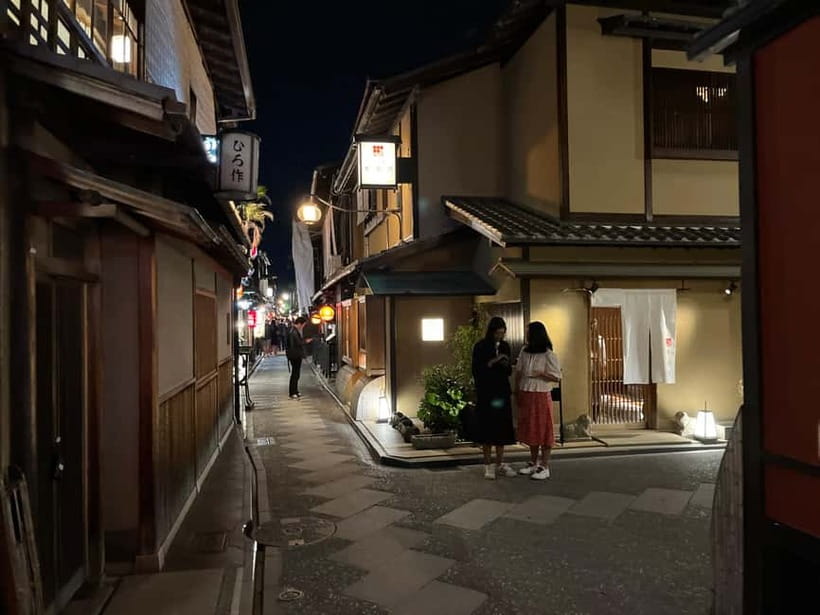
The final part of the route visits Gion-Higashi, another hanamachi, before reaching Yasaka Shrine. Seeing three of Kyoto’s five hanamachi in one walk gives you a broader picture of the city’s traditional entertainment districts than a tour limited to central Gion.
Yasaka Shrine was formerly called Gion Shrine, and the district takes its name from it. The shrine’s origins reach back more than 1,100 years, according to the tour information. If time permits, the guide explains the Gion Festival, one of Japan’s three most important and famous festivals.
This is a useful ending because it ties together the district’s name, its religious roots, and its annual festival. You are not only looking at old streets. You are learning why this part of Kyoto developed as it did and how religion, public celebrations, and local identity overlap.
The phrase if time allows matters. The tour has a fixed two-hour duration and a route of about 3.3 kilometers, so the amount of time spent at Yasaka Shrine or on the Gion Festival may vary. If this subject is especially important to you, mention it early in the walk.
What the Spanish guide adds
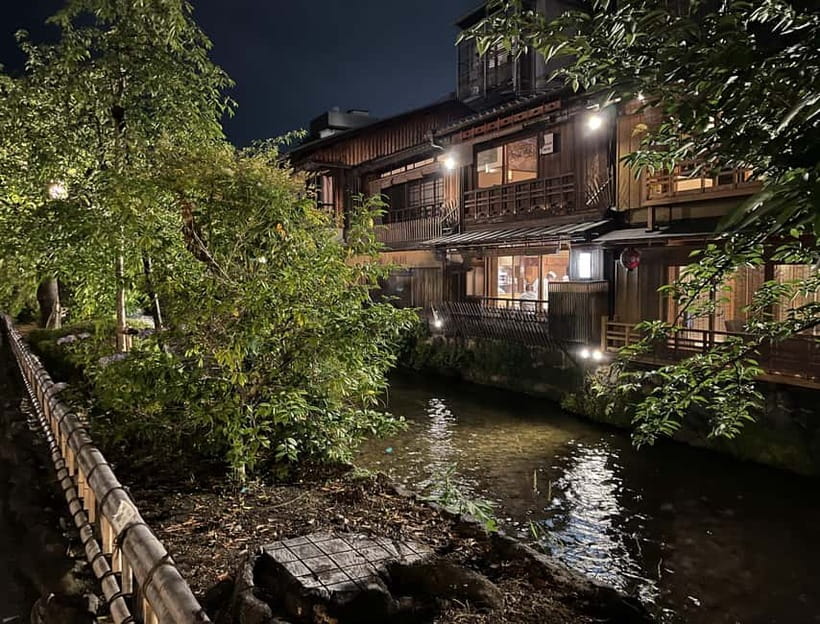
For Spanish-speaking visitors, the language is the main reason to choose this experience. Historical and cultural subjects can lose their meaning when you are trying to follow a translation or read brief signs. A Spanish-speaking guide can explain terms such as hanamachi, maiko, and geiko in a way that fits the wider story.
The strongest praise focuses on the guides’ manner. José is described as approachable, flexible when a time change was needed, and willing to keep checking whether questions had been answered clearly. Another account describes his passion as contagious during an evening visit, especially while discussing maiko.
Juan is praised for revealing lesser-known passages and for explaining the area in detail. One Spanish-speaking visitor describes the walk as a way to notice a huge amount of local heritage that would have been missed without a guide. That is a useful way to judge the tour: its real benefit is not simply finding Gion, but noticing what you would otherwise walk past.
One participant had only beginner-level Spanish and still found José understandable, with English explanations available when needed. I would not treat that as a guarantee of bilingual service, but it suggests some flexibility if a member of your group needs help with a difficult point.
Night walks, blossoms, and timing choices

The tour can be particularly atmospheric in the evening, and the available feedback includes strong praise for a nighttime visit through Gion. Low light can make the traditional lanes feel quieter and more enclosed, though it may also make small architectural details harder to see.
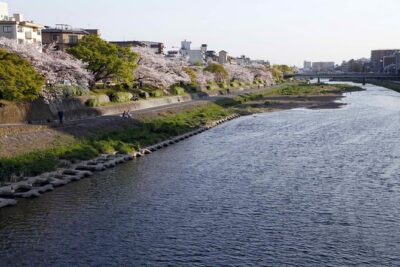
During cherry blossom season, roughly late March to early April, the route changes slightly to show attractive blossoms around Gion. This is a thoughtful seasonal adjustment, but spring is also a popular period in Kyoto. You should book early if the timing of your trip is fixed.
The 9:45 and 12:30 tours can include a free visit to the Gion Gallery if you want to extend the experience. The information does not state how long the gallery visit lasts, so think of it as an optional addition rather than a guaranteed part of the two-hour route.
Is $35 a fair price?
At $35 per person, this is a reasonable price for a two-hour guided walk in one of Kyoto’s most sought-after districts. You are paying for a Spanish-speaking guide, a small group capped at six people, and a route that covers three hanamachi plus historical sites along the way.
The value is strongest if you want explanations and conversation. If you are already well read on Kyoto and prefer to wander alone, you may find the price less necessary. Gion’s lanes are free to explore, and no additional services are included in this tour.
I would compare the cost with what you want from your first visit. A two-hour walk will not cover every famous Gion street, and it does not guarantee a maiko or geiko sighting. But it can give you a clear framework for exploring the district on your own afterward.
Free cancellation up to 24 hours before the start and reserve-now, pay-later booking make the decision easier for a changing itinerary. These terms are useful in Kyoto, where weather and crowded seasonal periods can alter your plans.
Who should book this walk?
I would recommend it to Spanish-speaking first-time visitors who want a calm introduction to Gion, especially those curious about Japanese culture beyond temples and photographs. It also suits repeat visitors who want a closer look at hanamachi history and local streets they may have missed.
Families and small groups may appreciate the limited group size and open question format, provided everyone is comfortable walking 3.3 kilometers. The route is also a good choice if you want to learn about daily life from a guide’s personal perspective rather than follow a heavily scripted tour.
I would hesitate if you mainly want Hanamikoji-Dori, an indoor geisha performance, or a guaranteed meeting with a maiko or geiko. None of those is promised here. The tour is about understanding Gion, not collecting a staged encounter.
Final verdict: book it for the stories behind Gion
Book this tour if you want Spanish explanations, a small group, and a route with real historical range. Pontocho, Gion-Kobu, Gion-Higashi, Tatsumi Jinja, and Yasaka Shrine give the walk a wider reach than a simple stroll through one famous lane.
Skip it if you prefer to explore alone or if Hanamikoji-Dori is essential to your plans. For most Spanish-speaking visitors, though, $35 is fair for two hours of useful context, personal answers, and a better understanding of why Gion is more than Kyoto’s geisha district.
FAQ
Is the tour conducted in Spanish?
Yes. The live tour guide language is Spanish, and the experience is designed for Spanish and Castilian-speaking participants.
How long does the Gion walking tour last?
The tour lasts two hours.
How far do you walk?
The route covers about 3.3 kilometers, or 2 miles.
How many people can join the group?
The group is limited to six participants.
Which hanamachi are included?
The route visits Pontocho, Gion-Kobu, and Gion-Higashi. These are three of Kyoto’s five hanamachi.
Is Hanamikoji-Dori included?
No. Hanamikoji-Dori is specifically excluded from the itinerary.
Will I see a maiko or geiko?
A maiko or geiko sighting cannot be guaranteed.
Does the tour visit Yasaka Shrine?
Yes. The route includes Yasaka Shrine, formerly known as Gion Shrine.
Can I learn about the Gion Festival?
Yes, if time allows. The guide may explain the Gion Festival, whose origins are connected with the Gion district and Yasaka Shrine.
What should I bring?
Bring comfortable shoes, water, sunscreen, a sun hat, and an umbrella. These items are useful for a two-hour outdoor walk.
Where is the meeting point?
Meet the guide in front of the Disney Kyoto Shijo-Kawaramachi store. Look for someone holding an iPad with the Spanish tour title and the scheduled time.
Can the tour be canceled for a full refund?
Yes. You can cancel up to 24 hours in advance for a full refund.
Can I reserve now and pay later?
Yes. The booking option lets you reserve your place and pay nothing at the time of booking.
Just added around Kyoto
- Kyoto: Gion Night Walking Tour with Geisha Insight★ 5.0 · 39 reviews
- Kyoto: Private Customizable Day Trip by Car★ 5.0 · 38 reviews
- Kyoto: Full Day Bike Tour★ 4.9 · 39 reviews
- Private Japanese Calligraphy in Kyoto – Learn Shodō with a Master★ 5.0 · 39 reviews
- Experience a tea ceremony in an authentic tearoom, in Kyoto!★ 4.5 · 41 reviews
- Kyoto: Gion Evening Walk with Hidden Gems, Geisha & Sake★ 5.0 · 41 reviews
- Kyoto Private Photo Shoot & Tour by SnapKyoto★ 5.0 · 41 reviews
- The Way of Tea: Kyoto Crafts, Hidden Temples & Wabi-Sabi Walk★ 5.0 · 41 reviews
Geisha & Gion District Tours, compared.
Kyoto Geisha Walking Tour: Gion District & Hidden Gems
Read our review →
Gion Magical Night Walking Tour with Geisha Trivia
Read our review →
Gion Geisha District Walking Tour – Stories of Geisha
Read our review →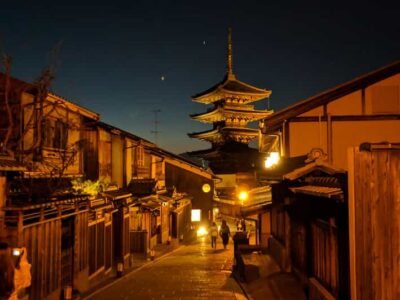
Best of Kyoto: Gion, Geisha, Pagodas & Cobblestones
Read our review →
Kyoto Night Foodie Tour in Gion (9+ dishes + 6 Sake tastings)
Read our review →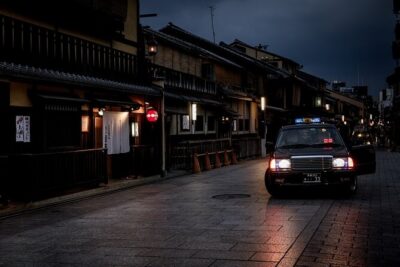
Kyoto Gion Geisha District Walking Tour – The Stories of Geisha
Read our review →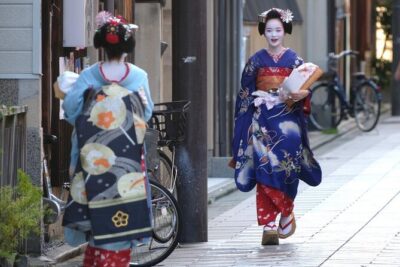
Kyoto Gion: 2-Hour Geisha Culture & History Walking Tour
Read our review →Browse the lists this tour appears in