
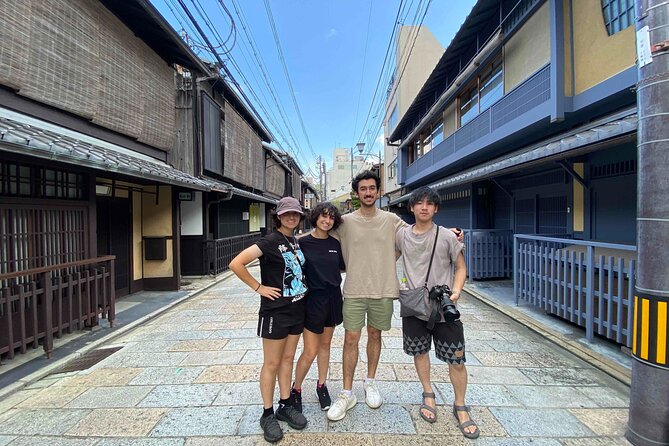
Reviewed · GOVERNMENT-LICENSED GUIDE TOURS
Kyoto 8hr Private Tour with Government-Licensed Guide
Kyoto rewards a good plan. This private eight-hour tour lets you choose four to six places with a government-licensed English-speaking guide, so you can shape the day around temples, old neighborhoods, gardens, food, or Japanese history. I like the personal format and the chance to ask for an itinerary built around your interests. One point to watch: transport, meals, and entrance fees are extra, and you meet the guide on foot.
I also like the flexibility for families and small groups. You can focus on famous sights such as Fushimi Inari, Kiyomizu-dera, and Gion, or choose quieter places such as Daitoku-ji, Shugakuin Imperial Villa, or the northern mountain towns. The main drawback is simple: eight hours sounds long, but Kyoto is spread out, so trying to squeeze in too many districts can turn a pleasant day into a race.
In This Review
- Key points at a glance
- How the private format changes a Kyoto sightseeing day
- Starting at Fushimi Inari and Tofuku-ji
- Kiyomizu-dera, Gion, and Higashiyama
- Nishiki Market, Pontocho, and central Kyoto
- Kinkaku-ji, Ryoan-ji, and northern temple routes
- Arashiyama needs a full, careful plan
- Northern mountains and Imperial villas
- What the $201.46 price really buys
- Guides, pace, and practical planning
- Who should book this Kyoto day?
- Should you book the Kyoto private tour?
- FAQ
- How long does the Kyoto private tour last?
- How many places can I choose?
- Is the tour private?
- Is an English-speaking guide included?
- Is transportation included?
- Are temple and attraction admission fees included?
- Is lunch included?
- Where does pickup take place?
- Can most people participate?
- When can I cancel for a full refund?
Key points at a glance
- Choose four to six sites: Build the day around your own interests instead of following a fixed route.
- Licensed English-speaking guide: Your guide can explain religious customs, architecture, local history, and practical details in English.
- Private for your group: Only your party takes part, with no unrelated group joining.
- Walking-based pickup: You meet and finish with the guide on foot within the designated Kyoto area.
- Transport and admission are extra: Budget for trains, buses, taxis, and temple or garden entry fees.
- Strong guide flexibility: Guides such as Karkoo Tanigawa, Ichiro, and Shu have been praised for patience, professionalism, and adapting to the group.
How the private format changes a Kyoto sightseeing day
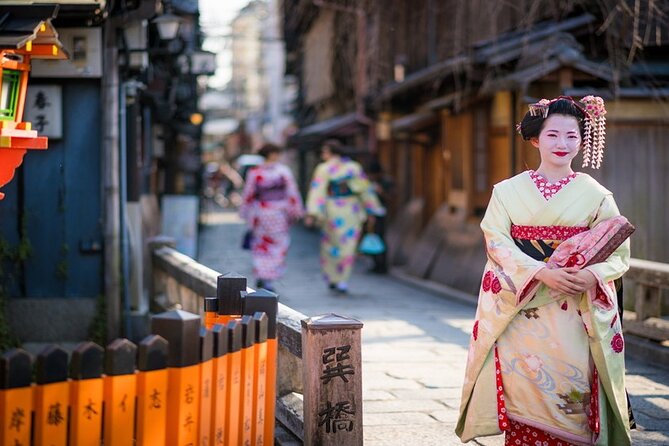
Kyoto has too many worthwhile places for one fixed eight-hour route. The smart feature here is the planning conversation after you reserve. You select four to six places from a very long menu, or ask the guide to suggest a route based on your interests.
That matters because Kyoto’s sights sit in separate pockets of the city. Fushimi Inari and Tofuku-ji are in the southeast. Kiyomizu-dera, Gion, and Higashiyama are close enough to pair. Kinkaku-ji, Ryoan-ji, and Ninna-ji work better as a western or northwestern cluster. Arashiyama is a separate half-day area by itself.
I would not try to visit six major temples scattered across Kyoto. Instead, choose a neighborhood pattern. A first visit could pair Fushimi Inari, Kiyomizu-dera, Gion, and Nishiki Market. A garden-focused day might include Ginkaku-ji, Nanzen-ji, Eikando, and the Imperial Palace. Arashiyama deserves its own plan, especially if you want the bamboo paths, Tenryu-ji, and the smaller hillside temples.
Your guide can help with that judgment. The value is not simply having someone walk beside you. It is avoiding a poor route that wastes time on the city’s transport network.
More Licensed Guide Tours in Kyoto
- Kyoto 6hr Private Tour with Government-Licensed Guide
★ 5.0 · 1,369 reviews - Kyoto 4hr Private Tour with Government-Licensed Guide
★ 5.0 · 629 reviews - Kyoto: Private Tour with Local Licensed Guide
★ 4.8 · 463 reviews
Starting at Fushimi Inari and Tofuku-ji
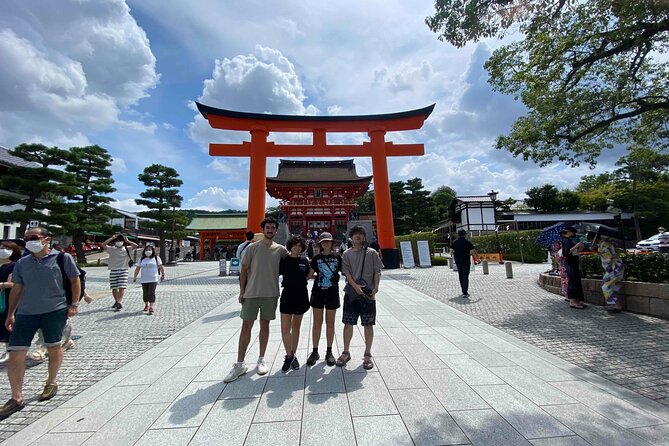
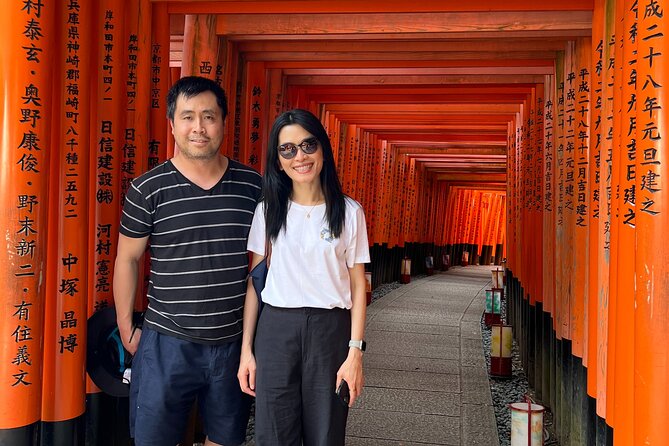
Fushimi Inari-taisha is one of Kyoto’s essential stops, known for its long paths of orange torii gates climbing the wooded mountain. A guide can give the shrine’s symbols and customs some meaning instead of leaving you with only a photo stop.
The supplied timing suggests 15 minutes at Fushimi Inari, but that is too short for a serious visit. Treat that figure as a rough planning marker, not a promise that you will hike the full route. If you want to walk farther up the mountain, say so before the day is finalized.
Nearby Tofuku-ji is a large Zen temple, especially famous for autumn color. Its spacious grounds make a useful companion to Fushimi Inari, giving you a quieter temple setting after the shrine’s famous gates. Admission is not included.
Toji, also in the southern part of Kyoto, offers another possible stop. Founded soon after Kyoto became Japan’s imperial capital, it is especially known for its five-story pagoda and Buddhist setting. The attraction is listed as free for the tour, but confirm exactly which areas your guide plans to enter, since some temple grounds or special exhibitions may have separate charges.
Kiyomizu-dera, Gion, and Higashiyama
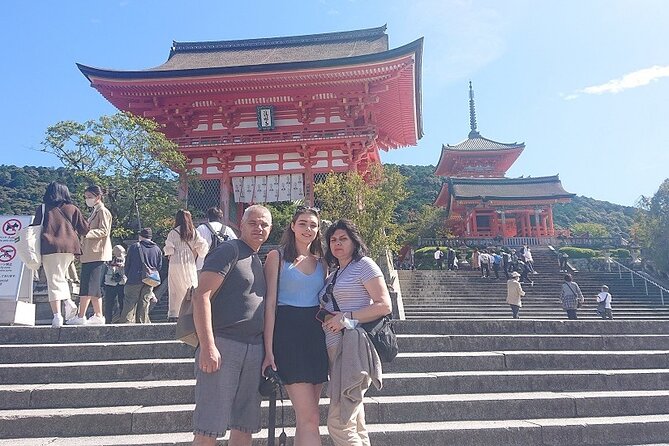
For a first-time introduction to old Kyoto, this is the strongest cluster. Kiyomizu-dera sits above the Higashiyama district and gives you a grand temple, historic streets, and views across the city. The temple is popular, so a guide is useful for explaining the buildings and helping you understand how the grounds fit together.
The stated stop time is 15 minutes, although the description also refers to a one-hour guided visit. Those details do not match, so ask your guide how much time is actually planned. Kiyomizu-dera requires an admission fee, paid separately.
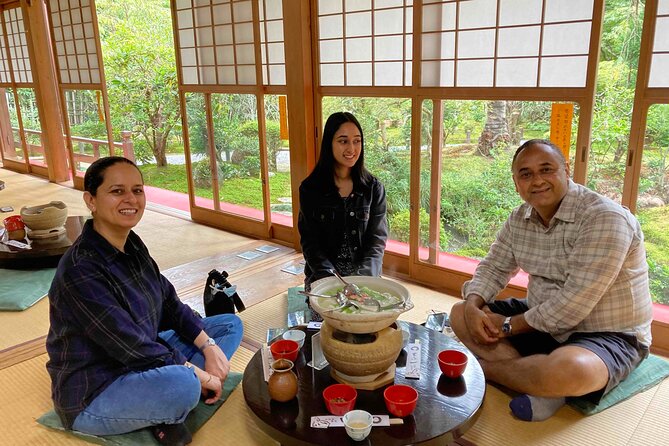
From there, Higashiyama’s preserved streets lead toward Gion. This is the part of Kyoto where the city’s traditional wooden architecture is easiest to appreciate. You can explore narrow lanes, small shrines, shops, and tea houses, while your guide explains local etiquette and the difference between seeing a historic district and treating it like a film set.
Gion is associated with geisha culture, but keep your manners polished. Walk quietly, do not block lanes for photographs, and follow any posted rules about private streets or photography. The guide can help you see the area with respect rather than turning it into a hunt for a staged encounter.
Kennin-ji is another useful addition near Gion. It has pleasant grounds and dry gardens, making it a calmer counterpoint to the surrounding streets. The listed visit is only one minute, so request more time if you want to enter and look around.
Sanjusangendo gives this eastern route a different mood. Its long temple hall is famous for 1,001 statues of Kannon, the Buddhist figure associated with mercy. The listed visit is 30 minutes, and admission is extra. This is a strong choice for anyone interested in religious art.
Nishiki Market, Pontocho, and central Kyoto
Nishiki Market is a narrow, five-block shopping street known as Kyoto’s Kitchen. More than one hundred shops and restaurants line the passage, with food, kitchen goods, and local specialties. It is a good place to build a lunch or snack break into the day, but remember that lunch is not included.
The market can feel tight, especially when busy. A guide can make the food stalls less confusing, but you should still allow time to move slowly and avoid treating the passage as a quick drive-by. If food is a main reason for booking, tell the guide when planning the route.
Pontocho is another central Kyoto option. This narrow lane beside the Kamogawa River is packed with restaurants and has a particularly atmospheric feel in the evening. It is best suited to a late afternoon or dinner-oriented plan, though the tour does not include a meal.
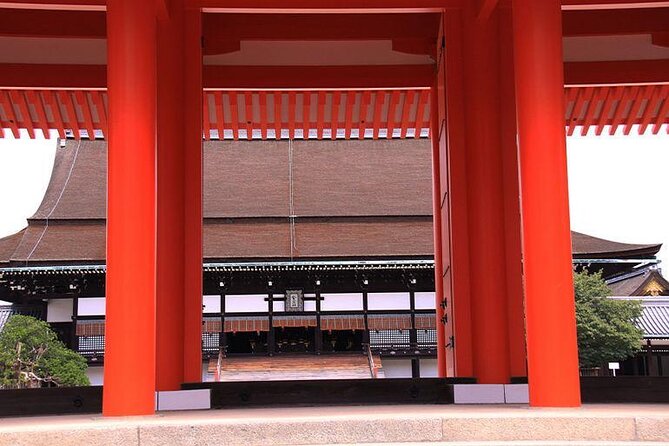
The Kyoto Imperial Palace offers a broad change of scale. It was the Imperial Family’s residence until 1868, when the capital moved to Tokyo. The surrounding grounds are spacious, which can feel refreshing after the tight lanes of Nishiki, Gion, and Pontocho. Admission is not included, and you should ask the guide what access is possible on your chosen date.
A completely different kind of day out in Kyoto:
- PERFECT KYOTO 1-Day Bus Tour
★ 5.0 · 13,518 reviews - Kyoto: Fushimi Inari, Kinkakuji, Bamboo Grove 1 Day Bus Tour
★ 4.8 · 4,316 reviews - Kyoto: Tea Ceremony in a Traditional Tea House in Kiyomizu
★ 4.9 · 3,519 reviews - Kyoto Geisha Walking Tour: Gion District & Hidden Gems
★ 4.7 · 3,273 reviews
Kinkaku-ji, Ryoan-ji, and northern temple routes
Kinkaku-ji, the Golden Pavilion, is one of Kyoto’s most recognizable sights. Its upper floors are covered in gold leaf, and the building is set beside a pond. It is a memorable photo stop, but it is also one of the city’s most popular attractions, so the visit may feel less quiet than the images suggest.
Ryoan-ji is the better choice if you prefer space for thought. Its famous rock garden is spare and carefully composed, with an effect that depends on taking a few quiet minutes rather than simply checking it off. Admission is extra.
Ninna-ji adds imperial and Buddhist history to this northern route. Founded in 888, it is a World Heritage site and the head temple of the Omuro school of Shingon Buddhism. Its grounds and buildings make it a good fit for visitors who want more than one famous view.
Daitoku-ji and Myoshin-ji offer larger temple complexes. Daitoku-ji is the head temple of a Rinzai Zen school and contains nearly two dozen subtemples. Myoshin-ji has about 50 subtemples in addition to its main buildings. These are not quick photo stops. If you choose one, ask which halls are open and allow time to walk between sections.
Arashiyama needs a full, careful plan
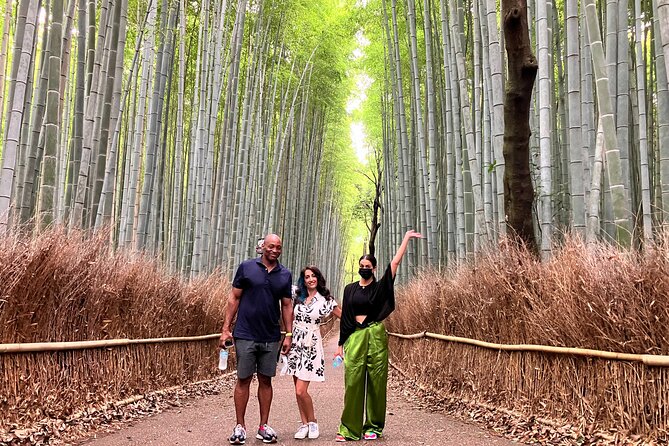
Arashiyama is often treated as one attraction, but it is an entire district. The bamboo paths are pleasant, yet the area also includes Togetsukyo Bridge, Tenryu-ji, Okochi Sanso Garden, Jojakko-ji, Nison-in, Gio-ji, Adashino Nenbutsu-ji, and Otagi Nenbutsu-ji.
Togetsukyo Bridge is Arashiyama’s best-known landmark. The present structure was rebuilt in the 1930s, though the bridge has much older roots. The bamboo groves provide a pleasant walk, and a guide can help you decide how far to continue rather than assuming the famous path is the whole district.
Tenryu-ji is the major temple here and a World Heritage site. Okochi Sanso Garden was the former villa of actor Okochi Denjiro and includes gardens and buildings in the bamboo area. It requires admission, as do the other listed temples.
Jojakko-ji, Nison-in, and Gio-ji are appealing if you want moss, maple trees, smaller buildings, and a quieter hillside mood. Adashino Nenbutsu-ji is known for stone figures placed for the souls of the dead. Otagi Nenbutsu-ji has 1,200 carved stone figures, each with a different face.
I would choose Arashiyama only if you are willing to spend most of the day there. Adding Fushimi Inari or Kinkaku-ji to the same route may look efficient on paper, but the distance can eat into your sightseeing time.
Northern mountains and Imperial villas
The tour can also reach places beyond the standard first-visit circuit. Kibune is a small mountain town developed around Kifune Shrine, while Kurama is known for Kurama-dera and its hot spring. Both offer a more rural side of Kyoto, but they are less suitable as quick add-ons to central Kyoto.
Shugakuin Imperial Villa was built in the 17th century for Emperor Gomizuno and is managed by the Imperial Household Agency. Katsura Imperial Villa is prized for its Japanese architecture and garden design. These choices suit repeat visitors or anyone with a strong interest in gardens and imperial culture.
Nanzen-ji and Eikando are easier to pair with an eastern Kyoto route. Nanzen-ji is a major Zen temple at the foot of the Higashiyama mountains, with broad grounds and a notable brick aqueduct. Eikando is famous for autumn color and evening illumination. Eikando has a listed 30-minute visit, giving it more realistic time than many of the 10-minute entries.
Yoshimine-dera, in Kyoto’s western mountains, is built along a hillside and offers a more open setting than many central temples. It is beautiful but less practical if your priority is seeing several central landmarks.
What the $201.46 price really buys
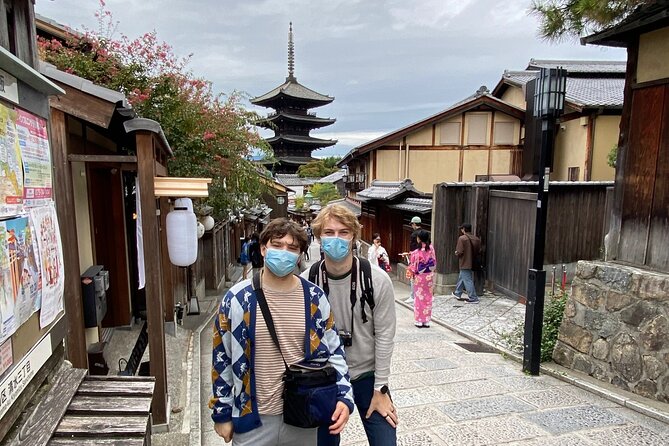
At $201.46 per person, this is not a bargain sightseeing walk for a solo visitor. It can make better financial sense for a private group, especially since group discounts are offered and only your party participates.
The price covers a licensed local English-speaking guide and a custom route of four to six sites. It does not cover transportation, entrance fees, lunch, personal purchases, or a private vehicle. You also pay the guide’s entry fee only for sights listed in the tour details, so confirm how that rule applies to your chosen stops.
I see the strongest value in the planning help and the private pace. A family can pause when needed. A temple enthusiast can spend less time at markets. A group of six can split the cost of one guide while keeping the day together. One six-adult group began smoothly after arranging local currency and transportation cards in advance, a practical tip worth copying.
Guides, pace, and practical planning
The guide team includes English-speaking professionals such as Karkoo Tanigawa, Ichiro, and Shu. Karkoo Tanigawa was praised for being helpful and accommodating with a group of six adults. Ichiro and Shu were also praised for professionalism and for going beyond the basic sightseeing script during two separate tour days.
That kind of flexibility is the main reason to choose a private tour. Still, the exact guide is not guaranteed in the information provided, so consider the names useful examples rather than a promise.
This is a walking tour. Pickup and drop-off happen on foot within a designated area, and the experience is near public transportation. You should arrange a transportation card and carry local currency before meeting the guide. Comfortable shoes matter more here than stylish ones.
The tour is intended for most participants, and service animals are allowed. Reserve at least two weeks ahead. The average booking lead time is 69 days, which suggests that popular dates can fill well before your trip.
Free cancellation is available until 24 hours before the local start time. Changes or cancellations inside that window are not accepted for a refund.
Who should book this Kyoto day?
I would choose this tour if you want a guide who can connect religious buildings, imperial history, food streets, and neighborhood customs into one day. It is also a good fit for families, small groups, first-time visitors, and anyone who dislikes fixed coach routes.
I would skip it if you want a cheap group walk, a fully transported sightseeing day, or an exact schedule with every fee already paid. You also need to take an active role in planning. Four carefully chosen places will usually beat ten rushed ones.
Should you book the Kyoto private tour?
Book it if you value personal planning, an English-speaking licensed guide, and the freedom to choose your Kyoto priorities. For a group of four to six, the price can be reasonable once divided among the party, particularly if the guide saves you from poor route choices.
Before paying, tell the agency your interests, group size, walking comfort, and top four sights. Ask how much time will be spent at each place and which transport will connect them. If you build a tight neighborhood route and budget separately for fares and admissions, this can be a useful, flexible introduction to Kyoto.
FAQ
How long does the Kyoto private tour last?
The tour lasts approximately eight hours.
How many places can I choose?
The tour includes a customizable itinerary of four to six sites from the available list.
Is the tour private?
Yes. Only your group participates, and unrelated groups cannot be combined with yours.
Is an English-speaking guide included?
Yes. A licensed local English-speaking guide is included.
Is transportation included?
No. Transportation fees are not included, and the tour does not provide a private vehicle.
Are temple and attraction admission fees included?
No. Entrance fees are generally separate. The guide’s entry fees are covered only for sights listed in the tour details.
Is lunch included?
No. Lunch and other personal expenses are not included.
Where does pickup take place?
Pickup and drop-off take place on foot within the designated area of Kyoto.
Can most people participate?
Yes. Most travelers can participate, and service animals are allowed. The experience is a walking tour and is near public transportation.
When can I cancel for a full refund?
You can cancel at least 24 hours before the local start time for a full refund. Cancellations or changes made less than 24 hours before the start are not accepted for a refund.
Just added around Kyoto
- Kyoto: Gion Night Walking Tour with Geisha Insight★ 5.0 · 39 reviews
- Kyoto: Private Customizable Day Trip by Car★ 5.0 · 38 reviews
- Kyoto: Full Day Bike Tour★ 4.9 · 39 reviews
- Private Japanese Calligraphy in Kyoto – Learn Shodō with a Master★ 5.0 · 39 reviews
- Kyoto: Gion Evening Walk with Hidden Gems, Geisha & Sake★ 5.0 · 41 reviews
- Experience a tea ceremony in an authentic tearoom, in Kyoto!★ 4.5 · 41 reviews
- Kyoto Private Photo Shoot & Tour by SnapKyoto★ 5.0 · 41 reviews
- The Way of Tea: Kyoto Crafts, Hidden Temples & Wabi-Sabi Walk★ 5.0 · 41 reviews
Government-Licensed Guide Tours, compared.
Tokyo 6hr Private Tour with Government-Licensed Guide
Read our review →
Tokyo 4hr Private Tour with Government-Licensed Guide
Read our review →
Kyoto 6hr Private Tour with Government-Licensed Guide
Read our review →
Hiroshima / Miyajima Full-day Private Tour with Government Licensed Guide
Read our review →
Kyoto 4hr Private Tour with Government-Licensed Guide
Read our review →
Hiroshima City 4hr Private Walking Tour with Licensed Guide
Read our review →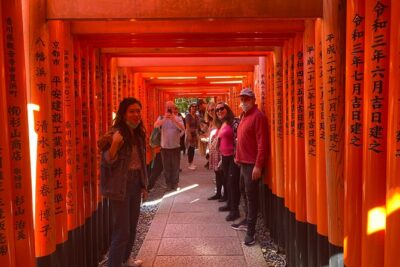
Private Kyoto Tour with Licensed Guide & Vehicle (Max 15 persons)
Read our review →Browse the lists this tour appears in