

Reviewed · GEISHA & GION DISTRICT TOURS
Kyoto Early Bird English Tour: Fushimi Inari & Gion(Private opt)
Kyoto rewards early risers. This private walking tour links Fushimi Inari, Kiyomizu-dera, the old streets of Higashiyama, and Gion before the day reaches full speed. I like the smart route, which begins at Kyoto Station and ends near Yasaka Shrine, and I like the guide’s added role as photographer. The early timing also gives you a better chance at quiet paths and cleaner photos.
The strongest praise goes to Ikki, a Kyoto-born guide with excellent English, a lively manner, and a gift for explaining local customs in plain terms. He has also prepared helpful material about Japanese language, temple history, and prayer etiquette. The main consideration is pace: the advertised duration is four to five hours, but one experience was reported at about two and a half hours, so confirm the expected schedule before booking.
In This Review
- Key things to know before booking
- Why the early start matters at Fushimi Inari
- Kiyomizu-dera gives you Kyoto from above
- Sannenzaka and Ninenzaka slow the pace
- Yasaka Pagoda supplies the classic photo stop
- Yasaka Koshin-do adds color and local custom
- Gion shows Kyoto’s old entertainment district
- Yasaka Shrine finishes the morning well
- Ikki’s guiding style is a major part of the value
- The price makes sense for a private half-day
- Walking, transport, and timing
- Who should book this Kyoto morning?
- FAQ
- Where does the tour start?
- Where does the tour end?
- How long does the tour last?
- Is this a private tour?
- Are transportation and temple admission included?
- Is the tour suitable for people with limited fitness?
- What happens if I arrive late?
- Should you book the Kyoto Early Bird English Tour?
Key things to know before booking
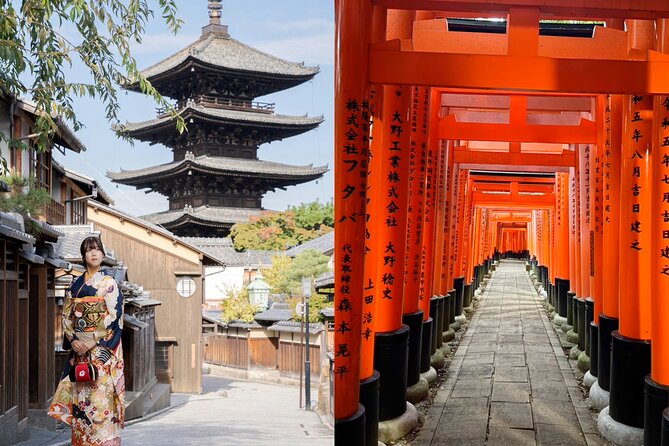
- Fushimi Inari comes first, when its famous torii-gate paths are most pleasant and easiest to photograph.
- Ikki is the guide to request, if available. His Kyoto roots, clear English, humor, and personal recommendations earn especially strong praise.
- Photos are included, with the guide taking pictures during the tour and sending them afterward.
- The tour is private, so only your own group participates, even though group discounts are available.
- You pay extra for transport and Kiyomizu-dera, including ¥390 for public transportation and ¥500 for temple admission per person.
- Expect plenty of walking, stone streets, temple approaches, stairs, and a moderate fitness requirement.
Why the early start matters at Fushimi Inari
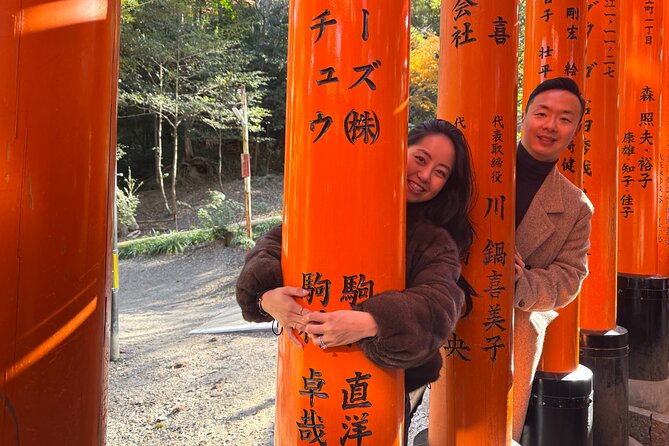
Fushimi Inari-taisha is the natural opening act. Its thousands of orange-red torii gates climb the wooded slopes of Mount Inari, creating one of Kyoto’s most recognizable scenes. The shrine honors Inari, associated with rice, prosperity, and business success.
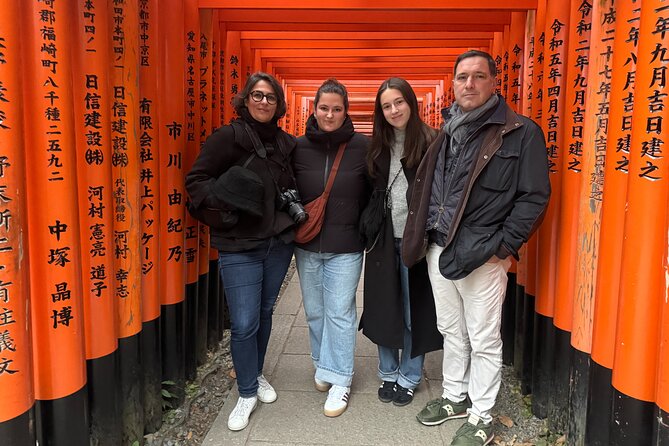
The appeal is not only the gates. Fushimi Inari is a working religious site, and the early hour helps you notice its quieter side. You can watch people make offerings, pass through the shrine grounds respectfully, and hear explanations about the meaning of the place before tour groups fill the paths.
I especially like beginning here because the route makes practical sense. Fushimi Inari is near the southern side of Kyoto, while Kiyomizu-dera and Gion sit farther north. You see the most in-demand sight first, then work toward the historic Higashiyama district.
The listed stop is about one hour. That is enough for an introduction and a walk through part of the torii route, but not enough to explore every path on Mount Inari. If you want to hike all the way to the summit, this is not the right format. You are paying for a broad morning overview, not a long mountain outing.
Your guide can also make the visit more meaningful. Without context, the gates can become a series of attractive photo frames. With explanation, you learn why businesses and individuals donate torii, how the shrine connects to prosperity, and how to behave at a Shinto site.
More Temple & Shrine Tours in Kyoto
- Kyoto: Fushimi Inari, Kinkakuji, Bamboo Grove 1 Day Bus Tour
★ 4.8 · 4,316 reviews - Kyoto: Tea Ceremony in a Traditional Tea House in Kiyomizu
★ 4.9 · 3,519 reviews - Kyoto: Tea Ceremony Ju-An at Jotokuji Temple
★ 4.9 · 3,207 reviews
Kiyomizu-dera gives you Kyoto from above
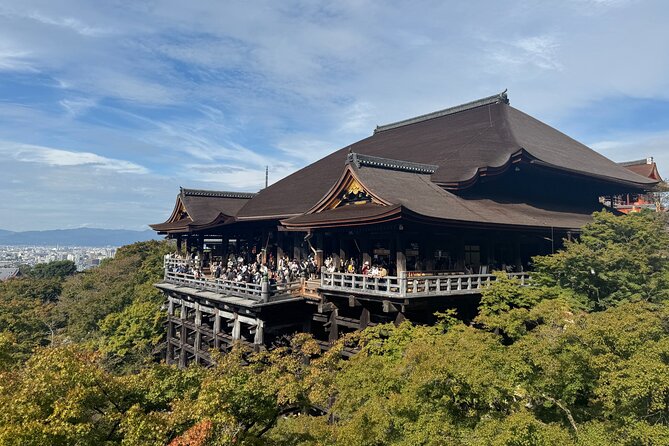
Kiyomizu-dera is the tour’s largest temple stop and one of Kyoto’s essential sights. Set on a hillside, it offers wide views over the city and a memorable sense of place. The temple is also one of the busiest stops on the route, which is another reason an early start helps.
The planned visit lasts about one hour. That gives you time to take in the temple grounds, listen to the guide, and pause for photographs. Admission is not included, so budget ¥500 per person. That is a small extra cost for one of Kyoto’s major cultural sights, but it is worth knowing before you arrive.
Kiyomizu-dera is reached through the historic streets of eastern Kyoto, so the approach is part of the experience. You are not simply dropped at a large entrance and moved on. The old district gradually builds the setting, with traditional buildings, shops, and sloping lanes leading toward the temple.
The hillside location has a practical downside. The route involves walking uphill and may include uneven stone surfaces and stairs. Comfortable shoes are essential. Anyone with limited mobility should ask the operator for more details before booking, since the tour specifically calls for moderate physical fitness.
Sannenzaka and Ninenzaka slow the pace
After the temple, the tour moves through Sannenzaka and Ninenzaka, two stone-paved lanes in the Higashiyama area. Wooden buildings, small restaurants, and souvenir shops line the route, giving you one of Kyoto’s clearest glimpses of an older townscape.
The planned stop is only 15 minutes, so think of this as a guided orientation rather than shopping time. Your guide can point out the character of the streets, explain why the district is protected and popular, and help you identify places to return to later.
These lanes can be crowded later in the day. Early timing improves the experience, but you should not expect complete solitude. This is a well-known part of Kyoto, and shop opening hours may also be limited in the morning.
I like the short stop because it prevents the tour from becoming temple-heavy. You get a change of rhythm: less formal architecture, more street life, and a chance to see how Kyoto’s older buildings fit into the modern city.
Yasaka Pagoda supplies the classic photo stop
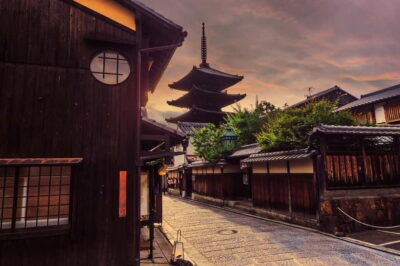
Yasaka Pagoda, also called Hokanji Temple, is one of the most recognizable structures in the district. Its tall wooden form rises above the surrounding streets, and its scale can surprise you when seen from close range.
The tour allows about 15 minutes here. That is enough for photos and an explanation, but not for a long visit. The pagoda’s appeal is mainly visual from the outside, and its position among the old streets gives your guide a useful setting for discussing Kyoto’s building traditions.
The supplied information describes it as one of Japan’s oldest wooden structures and notes its construction without nails. That detail gives the stop a clear focus, rather than making it just another quick photograph.
The brief timing is both a benefit and a limitation. You can see the landmark without losing too much time, but you will want to return independently if this is one of your main interests.
More geisha district walks in Kyoto:
- Kyoto Geisha Walking Tour: Gion District & Hidden Gems
★ 4.7 · 3,273 reviews - Kyoto: Gion Magical Night Walking Tour with Geisha Trivia
★ 4.9 · 2,393 reviews - Kyoto: Gion Geisha District Walking Tour – Stories of Geisha
★ 4.7 · 2,187 reviews - Best of Kyoto: Gion, Geisha, Pagodas & Cobblestones
★ 4.9 · 2,058 reviews
Yasaka Koshin-do adds color and local custom
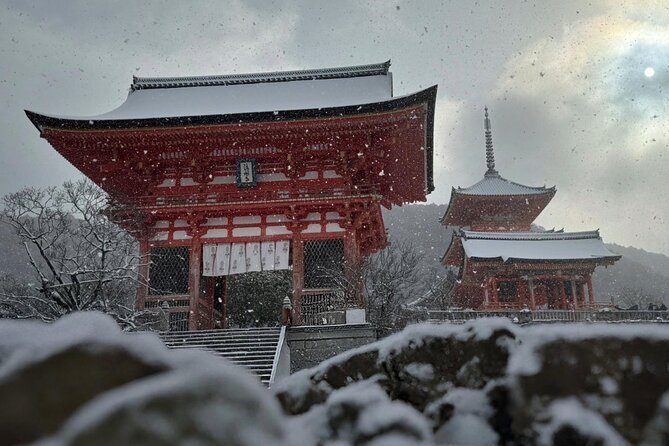
Yasaka Koshin-do is a small temple with a very different look from Kyoto’s more restrained religious buildings. Colorful decorations cover the site, making it a favorite place for photographs and a useful reminder that Japanese religious spaces are not all quiet wood and muted tones.
The temple’s construction date is unknown, according to the tour information. That uncertainty gives the guide room to explain the site’s local character without pretending every detail is settled.
Again, the visit lasts around 15 minutes. That is enough to see the decorations and learn what makes the temple unusual. You will not have time for a long independent exploration, so treat this as a brief but distinctive stop between the better-known landmarks.
This is one of the places where a guide adds real value. A quick look at colorful objects can be memorable, but an explanation of their meaning helps you understand why the site matters to local worshippers.
Gion shows Kyoto’s old entertainment district
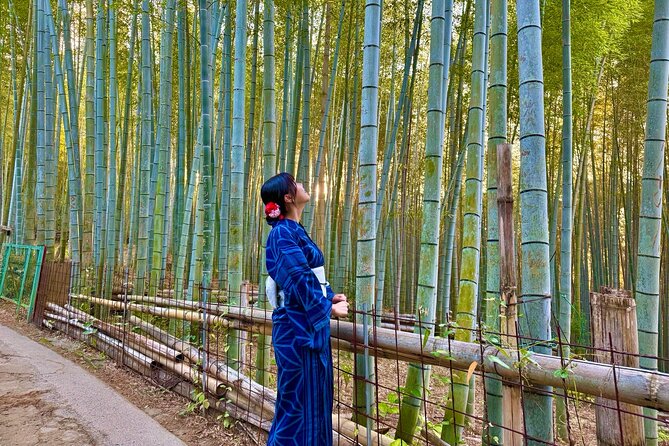
Gion is Kyoto’s best-known geisha district, with traditional machiya houses, teahouses, and preserved streets. The tour gives you about 15 minutes to walk through the area and hear about its place in Kyoto’s cultural life.
The short visit will not cover every lane in Gion. It is more useful as a first introduction, especially if you plan to return later for a slower walk. Your guide can help you understand the difference between seeing a traditional district and treating it like a movie set.
That point matters. Gion is a living neighborhood, not a stage built for photographs. Walk quietly, avoid blocking narrow lanes, and follow any posted rules about photography. A thoughtful guide can help you appreciate the district without turning local life into a spectacle.
Because this tour finishes at Yasaka Shrine, Gion is not an isolated stop. The route gradually moves you through the old eastern districts, making the final section feel like a continuation rather than a disconnected attraction.
Yasaka Shrine finishes the morning well
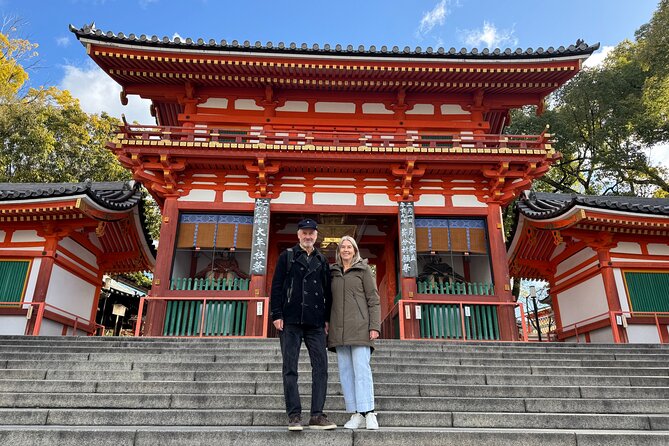
Yasaka Shrine is the final destination. It is the headquarters of about 2,300 related shrines across Japan and is linked with prosperity and protection. The shrine’s location at the edge of Gion makes it a convenient end point for continuing your day.
The planned visit lasts 30 minutes, longer than the three smaller Higashiyama stops. That gives you time to see the main areas, ask final questions, and receive advice about what to do next.
Ending here is practical. You can continue exploring Gion, find food nearby, or take public transportation toward your hotel or another attraction. The guide can also suggest the best route based on your next plan. One particularly useful detail from the experience is that Ikki has helped participants find local food, including a conveyor-belt sushi restaurant.
The end point is not Kyoto Station, so plan the rest of your morning. That is not a flaw, but you should know it in advance. The tour is designed to place you in one of Kyoto’s most useful sightseeing districts, not return you to the starting point.
Ikki’s guiding style is a major part of the value
The sights are excellent, but the guide can determine whether this feels like a meaningful introduction or a fast checklist. Ikki receives repeated praise for clear English, strong preparation, patience, humor, and a friendly manner that works well with couples, families, teenagers, and older relatives.
He was born and raised in Kyoto, which gives him a personal connection to the city. He also has experience abroad, helping him explain local customs in a way that makes sense to English speakers. That combination is useful when you want more than dates and names.
I also like the photography service. The guide takes pictures throughout the morning, including at Fushimi Inari, Kiyomizu-dera, and the pagoda. Several people appreciated receiving the photos afterward, since taking a good self-timer picture at a crowded shrine is not always easy.
The prepared booklet is another thoughtful touch. It includes material about Japanese words, temple and shrine history, and how to participate in prayers. That can help you remember what you saw after the tour ends.
Guide availability can change, so do not assume Ikki is guaranteed unless the booking confirms it. Still, his name is worth requesting when possible.
The price makes sense for a private half-day
The listed price is $99.10 per person. That is not the cheapest way to see these sights, especially because public transportation and Kiyomizu-dera admission cost extra. You should add ¥390 for transportation and ¥500 for the temple, plus any food or drinks.
The value comes from the structure. You get a private experience, an English-speaking local guide, cultural explanations, route planning, and professional photos. For a couple or family that wants personal attention and does not want to work out Kyoto’s connections alone, the price can be fair.
For solo visitors, the per-person cost is harder to justify. A larger private group may benefit from the group discount, though you should check the exact rate at booking.
The schedule is the one area that needs clarification. The official duration is approximately four to five hours, and the listed stop times add up to about four hours before allowing for transport. Yet one person described a much shorter two-and-a-half-hour experience. Ask the provider how long your specific departure is expected to last, especially if you are arranging lunch, train travel, or another reservation afterward.
Walking, transport, and timing
This is a walking tour that uses public transportation. The meeting point is Kyoto Station, at Higashishiokoji Kamadonocho in Shimogyo Ward. From there, you travel toward Fushimi Inari and then continue on foot through the temple and Gion districts.
You pay the ¥390 transportation fare per person. The tour does not include meals or drinks, so carry water and consider eating before you meet. Since the start is early, nearby food options may be limited at the beginning of the route.
The tour requires punctuality. If you arrive late, you may not be able to join, and no refund is provided for a missed start. Build in extra time to find the meeting point inside the busy Kyoto Station area.
Wear shoes suitable for hills and stone paving. You will encounter temple approaches, sloping streets, and plenty of standing. Families can enjoy the outing, and one family found the guide especially kind with an eight-year-old child, but younger children should be ready for a long morning on foot.
Who should book this Kyoto morning?
I would choose this tour if you are visiting Kyoto for the first time and want the major eastern sights explained in one organized morning. It suits couples, families, and private groups that value conversation, photos, and local recommendations.
It is also a good fit if you have limited time. Fushimi Inari, Kiyomizu-dera, Higashiyama, Gion, and Yasaka Shrine form a strong first look at Kyoto’s religious and traditional sides.
I would skip it if you prefer to linger for hours at one temple, hike all of Mount Inari, or shop at your own pace. The route covers a lot, and the shorter stops are intentionally introductory.
Book it if you want context and help with the city’s layout. If you do, request Ikki when possible, confirm the actual duration, and arrive early at Kyoto Station. Those three steps address the main practical questions and give you the best chance of getting full value from the morning.
FAQ
Where does the tour start?
It starts at Kyoto Station, at Higashishiokoji Kamadonocho in Kyoto’s Shimogyo Ward.
Where does the tour end?
The tour ends at Yasaka Shrine in the Gion area. From there, you can continue sightseeing or take a bus to another attraction or your hotel.
How long does the tour last?
The stated duration is approximately four to five hours. The listed visits and transport take about four hours, but the actual timing can vary, so confirm the schedule before booking.
Is this a private tour?
Yes. Only your own group participates in the activity.
Are transportation and temple admission included?
No. Public transportation costs ¥390 per person, and Kiyomizu-dera admission costs ¥500 per person. Food and drinks are also separate.
Is the tour suitable for people with limited fitness?
The tour requires a moderate level of physical fitness. It is a walking experience with public transportation, hills, stone streets, and temple approaches.
What happens if I arrive late?
If you are late for the meeting time, you may not be able to join the tour and will not receive a refund.
Should you book the Kyoto Early Bird English Tour?
Book it for a well-organized first morning in Kyoto, especially if you want an English-speaking local guide, private attention, and photos you could not easily take yourself. The combination of Fushimi Inari before the crowds, Kiyomizu-dera, Gion, and Ikki’s local knowledge makes the experience a strong choice for first-time visitors.
Just confirm the real duration, budget for the extra fees, and prepare for serious walking. If those details suit your plans, this is a practical and personal way to meet Kyoto early in the day.
Just added around Kyoto
- Kyoto: Gion Night Walking Tour with Geisha Insight★ 5.0 · 39 reviews
- Kyoto: Private Customizable Day Trip by Car★ 5.0 · 38 reviews
- Kyoto: Full Day Bike Tour★ 4.9 · 39 reviews
- Private Japanese Calligraphy in Kyoto – Learn Shodō with a Master★ 5.0 · 39 reviews
- Kyoto: Gion Evening Walk with Hidden Gems, Geisha & Sake★ 5.0 · 41 reviews
- Experience a tea ceremony in an authentic tearoom, in Kyoto!★ 4.5 · 41 reviews
- Kyoto Private Photo Shoot & Tour by SnapKyoto★ 5.0 · 41 reviews
- The Way of Tea: Kyoto Crafts, Hidden Temples & Wabi-Sabi Walk★ 5.0 · 41 reviews
Geisha & Gion District Tours, compared.
Kyoto Geisha Walking Tour: Gion District & Hidden Gems
Read our review →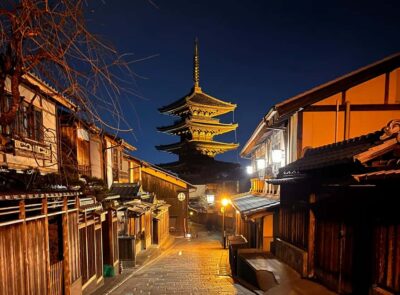
Gion Magical Night Walking Tour with Geisha Trivia
Read our review →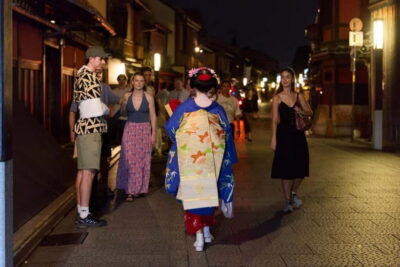
Gion Geisha District Walking Tour – Stories of Geisha
Read our review →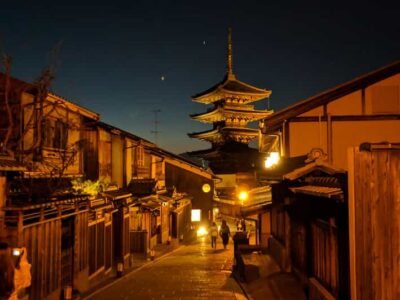
Best of Kyoto: Gion, Geisha, Pagodas & Cobblestones
Read our review →
Kyoto Night Foodie Tour in Gion (9+ dishes + 6 Sake tastings)
Read our review →
Kyoto Gion Geisha District Walking Tour – The Stories of Geisha
Read our review →
Kyoto Gion: 2-Hour Geisha Culture & History Walking Tour
Read our review →Browse the lists this tour appears in