
Reviewed · COOKING CLASSES
Kyoto Family Kitchen Cooking Class
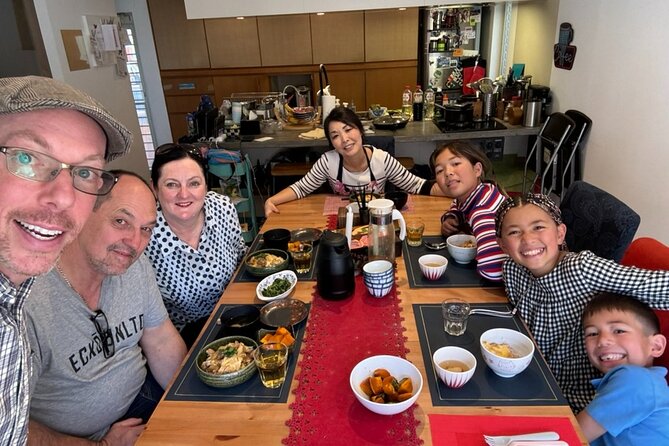
Dinner tastes better in a family home. The Kyoto Family Kitchen Cooking Class gives you a seat at a local table, not just a place at a demonstration counter. I like the hands-on cooking and the easy family setting, where children can help, pets may wander through, and conversation matters as much as the recipes. The other big plus is the chance to learn practical Japanese basics such as dashi, soy sauce, mirin, and sake. The main consideration is clear: this is an informal family meal with cooking, not a tightly scripted professional cooking school.
Anthony and Naomi host the experience at their home in Sakyo Ward, outside Kyoto’s city center. I also like that transportation to Kokusaikaikan subway station is included, which makes the suburban location easier to manage. Still, you should be comfortable entering a private home and sharing the evening with the family’s children, dog, and cat. If you want polished instruction and restaurant-style presentation, this may feel too casual.
In This Review
- Key points at a glance
- What the Kyoto Family Kitchen really offers
- Arriving at the home on the hill
- Tea, conversation, and the first look at dinner
- Around the counter: how much cooking will you do?
- Dinner with Anthony, Naomi, and the family
- Why the children and pets matter
- Price and the value of a full evening
- Who should book this Kyoto cooking experience?
- Timing, group size, and practical planning
- The final call: book it for the people, not just the food
- FAQ
- Where does the Kyoto Family Kitchen Cooking Class take place?
- How long does the cooking class last?
- What is included in the price?
- Is alcohol included?
- Is this a private activity?
- Can children take part?
- What is the cancellation policy?
Key points at a glance
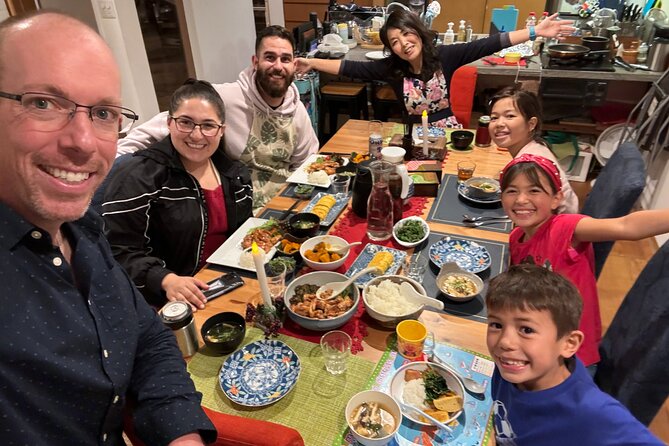
- Cook in a real Kyoto home: You prepare and eat an everyday Japanese dinner with Anthony, Naomi, their children, and household pets.
- Learn the Japanese pantry: The class explains dashi, soy sauce, mirin, and sake, the building blocks behind many home dishes.
- Expect active participation: You slice, dice, mix, and help prepare the meal rather than simply watching a chef work.
- Family-friendly by design: Children can take part in the cooking or play with the hosts’ children and pets.
- A private two-and-a-half-hour evening: Only your group participates, with dinner, tea or coffee, ingredients, and taxes included.
- Highly rated, with one important caveat: The experience has a 4.9 rating from 60 reviews and a 97 percent recommendation rate, but one unhappy participant wanted a more formal class.
What the Kyoto Family Kitchen really offers
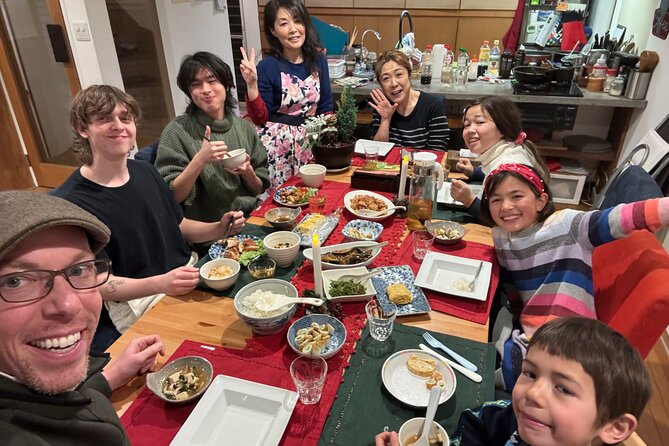
This experience is best understood as a family dinner with a cooking lesson built into it. You are not signing up for a chef’s master class, a market tour, or a long list of restaurant dishes. You are visiting a Kyoto household, helping prepare food, and sitting down to eat together.
That difference matters. Many cooking classes focus on technique, precise measurements, and a polished final plate. Here, the focus is on how Japanese families actually use familiar ingredients at home. You may learn less about professional knife work and more about how dashi, mirin, soy sauce, and sake fit into a normal kitchen routine.
The setting is deliberately relaxed. You arrive, take a seat, have tea, and talk about your trip before cooking begins. Food becomes the bridge into the lesson. Then you preview the evening’s menu, put on aprons, and gather around the kitchen counter.
The class lasts about two hours and 30 minutes, usually from 6:00 to 8:30 p.m. Monday through Friday. That timing works well after a day of temples and city sightseeing. You finish with dinner rather than needing to find a restaurant afterward.
More Cooking Classes in Kyoto
- Ramen Cooking Class at Ramen Factory in Kyoto
★ 5.0 · 1,937 reviews - Kyoto: Ramen Cooking Class at a Ramen Factory with Souvenir
★ 4.9 · 532 reviews - Kyoto: Ramen, Gyoza, and Onigiri Cooking Class
★ 5.0 · 445 reviews
Arriving at the home on the hill
The meeting address is 33-50 Kamitakano Saimyōjiyama in Sakyo Ward, Kyoto. This is outside the central sightseeing zone, in a suburban part of the city. The host works out the meeting time, menu, and directions with you after booking.
Transportation to Kokusaikaikan subway station is included. That is a useful detail because it reduces some of the uncertainty of reaching a private home outside the center. You should still pay close attention to the directions and allow enough time to reach the meeting point. The activity begins and ends at the same home.
The location helps shape the experience. You leave behind the usual sightseeing circuit and spend an evening in a place that feels connected to ordinary domestic life. That is the appeal, but also the tradeoff. You are not walking into a central Kyoto venue with a large sign and a reception desk. You are going to someone’s home, so the tone is personal from the moment you arrive.
The hosts describe the house as a place where children, pets, and adults can relax together. The dog and cat are part of the household atmosphere. If you enjoy animals and a lively family setting, this adds charm. If you have allergies, anxiety around pets, or a strong need for a quiet room, ask about the setup before booking.
Tea, conversation, and the first look at dinner
The evening begins with a pause. You have tea or coffee, settle in, and talk about your trip. This opening is not filler. It gives you time to get comfortable in a private home and lets the hosts learn about your interests and food needs.
From there, the conversation turns to Japanese food. You get an introduction to the dishes you will prepare and to the everyday seasonings that make them taste familiar. The food lesson is likely to be most useful for cooks who want ideas they can repeat at home, rather than a single complicated dish they will never make again.
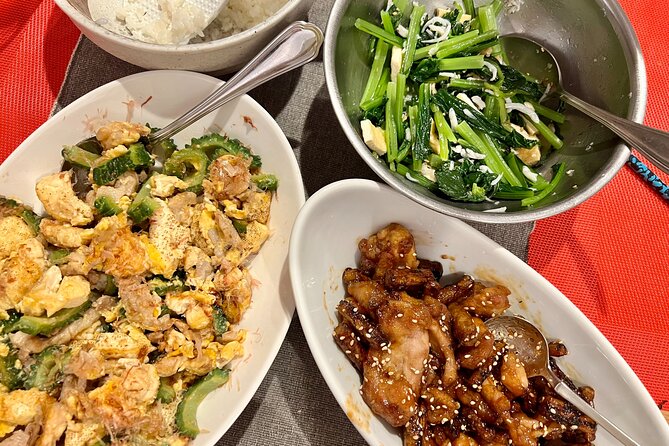
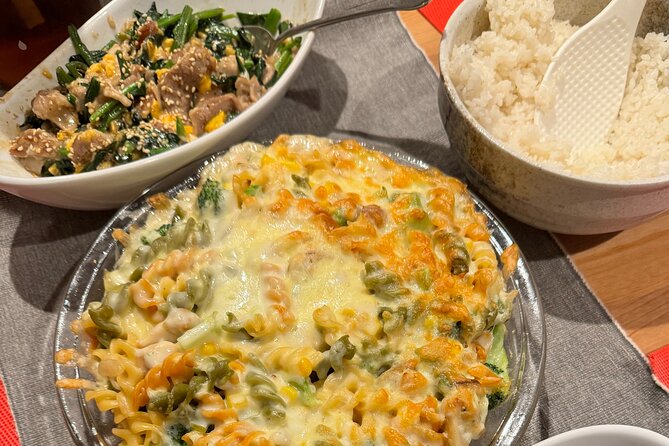
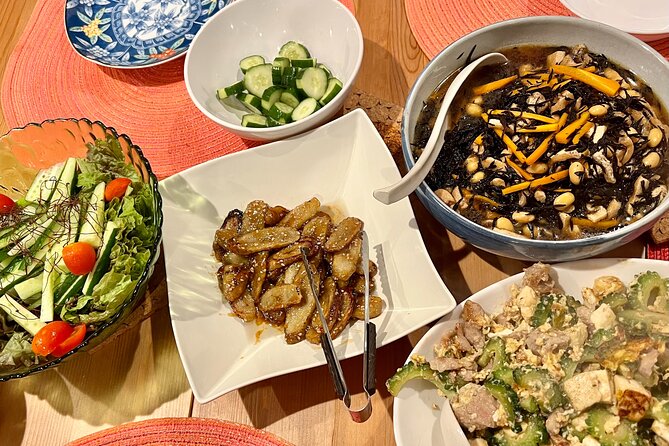
The hosts have prepared meals such as gyoza, tamago yaki, okonomiyaki, teriyaki chicken, and sautéed vegetables for different groups. The exact menu is arranged with you, so you should not assume every dish will appear on every date. That flexibility is helpful for families and groups with different tastes.
Dietary needs can also be discussed. A group of six that included a vegetarian participant received accommodations and plenty of food for that person. Still, you should share restrictions clearly before the class so the menu can be planned properly. Alcohol is not included, so plan on a nonalcoholic evening unless you arrange otherwise with the host.
Around the counter: how much cooking will you do?
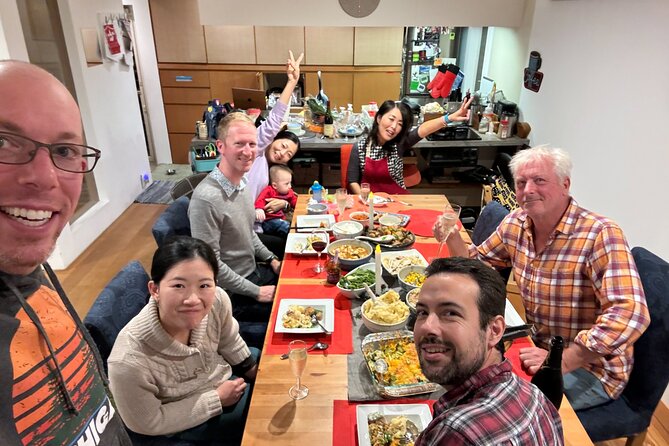
Once the introductions are over, you put on aprons and work around the kitchen counter. The format includes slicing, dicing, mixing, and preparing the dishes together. Children can join in at a level that suits them, and the informal setup means nobody needs to act like a professional cook.
The best part is the ordinary nature of the food. You are learning how simple Japanese meals come together, using staples that can support many different dishes. Dashi provides a savory base. Soy sauce brings salt and depth. Mirin adds sweetness, while sake contributes another layer of flavor. The class puts these ingredients into a household context rather than presenting them as mysterious restaurant tricks.
You should keep your expectations realistic. One participant felt the experience was more like assisting the family and cooking alongside the hosts than attending a formal cooking class. That criticism is useful. If you want every step demonstrated in detail, each knife movement corrected, and a printed lesson plan followed precisely, this format could disappoint.
On the other hand, the relaxed approach is exactly why many people rate the evening so highly. You are free to talk, ask questions, and learn through doing. The goal is not perfect technique. It is to understand how a Japanese family cooks and to enjoy making a meal with other people.
A completely different kind of day out in Kyoto:
- PERFECT KYOTO 1-Day Bus Tour
★ 5.0 · 13,518 reviews - Kyoto: Fushimi Inari, Kinkakuji, Bamboo Grove 1 Day Bus Tour
★ 4.8 · 4,316 reviews - Kyoto: Tea Ceremony in a Traditional Tea House in Kiyomizu
★ 4.9 · 3,519 reviews - Kyoto Geisha Walking Tour: Gion District & Hidden Gems
★ 4.7 · 3,273 reviews
Dinner with Anthony, Naomi, and the family

After the cooking, everyone gathers around the table. This is where the experience earns its strongest praise. The meal is not simply a reward at the end of class. It is the main social event, with time for stories, questions, and conversation about Japanese life.
Anthony and Naomi host with their children, and the family atmosphere is central to the evening. Past participants have described feeling welcomed quickly and included in the household. Children have played with the hosts’ children and pets, while adults shared stories about food, travel, work, and family life.
That mix makes the class work for a wide range of ages. A family with an 11-year-old child and a 78-year-old parent found the setting comfortable and engaging. Couples have also enjoyed it, especially those who wanted something more personal than another restaurant meal. Small groups of friends can fit the format as well, and larger groups or family gatherings may be possible by arrangement.
The food itself receives strong praise. Several people describe dishes prepared from scratch and found the dinner extremely delicious. The meals are traditional in spirit, but you should not expect an elaborate kaiseki presentation. This is home cooking, served in a home, with the warmth and imperfections that come with that choice.
You may also pick up small cultural details that do not appear in a standard lesson. One couple learned a few Japanese phrases to use during the rest of their trip. That kind of exchange is part of the value. You are not just copying a recipe. You are talking with a local family about the way food fits into daily life.
Why the children and pets matter
The children and animals are not a side attraction. They help set the tone. Kids who are restless during formal tours may find it easier to take part here, then move to play when the cooking loses their attention.
Families should see this as a major advantage. The setting does not demand that every child sit still and listen for 150 minutes. They can help mix or prepare ingredients, meet the host’s children, and spend time with the dog and cat.
Still, a home is not the same as a purpose-built activity room. You will need to supervise your own children and respect the family’s space. Service animals are allowed, but anyone with allergies or concerns about animals should check the practical details before reserving.
For adults, the family setting can make conversation feel natural. You are not being entertained by a guide delivering a speech. You are spending an evening with a household that has opened its kitchen and dining table to you.
Price and the value of a full evening
The price is $96.84 per person. That is not the cheapest way to eat in Kyoto, but the comparison is not really with a bowl of noodles or a set meal at a neighborhood restaurant.
Your price covers dinner, coffee or tea, an English-speaking instructor, all cooking ingredients and seasonings, transportation to Kokusaikaikan subway station, and all fees and taxes. You also receive a private activity for your group, rather than joining a large class.
The value comes from the combination. You get a meal, instruction, transportation help, and several hours of personal conversation in a local home. For a couple or family looking for a memorable evening, that can justify the cost. The strongest value is for people who care about contact with a local family as much as the cooking itself.
The value is weaker if your main goal is technical training. You might learn useful methods, but the format is intentionally informal. You are paying for hospitality and connection, not just recipes.
There is also no alcohol included, and gratuity is not included. Those are normal exclusions, but they are worth noting when you compare the total cost with other Kyoto food activities.
Who should book this Kyoto cooking experience?
I would put this near the top of your list if you want to:
- Share a meal with a local family rather than eat only in restaurants
- Give children a flexible, social activity
- Learn the role of common Japanese seasonings
- Cook familiar home dishes such as gyoza, okonomiyaki, or tamago yaki
- Meet English-speaking hosts in a private setting
- Try something personal and low-key after a busy day of sightseeing
It is also a good choice for a small group with mixed ages. The evening has worked for couples, families, and groups of six. Dietary requests can be accommodated when discussed ahead of time.
I would look elsewhere if you want a formal chef-led course, a central Kyoto location, a market visit, or a highly structured recipe lesson. The one two-star assessment makes the key issue plain: someone seeking a conventional cooking school may feel that the hosts do more of the preparation or that the instruction is not detailed enough.
Timing, group size, and practical planning
The published hours are Monday through Friday, 6:00 to 8:30 p.m., for the period listed from December 8, 2023 through June 7, 2026. The experience requires a minimum of two participants and is private to your group.
It is commonly reserved about 43 days ahead, so I would not leave it until the last night of your Kyoto stay. Booking earlier also gives you time to discuss the menu, dietary needs, meeting time, and directions with Anthony.
A mobile ticket is provided. Confirmation arrives at booking, and free cancellation is available until 24 hours before the start time. Changes made inside that 24-hour window are not accepted, and the amount paid is not refunded for a late cancellation.
Because the class ends where it begins, you should think about your evening route before booking. It is not a drop-off at a central hotel or restaurant. Transportation to Kokusaikaikan subway station is included, but the rest of your return plan should be clear.
The final call: book it for the people, not just the food
The Kyoto Family Kitchen Cooking Class is a strong choice if you want an evening that feels like an invitation into daily life. The 4.9 rating from 60 reviews and 97 percent recommendation rate reflect what the format does best: warm hosts, good food, children and pets, and plenty of conversation.
I especially like it for families, couples, and small groups who have already seen the major temples and want a more personal side of Kyoto. You will probably remember the table talk and the welcome as much as the meal.
Book it if cooking alongside a family sounds better than watching a professional perform. Skip it if you need a strict lesson plan and chef-school precision. At $96.84, the experience is worth the price when you value hospitality and cultural exchange as much as dinner.
FAQ
Where does the Kyoto Family Kitchen Cooking Class take place?
It takes place at 33-50 Kamitakano Saimyōjiyama, Sakyo Ward, Kyoto, 606-0064, Japan, at the host family’s home.
How long does the cooking class last?
The activity lasts approximately two hours and 30 minutes, from 6:00 p.m. to 8:30 p.m. on the listed Monday through Friday schedule.
What is included in the price?
The price includes dinner, coffee or tea, an English-speaking instructor, all cooking ingredients and seasonings, transportation to Kokusaikaikan subway station, and all fees and taxes.
Is alcohol included?
No. Alcoholic beverages are not included in the experience.
Is this a private activity?
Yes. Only your group participates, and the experience requires a minimum of two participants.
Can children take part?
Yes. The activity is designed for all ages, and the host’s children may join the cooking and family time.
What is the cancellation policy?
You can cancel at least 24 hours before the start time for a full refund. Cancellations or changes made less than 24 hours before the experience are not accepted, and the amount paid is not refunded.
Just added around Kyoto
- Kyoto: Gion Night Walking Tour with Geisha Insight★ 5.0 · 39 reviews
- Kyoto: Private Customizable Day Trip by Car★ 5.0 · 38 reviews
- Kyoto: Full Day Bike Tour★ 4.9 · 39 reviews
- Private Japanese Calligraphy in Kyoto – Learn Shodō with a Master★ 5.0 · 39 reviews
- Experience a tea ceremony in an authentic tearoom, in Kyoto!★ 4.5 · 41 reviews
- Kyoto: Gion Evening Walk with Hidden Gems, Geisha & Sake★ 5.0 · 41 reviews
- Kyoto Private Photo Shoot & Tour by SnapKyoto★ 5.0 · 41 reviews
- The Way of Tea: Kyoto Crafts, Hidden Temples & Wabi-Sabi Walk★ 5.0 · 41 reviews
Cooking Classes, compared.
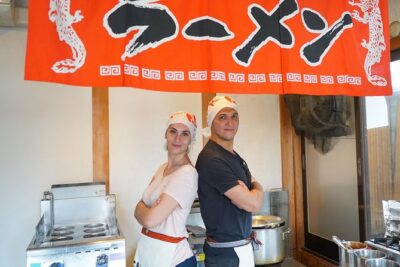
Ramen Cooking Class at Ramen Factory in Kyoto
Read our review →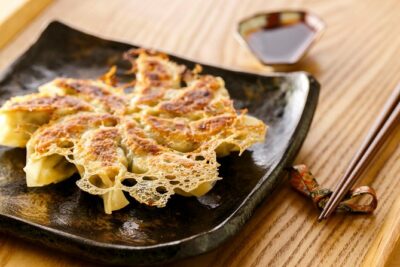
Ramen & Gyoza Cooking Class in Tokyo with Local Supermarket Visit
Read our review →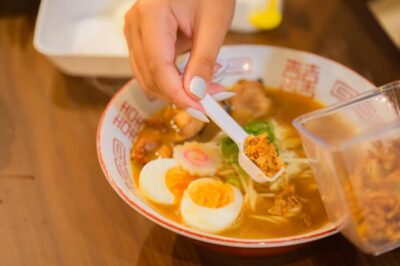
Ramen Cooking Class at a Ramen Factory with Souvenir
Read our review →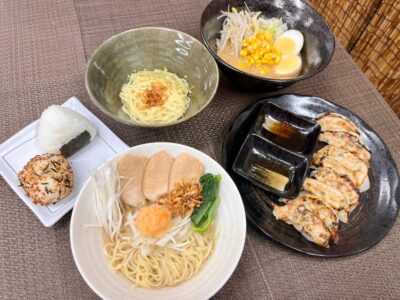
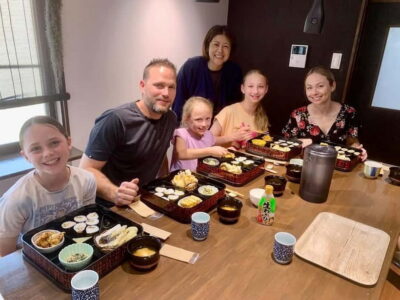
Japanese Washoku Bento Small Group Cooking Class
Read our review →

Easy Ramen Cooking Experience in Kabukicho, Shinjuku
Read our review →
Ramen and Sushi Cooking Class with Sake Pairing Set in Tokyo
Read our review →Browse the lists this tour appears in