
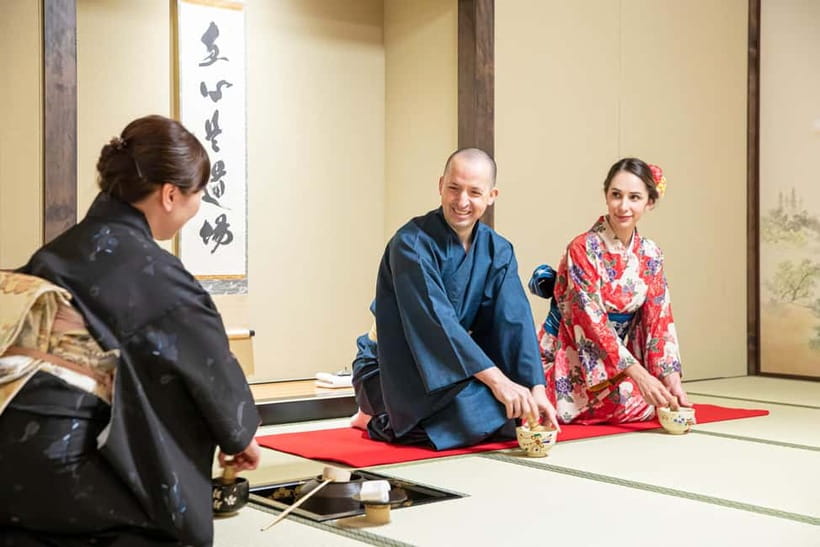
Reviewed · TEA CEREMONY EXPERIENCES
Kyoto: Kimono Tea Ceremony with Matcha and Sweet
Slow down for a taste of Kyoto. This 90-minute experience combines kimono dressing with a traditional tea ceremony, giving you more than a photo opportunity. I especially like the hands-on matcha preparation and the calm, clear English guidance from the tea master. The seasonal wagashi, Japanese sweets shaped and flavored for the time of year, add a thoughtful local touch.
The kimono selection and hair styling make this a memorable cultural activity, especially for couples and families with older children. My main caution is that the ceremony is partly a workshop: you prepare your own matcha rather than simply watching a tea master serve it. If you want a highly formal ceremony, that distinction matters.
In This Review
- What makes this Kyoto experience special
- Choosing a kimono and getting dressed
- Entering the tea room in full traditional dress
- Learning the four ideas behind the ritual
- Making a bowl of matcha yourself
- Seasonal wagashi add a small but important detail
- Photos, kimono time, and the practical value of the outfit
- How long the visit really takes
- Group size, language, and comfort
- Is $66 a fair price?
- Who should book this activity?
- Booking advice and small details that matter
- Should you book the Kyoto kimono tea ceremony?
- FAQ
- How long does the kimono tea ceremony last?
- What is included in the price?
- Is the experience conducted in English?
- Can I choose my kimono?
- Do I have to sit on tatami mats?
- Are children allowed to participate?
- Is transportation included?
- Can I cancel the booking?
What makes this Kyoto experience special
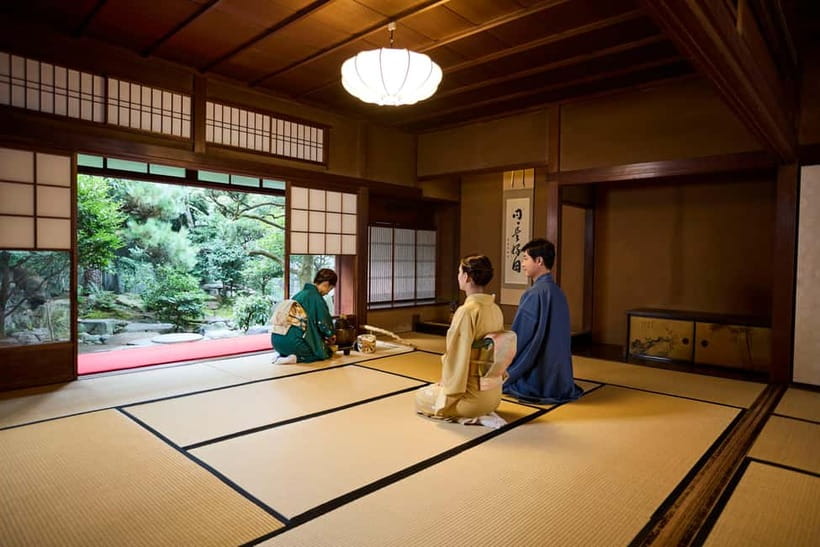
- You choose your own kimono: Pick from various colors, sizes, and obi belts before the ceremony begins.
- You prepare your own matcha: A tea master explains the process, then helps you make a bowl with premium matcha powder.
- Seasonal wagashi change with the calendar: The sweets vary in color, flavor, and design, so the small treat is different at different times of year.
- English guidance is built in: Bilingual staff assist with dressing, while the ceremony is conducted in English.
- Tatami or bamboo chair seating: You can request a chair in advance if sitting on the floor is uncomfortable.
- The kimono may be the lasting souvenir: Several participants enjoyed taking photos before and after the ceremony, and some were able to wear the outfit for up to two hours.
Choosing a kimono and getting dressed
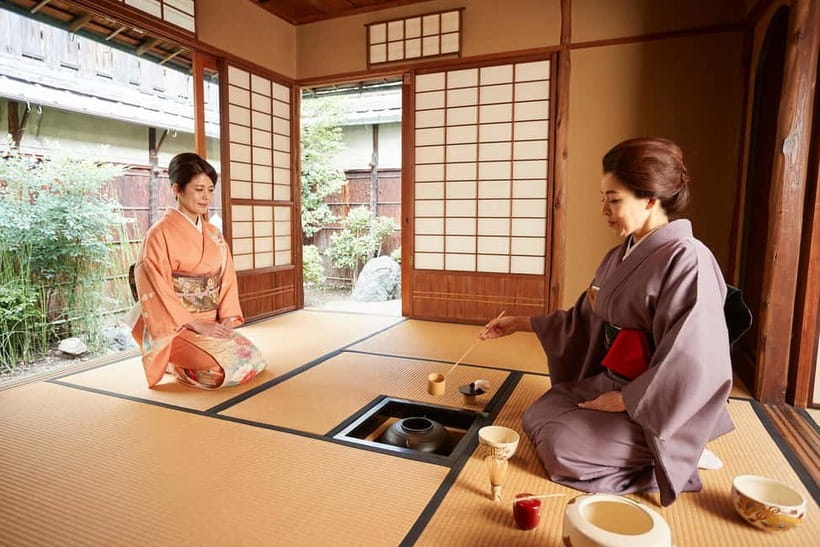
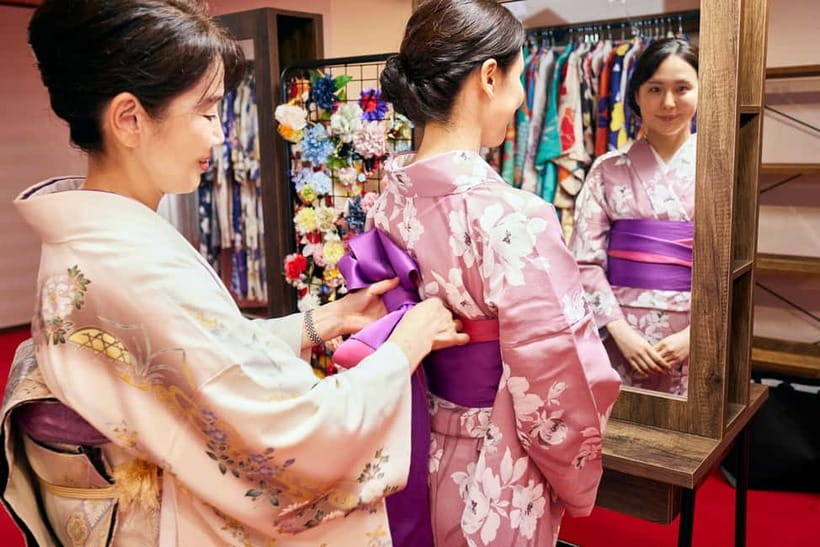
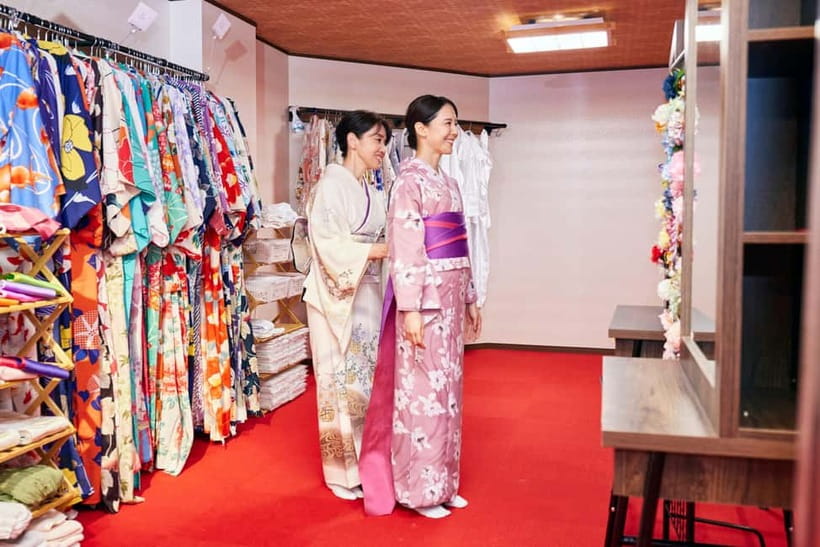
Your visit begins with the kimono, not the tea. Staff help you select a garment and coordinate it with an obi, the wide sash worn around the waist. The range of choices is one of the activity’s strongest features, since you are not simply handed a standard outfit.
The dressing process is included in the price, along with kimono socks. Women with long hair can also receive hair styling, with flowers available to add to the finished look. That small detail changes the feel of the activity. You are not just putting on a costume for a quick photograph. You are being prepared for a traditional setting.
I like that staff assistance is central here. A kimono is not a garment you casually wrap around yourself, and the proper layers and sash need careful adjustment. Several visitors found the staff patient, friendly, and attentive, with one person describing the final look as feeling like being treated as a princess.
The process can be quick, though. One participant felt there was not enough time to apply makeup before the ceremony. If you want to arrive looking photo-ready, do your makeup before check-in and keep your morning schedule fairly relaxed.
The information provided does not give a precise kimono size range, so if fit is important to you, ask when booking. The experience includes various sizes, but availability can change by session.
More Kimono Experiences in Kyoto
- Kimono Tea Ceremony at Kyoto Maikoya, NISHIKI
★ 5.0 · 911 reviews - Kyoto: Kimono Rental with Hairstyling and Accessories
★ 4.8 · 653 reviews - Kyoto: Kimono Tea Ceremony at Orizuruya Gion
★ 4.9 · 618 reviews
Entering the tea room in full traditional dress
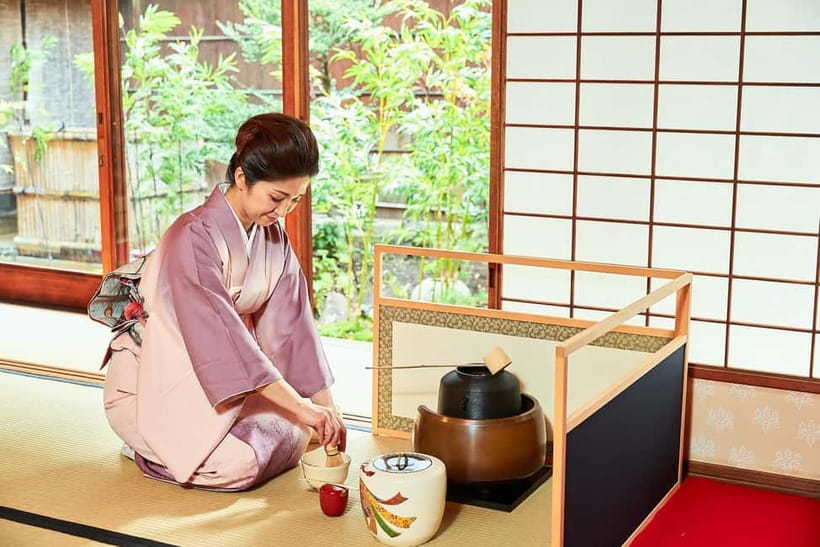
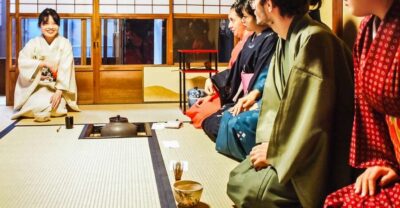
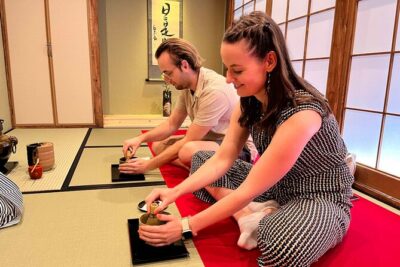
Once dressed, you move into a traditional tea room where the utensils are arranged for the ceremony. Sitting on tatami mats is customary, and the floor seating helps you understand the physical side of Japanese tea practice.
You do not have to force yourself into an uncomfortable position. Bamboo chairs are available by advance request, and the activity also says you may sit as you prefer. That is useful for anyone who has trouble kneeling or sitting on the floor for an extended period.
The atmosphere is designed to be calm and orderly. Tea ceremony is not only about drinking matcha. The placement of the tools, the handling of the bowl, and the movements between steps all carry meaning. Your host explains the tools and etiquette in English, so you can follow what is happening instead of guessing when to bow, turn the bowl, or take a sip.
The group size is usually about 12 to 14 people because bookings from different platforms may be combined. That is not an intimate private lesson, but it is still small enough for a shared cultural demonstration. Some sessions may be smaller, and one person described a group of only four as a major plus.
Learning the four ideas behind the ritual
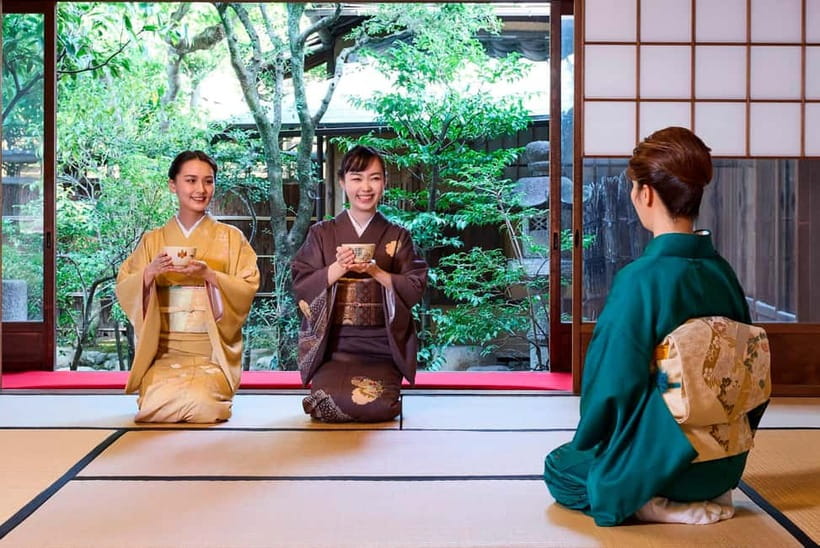
The tea master introduces four Zen principles: Wa, Kei, Sei, and Jaku.
- Wa means harmony. It reflects the relationship between host, participants, utensils, room, and season.
- Kei means respect. This appears in the way the host handles the tea tools and welcomes each person.
- Sei means purity. The careful preparation and clean arrangement of the room express this idea.
- Jaku means tranquility. The quiet rhythm of the ceremony gives you a chance to slow down.
You will not become a tea master in one short visit, but you will leave with a clearer sense of why the ritual takes its form. The explanations cover the history, tools, customs, and etiquette rather than treating the tea ceremony as a set of pretty gestures.
That educational side earns repeated praise. Hosts such as Maki and Megumi have been singled out for warm presentation and clear instruction. Other visitors appreciated guides who spoke slowly enough for everyone to follow and encouraged active participation instead of delivering a stiff lecture.
The English support is a real advantage. Tea ceremony etiquette can feel mysterious when you first encounter it, and a few well-timed explanations make the experience far more rewarding.
Making a bowl of matcha yourself
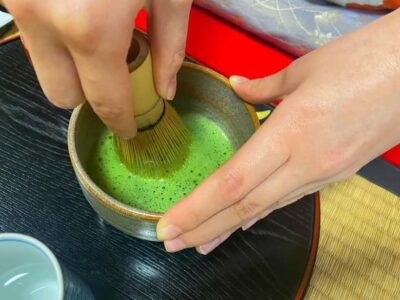
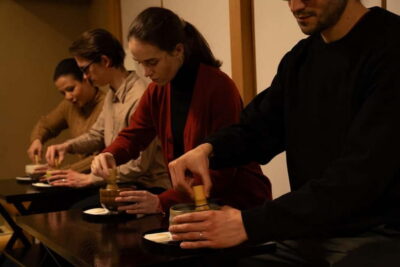
After watching the tea master demonstrate the process, you prepare your own matcha. You use high-quality matcha powder and learn how to create the froth that gives the drink its familiar texture.
This hands-on section makes the activity accessible. You are not expected to know the correct movements in advance. The instructor guides you through the steps, and the process becomes less intimidating once you have the bowl, whisk, and powder in front of you.
I like this part because it turns the ceremony into something you take part in. You remember the tea better when your own hands have measured, mixed, and whisked it.
There is also a trade-off. A formal tea ceremony usually places the guest in the role of recipient, while this experience asks you to make your own cup. One participant specifically preferred the idea of having a tea master serve the tea rather than preparing it personally. If you want a strict demonstration of the host’s movements, this workshop-style format may feel less formal.
For most first-time visitors, though, participation is probably the better value. You receive instruction, try the technique, and gain a practical understanding of how matcha is prepared.
More Tea Ceremonies in Kyoto
- Kyoto: Tea Ceremony in a Traditional Tea House in Kiyomizu
★ 4.9 · 3,519 reviews - Kyoto: Tea Ceremony Ju-An at Jotokuji Temple
★ 4.9 · 3,207 reviews - Kyoto: 45-Minute Tea Ceremony Lesson Experience
★ 4.3 · 2,378 reviews - Kyoto: Table-Style Tea Ceremony at a Kyo-Machiya
★ 4.9 · 1,211 reviews
Seasonal wagashi add a small but important detail
The matcha comes with wagashi, traditional Japanese sweets. These are not described as one fixed snack throughout the year. Their flavor, color, and design change with the seasons.
That seasonal element fits the philosophy of tea ceremony. The experience is meant to recognize the time of year, and the sweet becomes part of that setting. It is a small portion, but it gives you another way to notice Japanese attention to presentation.
The sweets also balance the taste of matcha. Matcha can have a strong, grassy bitterness, while wagashi provides sweetness. The pairing helps you appreciate why both are served together.
The specific sweet served on your date is not listed, so do not book this expecting a particular flavor. The changing selection is part of the appeal.
Photos, kimono time, and the practical value of the outfit
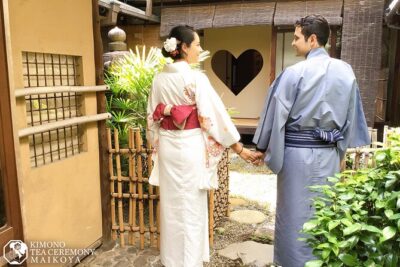
The kimono is not only used during the ceremony. Several people took photographs before and after the tea session, and one account says the outfit could be worn for up to two hours. Other visitors found photo opportunities nearby and recommended a professional selfie location down the road.
Because the outfit is a major part of the experience, allow time for pictures if your schedule permits. The setting, the tea room, and the traditional clothing work well together, and photos give you a tangible memory of the visit.
The exact amount of time available for wearing the kimono should be confirmed when you book. The activity lasts about 90 minutes, although the full visit can run from 90 to 120 minutes. The dressing stage comes first, and extra photography time may affect how much free time you have afterward.
This is also where the activity feels different for different people. Some will find the clothing the highlight. Others may feel slightly overdressed while making tea, especially if they expected a more formal ceremony. I would treat the kimono as a central part of the cultural experience, not a decorative extra.
How long the visit really takes
The advertised duration is 90 minutes, but the stated ceremony time is approximately 90 to 120 minutes. Since dressing begins the experience, you should avoid booking something immediately afterward.
A typical visit follows this order:
- Choose a kimono and obi.
- Receive dressing assistance and, for women with long hair, hair styling.
- Enter the tea room and settle on tatami or a requested bamboo chair.
- Watch the tea master explain the tools, movements, history, and etiquette.
- Learn about Wa, Kei, Sei, and Jaku.
- Prepare your own matcha.
- Eat seasonal wagashi and take photographs if time allows.
The pace is generally described as relaxed rather than rushed, though the dressing may move quickly. If photographs matter to you, arrive prepared and plan a little breathing room around the stated duration.
Children under seven are not allowed. Older children may enjoy the dressing and matcha preparation, but the quiet etiquette portion requires enough patience to listen and follow directions.
Group size, language, and comfort
English is the listed instruction language, and bilingual staff help with the kimono fitting and the ceremony. This matters because the value of the visit depends heavily on understanding the gestures and ideas behind the ritual.
The shared group normally has about 12 to 14 participants. You may receive personal help during dressing, but the tea ceremony itself is a group activity. If you want complete privacy or a lesson tailored only to your party, this is not the right format.
Tatami seating is part of the traditional setting, but chairs are available by advance request. Do not wait until arrival if you know you need a chair. The activity places clear emphasis on comfort, and sitting in a way that lets you pay attention is better than struggling through the ceremony.
Transportation is not included. You need to arrange your own way to and from the venue, so leave enough time to locate the meeting place and arrive ready for the dressing stage.
Is $66 a fair price?
At $66 per person, this is not the cheapest way to taste matcha in Kyoto. You are paying for much more than a drink: kimono rental and dressing, hair styling for eligible women, English assistance, a tea master-led ceremony, hands-on preparation, wagashi, and the use of a traditional tea room.
The price makes the most sense if you want several activities combined into one short visit. Booking kimono dressing, hair styling, a cultural lesson, and a tea experience separately could take more time and planning. This option keeps the package compact and easy to fit into a Kyoto sightseeing day.
Value depends on what you expect. If your priority is a formal ceremony in which you quietly watch the host prepare and serve tea, you may find the workshop format less satisfying. If you want to wear a kimono, learn the meaning behind the ritual, prepare matcha, and take photographs, the combination is strong.
The very high rating of 4.9 from 249 reviews fits the pattern of the experience: the staff, clothing, and teaching receive the most praise. The activity is not trying to offer advanced tea training. It is a welcoming first introduction for visitors who want context as well as a memorable experience.
Who should book this activity?
I would recommend it most strongly to:
- First-time visitors to Kyoto who want a guided introduction to tea ceremony.
- Couples looking for a shared cultural activity and photographs.
- Families with children aged seven and older who can manage a quiet 90 to 120 minutes.
- People who want to wear a kimono without committing to a full-day rental.
- Visitors who appreciate clear English explanations.
- Anyone curious about matcha and willing to make the drink themselves.
It is less suitable if you dislike floor seating and do not arrange a chair ahead of time, or if you want a private ceremony. It may also disappoint visitors seeking a strictly formal ritual rather than a participatory lesson.
The activity suits a rainy or otherwise flexible Kyoto day particularly well because the core experience takes place indoors. The supplied details do not promise a particular view or outdoor walk, so I would book it for the tea room, clothing, and instruction rather than for sightseeing scenery.
Booking advice and small details that matter
Reserve early if you have a fixed schedule, especially if you need a bamboo chair or want a particular starting time. Availability controls the session times, and the group may include people booked through other platforms.
The activity offers free cancellation up to 24 hours in advance for a full refund. You can also reserve now and pay later, which helps if your Kyoto plans are still shifting.
Wear clothing that you can comfortably change out of. The experience begins with dressing, and arriving with your hair and makeup already prepared gives you more time for photographs. Long-haired women can receive hair styling, but the included styling is not described for short hair.
Do not judge the activity only by its photograph potential. The strongest part is the explanation of the tea ceremony’s purpose and etiquette. The kimono makes the lesson more memorable, but the host’s teaching gives the visit its real substance.
Should you book the Kyoto kimono tea ceremony?
Book it if you want a friendly, well-organized introduction to Japanese tea culture with the pleasure of wearing a kimono. The strongest features are the broad kimono choice, kind staff, clear English instruction, seasonal wagashi, and the chance to make your own matcha.
Skip it if you want a private or highly formal ceremony in which you only observe the tea master. This is a shared, participatory experience, and that means the atmosphere is approachable rather than solemn from beginning to end.
For most visitors, $66 is a fair price for the amount packed into 90 to 120 minutes. Request a chair ahead of time if needed, arrive ready for photographs, and allow some schedule space after the activity. With those expectations in place, this is an easy way to add a thoughtful piece of Kyoto culture to your itinerary.
FAQ
How long does the kimono tea ceremony last?
The advertised duration is 90 minutes, while the full experience may take approximately 90 to 120 minutes. Kimono dressing begins the visit.
What is included in the price?
The price includes kimono dressing, a traditional tea ceremony led by a tea master, hands-on matcha preparation, Japanese sweets, bilingual staff assistance, and hair styling for women with long hair.
Is the experience conducted in English?
Yes. English is the listed instruction language, and bilingual staff assist with the kimono dressing and ceremony.
Can I choose my kimono?
Yes. You can choose from various kimonos, sizes, and obi belts. Availability may vary by session.
Do I have to sit on tatami mats?
Tatami seating is customary, but bamboo chairs are available by advance request. You can also sit in the way that is most comfortable for you.
Are children allowed to participate?
Children under seven are not allowed. The activity is suitable only for children aged seven and older.
Is transportation included?
No. Transportation to and from the venue is not included, so you must arrange your own transport.
Can I cancel the booking?
You can cancel up to 24 hours in advance for a full refund. The activity also allows you to reserve now and pay later.
Just added around Kyoto
- Kyoto: Gion Night Walking Tour with Geisha Insight★ 5.0 · 39 reviews
- Kyoto: Private Customizable Day Trip by Car★ 5.0 · 38 reviews
- Kyoto: Full Day Bike Tour★ 4.9 · 39 reviews
- Private Japanese Calligraphy in Kyoto – Learn Shodō with a Master★ 5.0 · 39 reviews
- Experience a tea ceremony in an authentic tearoom, in Kyoto!★ 4.5 · 41 reviews
- Kyoto: Gion Evening Walk with Hidden Gems, Geisha & Sake★ 5.0 · 41 reviews
- Kyoto Private Photo Shoot & Tour by SnapKyoto★ 5.0 · 41 reviews
- The Way of Tea: Kyoto Crafts, Hidden Temples & Wabi-Sabi Walk★ 5.0 · 41 reviews
Tea Ceremony Experiences, compared.
Tea Ceremony in a Traditional Tea House in Kiyomizu
Read our review →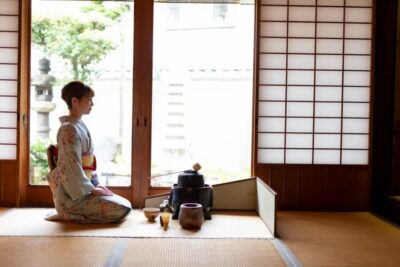
Browse the lists this tour appears in