
Reviewed · TEA CEREMONY EXPERIENCES
Kyoto Kiyomizu Tea Ceremony with Scenic Garden Views
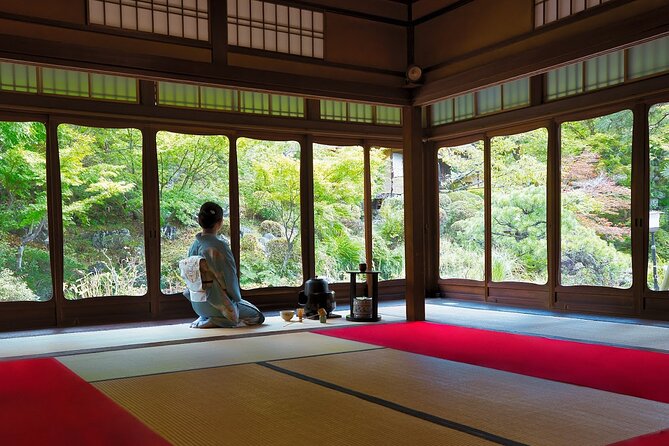
Slow down in Kyoto’s most historic district. This small-group tea ceremony pairs a graceful matcha ritual with wide garden views, giving you a quiet break from Kiyomizu’s busy streets. I especially like the beautiful tea room setting and the chance to drink two cups of matcha, including one you prepare yourself. The main drawback is the price: at $50.87 per person for roughly 45 minutes, it may feel costly if you want only a quick taste of powdered tea.
The experience is friendly and easy to follow, thanks to clear English explanation and plenty of time for questions. It suits first-time visitors who want cultural context without committing to a long formal ceremony. Keep in mind that you’ll sit in a traditional style, so it is not recommended if you have serious foot or knee problems.
In This Review
- Key points to know before you book
- Why this Kyoto tea ceremony works so well
- Arriving at Tea Ceremony SAKAGUCHIAN
- The garden view changes the experience
- Watching the tea master perform each movement
- Your first cup of matcha and wagashi
- Learning to make your second cup
- What the small group size adds
- How long it lasts, and how to fit it into your day
- Is $50.87 a fair price?
- Comfort, clothing, and practical limits
- Who will enjoy it most?
- Booking and cancellation details
- My verdict: book it for culture, not just tea
- FAQ
- How long does the Kyoto tea ceremony last?
- Where does the tea ceremony begin and end?
- How many people can join the tea ceremony?
- What is included in the price?
- Is kimono rental included?
- Can I cancel for a full refund?
Key points to know before you book
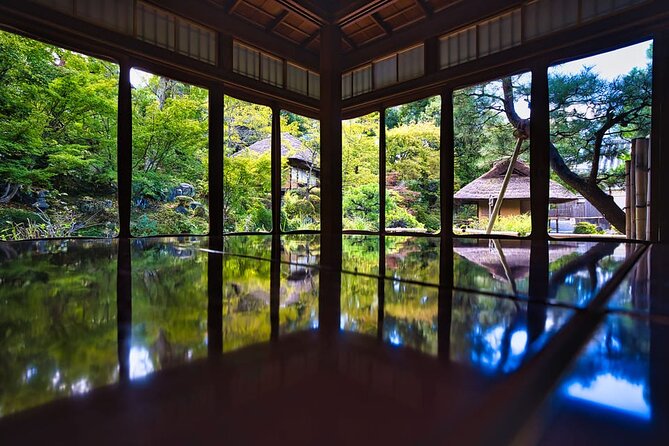
- Garden-facing tea room: Large windows provide views of a carefully maintained Japanese garden while the ceremony takes place.
- Two matcha servings: The tea master prepares the first cup, then you learn how to whisk the second.
- Small group size: The room accommodates a maximum of 12 people, keeping the demonstration personal.
- Wagashi pairing: Traditional Japanese sweets are served with the tea and help balance matcha’s bitterness.
- Strong cultural explanation: The host explains the ceremony’s gestures, objects, history, and symbolism in English.
- Bring socks: You may sit in a traditional tea room, and one guest specifically advises wearing or carrying socks.
Why this Kyoto tea ceremony works so well
Kyoto offers plenty of polished cultural activities, but this one has a simple advantage: it lets you watch, taste, and participate in the same short visit. You are not simply handed a bowl of matcha in a restaurant. You see the tea master purify the utensils, measure and whisk the tea, and move through each part of the ritual with care.
That slow rhythm is the point. The ceremony is built around ideas often described as harmony, respect, purity, and tranquility. You do not need prior knowledge of Japanese tea culture to appreciate it. The host explains what is happening, so each movement feels meaningful instead of mysterious.
I also like the balance between formality and approachability. The tea master performs the ceremonial steps with precision, but the session includes instruction and questions. You can learn the proper way to handle the bowl, how to drink the tea, and how to create a frothy cup yourself.
More Tea Ceremonies in Kyoto
- Kyoto: Tea Ceremony in a Traditional Tea House in Kiyomizu
★ 4.9 · 3,519 reviews - Kyoto: Tea Ceremony Ju-An at Jotokuji Temple
★ 4.9 · 3,207 reviews - Kyoto: 45-Minute Tea Ceremony Lesson Experience
★ 4.3 · 2,378 reviews
Arriving at Tea Ceremony SAKAGUCHIAN
The meeting point is Tea Ceremony SAKAGUCHIAN, also written as 茶道体験 阪口庵, at 3-chōme-334 Kiyomizu in Kyoto’s Higashiyama Ward. The activity begins and ends here, so there is no complicated transport arrangement during the experience.
This location matters because Kiyomizu is one of the best areas in Kyoto for traditional architecture and old streets. You can combine the ceremony with time in the surrounding district, but leave enough room to find the tea house without rushing. The exact meeting address is worth saving on your phone before you set out.
A mobile ticket makes the entry process straightforward. Confirmation is sent when you book, which is useful if you are arranging several Kyoto activities close together. The activity is popular, with more than five bookings recorded on the same day, so I would not leave it until the final afternoon of a short Kyoto visit.
The garden view changes the experience
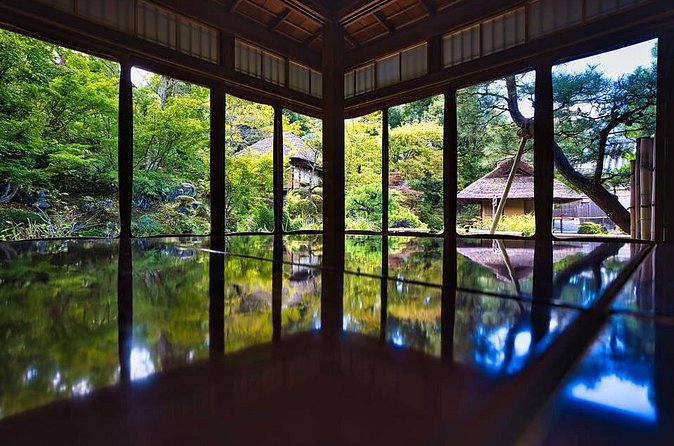
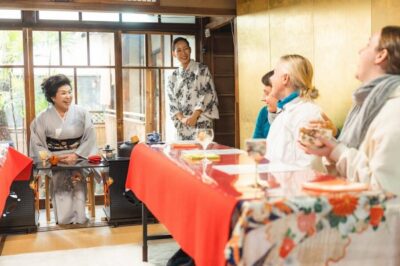
The tea room looks onto a Japanese garden, and this is one of the strongest reasons to choose this particular activity. Large windows open the room to seasonal views, giving you something gentle to look at while the tea is prepared.
The garden is not just a backdrop for photographs. It helps explain why Japanese tea culture pays close attention to setting, season, and small visual details. Your attention moves between the tea bowl, the master’s hands, the sweets, and the garden beyond the windows.
Several people describe the setting as peaceful and carefully maintained. One useful detail is that the room has air conditioning, which can make a real difference during Kyoto’s hot summer months. You still get the traditional atmosphere without having to sit through the ceremony in an uncomfortable room.
The view will change with the season, but the activity remains indoors. If bad weather affects the experience, the provider may offer another date or a full refund. That policy is reassuring, especially when weather might spoil the garden view or make getting around Higashiyama unpleasant.
Watching the tea master perform each movement
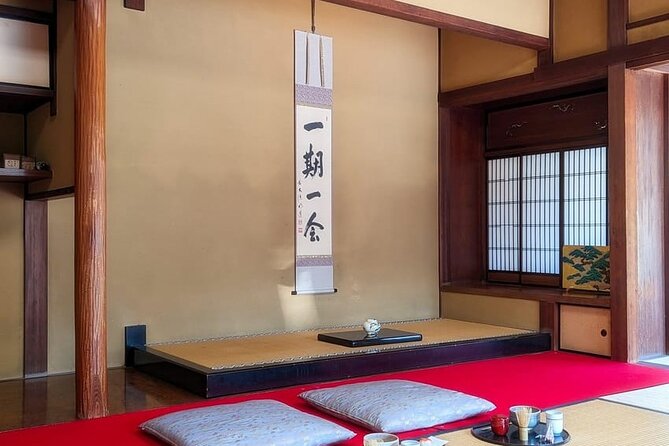
The ceremony begins with the tea master preparing the room and utensils. You watch the tools being purified before the matcha is made. These actions can seem small, but they are central to the ritual and show how much importance is placed on cleanliness, order, and attention.
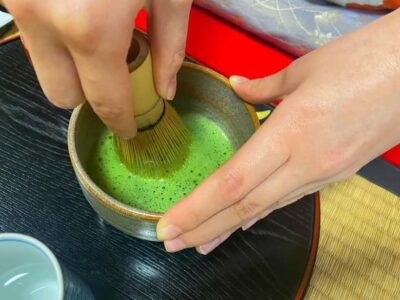
The master’s movements are measured and controlled. The performance is not rushed to fit a tourist schedule, although the entire activity is short. You will see the tea whisk used to turn bright green matcha into a light froth, and the host explains how each object is handled.
This is where the activity feels different from a simple tasting. You are given a window into the discipline required to perform a tea ceremony properly. The master’s clothing, the arrangement of the room, the tea utensils, and the garden view all support the same calm mood.
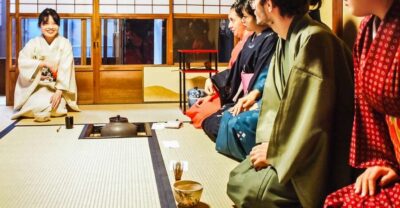
The English-speaking assistant or host explains the process as it unfolds. The explanations cover the ceremony’s background, the purpose of the movements, and the correct way to receive and drink the tea. The clear translation is especially helpful if this is your first introduction to Japanese tea culture.
More Temple & Shrine Tours in Kyoto
- Kyoto: Fushimi Inari, Kinkakuji, Bamboo Grove 1 Day Bus Tour
★ 4.8 · 4,316 reviews - Fushimi Inari Hidden Hiking Tour (Private Option Available)
★ 5.0 · 1,750 reviews - Osaka/Kyoto:Kinkakuji,Arashiyama,FushimiInariShrine,NaraPark
★ 4.1 · 1,596 reviews - Kyoto/Osaka: Nara, Fushimi Inari Taisha, Arashiyama Bus Tour
★ 4.7 · 1,275 reviews
Your first cup of matcha and wagashi
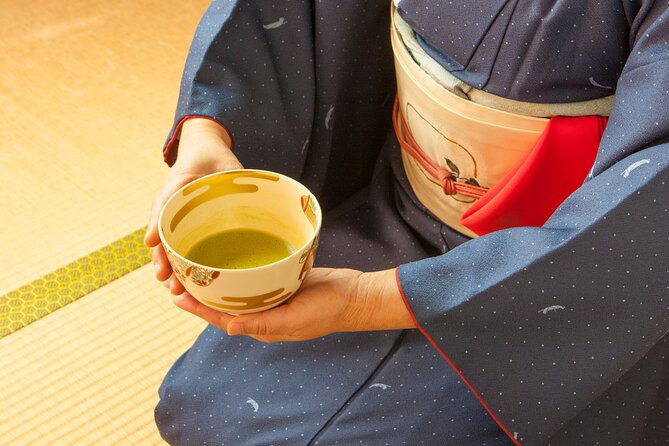
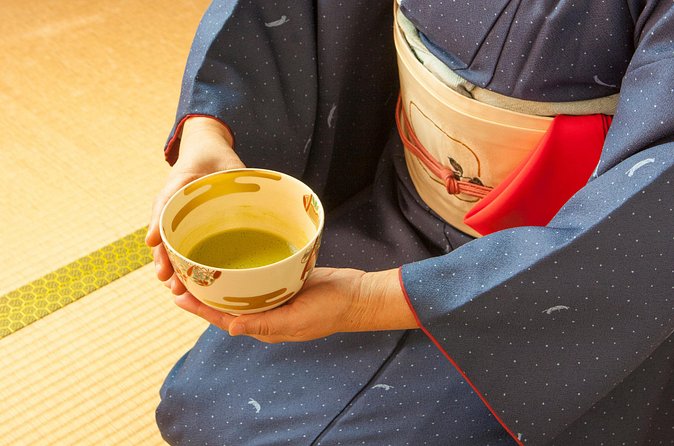
The first cup is prepared for you by the tea master. It is served with wagashi, a traditional Japanese sweet chosen to pair with matcha. The sweet is not an afterthought. Its delicate sweetness softens the tea’s bitter edge and gives you a better sense of how the two are meant to be enjoyed together.
If you are used to sweetened tea or matcha drinks made with milk, the flavor may surprise you. This is a more direct taste of matcha, with a fresh, grassy bitterness and a smooth froth. The ceremony gives you time to appreciate it rather than gulping it down.
The wagashi is one of the most praised parts of the experience, and it adds a welcome touch of ceremony. You first enjoy the sweet, then drink the tea. That order helps prepare your palate and makes the matcha taste less severe.
The included serving is modest, but it is enough for the purpose. This is not a full meal or a dessert stop. Plan to eat before or after if you need something substantial.
Learning to make your second cup
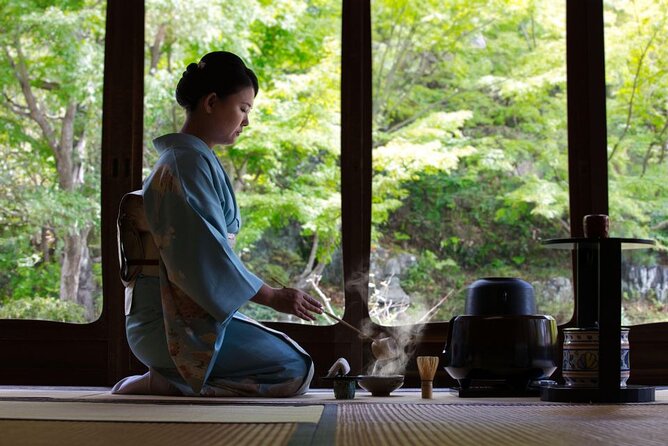
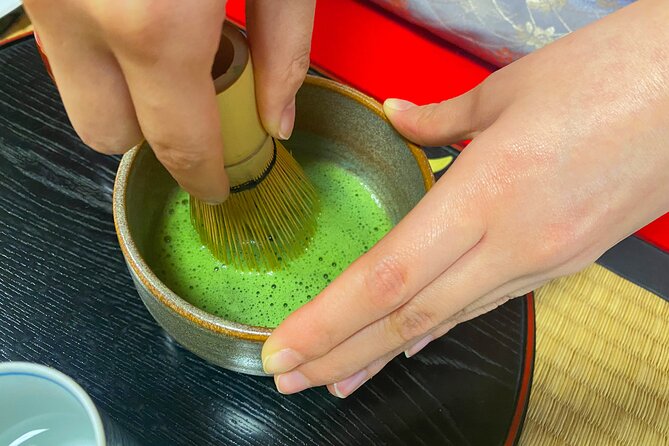
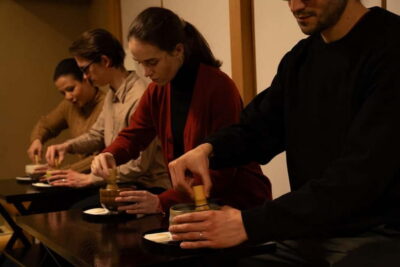
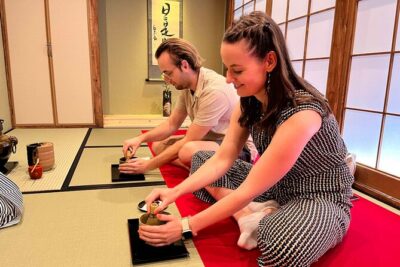
The second serving turns you from observer into participant. You learn how to prepare matcha using the traditional whisk and are shown the technique needed to produce a light, foamy surface.
This hands-on part is valuable because it gives you a physical connection to the ceremony. You learn how to hold the bowl, how to use the whisk, and how the preparation itself is part of the experience. You are not expected to become a tea master in a few minutes, but you leave with a better understanding of the work behind each cup.
The instruction is presented in a relaxed way. You can ask questions about the tea, the ceremony, and the cultural meaning of the objects around you. Families and small groups seem especially well suited to this format because everyone gets a chance to watch and then try the process.
There is also a practical limit. One 45-minute session can only cover the basics. You will learn the main sequence and the core technique, but not every detail of formal tea practice. If your main interest is advanced matcha preparation, this will feel like an introduction rather than a complete course.
What the small group size adds
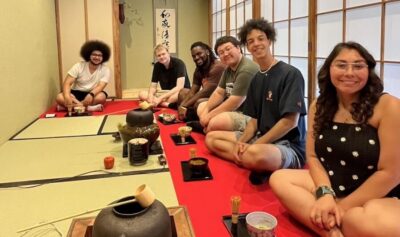
The maximum group size is 12 people. That is not a private lesson, but it is small enough to keep the room from feeling crowded. You can see the tea master’s movements, hear the explanation, and ask questions without competing with a large audience.
The intimate format also fits the mood. A tea ceremony loses some of its effect if people are packed into a noisy room or pushed through the steps in a large line. Here, the setting allows the activity to remain quiet and personal.
The group size can vary, so your session may be smaller than the maximum. Either way, you should expect a shared experience rather than one-on-one teaching. If you want complete control over the timing or a private ceremony, check the booking conditions before paying.
How long it lasts, and how to fit it into your day
The stated duration is approximately 45 minutes. Some descriptions of the experience refer to about an hour, so I would set aside a full hour rather than scheduling another attraction immediately afterward.
That length works well in a Kyoto sightseeing plan. You can place the ceremony between visits in Higashiyama, using it as a quiet pause after walking through the district. It is also a good choice during the hottest part of the day because the tea room has air conditioning and the activity does not require extended outdoor movement.
Do not book it when you are in a hurry to catch a train or rush to another timed entry. The value comes from slowing down and paying attention. You will enjoy it more if you arrive ready to sit quietly, listen, and take part.
The session ends back at the meeting point. From there, you can continue exploring Kiyomizu and nearby streets on your own.
Is $50.87 a fair price?
At $50.87 per person, this is not the cheapest way to drink matcha in Kyoto. You could find tea and sweets at a café for much less. The price pays for more than the beverage, though. It includes the tea master’s demonstration, guided instruction, cultural explanation, the garden-facing setting, two cups of matcha, wagashi, and a photo.
I consider it reasonable for someone who values context and atmosphere. The garden views and careful performance make it more than a refreshment stop. You are paying for access to a traditional setting and for help understanding what you are seeing.
Still, the value depends on your expectations. One person found the session a bit brief and slightly expensive because it only introduced the ceremony and matcha preparation. That is a fair criticism. At roughly 45 minutes, the activity offers a well-presented overview, not an extended study of tea practice.
If you are curious about Japanese culture but want a short activity, the price is easier to justify. If you only want to sample matcha, save your money for a tea shop.
Comfort, clothing, and practical limits
The ceremony is not recommended for people with foot or knee problems. Traditional tea rooms often involve sitting close to the floor, and the supplied information specifically warns that the activity may not suit anyone with poor leg or knee condition.
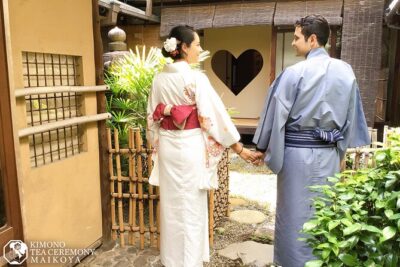
Socks are a smart choice. One attendee advises bringing or wearing them, and it is a useful precaution for a traditional indoor setting. Kimono rental is not included, so you should not expect costume dressing as part of the experience.
Photography is included, but video recording is not. You can capture a memory of the visit, yet the focus remains on watching and taking part rather than filming the entire ceremony.
The group is international and the English explanations are designed to make the process accessible. Still, the experience is quiet and formal. It is not the right pick if you want a loud, fast, highly interactive attraction.
Who will enjoy it most?
I would recommend this tea ceremony to you if:
- You want a gentle cultural activity in the Kiyomizu area.
- You are interested in the meaning behind Japanese tea rituals.
- You prefer a small group to a large staged performance.
- You enjoy gardens, architecture, and careful visual details.
- You want to prepare matcha yourself, not just drink it.
- You need a calm break from a full day of walking.
It is also a strong choice for families, couples, and parent-child trips. The simple hands-on lesson gives younger participants something to do, while the setting and explanation keep the activity worthwhile for adults.
You may want to skip it if you dislike sitting in a traditional position, have foot or knee trouble, or feel that $50.87 is too much for a short introduction. You should also choose another activity if your schedule leaves no room for a relaxed pace.
Booking and cancellation details
Free cancellation is available if you cancel at least 24 hours before the start time. Changes or cancellations made less than 24 hours ahead are not accepted for a refund, and the cut-off follows Kyoto local time.
The experience depends on good weather. If poor weather causes the provider to cancel, you can choose another date or receive a full refund. Since the activity takes place in a tea room with garden views, bad weather may not ruin the ceremony itself, but it can affect the setting and local travel conditions.
My verdict: book it for culture, not just tea
You should book this experience if you want a short, polished introduction to Japanese tea culture in a beautiful Kiyomizu setting. The strongest parts are the garden-facing room, the tea master’s precise movements, the clear explanation, and the chance to whisk your own second cup.
I would not book it simply for a drink. The tea and sweets are only part of the value. You are paying for the ritual, the quiet room, the cultural explanation, and the chance to understand why each step matters.
For most first-time visitors to Kyoto, this is a thoughtful addition to a day in Higashiyama. Just wear socks, allow about an hour, and arrive ready to sit still for a while. That small change of pace may be exactly what your sightseeing day needs.
FAQ
How long does the Kyoto tea ceremony last?
The stated duration is approximately 45 minutes. Some descriptions refer to about an hour, so allow a little extra time when planning your day.
Where does the tea ceremony begin and end?
It begins at Tea Ceremony SAKAGUCHIAN, at 3-chōme-334 Kiyomizu, Higashiyama Ward, Kyoto, 605-0043, Japan. The activity ends back at the same meeting point.
How many people can join the tea ceremony?
The activity has a maximum of 12 participants.
What is included in the price?
The experience includes two cups of matcha, traditional wagashi sweets, and a photo.
Is kimono rental included?
No. Kimono rental is not included. Video recording is also not included.
Can I cancel for a full refund?
Yes, if you cancel at least 24 hours before the scheduled start time. Cancellations or changes made less than 24 hours before the start are not accepted for a refund. If poor weather causes the provider to cancel, you will be offered another date or a full refund.
Just added around Kyoto
- Kyoto: Gion Night Walking Tour with Geisha Insight★ 5.0 · 39 reviews
- Kyoto: Private Customizable Day Trip by Car★ 5.0 · 38 reviews
- Kyoto: Full Day Bike Tour★ 4.9 · 39 reviews
- Private Japanese Calligraphy in Kyoto – Learn Shodō with a Master★ 5.0 · 39 reviews
- Kyoto: Gion Evening Walk with Hidden Gems, Geisha & Sake★ 5.0 · 41 reviews
- Experience a tea ceremony in an authentic tearoom, in Kyoto!★ 4.5 · 41 reviews
- Kyoto Private Photo Shoot & Tour by SnapKyoto★ 5.0 · 41 reviews
- The Way of Tea: Kyoto Crafts, Hidden Temples & Wabi-Sabi Walk★ 5.0 · 41 reviews
Tea Ceremony Experiences, compared.
Tea Ceremony in a Traditional Tea House in Kiyomizu
Read our review →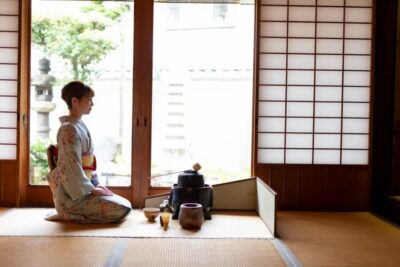
Browse the lists this tour appears in